
What Do Beginner Tarantulas Eat? A Complete Feeding Guide for the Chilean Rose Hair and Beyond
Species like the Grammostola rosea, or Chilean Rose Hair, have earned their beginner-friendly reputation not just through docility, but through a remarkably forgiving and straightforward approach to feeding. This article demystifies tarantula nutrition, transforming anxiety into confident routine. From my 15 years caring for Rosie, my own ‘pet rock’ G. rosea who famously refuses meals for months, I can assure you that a successful feeding regimen hinges more on observation and patience than complex schedules. We will explore prey choices, portion sizes, and the silent signals your spider gives you.
Quick Stats for a Classic Beginner Species:
- Origin: Arid scrublands of Chile
- Type: New World (equipped with urticating hairs)
- Growth Rate: Very slow, often requiring 5-7 years to reach full size
My guide provides the specific feeding strategies you need to support your tarantula’s health from the delicate sling stage all the way through to a robust adulthood.
The Natural Tarantula Diet: Insights from the Wild
In their native habitats, from arid scrublands to humid rainforests, tarantulas are sit-and-wait predators. Their diet is a silent, opportunistic buffet of live insects. Crickets, grasshoppers, and beetles form the core menu. Larger terrestrial species, like my Theraphosa stirmi Goliath, will occasionally take small vertebrates such as frogs or pinky mice. They do hunt and capture prey, typically by ambushing from concealment and gripping it with their legs before delivering venom to immobilize it.
Captive care condenses this wild variety into reliable, safe feeder insects. We select captive feeders not to perfectly mimic the wild, but to provide balanced nutrition and minimize risk in a confined space. The goal is a diet that supports health without the parasites or unpredictable fights found in nature.
I’ve observed my Grammostola rosea, Rosie, fast for months, a behavior rooted in wild feast-or-famine cycles. This natural resilience means our feeding schedules in captivity can be flexible, focusing on quality over constant quantity. We choose feeders like dubia roaches for their protein content, mirroring the nutrition of a wild beetle.
Building the Perfect Captive Diet: Best Feeder Insects
The three staple feeders are crickets, dubia roaches, and mealworms. Each has distinct advantages for different situations in your tarantula room.
| Feeder Insect | Nutritional Value | Ease of Use | Approximate Cost |
|---|---|---|---|
| Crickets | Moderate protein, good moisture content | Widely available, but can be noisy, may bite tarantulas | Low |
| Dubia Roaches | High protein, low fat, excellent gut-loading potential | Quiet, cannot climb smooth surfaces, less odor | Moderate |
| Mealworms | Higher in fat, best used as a occasional item | Easy to store, but can burrow into substrate and pupate | Very Low |
Live prey triggers natural hunting instincts, but pre-killed is often safer. For defensive or fast species like my OBT Flash, I always pre-kill larger prey to prevent the feeder from injuring the tarantula during a stressful confrontation. A struggling cricket can harm a molting or stressed spider. Additionally, many keepers debate whether dubia roaches or crickets make the superior feeder for tarantulas, weighing safety, ease of handling, and feeding response. Depending on the tarantula, one may be preferable to the other, but safety considerations remain key across options.
My personal rule is to never leave live prey unattended. Removing uneaten food, especially with notorious burrowers like mealworms, is a non-negotiable step for reducing enclosure stress and preventing harm. This practice is a cornerstone of respectful, hands-off care.
Appropriate Prey Size: A Critical Rule
The most important feeding guideline is simple: the prey item should be no larger than your tarantula’s abdomen. This prevents injury and ensures a clean, successful capture.
For spiderlings, or slings, this means prey like pinhead crickets or flightless fruit flies. Their strikes are precise but weak. I’ve raised many slings on this micro-diet, watching their abdomens slowly plump after a successful hunt.
Juvenile tarantulas graduate to small crickets or quarter-inch dubia roaches. Adults, like my Goliath, can handle an adult cricket or a full-sized roach. Offering oversized prey risks a defensive backlash, a refused meal, or even damage to your tarantula’s fangs. I learned this when a too-large roach prompted Goliath to unleash a cloud of urticating hairs instead of a feeding bite.
Use this quick size guide based on life stage:
- Spiderlings (Slings): Pinhead crickets, fruit flies, pre-killed mealworm segments.
- Juveniles: Small crickets, tiny dubia roaches, whole mealworms.
- Adults: Adult crickets, large dubia roaches, superworms (with caution).
Watch how your tarantula interacts with its food. A perfect prey size results in a confident grab and a quiet retreat, not a prolonged struggle or a missed strike. Adjust as needed, remembering that a slightly smaller meal is always safer than a slightly larger one.
How to Offer Food: A Step-by-Step Process
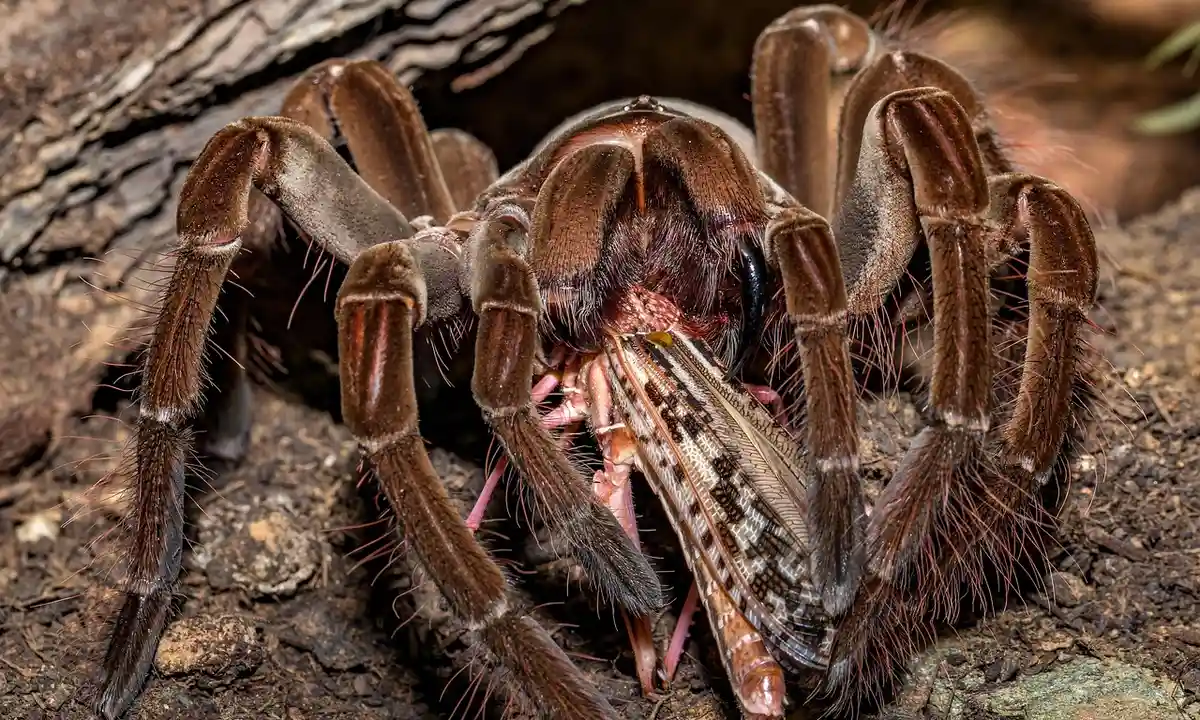
- Select and Prepare the Prey
Your first decision is prey size. It should be no larger than your tarantula’s abdomen. For my spiderlings, I use pinhead crickets or chopped mealworms. For Goliath, I offer a full-sized roach. I always gut-load feeder insects for 24 hours prior with fresh vegetables like carrot slices; this passes nutrients to your tarantula.
- Use the Right Tools for Safety
Never use your fingers. Long, soft-tipped feeding tweezers, 10-12 inches in length, are non-negotiable. They protect you from a defensive strike and prevent the tarantula from associating your scent with food. I keep a dedicated pair for each of my more defensive species, like Flash.
- Gently Present the Prey
Open the enclosure slowly to avoid sudden vibrations. For terrestrial species like Rosie, I place the insect directly onto the substrate near her burrow entrance. For arboreal tarantulas, I gently place it on their webbing or a cork bark wall. The goal is a gentle presentation, not a drop from height.
- Observe the Strike
Step back and watch. A feeding tarantula is a breathtaking lesson in efficiency. You might see a slow, deliberate stalk or a lightning-fast strike with a faint clicking sound from the fangs. This is the reward of our hobby—observing natural, undisturbed behavior. Look for the tarantula’s subtle food dance—tiny leg taps and a shifting posture that show it’s ready to eat. Reading these cues helps you anticipate the moment and understand its feeding behavior.
- Remove Uneaten Prey
If the tarantula shows no interest after 15 minutes, I remove the live prey. An uneaten cricket or roach can stress a molting tarantula or even nibble on it. I always check again after 24 hours for any hidden prey carcasses and remove them to prevent mold. If you notice a stale odor, damp substrate, or visible mold, those are signs your tarantula’s enclosure needs cleaning. Regular checks like these help keep the habitat safe during feeding and molting.
A critical tip is to never tap on the glass or poke your tarantula to stimulate feeding; this causes immense stress and can trigger a defensive response. For fast species, I complete all steps with the enclosure inside a large, clear tub to contain any potential escapes.
Creating a Tarantula Feeding Schedule
- Spiderlings (0-1.5″ legspan)
Their metabolisms are rapid. I feed my slings small prey 2-3 times per week. A plump abdomen is a sign of good health. They need this consistent nutrition to support frequent molts and steady growth.
- Juveniles (1.5″ to near adult size)
Growth begins to slow. A meal once a week is typically perfect. This is where you start to see individual personalities emerge-some are eager eaters every time, while others may skip a meal occasionally as their metabolism adjusts.
- Adults
Mature tarantulas require far less food. For most species, a single appropriately-sized insect every 10 to 14 days is sufficient. An adult female’s abdomen should look rounded, but not so large it appears it might drag or burst. Overfeeding can lead to health issues and long fasting periods. Following this 10 to 14 day cadence is considered part of the best diet and feeding schedule for a healthy tarantula. Maintaining consistency helps monitor body condition and overall health.
- Adjust for Individual and Season
There is no universal clockwork. My Goliath, a heavy-bodied species, eats weekly, while Rosie has gone over 14 months without a single bite-a normal fast for a mature Grammostola rosea. Many tarantulas will also eat less during cooler winter months, mimicking natural cycles. Watch your tarantula, not the calendar.
The most reliable feeding schedule is based on direct observation of your tarantula’s abdomen size and behavior, not on rigid dates. A slightly shriveled abdomen means offer food. A very plump abdomen means wait. Learning this rhythm is key to confident care.
Reading Your Tarantula: Hunger and Refusal Signs
Tarantulas speak through motion and posture, not sound. Interpreting this body language prevents wasted feeders and reduces stress for your pet. A hungry tarantula often patrols the enclosure perimeter at night or assumes a vigilant stance at its burrow entrance, legs poised for a sudden strike. My old Chilean Rose Hair, Rosie, will station herself by her cork bark hide, her dusty pink carapace catching the light, in a silent demand for food. Some tarantula species can also communicate via faint stridulation or substrate vibrations, though these cues are subtle and not universal. Understanding these signals requires species-specific knowledge.
Refusal behaviors are equally distinct. A spider that ignores live prey, retreats into a deep hide, or even flicks urticating hairs at a cricket is communicating clearly. This rejection typically points to two states: preparation for molt or experience of environmental stress. My defensive OBT, Flash, will completely seal his web tunnels and ignore all movement outside when he is not interested.
Troubleshooting Common Feeding Problems
When a tarantula consistently refuses meals, methodically investigate these three areas. Quick identification of the cause keeps your spider safe and prevents unnecessary worry.
- Pre-Molt Indicators: Look for a dark, dull carapace, a plump and often bald abdomen, and reduced activity. Always remove uneaten live prey during this phase; a soft, molting spider is vulnerable to injury. My Goliath bird eater becomes unusually placid and his dark brown hues appear muted before ecdysis.
- Stress Factors: Common stressors include loud vibrations, excessive light, lack of hides, or an enclosure that feels too open. Provide ample cover and place the habitat in a calm location to promote a feeling of security.
- Prey Issues: The feeder insect may be too large, too fast, or simply not preferred. Experiment with different options like dubia roaches, mealworms, or locusts to find what your individual spider favors. I switched Rosie to smaller roaches during her infamous multi-month fasts with better results.
Molting and Feeding: The Essential Cycle
Ecdysis, the molting process, is a total renewal of your tarantula’s exoskeleton and internal organs. Imagine a snake shedding its skin, but far more physiologically demanding. Appetite vanishes entirely in the weeks preceding a molt as the spider’s body conserves resources for this critical event.
The post-molt period requires disciplined patience. After the arduous process of shedding its old skin, your tarantula emerges fragile and soft. You must wait a full 7 to 10 days after the molt before offering food, allowing its new fangs to solidify and darken from a soft, creamy white. Offering prey before this can lead to broken fangs and starvation. I use a small calendar sticker on each enclosure to track this essential hardening period for all my spiders. Similarly, many tarantulas fast in the days leading up to a molt. This post-molt guidance sits alongside broader pre-molt and other fasting recommendations.
Foods to Avoid for Beginner Tarantulas
-
Wild-caught insects are a silent hazard you must never use. Grasshoppers, beetles, or caterpillars from your garden likely carry pesticide residues or internal parasites. I once saw a tarantula decline after consuming a wild cricket; the invisible chemical burden is a real threat. Captive-bred feeders eliminate this gamble entirely.
-
Large vertebrate prey, such as pinkie mice or small lizards, poses a severe physical risk. The tarantula’s fangs can be damaged during the struggle, and a rotting carcass will quickly spoil the enclosure’s cleanliness. My T. stirmi, Goliath, has the size to tackle a pinkie, but the potential for injury and bacterial explosion makes it a foolish choice.
-
Obviously toxic insects like fireflies (Photinus species) are absolutely fatal. Their defensive chemicals, called lucibufagins, will kill a tarantula with terrifying speed. This includes any brightly colored insect you cannot positively identify-when in doubt, leave it out.
-
Feeder insects fed a poor diet themselves will pass little nutrition to your spider. “Gut-loading” with quality vegetables is key. I never feed my tarantulas crickets that have been starving in a tub; I give those feeders nutritious greens first for 24 hours.
-
Pre-killed prey that is too large can still be dangerous during a molt. A tarantula may sense the rotting mass and attempt to move it, risking injury in its soft, vulnerable state. For many keepers, the debate between live prey and pre-killed prey is about safety versus stimulation, and the choice often depends on the tarantula’s species and molt status. During molts, many keepers prefer pre-killed prey to minimize handling risk. I always remove any uneaten food within 24 hours, especially with my slow-eating G. rosea, Rosie.
-
Sticking to captive-bred feeder insects from a reputable source is your simplest path to success. This practice controls variables from parasites to nutrition. For my fast OBT, Flash, and all my others, I use only farm-raised dubia roaches and crickets. It ensures every meal is safe.
Common Questions
What should you do if your beginner tarantula refuses to eat?
First, do not panic, as fasting is normal. Immediately remove any live prey to prevent it from stressing or harming your tarantula. Assess the situation by checking for pre-molt signs like a dark abdomen or reduced activity, and ensure the enclosure is in a quiet, low-stress location. These signals are part of the 10 key signs your tarantula is about to molt, helping you anticipate and time care. For a full understanding of all signs, review the complete list. If no molt is imminent, simply wait a week and offer a different type of prey, like a dubia roach instead of a cricket.
How do you know if your beginner tarantula is hungry?
A hungry tarantula will often become more active, particularly at night, and may patrol the front or sides of its enclosure. You might observe it waiting in a prominent, ready stance at the entrance of its hide with its legs poised. A visual cue is a slightly shriveled or less plump abdomen, which indicates it has used its stored energy reserves.
What are the best feeder insects for a beginner tarantula?
Dubia roaches are an excellent staple due to their high protein content, quiet nature, and inability to climb smooth surfaces. Crickets are a common and readily available option, though they can be noisy and may bite. Mealworms can be used occasionally, but they should be supervised as they can burrow and turn into beetles if left uneaten.
Are there any foods you should absolutely avoid feeding a beginner tarantula?
Yes, you must never feed wild-caught insects due to the risk of pesticides and parasites. Avoid large vertebrate prey like pinky mice, as they can injure your tarantula and cause severe enclosure contamination. Also, never offer insects you cannot positively identify, such as fireflies, which contain toxins that are rapidly fatal to tarantulas.
How does a beginner tarantula’s feeding change as it molts?
Your tarantula will stop eating entirely in the weeks leading up to a molt, which is completely normal. After it has successfully shed its old exoskeleton, you must wait 7-10 days before offering food again to allow its new fangs to harden. Knowing when it’s safe to feed your tarantula post-molt is crucial to prevent injury. Attempting to feed too soon after a molt can result in serious injury to your vulnerable spider.
The Final Molt
Feeding a tarantula is a simple act with profound consequences. The energy from a single cricket fuels the incredible biological process of creating an entirely new, larger exoskeleton. The single most important parameter for successful feeding and molting is not the prey itself, but a constant, clean source of hydration. A full water dish is non-negotiable; it supports organ function, aids in the molt, and is often the difference between a thriving spider and a failing one.
Your true success as a keeper will be measured in quiet observations, not in a feeding tally. Watch the meticulous construction of a burrow, the patient ambush from a silken retreat, or the sudden, explosive strike. My old Chilean Rose, Rosie, once fasted for over fourteen months, a masterclass in patience that taught me more than any feeding frenzy. Embrace the stillness and the sudden motion equally, and you will find a deep, lasting fascination in the precise rhythm of your tarantula’s life.
Further Reading & Sources
- Tarantula Feeding Guide: Tips & Diet Essentials
- Tarantula Feeding – What, when, and how much to feed | Tom’s Big Spiders
- A guide to feeding Australian tarantulas – Minibeast Wildlife
Arlo is a lifelong arachnid enthusiast who believes tarantulas are the world’s most misunderstood roommates. With years of hands-on experience in tarantula care, habitat setup, and species behavior, Arlo combines expert knowledge with a dash of humor to make spider ownership less scary and a lot more fascinating. From choosing the right enclosure to understanding why your eight-legged buddy is doing that weird little pose again, Arlo is here to help you become the best tarantula parent you can be, without getting tangled in the web of misinformation.
Best Food Options