
11 Pervasive Tarantula Myths Debunked by Expert Keepers
Published on: January 1, 2026 | Last Updated: January 1, 2026
Written By: Arlo
More than any other invertebrate pet, tarantulas are shrouded in a web of misinformation and outdated folklore, even as their popularity soars. From false assumptions about their care to exaggerated dangers, these myths can lead to poor husbandry and unnecessary fear. This article cuts through the noise with evidence-based facts from years of hands-on experience.
Quick Stats:
- Origin: A Global Perspective
- Type: New World & Old World Behaviors
- Growth Rate: Varied Across Species
Whether you’re a curious newcomer or a seasoned keeper, this guide will equip you with the clear, practical knowledge needed to appreciate these animals respectfully and confidently.
Myths About Tarantula Danger and Human Health
Fear sells movie tickets and headlines, but it makes for terrible animal care. Let’s clear the air about actual risk, separating Hollywood fiction from arachnid fact.
Myth 1: Tarantula Venom is Lethal to Humans
This is perhaps the most persistent fiction. For the vast majority of species, their venom is not a significant medical threat to a healthy adult. Think of a bee sting, not a snake bite. My OBT, Flash, possesses venom considered more potent than my Chilean Rose, Rosie. Yet even a bite from a so-called “potent” species typically results in localized pain, swelling, and cramping that subsides within hours to a couple of days. The primary danger is an allergic reaction, similar to one you might have to a wasp, which is exceptionally rare. I’ve kept fast, defensive species for years without a bite, because I respect their space and use proper tools.
Myth 2: Tarantulas Frequently Bite Their Owners
A tarantula’s first line of defense is nearly always to run and hide. Biting is a last resort, an enormous waste of precious energy and venom reserved for subduing prey. In over a decade of keeping, I’ve been bitten zero times. My Burgundy Goliath, Goliath, would rather kick a cloud of irritating hairs than ever bring his fangs to bear on the giant that fills his water dish. Bites almost always occur during avoidable scenarios: careless rehousing, prodding, or accidental trapping. Move slowly, use long tweezers for feeding, and give them a proper hide—creating a safe habitat minimizes the risk of tarantula bites. They want nothing to do with you, and that’s the beautiful, safe foundation of our hobby.
Myth 3: Tarantulas Are Inherently Dangerous for Households with Children
This myth hinges on a misunderstanding of the danger and a misplaced view of the pet. A tarantula is not a cuddly companion; it’s a living terrarium display. This makes it an exceptional tool for teaching respect, observation, and responsibility. The key is supervised, hands-off interaction where children learn to appreciate the animal without touching it. My enclosures are sealed and secure, preventing escapes. Children can be fascinated by the silent hunt, the intricate webbing, and the dramatic molting process. It teaches that danger is not a prerequisite for fascination, and that we can care for creatures vastly different from ourselves. A household rule of “look, don’t touch” protects both the delicate tarantula and the curious child perfectly.
Myths About Tarantula Aggression and Temperament
Myth 4: All Tarantulas Are Aggressive and Will Attack
This myth is fueled by movie scenes and general fear, not reality. Tarantulas are not aggressive; they are defensive. There is a critical difference. An aggressive animal seeks out conflict, while a defensive one reacts to a perceived threat. Let’s unpack this common misconception about tarantulas being aggressive. In reality, aggression is rare and most bites occur only when the spider is provoked or mishandled. Your tarantula’s primary goal is to be left alone, a sentiment I appreciate after a long day.
Consider my own collection. My Chilean Rose Hair, Rosie, is the definition of placid. She might slowly amble away if I disturb her, but more often, she simply doesn’t move. Contrast her with my Orange Bitey Thing, Flash. His bright color is nature’s warning sign. He is defensive. He will threat pose and web at the slightest vibration. He isn’t “angry” or seeking a fight; he is communicating “DANGER, STAY BACK!” in the only way he knows. The vast majority of common pet species, like Brachypelma and Grammostola, are incredibly reluctant to bite. They would rather flee, hide, or flick urticating hairs. A bite is an absolute last resort, a costly waste of venom they need for food.
Myth 5: A Threat Pose Means an Imminent Bite
Witnessing a threat pose is startling. The tarantula rears up, front legs and pedipalps high, fangs bared. It’s a powerful, silent display. The instinct is to jump back, assuming an attack is coming. In truth, this is a spectacular bluff. The threat pose is a clear warning, not a commitment to strike. It’s the tarantula shouting, “See these? Go away!”
I’ve seen my Goliath bird-eater assume this posture when I was refilling her water dish too noisily. I froze, then slowly backed my tools out and closed the enclosure. Ten minutes later, she was calmly drinking. She had no desire to bite the giant plastic scoop; she just wanted the disturbance to stop. Respecting this warning and retreating is the cornerstone of safe interaction. Pushing past it forces the tarantula’s final hand. A bite that follows a threat pose is almost always because the warning was ignored.
Myths About Tarantula Care and Husbandry
Myth 6: Tarantulas Are Delicate and Die Easily
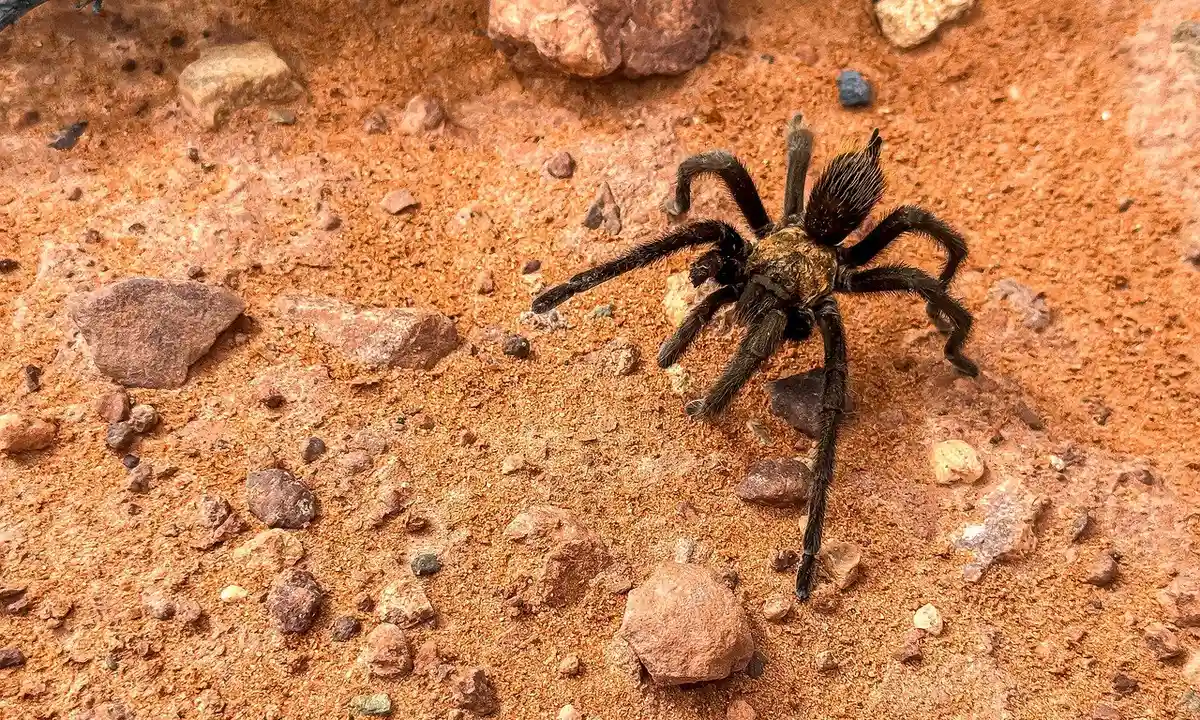
This myth contains a dangerous half-truth. Tarantulas are incredibly resilient in some ways and fragile in others. Their physiology is ancient and robust. They can survive weeks without food, heal from minor injuries during a molt, and live for decades. My Rosie is 15 years old and has gone on year-long hunger strikes without issue.
Their fragility is specific. The greatest risk is a fall. A drop of even a few inches onto a hard surface can rupture their abdomen, which is fatal. This is why “Look, Don’t Touch” is a core husbandry ethic. The other critical period is during the molting process, when they are soft and vulnerable. With a proper, escape-proof enclosure and minimal disturbance, a tarantula is one of the hardiest pets you can keep. They don’t carry common diseases, don’t need vaccines, and their waste is minimal and odorless. Learn about the risks of keeping tarantulas as pets to put their fragility into perspective.
Myth 7: All Tarantulas Have the Same Habitat Needs
Assuming all tarantulas need the same environment is like assuming all fish live in the same bowl. Their needs are as diverse as their origins. We group them into rough categories:
- Terrestrial: Ground-dwellers like my Rosie. They need more horizontal space than height, with a hide and a shallow water dish.
- Fossorial: Burrowers like many Asian species. They require a deep, moist substrate column to construct intricate tunnels.
- Arboreal: Tree-dwellers like many from the genus Caribena. They need vertical space with cork bark to climb and web against.
Humidity is the most variable factor. Keeping a desert species like a Grammostola rosea on damp substrate will stress it, while a swamp-dweller like my Theraphosa stirmi will desiccate and die without 80% humidity and a moist retreat. You must research the species, not just “tarantula.”
Myth 8: Tarantulas Are High-Maintenance Pets
This myth couldn’t be further from the truth. Once established, a tarantula enclosure is a near-self-sustaining micro-habitat. Their care routine is measured in minutes per week, not hours per day.
Compare it to a dog or a parrot. There are no daily walks, no constant socialization needs, no complex training. My weekly routine is simple:
- Check water dishes (refill if empty, clean if soiled).
- Scan for leftover prey (remove uneaten crickets).
- Observe the tarantula’s condition (Is it active? In pre-molt?).
- Spot-clean any noticeable waste.
Feeding happens once a week for juveniles, or once every two weeks to a month for adults. The bulk of your “work” is observation, which is the joy of the hobby-watching their secretive lives unfold. They are the ultimate pet for those who appreciate low-maintenance, fascinating biological displays.
Myths About Tarantula Biology and Lifespan
Myth 9: Tarantulas Stop Growing or Changing After Maturity
This belief stems from a fundamental misunderstanding of tarantula biology. A tarantula’s life is a series of continuous, subtle changes, even after its final molt to maturity. While a mature female may not increase in skeletal size, her abdomen can fluctuate dramatically with feeding and premolt cycles. My 15-year-old G. rosea, Rosie, can look plump or startlingly slender depending on her months-long fasting periods.
Mature males undergo the most drastic post-maturity transformation. After their ultimate molt, they develop emboli on their pedipalps and tibial hooks. Their behavior shifts entirely; they often stop eating, become relentless wanderers, and their lifespan shortens to a year or two. They are biologically programmed for one purpose: to find a mate.
Myth 10: All Tarantulas Glow Under UV Light
Watching a tarantula fluoresce under a black light is a magical experience, but it’s not a universal trait. This phenomenon is primarily observed in New World tarantulas. The cause is a set of special chemicals (beta-carbolines) in their setae and exoskeleton that absorb and re-emit UV light as a visible blue-green glow.
Old World tarantulas from Africa and Asia generally lack this glowing property. In my collection, my OBT (P. murinus) shows no fluorescence, while my T. stirmi (Goliath) has a subtle sheen. It’s a fascinating taxonomic clue, not a party trick for every spider.
Myth 11: Sexing a Tarantula is Simple and Obvious
If only it were that easy. Determining the sex of a live tarantula is an exercise in educated inference, not simple observation. You cannot reliably sex a tarantula by its colors, size, or “behavior.” The only definitive methods require a clear view of specific anatomical structures. To actually determine sex, follow a step-by-step guide that walks you through the reliable methods and what to look for.
Here are the two reliable approaches:
- Examine a Shed Molt: After a successful molt, you can carefully unravel the shed exoskeleton and look for the spermathecae (female sex organs) in the epigastric furrow. Absence suggests, but does not guarantee, a male.
- Ventral View of a Mature Specimen: In some species, a mature female may show a noticeable epigynal plate. However, this requires a perfect, stress-free look at the underside of a calm spider-a rare combination.
Never assume you have a female because a seller said so or because the spider is large; many hopeful “females” mature into wandering males. I’ve been surprised more than once.
Myths About Handling, Hairs, and Safety
Myth 12: Handling a Tarantula is Safe and Bonding
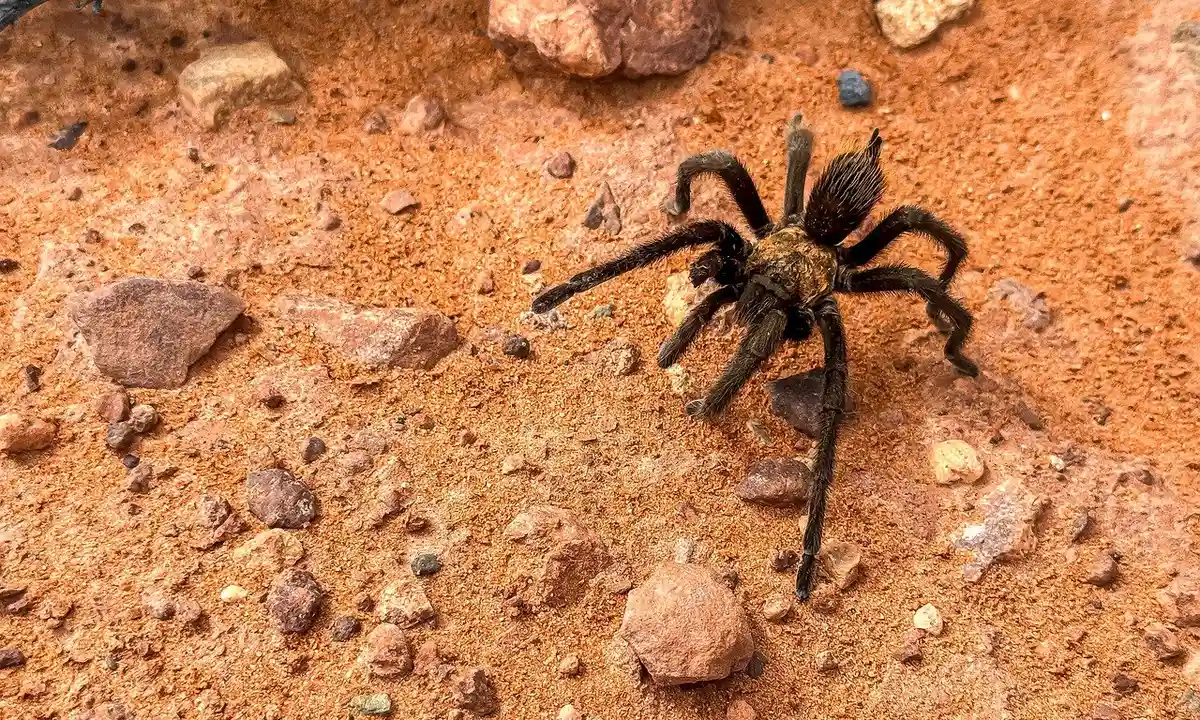
This is perhaps the most dangerous myth for both keeper and animal. Tarantulas do not bond, crave affection, or enjoy interaction. They are solitary, instinct-driven predators that interpret handling as a massive, confusing threat. Many owners mistake holding as affection, but that is a myth. In reality, even brief handling can cause stress and disrupt their routine. The “Look, Don’t Touch” philosophy is rooted in respect for the animal’s well-being, not fear.
A fall from even waist height can be fatal, rupturing their delicate abdomen. Stress from handling can lead to refusal to eat, hair-kicking, or bolting. I learned this early when my fast P. murinus, Flash, teleported from a cup to a curtain in a blink. It was a heart-stopping rehousing lesson, not a bonding session.
Myth 13: Urticating Hairs Are Just a Minor Nuisance
This myth severely underestimates a tarantula’s primary defense. New World tarantulas (except some genera like Psalmopoeus) possess these microscopic, barbed hairs on their abdomen. When threatened, they kick a cloud of them into the air with their back legs.
These hairs are not just itchy; they are engineered to cause mechanical and chemical irritation to skin, eyes, and mucous membranes. Effects range from a burning, itchy rash that lasts for weeks to serious corneal abrasions if they get in your eyes. My T. stirmi, Goliath, is a prolific hair-kicker; I wear gloves and eye protection during every enclosure maintenance because the consequences are too severe to ignore.
There are different types (I-IV) of urticating hairs, with Type III (from Theraphosa and some Grammostola) being particularly potent. The irritation is not an allergic reaction for most people, but a direct physical insult from the barbed hairs embedding in your skin.
Which Tarantula Species Are Most Prone to Kicking Hairs?
While any New World tarantula with urticating hairs can and will use them, some species and genera have a notorious reputation for deploying them preemptively and frequently. This prompts the question: do tarantulas defend themselves from hairs with venom, or is their venom mainly a prey-subduing tool? In practice, urticating hairs are the primary defense, and venom is typically a secondary option if threats persist or hairs fail.
- Theraphosa (Goliath Birdeaters): T. stirmi and T. blondi are infamous. They often kick first and ask questions never. The hairs are potent and plentiful.
- Grammostola (Rose Hairs & Allies): Despite their “docile” reputation, many will readily kick when provoked. My G. rosea has done it during rehousing.
- Brachypelma & Tliltocatl: Species like the Mexican Redknee (B. hamorii) and Mexican Redleg (T. vagans) frequently use this defense.
- Lasiodora (Brazilian Salmon Pink): Another large genus known for being quick to release a cloud of hairs.
Proactive hair-kicking is often a sign of a more defensive or skittish temperament, so always approach these species with extra caution and proper gear.
FAQs
Are tarantulas venomous to humans?
Yes, all tarantulas possess venom to subdue their prey. However, for most common pet species, the venom’s effect on a healthy human is very mild, comparable to a bee sting. Severe medical consequences are exceptionally rare and typically involve allergic reactions, not the potency of the venom itself. The risk is minimal with proper, respectful care practices, especially when owners understand why tarantulas bite humans and how to prevent it.
Can tarantulas kill humans?
There are no scientifically documented cases of a tarantula bite causing human death. Their venom is simply not potent enough for that purpose. While a bite from certain species can cause significant localized pain, cramping, and discomfort for several days, it is not a lethal threat. The focus should be on preventing bites through safe handling, not on unfounded fears of fatality. It’s important to understand the nature of their venom to dispel common myths.
Do tarantulas have irritating hairs that can cause skin or eye irritation?
Yes, most New World tarantulas possess urticating hairs as a primary defense mechanism. These barbed hairs can cause significant skin irritation, a painful rash, and serious eye injuries if kicked into the air and contact is made. For this reason, always exercise caution during enclosure maintenance, especially with prolific hair-kicking species. It is a substantial defense, not a minor nuisance. Understanding the real risks helps you protect yourself. Use protective gear and practice careful handling to minimize exposure.
Do tarantulas live longer than many people think?
Absolutely. Tarantulas, particularly females, are remarkably long-lived pets. It is common for females of many species to live 15 to 25 years, with some exceeding 30 years with proper care. Males have a significantly shorter lifespan after reaching maturity, often living only 2 to 5 years. Their potential for longevity is one of the most surprising and rewarding aspects of keeping them. In this ultimate maturity guide, we compare male and female lifespans and explain how maturity affects care and expectations.
Long-Term Success
After dismantling these myths, your focus should shift to consistent, species-specific care. The most vital husbandry parameter is mastering humidity and ventilation for your individual tarantula, as incorrect levels are a leading cause of preventable health failures. My Burgundy Goliath thrives with damp substrate and moist air, while my Chilean Rose Hair perishes in the same conditions. There is no universal setting.
True keeping mastery is found in patient observation. Enjoy the behavioral poetry-the silent sit-and-wait of a fossorial species, the architectural webbing of an arboreal builder, the dramatic frenzy of a molt. I learn more from watching Rosie’s months of fasting than from any textbook. Cultivate this quiet attention. Your reward is witnessing a hidden world of instinct and beauty, all from the safe, respectful distance that “Look, Don’t Touch” provides.
Further Reading & Sources
- Debunking Myths About Creepy, Crawly Creatures | Desert Botanical Garden
- The Best (and Most Ridiculous!) Tarantula Myths | Tom’s Big Spiders
- Untrue Tarantula Myths You’ve Heard? | Arachnoboards
Arlo is a lifelong arachnid enthusiast who believes tarantulas are the world’s most misunderstood roommates. With years of hands-on experience in tarantula care, habitat setup, and species behavior, Arlo combines expert knowledge with a dash of humor to make spider ownership less scary and a lot more fascinating. From choosing the right enclosure to understanding why your eight-legged buddy is doing that weird little pose again, Arlo is here to help you become the best tarantula parent you can be, without getting tangled in the web of misinformation.
Tarantula Myths and Misconceptions