
Avicularia avicularia (Pink Toe Tarantula)
Published on: February 19, 2026 | Last Updated: February 19, 2026
Written By: Arlo
The Pink Toe Tarantula, with its soft black velvet body and comical pink-tipped feet, is often celebrated as the perfect beginner arboreal-a gentle sprite that prefers to leap rather than bite. Yet, that very question of “Are they venomous?” hangs in the air for every new keeper. Yes, like all tarantulas, they possess venom for subduing prey, but it is not considered medically significant to humans. This guide will move beyond the simple yes/no to explore their true temperament, the specific care that keeps them thriving, and how to appreciate their unique arboreal ballet safely.
- Quick Stats:
- Origin: Tropical rainforests of South America
- Type: New World, Arboreal
- Growth Rate: Medium
This guide will provide the specific, detail-oriented husbandry you need to successfully shepherd one of these tree-dwelling jewels from a tiny, skittish sling to a magnificent, web-draped adult.
The Simple Truth About Pink Toe Tarantula Venom
All tarantulas possess venom, and Avicularia species like the Pink Toe are no exception. Their venom is designed for subduing insect prey, not for defense against humans, and its effects on us are typically mild and comparable to a bee sting. I have never been bitten by one of my Pink Toes, but I treat their enclosures with the same respect I give my OBT, Flash, whose venom is considered medically significant.
In my years breeding, I’ve found that bite risk is almost zero with cautious, hands-off care. The real danger with any new world tarantula, including Pink Toes, often comes from their urticating hairs, not their venom. While Pink Toes can flick these irritating hairs from their abdomen, they do so far less readily than my Burgundy Goliath, who will kick a cloud at the slightest disturbance.
Focus on observing, not interacting. Watching a Pink Toe’s delicate strike on a cricket-the sudden, silent lunge-is far more rewarding than any handling session. Their venom is a fascinating biological tool, not a threat, when we respect their space.
Understanding Pink Toe Temperament: Calm But Cautious
Pink Toe tarantulas, such as Avicularia avicularia, are often described as docile. In my experience, “calm but skittish” is more accurate, as they are arboreal athletes prone to sudden, fast movements when startled. They lack the predictable stillness of my Chilean Rose Hair, Rosie, but are far less deliberately defensive than my OBT.
Their temperament is shaped by their environment. A well-set-up Pink Toe with ample height, cork bark to climb, and foliage to hide in will display confident, natural behaviors instead of stress. I see this in my own collection; a stressed tarantula, like Flash webbing frantically, is communicating its need for security. This becomes especially important when handling arboreal versus terrestrial tarantulas, as their stress levels can influence their reactions.
Recognizing Defensive Behaviors
Learning their body language prevents stressful encounters. Here are the key signs a Pink Toe feels threatened:
- Rearring Up: The spider lifts its front legs and carapace, exposing its fangs. This is a clear “back off” signal.
- Flicking Urticating Hairs: They may use their back legs to kick hairs from their abdomen toward a threat. These can cause skin and eye irritation.
- Rapid Bolting: A startled Pink Toe can move with surprising speed, often upward. This is why secure lid clips are non-negotiable.
- Threat Posturing: Facing the perceived threat directly, often with front legs raised.
If you see any of these behaviors, the only correct response is to stop what you’re doing and give the animal space. I learned this lesson early when rehousing a juvenile; one swift movement from me resulted in a lightning-fast retreat up the side of the bin.
Contrast this with feeding time. A calm, hungry Pink Toe will often slowly approach prey, using almost deliberate movements, before striking with that characteristic arboreal precision. Reading these moods is the cornerstone of respectful care.
Building the Perfect Arboreal Habitat
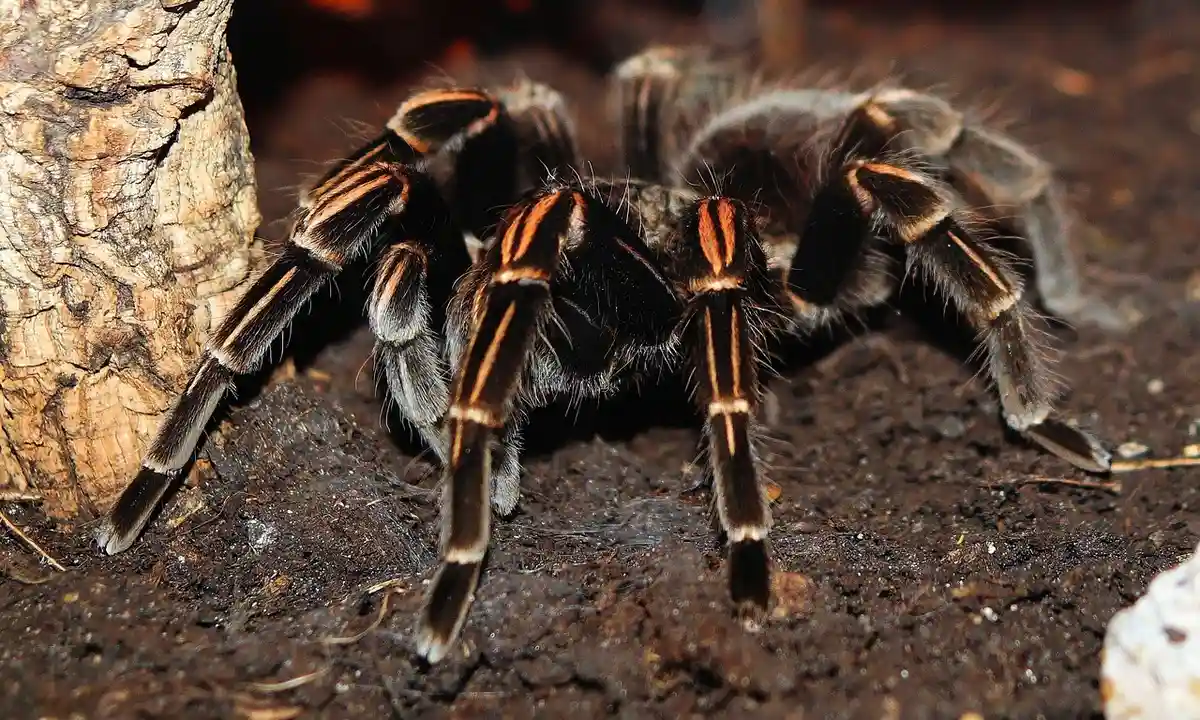
For tree-dwelling species like the Pink Toe (Avicularia avicularia), a proper enclosure mimics the vertical complexity of their natural home. A well-designed habitat reduces stress, encourages natural webbing behavior, and is fundamental to their health. My defensive OBT, Flash, taught me that arboreal setups require meticulous planning to manage their speed and webbing instincts safely.
Enclosure Setup Steps
Follow this sequence to create a secure and stimulating environment. I use this method for all my arboreal tarantulas, adjusting based on species-specific needs. Creating a safe habitat also minimizes tarantula bite risk by reducing stress and escapes. Use secure enclosures, proper substrate, and minimal handling to keep both spider and keeper safe.
- Select a Tall Enclosure. Choose a front-opening terrarium at least 18 inches tall. Width is less critical than height. A front door minimizes disturbance when you need to access the space for maintenance.
- Install Vertical Climbing Surfaces. Anchor cork bark flats or tubes securely against the back wall. Provide branches that reach near the top. From experience, silicone adhesive is safe for securing these structures once fully cured.
- Add a Moisture-Retentive Substrate. Use 2-3 inches of a deep soil mix. I blend coconut fiber with organic potting soil and sphagnum moss. This substrate layer holds humidity and provides a landing cushion for a potential fall.
- Ensure Cross-Ventilation. Drill or select an enclosure with ventilation panels on the sides, not just the top. This prevents stagnant, mold-prone air pockets that can harm respiratory health.
- Furnish the Upper Zone. Place artificial leaves, vines, or cork bark hides in the upper third of the cage. Pink Toes will anchor their silky retreats here. My Pink Toes always webbed more readily when I provided these anchor points.
Critical Climate: Humidity & Temperature
These parameters are non-negotiable for Avicularia species. Getting them wrong is a common source of health decline.
Maintain ambient humidity between 70% and 80%. Use a digital hygrometer placed at mid-height in the enclosure for accurate readings, as humidity stratifies. I achieve this by overfilling the water dish twice weekly and lightly misting one side of the enclosure, never directly on the tarantula. The substrate should feel damp to the touch but not waterlogged. Temperature management is also important, and ideal ranges vary by species. In general, many tarantulas do well around 75–85°F (24–29°C) with steady humidity near tarantula temperature and humidity ranges of 70–80%.
Keep temperatures steady at 75°F to 80°F (24°C to 27°C). A small, thermostatically controlled heat mat on the side of the enclosure works well. Never place heat sources underneath, as this can overheat the substrate and harm your tarantula. Contrast this with my Chilean Rose Hair, Rosie, who thrives at a dry 70°F; Pink Toes need consistent warmth and moisture. Heating mats are often preferred over heat lamps for tarantula enclosures due to their gentle and consistent heat.
Monitor the balance daily. Poor ventilation combined with high humidity invites mold. Good airflow prevents this while maintaining the moist air these tarantulas require. Understanding the five biggest humidity-ventilation mistakes in tarantula care can help you avoid common pitfalls. By avoiding these errors, you can maintain safe humidity levels while ensuring proper airflow.
Daily Care: Feeding, Watering, and Observation
Routine care is about consistency and keen observation. Your goal is to meet their needs with minimal intrusion.
Offer food twice a week. Prey size should be smaller than the tarantula’s carapace. I use crickets or dubia roaches. Live prey can stimulate natural hunting behavior, but some keepers prefer live prey vs pre-killed prey to reduce risk of injury or stress. Choosing between live and pre-killed prey depends on your tarantula’s temperament and your ability to monitor feeding. Always remove uneaten live prey within 24 hours to prevent stress or injury to your tarantula. My Pink Toes often take prey directly from my soft-tipped tweezers, which minimizes cage disturbance.
Provide a fresh, shallow water dish at all times. Refill it with dechlorinated water. Arboreal tarantulas require different humidity levels than terrestrial species and will drink from droplets on webbing or foliage, but a dish is essential. I anchor a small bottle cap to cork bark in the upper section as a secondary water source for my specimens.
Daily observation is your best health tool. Look for these signs:
- Active movement or webbing construction at dusk.
- A plump abdomen, indicating good hydration and feeding.
- Clear, bright eyes and a lack of bald spots from excessive hair-flicking.
Adhere to a “Look, Don’t Touch” philosophy to avoid causing defensive behavior or a dangerous fall. I learned this deeply after rehousing my Burgundy Goliath, Goliath; even a calm species can release urticating hairs when stressed. For Pink Toes, the risk is a sudden, panicked jump. Watch the elegant silence of their enclosure, enjoy the iridescent sheen of their carapace under light, and let them be the fascinating display animals they are meant to be.
Spotting Health Issues in Your Pink Toe
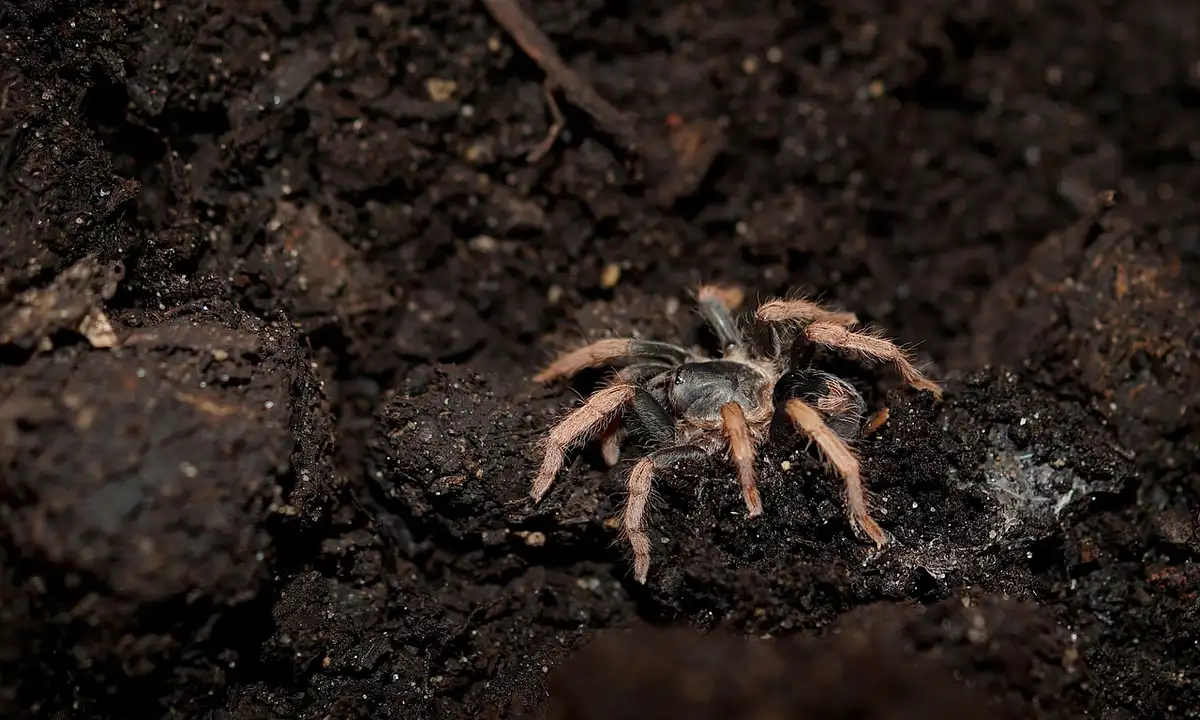
Your Pink Toe is a master of stillness, but this can mask underlying problems. Proactive, observant husbandry is your best tool for catching issues before they become emergencies. I learned this the hard way with my old Chilean Rose, Rosie, whose months-long fasts taught me the difference between normal behavior and subtle distress.
Common Alarms and Their Fixes
Watch for these physical and behavioral changes.
- Dehydration (Dorsal Shrinking): Look at the top of the abdomen. A healthy abdomen is plump. A shrunken, wrinkled, or darkened abdomen signals severe dehydration. This is a critical, fast-acting condition.
- Failed Molt (Dysmysis): Finding your tarantula partially stuck in its old exoskeleton, especially over the book lungs or mouthparts, is an urgent situation. It often links to incorrect humidity.
- Injury or Fluid Leak: A dark, wet spot on the abdomen or joints is a rupture. This requires immediate isolation in a sterile, paper-towel-lined enclosure to prevent fatal infection.
- Prolonged Lethargy in Unusual Spots: A Pink Toe on the enclosure floor for more than a day, especially with its legs tucked tightly, is a major red flag. It may be preparing to molt, but it could also be critically ill.
- Loss of Appetite: Pink Toes can fast for weeks, especially pre-molt. But a sudden refusal of food in a previously eager eater, combined with other symptoms like lethargy, warrants attention.
The Molting Process: A Critical Period
Molting is the most vulnerable time in your tarantula’s life. Your role is to provide perfect conditions and then become a silent, non-intervening observer. Do not offer food. Do not adjust decor. Simply ensure humidity is stable (70-80%) and the enclosure is undisturbed. If you want to learn more about molting issues, check out this guide to tarantula molting problems and solutions.
- Premolt Signs: The abdomen darkens and becomes glossy. The tarantula ceases eating, often for weeks. It will weave a thick, silken molting mat.
- The Event: The tarantula flips onto its back. Do not panic. This is normal. The process can take hours. Absolutely do not touch or assist.
- Post-Molt Care: The new exoskeleton is soft and wet. It needs 7-14 days to harden. Provide a shallow water dish. Do not offer food until the fangs have hardened (typically 1-2 weeks). You can safely remove the old molt once the tarantula has moved away from it.
Safety and Respectful Coexistence
Living with an Avicularia species is a lesson in appreciating beauty at a distance. Their primary defense is a swift retreat, but a cornered individual will not hesitate to bite. I practice and advocate for a strict “Look, Don’t Touch” philosophy for the wellbeing of both keeper and spider.
Understanding Their Defenses
Pink Toe Tarantulas possess venom for subduing prey. For humans, a bite is typically comparable to a bee sting in pain, though effects vary based on individual sensitivity. The greater risk with New World species like these is not the bite, but the potential for sudden, startling movements that lead to a fall. A fall of even a foot onto a hard surface can be fatal, rupturing their delicate abdomen.
Unlike my Burgundy Goliath (T. stirmi), which readily flicks urticating hairs, arboreal tarantulas like Pink Toes lack these barbed abdominal hairs. Do tarantulas defend themselves with hairs or venom? Their main physical defenses are speed and venom.
The “Look, Don’t Touch” Protocol
Handling induces measurable stress, increases fall risk, and provides zero benefit to the animal. Respectful care means designing an enclosure that is fully serviceable without needing to put your hands on the tarantula. Use long tongs for maintenance and a catch cup for gentle guidance during rehousing. Having the right essential tarantula handling tools and safety equipment is part of responsible care. Regularly inspect and maintain these tools to ensure safe, humane handling.
- Rehousing Procedure: Always work over a large, padded surface. Have a clear plastic deli cup and a stiff card ready. Gently guide the tarantula into the cup using the card-never chase or grab. My OBT, Flash, once exploited a millisecond gap during a rehouse; a calm, methodical process prevents escapes.
- Enclosure Design for Safety: Ensure all ventilation is secure. For arboreal species, height is needed but the fall distance inside must be minimized with soft substrate and strategically placed foliage to break a tumble.
- If You Must Handle: Sit on the floor. Keep hands low, cupped, and together. Never handle above a hard surface. Be prepared for explosive speed. One sudden motion from you or a loud noise can send the tarantula leaping.
Creating a Low-Stress Environment
A happy Pink Toe is a hidden Pink Toe. Stress manifests in constant pacing, refusal to web, or excessive defensiveness. Provide multiple anchor points for webbing, cork bark tubes for secure hiding, and foliage for visual breaks. Limit loud vibrations and direct, bright light. When you observe, do so quietly. The goal is to witness natural behaviors-the silent, meticulous construction of a silken tunnel, the patient ambush from a retreat, the careful grooming of pedipalps-not to force an interaction.
FAQs
Are Pink Toe Tarantulas venomous?
Yes, like all tarantulas, Pink Toes possess venom. However, their venom is designed for incapacitating small prey and is not considered medically significant for humans. Its effects are typically very mild, often compared to a bee sting. The focus for keepers should be on avoiding stress and defensive behaviors rather than fearing the venom itself.
What is the temperament of a Pink Toe Tarantula like?
Pink Toes are generally calm but can be quite skittish and fast-moving when startled. They are not typically aggressive but are arboreal athletes that may bolt or jump if frightened. Their behavior is best described as defensive rather than confrontational, and they will often choose to flee or flick urticating hairs before resorting to biting.
How do I set up the perfect enclosure for a Pink Toe?
A proper habitat is tall, not wide, with ample vertical climbing space like cork bark. Cross-ventilation is critical to prevent stagnant, moldy air while maintaining high humidity between 70-80%. The setup must prioritize security with secure lid clips and soft substrate below to minimize injury risk from a potential fall.
What are the key signs of a healthy Pink Toe Tarantula?
A healthy Pink Toe displays active periods at dusk, engages in web-building, and has a plump abdomen indicating good hydration and feeding. Clear eyes and a lack of bald spots from excessive hair-flicking are also positive signs. Consistent, calm behavior in its elevated retreat is a strong indicator of a low-stress, thriving tarantula.
Is it safe to handle my Pink Toe Tarantula?
Handling is strongly discouraged. It provides no benefit to the tarantula and poses significant risks, primarily from a potentially fatal fall. Pink Toes are delicate, and their primary defense is a rapid, unpredictable retreat. A respectful “look, don’t touch” philosophy ensures the safety and well-being of both the keeper and the spider.
The Final Molt
From their mild venom to their sky-bound homes, caring for a Pink Toe is a lesson in elevation. The single most important factor for their health is not humidity or heat, but airflow. Stagnant, damp air is a death sentence for an Avicularia; prioritize cross-ventilation over moisture at every turn. A well-ventilated enclosure with a full water dish and occasional misting on one side is the formula for a thriving, long-lived arboreal.
Your reward is a front-row seat to an architectural marvel. Watch as your Pink Toe spins its silken tube, a private retreat woven with precision. Observe the silent, calculating strike at a cricket, a testament to millions of years of evolution. Progress in this hobby is measured in molts and web tunnels, not in handling sessions. Sit back, watch, and learn. The most profound lessons these spiders teach are observed in the quiet dignity of their undisturbed lives.
Further Reading & Sources
- Guyana Pinktoe Tarantula (Avicularia avicularia) Care – The Tarantula Collective
- Avicularia avicularia – Wikipedia
- Avicularia Avicularia | Pinktoe | Tarantula Care Guide
Arlo is a lifelong arachnid enthusiast who believes tarantulas are the world’s most misunderstood roommates. With years of hands-on experience in tarantula care, habitat setup, and species behavior, Arlo combines expert knowledge with a dash of humor to make spider ownership less scary and a lot more fascinating. From choosing the right enclosure to understanding why your eight-legged buddy is doing that weird little pose again, Arlo is here to help you become the best tarantula parent you can be, without getting tangled in the web of misinformation.
Understanding Tarantula Behavior