
Tarantula Molting and Reproduction: How Are They Connected?
In the silent, observant world of tarantula keeping, molting and reproduction are the two great biological dramas, intimately linked by the timeless cycle of growth and renewal. From my 15 years with Rosie, my Grammostola rosea, to the explosive energy of Flash, my Pterinochilus murinus, I’ve seen how one process gates the other. This article explores that precise connection, explaining why a female’s fast before molting signals future receptivity and how a male’s final molt arms him for courtship. A female tarantula’s willingness to mate is almost exclusively tied to the soft, vulnerable period following a successful molt.
Quick Stats:
- Origin: Varied by species; from arid Chilean scrub (G. rosea) to humid African burrows (P. murinus).
- Type: Includes both New World (e.g., G. rosea, T. stirmi) and Old World (e.g., P. murinus) tarantulas, with differing defensive strategies.
- Growth Rate: Species-dependent; slow for G. rosea (years to maturity), fast for P. murinus (months to maturity).
This guide will walk you through the interdependent stages of molt and reproduction, giving you the husbandry insights to support your tarantula from sling to adult breeding candidate.
The Molting Process: Foundation for Growth and Reproduction
Molting, or ecdysis, is the singular most critical biological event in a tarantula’s life. It is the mechanism for growth, damage repair, and the ultimate gateway to reproduction. Every aspect of their existence is tethered to this cycle of renewal.
Pre-Molt: The Silent Preparation
This phase begins invisibly, long before any outward signs appear. Inside your tarantula, a new, soft exoskeleton forms beneath the old. The most reliable pre-molt signal is a loss of appetite, sometimes lasting for many months, as their body redirects all resources to the monumental task ahead. My Chilean Rose Hair, Rosie, once fasted for a staggering eleven months before her molt. To help you spot it, this guide outlines 10 key signs your tarantula molts. Individual species may show different cues, so observe closely.
External clues follow: a darkening of the abdomen’s skin, often a bald spot from kicked urticating hairs, and a profound lethargy. They may seal themselves in their burrow or web tube. Humidity becomes paramount here. I increase moisture slightly for my terrestrial species and ensure my Burgundy Goliath’s (T. stirmi) substrate is genuinely damp to support the fluid pressure needed for the coming split.
Ecdysis: The Vulnerable Hour
The tarantula will flip onto its back or side. Do not interfere. This is not a sign of distress but the required position for extraction. During the few hours of actual ecdysis, the animal is utterly defenseless; any disturbance can lead to fatal limb loss or a stuck molt. The old carapace lifts, and through a series of rhythmic pulsations, the tarantula slowly withdraws itself from its former shell. Be alert for signs of impaction—such as a distended abdomen, slow movement, or a lack of appetite—as early detection helps prevent serious issues. To minimize risk, feed appropriately sized prey and keep substrate clean and smooth, avoiding disturbance during vulnerable molts.
The new exoskeleton is pale, soft, and incredibly fragile. The vivid colors of my OBT, Flash, are muted to a dull peach, and his notorious speed is replaced by a trembling vulnerability. The enclosure must remain absolutely quiet and untouched.
Post-Molt: A New Exoskeleton and New Potential
For the next several days to weeks, the tarantula hardens. Its new exoskeleton darkens and solidifies, a process called sclerotization. This is when literal growth occurs, and for mature females, it is also when the sperm receptacle, the spermatheca, is renewed and made functional again. They will not eat until their fangs, which are also part of the exoskeleton, have hardened from a soft black into glossy, operational tools. Offering food too early is dangerous. Once the fangs are fully hardened, the tarantula may sit still or slowly approach prey as a sign of readiness. Reading these cues—calm posture and deliberate movements—helps indicate when it’s ready to eat.
Achieving Sexual Maturity: The Final Molts
A tarantula does not become sexually mature at a specific age, but at a specific size, dictated by a final, transformative molt. This ultimate molt equips them with the specialized hardware necessary for reproduction. For hobbyists following a sling-to-adult growth plan, a complete month-by-month tarantula growth guide helps track molts and estimate timing of maturity.
Recognizing the Mature Male
The change in the male is dramatic and unequivocal. After his final molt, he develops two primary structures:
- Emboli: Bulb-like tips on his pedipalps (the two small “appendages” near the mouth). These are his sex organs, used to transfer sperm to the female. They look like tiny boxing gloves or lock picks.
- Tibial Hooks: Curved spurs on the front pair of legs. These are used to lift the female’s fangs during mating, a vital life-saving maneuver.
His behavior shifts completely. He becomes restless, stops building burrows, and develops a singular purpose: to wander in search of a mate. His lifespan post-maturity is typically limited to 12-18 months.
Recognizing the Mature Female
The female’s change is internal and more subtle. Her final mature molt fully forms her spermatheca. You cannot see this externally without a microscope, but her overall size and age are indicators. The only definitive way to confirm a mature female, without breeding attempts, is by examining her shed exuvia (molt).
How do you sex a molt? Carefully unfold the shed skin from the abdomen area (using soft tweezers and a paintbrush) and look for a flap-like structure between the book lungs. This is the spermatheca. Its presence confirms female. Its absence indicates a male. A mature female can store viable sperm for years, using it to fertilize multiple egg sacs from a single pairing, and she may live for decades.
Post-Molt Physiology: Direct Links to Reproduction
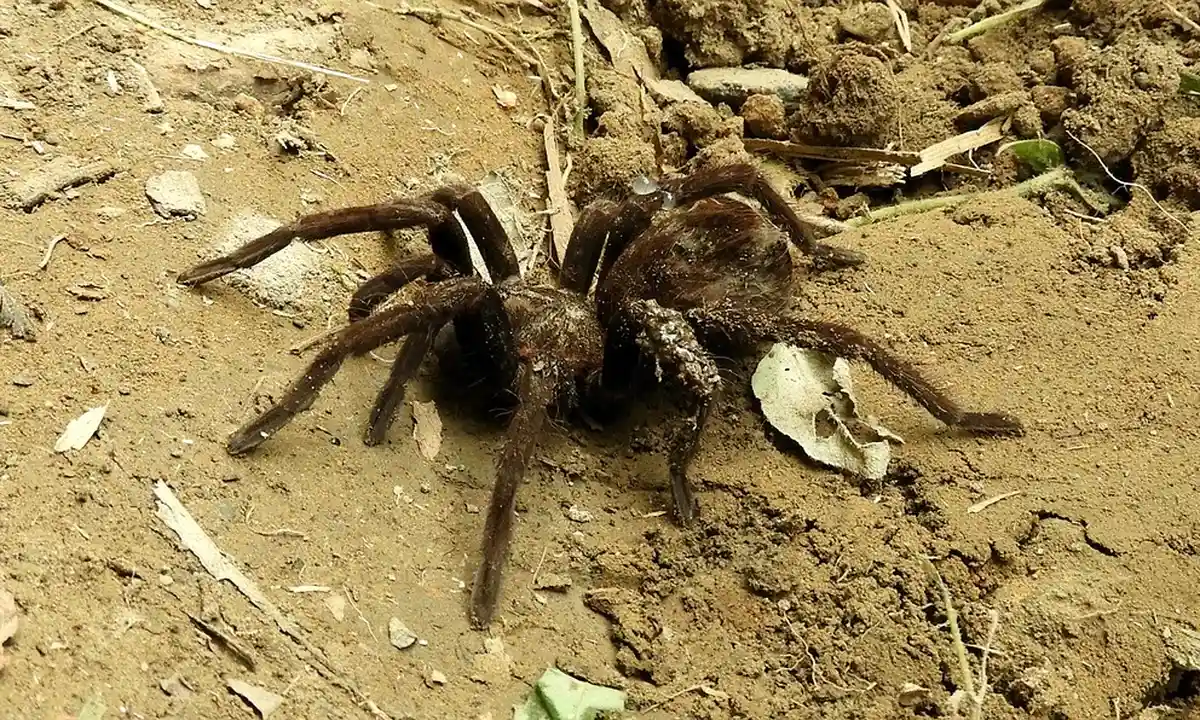
A tarantula’s body is functionally reset after a successful molt. This period of soft-shelled vulnerability is immediately followed by a phase of critical internal development directly tied to reproductive capability. The fresh exoskeleton is not just a new suit of armor; it’s a blank slate for the systems that enable the next generation. If a leg has been lost, the molt also marks the window when regrowth begins; the new limb starts to form as the old shell is shed. Regrowth usually requires several molts to rebuild the limb to full size.
Male Readiness: Sperm Transfer Essentials
For a mature male, the ultimate post-molt transformation happens at his pedipalps. These leg-like appendages by the mouth develop specialized, bulb-like tips called emboli. After his final molt into maturity, a male must create a sperm web. I’ve watched my old male Grammostola rosea perform this silent, delicate dance. He spins a small, hammock-like web, deposits a droplet of sperm from his abdomen onto it, and then meticulously loads the sperm into his emboli.
This sperm-loading ritual is the single most important act of his adult life, and it can only be done after that definitive molt. Once charged, his palps are his only tool for fertilizing a female. He then abandons feeding for a relentless search for a mate, a phase I’ve observed firsthand that is both fascinating and poignant in its singular focus.
Female Readiness: Receptivity and Egg Development
A female’s reproductive hardware, the spermathecae, is also part of her molted exoskeleton. When she sheds, she casts off the old spermathecae and develops a brand new set. A freshly molted female is not receptive to a male; her new spermathecal tissue must first harden and become functional, a process that can take weeks or even months depending on her size and species.
Furthermore, the act of molting often triggers the development of oocytes (immature eggs) within her abdomen. The resources she stored before the molt are now mobilized. You might notice your female’s abdomen, once shriveled post-molt, plump up again rapidly-this isn’t just a full gut. It’s often the first sign of egg development, whether she’s been bred or not. My female T. stirmi, Goliath, once produced a massive, viable egg sac completely parthenogenetically after a large molt, a powerful demonstration of this physiological link.
Breeding Synchronization: Timing the Molt Cycles
Successful breeding in captivity is less about chance and more about careful calendar management. You are essentially trying to align the brief, urgent window of a mature male with the precise receptive period of a well-conditioned female. Missing this window by a few weeks can mean waiting another year, or the loss of the male.
Conditioning the Male
The male’s timeline is fixed and short. Your goal is to ensure he is at peak health for his one purpose.
- Identify his ultimate molt. Look for tibial hooks on the front legs and fully developed emboli on the pedipalps.
- After his maturity molt, offer food until he refuses it. He needs energy for sperm web construction and the search.
- Once he stops eating, provide a small, flat cork bark or leaf for him to spin his sperm web on. You may not witness this secretive act, but you’ll see the tiny, silken platform afterward.
- A male with loaded emboli is ready. Do not delay his introduction; his clock is ticking down.
Conditioning the Female
The female’s conditioning is about ensuring she is receptive, well-fed, and not in a pre-molt state. A female approaching a molt will likely kill and eat a suitor.
- Track her molt history. Aim to introduce the male 4-8 weeks after her last molt, when her new spermathecae are fully sclerotized. A recent feed is a good indicator she is not in pre-molt.
- Power-feed her for several weeks before the planned introduction. A plump, well-nourished female is more likely to be receptive and will have the resources to produce a strong egg sac.
- Signs of non-receptiveness include immediate, aggressive attacks or a lack of interest. I once introduced a male to my P. murinus, Flash, too soon after her molt; the male’s swift retreat, missing a leg, was a harsh lesson in timing.
- If she is receptive, you will observe a remarkable calmness. She will allow him to approach, perform his tapping rituals, and safely mate.
Risks and Rewards: Molting Within the Breeding Context
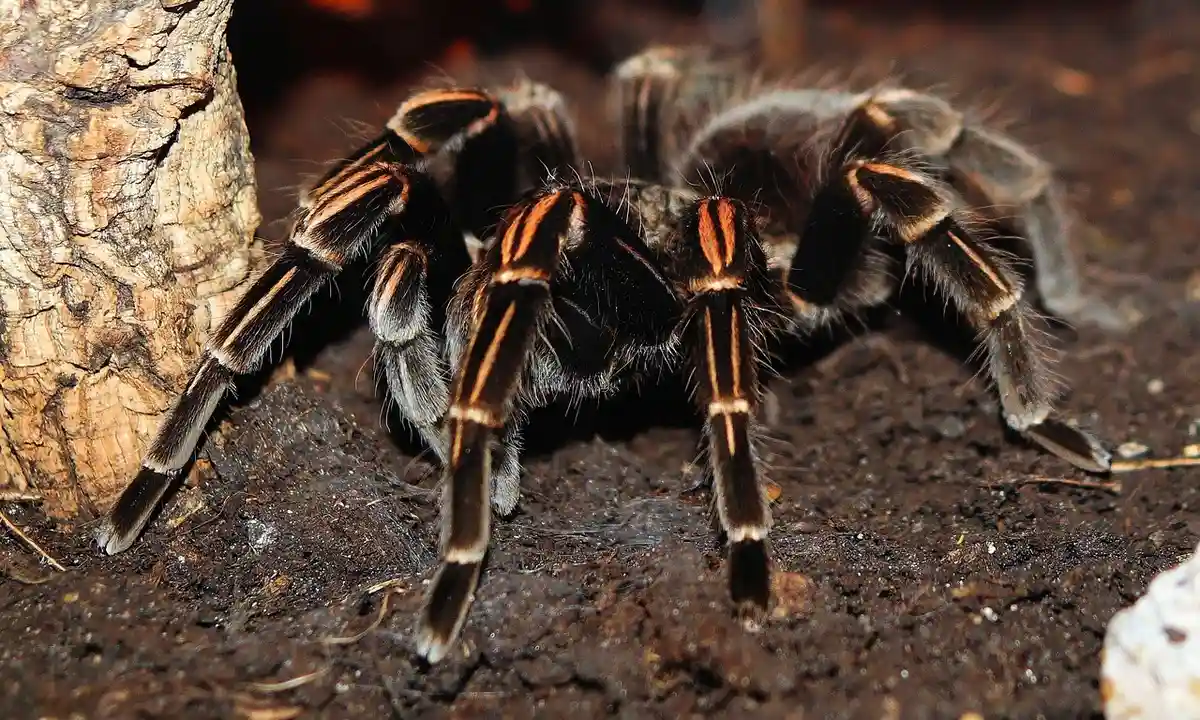
Breeding tarantulas is not about simple pairing. The entire reproductive cycle is a delicate, high-stakes dance synchronized with the molting cycle, where timing is everything. A mistake can mean a lost male or a failed egg sac. Be aware of common tarantula mating problems and how to avoid them. Ensure both partners are ready and monitor for stress signs before any pairing.
Pre-Breeding Molt Risks
The most critical event is the female’s ultimate or penultimate molt. For the male, his final maturation molt into a mature male is a point of no return. Introducing a male before the female has hardened completely from her pre-breeding molt is a death sentence for him; she will view him as food, not a mate. I wait a minimum of four weeks, sometimes more for slower species, after the female’s molt before any introduction.
- Male Vulnerability: After his final molt, a mature male’s sole purpose is to find a mate. His focus shifts, his lifespan shortens, and he becomes more willing to take risks. His emboli (sperm transfer organs) are now fully formed and fragile.
- Female Readiness: A fresh post-molt female is rebuilding internal resources. Her new epigynum (sperm receptacle) must be fully sclerotized. Rushing this is the most common breeding error I see.
- The Keeper’s Role: You must track molts meticulously. I keep a simple journal: date of molt, species, and estimated time until breeding readiness. Patience here is non-negotiable.
Post-Breeding Considerations
After a successful pairing, the biological clock starts for both spiders. The female will not molt again until after she has produced an egg sac, as the act of molting would eject any stored sperm. Her body dedicates all resources to egg production. Post-mating, tarantulas may show post-mating care behaviors in tarantulas: the female guards the developing egg sac and the surrounding silk until the spiderlings hatch. The male typically withdraws after mating to reduce the risk of aggression.
- For the Female: She enters a period of intense physiological investment. Provide ample food and perfect stability. Any stress can cause her to abort egg development or consume her sac.
- For the Male: His journey is often complete. Even if he survives the encounter, his systems are winding down. I offer my males quiet retirement with easy prey, knowing their time is limited.
- The Molt Reset: Once the spiderlings have dispersed, the female’s body can finally resume its own growth cycle. She will often molt relatively soon after, clearing her sperm storage and resetting her reproductive system.
Signs of Reproductive Activity Linked to Molting
Observing these behaviors is a privilege. Recognizing the signs of courtship and preparation separates casual keeping from intentional breeding practice. It requires quiet observation and understanding the link between the molt cycle and these actions.
Male Courtship Displays
A mature male’s behavior transforms entirely after that final molt. You’ll notice a profound restlessness; my male Grammostola rosea, normally a pet rock, began endlessly pacing his enclosure, tapping his pedipalps, a clear signal he was ready to search.
- Drumming and Tapping: He uses his front legs and pedipalps to vibrate on the ground or female’s webbing, transmitting species-specific rhythms. This is his language, announcing his intentions.
- Sperm Web Construction: Prior to introduction, he spins a small, horizontal web mat. He deposits his sperm onto it, then charges his emboli. Finding this delicate web is a sure sign he is primed.
- Hooks and Spurs: On his front legs, you’ll see the tibial hooks (or apophyses) that evolved to hold the female’s fangs back during mating. Their presence confirms maturity.
Female Receptivity and Egg Sac Care
The female’s readiness is subtler but just as vital. A receptive female will often respond to the male’s drumming with reciprocal tapping, a breathtaking moment of communication in the silence of the enclosure.
- Behavioral Shift: A well-fed, post-molt female may become more active near her burrow or web entrance. She is not hunting, but monitoring. Aggressive feeding responses often increase.
- Egg Sac Preparation: Weeks after mating, she will seal herself in her retreat or web tube. She then spins a thick, silken mat-the foundation for her egg sac. This intensive weaving is a direct behavioral outcome of successful post-molt breeding.
- The Ultimate Commitment: Once the sac is made and filled, she guards it ferociously, turning it regularly with her legs and fangs to prevent fungus. During this two-month vigil, she is in her most vulnerable and dedicated state, a direct result of the reproductive chain started by a well-timed molt.
Common Questions
How does molting affect a tarantula’s ability to reproduce?
Molting is the essential gateway to reproduction for both sexes. For a male, his final maturity molt develops the specialized structures he needs to mate, like emboli and tibial hooks. For a female, molting renews her internal sperm receptacle, making her capable of receiving and storing sperm again. A female is only receptive to mating after her new exoskeleton, including this receptacle, has fully hardened post-molt.
Why is molting critical for male tarantulas before they seek a mate?
A male tarantula is physically incapable of breeding until after his ultimate molt into maturity. This specific molt forms the emboli on his pedipalps, which are his only means of transferring sperm. After this molt, he must also perform the vital act of creating a sperm web to charge those emboli. Without this post-molt development and ritual, any attempt to mate would be biologically impossible, as outlined in this detailed guide to tarantula reproduction.
What risks are associated with molting for breeding tarantulas?
The greatest risk is fatal mismanagement of timing. Introducing a mature male to a female who is in pre-molt or has recently molted will almost certainly result in him being killed and eaten. Furthermore, the actual molting process is inherently risky, and a breeding female under the stress of egg development may face complications. A failed molt at any point can end breeding prospects permanently.
How do keepers condition tarantulas for breeding in relation to their molt cycles?
Keepers meticulously track molt dates to predict readiness. A female is conditioned by being power-fed to ensure she is plump and not in pre-molt, with introductions typically scheduled 4-8 weeks after her last molt. A male is conditioned after his final maturity molt by ensuring he is well-fed until he creates a sperm web, signaling he is ready for immediate introduction, as his time is very limited.
Maturity and Beyond
The ultimate molt is a quiet revolution. When that final exoskeleton splits, it unlocks reproductive capability but also signals a fundamental shift in your long-term care. From this point forward, the single most important husbandry parameter becomes consistent, species-appropriate humidity to prevent fatal dehydration in a spider that will never grow again. A mature male’s brief, wandering life demands a shallow water dish and peace. A female, now settled into her permanent form, requires a stable environment where hydration is always within reach—especially important to avoid any wet molts that can be fatal if not properly managed.
This is where observation becomes your most rewarding skill. Watch the meticulous engineering of a funnel web, the patient excavation of a burrow, the sudden, precise strike at prey. The true art of keeping tarantulas lies not in forcing milestones but in providing such steadfast care that their natural lifecycle unfolds before you, in its own silent time. Proper care for advanced rare tarantula species means tailoring enclosure, humidity, and temperature to each species’ needs and minimizing handling. This disciplined approach lets their lifecycles unfold in their own time. I’ve kept my Chilean Rose Hair, Rosie, for fifteen years; her long fasts and sudden activity are a lesson in patience. Your vigilance—not interference—builds the trust that lets you witness these rare moments, from a successful molt to the delicate dance of reproduction.
Further Reading & Sources
- How to Tell if Your Tarantula Is Molting
- How Often Do Tarantulas Molt? – Laurel Veterinary Clinic
- Watch a Tarantula Crawl Out of Its Own Skeleton | National Geographic
Arlo is a lifelong arachnid enthusiast who believes tarantulas are the world’s most misunderstood roommates. With years of hands-on experience in tarantula care, habitat setup, and species behavior, Arlo combines expert knowledge with a dash of humor to make spider ownership less scary and a lot more fascinating. From choosing the right enclosure to understanding why your eight-legged buddy is doing that weird little pose again, Arlo is here to help you become the best tarantula parent you can be, without getting tangled in the web of misinformation.
Molting Process