
Huntsman Spider vs Tarantula: A Complete Size and Species Comparison
To the uninitiated, a large spider is just a large spider, but to the observant eye, the huntsman and the tarantula represent two utterly different chapters of arachnid evolution. One is built for stealthy speed in your home’s crevices, the other for patient ambush in a burrow. This comparison will dissect their worlds, from the startling spread of a huntsman’s legs to the deliberate heft of a tarantula’s body. Knowing these differences transforms fear into fascination and informs everything from safe removal to specialized pet care.
Quick Stats:
Huntsman Spider (Family: Sparassidae)
- Origin: Global distribution, prevalent in warm tropical and subtropical regions.
- Type: A distinct family separate from tarantulas; not classified by New/Old World.
- Growth Rate: Generally rapid, often reaching maturity in under two years.
Tarantula (Family: Theraphosidae)
- Origin: Found across the Americas, Africa, Asia, and Australia.
- Type: Categorized as New World (the Americas) or Old World (Africa, Asia) with major behavioral differences.
- Growth Rate: Extremely variable; some species mature in 2-3 years while others, like my G. rosea, can take over a decade.
This guide will provide a detailed roadmap of their physical dimensions, defensive strategies, and the distinct husbandry philosophies each requires for a thriving life.
Defining the Contenders: Taxonomy and Basic Biology
To truly understand these arachnids, we must start with their scientific classification. All tarantulas belong to the family Theraphosidae, a specialized group within the order Araneae. Huntsman spiders are members of a completely separate family: Sparassidae. While both are spiders, their evolutionary paths diverged long ago, leading to profound differences in their build and behavior.
This split is visible in their morphology. Tarantulas are mygalomorphs, characterized by downward-striking fangs and two pairs of book lungs. Huntsman spiders are araneomorphs, with opposing, pincer-like fangs and a single pair of book lungs. These anatomical differences explain why a tarantula’s bite is a slow, deliberate press, while a huntsman’s is a quick pinch. More differences exist beyond morphology.
| Family | Common Name | Key Trait | Approx. Species |
|---|---|---|---|
| Theraphosidae | Tarantula | Terrestrial/fossorial, urticating hairs, robust bodies | 1,000+ |
| Sparassidae | Huntsman Spider | Laterigrade legs for speed, flattened bodies, nomadic hunters | 1,200+ |
Why does this matter for a keeper? Taxonomy dictates care. Knowing an animal’s family tells you its fundamental needs. A Theraphosid requires specific humidity for molting and a secure burrow. A Sparassid needs vertical space and hunting territory. Correct identification prevents the critical error of housing a fast, reclusive hunter like a docile, burrowing pet.
Size Showdown: Leg Span and Body Length
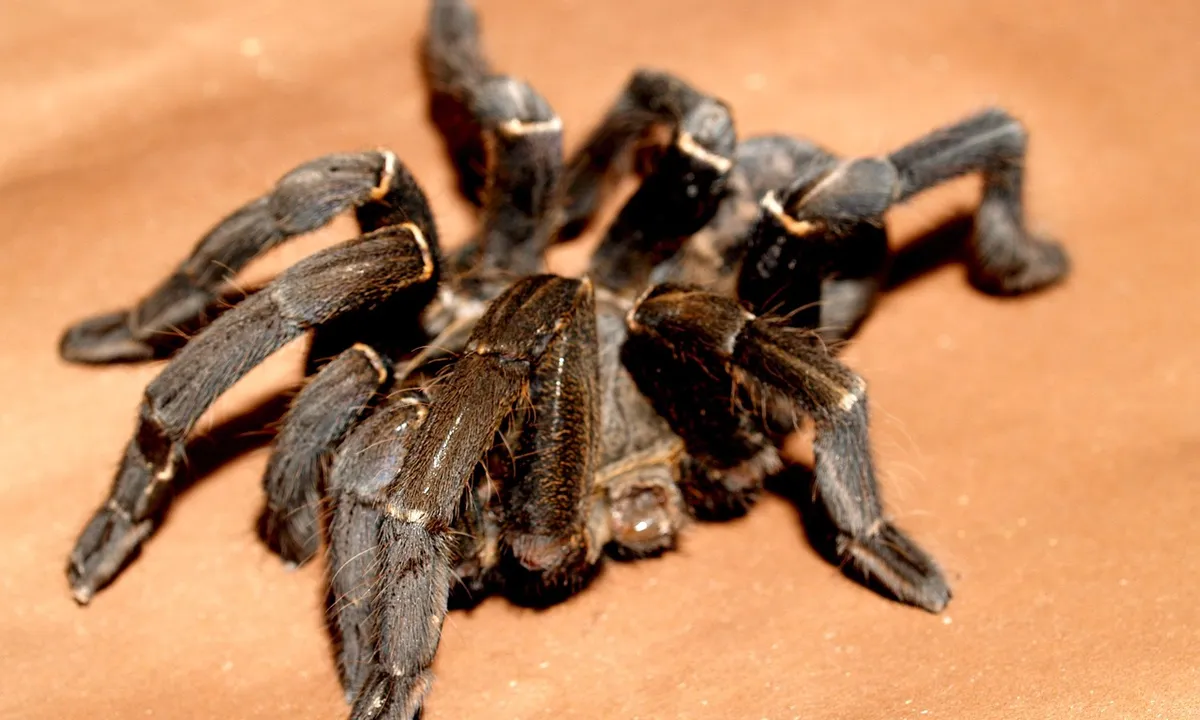
The title of “world’s largest spider” often sparks debate between these families. The current record for leg span belongs to the Heteropoda maxima, the giant huntsman spider from Laos, with leg spans exceeding 30 centimeters. For tarantulas, the goliaths of the genus Theraphosa (like my T. stirmi, Goliath) compete, with hefty bodies and leg spans reliably reaching 28 centimeters.
Average pet species are more modest. A common Chilean rose hair tarantula (Grammostola rosea) like my Rosie reaches a placid 13-15 centimeters. A Pantropical huntsman (Heteropoda venatoria) might showcase a similar leg span but with a dramatically thinner, lighter body. The huntsman’s size is an illusion of leg, while the tarantula’s is a testament to mass.
- Visual Analogy: A large tarantula often covers a standard dinner plate. A large huntsman’s legs could span from your thumb tip to the base of your palm.
- Pet Species Averages:
- New World Tarantulas (e.g., Brachypelma, Aphonopelma): 12-18 cm leg span.
- Old World Tarantulas (e.g., Pterinochilus, Haplopelma): 12-20 cm leg span.
- Common Huntsman Spiders (e.g., Holconia, Isopedella): 10-15 cm leg span.
Several factors influence an individual’s ultimate size. Females are almost always larger and longer-lived in both families. Nutrition plays a role; a well-fed spider will reach its genetic potential. Habitat pressure is another factor-a cramped enclosure can stunt growth. In my experience, providing a spacious, stress-free environment is the single greatest husbandry factor for achieving a spider’s full, natural size.
Global Distribution and Natural Habitats
Huntsman Spider Range and Ecology
Huntsman spiders from the family Sparassidae are masters of subtle colonization. Their global presence is a testament to an incredible adaptability that sees them thriving from arid scrublands to humid kitchen corners.
- Primary Regions: Australia is a major hub, home to genera like Heteropoda and Neosparassus. Asia and Africa follow closely, with high diversity in tropical zones from India to Madagascar.
- Typical Habitats: Look for their flattened forms under loose tree bark or within rock fissures. Many species are synanthropic, quietly hunting cockroaches on walls inside homes. In forests, they are agile navigators of tree trunks and leaf litter.
Tarantula Range and Ecology
Tarantulas occupy a wider biogeographic theater, with ecology dictating captive care. The split between New World and Old World species fundamentally shapes their defense mechanisms and environmental needs. Old World tarantulas lack the urticating hairs common in many New World species and rely more on venom. This, along with a tendency toward aggressive defense, helps explain why they are regarded as more dangerous.
- Primary Regions: The Americas are extraordinarily rich, from the United States southwest through Central to South America. Africa hosts famed baboon spiders, while parts of Asia, like Thailand and Myanmar, hold secretive forest species.
- Typical Habitats: Deserts cradle burrowing obligates like some Aphonopelma. Rainforests house arboreal gems in the canopy. Grasslands and scrub support fossorial lives, a direct link to the deep substrate they need in captivity.
Habitat Comparison for Pet Keepers
Replicating native conditions is the cornerstone of preventative health. Huntsmans generally require moderate humidity of 60-70% and temperatures between 70-80°F, while tarantula needs swing dramatically from 40% to over 80% humidity. Are there universal ideal ranges for tarantula enclosures? Not really—ranges depend on the species and natural habitat, so tailor them to your tarantula’s needs.
- Environmental Contrasts: Most huntsmans tolerate standard room conditions. Tarantulas like my Burgundy Goliath Bird Eater, T. stirmi, demand a hot, humid microclimate near 80°F and 75-85% humidity to thrive.
- Replication Steps from Experience: For a T. stirmi, I use a deep layer of moisture-retentive substrate like coconut fiber and sphagnum moss, misting one corner heavily. For arid species, I provide shallow, dry substrate with ample cross-ventilation. I always use digital probes over analog gauges for accuracy.
Morphology and Appearance: More Than Just Size
Huntsman Spider Physical Traits
Their build is an evolutionary blueprint for speed and concealment. The crab-like leg orientation lets them execute startling lateral bursts across ceilings and walls.
- Crab-Like Leg Orientation: Legs sprawl sideways from a flattened cephalothorax, perfect for slipping behind picture frames or under siding.
- Flattened Body and Eyesight: A low profile aids in hiding. They possess excellent vision, with eight eyes in two rows providing a wide field of view for active pursuit hunting.
- Coloration and Camouflage: Many Australian species wear cryptic patterns of grey and brown, mirroring the bark they rest on during daylight hours.
Tarantula Physical Traits
Tarantulas are tactile worlds unto themselves, covered in specialized hairs. Urticating hairs are a defining New World trait, a cloud of irritation kicked back in defense that I manage regularly with my T. stirmi as a means of defense.
- Hairiness and Urticating Hairs: The dense coat provides sensory input and defense. Old World tarantulas lack urticating hairs but often possess more potent venom.
- Robust Bodies and Poorer Eyesight: A heavy abdomen and sturdy legs suit a sedentary or burrowing life. Their eyesight is poor; they sense the world through vibrations and touch.
- Coloration Variations: Colors range from the earthy, dusty pink of my G. rosea to the electrifying, warning orange of my P. murinus, Flash.
Direct Morphology Comparison
These physical differences are not just academic; they dictate daily care and interaction. The huntsman’s reliance on sight versus the tarantula’s reliance on touch and vibration explains why sudden movements stress them differently.
- Eye Arrangement: Huntsmans have eyes spread for panoramic vision. Tarantulas have eyes clustered on a frontal tubercle, offering minimal detail.
- Hair Types: Tarantulas have urticating or sensory setae. Huntsmans have fine hairs mostly for sensing air currents and touch.
- Leg Structure: Huntsman legs are long, thin, and built for sprinting. Tarantula legs are thicker, more muscular, for digging or careful climbing.
- Influence on Behavior and Care: Tarantulas may need more secure hides to feel safe due to poorer vision. Huntsmans require vertical space to roam. Handling risks are higher with tarantulas due to urticating hairs and defensive postures, reinforcing my ‘Look, Don’t Touch’ philosophy for both groups.
Behavior and Ecology: Hunters vs. Ambushers
Huntsman Spider Behavior
Huntsman spiders are pursuit predators, relying on stealth and explosive speed to run down insects. They do not spin intricate webs to trap food. Their hunting strategy is a silent, high-speed chase across bark or walls, ending in a sudden strike.
- Active hunting style means they patrol and explore, using excellent eyesight and vibration sensing to locate prey.
- Speed is their hallmark; they can move in rapid, darting motions that make them seem to vanish.
- Minimal web use is for creating flat, silk retreats under loose bark or in crevices, not for capture.
- Many species are nocturnal, but diurnal activity is common in warmer climates. When threatened, their first reaction is a lightning-fast escape.
Tarantula Behavior
Tarantulas are masters of ambush. They employ a “sit-and-wait” strategy, conserving energy for when prey wanders too close. They do hunt and capture their prey, striking with sudden speed when the opportunity arises. A rapid strike and a secure bite finish the capture. The patience of a tarantula is a lesson in efficient energy use, with movements calculated and deliberate.
- Ambush predation involves lurking at a burrow entrance or hide, sensing vibrations through silk trip lines.
- Silk is used architecturally: for burrow lining, creating door seals, and as alert systems. My P. murinus, Flash, demonstrates this by webbing every surface into a dense, funnel-shaped fortress.
- Temperaments vary wildly. My 15-year-old G. rosea, Rosie, is a docile ‘pet rock,’ while my T. stirmi, Goliath, is quick to kick clouds of irritating urticating hairs from her abdomen when she senses vibration.
Behavioral Comparison in Captivity
Respecting these innate behaviors is the core of ethical care. Stress reduction directly impacts health and longevity. Your goal as a keeper is to provide a stage for their natural instincts, not to force interaction.
- Steps for Observation and Stress Reduction:
- Design enclosures that match their ecology: vertical space with cork for huntsmen, deep substrate for terrestrial tarantulas.
- Use dim, indirect lighting for nocturnal species to encourage natural activity cycles.
- Never tap on the glass or make sudden movements; observe from a calm distance.
- Feed according to their style: drop prey near a roaming huntsman, but place it gently at the entrance of a tarantula’s hide.
- Feeding responses differ. A huntsman will actively chase crickets, while a tarantula like my Rosie may wait motionless for hours before a slow lunge.
- Activity levels tell a story. Huntsman spiders explore frequently, while many tarantulas remain still for days. This is normal, not a sign of boredom.
I strictly advocate for a “look, don’t touch” philosophy. Handling induces panic flight in huntsmen and defensive postures in tarantulas, serving no benefit to the animal.
Venom, Bite Risk, and Human Safety
Understanding Huntsman Spider Venom
Their venom is evolved for immobilizing arthropod prey, not for harming large mammals. A bite to a human is a rare defensive accident, typically resulting in short-lived, localized pain.
- Venom potency for humans is generally mild, often compared to a bee sting in intensity.
- Effects can include sharp pain, slight swelling, or redness at the site, resolving within a day.
- Bites are exceedingly rare due to their non-aggressive, escape-focused nature.
- First-aid involves washing the area with soap and water, applying a cold pack, and monitoring. Seek medical attention only if severe allergic symptoms occur.
Understanding Tarantula Venom and Defenses
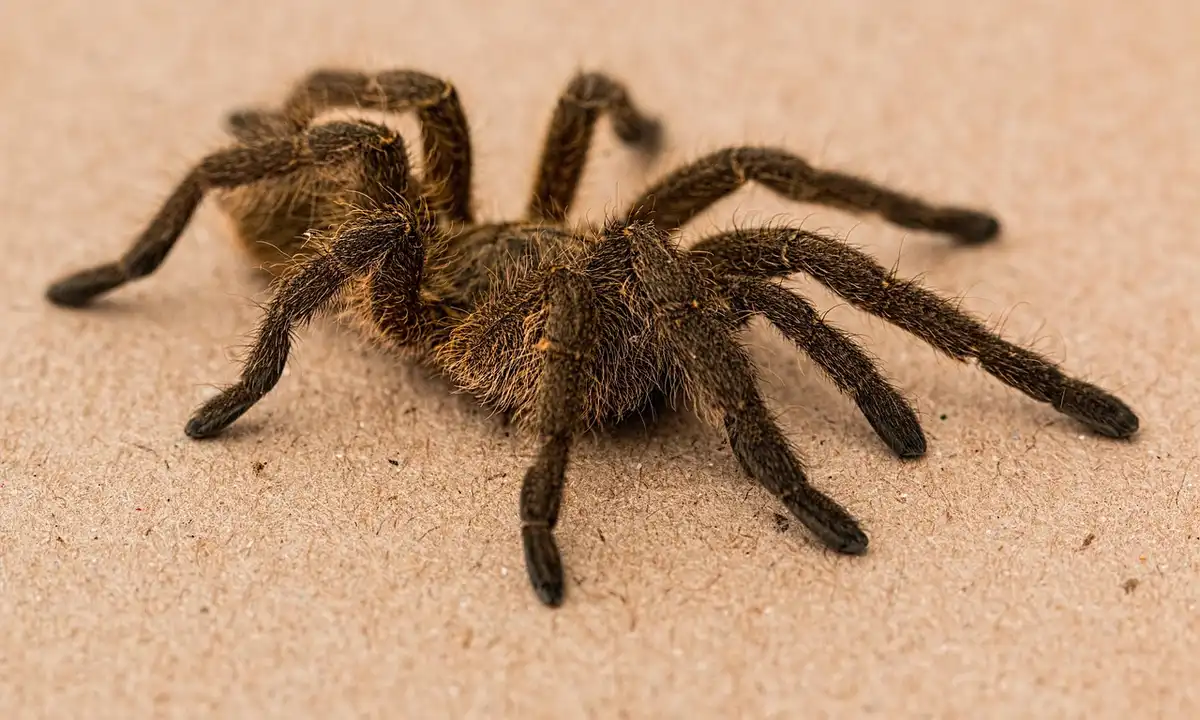
Tarantula venom varies significantly by genus and geography. For New World species like my Goliath, urticating hairs are a far more likely defense than a bite. In most encounters, the hairs cause irritation or dermatitis, while bites are rare and typically less dangerous.
- Venom variability is key. Most New World tarantulas possess mild venom, but some Old World species like the OBT have venom that is medically significant and can cause severe muscle cramps.
- Urticating hairs are barbed bristles kicked from the abdomen. I’ve experienced this firsthand during Goliath’s rehousing; the airborne hairs caused a persistent, itchy rash on my arms for weeks.
Safety Comparison for Pet Owners
Informed precautions prevent accidents. Using tools like long tweezers and soft paintbrushes for guidance is a sign of respectful care. Always work over a large, open bin when rehousing to contain falls or sudden bolts.
| Aspect | Huntsman Spider | Tarantula |
|---|---|---|
| Typical Bite Symptoms | Instant sharp pain, minor swelling, redness. | Localized pain, swelling; for some species, muscle cramps or nausea. |
| Relative Risk Level | Very Low. Bites are rare and not medically dangerous. | Low to Moderate. Varies by species; hair kicking is a more common issue. |
| Recommended Precautions | Move slowly, avoid cornering. Wear gloves if necessary during enclosure maintenance. | Know your species’ temperament. Use tools, wear eye protection, and wash hands after contact with enclosure or tools. |
The safest approach is to never handle either spider unnecessarily. Their world is one of vibration and patience; our clumsy hands are a source of profound stress.
Suitability as Pets: Care Requirements Compared
Choosing between these arachnids means committing to two distinct styles of care. One demands constant vigilance against escapes, the other offers a predictable, grounded routine. Both require a keeper who values observation over interaction.
Huntsman Spider Care Essentials
Housing a huntsman is an exercise in secure, vertical design. Their speed and flattened bodies turn the smallest gap into an express exit. Their care focuses on facilitating natural hunting behavior while preventing a household safari.
An enclosure for a huntsman must prioritize height and security, as they are ambush predators that rely on vertical surfaces and can compress their bodies to slip through impossibly small vents.
- Enclosure: A tall terrarium is mandatory. Provide ample vertical climbing space with cork bark slabs or panels. Cross-ventilation is vital, but all openings must be fine mesh or perforated acrylic they cannot pry open. A secure, locking lid is non-negotiable.
- Humidity & Substrate: Moderate humidity (60-70%) suits most species. Lightly mist one side of the enclosure weekly. Use a moisture-retentive substrate like coconut fiber or a soil mix, but keep it shallow; they are not burrowers.
- Feeding: These are active, visual hunters. Offer appropriately sized crickets or roaches 1-2 times per week. They have faster metabolisms than most tarantulas and rarely refuse a meal. Remove uneaten prey quickly to avoid stressing the spider.
Tarantula Care Essentials
Tarantula husbandry is a lesson in reading your animal and tailoring its world. My three pets-Rosie, Goliath, and Flash-live in entirely different setups, a direct reflection of their ecological niches.
The single most critical factor in tarantula care is matching the enclosure type—terrestrial, arboreal, or fossorial—to the species’ natural behavior, which dictates everything from substrate depth to decor.
- Enclosure by Type:
- Terrestrial (e.g., Rosie, G. rosea): A long, low enclosure with a secure lid. Fill it with 5-6 inches of dry, packed substrate (like coconut fiber or topsoil) for burrowing and to prevent injury from a fall.
- Fossorial (e.g., many African species): Similar to terrestrial but deeper. Provide 8-10 inches of slightly damp, packable substrate to allow for complex tunnel construction.
- Arboreal (e.g., Flash, P. murinus): A tall enclosure with ample vertical cork bark or branches for webbing anchor points. Substrate depth is minimal (1-2 inches), as they live above ground.
- Feeding: Tarantulas are opportunistic, ambush feeders. I offer my adults one appropriately sized cricket or roach every 7-14 days. Be prepared for fasting periods, especially in mature females like my Rosie who may refuse food for 8+ months with no ill effects-this is normal and requires keeper patience. Always remove uneaten live prey after 24 hours.
Pet Care Comparison for Beginners
For the novice invertebrate keeper, the devil is in the details-and the escape attempts. This direct comparison highlights the key operational differences.
While both can be kept successfully, tarantulas offer a more forgiving and standardized entry point due to their slower pace and the vast repository of species-specific care data available from the dedicated keeper community. A tarantula species identification care guide can help beginners accurately identify species and align care requirements accordingly. Pairing that guide with community insights makes learning and proper husbandry more intuitive.
- Enclosure Setup:
- Huntsman: Secure, vertical space with hiding surfaces. Escape-proofing is the primary challenge.
- Tarantula: Horizontal or vertical space dictated by species. The primary challenge is providing the correct substrate volume and humidity gradient.
- Temperature: Both thrive at standard room temperatures of 75-80°F. Supplemental heating (via a space heater, not heat mats) is only needed if your room drops below 65°F.
- Humidity:
- Huntsman: Generally moderate (60-70%), achieved through occasional misting.
- Tarantula: Wildly variable. It ranges from arid (50-60% for my G. rosea) to tropical (80-85% for my T. stirmi, which needs a large water dish and damp substrate). Research is essential.
- Handling Policy: A firm “Look, Don’t Touch” applies to both. Huntsmen are prone to sudden, lightning-fast bolts. Tarantulas, while often slower, can flick urticating hairs (a miserable experience I’ve had from Goliath) or deliver a medically significant bite if provoked. Handling causes immense stress and provides zero benefit to the animal.
- Beginner Verdict: Tarantulas are generally the more suitable beginner pet. Their care is well-documented, they are less prone to dramatic escapes, and their slower pace allows for easier observation. A huntsman spider can be a fascinating pet for an experienced keeper who has mastered secure enclosure design and is comfortable with their extreme speed.
FAQs
Are huntsman spiders a type of tarantula?
No, huntsman spiders and tarantulas are from two completely separate spider families. Tarantulas belong to the Theraphosidae family, while huntsman spiders are from the Sparassidae family. This fundamental taxonomic difference explains their major variations in body structure, fang orientation, and behavior. They are distinct branches of arachnid evolution. Wolf spiders, by contrast, belong to the Lycosidae family, reminding us that tarantulas are not closely related to many other large spider groups. Studying these relationships helps unravel the spider family tree and trace evolutionary connections across lineages.
Which spider is generally larger, a huntsman or a tarantula?
In terms of leg span, the largest huntsman spider species can slightly exceed the largest tarantulas. However, tarantulas are significantly heavier and more robust. For common pet species, their leg spans can be similar, but a tarantula has much more body mass, while a huntsman’s size is more about long, slender legs.
Which one is more dangerous to humans?
Both pose very little threat. Huntsman spiders are non-aggressive and their venom causes only short-lived, localized pain. Tarantulas, especially popular New World pets, are more likely to defend with irritating urticating hairs than a bite. While some Old World tarantula venom can be potent, bites are exceptionally rare with cautious care.
Is a huntsman spider a good pet for a beginner?
Huntsman spiders are not generally recommended for beginners. Their incredible speed and flattened bodies make them expert escape artists, requiring meticulously secure enclosures. They also have faster metabolisms and more active hunting needs compared to the more predictable, sedentary nature of many beginner-friendly tarantula species.
How do their care requirements differ?
Huntsman care focuses on a secure, vertical enclosure for climbing and hunting. Tarantula care is more varied, requiring specific setups based on if the species is terrestrial, arboreal, or fossorial (burrowing). Tarantula humidity needs also range dramatically by species, while huntsmans typically do well at moderate room humidity.
Can either spider be handled safely?
Handling is strongly discouraged for both. Huntsman spiders are prone to sudden, lightning-fast bolts if startled. Tarantulas may flick urticating hairs that cause skin and eye irritation, or may bite if threatened. For the spider’s well-being and your safety, a “look, don’t touch” philosophy is best.
The Final Molt
Whether you find yourself drawn to the formidable presence of a tarantula or the sleek agility of a huntsman, your long-term success rests on one foundational principle. The single most critical husbandry decision you’ll make is matching the enclosure to the spider’s lifestyle: long, deep substrate for terrestrial tarantulas, and vertical climbing space with ample anchor points for arboreal huntsmen. Get this right from the start, and you create a canvas for natural behavior, reducing stress and laying the groundwork for a healthy, observable animal. When you’re weighing options for a pet, deciding between an arboreal or terrestrial tarantula guides your setup, care, and daily interactions. The right choice supports a thriving, engaging pet that fits your environment and schedule.
Beyond correct setup, the true joy of this hobby lives in quiet observation. Watch your tarantula meticulously sculpt its burrow, or delight in the silent, fluid speed of a huntsman exploring its vertical domain. I’ve spent countless hours watching my OBT, Flash, weave his enclosure into a labyrinth of dense silk, a behavior far more fascinating than any brief handling session. Patience is not just a virtue here; it’s the primary tool. These are animals of stillness and sudden, breathtaking action. Your reward is witnessing a hidden world unfold on its own terms, a quiet drama of molts, meals, and intricate instinct played out in the glass-fronted theater of a well-designed enclosure.
Further Reading & Sources
- Spider Showdown: Huntsman vs. Tarantula – Who Will Win? #SpiderShowdown #HuntsmanSpider #Tarantula – YouTube
- Huntsman vs Tarantula Differences?
- Who would win, a huntsman spider or a tarantula? – Quora
Arlo is a lifelong arachnid enthusiast who believes tarantulas are the world’s most misunderstood roommates. With years of hands-on experience in tarantula care, habitat setup, and species behavior, Arlo combines expert knowledge with a dash of humor to make spider ownership less scary and a lot more fascinating. From choosing the right enclosure to understanding why your eight-legged buddy is doing that weird little pose again, Arlo is here to help you become the best tarantula parent you can be, without getting tangled in the web of misinformation.
Popular Species