
Do Tarantulas Sleep or Hibernate? Understanding Their Activity Patterns
Published on: January 5, 2026 | Last Updated: January 5, 2026
Written By: Arlo
Many new keepers watch their motionless pet for weeks, wondering if their cherished tarantula is sleeping, hibernating, or simply giving them the silent treatment. The truth is that tarantula inactivity is a complex, species-specific behavior, more akin to a profound metabolic rest than traditional sleep. This article explains the stillness, from the months-long fasts of my Grammostola rosea to the hidden nocturnal bustle of my burrowing Pterinochilus murinus.
- Quick Stats:
- Origin: Chilean deserts (using G. rosea as our example)
- Type: New World, terrestrial
- Growth Rate: Exceptionally slow
This guide will decode the quiet periods in your tarantula’s life, helping you understand their rhythms from vulnerable sling to venerable adult.
What Does ‘Sleep’ Mean for a Tarantula?
Defining Rest in Invertebrates
Tarantulas lack the centralized brain and REM cycles we associate with vertebrate sleep. Their rest is a state of profound inactivity called torpor. Metabolism slows. Sensory input is dialed down, though not entirely off. Think of it as a deep, energy-saving standby mode, not unconsciousness. This torpor is their version of sleep, a vital physiological reset we must respect by not disturbing them.
I’ve watched my old Chilean Rose Hair, Rosie, sit in perfect stillness for 18 hours. Her legs settled gently under her body, her pedipalps resting on the substrate. To an untrained eye, she might seem catatonic. But a sudden vibration would elicit a subtle, deliberate shift-proof she was always vaguely aware of her environment, just profoundly at rest.
Signs Your Tarantula is Resting
Recognizing this state prevents unnecessary stress. A resting tarantula is not hiding, threatening, or preparing to molt. To read your tarantula’s body language for stress and defensive signs, observe their posture and movements. This helps you interact calmly and adjust handling or enclosure conditions accordingly. Key indicators include:
- Complete Physical Stillness: No leg tapping, abdomen pulsations, or grooming motions for extended periods.
- Relaxed Posture: Legs are tucked comfortably beneath or beside the carapace, not held high or in a defensive curl.
- Lowered Response Threshold: They may ignore a prey item wandering nearby or react slowly to gentle light changes.
- Favorite Resting Spots: They often choose a consistent, sheltered corner or burrow entrance. My OBT, Flash, often rests halfway out of his silken tunnel, a stark contrast to his usual frantic webbing pace.
The most important sign is a consistent, daily pattern of this inactivity, typically during the day for a nocturnal animal. If this “rest” lasts for months alongside food refusal, you’re likely observing a different phenomenon.
The Truth About Tarantula Hibernation and Dormancy
Hibernation vs. Torpor: A Scientific Distinction
True hibernation is a long-term, seasonal survival strategy with drastic physiological changes. Tarantulas do not hibernate. What they experience are extended periods of dormancy or fasting, often mistakenly called “brumation” in the hobby. The critical difference is that a dormant tarantula can become active almost immediately if conditions change, whereas a hibernating animal cannot.
This dormancy is often driven by seasonal cues in the wild-cooler temperatures, drier air, reduced prey availability. In our controlled enclosures, these cues are absent, yet the biological impulse can remain. My 15-year-old G. rosea, Rosie, famously fasts for 8-12 months at a time, a dormant period where she acts like a beautiful, dusty pink statue. She has never truly hibernated.
Seasonal Inactivity in Pet Tarantulas
You may notice reduced feeding responses and movement during certain months, even with stable tank conditions. This is normal for many species. Your care should adapt subtly.
- Do Not Force Environmental Changes: Never deliberately drop temperatures or humidity to “simulate winter.” This risks health.
- Respect the Fast: Continue offering food every 2-3 weeks, but remove uneaten prey immediately. They will eat when ready.
- Maintain Hydration: A clean, shallow water dish is non-negotiable. A dormant tarantula still drinks.
- Minimize Disturbance: This is not the time for cage redecorating or unnecessary checks. Observe, don’t interact.
This seasonal slowdown is a testament to their ancient rhythms, not a problem you need to fix. My humidity-loving T. stirmi, Goliath, shows no seasonal dormancy, reflecting his tropical, stable habitat. Species origin is the best predictor of this behavior.
Deciphering Daily and Seasonal Activity Patterns
Nocturnal, Diurnal, and Crepuscular Rhythms
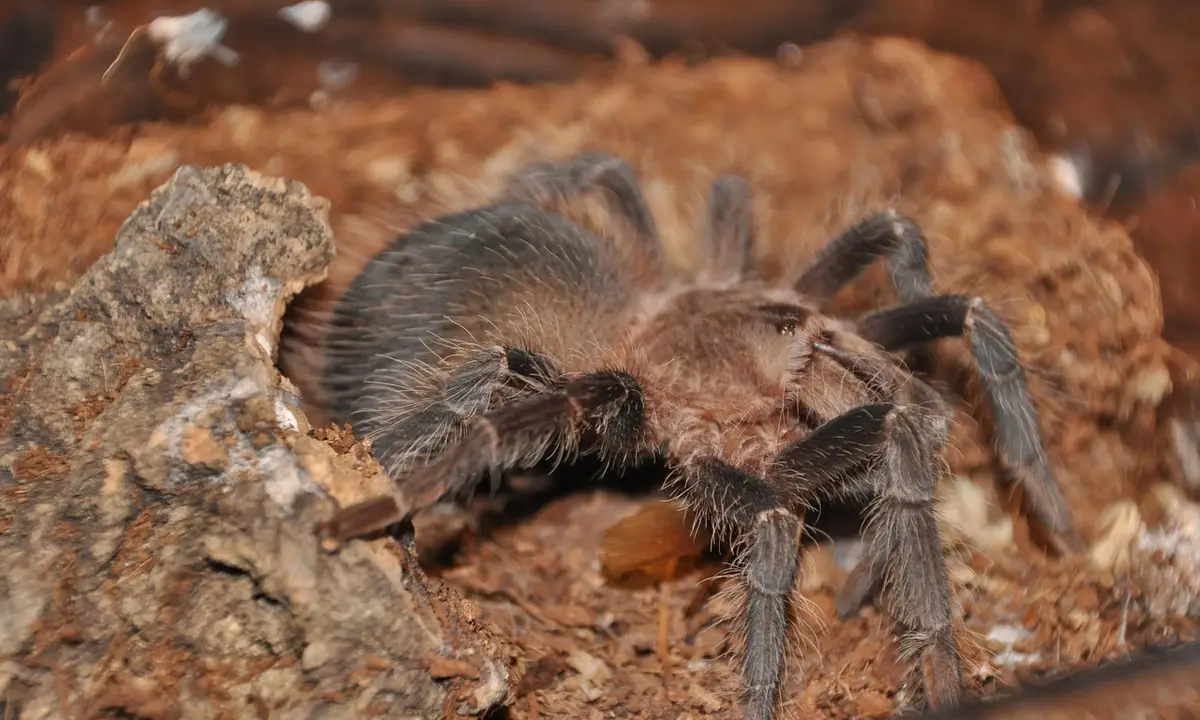
Tarantulas are not randomly active. Their movements follow biological clocks tied to light, temperature, and prey availability. Most species, like my T. stirmi Goliath, are strictly nocturnal. You’ll witness their world come alive only in the deep quiet of the night. They emerge to patrol, drink, and sometimes hunt under the cloak of darkness, retreating to their burrows or hides at first light. Observing a nocturnal tarantula requires patience and sometimes a dim red light, which they cannot perceive, to avoid disrupting their natural cycle. This is especially important when watching how they hunt and capture their prey.
A smaller group are diurnal, or daytime active. My P. murinus Flash, the OBT, is a prime example. His bright enclosure is a hub of industry during the day-webbing, remodeling, and standing guard. This adaptation likely helps avoid nocturnal predators in their native habitats. Some species, like certain Aphonopelma, are crepuscular, most active during the twilight hours of dawn and dusk.
Seasonal shifts matter too. Many species slow down during cooler, drier periods in their native ranges, a state we often mimic in captivity. My 15-year-old G. rosea Rosie demonstrates this perfectly, entering phases of profound stillness that can last for months, a seasonal rhythm written into her very biology.
How to Track Your Tarantula’s Personal Rhythm
Learning your spider’s unique timetable is rewarding and informs better care. Here is a simple method I use.
- Keep a simple log. Note the time of day you see your tarantula active outside its hide.
- Monitor feeding response. Does it readily take prey during the day or only at night?
- Observe web construction. When is new silk typically added? OBTs like Flash often web in daylight bursts.
- Watch for water bowl visits. A tarantula venturing to drink is a clear sign of its active period.
Humidity interacts closely with temperature. For moisture-dependent species like the Goliath, a drop in humidity can trigger a retreat to a pre-moistened burrow. For arid species, excessive dampness can cause similar stress-induced hiding. I track conditions with digital hygrometers, aiming for a gradient that lets the spider choose its perfect microclimate. These insights help define the ideal temperature and humidity ranges for a tarantula enclosure. While needs vary by species, maintaining stable temperatures roughly in the 70–85°F range with appropriate humidity supports steady metabolism and successful molts.
When to Worry: Normal Rest vs. Health Issues

Red Flags in Tarantula Behavior
Long periods of stillness are normal, but certain postures break the quiet with alarm. A tarantula with its legs tightly curled underneath its body, a ‘death curl,’ is often severely dehydrated or dying. I once found my docile Rosie in a slight curl, which resolved after I offered water directly to her mouthparts.
Pay attention to location and position. A tarantula laying on its back for over 24 hours without beginning to molt is a critical sign of neurological or physical distress. Healthy premolt involves flipping over relatively quickly to split the old exoskeleton.
- Abdomen Dragging: An arachnid that scoots its abdomen awkwardly may have a fluid leak or injury from a fall.
- Loss of Coordination: Stumbling, trembling, or inability to right itself points to potential toxicity or parasite load.
- Prolonged Fasting in Juveniles: While adults fast, a growing sling that refuses all food for months is not simply resting.
- Sudden Defensiveness: A typically calm species becoming reactive, like a rose hair threat-posing, can indicate enclosure problems or illness.
Common Misinterpretations and Their Solutions
Many keepers confuse deep premolt with a health crisis. Tarantulas do not hibernate; they enter a premolt fast where metabolism redirects energy to growing a new exoskeleton beneath the old. My Goliath once sealed himself away for eight weeks before emerging, larger and hungrier.
Another frequent error is misreading defensive webbing. An enclosure thick with silk, like Flash’s orange curtain, is a sign of a content, territorial animal establishing its space, not a plea for help. Disturbing this web fortress causes immense stress.
- Misinterpretation: “My tarantula is dead because it’s not moving.” Solution: Gently blow air across its legs. A living tarantula will react with subtle movement. Then, leave it alone.
- Misinterpretation: “It’s always hiding, so the enclosure is wrong.” Solution: Fossorial and burrowing species are *supposed* to hide. Ensure substrate depth is adequate and the hide is secure, then enjoy the rare sightings.
- Misinterpretation: “Hair kicking means it’s angry with me.” Solution: Urticating hair kicks, as Goliath employs, are a stress defense. Rehouse less often, avoid tapping the glass, and wear gloves during maintenance to protect your skin.
Optimizing Care for Your Tarantula’s Natural Rhythm
Setting Up an Enclosure for Healthy Activity
Activity is dictated by instinct and environment. For obligate burrowers, provide substrate depth at least 1.5 times their diagonal leg span to allow for full tunnel construction and security. My T. stirmi’s deep, moist peat lets him regulate his own humidity through burrow choice.
Terrestrial roamers need ample floor space with a secure hide. The enclosure length should be at least three times the tarantula’s leg span, offering room to patrol without feeling exposed. This setup reduces the frantic glass-climbing often mistaken for hyperactivity.
- Substrate Choice: Use a moisture-retentive mix of coconut coir, topsoil, and sand for most species. For arid types like G. rosea, keep it bone-dry with a full water dish.
- Humidity Management: Measure with a digital hygrometer. Mist only one corner of the enclosure to create a gradient, allowing the tarantula to seek its preferred moisture level.
- Temperature Gradients: Maintain an ambient range of 75-80°F (24-27°C). Use a small space heater for the room, never a heat rock, to prevent accidental cooking.
Lighting, Stimulation, and the ‘Look, Don’t Touch’ Ethos
Tarantulas perceive light and shadow but have no need for special lamps. Indirect room lighting on a regular cycle is ideal, as direct bulbs can desiccate the enclosure and disrupt nocturnal cycles. My shelves use timers for gentle LED bias lighting, which never shines directly into tanks.
Stimulation is environmental, not interactive. The core of ‘Look, Don’t Touch’ is recognizing that handling provides zero benefit to the tarantula and introduces major risks of falls, punctures, and stress-induced health declines. The iridescent sheen of a carapace is best admired through glass.
Create a bioactive-inspired setup with leaf litter and cork flats. These elements encourage natural behaviors like web-anchoring and substrate manipulation, providing mental enrichment that reduces stereotypical pacing. Watching Flash engineer his web funnels is a masterclass in invertebrate intelligence.
Feeding Schedules Aligned with Activity
Feeding frequency must match metabolism and life stage. Juvenile tarantulas may eat weekly to support rapid growth, while mature females can enter prolonged fasts lasting over a year without harm. Knowing what to feed and when is crucial for their health. My Rosie’s legendary fasts taught me patience and trust in her biology.
Offer prey during their active hours. Dropping a cricket into the enclosure at dusk mimics natural hunting triggers and increases feeding response, especially for shy species. I always feed my nocturnal crew after sunset, observing the sudden strike in the dim light.
- For Web-Bound Species: Place prey directly into the web matrix. The vibration triggers an immediate predatory response, minimizing chase stress.
- During Fasting Periods: Attempt feeding only once a month. Continually offering and removing prey disturbs the tarantula’s conserved energy state.
- After a Successful Molt: Wait until the fangs harden and turn black, typically 7-10 days. Then, offer a smaller, pre-killed feeder to test appetite safely.
FAQs
How can I tell if my tarantula’s long rest is normal or a sign of illness?
Normal resting or dormancy involves a relaxed posture and occurs in a predictable pattern, often with a history of recent feeding. True health concerns are indicated by abnormal positions like a chronic death curl, fluid leaks from the abdomen, or a complete loss of coordination. Consistently monitoring your tarantula’s baseline behavior is the best way to distinguish between its natural rhythm and a potential problem.
Should I be concerned if my tarantula stops eating for several months?
For many adult tarantulas, especially females of certain species like the Chilean Rose Hair, fasting for many months is a normal part of their biological cycle. The key is to continue providing fresh water and to offer food sparingly, removing it promptly if uneaten. Only be concerned if a fasting juvenile shows significant weight loss or if fasting is accompanied by other alarming symptoms like a shrunken abdomen.
Do I need to provide a specific light/dark cycle for my tarantula?
Tarantulas benefit from a consistent, natural day/night cycle, but they do not require special lighting. Indirect room light or ambient daylight is sufficient. Avoid placing enclosures in direct sunlight or under bright lamps, as this can cause overheating and stress. A regular light cycle helps reinforce their natural nocturnal or diurnal activity patterns, supporting their circadian rhythm.
Is it okay to handle my tarantula when it’s in a dormant or resting phase?
It is strongly advised not to handle your tarantula during these phases. This period is a time of energy conservation and low responsiveness. Handling can cause significant stress, potentially disrupt their cycle, and increases the risk of a defensive reaction or a fall due to their slowed reflexes. Always observe the “look, don’t touch” principle, especially during inactivity. Common signs your tarantula is stressed or aggressive include a raised threat pose, rapid leg movements, or a sudden retreat. If you notice these cues, avoid handling and give it time to settle.
What does inactivity look like for different types of tarantulas?
Inactivity varies greatly by species. A fossorial (burrowing) tarantula may simply remain hidden in its deep burrow for weeks, which is normal. An arboreal species may rest motionless on its perch or within its silken retreat. Terrestrial species might choose a favorite corner. Understanding your specific tarantula’s natural habitat and behavior is crucial for correctly interpreting its quiet periods.
Long-Term Success Through Observation
The most vital husbandry practice for supporting a tarantula’s natural activity cycles is maintaining a stable, species-appropriate environment without frequent changes or disruptions. For my moisture-loving Goliath, that means keeping the substrate damp; for my arid-adapted Rosie, it’s a dry setup with a full water dish. Consistency prevents stress that can mimic or cause unhealthy lethargy. When choosing substrates, consider not just the material but how easy it is to maintain them in a stable enclosure. The best substrates are those you can monitor and adjust to maintain the right humidity and dryness over time.
True mastery comes from appreciating their subtle behaviors. I spend hours noting how Flash’s webbing density shifts before a molt, or how Goliath’s burrow shape changes with the seasons. The hobby’s deepest rewards are found in this silent, watchful practice-celebrating the animal on its own terms, without the need for interaction.
Further Reading & Sources
- Tarantula welfare may be improved with greater environmental complexity: A preliminary behavioral study with Brazilian black tarantulas (Grammastola pulchra) – PMC
- Tarantula Behavior Explained: A Guide for New Pet Owners | Spiders Web HQ
- Stepping Patterns in Tarantula Spiders | Journal of Experimental …
Arlo is a lifelong arachnid enthusiast who believes tarantulas are the world’s most misunderstood roommates. With years of hands-on experience in tarantula care, habitat setup, and species behavior, Arlo combines expert knowledge with a dash of humor to make spider ownership less scary and a lot more fascinating. From choosing the right enclosure to understanding why your eight-legged buddy is doing that weird little pose again, Arlo is here to help you become the best tarantula parent you can be, without getting tangled in the web of misinformation.
Understanding Tarantula Behavior