
Can Tarantulas Eat Mice Lizards or Snakes? The Risks of Vertebrate Feeders
The image of a tarantula subduing a mouse is a dramatic staple of fiction, but in the real-world hobby, it represents a dangerous deviation from responsible care. This article cuts through the mythology to examine the tangible risks-from internal injuries to fatal infections-that vertebrate prey pose to your spider. The quick answer: tarantulas are biologically adapted to eat insects and other arthropods; mice, lizards, and snakes are inappropriate, hazardous food items.
- Quick Stats:
- Natural Prey Spectrum: Insects, other arachnids, and occasionally small vertebrates in the wild-a rare, risky event not to be replicated in captivity.
- Feeding Physiology: Venom and digestive enzymes are optimized for invertebrates, not for breaking down fur, bones, or scales.
- Critical Risk Factor: Vertebrate prey can fight back, causing grave injury, and their decomposing bodies can foul the enclosure.
Drawing from two decades of breeding everything from pet-rock Grammostola to defensive Pterinochilus, this guide will provide the specific, evidence-based husbandry you need to ensure your tarantula thrives on a safe, species-appropriate diet.
The Short Answer: Can Tarantulas Physically Eat Vertebrates?
Biologically, a large, adult tarantula possesses the physical capability to subdue and consume a very small vertebrate, such as a pinky mouse or a hatchling lizard. The potent venom quickly immobilizes the prey. My T. stirmi, Goliath, could technically overpower a vertebrate of that size, but that doesn’t mean I would ever offer one. The real question isn’t about simple physical possibility, but about the cascade of severe risks that follow.
The Primary Risks: Why Vertebrate Feeders Are Dangerous
Choosing to feed a vertebrate is a deliberate step into high-risk husbandry. The potential consequences are severe, ranging from immediate physical trauma to slow, internal failure. These risks completely overshadow any perceived spectacle of offering such prey.
Risk of Severe Injury to Your Tarantula
Vertebrates fight back. A mouse can bite, a lizard can scratch, and their reflexive struggles are powerful. A tarantula’s exoskeleton, while tough, is not armor. A single bite or deep scratch from a rodent tooth can puncture the abdomen, leading to a fatal, incurable hemorrhage. I’ve seen the aftermath of a roach with sharp legs causing a tiny abdominal puncture; a mouse is exponentially more dangerous.
- Teeth and Claws: Vertebrate prey are equipped with weapons designed to cause damage.
- Reflexive Thrashing: Even a dying animal’s nervous system can trigger powerful movements.
- Abdominal Vulnerability: The opisthosoma is a soft, fluid-filled sac. A puncture means death.
Disease and Parasite Transmission
Feeder vertebrates, especially wild-caught or from non-specialist sources, are vectors for pathogens. Their internal parasites and bacteria are not meant for an arachnid’s digestive tract. Introducing a wild-caught anole or a pet store pinky mouse is like rolling dice with your tarantula’s health. Crickets and roaches from reputable breeders are a controlled diet; vertebrates are not.
- Internal Parasites: Nematodes or protozoa from the prey can infect your tarantula.
- Bacterial Load: High bacterial content from vertebrate guts can cause fatal septicemia.
- Unfamiliar Pathogens: Tarantulas have not evolved defenses against common vertebrate diseases.
Nutritional Imbalance and Digestive Difficulty
A tarantula’s digestive system is exquisitely tuned for insects. Vertebrate tissue, particularly mammalian, is dense, fatty, and difficult to process. Feeding a mouse is the equivalent of forcing your tarantula to digest a stick of pure butter and dense protein it cannot properly utilize. This can lead to impaction, regurgitation, or a dangerously prolonged, foul-smelling feeding event that attracts mites and mold. This is a reminder that many common feeding beliefs are myths. In this article, we debunk 7 common tarantula feeding myths that could harm your pet.
- High Fat Content: Can overwhelm the hepatopancreas (digestive organ).
- Dense Bone and Fur: Creates an indigestible bolus that can block the sucking stomach.
- Incomplete Consumption: Often leads to rotting leftovers that spoil the enclosure.
Ethical and Practical Husbandry Concerns
Responsible tarantula keeping centers on reducing stress and providing species-appropriate care. The act of introducing a large, panicked vertebrate is inherently stressful. Our philosophy is “Look, Don’t Touch” to minimize disturbance; offering a live mouse is the ultimate violation of that peaceful environment. Practically, the mess is immense, and the risk-reward ratio is non-existent, especially when considered alongside the core principles of ethical tarantula breeding.
- Unnecessary Stress: The chaotic struggle stresses both predator and prey.
- Contradiction of Care: It prioritizes drama over the animal’s quiet, instinctual needs.
- Clean-up Hazard: Removing a rotting half-eaten vertebrate is a foul task that risks defensive reactions from your tarantula.
What Tarantulas Are Designed to Eat: Optimal Prey Options
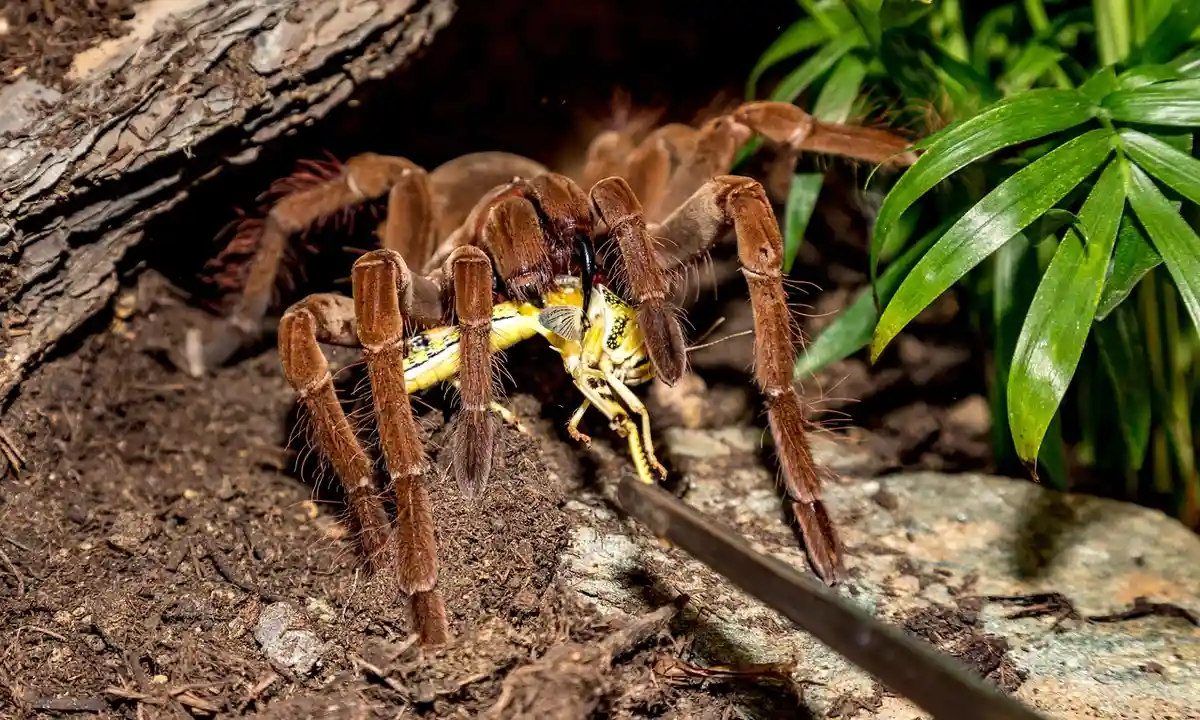
Tarantulas are exquisite arthropod specialists, not miniature predators built for vertebrate prey. In their natural habitats, from deserts to rainforests, their menu consists almost entirely of insects and other invertebrates. This design informs everything from their venom potency to their digestive efficiency. They are adapted to hunt and capture such prey, making them effective predators in their ecological niche.
Sticking to an invertebrate-based diet aligns with their physiological blueprint, reducing risk and mimicking the nutritional balance they evolved with. My fifteen-year-old Chilean Rose Hair, Rosie, exemplifies this-her long, healthy life has been sustained solely on a rotation of crickets and the occasional worm.
Primary Staple Feeders
These are the reliable, nutritious cornerstones of tarantula care. I offer them based on the spider’s life stage and species-specific metabolism. I also consider environmental factors like enclosure size, humidity, and temperature, as well as stress, since these influence tarantula lifespan. This helps me tailor care to support longevity across species.
- Gut-loaded Crickets: The classic choice. Their soft exoskeleton is easy to digest. I always feed my crickets nutritious greens 24 hours before offering them to my tarantulas, a process called gut-loading, to boost vitamin content.
- Dubia Roaches (Blaptica dubia): My personal favorite. They are less noisy, more nutritious, and cannot climb smooth surfaces, making escapes rare. My Burgundy Goliath Bird Eater, Goliath, readily accepts large nymphs.
- Discoid Roaches: An excellent alternative where dubias are regulated. They share similar benefits.
- Red Runner Roaches (Shelfordella lateralis): Fast and stimulating for more active hunters like my OBT, Flash. Their speed triggers a phenomenal predatory strike.
Supplemental and Treat Feeders
These add variety but should not be the sole diet. Use them sparingly.
- Mealworms and Superworms: High in fat. I only offer pre-killed or carefully monitored, as their strong mandibles can injure a molting tarantula. I crush the head with tweezers first.
- Hornworms: A hydrating snack, perfect for boosting moisture intake. Their large size means I only offer them to my adult T. stirmi.
- Silkworms: Exceptionally nutritious and soft. A fantastic treat for all life stages.
The key is matching prey size to your tarantula’s carapace; the prey item should be no larger than the spider’s abdomen for safe, stress-free consumption. For slings, I use pinhead crickets or chopped mealworm segments. This precision prevents injury and wasted food. Live prey vs pre-killed can stimulate a natural hunting response, while pre-killed prey minimizes handling risk. The best approach varies by species, size, and your tarantula’s individual preferences.
Safe Feeding Practices and Final Husbandry Guidelines
Feeding is a critical husbandry moment that, when done correctly, minimizes stress and maximizes health. It is a silent ritual of observation, not interaction.
The Step-by-Step Feeding Protocol
- Assess Readiness: Is your tarantula in a predatory posture? Is it not in pre-molt (a darkened, shiny abdomen)? Dropping prey into a burrow during a molt is a fatal error.
- Select & Introduce Prey: Using long, soft-tipped tweezers, place the live insect near the tarantula. For defensive species like Psalmopoeus murinus, I simply open the lid, drop the roach in, and secure the enclosure immediately.
- Observe from a Distance: Do not hover. The strike is a private, explosive event-the sudden grapple, the injection of venom. Watch for the telltale flexion of the fangs.
- Remove Uneaten Prey: If the tarantula ignores the feeder for 24 hours, remove it. A live cricket can harass or even injure a spider. I learned this the hard way with a young Grammostola rosea that lost a leg to a persistent cricket.
Always use tools, not your fingers, to place or remove prey; a startled tarantula may strike at movement, not just the intended food. This practice protects both you and the animal. Having the right tarantula handling tools and safety equipment is essential for safe, humane care. Use purpose-made tools—soft-tipped forceps, long tweezers, and containment containers—and wear gloves and eye protection when handling or transferring tarantulas.
Husbandry Synergy: Enclosure Setup for Feeding Success
Your enclosure design directly impacts feeding safety and efficacy. A stressed tarantula will not eat.
- Bioactive Setups: I use them for my moisture-dependent species like Theraphosa stirmi. The clean-up crew (springtails, isopods) consumes leftover boluses and mold, creating a stable environment where Goliath feels secure enough to hunt confidently.
- Humidity & Temperature: A tarantula’s metabolism is tied to its environment. My OBT, Flash, feeds most actively at 78-82°F. My T. stirmi requires 80-85% humidity for proper digestion; a dehydrated tarantula may refuse food altogether.
- Secure Hides & Anchor Points: Ample hiding spaces and cork bark for webbing allow the tarantula to feel in control. Flash’s heavy webbing acts as a sensory net, alerting him to prey vibration.
The “Look, Don’t Touch” philosophy is never more critical than during feeding, as handling attempts can cause regurgitation or a defensive bite. I have never handled any of my tarantulas during a feeding cycle; the risk of a dropped tarantula or a defensive reaction is too great. For beginners, handling tarantulas is not recommended. Stick to observing from outside the enclosure, and use appropriate tools only if you must move or inspect the tarantula.
Final Guidelines for a Sustainable Routine
- Frequency Varies: Juveniles may eat twice a week; adults like my G. rosea may fast for months. This is normal. Do not force-feed.
- Water is Non-Negotiable: A shallow, clean water dish is always available. I provide one even for my smallest slings using bottle caps.
- Record Keeping: I note feeding dates, refusals, and molts in a simple journal. This data reveals patterns and catches health issues early.
Respectful care means understanding that feeding is not entertainment for us, but a fundamental, delicate process for them. By providing optimal invertebrate prey and a stress-free environment, you support the natural behaviors that make these creatures so captivating to observe.
FAQs
Can tarantulas safely eat mice, lizards, or snakes?
No, feeding tarantulas vertebrates like mice, lizards, or snakes is unsafe and not recommended. While large adult tarantulas may physically overpower small vertebrates, their biology is adapted for invertebrates. Offering vertebrates introduces unnecessary risks that can harm your tarantula’s health and well-being, especially when compared to safe, invertebrate prey like roaches.
What are the main risks of feeding vertebrates to my tarantula?
The key risks include severe injury from bites or scratches, which can puncture the abdomen and cause fatal bleeding. Vertebrates may also carry parasites or bacteria that lead to infections, and their dense, fatty tissue is difficult for tarantulas to digest. This can result in impaction, regurgitation, or enclosure fouling from leftovers.
Why are insects a better choice than vertebrates for tarantulas?
Insects like crickets and roaches match tarantulas’ natural digestive enzymes and nutritional needs. They are less likely to fight back, reducing injury risk, and can be gut-loaded for optimal vitamins. This diet supports healthy growth without the hazards associated with vertebrate prey.
Is it ever acceptable to feed vertebrates for variety or spectacle?
No, in captive care, there is no ethical or practical justification for feeding vertebrates. It prioritizes human curiosity over the tarantula’s safety and can cause stress, injury, or death. Responsible husbandry focuses on providing a stress-free environment with species-appropriate invertebrate prey.
How can I ensure my tarantula gets proper nutrition without vertebrates?
Offer a rotation of staple feeders such as gut-loaded crickets or dubia roaches, supplemented with occasional treats like silkworms. Always match prey size to your tarantula’s abdomen and remove uneaten insects promptly. This approach ensures balanced nutrition and minimizes health risks. For beginners, this serves as a complete feeding guide—outlining staple foods, portion sizes, and feeding frequency. It also explains how to adjust the plan as the tarantula grows.
The Path to Mastery
Your dedication as a keeper is measured not by what you feed, but by the quality of life you provide. The single most important rule for any tarantula’s diet is this: stick to appropriately sized invertebrate prey like crickets, roaches, and mealworms to ensure a long, healthy life for your spider. This simple choice prevents a cascade of potential injuries and ethical concerns, placing the animal’s welfare at the center of your practice.
True success in arachnoculture is found in quiet observation. Watch the meticulous engineering of a web tunnel, the patient ambush from a burrow’s entrance, or the precise, efficient strike at a passing roach. There is profound beauty in appreciating a tarantula on its own terms, as a fascinating predator exquisitely adapted to its niche, not as a spectacle. Your greatest tool is patience-witnessing the slow drama of a molt, the gradual expansion of a burrow, or the subtle shifts in color and behavior over time. This is the real reward of the hobby.
Further Reading & Sources
- All About Feeders, Feeding, Watering & Troubleshooting – Jamie’s Tarantula Blog
- Feeding Your Tarantula
- Tarantula Feeding – What, when, and how much to feed | Tom’s Big Spiders
Arlo is a lifelong arachnid enthusiast who believes tarantulas are the world’s most misunderstood roommates. With years of hands-on experience in tarantula care, habitat setup, and species behavior, Arlo combines expert knowledge with a dash of humor to make spider ownership less scary and a lot more fascinating. From choosing the right enclosure to understanding why your eight-legged buddy is doing that weird little pose again, Arlo is here to help you become the best tarantula parent you can be, without getting tangled in the web of misinformation.
Best Food Options