
Can Tarantulas Jump? How High and Why They Leap
Published on: June 28, 2026 | Last Updated: June 28, 2026
Written By: Arlo
Observing my defensive Pterinochilus murinus Flash, I’ve seen the blur of orange and felt the air move as she propels herself-a stark contrast to my sedentary Grammostola rosea Rosie. Tarantulas possess a capability that clashes with their bulky silhouette: a rapid, hydraulic-powered jump used for survival, not sport. We will dissect the biomechanics behind these leaps, identify which species are most prone to them, and translate this knowledge into safer husbandry. For the keeper, recognizing this behavior is the first step in preventing escape or injury during routine care.
Quick Stats:
- Primary Adapters: Arboreal genera (e.g., Psalmopoeus, Avicularia) and some agile terrestrials.
- Propulsion System: Sudden release of hemolymph (blood) pressure into the legs.
- Typical Leap Range: 2 to 5 inches, though distance trumps height.
- Immediate Catalyst: A perceived threat or the skittering of prey like crickets.
This exploration will provide you with the specific insights needed to anticipate and respect this startling behavior in a captive setting, ensuring your tarantula’s world remains secure and serene.
The Jumping Tarantula: Fact or Fiction?
Many new keepers ask me if tarantulas can truly jump. The answer is yes, but not in the way a cricket or a grasshopper does. Most tarantulas lack the muscle structure for a true, spring-loaded leap. Instead, they perform a powerful, coordinated lunge. This is a fact I’ve witnessed firsthand with my Orange Bitey Thing, Flash. During a rehousing, a sudden shadow provoked a lightning-fast propulsion sideways-a defensive jump that covered nearly six inches. This behavior is a stark reminder that even a docile species like my Chilean Rose Hair, Rosie, possesses the same latent ability, which is why I always advocate for a calm, ‘Look, Don’t Touch’ philosophy.
Not all species are equally prone to jumping. Heavy-bodied terrestrial tarantulas, like my Burgundy Goliath Bird Eater, Goliath, rely more on threat displays and urticating hairs. Arboreal species, however, are often more athletic. Their jumps are typically short, explosive movements used for evasion or capturing prey. Understanding this distinction helps you anticipate behavior and design safer, more secure enclosures to prevent stressful escapes.
The Mechanics of a Tarantula Leap
When a tarantula moves with explosive speed, it’s a marvel of invertebrate engineering. The action is a blend of hydraulic pressure and leveraged muscle. They don’t simply push off with their legs. They contract their body to build pressure, then release it in a directed burst. This is why a startled tarantula can seem to teleport from the center of its enclosure to the lid in a blur of motion.
The distance is usually modest. Most documented jumps are under a foot, often just a few inches. Factors like species, size, and motivation play a role. A hungry arboreal tarantula might jump a greater distance toward a moth than a content terrestrial would when startled. Always handle enclosure lids with extreme care, as the sudden gap is an irresistible launch point for a stressed animal.
Hydraulic Power vs. Muscle Strength
Tarantula legs operate on a hydraulic system. They have flexor muscles to bend their limbs, but to extend them, they rely on pumping hemolymph (their version of blood) into the joints. This is key to their jump.
- The tarantula contracts its cephalothorax, increasing internal pressure.
- This pressure is channeled to the legs, rapidly extending multiple joints at once.
- The rear legs provide the main pushing force, while the front legs are often poised to grab.
This hydraulic extension is faster and more powerful than muscle alone could achieve, explaining their sudden, startling strikes. It’s a system built for efficiency, not for sustained athleticism. After such a burst, the tarantula often needs a moment to reset its internal pressure.
The Role of Silk in Mid-Air Control
Silk isn’t just for webs and burrows. For some tarantulas, it’s a critical safety tool during aerial movement. While they don’t “fly” or use silk like a parachute, they use it for precision and security. In arboreal tarantulas, silk strands act as anchor points that stabilize climbs and cautious leaps on branches. This webbing thus serves as an essential safety system, not merely decoration.
- Draglines: Arboreal species, especially, will often attach a strand of silk before making a risky move. This acts as a safety line if they miss their target.
- Stabilization: The light silk strand may provide minimal drag, helping orient their body mid-leap.
- Anchor Points: I’ve seen Flash, my OBT, use pre-laid webbing on enclosure decor to seemingly bounce or change direction, using the silk as a pivot.
Observing this use of silk reveals a complex, calculated behavior, not a blind panic jump. It underscores why a well-furnished enclosure with anchor points is less stressful, allowing them to express natural instincts safely.
How High Can Tarantulas Really Jump?
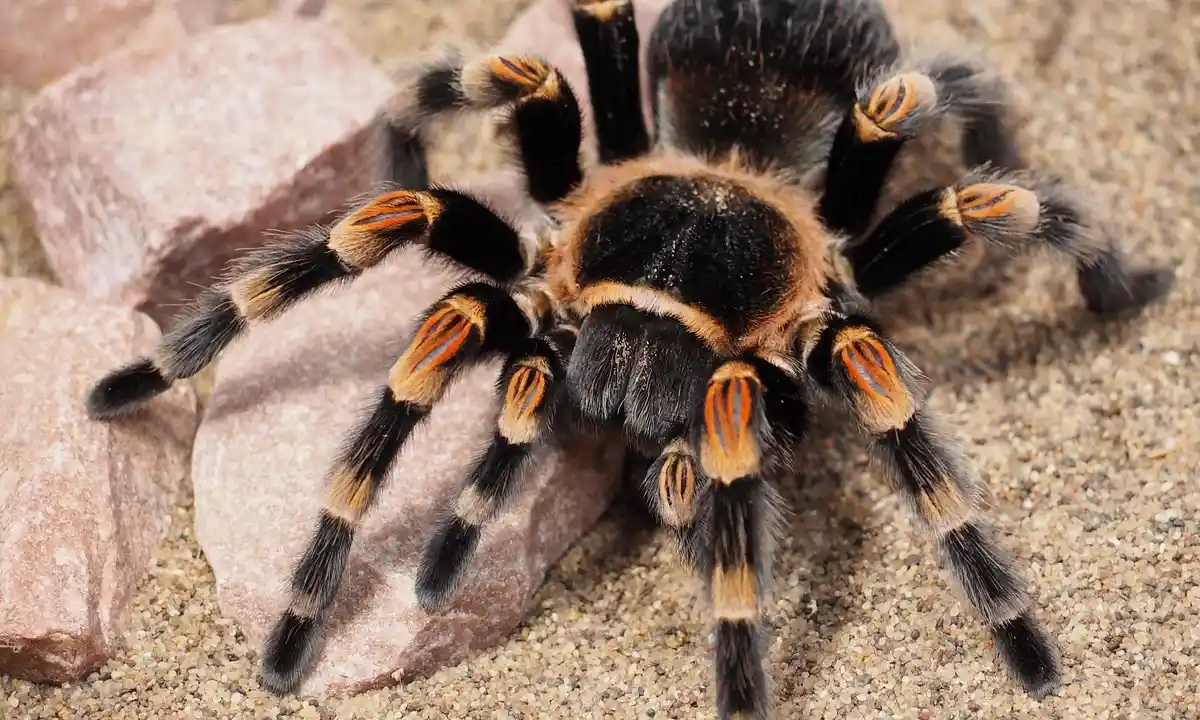
Watching a tarantula leap is a rare, breathtaking event. Most are not built for jumping like their smaller spider relatives. While a heavy-bodied Chilean Rose Hair like my Rosie has never jumped an inch in 15 years, my Orange Bitey Thing, Flash, can cover 4 to 6 inches in a blur. That distance, about ten times his body length, is the upper limit for most capable species.
Arboreal tarantulas, built for life in trees, are typically the athletes. Genera like Psalmopoeus and Tapinauchenius can launch themselves to bridge gaps between branches. Terrestrial giants like my Goliath Bird Eater rely on threat displays and urticating hairs, not acrobatics. In the pet tarantula hobby, people often split favorites into arboreal vs terrestrial to guide enclosure choices and care. This distinction helps hobbyists pick a species that fits their setup and experience.
Factors Influencing Jump Height
Not all tarantulas jump, and those that do vary widely. Several key elements determine their capability.
- Species and Build: Lightweight, long-legged arboreal types are built for springing. Heavy, ground-dwelling tarantulas like Grammostola are physiologically poor jumpers.
- Size and Age: A smaller, younger spider is often more agile. Large adults, especially females heavy with eggs, rarely attempt more than a short hop.
- Health and Condition: A well-fed, hydrated tarantula in prime condition has the muscle tone and energy for a powerful leap. A tarantula nearing a molt or in poor health will not.
- Pure Motivation: Fear or intense hunger can trigger explosive movement not seen in calm moments. This is why a usually docile tarantula might surprise you during a rehousing.
I learned this firsthand when Flash, my P. murinus, vanished from a deli cup lid during a transfer, appearing silently on the floor three feet away. The combination of his species, size, and stress created a perfect jump storm.
Why Do Tarantulas Jump? Survival Strategies
In the wild, a jump is a calculated survival tool, not a random act. Each leap serves a specific, life-or-death purpose.
Escape from Predators and Threats
The primary reason for a jump is evasion. A sudden, unpredictable bound can mean the difference between life and becoming a meal. In your home, the “predator” is often an unexpected shadow, a vibration, or the giant hand during enclosure maintenance.
I treat every rehousing like a bomb disposal, moving slowly to minimize this panic response. For arboreal species, a leap is often directed downward, using gravity to aid their escape into underbrush or off a tree trunk. This instinct is why an open-top enclosure is an invitation for a missing pet.
Capturing Prey with Precision Strikes
Some tarantulas employ a short, lunging jump to subdue prey. It’s less of a soaring arc and more of a powered tackle. This is a classic example of how tarantulas hunt and capture their prey. They rely on speed, precision, and venom to subdue their targets. You might see this when feeding an arboreal species a cricket that has climbed the enclosure wall; the tarantula will often launch from its perch to intercept.
The strike is a synergy of movement: a rapid push from the back legs, a grab with the front legs and pedipalps, and an immediate fang insertion. My OBT’s enclosure is a silken fortress, and I’ve seen him use these micro-leaps to ambush prey from across his web tunnel, a bright orange flash ending in silence.
Defensive Leaps: A Last Resort
When cornered and all other defenses-threat postures, hair kicking-have failed, a tarantula may jump toward the threat. This is a desperate bluff to startle and create an opening to flee. This defensive leap is the number one reason I advocate for a strict “Look, Don’t Touch” philosophy; forcing interaction can trigger this high-stress, risky behavior.
It is not an attack run, but it can certainly feel like one. The tarantula is not aiming to land on you out of aggression, but out of pure defensive programming. Managing them with gentle guidance into a catch cup, rather than hand-catching, respects their instincts and keeps everyone safe. For beginners, this safe, low-stress approach is strongly recommended. It avoids direct hand-contact and helps you learn a tarantula’s signals safely.
Which Tarantula Species Are Known to Jump?
Not all tarantulas possess the same athletic prowess. The ability and tendency to leap is tightly woven into a species’ ecology and physical design. Observing these differences is key to anticipating behavior and providing species-specific care. For example, arboreal tarantulas hunt from perches in trees and may leap toward prey. Terrestrial tarantulas rely on ground stalking and ambush.
Arboreal Specialists: Built for Leaping
Tree-dwelling tarantulas are the acrobats of the family. Their lighter bodies, long, spindly legs, and exceptional grip are adaptations for a life spent hunting and navigating canopy spaces. A sudden, precise jump is a standard tool for capturing prey or evading threats in the wild. This translates directly to captive care, where species like Psalmopoeus cambridgei (Trinidad Chevron) or Tapinauchenius genera can launch themselves several inches with startling accuracy, making arboreal tarantulas generally more cautious to handle.
I recall rehousing a young Psalmopoeus irminia (Venezuelan Suntiger). The silence of the enclosure was broken by a blur of dark legs-it leaped from the cork bark to the side of the bin in a split second. This wasn’t aggression, but a calculated escape maneuver. For these spiders, jumping is as natural as webbing.
- Common Jumping Arboreal Genera: Psalmopoeus, Tapinauchenius, Iridopelma.
- Why They Leap: Primarily for prey capture and rapid relocation in complex vertical environments.
- Physical Traits: Lower body mass, elongated legs, and enlarged scopulae (gripping hairs) on their feet for secure landings.
Ground-Dwelling Tarantulas: Rare Leapers
Terrestrial tarantulas, like my old Chilean Rose Hair Rosie, are built for power and burrowing, not aerial maneuvers. Their heavier abdomens and stockier legs make true, sustained jumps uncommon. What is often mistaken for a jump is usually a defensive lunge or a rapid, short dash, driven by threat perception rather than athleticism.
My Burgundy Goliath Bird Eater (Theraphosa stirmi) exemplifies this. When startled, she might rear up and lunge forward, but her movement is along the ground. Her primary defense is a cloud of urticating hairs, not flight. Most New World terrestrials, like Grammostola or Aphonopelma species, share this grounded nature.
- Typical Behavior: Defensive lunges, fast runs, or threat postures are far more likely than an actual jump.
- Exceptions: Some Old World terrestrial species, known for speed and defensiveness, may exhibit explosive, jump-like movements when cornered. My OBT, Flash (Pterinochilus murinus), can move with such blinding speed it appears to teleport-but this is a horizontal sprint, not a vertical leap.
- Key Takeaway: While possible under extreme duress, a deliberate, controlled jump is rare in most ground-dwelling pet tarantulas.
Implications for Tarantula Care and Safety
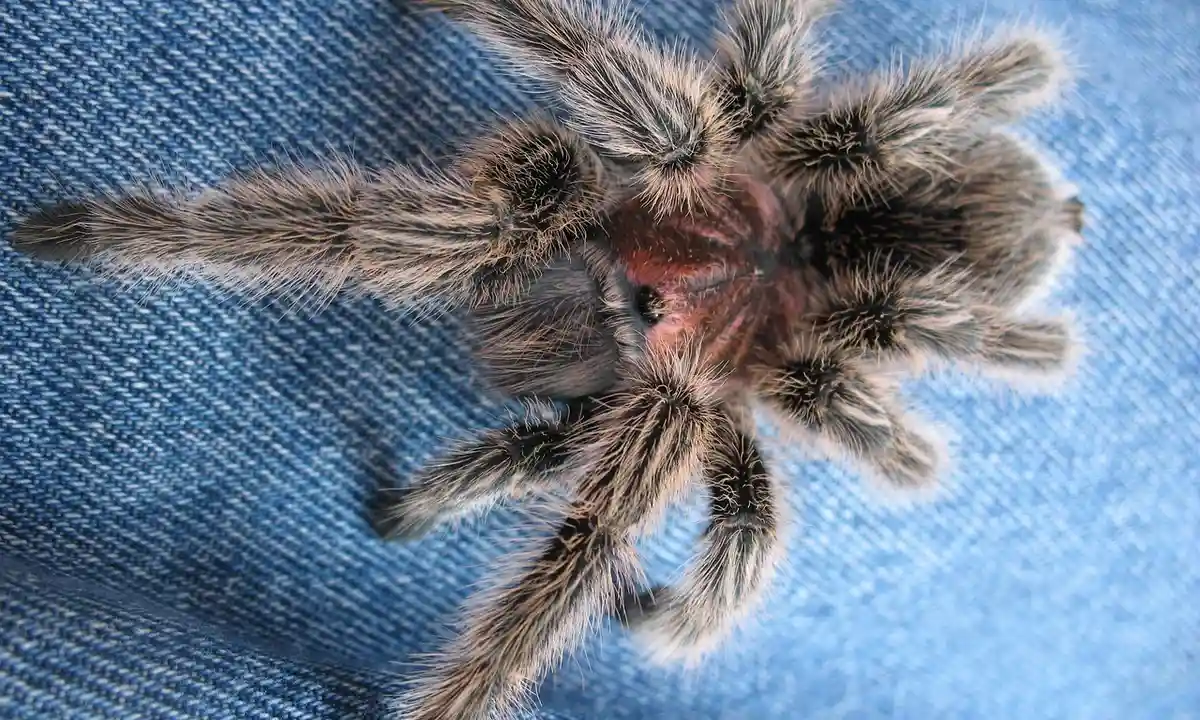
Recognizing your tarantula’s potential for sudden movement directly shapes how you set up its home and interact with it. Proactive enclosure design is your first and best defense against escapes and stressed animals. This philosophy reinforces the “Look, Don’t Touch” approach, prioritizing the spider’s well-being and your safety. For a practical walkthrough, check out our best enclosure setup tarantula step-by-step guide. It covers choosing the right enclosure, substrate, humidity, and escape-proof features.
Securing the Enclosure: A Priority
For any tarantula, especially known jumpers, a secure lid is non-negotiable. The force of a leap can pop open a poorly fastened top. I use mechanical locking latches or weighted clips on all my arboreal enclosures, treating them like a contained ecosystem that must remain intact. Screen lids pose a dual risk: toes can get caught, and determined spiders can sometimes chew through.
Consider these enclosure essentials:
- Lid Security: Use solid acrylic or glass lids with front-opening doors or secure sliding tops. For tanks, employ multiple sturdy clips.
- Height Management: For arboreal species, provide ample vertical space (18-24 inches) with clutter like branches and plants. This allows natural behavior but ensures the distance from the top to the highest perch is too great for a jump to reach the lid.
- Bioactive Buffer: In my bioactive setups, dense plant growth at the top can gently deter upward climbs, adding a layer of natural security.
Minimizing Stress During Maintenance
Sudden jumps are often a stress response. Your routine should be calm and predictable. Always work over a large, open bin or on a floor-cleared table to create a safe “catch basin” in case of an unexpected leap. Move with slow, deliberate motions to avoid triggering a flight instinct.
Here is my step-by-step process for safe maintenance:
- Prepare the Space: Close all room doors and windows. Have a catch cup and soft paintbrush within reach.
- Announce Your Presence: Gently tap the enclosure before opening. This vibrations often causes the tarantula to retreat, giving you a moment.
- Use Tools, Not Hands: Long tongs for removing boluses, a paintbrush to gently guide movement. This maintains a safe distance.
- Work Quickly and Confidently: Prolonged disturbance increases anxiety. Know your task and execute it with calm efficiency.
I learned this the hard way years ago with a fast-moving specimen. A moment of hesitation during a water dish change led to a frantic scramble. That experience cemented my belief that respectful care means managing the environment to prevent the spider from ever feeling the need to make a desperate leap for freedom.
Observing and Respecting Jumping Behavior
Witnessing a tarantula leap is a breathtaking, split-second event. The stillness of the enclosure shatters as the spider propels itself with surprising force. This behavior is a powerful reminder that we are observing potent survival instincts, not a creature seeking interaction.
The “Why” Behind the Leap
Not all tarantulas jump, but for those that do, the reasons are purely functional. They lack the muscular legs of a grasshopper. Instead, they use a sudden extension of their front legs to launch. This movement is typically a targeted strike for prey or a frantic escape from a perceived threat. My OBT, Flash, uses similar explosive speed to flee from light or to subdue crickets, a blur of orange that emphasizes why common names like “Orange Bitey Thing” exist. In the wild, tarantulas face constant threats from predators like birds, wasps, and snakes. Quick, explosive movements help them dodge attacks and sprint to safety.
Safety First: For You and Your Spider
A jumping tarantula is a stressed tarantula. Forcing interaction risks a fall, a bite, or a cloud of irritating urticating hairs. My Burgundy Goliath, who frequently kicks hairs, taught me that a defensive animal is best given space and peace. Adopting a “Look, Don’t Touch” philosophy isn’t about fear; it’s about respecting their nature and ensuring their long-term well-being.
Creating a Secure Observation Environment
You can safely enjoy these fascinating behaviors with proper setup. Follow these steps to minimize stress-induced jumping:
- Use an enclosure with a secure, locking lid. For arboreal species prone to jumping, like some Psalmopoeus, consider front-opening doors to avoid looming from above.
- Provide ample cover. Cork bark hides and live plants give your tarantula places to retreat, feeling secure enough to exhibit natural behaviors without panic.
- Feed using long, soft-tipped tweezers. This keeps your hands far from a feeding response that can look like a jump.
- Perform maintenance during the day for diurnal species and at night for nocturnal ones, matching their inactive periods to reduce surprises.
Personal Insights from the Breeding Room
I have rehoused many fast, skittish slings. The key is control. I perform all transfers inside a large, clear plastic tub. One escape attempt by a juvenile Psalmopoeus cambridgei, which jumped onto the tub wall, reinforced that every procedure must be planned for their explosive mobility. My docile G. rosea, Rosie, has never jumped, but her species is a reminder that individual temperament varies wildly.
Signs Your Tarantula Might Leap
Learn to read their body language. These postures often precede a rapid movement:
- Rearring up onto the hind legs, exposing fangs.
- A sudden, tense stillness followed by a slight rocking motion.
- Orienting the entire body toward a disturbance or prey item.
Recognizing these signals allows you to calmly back away, defusing the situation before the spider feels the need to launch.
Husbandry Adjustments for Agile Species
For known jumpers or fast runners like OBTs, standard care shifts slightly. I keep Flash’s humidity between 65-75% with a deep, dry substrate layer to prevent flooding. Bioactive setups can help, as established plants and microfauna create a stable environment that reduces the need for intrusive cleaning. The goal is to craft a habitat where they thrive without feeling cornered, making dramatic escape attempts less likely.
FAQs
Can tarantulas jump?
Yes, tarantulas can execute a sudden, hydraulic-powered lunge that functions as a jump. This is not a true athletic leap but a rapid propulsion used for evasion or prey capture. The ability varies by species, with arboreal tarantulas being the most adept at this movement.
Can tarantulas jump 6 feet?
No, tarantulas cannot jump 6 feet. Their maximum leap distance is typically around 6 inches, with most jumps ranging from 2 to 5 inches. This myth likely arises from exaggerated anecdotes or misunderstandings of their swift, startling movements in captivity.
Do tarantulas jump at people?
Tarantulas may defensively jump toward a person if they feel cornered or threatened, but this is a bluff, not an attack. This helps unpack the common misconception that tarantulas are inherently aggressive. In reality, most aggression is a defensive response to feeling cornered. In pet care, this rare behavior underscores the importance of using tools like catch cups during maintenance. Always maintain a calm environment to minimize stress-induced leaps.
How high can tarantulas jump vertically?
Tarantulas are not designed for high vertical jumps; their leaps prioritize horizontal distance over height. Most jumps are low-profile, covering a few inches along surfaces. Factors like species and motivation affect this, but significant upward leaps are uncommon in pet species.
Is it true, as discussed on Reddit, that tarantulas can jump 6 feet?
No, online rumors about tarantulas jumping 6 feet are false. Such claims on platforms like Reddit often stem from misinformation or hyperbolic stories. In reality, tarantula anatomy restricts jumps to short distances, so pet owners should trust verified care resources for accurate guidance.
A Keeper’s Perspective
The core of responsible keeping is not preventing a jump, but creating an environment where the spider feels no need to use that defensive leap in the first place. Your focus should shift from the spider’s potential to your own preparation. Secure enclosures with tightly fitting lids, gentle rehousing methods using deli cups, and a general attitude of calm predictability are your best tools.
Beyond the mechanics, I encourage you to simply watch. The true magic of this hobby lives in the observation of innate behaviors. Find joy in the meticulous webbing of an P. murinus like my Flash, who turns his home into a silken fortress. Appreciate the patient ambush of a G. rosea like Rosie, who may not move for weeks, then strikes with shocking speed. Patience is your most valuable skill, rewarding you with glimpses of a complex life lived on its own silent, eight-legged terms. Respect the animal, manage its world with care, and you’ll find that understanding why a tarantula *might* jump is far more fascinating than the leap itself.
Further Reading & Sources
- “Tarantulas Can Jump 10 Feet. . .” | Arachnoboards
- If jumping spiders were the size of tarantulas, would they still be able to jump so well? – Quora
- Can Tarantulas Jump? Leaping Legends or Grounded Giants | by Aexsha Teramera | Medium
Arlo is a lifelong arachnid enthusiast who believes tarantulas are the world’s most misunderstood roommates. With years of hands-on experience in tarantula care, habitat setup, and species behavior, Arlo combines expert knowledge with a dash of humor to make spider ownership less scary and a lot more fascinating. From choosing the right enclosure to understanding why your eight-legged buddy is doing that weird little pose again, Arlo is here to help you become the best tarantula parent you can be, without getting tangled in the web of misinformation.
Understanding Tarantula Behavior