
How Fast Do Tarantulas Move? Understanding Speed Across Species
Published on: January 4, 2026 | Last Updated: January 4, 2026
Written By: Arlo
Tarantulas possess a deceptive stillness, but their reputations as ‘pet rocks’ shatter in an instant when threatened, revealing bursts of speed that can defy human reaction time. This guide breaks down the complex factors behind their movement, from the languid crawl of a heavy-bodied terrestrial to the lightning strike of an arboreal hunter. For keepers, the most critical answer is this: speed is entirely species-dependent, and knowing your tarantula’s potential velocity is the first step in safe, respectful husbandry.
Quick Stats:
- Origin: Found on every continent except Antarctica, with speed adaptations for desert, rainforest, and grassland.
- Type: Categorized broadly as New World (often slower, armed with urticating hairs) or Old World (typically faster, relying on potent venom and escape).
- Growth Rate: Faster-growing species often exhibit more metabolic energy and quicker reflexes than slow-growing, long-lived tarantulas.
This guide will equip you with the knowledge to appreciate tarantula speed-from the biology behind their movements to the essential safety protocols that keep both you and your eight-legged specimen secure.
Tarantula Locomotion: Understanding Crawls, Sprints, and Gaits
To understand tarantula speed, you need to know their movement language. A crawl is their standard, slow walking pace for daily activities. A sprint is a sudden, explosive burst used for escape or prey capture. Stride refers to the distance covered with each leg cycle, while gait is the specific order their eight legs move in to create motion.
Most of the time, a tarantula’s patrol speed is a slow, deliberate creep. This changes in a flash to burst speed when threatened. The shift from a crawl to a sprint is one of the most dramatic behaviors you’ll witness, a reminder of their wild instincts.
Common movement patterns include:
- Deliberate walking: A steady, purposeful pace used during hunting or enclosure exploration.
- Slow exploration: The classic “patrol,” where they methodically test surfaces with their pedipalps.
- Rapid flight: A blinding, straight-line retreat triggered by perceived danger.
Their signature silence comes from precise leg coordination. Tarantulas typically move legs in alternating pairs or waves, a fluid gait that distributes weight and eliminates audible footsteps. Watching my Grammostola rosea Rosie amble across her cork bark, you hear nothing but the faint rustle of substrate.
Measuring Tarantula Speed: From Inches per Second to Burst Acceleration
Concrete speed data helps contextualize their abilities. Pet species range from sluggish to shockingly fast. Speeds are best measured in body lengths per second or inches per second, as miles per hour numbers seem deceptively small.
For perspective, a speed of 10 inches per second translates to roughly 0.57 miles per hour.
| Species (Common Name) | Typical Crawl Speed | Estimated Sprint Speed | Notes from Experience |
|---|---|---|---|
| Grammostola rosea (Chilean Rose) | 1-2 in/sec | 3-4 in/sec | My Rosie moves so slowly she seems to defy physics. |
| Theraphosa stirmi (Burgundy Goliath) | 2-3 in/sec | 6-8 in/sec | Goliath is surprisingly quick for his size when kicking hairs. |
| Pterinochilus murinus (OBT) | 3-5 in/sec | 10+ in/sec | My OBT Flash vanishes in a blur of orange; speed is his primary weapon. |
Accurate speed measurement requires considering several factors that influence an individual’s top performance.
- Size: Larger tarantulas often have a slower top speed but greater stride length.
- Age: Spiderlings and juveniles are typically faster and more agile than adults.
- Temperature: Warmer temperatures within their ideal range increase metabolic rate and reaction speed.
- Individual Health: A well-fed, hydrated tarantula in premolt will be slower than an active one.
To safely observe your tarantula’s speed:
- During a calm enclosure cleaning, place a ruler along a known path.
- Use gentle encouragement, like a soft paintbrush behind them, to prompt movement along the ruler.
- Time the movement over a fixed distance with a stopwatch. Never chase or stress the animal.
- Calculate speed (Distance/Time). Always prioritize the animal’s stress level over data collection.
New World Pace: Generally Slower, Defensive Moves
New World tarantulas, like those from the Americas, exhibit generally methodical locomotion. Genera like Grammostola and Theraphosa are built for power and patience over raw speed. My G. rosea, Rosie, embodies this; her weekly stroll across her 10-gallon tank is a major event. This is a beginner-friendly introduction to tarantulas that helps you understand what to expect when starting out.
This slower pace is directly linked to their primary defense: urticating hairs. Having a potent, ranged irritant to flick at threats reduces the evolutionary pressure to evolve lightning-fast escape speeds. My T. stirmi, Goliath, would rather stand his ground and launch a cloud of hairs than sprint away. Their movement is often a calculated, heavy-footed retreat.
Old World Velocity: Lightning-Fast Reactions
Old World tarantulas from Africa and Asia present a stark contrast. Species like the OBT (Pterinochilus murinus) possess neurological and muscular adaptations for instantaneous acceleration. They don’t just move fast; they disappear from one point and reappear at another with no visible transition.
This velocity is a survival necessity. Lacking urticating hairs, Old World tarantulas rely on potent venom and their incredible speed for both defense and predation. During the last rehousing of my OBT Flash, his movement was so rapid it seemed like teleportation-a powerful reminder of why “look, don’t touch” is the only safe policy. Their speed is not just locomotion; it is their first and most effective line of defense.
The Biomechanics of Speed: How Tarantula Legs Work
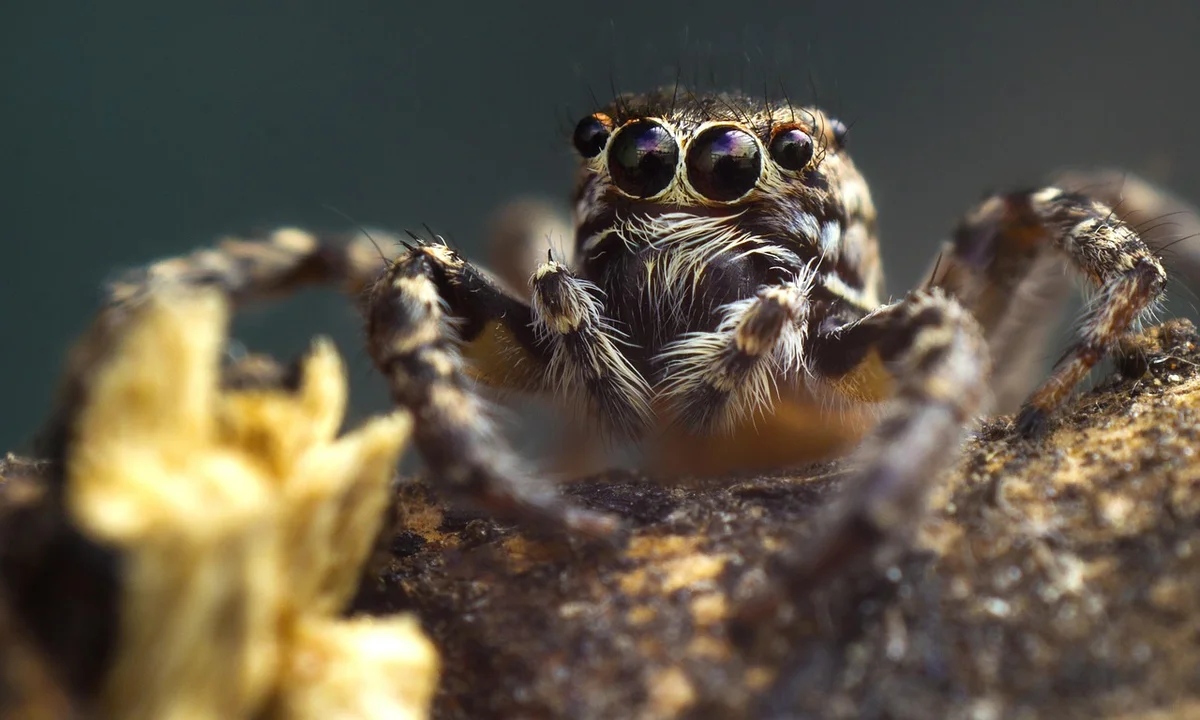
Tarantula movement is a silent marvel of biological engineering, powered by a combination of muscle and fluid. Each leg operates like a hydraulic piston. Muscles in the upper leg, the femur, can only pull the limb inward, flexing it. To extend the leg outward, the spider increases its internal body pressure, pumping hemolymph-its blood-into the limb.
This hydraulic extension system means a well-hydrated tarantula moves with more power and precision than a dehydrated one. It’s a precise, multi-legged pump system where coordination is everything.
Leg coordination follows distinct patterns, or gaits, depending on speed. During a slow, exploratory walk, legs move in a complex, wave-like sequence for stability. When transitioning to a sprint, this pattern tightens. Legs on opposite sides of the body often move in tandem, creating a more synchronized and powerful propulsion.
Several anatomical features directly enable or limit their explosive potential:
- Hydraulic Pressure: The primary engine for speed. Higher internal pressure equals faster, more forceful leg extension.
- Muscle Mass: Concentrated at the body core (prosoma). More muscle means stronger retraction, pulling the body forward after each hydraulic push.
- Lightweight Exoskeleton: Minimizes mass to accelerate, but provides less structural leverage than vertebrate skeletons.
- Claw Tufts & Hairs: Microscopic grips on the end of each foot provide incredible traction on most surfaces, preventing slips during a high-speed dash.
- Body Plan: A low center of gravity aids in stability during rapid direction changes, though their physiology favors straight-line bursts over complex maneuvering.
Behavior in Motion: When and Why Speed Erupts
Speed is a tool, deployed for specific reasons. A tarantula’s velocity tells you exactly what it’s thinking and what it needs.
Hunting and Prey Capture: The Ambush Sprint
The feeding strike is a masterclass in efficient motion. For hours, my old-world Pterinochilus murinus, Flash, remains a statue. Then, a cricket’s footfall vibrates the web. Her body tenses imperceptibly. In a blur, she covers several inches, fangs first. The entire event is over in under a second.
This ambush sprint is not a chase; it’s a calculated, point-blank explosion of motion triggered entirely by precise vibration sensing. The tarantula’s legs act as tuned antennae, feeling the exact location and size of prey through the substrate and silk. The speed ensures surprise and minimizes the prey’s chance to retaliate, much like how no chase is involved in their hunting strategy.
Escape and Defense: The Flight Response
When threatened, a tarantula’s goal is distance, not confrontation. A shadow passing overhead, a sudden vibration, or an intrusive tool can trigger this panic sprint. My Theraphosa stirmi, Goliath, combines defense with speed. She will first face a threat, lift her abdomen, and kick a cloud of urticating hairs. If the threat persists, she turns and bolts for her hide with shocking agility for her size. In addition to kicking hairs, tarantulas may bite in self-defense, delivering venom to deter threats. However, for many species, the urticating hairs remain the primary defense and often suffice to deter predators without a bite.
Defensive sprints are often more erratic than hunting strikes, characterized by a desperate, direct scramble to the nearest dark enclosure corner or burrow entrance. This is the speed you must respect during enclosure maintenance, as a startled tarantula has no concept of “up” and can sprint right over the side of an open tank.
Normal Activity vs. Stress Signals: Reading the Speed
Not all movement is extreme. Normal, nocturnal pacing is methodical. You might see your tarantula slowly patrolling the enclosure perimeter, testing the walls with its front legs, or deliberately rearranging substrate. My Grammostola rosea, Rosie, will sometimes spend a full hour slowly excavating her hide in a calm, rhythmic fashion.
Frantic, repetitive speed is a red flag. Here is how to differentiate curiosity from panic:
- Observe the Path: Normal exploration is varied. Stress pacing is a tight, repeated circuit along the same route, often the front glass.
- Check for Triggers: Is the behavior constant, or does it spike when room lights turn on or vibrations occur? Reaction to external stimuli points to stress.
- Assess Posture: A stressed tarantula often holds its body low, legs tense, ready to bolt. A curious one moves with a slightly higher, more relaxed stance.
- Evaluate Housing: Constant pacing often means the enclosure is unsuitable. It may lack hides, be too small, have incorrect humidity, or be in a high-traffic area. Flash’s first enclosure was too open; her non-stop pacing ceased when I added more anchor points and clutter.
Learning to read the tempo of your tarantula’s movement—from the slow, deliberate redecorating to the heart-stopping defensive bolt—is the key to understanding its well-being and providing a secure, low-stress home. This includes being able to read your tarantula’s body language for stress and defensive signs.
Safety and Secure Housing for Fast Species
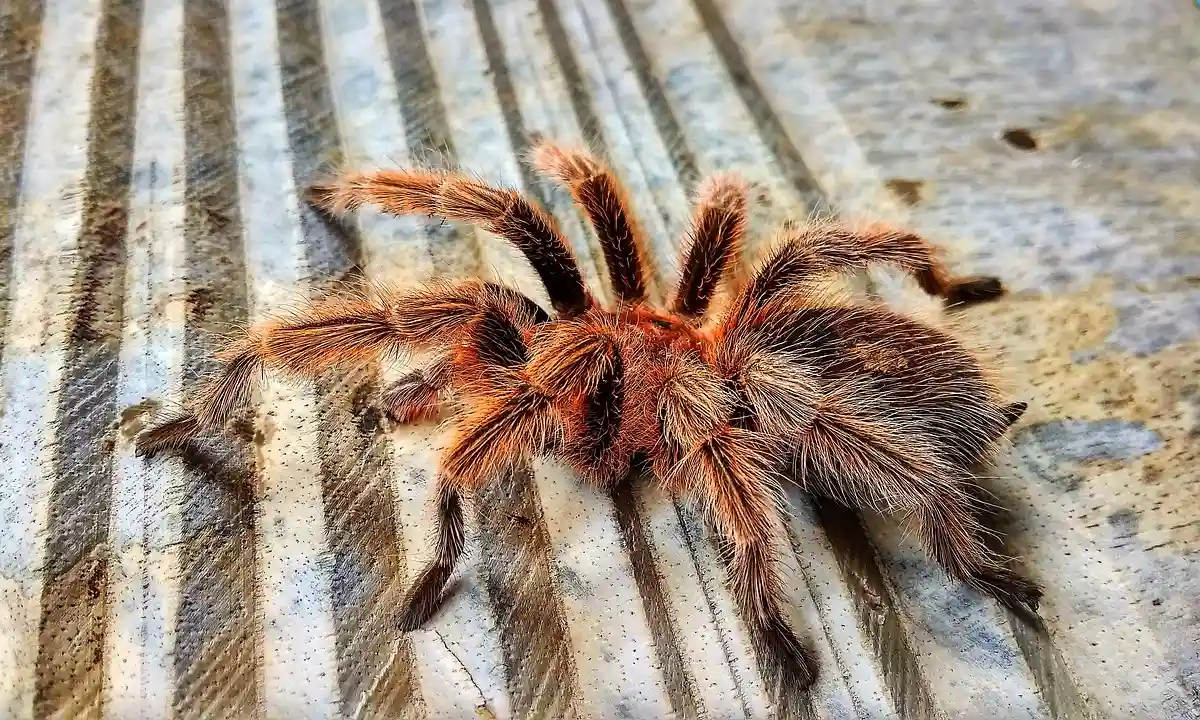
Respecting a tarantula’s speed means adopting a ‘Look, Don’t Touch’ mindset as a core safety rule. This philosophy protects you from a defensive bite and, more importantly, spares your tarantula the immense stress and risk of injury from a fall. Fast species like my P. murinus, Flash, operate on a hair-trigger nervous system; a perceived threat triggers instant flight, not calculation.
Creating an escape-proof enclosure is your first and most critical line of defense. A successful setup anticipates the tarantula’s strength and agility. Equally important is properly ventilating a secure tarantula enclosure. Adequate airflow helps maintain stable humidity and reduces mold risk.
- Secure Lids: All lids must lock or clip firmly. For my larger, powerful terrestrials like Goliath, I use aquarium lid clips in addition to any built-in locks. For arboreal species that can push, weighted or magnet-secured tops are non-negotiable.
- Gap Prevention: Ventilation holes or slots must be smaller than the tarantula’s carapace. I measure the space between the lid and the enclosure wall with a ruler; if my pinky fits, so could a determined spiderling.
- Safe Ventilation: Cross-ventilation is vital, but never sacrifice security for airflow. Drilled holes or fine mesh on multiple sides are preferable to large, sliding top screens that can catch delicate tarsal claws.
Rehousing a fast tarantula demands a protocol, not improvisation. I perform this in a small, clutter-free room with all escape routes blocked. For safe transport and a clean rehouse, I use a secure, ventilated container and minimize handling to reduce stress. The goal is to move quickly but calmly, keeping the tarantula contained at all times.
- Assemble the new enclosure and have all tools (long tweezers, soft paintbrush, deli cups, sturdy cardboard) within reach.
- Gently guide the tarantula from its old home into a large, clear deli cup using the brush. Immediately secure the cup’s lid.
- Place the secured cup into the new, prepared enclosure. Open the cup lid and use the brush to encourage the tarantula to walk out on its own.
- Never grab or chase. The goal is to let the animal move at its own pace from one secure container to another.
Preparation is everything. I learned this during a rehouse of Flash, my OBT. One moment he was in his burrow, the next he was a blur of orange scaling the enclosure wall toward my hand. My heart hammered as I used a large catch cup to block his path, a reminder that their explosive speed leaves no room for hesitation. The silence after I secured the lid was louder than any sound.
Enrichment and Habitat Design for Natural Movement
An enclosure should be more than a cage; it’s a habitat that allows for natural locomotion. A tarantula that can express its full behavioral repertoire is a less stressed, more observable animal. Essential features differ for terrestrial versus arboreal enclosures. Terrestrial tarantulas need stable ground and burrowing space; arboreals require vertical space and sturdy climbing structures. Providing the right architecture turns potential panic sprints into confident, natural movement.
Design must be species-specific, catering to innate instincts.
- For Arboreal Climbers: Vertical height with cork bark slabs, branches, and fake plants. They need anchor points high up for their silken retreats and safety lines-a network that lets them navigate vertically with confidence.
- For Terrestrial Burrowers: Depth is key. My Goliath has 8+ inches of moist substrate to construct his massive tunnels. A starter burrow against the glass lets you witness this secret engineering.
- For Opportunistic Burrowers: Even fossorial species like my G. rosea need enough substrate to dig if the mood strikes. A shallow layer frustrates this instinct.
- Anchor Points Everywhere: All species use silk for stability. Providing cork bark, twigs, or leaves gives them points to attach draglines, creating a secure web they can navigate quickly without risk of slipping.
Bioactive setups can subtly stimulate natural behaviors. A thriving microfauna population of springtails and isopods creates a dynamic substrate. Your tarantula may spend hours observing or gently investigating these tiny creatures, engaging its senses in a low-stakes hunt. The clean-up crew’s movement encourages gentle exploration from your pet.
You can encourage natural speed and agility through controlled enrichment. Vary your prey presentation. Instead of always offering a cricket directly in front of the burrow, occasionally place it on the opposite side of the enclosure. For my watchful Goliath, I’ll sometimes let a roach wander on the surface, triggering his impressive, lurching strike from his burrow entrance. This mimics the unpredictability of wild hunting and provides mental stimulation without the risks of handling. Observe the focused stillness before the strike-a testament to their evolved, efficient speed.
FAQs
Can I outrun my pet tarantula if it gets loose?
In a short, direct sprint, you cannot outrun a fast species like an Old World tarantula. Their explosive acceleration from a standstill is far quicker than human reaction time. However, they are built for brief bursts, not endurance, and you can easily keep pace with a walking pace. The real concern is their ability to disappear instantly into small, dark spaces in your home, not a prolonged chase.
Are there any truly “slow” tarantulas safe for beginners to handle?
No tarantula is considered “safe” to handle, as all can bite or flick hairs if stressed, and all are fragile and can die from a fall. However, some New World species like the Chilean Rose Hair (Grammostola rosea) are famously slow-moving and docile, making them less reactive. Their calm demeanor makes them excellent beginner species for observational care, but handling is always discouraged due to risks to the animal.
What’s the first thing I should do if my fast tarantula escapes its enclosure?
Stay calm and immediately confine the room by closing doors and blocking gaps under them. Turn off fans or AC to stop air currents, and dim the lights. Your tarantula will seek a dark, tight space, so carefully check along walls, under furniture, and inside shoes or clutter. Use a clear plastic cup and a stiff piece of paper to gently capture it once located, always guiding it—never grabbing. Once captured, you can handle and quarantine it during enclosure cleaning to ensure both your safety and the tarantula’s health.
Besides prey, how can I encourage my tarantula to move and explore?
You can encourage natural movement through thoughtful habitat design. Providing ample anchor points like cork bark and branches allows them to web securely and move with confidence. Occasionally changing the placement of décor or prey items (using long tongs) can stimulate gentle exploration. A bioactive setup with a clean-up crew also creates a dynamic environment that engages their senses without stress.
Does my tarantula’s speed mean it’s stressed or unhappy?
Not necessarily. Occasional fast patrols or a quick retreat from a disturbance are normal. Consistent, frantic pacing or repeated attempts to climb the glass, however, are strong stress indicators. This behavior often signals an issue with the enclosure, such as incorrect humidity, lack of hides, or placement in a high-vibration area. Assessing and correcting husbandry is key to restoring calm behavior.
The Final Molt: Cultivating a Healthy, Low-Stress Environment
Managing a tarantula’s speed begins long before it decides to sprint. The single most important parameter for any fast-moving species is providing an enclosure that is appropriately sized-not too large-with ample, secure anchor points for webbing and a deep, forgiving substrate to cushion any falls. A terrified spider in a vast, barren tank is an accident waiting to happen.
True success in this hobby is measured in quiet moments of observation. Watch the meticulous architecture of a webbing species like my OBT, Flash, who transforms his home into a labyrinth of silk. Appreciate the patient, calculating ambush of a terrestrial species. Your patience in providing consistent, correct husbandry is rewarded not with interaction, but with the privilege of witnessing natural, fascinating behaviors. Speed is just one facet of their incredible design. Respect it, plan for it, and you’ll find a deeper appreciation for the animal in your care.
Further Reading & Sources
- Tarantula top speed? | Arachnoboards
- Effect of temperature on leg kinematics in sprinting tarantulas (Aphonopelma hentzi): high speed may limit hydraulic joint actuation – PMC
- How fast do different Tarantula breeds move? | Tarantula Forum
Arlo is a lifelong arachnid enthusiast who believes tarantulas are the world’s most misunderstood roommates. With years of hands-on experience in tarantula care, habitat setup, and species behavior, Arlo combines expert knowledge with a dash of humor to make spider ownership less scary and a lot more fascinating. From choosing the right enclosure to understanding why your eight-legged buddy is doing that weird little pose again, Arlo is here to help you become the best tarantula parent you can be, without getting tangled in the web of misinformation.
Understanding Tarantula Behavior