
How Can You Tell a Tarantula’s Age? (Signs and Indicators)
In the quiet hobby of arachnoculture, where my Chilean Rose Hair Rosie has been a steadfast, dusty pink companion for fifteen years, a tarantula’s age remains a beautifully opaque mystery. You cannot count years like rings on a tree, but you can read the story written in molts, morphology, and behavior. This article shares the observational techniques I’ve honed through breeding and keeping diverse species, from my slow-growing Grammostola to my fast-maturing OBT. For a direct answer: prioritize size comparisons, sex identification, and the telltale slowing of the molt cycle.
Quick Stats:
- Growth Rate Spectrum: From glacial (Grammostola rosea, adding an inch in half a decade) to rapid (Psalmopoeus murinus, reaching maturity in under two years).
- Lifespan Divide: Female tarantulas commonly live 10-30 years; males typically live 2-5 years after maturing.
- Molt Pattern Shift: Frequency plummets from every few weeks as a sling to once a year or less as a mature adult.
This guide will teach you to interpret the physical and behavioral clues that chart a tarantula’s journey from delicate sling to venerable adult spider.
Why a Tarantula’s Exact Age Is Often a Mystery
In my years of breeding and keeping, I have never known the precise birthday of a single tarantula I’ve owned, including my 15-year-old G. rosea, Rosie. Unlike mammals, tarantulas lack the telltale dental records or annual growth rings that provide a clear chronological ledger. Their life history is written in a more subtle, biological script. In the wild, a tarantula’s journey from egg to adult is a clandestine affair, hidden in a burrow or under bark. Even in captivity, most tarantulas are acquired as juveniles or adults, their early history lost to the pet trade.
The single greatest factor obscuring a tarantula’s age is the immense variability in growth rates. This is not a simple clock. Growth is a frantic dance dictated by species, temperature, feeding frequency, and individual metabolism. A well-fed P. murinus like Flash can reach maturity in under two years, while a slow-growing G. rosea might take a decade. I’ve raised siblings from the same egg sac on identical regimens where one molted twice before the other molted once.
Key Tarantula Age Indicators: Reading the Clues
While we cannot pinpoint an exact year, we become detectives, learning to interpret a suite of clues that reveal life stage. This is not about assigning a number, but understanding where your tarantula is in its remarkable journey.
Observing Size and Leg Span
Size is the most obvious, but also the most relative, indicator. You must always reference the known maximum size for the specific species. A 5-inch T. stirmi like my Goliath is still a sub-adult, while a 5-inch G. rosea is almost certainly a mature adult. Juveniles show rapid increases in leg span and body mass between molts, a growth you can visibly appreciate every few months. Adults, conversely, reach a morphological plateau. My Rosie has been the exact same size for nearly a decade.
Look at the proportions. Spiderlings are often all abdomen with spindly legs. As they mature, the carapace broadens, and the legs gain substantial girth and strength. A key sign of a maturing male is the appearance of longer legs and a smaller abdomen relative to a bulky, egg-carrying female.
Watching Color and Pattern Development
For many species, color is a direct window into maturation. Neonates often bear little resemblance to their parents. The vibrant adult coloration, like the searing orange of an OBT, typically deepens and solidifies with the final few molts to maturity. My Flash was a dull, cryptic brown for his first several instars before his famous orange hue blazed forth.
Some species undergo dramatic pattern changes. A “zebra” knee banding might become more defined. The iridescent sheen on a carapace, seen in some Caribena species, intensifies with age. Look for the fading of juvenile patterns and the consolidation of the adult palette. This transformation is one of the most rewarding visual payoffs in the hobby.
Noting Behavioral Shifts and Life Stage Milestones
Behavior offers profound age and stage clues. A once-skittish juvenile that now stands its ground and threat-poses may be entering maturity. The most definitive behavioral shift is in mature males, who develop tibial hooks and emboli and abandon their homes to wander relentlessly in search of a mate. This “ultimate molt” signals the final chapter of their life.
Females exhibit subtler changes. A noticeable decrease in feeding frequency and activity often indicates adulthood. My Rosie’s transformation from an eager eater to a ‘pet rock’ that fasts for 9-month stretches is classic post-maturity behavior for many species. Web-building also evolves; a juvenile’s sparse silk mat often becomes an elaborate funnel or sheet as the spider perfects its craft.
Molting frequency is the ultimate behavioral metric. Spiderlings may molt every few weeks, large juveniles every few months, and adults may go 12-18 months between molts. Tracking the slowing rhythm of the molt cycle is the closest we get to hearing a tarantula’s biological clock tick. Studying spiderlings is essential to understanding tarantula molting cycles from the earliest stages. Following their first molts helps reveal how growth rate and developmental timing shape the tarantula’s life history.
The Role of Molting: Your Best Tool for Age Estimation
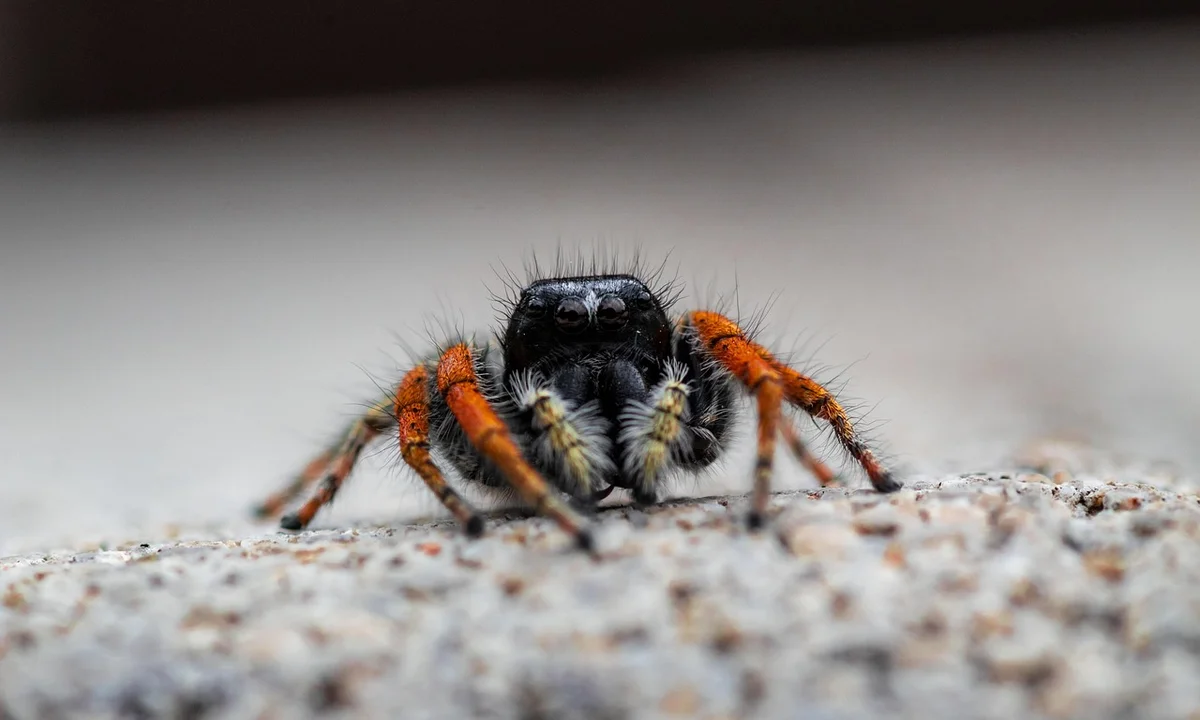
Molting, or shedding its exoskeleton, is the single most revealing event in a tarantula’s life. For us, it’s a window into their health, growth, and age. A fresh molt is a biological data log, providing clues that nothing else can. The old skin holds the exact size and often the sex of your spider. But its timing tells the story of age. Sometimes a molt can look alarming, and it’s easy to worry your tarantula is dying. To tell the difference, observe whether the molt progresses and the spider eventually resumes activity and hardens its new shell, or whether there is persistent immobility and no signs of recovery.
How to Estimate Age by Counting Molts
For spiderlings and juveniles, molt counting is your most accurate method. A healthy tarantula will molt on a semi-regular schedule when young. If you purchase a 1-inch sling, you can start your own calendar. I log every molt for my young spiders in a simple notebook, noting the date and the spider’s new legspan. This creates a personal growth chart.
However, this method has limits. Once a tarantula reaches maturity, especially males, molt frequency plummets. My old-world female, Flash (P. murinus), molted three times in her first year. Now, as an adult, it might be once every 18 months. For adult purchases, you’re not counting molts—you’re interpreting their signs. That’s the kind of detail you’ll find in a month-by-month tarantula growth guide. It helps you read molt signs and track growth through each life stage.
- Spiderlings (0-1.5″): Can molt every 3-8 weeks. Rapid growth phase.
- Juveniles (1.5″-near adult size): May molt every 3-6 months. Schedule becomes less predictable.
- Adults: Females may molt once every 12-24 months. Mature males may never molt again.
How Molt Frequency Signals Life Stage
The slowdown is the signal. A tarantula that molted twice in a year but hasn’t molted in the last 15 months is likely entering its adult stage. For females of long-lived species, like my Grammostola rosea Rosie, the gaps become vast. She hasn’t molted in over three years—a clear sign of her advanced maturity. A long pre-molt fast and a lengthy, successful molt recovery are hallmarks of an older, larger tarantula. These signals also feed into a long-term lifespan guide by species. Different tarantula species can have very different lifespans, from a few years to decades in captivity. Conversely, a spider that still molts with youthful frequency is likely under five years old.
Species-Specific Age Clues: One Size Does Not Fit All
A tarantula’s genealogy dictates its life clock. Assuming a 4-inch Brachypelma is the same age as a 4-inch Pterinochilus is a major error. Their growth speeds and lifespans are worlds apart.
Slow and Steady: The Long-Lived Terrestrials
New World, ground-dwelling genera like Grammostola, Brachypelma, and Aphonopelma are the tortoises of the tarantula world. They grow with agonizing patience. A 5-inch female from these groups could easily be 10-15 years old, possibly even older if wild-caught. My Rosie, at 15, is in her prime middle-age. These species show their age through profound stillness, very long fasting periods, and molts that become rare, major events. Their size is a poor indicator of youth.
Fast and Furious: The Quick-Maturing Species
Contrast this with many Old World arboreals and some fast terrestrial species. Genera like Pterinochilus (OBTs), Poecilotheria, and Chromatopelma grow at an astonishing rate. My OBT, Flash, reached her full 5-inch size in under two years-a pace that would take a Rose Hair over a decade. A large, mature female from these faster groups might only be 3-5 years old. They often have higher metabolisms and more frequent molts as juveniles, but their adult lifespans are generally shorter than their slow-growing cousins.
Even large species vary. The massive Theraphosa stirmi (my Goliath) grows relatively quickly, reaching impressive size in 3-4 years, while an Aphonopelma chalcodes of the same size might be 20. Knowing your species’ typical growth rate is the first step in making an educated age guess.
Caring for an Aging Tarantula: Adjusting Your Husbandry
Recognizing the Signs of an Elderly Tarantula
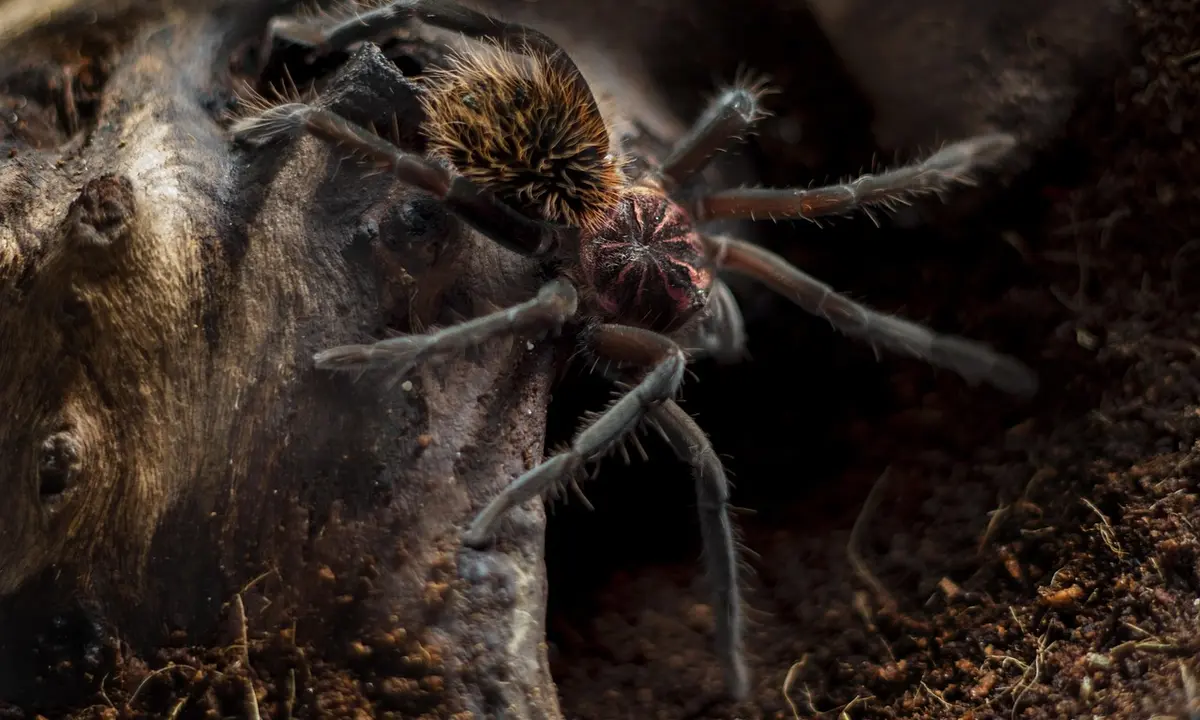
An older tarantula communicates its age through subtle, physical shifts in behavior and appearance. Watch for a pronounced slowdown in general activity, where your once-curious explorer may now prefer the silence of its hide for weeks on end. The vibrant colors of a fresh exoskeleton, like the bright orange of an OBT, can fade to a duller, muted hue after many molts. Movement becomes deliberate and sometimes uncoordinated, especially after a molt, as joint membranes stiffen. My old Chilean Rose Hair, Rosie, exemplifies this: her dusty pink carapace has lost its iridescent sheen, and her famous “pet rock” demeanor has intensified into months of complete stillness.
Other indicators include longer intervals between molts or a cessation of molting entirely in mature males. Appetite often diminishes dramatically, with some species entering voluntary fasts that stretch for a year or more, which is a natural stress reduction strategy. You might notice slightly cloudy eyes or a persistent bald patch on the abdomen from past urticating hair kicks that no longer regrows. These signs, observed together, paint a picture of a senior spider.
Adapting the Enclosure for Comfort and Safety
An aging tarantula’s habitat must prioritize security and ease of access above all else. The primary goal is to eliminate any risk of a fall, as a brittle exoskeleton is far more susceptible to fatal rupture. I learned this after rehousing my Burgundy Goliath Bird Eater, Goliath; his occasional hair-kicking fits made me remove all tall cork bark, replacing it with a wide, shallow hide. A secure, escape-proof setup also lowers bite risk by reducing stress during routine checks. By prioritizing a calm, accessible habitat, you minimize defensive bites and make care safer for both you and the tarantula.
Follow these steps to retrofit an enclosure:
- Reduce vertical space. For terrestrial species, the distance from the substrate to the lid should not exceed 1.5 times the tarantula’s diagonal leg span.
- Use minimal, ground-level decor. A single hide with a wide entrance and perhaps a silk plant for cover is sufficient.
- Switch to a shallower water dish. A bottle cap or ceramic dish no deeper than the spider’s carapace prevents drowning and allows easy drinking.
- Maintain a slightly deeper, packable substrate like coconut fiber or topsoil mix to cushion any minor slips.
Beyond the substrate, focus on providing stable, easy-to-maintain conditions-constant fluctuations in temperature or humidity are more taxing on an older specimen. For my moisture-loving T. stirmi, I keep humidity at a steady 80% through a large water dish and damp substrate corner, avoiding frequent misting that disturbs him.
Feeding and Hydration for Senior Tarantulas
The dietary needs of an elderly tarantula shift from growth to simple sustenance. Offer smaller, softer prey items like pre-killed crickets, chopped mealworms, or even a repashy gel cube, presented once every three to four weeks. This approach aligns with the best diet feeding schedule for a healthy tarantula, emphasizing infrequent, smaller meals to minimize stress. Regular monitoring of appetite and body condition helps ensure the schedule remains appropriate for aging tarantulas. The sudden strike of their younger years may be replaced by a slower, more tentative approach. If the prey is ignored for 24 hours, remove it to prevent stress and enclosure contamination.
Hydration becomes critically important, especially for fasting individuals. A clean, accessible water dish is non-negotiable; I refresh Rosie’s dish weekly, even during her 10-month fasting periods, and have seen her drink regularly. For species that prefer higher humidity, ensure the water dish is always full to support their respiratory health. Understand that prolonged fasting is biologically normal for many mature tarantulas, particularly Grammostola species like my rosea. Do not attempt to force-feed; this causes immense stress.
The Limits of Tarantula Age Estimation: Embracing the Unknown
Despite our best observations, a tarantula’s exact age remains one of the hobby’s great mysteries. We are always making educated guesses based on size, sexual maturity, and molt history, not precise birth records. A wild-caught specimen could be decades old upon purchase, and even captive-bred slings have variable growth rates influenced by temperature and feeding. This variability is one of the reasons determining tarantula age in the wild versus in captivity can be so challenging.
This uncertainty is not a failure but an invitation to hone your skills as a keeper. Focus your energy on providing impeccable, species-specific care, and your tarantula will communicate its needs through its behavior. My defensive P. murinus, Flash, teaches me daily; his frantic webbing and threat postures clearly state his desire for privacy and a stable, dry environment. Whether your tarantula is five years old or twenty, the principles of respectful, observant husbandry—prioritizing their safety and comfort in a “look, don’t touch” framework—are what truly ensure a long, healthy life. For those aiming to properly care for advanced, rare tarantula species, this intent must translate into meticulous, species-aware husbandry. In practice, that means researching each species’ needs and tailoring enclosures accordingly. Embrace the unknown, and let the animal itself be your guide.
FAQs
What are the most reliable indicators for estimating a tarantula’s age?
Key indicators include size relative to species norms, molt frequency, and behavioral changes. For instance, juveniles grow rapidly and molt often, while adults plateau in size and molt less frequently. Observing sexual maturity, like tibial hooks in males or a slowdown in activity, also provides strong clues to life stage.
How does molting frequency reveal a tarantula’s life stage?
Molting frequency slows dramatically as tarantulas age, making it a primary age indicator. Spiderlings may molt every few weeks, juveniles every few months, and mature adults often go a year or more between molts. Tracking this slowing rhythm helps distinguish between young, fast-growing spiders and older, established ones.
Why is age estimation different across tarantula species?
Species growth rates vary immensely, so size alone is misleading. Slow-growing terrestrials like Grammostola can take a decade to mature, while fast-maturing species like Psalmopoeus may reach adulthood in under two years. Always reference species-specific lifespan and growth data for accurate age guesses.
What behavioral signs suggest a tarantula is aging?
Older tarantulas often show reduced activity, longer fasting periods, and less frequent molts. Mature males may wander seeking mates, while females might become more sedentary. These shifts, along with potential color fading, signal advancing age and require adjusted care for comfort. Lifespan varies by species (https://eightleggedlife.com/what-factors-influence-a-tarantulas-lifespan-care-species-and-environment) and individual biology. The care environment, including enclosure setup and diet, also influences longevity.
The Long View
Whether caring for a tiny sling or a venerable adult like my fifteen-year-old Rosie, your consistent care forms the bedrock of their longevity. The single most important daily practice is ensuring constant access to fresh, clean water in a shallow, safe dish; dehydration is a silent killer that can halt molts and shorten lifespans dramatically.
Beyond fundamental needs, your greatest joy lies in quiet observation. Watch for the methodical expansion of a burrow, the intricate architecture of a new web sheet, or the patient ambush from a hide. A tarantula’s age is not just in its size but in the stories its behavior tells-the seasoned calm of a mature female, the explosive growth of a juvenile. Success in this hobby is measured in years, not days, and your patient stewardship is the key to witnessing a truly remarkable life unfold in silence.
Further Reading & Sources
- How to Tell the Age of a Tarantula | Pets on Mom.com
- Tarantula Growth and Development Tarantulas, like all arthropods, have a
- How can you tell if a tarantula is old | Arachnoboards
Arlo is a lifelong arachnid enthusiast who believes tarantulas are the world’s most misunderstood roommates. With years of hands-on experience in tarantula care, habitat setup, and species behavior, Arlo combines expert knowledge with a dash of humor to make spider ownership less scary and a lot more fascinating. From choosing the right enclosure to understanding why your eight-legged buddy is doing that weird little pose again, Arlo is here to help you become the best tarantula parent you can be, without getting tangled in the web of misinformation.
Lifespan