
Tarantula Age & Lifespan Estimator: Mapping Your Spider’s Journey
In a hobby measured in molts and years, a tarantula’s age is a story written in slow motion. Estimating a tarantula’s age and potential lifespan is less about a simple calendar and more about interpreting a tapestry of species biology, growth rate, and individual history. This guide merges observable clues with husbandry science to help you make an educated guess at your spider’s timeline, empowering you to tailor care for every life stage. A quick answer: while size offers a hint, the most reliable age indicators are a documented growth history and, for adults, a confirmed sex-female tarantulas often live 2 to 5 times longer than males.
Quick Stats: Lifespan Fundamentals
- Primary Lifespan Factor: Sex. Females are the long-haul champions; males are typically short-lived post-maturity.
- Growth Speed Spectrum: Ranges from glacial (e.g., Grammostola species, taking 7+ years to mature) to rapid (e.g., Psalmopoeus species, maturing in 2-3 years).
- Major Life Stages: Sling (0-1.5″), Juvenile (1.5″-near adult size), Mature Adult (final size, capable of reproduction).
Drawing from my own colony-from Rosie’s 15-year stillness to Flash’s explosive two-year growth-this estimator will equip you to decode the signs and support your tarantula from its first fragile molt to its venerable old age.
Species and Sex: The Lifespan Blueprint
Your Tarantula’s Species is the Biggest Clue
A tarantula’s maximum potential lifespan is written in its genetic code. New World terrestrial species from arid climates, like my old Chilean Rose Hair (Grammostola rosea), are the marathon runners, with females regularly living 20-25 years. These figures illustrate the kind of species-by-species data found in a long tarantula lifespan guide. They show why choosing a species matters for long-term care. My Rosie, at 15, is just entering her dignified middle age. Contrast this with many fast-growing, tropical arboreal species, whose females may live 8-12 years—a vibrant, but shorter, sprint.
The difference is tied to metabolism and environment. A slow-growing desert dweller has evolved for endurance, while a rainforest opportunist grows quickly to reproduce in a dynamic habitat. Knowing your species’ origin gives you the first and most powerful number in the lifespan equation.
- Longevity Champions (Female): Grammostola, Brachypelma, Aphonopelma species. Often 20+ years.
- Intermediate Lifespans (Female): Many terrestrial species like my Goliath’s kin (Theraphosa stirmi). 10-15 years.
- Shorter, Intense Lives (Female): Fast arboreals like Poecilotheria, or prolific webbers like my OBT (Pterinochilus murinus). Often 8-12 years.
The Critical Division: Male vs. Female Longevity
Sex is the ultimate lifespan dictator. Female tarantulas enjoy dramatically longer lives because their goal is to reach maturity, mate, and then invest energy into producing egg sacs over many seasons. Their post-ultimate molt life is measured in years, sometimes decades. In this ultimate maturity guide, we also compare how male tarantulas fare, and explain why females tend to outlive them. Understanding this sex-based contrast helps explain the full arc of tarantula lifespans.
Males have a single biological purpose: find a mate. After their final, transformative “ultimate molt,” males typically have only 6 to 18 months left, a period marked by restless wandering and a loss of interest in food. I’ve seen this clock start ticking in my own collection; it’s a poignant, natural process.
This is why the “ultimate molt” is such a pivotal husbandry event. For a male, it signals the beginning of the end of his natural life. For a keeper, it means ensuring he is well-fed and housed securely before any breeding attempts, as his time is now precious and limited.
Decoding Life Stages: From Spiderling to Senior
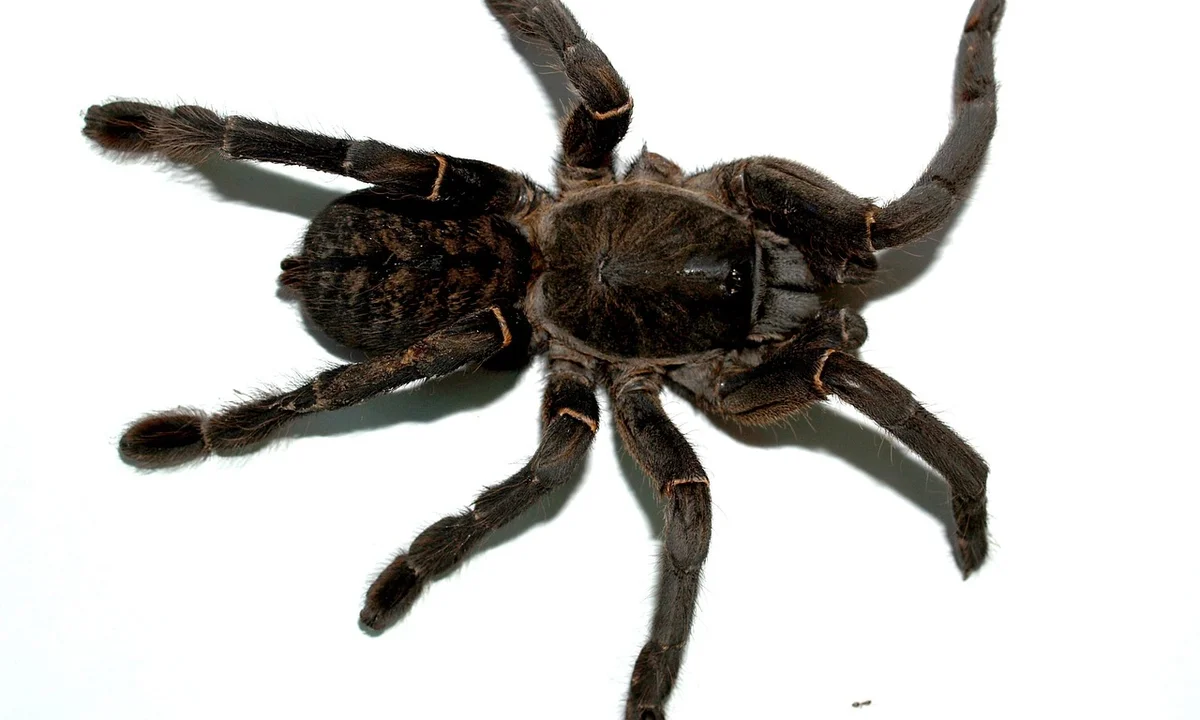
Identifying Spiderling, Juvenile, and Adult Stages
Visually tracking these stages removes the guesswork from aging. A spiderling (or “sling”) is typically under 1″ in diagonal leg span (DLS), often looks like a tiny, pale replica of its parents, and its behavior is all about hiding and rapid growth. They are fragile and require careful humidity management.
The juvenile stage is the long, fascinating middle. You’ll see pronounced growth between molts, the full adult coloration gradually developing, and species-specific behaviors becoming apparent. My OBT, Flash, spun elaborate funnel webs as a tiny juvenile-a clear personality preview. This stage can last several years.
Adulthood is marked by sexual maturity. Females become robust and often more settled, while mature males develop tibial hooks on their front legs and emboli on their pedipalps, transforming them for mating. An adult female’s abdomen is often larger and rounder when well-fed, a sign of her egg-producing capacity.
How Growth Rate Reveals Age
Growth rate is not a precise calendar, but a flexible indicator. A tarantula that molts every few months is likely under two years old, while one that molts once a year or less is a settled adult. My Goliath, at 4 years old and over 9 inches, still molts annually, revealing his continued, albeit slowed, maturation.
Several factors directly control this metabolic pace:
- Temperature: Warmer temperatures (78-85°F) accelerate metabolism and growth. Cooler temps (70-75°F) slow it down.
- Feeding Frequency: Consistent, appropriate feeding fuels growth. Sporadic feeding, like my Rose Hair’s infamous fasts, pauses the process.
- Species Genetics: A Brazilian Salmon Pink (Lasiodora parahybana) will outgrow a Mexican Redknee (Brachypelma hamorii) of the same age every time.
By observing the frequency of molts and the increase in size, you can place your tarantula on a relative timeline-fast-growing juvenile, slowing sub-adult, or methodical adult. This understanding helps you provide stage-appropriate care, from the humid vial of a spiderling to the spacious, deep substrate an adult terrestrial requires. A complete month-by-month growth guide from sling to adult can help you track milestones and fine-tune enclosure size, humidity, and feeding as your tarantula grows.
The Molt Cycle: Your Best Age Estimation Tool
Forget counting rings on a tree. For tarantulas, the exuvia-the discarded exoskeleton-is the closest thing to a personal diary. Each molt marks a clear chapter in their life. By carefully tracking these molts, you build a reliable, firsthand history that no generic growth chart can match.
Tracking Molts Like a Logbook
I keep a simple digital note for each of my spiders. The moment I find a molt, I log the date and take a photo next to a ruler. This habit started after my OBT, Flash, molted three times in a single year as a sling, then suddenly stopped. My 15-year-old G. rosea, Rosie, might go over a year between molts now. This log revealed their individual growth rhythms, turning vague guesses into precise data.
Establish your own log. Note the date, the spider’s approximate legspan before and after, and any observations. Did they fast for weeks prior? Was the molt perfect? This record becomes invaluable.
- For fast-growing slings (like my OBT was): Expect molts every few weeks to months.
- For juvenile and sub-adult specimens: Molts may come every 6 to 18 months, varying hugely by species.
- For mature adults, especially females: The interval can stretch to years, a sign of their slowed biological clock.
How to “Read” a Molt for Age and Sex Clues
A fresh, intact molt is a treasure trove of information. With soft-tipped tweezers and a small paintbrush, you can gently explore it.
To estimate age progression, examine the molt’s size compared to the last one. A dramatic increase suggests a younger, still-growing animal. A minimal size change often indicates maturity is near.
Sexing is done by inspecting the interior of the abdomen’s upper half. For females of many species, you may find two whitish, ribbon-like structures-the spermathecae. Their absence suggests, but does not guarantee, a male. Mature male molts will clearly show the emboli-modified palpal tips-on the pedipalps, which look like small boxing gloves. Finding these on my old male Goliath’s molt confirmed he had reached his final life stage.
- Soak the molt in a drop of water with a dash of dish soap to soften it.
- Under good light, use tools to carefully open the abdomen from the top.
- Look for those pale, skeletal structures. A hand lens or macro camera helps.
The Size Estimation Method: A Rough Guide
While not precise, size offers a general frame of reference, especially for tarantulas with unknown history.
Measuring Legspan and Carapace Width
Use a clear ruler against the outside of the enclosure. Measure diagonally from the tip of the first leg to the tip of the opposite hind leg for legspan. For carapace width, measure across the widest part of the hardened dorsal plate. My T. stirmi, Goliath, has a legspan nearing 9 inches but a carapace only about 2 inches wide. Legspan shows overall scale, but carapace width is a more stable indicator of skeletal growth.
Why Size Alone is a Tricky Indicator
Size can deceive. A well-fed, warm tarantula may grow faster and larger than a sibling kept cooler. My OBT reached 5 inches in under two years, while a rose hair might take a decade. Species is the greatest variable. A 4-inch Acanthoscurria geniculata is likely a juvenile; a 4-inch Grammostola rosea could be a middle-aged adult. Always pair size with molt history and species-specific growth rates for a clearer picture.
Using a Lifespan Estimator: A Practical Framework
An estimator is not a crystal ball. It is a thinking tool that combines known factors to bracket possibilities.
Inputting Your Tarantula’s Profile
Think in terms of these key parameters. I mentally run my spiders through this checklist.
- Species & Sex: This is the largest determinant. Female Brachypelma species can live 25+ years; male Psalmopoeus species may live only 3-4.
- Last Known Molt/Signs of Maturity: Has it molted recently with little size gain? For males, look for tibial hooks and emboli. These signal the “final inning.”
- Current Size vs. Maximum Species Size: A 3-inch spider from a species that maxes at 5 inches is likely not yet mature.
- Husbandry History: Consistent, appropriate care supports a full lifespan. Chronic stress or poor conditions can shorten it.
By cross-referencing these, you move from asking “How old is it?” to stating, “Given its size, species, and recent molt, it’s likely a sub-adult female, possibly 3-4 years into a potential 15-year lifespan.” This framework brings clarity, replacing mystery with informed estimation.
Extending Your Tarantula’s Lifespan: Care That Counts
Optimizing Environment for Longevity
Think of your tarantula’s enclosure as its entire world. Every detail directly impacts its metabolic rate and stress levels. My old Chilean Rose Hair, Rosie, has thrived for fifteen years because her simple, dry setup mimics the arid foothills of Chile. For my Burgundy Goliath, Goliath, I maintain 78-82°F with 80-85% humidity using a deep, moist substrate mix. Precise environmental replication isn’t just aesthetic; it reduces chronic stress that can silently shorten a tarantula’s life.
Start with substrate depth. Burrowing species need enough to construct secure tunnels. A good rule is twice the leg span of your tarantula. I use a blend of coconut fiber, peat moss, and vermiculite for moisture retention. Avoid potting soils with fertilizers. For arid types like Rosie, I use plain topsoil mixed with sand for drainage. The substrate should hold a burrow’s shape without collapsing. Deep beds suit burrowers, while some species thrive in shallower substrates. Tailor depth to your tarantula’s natural habitat.
Ventilation prevents stagnant air and mold, which is crucial for humid setups. I use cross-ventilation holes on the sides of Goliath’s enclosure, not just the top. This mimics gentle air flow and keeps the humidity high without suffocating moisture. Temperature stability matters more than a precise number. Sudden drops below 70°F can slow digestion for many species.
- For Moisture-Dependent Species (e.g., Theraphosa, Megaphobema): Use water-retentive substrate. Maintain 75-80% humidity. Provide a large, shallow water dish.
- For Arid Species (e.g., Grammostola, Aphonopelma): Use dry, packed substrate. Humidity can sit at 40-50%. A water dish is still non-negotiable.
- For All Enclosures: Ensure hides are secure and appropriately sized. Your tarantula should touch the sides, feeling enclosed and safe.
Bioactive setups, with clean-up crews like springtails, can help manage waste and mold. I’ve found they create a more stable microecology. Remember, the goal is a silent, stable environment where your tarantula feels invisible. Reducing visible stress behaviors, like constant climbing or frantic pacing, is a direct indicator of environmental success.
Diet and Health Monitoring
Feeding is not just about growth; it’s about health. Overfeeding accelerates the molt cycle and can lead to fatal complications. I feed my adult females, like Rosie, one appropriately sized cricket every 10-14 days. My growing OBT, Flash, gets a prey item weekly. The prey should be no larger than your tarantula’s carapace. For a best diet and feeding schedule that promotes health, keep prey portions consistent and adjust intervals as the spider grows. A lean tarantula is often a longer-lived tarantula, as excess weight strains their delicate exoskeleton and internal organs.
Gut-load your feeder insects with nutritious vegetables like carrots or commercial diets 24 hours before offering. This passes vital nutrients to your spider. I dust prey with calcium powder for slings and juveniles to support exoskeleton development. Always remove uneaten prey within 24 hours to prevent injury to a molting or stressed tarantula.
Health monitoring is daily observation. Look for a plump abdomen, clear eyes, and steady movement. Be alert for these red flags:
- A shriveled abdomen can indicate dehydration.
- Prolonged lethargy or a loss of righting reflex (inability to flip over) is a serious concern.
- Dark, wet spots on the abdomen may signal a fall or rupture.
- Refusal to eat for months, common in Grammostola, is usually normal fasting. Record it anyway.
Handling is a significant stressor and risk. I advocate for a strict “Look, Don’t Touch” policy. A fall from even a short height can be fatal due to abdominal rupture. The urticating hairs kicked by Goliath are a potent defense for a reason. Respecting their space is the single greatest act of care you can provide, ensuring they live a full, natural life without human-induced trauma.
Keeping a Tarantula Life Journal
What to Record for Accurate Tracking
A simple notebook or digital spreadsheet becomes a powerful tool. I’ve kept journals for all my tarantulas since my first rehousing mistake years ago. This log turns casual keeping into meaningful science. Consistent data points reveal the unique biological rhythm of your individual spider, which generic care sheets can never provide.
Record these details after every interaction or notable change:
| Data Point | Why It Matters | Example from My Colony |
|---|---|---|
| Molt Date & Sex Confirmation | Tracks growth rate and determines lifespan potential (females live decades longer). | Flash’s last molt on 04/10/2023 confirmed male. |
| Pre-Molt Signs | Darkening abdomen, bald spot, refusal of food. Helps you anticipate and avoid feeding. | Rosie stops eating 3-4 months before each molt. |
| Feeding Response & Prey Item | Monitors health and appetite cycles. | Goliath refused a roach on 05/01/2023, likely due to high humidity adjustment. |
| Enclosure Parameters | Temperature, humidity readings, and any changes made. | Noted that lowering Goliath’s humidity to 80% reduced hair-flicking. |
| Unusual Behavior | Webbing patterns, posture, or activity shifts. | Flash webbed entire cork bark hide shut, indicating reclusive period. |
Photograph each molt. Spread the exuvia carefully under a light to examine the epigastric furrow for sexing. This record is invaluable if you ever consult a breeder or veterinarian.
The Reward of Long-Term Observation
This journal transforms you from an owner into an observer. Over years, patterns emerge that teach you more than any book. Watching Rosie’s decade-plus of slow, deliberate movements has given me a deep appreciation for the patience of these animals. The journal becomes a story, a living document that connects you to the silent, intricate life happening within the enclosure.
You’ll start to predict molts with accuracy. You’ll recognize the difference between normal fasting and potential illness. When my OBT, Flash, began webbing more densely than usual, my journal showed it was his annual pre-molt pattern, not a cause for alarm. This practice reduces your impulse to intervene unnecessarily.
Sharing anonymized data with trusted communities contributes to collective knowledge, especially for species with less documented lifespans. The quiet act of noting “all is well” is a meditation. It reinforces that our role is custodianship, not control. In the end, the greatest reward is witnessing a complete, natural lifespan unfold through the pages of your own careful notes.
FAQs
What is the species of my tarantula, and why is it important for estimating lifespan?
The species is the primary factor in lifespan estimation, as genetics determine growth rates and longevity. For instance, slow-growing desert species like Grammostola can live decades, while fast arboreals like Psalmopoeus have shorter lives. Identifying your species allows you to reference typical lifespan ranges and adjust care for environmental needs, ensuring better health management.
How can I determine the sex of my tarantula, and why does it matter?
Sex is best confirmed by examining a shed molt for female spermathecae or male emboli and tibial hooks. This matters immensely because females often live 2 to 5 times longer than males, who typically die soon after maturity. Knowing the sex helps predict lifespan, plan for breeding, and prepare for the male’s shorter post-maturity phase, reducing uncertainty in age estimation.
What are the key life stages, and how can I identify them?
Tarantulas move through spiderling (under 1 inch, reclusive), juvenile (developing color and behavior), and adult (sexually mature) stages. You can identify these by size, molt frequency, and physical traits like robust bodies in females or hooks in males. These stage cues also serve as age signs or indicators, helping you estimate a tarantula’s approximate age based on development and molts. Recognizing the stage then informs how you tailor enclosure setup, feeding, and humidity to support growth and longevity.
How does general health and activity level influence lifespan estimation?
Health and activity level provide clues to well-being, impacting lifespan potential. A tarantula with a full abdomen, regular molts, and species-typical activity (e.g., webbing or burrowing) is likely thriving. Conversely, signs like prolonged fasting, lethargy, or injury may indicate stress or illness that could shorten life, highlighting the need for consistent monitoring and optimal husbandry practices.
The Final Molt
Reflecting on my years with Rosie, Goliath, and Flash, the common thread for a long, healthy life isn’t a mystery. Your tarantula’s lifespan is fundamentally tied to the stability of its environment, with precise humidity and temperature ranges that mimic its native habitat being non-negotiable. Other factors beyond humidity and temperature—substrate quality, enclosure size and hiding spots, and consistent feeding—also influence lifespan across species. A Grammostola rosea like my Rosie will thrive in bone-dry substrate, while a Theraphosa stirmi like Goliath requires a constantly damp retreat to avoid fatal dehydration.
Tarantula keeping is a practice in attentive observation. Value the slow unveiling of their lives—the night-time remodeling of a burrow, the precise placement of silk, the sudden, efficient strike at prey. Do tarantulas hunt and capture their prey? They typically lie in wait, then strike with a sudden, venomous bite to subdue their quarry. My defensive OBT, Flash, has transformed its enclosure into a labyrinth of silk, a behavior I now appreciate from a respectful distance. This hobby rewards the patient keeper who finds fascination not in hands-on interaction, but in providing a secure space for these remarkable animals to simply be.
Further Reading & Sources
- How Long Do Tarantulas Live? Tarantula Lifespan Chart – Dragon’s Diet
- This Is the Average Lifespan of a Tarantula – A-Z Animals
- r/tarantulas on Reddit: how long do tarantulas typically live?
Arlo is a lifelong arachnid enthusiast who believes tarantulas are the world’s most misunderstood roommates. With years of hands-on experience in tarantula care, habitat setup, and species behavior, Arlo combines expert knowledge with a dash of humor to make spider ownership less scary and a lot more fascinating. From choosing the right enclosure to understanding why your eight-legged buddy is doing that weird little pose again, Arlo is here to help you become the best tarantula parent you can be, without getting tangled in the web of misinformation.
Lifespan