
Deep vs. Shallow Substrate: Which Is Better for Your Tarantula Species?
Published on: December 29, 2025 | Last Updated: December 29, 2025
Written By: Arlo
The depth of your tarantula’s substrate is a foundational husbandry choice, one that dictates their sense of security, physical health, and natural behavior. From my docile Grammostola rosea Rosie, who sits content for months on end, to my fastidious Theraphosa stirmi Goliath, whose humidity hinges on a deep, moist base, I’ve learned this choice is never one-size-fits-all. This article dissects the science and art behind substrate depth, giving you clear rules for burrowers, terrestrials, and everything in between. The quick answer: deep substrate is non-negotiable for fossorial and many terrestrial species, while shallow layers can work for some arid, mature tarantulas in very specific setups.
- Quick Stats:
- Primary Factor: Natural Behavior (Fossorial, Terrestrial, Arboreal)
- Critical Influence: Humidity Retention and Molting Safety
- Keeper’s Goal: Mimic the Security of a Burrow or Forest Floor
This guide will translate a tarantula’s wild instincts into practical layering in your enclosure, ensuring a secure journey from vulnerable sling to confident adult.
Understanding Tarantula Substrate Depth
Substrate depth simply means how thick the layer of bedding is on the floor of your tarantula’s home. It is not just dirt; it is the foundation of their world.
Getting this depth right directly supports your tarantula’s health and natural behaviors, turning a cage into a habitat.
This material serves several critical, life-supporting roles:
- Supporting Burrowing Instincts: For many species, digging is a fundamental behavior. Deep substrate allows them to construct tunnels and chambers, providing security and a sense of control over their environment.
- Regulating Humidity Levels: The substrate acts like a reservoir. Moisture evaporates slowly from deeper layers, creating a stable humidity gradient within the enclosure. This is vital for species with specific moisture needs.
- Providing a Safe Molting Surface: A soft, deep area gives a tarantula the perfect place to lay on its back and perform the delicate, vulnerable process of ecdysis. A hard floor can lead to fatal complications during this time.
- Preventing Injury from Falls: Tarantulas are clumsy climbers. A deep, cushioned substrate layer is a critical safety measure, absorbing the impact of a tumble and preventing a potentially lethal rupture of the abdomen.
I once spent hours watching my young Grammostola rosea, Rosie, methodically excavate her first full burrow. The silence of the enclosure was broken only by the soft scraping of her pedipalps as she moved mound after mound of substrate, crafting a hidden retreat that she used for years. Observing this innate engineering firsthand cemented my respect for providing the raw materials for such natural expressions.
Deep vs. Shallow Substrate: A Detailed Comparison
Advantages of Deep Substrate
For the right species, a generous substrate layer is non-negotiable. Think of it as providing both an apartment and climate control.
- It enables complex, secure burrow systems. Fossorial (obligate burrower) and many terrestrial species will dig elaborate homes, which drastically reduces their stress levels. They feel hidden and safe.
- It buffers temperature and moisture fluctuations. Deep substrate stabilizes the microclimate. For humidity-dependent species like my Theraphosa stirmi, Goliath, a deep, moist substrate helps maintain that crucial 75-85% range without constant misting. The lower layers stay damp while the surface can be drier, offering the tarantula a choice.
- It reduces stress for species hardwired to dig. Denying a burrowing tarantula adequate depth forces it to live in a state of constant, anxious exposure. Providing depth is an act of respectful care.
Species like the Burgundy Goliath Bird Eater (Theraphosa stirmi) or many Asian earth tigers (Chilobrachys spp.) will not thrive without substrate depths of 8-12 inches or more to accommodate their size and humidity needs.
When to Use Shallow Substrate
More substrate is not always better. In some setups, a shallow layer is the correct and safer choice.
- It is mandatory for arboreal tarantulas. Species like Psalmopoeus or Tapinauchenius live in trees, not dirt. A deep substrate is wasted space and can even be hazardous. A shallow 1-2 inch layer is sufficient for moisture and anchoring a water dish.
- It is ideal for very dry, desert-type setups. For arid species like many from the Aphonopelma genus, a shallow, dry substrate prevents moisture from being trapped where it isn’t needed, minimizing mold risk.
- It is necessary in enclosures with height constraints. The primary rule is that the distance from the substrate to the lid must be less than 1.5 times the tarantula’s leg span to prevent fall injuries. In a shorter tank, you use shallow substrate to achieve this safe gap.
A shallow, well-ventilated substrate reduces the risk of stagnant moisture pockets and mold, which are real threats in stagnant, overly wet conditions.
For web-builders like my OBT, Flash, the focus shifts from deep dirt to ample anchor points. Providing cork bark, branches, and foliage for webbing is far more important than the few inches of substrate below, which mainly serves to hold modest humidity for the funnel web he constructs above it.
Choosing Substrate Depth for Your Tarantula’s Lifestyle
For Terrestrial and Fossorial Species
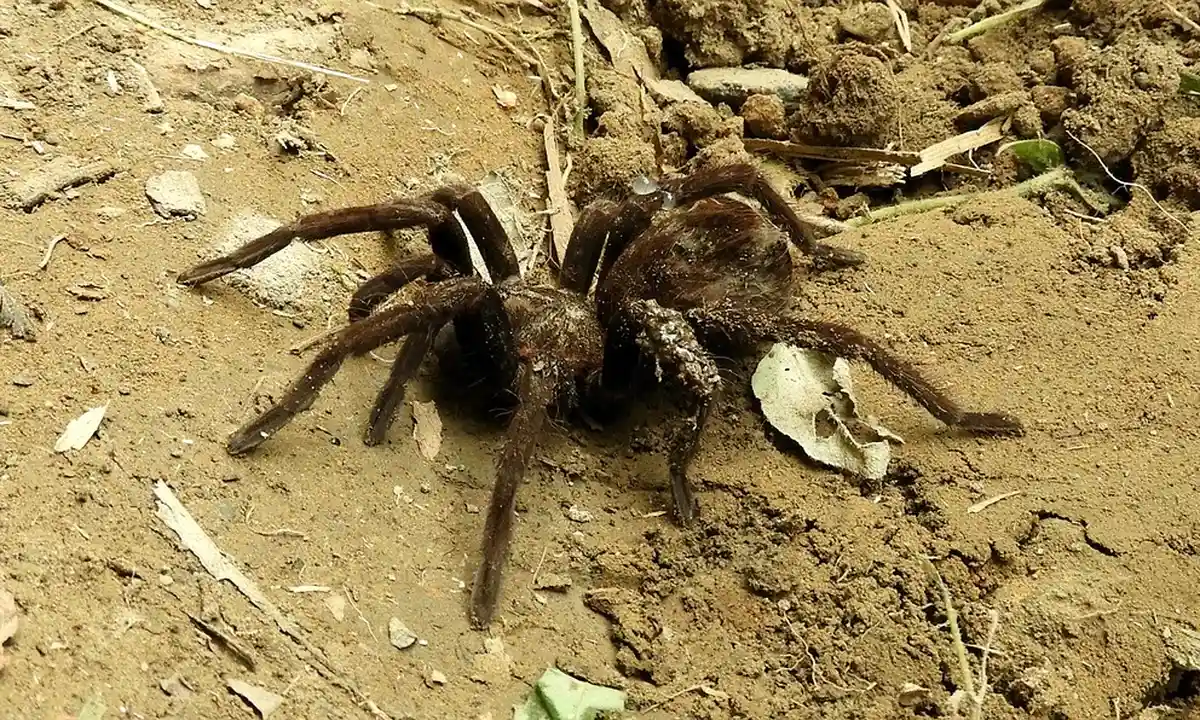
These tarantulas are engineers of the underground. Their burrowing patterns reveal how they shape and defend their home. Understanding these digging habits helps us meet their needs in captivity. Provide a substrate depth at least 1.5 times your tarantula’s diagonal leg span (DLS) to satisfy their instinct to dig. This space lets them construct stable burrows for security and molting.
Common genera requiring this deep bedding include Grammostola, Aphonopelma, and Theraphosa. My 15-year-old Grammostola rosea, Rosie, is a classic example; her deep, dry substrate allows her to disappear for weeks, a natural behavior for a ‘pet rock’.
Respect the sanctity of the burrow. Adhering to a “look, don’t touch” ethic means never digging for a tarantula that has vanished underground, as this destroys its home and creates profound stress. Your patience rewards you with observing natural behaviors.
For Arboreal and Opportunistic Burrowers
Think vertically. Use a shallow substrate layer of two to three inches to prioritize climbing height and anchor points for webbing. Deep substrate here is wasted space and can increase the risk of injury from a fall.
Genera like Psalmopoeus and Avicularia thrive with this setup. My Psalmopoeus murinus, Flash, has webbed every corner of his enclosure, turning it into a complex, silken fortress that starts well above the substrate.
Webbing replaces digging. Flash’s bright orange web tunnels demonstrate how these species utilize three-dimensional space, making shallow substrate the logical choice for their husbandry. I learned to provide ample vertical cork bark, which he eagerly covers.
Setting Up Your Substrate: A Step-by-Step Guide
Step 1: Selecting Your Substrate Material
Your material choice impacts moisture, burrow stability, and safety. Coconut fiber (coco coir) is highly absorbent, affordable, and holds burrow shape well when packed, making it a versatile base. Peat moss offers similar retention but can become too acidic over time.
Organic topsoil is dense and great for structure, but you must verify it contains no fertilizers or pesticides. Sand mixes add drainage but can be too loose for secure tunnels. I avoid them for primary burrowers.
Through trial with my collection, I found a reliable blend. My personal mix is 70% coconut fiber to 30% organic topsoil, which provides moisture control for Goliath and firmness for Rosie’s occasional excavations. It’s simple, safe, and effective.
Step 2: Determining and Adding the Correct Depth
-
Measure your tarantula’s diagonal leg span. Gently coax your spider into a clear container if needed. For my Goliath, this measurement is over eight inches, dictating a very deep setup.
-
Calculate the required depth. For terrestrial diggers, multiply the DLS by 1.5. For arboreal species, cap it at three inches. This calculation is the blueprint for their comfort.
-
Add and pack the substrate firmly. Layer the substrate in increments, pressing down each layer to prevent dangerous cave-ins in deep burrows. I pack it until it barely holds a fingerprint, a technique that saved me from a collapse during a rehousing.
Step 3: Integrating Humidity and Moisture Needs
Master the moisture gradient. Pour water into the enclosure corners or bottom layers to wet the lower substrate while leaving the surface dry, giving your tarantula a choice of microclimates. This method prevents stagnant surface moisture and mold.
Depth directly supports humidity needs. For my moisture-dependent Theraphosa stirmi, Goliath, I maintain a deep, consistently damp substrate base to sustain high humidity, while my arid Grammostola rosea, Rosie, gets the same depth but with only occasional corner watering. The depth allows the moisture to linger where it’s needed without wetting the entire enclosure.
Substrate Depth for Different Life Stages
Caring for Spiderlings (Slings)
For spiderlings, often called slings, I always start with a shallow layer of substrate-no more than an inch deep in a small deli cup or vial. This minimal depth is a safety and practicality measure, preventing a tiny Grammostola rosea sling from disappearing into a deep burrow where it could be missed during health checks or feeding. In my experience, shallow substrate makes the cricket or pre-killed mealworm easily visible, ensuring you can confirm the sling has eaten and remove any uneaten prey to prevent mold.
As your tarantula grows, its instincts will guide you. Gradually increase substrate depth when you rehouse, adding an inch or two each time, which allows the spider to express natural burrowing behaviors as it matures. My OBT, Flash, started in a vial with barely any substrate but, by its third molt, was eagerly webbing and digging into a deeper, peat-based mix I provided. Understanding how fast tarantulas grow is crucial for anticipating these changes.
Adjusting for Adult Tarantulas
An adult tarantula’s enclosure should have its final, species-appropriate substrate depth from the start. Permanent depth is non-negotiable for adult care, as it provides critical security and environmental stability that reduces stress for the animal. In practice, essential enclosure features differ for terrestrial versus arboreal tarantulas, guiding how you design the habitat. Terrestrial species benefit from deeper substrates for burrowing and stability, while arboreal species need vertical space and climbing structures. For my docile Chilean Rose Hair, Rosie, a 4-inch layer of dry coco fiber is perfect for her terrestrial, low-humidity needs. In contrast, my Burgundy Goliath Bird Eater, Goliath, requires a deep, damp mix of topsoil and peat to burrow and maintain the 80% humidity he thrives in.
Even with permanent depth, the substrate itself isn’t permanent. I perform a complete substrate refresh every 12 to 18 months to maintain hygiene and the proper texture for burrow integrity, carefully rehoming the tarantula to a temporary container during the process. This prevents the slow compaction and waste accumulation that can occur over time, which is especially important for moisture-dependent species. If you start to notice odors, mold, or crusty residue, those are common signs your tarantula’s enclosure could use a thorough cleaning. Regular checks help you spot these cues early and keep the habitat healthy.
Maintaining and Troubleshooting Your Substrate
Regular Maintenance Checklist
Consistent, simple checks will keep your substrate healthy and your tarantula secure. These checks reflect essential daily, weekly, monthly tarantula maintenance tasks. Include a quick daily glance, a weekly substrate inspection, and a monthly enclosure review. Follow this routine every week.
- Spot clean boluses and leftover prey. Use long tweezers to remove these waste packets promptly.
- Check moisture levels. I press a finger into the substrate or use a moisture probe; for species like T. stirmi, the lower layers should feel cool and damp, not soggy.
- Monitor for substrate compaction or mold growth. Look for a crusted surface or any white, green, or blue fungal spots, which indicate a need for adjustment.
Identifying and Fixing Common Problems
Problem: Refusal to Burrow or Web
If your tarantula ignores the substrate, the environment is likely wrong. Substrate that is too wet, too dry, or too loose will fail to hold a burrow’s shape, discouraging natural behavior. For a pet hole species that won’t dig, try moistening the substrate until it clumps lightly in your hand, or mixing in more topsoil for structure. I corrected this for a juvenile Grammostola by simply packing the substrate more firmly. Using the right substrates is crucial for maintaining a healthy environment.
Problem: Persistent Mold or Foul Odor
A musty smell or visible mold means the balance is off. Overwatering, insufficient ventilation, or decaying organic matter like leftover prey are the usual culprits behind this common issue. Fix it by removing the affected substrate section, increasing cross-ventilation in the enclosure, and watering less frequently but more deeply at one corner only. For severe cases, a 50% substrate change is my go-to solution.
Problem: Tarantula Staying on the Glass
A tarantula persistently climbing the walls, away from the substrate, is communicating discomfort. This climbing is often a sign of stress from incorrect substrate conditions, such as inappropriate moisture or a lack of secure hiding places. These are common tarantula enclosure mistakes to avoid for a calm, healthy enclosure. Re-evaluate your setup: ensure the substrate depth is adequate, the humidity is correct for the species, and that you’ve provided a snug cork bark hide. Ensuring proper substrate, humidity, and hides helps prevent these stress behaviors. My Goliath did this when his substrate was too dry; adding moisture drove him back down to burrow.
FAQs
How do I accurately measure “substrate depth”?
Substrate depth is measured from the bare enclosure floor to the top of the substrate surface. It should be a consistent depth across the entire enclosure floor, not just piled high in one area. Use a ruler to check this measurement after you have added and gently packed down your chosen substrate material to ensure it meets your tarantula’s specific needs.
Can I start with shallow substrate and add more later as my tarantula grows?
Yes, this is a common and recommended practice, especially for spiderlings. When you rehouse your tarantula into a larger enclosure, that is the perfect time to increase the substrate depth to match its larger size and stronger instincts. Simply adding loose substrate on top of an existing layer in a current enclosure is not advised, as it can disturb your tarantula and potentially collapse any existing burrows.
Is it safe to mix different substrate materials?
Absolutely, and it is often beneficial. Blending materials like coconut fiber with organic topsoil can create an ideal texture that holds burrows well and manages moisture effectively. The key is to ensure every component is free of additives, chemicals, fertilizers, or sharp pieces. Always mix thoroughly to create a uniform consistency before adding it to the enclosure.
My tarantula isn’t burrowing even though I provided deep substrate. What’s wrong?
This can be due to substrate texture or environmental stress. If the substrate is too dry and loose or too wet and muddy, it may not hold a burrow’s shape. Try moistening and packing it more firmly. Also, ensure the tarantula has ample privacy and feels secure; a hide or starter burrow can encourage them to begin excavating their own space. This ties into the ultimate guide to tarantula burrows—why they dig and how to support it. Understanding these digging instincts helps you design enclosures that promote healthy, natural burrowing behavior.
How often should I completely replace the substrate?
A full substrate change is generally needed every 12 to 18 months to maintain hygiene and prevent the slow accumulation of waste and bacteria. For very moist setups or if you notice persistent mold or odor, you may need to do a partial or full change sooner. Always move your tarantula to a temporary, secure container during the full cleaning process.
The Key is in the Details
The single most important factor is to match the substrate’s depth and moisture to the specific, inherent nature of your spider-whether it’s a deep-dwelling fossorial, an opportunistic terrestrial, or an obligate arboreal. My Goliath (T. stirmi) needs that packed, damp earth to thrive, while my OBT (P. murinus) turns a shallow layer into a silken fortress. Getting this right prevents a cascade of husbandry problems, from dehydration to dangerous falls.
Watch what your tarantula does with the space you provide. The patient excavation of a burrow, the meticulous layering of web, the sudden, precise strike from an ambush hole-these are the rewards. I’ve spent hours watching my old Chilean Rose (G. rosea) simply sit, a lesson in stillness. Rushing a rehousing or constantly adjusting the enclosure causes stress. Provide the correct foundation, then step back and let the animal live. Your greatest tool is quiet observation. If transport or rehousing becomes necessary, use a secure transport container and minimize handling. Prepare the new enclosure first and relocate the tarantula only when it’s calm.
Further Reading & Sources
- r/tarantulas on Reddit: Terrestrial Substrate Depth Guideline
- Proper substrate depth? | Arachnoboards
- Choosing the Best Tarantula Substrate – Talis Us
Arlo is a lifelong arachnid enthusiast who believes tarantulas are the world’s most misunderstood roommates. With years of hands-on experience in tarantula care, habitat setup, and species behavior, Arlo combines expert knowledge with a dash of humor to make spider ownership less scary and a lot more fascinating. From choosing the right enclosure to understanding why your eight-legged buddy is doing that weird little pose again, Arlo is here to help you become the best tarantula parent you can be, without getting tangled in the web of misinformation.
Substrates and Decor