
The Ultimate Tarantula Pre-Purchase Checklist: 12 Things to Verify Before You Buy
Published on: January 2, 2026 | Last Updated: January 2, 2026
Written By: Arlo
Bringing a tarantula into your home is a commitment that begins long before the spider arrives, requiring meticulous verification to prevent escapes, stress, and mismatched care that I learned the hard way when my OBT, Flash, webbed an enclosure shut overnight. This checklist distills years of arachnoculture experience into 12 non-negotiable verifications, designed to ensure you and your future tarantula start on stable ground.
Quick Stats:
- Verification Points: 12
- Core Focus: Enclosure security, species temperament, supplier ethics, husbandry readiness
- Timeframe: Complete before any purchase or adoption
This guide will walk you through each critical pre-acquisition step, from assessing your ability to meet a species’ humidity needs to guaranteeing escape-proof enclosures, so you can welcome your tarantula with confidence and calm.
1. Confirm Legal Ownership and Personal Commitment
Owning a tarantula is not legal everywhere. Before anything else, check local, state, and national regulations. Some areas ban certain genera or require permits. I once helped a hobbyist rehome a confiscated tarantula because they overlooked a city ordinance, a stressful event for both keeper and spider.
Follow these two steps to build a solid foundation.
- Research legality for your exact location. Use government wildlife department websites and connect with local exotic pet societies for the most current rules.
- Honestly assess your long-term ability to care for an animal that may outlive a cat or dog. My Grammostola rosea, Rosie, is 15 years old and still going.
Run through this brief self-checklist. Be brutally honest with your answers.
- Time: Can you provide decades of consistent, calm care? This means weekly feeding checks, water dish refills, and occasional enclosure deep-cleaning.
- Budget: Initial setup costs range from $50 to $200. Factor in ongoing expenses for substrate, feeder insects, and replacement enclosure parts.
- Household Acceptance: Does everyone you live with consent? A startled roommate or parent can lead to accidental escapes or harm.
2. Research and Select the Right Species for Your Skill Level
Selecting your first tarantula based solely on color is a common mistake. The key to success is matching species needs to your experience. The frantic speed and defensive posture of my OBT, Flash, makes it a poor choice for a novice, while Rosie’s sedentary nature is forgiving.
Compare species using these critical husbandry data points. Temperament dictates handling risk, growth rate affects rehousing frequency, and environmental needs demand specific gear.
- Temperament: Beginner genera like Grammostola are often docile. Advanced genera like Poecilotheria are fast and defensively aggressive.
- Growth Rate: Slow-growing species (e.g., many Brachypelma) allow you to learn at a relaxed pace. Fast-growing species (e.g., Lasiodora) require frequent, confident rehousings.
- Humidity Needs: Species like Theraphosa stirmi need 80-90% humidity, requiring a quality hygrometer and regular misting. Desert species need 40-60%.
- Venom Potency: New World tarantulas typically have milder venom and urticating hairs. Old World tarantulas lack urticating hairs but possess more potent, medically significant venom.
Focus on these key selection factors during your research. Your goal is to reduce stress for the animal and ensure your own safety.
- Docility vs. Defensiveness: A docile tarantula is not a handleable toy. It is a calm animal less likely to bolt or flick hairs when you perform maintenance.
- Arboreal vs. Terrestrial Needs: Arboreal species (e.g., Avicularia) need tall enclosures with cork bark. Terrestrial species (e.g., Aphonopelma) need more horizontal space and deep substrate for burrowing.
- Common Names vs. Scientific Names: Always use the scientific name for research. “Rose Hair” can mean Grammostola rosea or Grammostola porteri, which have subtle care differences.
Your ability to replicate the tarantula’s natural history is the ultimate test. I keep my T. stirmi, Goliath, on damp coconut fiber with a large water dish to mimic its humid rainforest floor, a setup I would not attempt without years of humidity management practice (especially for species with specialized heating and humidity requirements). Start with a hardy, forgiving species to learn the fundamentals of spider behavior and care.
3. Vet the Seller or Breeder for Reputability
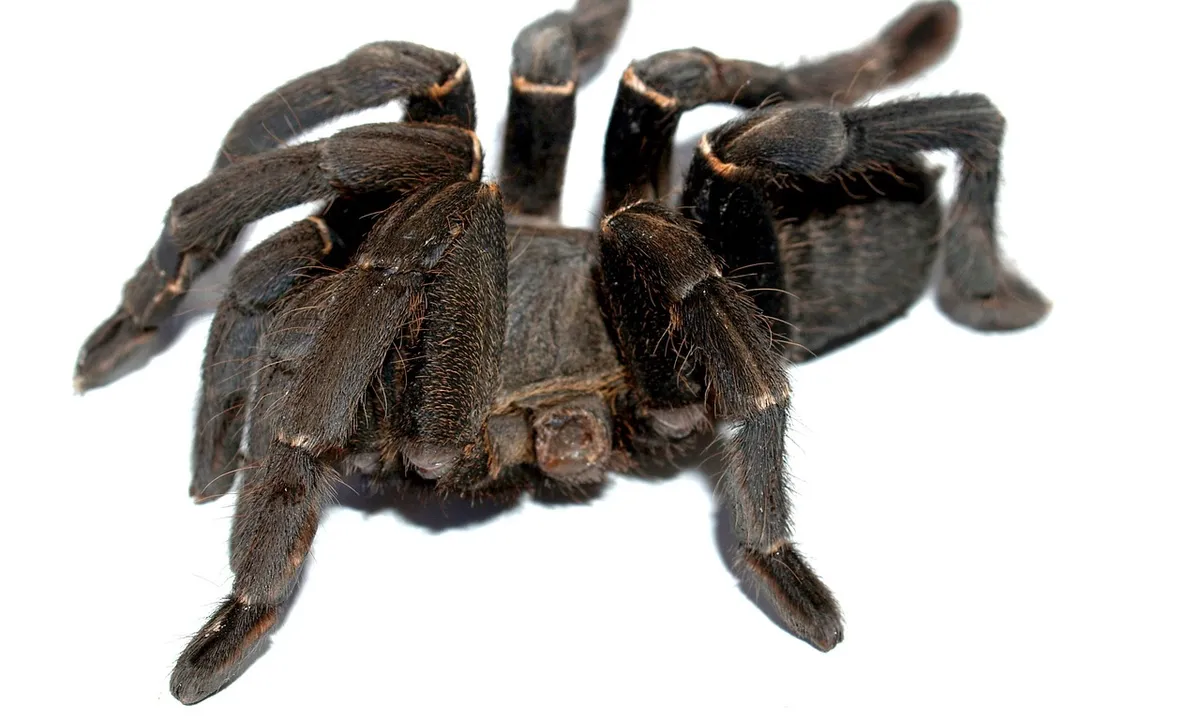
Finding a trustworthy source is your first defense against bringing home a sick or stressed animal. A reputable seller specializes in arachnids, communicates with transparent detail about an animal’s origin, and has a trail of positive feedback from other keepers. I learned this after a early purchase from a generic pet shop; the Grammostola rosea I brought home had cryptic health issues a dedicated breeder would have noted.
Specialization matters. A vendor who only deals in reptiles might not spot the subtle signs of dehydration in a tarantula. Look for sellers whose primary focus is spiders.
- Ask for captive-bred proof. Request photos of the spiderling with the mother, or ask for the breeder’s name and the clutch date. Wild-caught imports are often riddled with parasites and suffer immense transit stress.
- Inquire directly about the breeder’s experience with the species and their post-purchase support. Will they answer questions if your new pet refuses to eat? My OBT, Flash, came from a breeder who gave me precise premolt cues for the species, which prevented a disastrous feeding attempt.
Recognize these red flags immediately.
- Vague or missing species information, like labeling a spider simply as “Bird Eater.”
- An inventory consisting solely of wild-caught adults. This often exploits wild populations and delivers unhealthy animals.
- Defensive or evasive answers to basic husbandry questions about the spider’s history.
4. Perform a Detailed Health and Biological Inspection
Age and Molt Status Verification
Age in tarantulas is estimated through size and molt frequency, not exact birth records. A juvenile’s growth rate reveals its age approximation, with faster-growing species like my Theraphosa stirmi reaching large sizes in a few years, while slow growers like Grammostola rosea can take a decade to mature. In many tarantula care guides, molt frequency serves as a practical, species-specific age estimation by molt frequency. Knowing a species’ typical molt schedule helps estimate age more reliably. Always ask, “When was its last molt?” A spider in premolt is a fragile shipping risk.
Check for a recent, successful molt by looking for a plump, shiny abdomen and intact, new setae. Signs of impending molt include a darkened, bald abdomen, refusal of food for weeks, and excessive webbing to create a safe molting mat.
Sexing is done via the shed exuviae (molt). If the seller can provide the last molt, examine it under good light.
- Carefully locate the abdomen section of the shed skin.
- Inside the top part, look for a paired, sclerotized structure called the spermathecae in females. It looks like a tiny, dark wishbone or pair of pockets.
- In mature males, you will find modified pedipalps with enlarged, bulbous tips called palpal bulbs, used for mating.
Visual Health Check
Conduct this inspection calmly from outside the enclosure. A healthy tarantula should exhibit these traits.
- A full, rounded abdomen (not obese, but not shriveled).
- Alert posture; it should react gently to light disturbance by moving, not by cowering or striking.
- All limbs are intact and held close to the body. A missing leg is not a crisis and will regenerate.
- No visible mites (tiny moving specks) or fungal patches (odd colored or fuzzy spots) on the body or substrate.
These signs indicate potential illness or severe stress. Walk away from any tarantula showing a severely shriveled abdomen, profound lethargy unconnected to premolt, or visible fluid leaks from the body. Bald spots on the abdomen, like on my Goliath, are often from kicking urticating hairs and are a sign of a defensive, stressed spider that may need extra care.
5. Design and Assemble the Complete Enclosure First
Enclosure Size and Type
Your tarantula’s home is its entire world. Getting the size and style wrong creates immediate stress. For terrestrial species like my Chilean Rose Hair, floor space is paramount. For arboreal champions like many in the Psalmopoeus genus, height and climbing surfaces are critical. A simple, reliable rule I’ve used for years is this: the enclosure’s length should be at least three times the tarantula’s diagonal leg span (DLS).
This provides room to explore without creating a risky, cavernous space where falls can be fatal. The lid is your most important security feature. I’ve learned from experience that a latched or heavy, secure lid is non-negotiable, especially for powerful, determined species. A loose-fitting top is an invitation for an escape.
Substrate, Humidity, and Ventilation
This trio works together. Your substrate choice directly impacts humidity and behavior. Coco fiber is a common, affordable start-it retains moisture well for my Goliath’s humid setup. But for dedicated burrowers, a deep layer of a topsoil and sand mix holds tunnel shape far better than fiber alone.
Humidity is not a guessing game. Use a digital hygrometer. Most species thrive at 60-70% room humidity, achievable with a full water dish. True moisture-dependent tarantulas, like my Theraphosa stirmi, need 75-85%, which I maintain with damp substrate and partial misting. Always prioritize cross-ventilation. Stagnant, wet air kills faster than slight dryness. When setting up your habitat, it’s crucial to know the ideal temperature and humidity ranges for your tarantula species.
Essential Furnishings
Think of furnishings as functional decor. Every enclosure must have three things:
- A secure hiding spot: A cork bark flat or half-round, positioned firmly.
- A shallow, tip-proof water dish: I use bottle caps for slings and ceramic dishes for adults.
- Anchor points for webbers: Fake leaves, branches, or cork bark for species like my OBT to attach its dense silk lattice.
These items reduce stress by providing choice-your tarantula can hide, drink, or modify its space as it wishes.
6. Master the Ongoing Care Schedule Before Purchase
Routine is calming, for you and the animal. Feeding varies dramatically. Spiderlings may eat twice a week, while adults like my 15-year-old Grammostola rosea may fast for 9 months. You must be comfortable not feeding a healthy adult tarantula that refuses food; offering prey too often is a greater stressor than a fast. That balance is central to the best diet feeding schedule for a healthy tarantula. Tailor prey size and how often you feed to the spider’s age and species.
Temperature is simple for most species. Room temperature (70-78°F) is perfect. Avoid heat mats, especially under the tank, which can cook a burrowing tarantula seeking cooler ground. For a definitive guide on heating mat vs heat lamp in tarantula enclosures, we’ll compare safety, heat distribution, and species needs. This helps you choose the best method without stressing your spider or creating hotspots.
Your weekly and monthly rhythm should look like this:
- Daily: Visual welfare check.
- Weekly: Refill the water dish with dechlorinated water.
- Monthly: Spot-clean boluses (prey remnants) and refresh substrate corners if needed.
- Post-Molt: Remove the old exoskeleton once the tarantula has hardened completely.
This schedule is less about constant intervention and more about structured observation, allowing you to notice subtle changes in behavior or appearance. This is how you catch a pre-molt fast or identify a successful molt early. The routine becomes a quiet dialogue with your pet.
7. Account for All Costs and Equipment
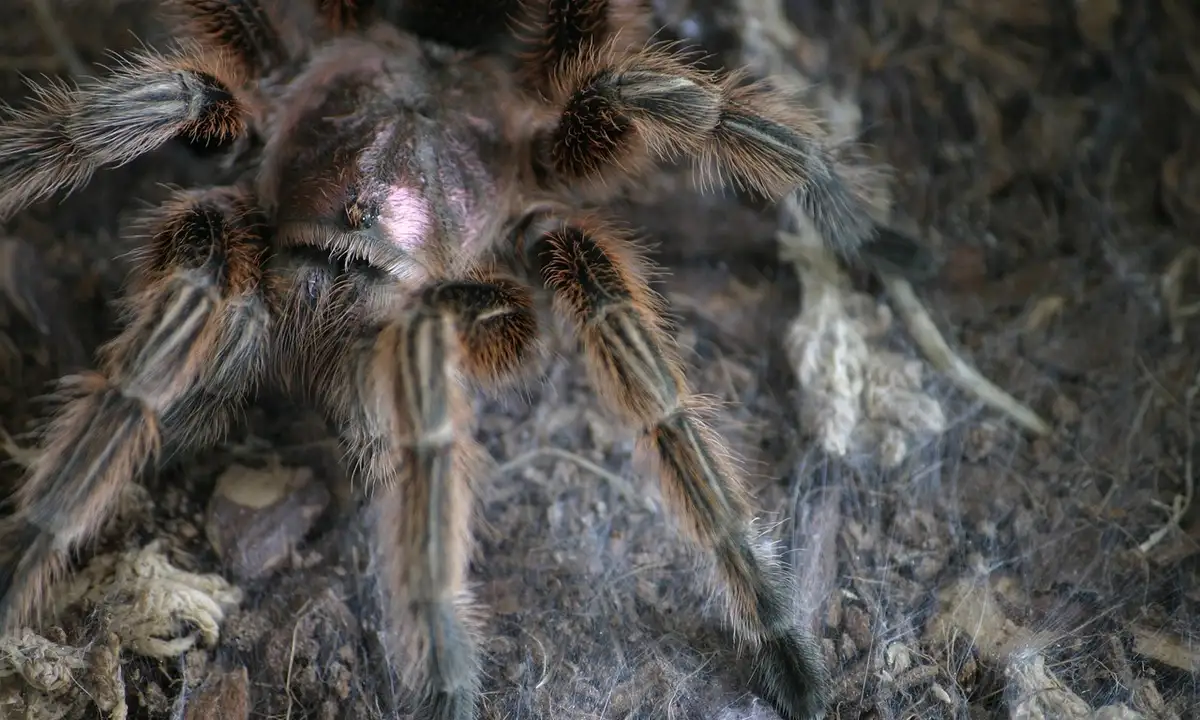
Budgeting for a tarantula extends far beyond the initial purchase price. I learned this the hard way when I set up my first enclosure for Rosie, only to realize I needed specific tools to manage her lengthy fasting periods safely. A clear financial plan prevents surprises and ensures you can provide consistent care from day one.
One-time startup costs focus on the permanent habitat and handling gear. Your enclosure is the largest single expense, with prices varying from a simple plastic critter keeper to a front-opening glass terrarium for display species. Do not forget foundational items like a secure lid, a reliable digital hygrometer, and a low-wattage heat mat if your room drops below 70°F.
- Enclosure with secure lid
- Digital thermometer/hygrometer
- Supplemental heat source (if needed)
- Water dish
- Hides and decor (cork bark, artificial plants)
Recurring costs are the silent commitment of the hobby. You will regularly purchase substrate, feeder insects, and replacement items like water dishes chewed by a hungry spider. My Burgundy Goliath, for instance, requires deep, damp substrate I change out annually, a consistent cost his smaller counterparts do not incur.
- Substrate (coconut fiber, topsoil mix)
- Feeder insects (crickets, roaches, mealworms)
- Replacements for damaged decor or dishes
- Shipping costs for online feeder orders
The right tools are non-negotiable for safe maintenance. Long, blunt-tipped tweezers are your primary interface for feeding and debris removal, keeping your hands far from a defensive strike or flicked urticating hairs. I keep a dedicated set for each of my tarantulas, including Flash, my OBT, to prevent cross-contamination and stress.
- 12-inch feeding tongs
- Soft-bristled paintbrushes for gently guiding spiders
- Clear plastic deli cups and catch cups for rehousing
- A small handheld flashlight for peering into burrows
- A dedicated notebook for logging feeds, molts, and behaviors
8. Finalize with Safe Acquisition and Quarantine Plans
Safe Shipping or Transport
A reputable breeder will pack your new tarantula with immense care. Expect to see a secure primary container, like a deli cup with air holes, nestled inside a larger box filled with crumpled paper or foam peanuts to prevent jostling. The silence of the unboxing is always punctuated by my focused breathing, knowing a live animal waits inside. To safely transport and rehouse your tarantula, keep the container upright and secure during transit. When you arrive, transfer it gently into its new enclosure and allow time to settle.
Acclimation is a calm, methodical process. Your goal is to transfer the tarantula to its permanent home with zero chance for an escape, which I assure you is heart-stopping when dealing with a fast species. Follow these steps in a small, enclosed room like a bathroom with towels blocking door gaps. In the tarantula’s first 24 hours, follow this step-by-step acclimation guide to ensure a calm, controlled transition. This will help keep stress low and your new pet safe.
- Have the fully prepared enclosure open and within reach before you touch the shipping box.
- Gently open the outer box and inner padding to reveal the transport container.
- Slowly open the transport container, using a soft brush if needed, to encourage the tarantula into the new enclosure or into a catch cup for transfer.
- Securely close the new enclosure and observe from a distance as the spider explores.
Quarantine and Initial Evaluation
Isolate your new tarantula from your existing collection for at least 30 to 45 days. Quarantine is a basic biocontainment practice that lets you monitor for mites, fungal issues, or unexplained lethargy before introducing a potential pathogen to your other pets. To quarantine properly, keep the newcomer in a dedicated enclosure with separate tools and minimal contact with your established collection. Regularly monitor and document any signs of illness during the quarantine period. I keep a separate shelf for new arrivals, a habit started after a purchased sling arrived with a mite problem I was able to contain.
Use this quiet period for passive health checks. Note its appetite, hydration, and any abnormal movements like a persistent stumble or difficulty climbing, which could indicate injury. Provide a water dish and a hide, but resist the urge to fuss over it; stress reduction is paramount. Specialized invertebrate vets are rare, but a vet evaluation becomes necessary if you observe clear injury, such as a ruptured abdomen, or signs of a serious parasitic infection.
FAQs
Is it ever safe to handle my tarantula?
Handling is strongly discouraged for both your safety and the tarantula’s well-being. A fall from even a short height can be fatal due to a ruptured abdomen. Furthermore, many species possess urticating hairs that can cause severe irritation or may have venom that, while not typically lethal to humans, can cause significant pain and medical issues. Handling is especially not recommended for beginners. Observation, not interaction, is the heart of responsible tarantula keeping.
What is the absolute best tarantula species for a complete beginner?
For a first-time keeper, a docile, slow-growing New World terrestrial species is ideal. Genera like Grammostola (e.g., Chilean Rose Hair), Brachypelma (e.g., Mexican Red Knee), and Aphonopelma are typically recommended. These species generally have calm temperaments, are forgiving of minor husbandry fluctuations, and possess milder defenses, making the learning process much less stressful for both you and the spider.
What should I have in a tarantula emergency kit?
Being prepared for common issues is key. Your kit should include soft-tipped paintbrushes and long tongs for gentle guidance, a set of clear deli cups and lids for secure containment during escapes or enclosure issues, a small bottle of water-based glue (like cyanoacrylate gel) to safely seal any minor cracks in a ruptured abdomen, and a bright flashlight for thorough inspections. Quick access to these tools can prevent a minor incident from becoming a crisis.
Where is the best place in my home to put the enclosure?
Place the enclosure in a quiet, low-traffic area with stable, room-temperature conditions and indirect light. Avoid direct sunlight, which can rapidly overheat the tank, and keep it away from vents, radiators, or drafty windows that cause temperature fluctuations. The location should also be vibration-free, as constant disturbances from speakers, slamming doors, or heavy footfall can stress a tarantula.
Are tarantulas really as low-cost as people say?
While their ongoing costs are lower than many pets, the initial setup and recurring expenses are not negligible. You must budget for a proper enclosure, substrate, decor, feeders, and specialized tools. The real “cost” is the decades-long commitment of time and attentive observation required for an animal that cannot vocalize its needs. Proper care is an investment in its long-term health and welfare.
The Final Molt
The single most important factor for any tarantula’s long-term health is your ability to replicate its native microclimate. Your primary task is to diligently research your chosen species and provide the exact substrate moisture, ventilation, and warmth it needs to thrive. Getting this wrong is the fastest path to failure, while getting it right sets the stage for a decade or more of fascinating observation. Beyond microclimate, factors influencing tarantula lifespan like diet, enclosure size, and environmental stability influence a tarantula’s lifespan across species. Understanding these variables helps tailor care to the specific environment each species relies on.
Success is measured in slow, quiet moments. It’s the overnight appearance of a new excavation in your Goliath’s enclosure, the intricate silken tunnel your OBT has woven, or the patient stillness of a rose hair like my Rosie, who has taught me more about patience than any other creature. Your greatest tool is not a feeding tong or a mister, but your own attentive eyes. Watch, learn, and let the spider simply be a spider. That is where the true reward lies.
Further Reading & Sources
- Nightshady’s Guide to Buying Your First Tarantula | Arachnoboards
- How To Buy A Tarantula: What To Look For And Red Flags (What NOT To Do)
- where to buy my first tarantula | Arachnoboards
Arlo is a lifelong arachnid enthusiast who believes tarantulas are the world’s most misunderstood roommates. With years of hands-on experience in tarantula care, habitat setup, and species behavior, Arlo combines expert knowledge with a dash of humor to make spider ownership less scary and a lot more fascinating. From choosing the right enclosure to understanding why your eight-legged buddy is doing that weird little pose again, Arlo is here to help you become the best tarantula parent you can be, without getting tangled in the web of misinformation.
Signs of a Healthy Tarantula