
Your New Tarantula’s First 24 Hours: A Step-by-Step Acclimation Guide
Welcoming a new tarantula, whether a stoic Grammostola rosea or a skittish Old World species, is a profound responsibility that begins the moment you open the shipping box. Based on years of rehousing everything from pet rocks to hair-kicking giants, I can say this period is defined by quiet patience, not interaction. Your primary job is to be a ghost-providing a secure, stable environment while the spider assesses its new world without pressure.
Quick Stats:
- Origin: Varies wildly; from arid Chilean foothills to humid Amazonian basins.
- Type: New World (generally more handleable, possess urticating hairs) or Old World (often faster, more defensive, lack urticating hairs).
- Growth Rate: Species-dependent; can be measured in months for some, decades for others.
This guide delivers the precise, stress-reducing protocol to transition your spider, from a fragile sling to a robust adult, into its permanent home with confidence.
Why the First Day Demands Quiet Respect
Your new tarantula has just survived a journey of vibrations, temperature shifts, and confinement. The first 24 hours are a critical recovery period where your only job is to provide silent, undisturbed security. I learned this the hard way years ago with my first OBT, Flash; an early cage inspection triggered a lightning-fast threat posture and a frantic rehousing. Stress can suppress their immune system and delay feeding.
Resist all temptation to handle or even open the enclosure. “Look, Don’t Touch” is not just a philosophy for safety, but a mandate for animal welfare on day one. A docile Grammostola rosea like Rosie may play dead for hours, while a nervous specimen might bolt. Your observation should be from a distance, noting the silence of the enclosure and any gradual exploration.
This quiet respect directly impacts long-term health. A stressed tarantula is more prone to refusing food, aborting a molt, or flicking urticating hairs like my T. stirmi, Goliath, does when annoyed. Give the animal time to map its new territory with its sensitive hairs. The sudden strike at a cricket next week will be your reward for today’s patience.
Before the Arrival: The Perfectly Prepared Enclosure
Everything must be ready before the shipping box arrives. A prepared enclosure minimizes the time your tarantula spends in transit containers and reduces your stress during transfer. I set up enclosures days in advance, allowing humidity and temperature to stabilize. This foresight prevents rushed decisions that compromise safety.
Choosing and Preparing the Substrate
Substrate is your tarantula’s foundation. It must be safe, retain appropriate moisture, and allow for burrowing if the species desires. I always use a sterile, additive-free topsoil or coconut fiber blend as my base for its natural composition and hold. For moisture-dependent species like the Burgundy Goliath Bird Eater, I mix in vermiculite to help maintain that 80-85% humidity range. Choosing the best substrates also means selecting options you can maintain easily over time. Regularly monitor moisture and refresh or replace substrate as needed to keep the enclosure clean and safe.
Here is a simple breakdown of common substrate options:
- Coconut Fiber (Coir): Affordable, retains humidity well, and is generally mold-resistant. I use this for most of my collection.
- Peat Moss: Excellent for moisture retention but can become acidic over time. Best used in mixes.
- Sterilized Topsoil: A natural choice for bioactive setups. Ensure it has no fertilizers or pesticides.
Preparation is key. You must moisten the substrate thoroughly and then squeeze it until it is damp but not dripping-a “handful test” I perform for every new setup. For arid species like my Chilean Rose Hair, Rosie, I let the top layer dry out completely to mimic her native environment. Pack the substrate firmly to prevent collapses in burrows.
Essential Furnishings: Hides, Dish, and Safety
Furnishings are not decor; they are tools for security and hydration. A proper hide gives your tarantula a dark refuge, drastically reducing stress-induced behaviors. The hide should be snug, with just enough room for the tarantula to turn around. I use cork bark flats for most, as they are natural and durable.
Never overlook the water dish. Provide a shallow, tip-proof dish filled with clean water; even desert species will drink and use it to regulate micro-humidity. I use bottle caps for slings and small ceramic dishes for adults. For my heavy-bodied Goliath, I sink a dish into the substrate to prevent flipping.
Safety checks are non-negotiable. Your enclosure must have a securely fitting, ventilated lid to prevent escapes, especially with fast, teleportive species like Pokies or OBTs. After Flash’s second great escape, I now use front-opening enclosures with dual locking mechanisms for all my Old World tarantulas. Check for any sharp points or gaps larger than your tarantula’s carapace. These safety checks are the foundation of any best enclosure setup tarantula step-by-step guide. Once the lid, ventilation, and locks are sorted, you can move on to the next steps for substrate, hides, and humidity.
- Hide: Cork bark, plastic plant pot, or half-log. Anchor it securely.
- Water Dish: Shallow, ceramic or plastic. Clean and refill weekly.
- Safety Lid: Ventilated but secure. Test the latch yourself.
- Optional Anchor Points: For webbers like Flash, add fake plants or twigs to support silk networks.
The Gentle Introduction: Moving Day
Step 1: Secure the Area
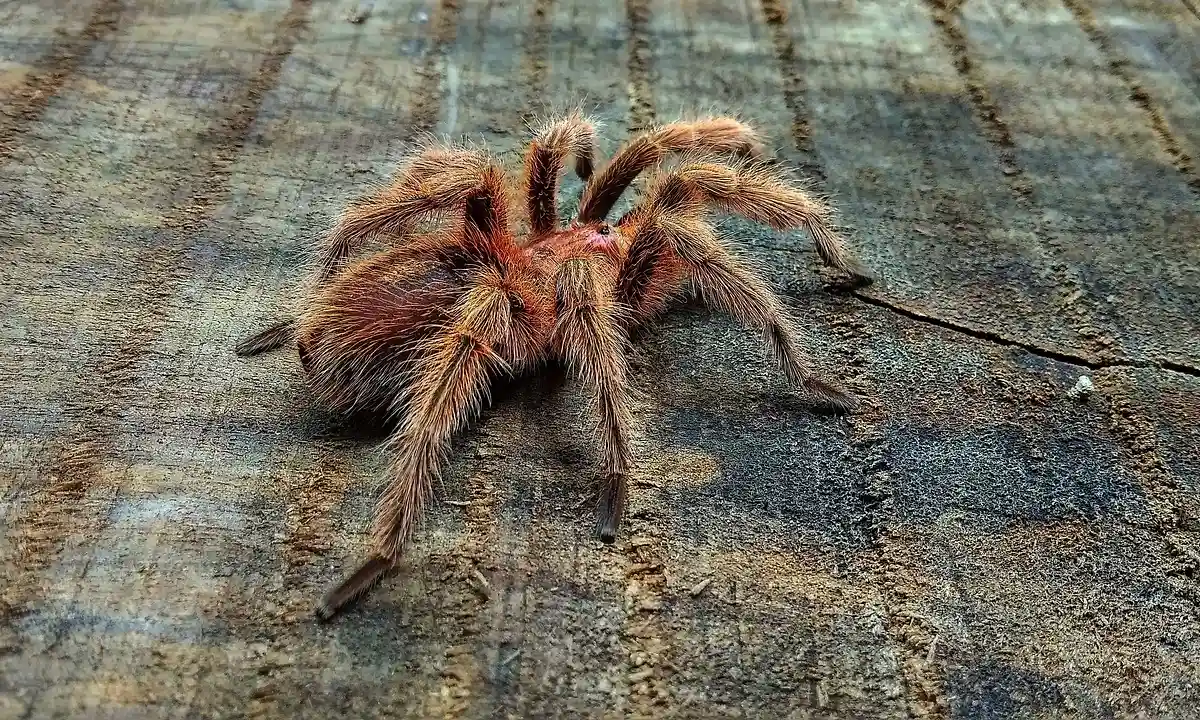
Before the tarantula even leaves its shipping vial, you must transform your room into a safe, escape-proof zone. Close all windows and doors, turn off ceiling fans, and clear the workspace of clutter. Have your long tweezers, a clear plastic cup with a lid, and the fully prepared enclosure within easy reach. I treat every rehousing like a surgical procedure, where preparedness prevents panic. To safely handle, hold, and transfer your tarantula, follow a calm, step-by-step guide. This approach keeps handling predictable and reduces stress for both you and your spider. My bright orange P. murinus, Flash, once used a moment of distraction to sprint up my arm during a transfer; a sealed room meant a much easier recapture.
- Eliminate escape routes under furniture or into vents.
- Work over a large, open bin or on a plain table to contain falls.
- Ensure lighting is bright but not directly heating the workspace.
Step 2: The Transfer Method
This moment is about pressure-free guidance, not grabbing. For a calm species like my G. rosea, Rosie, I gently coax her from vial to enclosure using the lid as a guide. For defensive or fast tarantulas, the cup-and-lid method is non-negotiable. You carefully maneuver the tarantula into a large deli cup, secure the lid, and then lower the entire cup into the enclosure before removing the lid to let it walk out. This minimizes direct confrontation and keeps your fingers far from fangs or urticating hairs.
My Burgundy Goliath Bird Eater, Goliath, is a prolific hair-kicker. For her, I wear safety glasses and use long, 12-inch tweezers to manipulate hides and guide her movement. Resist the urge to “help” by touching its legs; let the animal move at its own pace, even if that pace is a stubborn sit-in.
Step 3: The Final Placement and Seal
Once your tarantula is inside the new habitat, slowly remove any transfer tools and secure the lid. If you haven’t already, double-check that the water dish is full and any cork bark hide is firmly placed. The goal is to create a secure fortress where the tarantula feels hidden, not exposed. For moisture-dependent species like Theraphosa stirmi, I immediately mist one corner of the substrate to spike humidity near 80%, replicating their humid forest floor home.
- Verify all ventilation is clear but gaps are too small for the carapace to fit through.
- Avoid the temptation to rearrange decorations for aesthetic reasons now.
- Label the enclosure with the date of acquisition and species name.
The Silent Observation Period: 1 to 24 Hours
Signs of Healthy Acclimation
Healthy behavior is often quiet behavior. Your new tarantula may immediately explore, tapping its pedipalps on the substrate to map its world. It might drink deeply from the water dish or begin anchoring silk lines in a corner. A tarantula that retreats to a hide and sits motionless is not necessarily stressed; for many, this is the ultimate sign of feeling secure. My 15-year-old G. rosea, Rosie, spent her first 48 hours in a new enclosure as a perfect, dusty pink statue, which for her is a textbook successful move.
- Subtle grooming of pedipalps or legs.
- Constructing a small silk mat or retreat at the entrance of a hide.
- Assuming a relaxed posture, with legs tucked comfortably under the body.
Critical Signs of Tarantula Stress
Stress manifests as frantic or unnatural activity. Constant climbing on the walls, especially by a terrestrial species, is a red flag. So is prolonged, aimless pacing. Defensive postures like rearing up or repeatedly flicking urticating hairs when not provoked indicate the animal feels threatened by its environment. A bald abdomen on a New World species is a clear log of previous distress. Lethargy that extends to a complete lack of righting reflex if gently turned is a severe medical emergency.
From experience, I once saw my T. stirmi, Goliath, pace her enclosure for hours. The fix was adjusting the humidity gradient; she stopped only after I created a damper substrate zone, satisfying her moisture needs. If you see stress signs, dim the lights, ensure the enclosure is in a quiet location, and resist the urge to open the lid. Give the animal time to self-regulate in its new space.
| Sign | Possible Cause | Action |
| Constant wall-climbing | Wrong substrate, too damp, insufficient hides | Check setup against species needs |
| Threat posture in hide | Excessive vibration or light | Move enclosure to a calmer spot |
| Refusal to eat | Normal post-molt or acclimation fast | Wait at least one week before offering food |
Post-24 Hour Care: The First Meal and Beyond
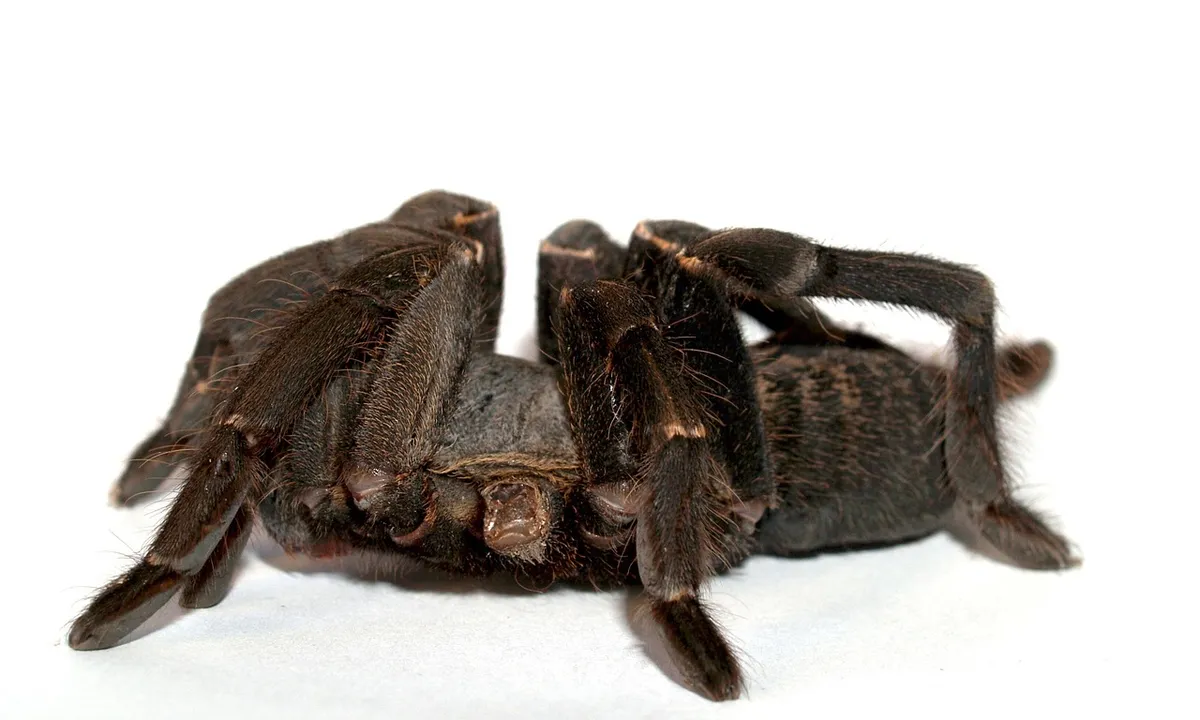
The initial quiet period is over. Now, watch for subtle signs of activity: a leg testing the air, a shift in posture. Your tarantula’s first meal in its new home is a critical test of its acclimation and your setup’s success. Patience here is non-negotiable. Rushing this step can undo all your careful work. You may also see its food dance—a deliberate series of leg taps and careful movements signaling it’s weighing the offering. Reading these cues helps you time feeding to its readiness and reduces stress for both of you.
Offering the First Prey Item
I always use pre-killed prey for the first offering. A live cricket can harass a stressed tarantula. The silence of the enclosure is broken only by your gentle movements. This method eliminates risk and allows the tarantula to feed in its own time without pressure. In a broader feeding guide, the debate between live prey and pre-killed options is addressed to help you weigh safety, stress, and success. Choose the method that best fits your tarantula’s temperament.
- Select Appropriate Prey: Use a feeder no larger than your tarantula’s carapace. For slings, pinhead crickets or chopped mealworm segments work. For my adult Rosie, a medium cricket is perfect.
- Prepare the Prey: Humanely euthanize the insect. I place it in a small container in the freezer for a few minutes.
- The Presentation: Use long tweezers to place the prey item gently near the tarantula’s hide entrance, not directly on it. Avoid dropping it from a height.
- The Retreat: Close the enclosure and walk away. Do not hover. Feeding is a private act. Check back in 12-24 hours.
- Cleanup: Remove any uneaten prey after 24 hours to prevent mold and mites.
My Burgundy Goliath, for instance, will often ignore food for a day before a sudden, powerful strike that vibrates the entire tank. Species-specific behavior dictates patience; some, like fossorials, may drag prey underground, while arboreals like a well-placed web catch.
What If My New Tarantula Won’t Eat or Explore?
Do not panic. This is common. My Chilean Rose Hair, Rosie, has taught me more about fasting than any care sheet. A refusal to eat is often a sign of intelligent husbandry, not failure, indicating your tarantula feels secure enough to prioritize other needs.
Consider these primary reasons:
- Premolt: This is the most likely cause. Look for a darkened, shiny abdomen and reduced activity. The tarantula is building internal resources. Do not offer food again until after a successful molt.
- Environmental Stress: Double-check your fundamentals. Is the temperature between 70-80°F for most species? Is the humidity correct? My T. stirmi demands 80-85% humidity, while my OBT, Flash, does well at 70%. Incorrect parameters shut down appetite.
- Simply Not Hungry: Tarantulas have phenomenal metabolisms. An adult can fast for many months. Rosie once went nine months without a bite.
If exploration is lacking, ensure the enclosure offers adequate cover. A tarantula that feels exposed will become a permanent fixture, not an explorer. Add more cork bark or leaf litter. Sometimes, doing less is the best action. Trust the process you’ve started.
Setting the Stage for a Long, Healthy Life
Acclimation never truly ends. It evolves into a rhythm of observation and minor adjustments. Your goal is to create a stable, enriching environment that minimizes stress and maximizes natural behavior. This is where the hobby transforms from ownership to stewardship.
Focus on these three pillars:
- Substrate and Hydration: Choose a mix that retains humidity without packing solid. I use a blend of coconut fiber, peat, and vermiculite for my moisture-dependent species. Provide a water dish with a shallow edge, always full. Overhead misting is a supplement, not a primary water source.
- Temperature Gradients: Avoid heat mats under the tank. Use a space heater or heat cable on one side of the enclosure to create a gentle gradient from 75°F to 80°F. This allows your tarantula to thermoregulate.
- Bioactive Potential: Consider adding springtails and isopods as a clean-up crew. They manage waste and mold, creating a tiny, self-sustaining ecosystem. My Goliath’s humid enclosure thrives with this setup.
Respect the animal’s nature. The “Look, Don’t Touch” philosophy isn’t about fear; it’s about respecting a creature whose world is built on vibration and chemical cues our hands disrupt. I’ve seen the frantic scrambling of a rehoused OBT and the calm placidity of a settled rose hair. Stress kills faster than hunger. Let their beauty be visual, their care be thoughtful, and their life in your hands be long and uneventful. That is the keeper’s true success.
FAQs
What is the first step when introducing your tarantula to its new enclosure?
The first step is to ensure your workspace is escape-proof by closing windows and doors, and clearing clutter. Have all tools ready, like long tweezers and a transfer cup, to minimize handling time. Gently guide the tarantula from its shipping container into the prepared enclosure using a calm, pressure-free method. This careful, minimal-handling transfer helps safely transport and rehouse your tarantula with minimal stress. Keep the pathway to the enclosure clear and the environment stable throughout the move to further reduce risk.
How long should you wait before offering food to your new tarantula?
Wait at least 24 hours after introduction, and often up to a week, to allow full acclimation. Start with pre-killed prey placed near the hide to avoid harassment. If the tarantula refuses, remove the prey after 24 hours and retry later, as fasting can be normal due to stress or premolt.
What are the signs that your tarantula is stressed during acclimation?
Signs include constant climbing on enclosure walls, frantic pacing, or defensive postures like rearing up. Excessive flicking of urticating hairs or a bald abdomen in New World species also indicates distress. If you observe these, watch for other body language signals of stress, check environmental factors, and avoid further disturbances to let the tarantula settle.
Where is the best place to position the enclosure in your home?
Position the enclosure in a quiet, low-traffic area away from direct sunlight, drafts, and vibrations. Ensure it’s on a stable surface at room temperature, typically between 70-80°F for most species. This helps reduce stress and supports a consistent microclimate for your tarantula. Understanding the ideal temperature and humidity ranges is essential for maintaining proper conditions.
Why is it important to leave the tarantula undisturbed for the first 24 hours?
Leaving it undisturbed allows recovery from transportation stress and lets the tarantula map its new environment safely. Disturbances can trigger defensive behaviors, suppress feeding, and delay acclimation. This quiet period is crucial for long-term health and reducing anxiety in your new pet.
What should you do if your tarantula does not explore its new enclosure?
Ensure the enclosure has sufficient hides and cover to provide security, as exposure can inhibit exploration. Verify that temperature and humidity match the species’ needs, making adjustments if necessary. Additionally, ensure the enclosure is properly ventilated to prevent stagnant air and mold growth. Use secure, mesh-covered vents to maintain airflow without compromising containment. Be patient, as some tarantulas may take days to settle; avoid rearranging decor or handling during this time.
From Acclimation to a Thriving Life
The first day is just the beginning of a fascinating journey. Your primary goal now shifts from setup to consistent, observant care. The single most important parameter you will manage is humidity, and it is non-negotiable for species like my Goliath (T. stirmi) and dangerously easy to overdo for others like my Rosie (G. rosea). Research your specific tarantula’s needs—measure it with a gauge, provide a water dish, and learn the difference between damp substrate and a soggy swamp. Check the requirements for your species.
Now, the real reward begins. Watch. You might see your tarantula lay down the first silk anchors for a burrow, or like my OBT Flash, begin webbing the entire enclosure into a silken fortress. The strike at a cricket is a blur of silent, precise motion. Patience is your most valuable tool; you are a curator of a tiny, wild life, not a director of its activities. Success is measured in a well-tended enclosure, a completed molt left in the cork bark, and the quiet confidence of a spider that feels secure in the home you’ve built.
Further Reading & Sources
- Care Guide: Tarantula | Carolina Biological Supply
- New Tarantula Keeper Guide – The Tarantula Collective
- Tarantula Cribs: Your Guide to Setting Up Tarantula Enclosures – Dragon’s Diet
Arlo is a lifelong arachnid enthusiast who believes tarantulas are the world’s most misunderstood roommates. With years of hands-on experience in tarantula care, habitat setup, and species behavior, Arlo combines expert knowledge with a dash of humor to make spider ownership less scary and a lot more fascinating. From choosing the right enclosure to understanding why your eight-legged buddy is doing that weird little pose again, Arlo is here to help you become the best tarantula parent you can be, without getting tangled in the web of misinformation.
Enclosures and Sizes