
Understanding Tarantula Behaviors: Your Guide to Spider Body Language
Published on: March 3, 2026 | Last Updated: March 3, 2026
Written By: Arlo
A tarantula’s world is one of silent, deliberate motion, where every shift of a leg and flick of a fang tells a story of instinct, comfort, and stress. Your spider will never vocalize its needs, making the ability to decode its actions the single most vital skill for any keeper. This guide will translate the complex postures and habits you see in your enclosure, transforming confusion into clarity. The most critical takeaway is this: the vast majority of “aggressive” behavior is actually defensive communication, a spider’s plea to be left alone.
Quick Stats:
- Communication Type: Non-vocal, tactile, and visual signaling.
- General Temperament Spectrum: From sedentary (like my G. rosea Rosie) to highly reactive (like my P. murinus Flash).
- Primary Behaviors: Threat posturing, grooming, webbing, burrowing, fasting, and molting rituals.
This guide will equip you to interpret behaviors from the delicate sling to the formidable adult, ensuring you can provide care that respects their natural language.
Defensive Behaviors: When Your Tarantula Feels Threatened
Threat Pose and Defensive Posture
You see your tarantula rear up on its back legs, its front legs raised high and fangs bared in a stiff, arching stance. This is the classic threat pose, a non-negotiable signal to stop. The raised legs make the spider appear larger, and the exposed fangs are a clear visual warning. This posture translates directly to “back off now” and is a hallmark of defensive species like the Orange Babbler Tarantula (Pterinochilus murinus). I learned this lesson vividly during a rehousing of my OBT, Flash. As I gently guided her into a new enclosure, she immediately assumed this pose, freezing in a bright orange arch of pure defiance. Instead of pressing forward, I stopped all movement, waited a full ten minutes for her to relax, and then completed the transfer without incident. Patience is your greatest tool here.
Hair Flicking and Urticating Hairs
New World tarantulas, like my Burgundy Goliath (Theraphosa stirmi), possess a unique defense: urticating hairs. These are microscopic, barbed hairs kicked from the abdomen using the back legs. They act as a potent irritant to skin, eyes, and mucous membranes. Hair flicking means your tarantula is experiencing high stress or perceives a direct threat, often during enclosure maintenance or if it feels cornered. Goliath does this with little provocation, so I always wear safety glasses and move with glacial slowness near her home. After any contact with the enclosure, wash your hands thoroughly. These hairs can cause itching and rashes for days. Understanding the real risks helps tarantula keepers handle them more safely. While most exposures are mild, eye exposure or skin breaks can occasionally lead to more serious irritation and may require medical attention.
Flight Response and Retreat
Not all tarantulas stand their ground. Many choose flight, bolting with surprising speed to a hide or web retreat. This fear-based behavior is common in skittish species. Common triggers include sudden vibrations from dropping something, bright overhead lights turning on, or the simple act of opening the enclosure lid. To minimize this stress and prevent escapes, follow these steps for secure maintenance:
- Work on a clear, enclosed surface like a large plastic tub.
- Move your hands slowly and predictably, avoiding quick shadows over the tank.
- Have all tools (tongs, catch cups) ready before you open the enclosure.
- If a bolt happens, remain calm and use a cup to gently guide the tarantula back.
Feeding Behaviors: The Hunt and Consumption
Ambush Hunting vs. Active Stalking
Tarantula hunting styles split into two broad camps. Ambush predators, like my webbing-heavy OBT Flash, build silken funnels and wait in utter silence for prey to wander too close. They are motionless sentinels, relying on vibration sensitivity to trigger a lightning strike. Do tarantulas hunt and capture their prey? Yes—whether ambushing or stalking, they strike quickly and inject venom to immobilize their prey. Ground stalkers, like many Grammostola species, may slowly patrol their territory at night. Both methods end the same way: with a sudden, precise lunge that immobilizes the prey.
The Feeding Response and Biting
The feeding sequence is a marvel of efficiency. It starts with detecting vibrations through specialized leg hairs. The tarantula orients its body, lunges forward, and delivers a venom-injecting bite. The speed is breathtaking—a blur of movement followed by the silent clasp of fangs. This is a feeding bite, meant to subdue food, not a defensive act. Observers describe a subtle reading of the meal—the tarantula’s posture and the prey’s tremors signaling readiness to eat. When those cues align, the tarantula latches on and initiates feeding. Signs of a strong feeding response include immediate capture, a firm hold on the prey, and the rapid onset of feeding, often within minutes. Defensive bites are rarer, usually accompanied by a threat pose and a quick retreat.
Refusal to Eat and Fasting
A tarantula rejecting food is not always a cause for alarm. Common meanings include preparation for a molt, temporary stress, or simply not being hungry. Some species, like the Chilean Rose Hair (Grammostola rosea), are famous for voluntary fasts that can last many months. My Rosie, a 15-year-old female, routinely refuses food for 6-8 months at a time, her abdomen remaining a healthy size. Here is how to manage fasting:
- Monitor the abdomen; a plump, rounded abdomen means no immediate need for food.
- Always remove uneaten live prey after 24 hours to prevent injury to your tarantula.
- Avoid panic. Offer food once a week, but do not force the issue. They eat on their own schedule.
Resting and Calm Behaviors: Signs of a Content Tarantula
Calm Resting and Posture
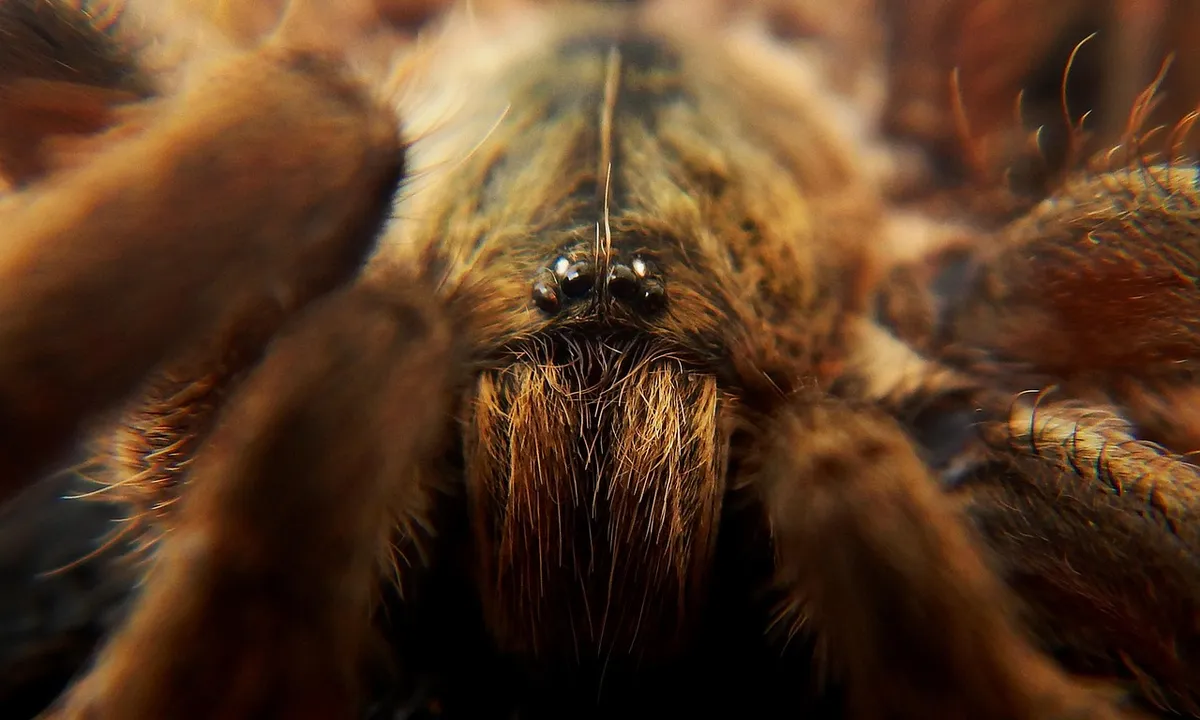
A relaxed tarantula often sits with its legs tucked neatly under its carapace. This energy-efficient pose, like my Chilean Rose Hair Rosie favors, indicates a state of peaceful readiness in a secure environment.
Some individuals stretch out fully on the substrate, exposing their ventral side. Seeing your tarantula lie flat with legs extended is a clear sign it feels no immediate threat and is comfortable in its space. From an anatomy standpoint, this ventral view is a quick tarantula anatomy 101 lesson. You’ll notice the prosoma (cephalothorax) and the abdomen, and how the legs attach to the body.
Differentiate healthy rest from sickness by noting activity cycles. A well tarantula will have predictable periods of movement, typically at night, while a lethargic one remains inert for days without any nocturnal exploration. My Burgundy Goliath, for example, is a daytime statue but patrols his humid enclosure after dark.
Hiding and Web Retreat
Burrows and silk hides are security blankets. When your tarantula retreats to these spaces, it is engaging in a natural, reassuring behavior that promotes low stress.
Constant, unbroken hiding can point to chronic stress from excessive light or vibration. Periodic seclusion, however, is perfectly normal, especially during daylight hours or after a large meal. My OBT Flash turns his cork bark into a silken fortress but emerges nightly to monitor his territory.
Offer hides that suit your pet’s natural history. A snug cork bark flat gives terrestrial species like Grammostola rosea a firm ceiling, while deep, moist substrate allows fossorial giants like Theraphosa stirmi to construct their own deep, secure tunnels.
Staring and Environmental Awareness
That motionless, fixed posture is not idleness. Your tarantula is actively sensing the world through specialized hairs called setae, which detect the faintest air movements and substrate vibrations.
They process information through this tactile network. A sudden freeze or a slow, deliberate leg lift often means your tarantula has registered your presence and is calculating its next move. I’ve seen Goliath halt completely, his massive frame attuned to the vibrations from my approach.
Honor this quiet vigilance. Avoid tapping the glass or causing abrupt disturbances, as this can overwhelm an animal whose primary sense is touch.
Molting Behaviors: From Preparation to Recovery
Pre-Molt Signs and Preparation
Pre-molt is marked by distinct behavioral shutdowns. Your tarantula is redirecting all internal resources toward the demanding task of building a new exoskeleton.
- Refusal to eat: The digestive tract clears out. Rosie has ignored food for over half a year before a molt.
- Increased webbing or burrowing: They create a safe molt mat, a carpet of silk for traction and cushioning.
- Darkening abdomen: The opisthosoma turns dark and glossy as the new skin forms beneath the old.
- Pronounced lethargy: Movement minimizes to conserve vital energy.
Some species seal themselves in. Flash webbed every entrance to his hide before his last molt, a definite signal to cease all enclosure maintenance.
Support this phase with subtle care. Gently raise humidity by 5-10% via a light mist on one side of the tank, and remove any live prey immediately to prevent injury to your vulnerable tarantula.
The Molting Process Itself
The molt commences when the tarantula turns onto its back. This supine position is a mandatory part of ecdysis and should never be interpreted as a sign of death or distress.
Watch for delicate leg tremors as the old carapace splits. The animal then painstakingly extracts itself, a slow and methodical escape that can take many hours. The only sound is the soft shred of the abandoned exuvia.
Absolute non-interference is the only correct practice during the molt. Any contact or attempted assistance risks catastrophic injury, such as limb loss or a fatal rupture.
Observing Rosie molt under dim light, I saw her old skin peel back like a wrinkled suit. The precise, gradual emergence of each new limb is a breathtaking display of natural engineering that requires our total patience.
Post-Molt Care and Vulnerability
The fresh exoskeleton is soft, pale, and offers little protection. This post-molt period is when your tarantula is at its most physically fragile, susceptible to falls and dehydration.
Ensure complete quiet and provide fresh water. I place a water dish close to the molt site and sometimes add a few drops to the webbing so my tarantula can drink without moving. Do not clean or rearrange the enclosure for at least a full week. This is post-molt tarantula care—after shedding, avoid handling and keep the enclosure quiet until the new exoskeleton hardens. Once dry, you can resume normal checks and care.
Wait 7 to 10 days before attempting to feed. After molting, ensure the molt is complete and the tarantula has fully hardened before offering food. The critical cue is fang coloration; once the chelicerae transition from a soft pinkish-white to a hardened, jet black, your tarantula can successfully hunt and eat again. Offering food too early can break their delicate new fangs.
After his last molt, Flash was a brilliant but wobbly orange. I provided ten days of uninterrupted calm before offering a pre-killed roach, which he consumed once his tools were fully operational.
Exploratory and Environmental Behaviors
Burrowing and Digging
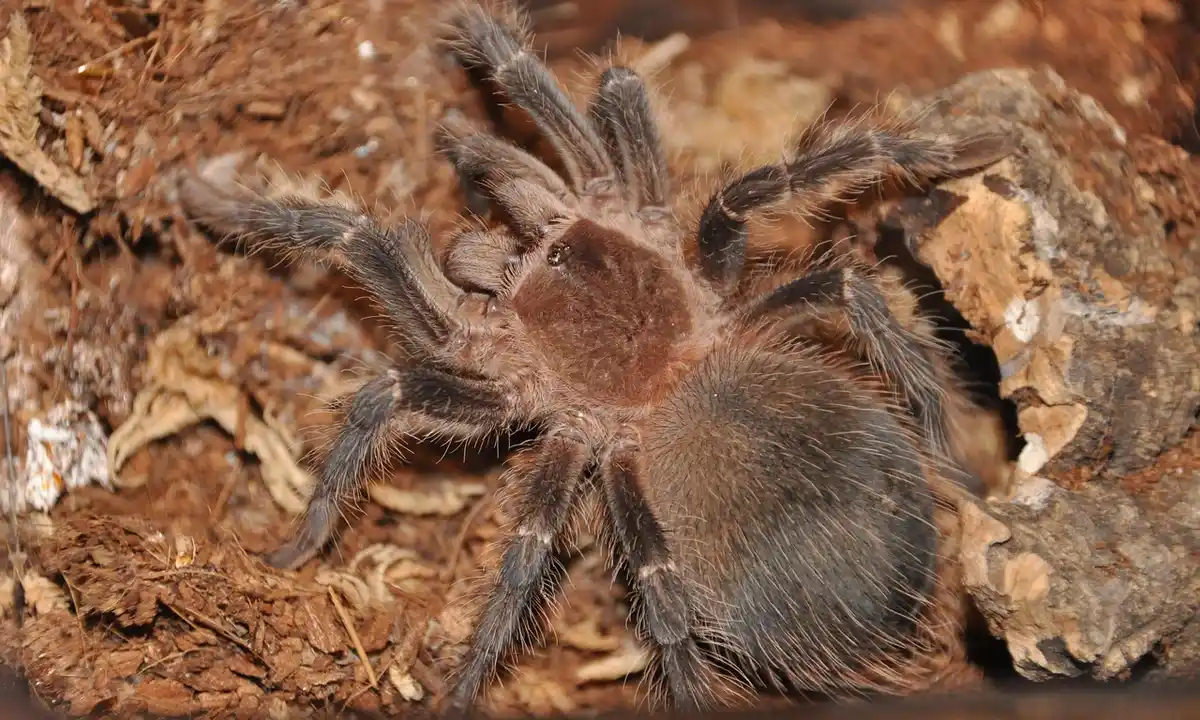
Watch a tarantula dig, and you witness an architect at work. This is natural construction, a drive to create shelter, control humidity, and prepare egg-laying sites. My Burgundy Goliath, T. stirmi, will spend nights moving substrate with a purposeful, rhythmic motion that reshapes its entire enclosure. Burrowing isn’t just instinct; it’s a critical behavior for thermoregulation and security, especially for fossorial species.
Excessive, frantic digging often signals a problem. I once saw my OBT, P. murinus, constantly scrabbling at the enclosure corners. This indicated the substrate was too dry and shallow for its liking. Unsuitable substrate moisture or depth can trigger stress-driven excavation as the tarantula seeks a better microclimate.
For species that love to dig, provide deep, packable substrate. I use a mix of coconut fiber and topsoil, packed down to about 1.5 times the tarantula’s leg span for fossorial types. This allows them to construct stable tunnels that won’t collapse. Providing the right foundation respects their natural instincts and prevents stressful, repetitive behaviors.
Pacing, Wandering, and Silk Draglines
Perimeter pacing, where your tarantula walks the same glass edge repeatedly, has multiple meanings. It could be simple exploration, especially after a rehousing. In mature males, it’s often a relentless search for a mate. However, constant pacing can also point to stress or an enclosure that feels too open. My G. rosea, Rosie, will sometimes pace when her water dish is empty, then stop once it’s refilled. Interpreting pacing requires context; look for changes in routine or other signs of discomfort.
Silk draglines are fascinating safety measures. As they walk, many tarantulas lay down a thin thread of silk, especially arboreal species like my OBT, Flash. This silk acts as a grip tape. That delicate dragline is a lifeline, providing traction and potentially catching them in a fall, a brilliant adaptation for life off the ground.
If pacing seems constant without an obvious cause like breeding, evaluate your setup. Enclosure size might be too small or too large, causing insecurity. Adding cork bark hides or leaf litter can break up sightlines and create a more enriching, secure environment. A simple change in scenery can often calm a wandering tarantula by fulfilling its need for complex exploration.
Sensing Vibrations and Substrate Communication
Tarantulas live in a world of vibration. Specialized leg hairs and organs called slit sensilla let them detect the faintest tremors through the substrate and air. The sudden freeze you see, where every leg goes still, is active listening. This vibration sensing is their primary link to the outside world, alerting them to approaching prey, a potential mate, or a threat.
Behaviors like gentle leg tapping are part of this communication. I’ve seen Flash, in her webbed fortress, tap a leg rhythmically before striking at a cricket. It’s a way to gauge distance and location. These minute vibrations are a language we can barely perceive, but for your tarantula, they paint a detailed picture of the environment. In a tarantula tapping decoding guide, researchers break down these vibrations into patterns that indicate intent, distance, and threat. Learning to read them turns taps into a living map of the spider’s world.
Communication and Social Behaviors
Drumming and Vibration Signals
When a mature male is ready to breed, he performs. Palpal drumming involves him rhythmically tapping his pedipalps and front legs on the ground or a female’s web. I’ve felt these vibrations through the table during breeding introductions-a rapid, persistent drumming. This isn’t random noise; it’s a species-specific courtship signal transmitted through substrate and silk to attract and appease a female.
The vibrations from drumming carry information about the male’s species, sex, and intentions. A receptive female may answer with her own taps or adopt a passive posture. Successful breeding hinges on this precise vibrational dialogue, a dance conducted entirely through feel.
Mating Rituals and Copulation
The mating ritual is a high-stakes ballet. The male approaches cautiously, drumming. If the female is receptive, he will use his tibial hooks to secure her fangs and perform a brief copulation before making a rapid, often frantic, retreat. This entire process lasts seconds, and the male’s swift exit is crucial to avoid being mistaken for a meal.
These rituals are inherently risky. I only attempt breeding under experienced supervision, with a clear escape plan for the male. Breeding requires respect for the animals’ instincts and a commitment to the “Look, Don’t Touch” principle, even during this intense interaction.
Trembling and Other Subtle Movements
Leg trembling during molting is completely normal. As the tarantula works to extract itself from the old exoskeleton, you’ll see subtle shakes and quivers. Watching my 15-year-old Rosie molt, the trembling was a sign of immense, careful effort. This molting tremor is a physical necessity, not a sign of distress, as the new soft body pushes free from the confining old skin.
In other contexts, trembling can signal threat. Just before my T. stirmi, Goliath, flicks its urticating hairs, I often see a fine tremble in its rear legs. It’s a stress response and a prelude to defense. Recognizing this subtle cue allows you to step back and give the animal space, preventing a stressful hair-flicking incident.
FAQs: Common Tarantula Behavior Questions
Why does my tarantula kick hairs from its abdomen?
This is called hair flicking, a primary defense for New World tarantulas. They use their back legs to kick barbed, irritating hairs (urticating hairs) at a perceived threat. It is a clear sign of stress or fear, often during enclosure maintenance or if the spider feels cornered. Always proceed with caution and wash your hands after contact.
Is it normal for my tarantula to refuse food for months?
Yes, extended fasting is normal for many species, especially prior to a molt. Some, like the Chilean Rose Hair, are famous for voluntary fasts lasting many months while remaining healthy. As long as the spider’s abdomen remains plump and it has access to water, there is typically no cause for concern.
What’s the safest way to rehouse a defensive tarantula?
Always work in a secure, enclosed area like a large bin. Use long tools like soft paintbrushes or catch cups to gently guide the spider, avoiding direct contact. If the tarantula assumes a threat posture, stop all movement and wait for it to calm down before proceeding patiently. These steps are part of a safe, step-by-step guide to holding and handling your pet tarantula. Following them helps reduce stress for the spider and protect you during handling.
What does it mean when my tarantula grooms itself?
Grooming is a sign of a calm, content tarantula. They will meticulously clean their legs and pedipalps by drawing them through their fangs. This essential maintenance removes old prey bits, substrate, and old urticating hairs to keep their sensory hairs effective. Why they groom themselves? It’s a core aspect of spider hygiene—removing debris and keeping their sensory hairs clean to maintain sensitivity. A deeper look at spider hygiene shows grooming also helps prevent infections and supports healthy molts.
Why does my tarantula web up its entire enclosure?
Heavy webbing is a natural instinct, especially for fossorial or arboreal species. Webbing provides security, creates a sensory network to detect prey, and helps stabilize their environment. Some species will also create a thick “molt mat” of silk before shedding their exoskeleton.
Why is my tarantula constantly pacing the enclosure walls?
For a mature male, constant pacing and wandering is a natural drive to search for a mate. In other tarantulas, it can indicate exploration after a rehousing, a need for a better hide, or stress from an enclosure that is too large or exposed. Evaluate the setup for security and enrichment.
The Greatest Reward: Years of Observation
Whether your tarantula is a pet rock like my Rosie or a web-slinging dynamo like Flash, long-term care hinges on mastering just one or two species-specific needs. For moisture-dependent species like my Goliath, the single most critical parameter is maintaining a perpetually damp section of substrate to prevent fatal dehydration – choosing and maintaining the right substrate is key. For arid species, that focus shifts to providing a dry environment with a water dish. Pinpoint that one core need, and you build the foundation for a thriving animal.
True success in this hobby is measured not in handling sessions, but in the quiet moments of witnessing natural behavior. Watch the meticulous patching of a tunnel entrance. Marvel at the silent, precise strike at a cricket. Observe the ritualistic movements before a molt. Your patience in providing the right environment is rewarded with a front-row seat to a hidden world. Give your tarantula the security to act like a tarantula, and you will be endlessly fascinated.
Further Reading & Sources
- What Different Tarantula Stances Mean | Pets on Mom.com
- Posture / Body language | Arachnoboards
- Decode Your Tarantula’s Body Language In ONE Easy Step (IMAGE) – Tarantula Heaven
Arlo is a lifelong arachnid enthusiast who believes tarantulas are the world’s most misunderstood roommates. With years of hands-on experience in tarantula care, habitat setup, and species behavior, Arlo combines expert knowledge with a dash of humor to make spider ownership less scary and a lot more fascinating. From choosing the right enclosure to understanding why your eight-legged buddy is doing that weird little pose again, Arlo is here to help you become the best tarantula parent you can be, without getting tangled in the web of misinformation.
Understanding Tarantula Behavior