
Do Male Tarantulas Die After Mating? The Lifecycle Explained
In the silent world of a tarantula enclosure, the male’s existence shifts from patient growth to a desperate, final mission. For the vast majority of tarantula species, a mature male’s lifespan is brutally shortened after his ultimate molt, with mating frequently serving as the terminal event in his biological narrative. This explanation delves beyond the simple yes or no, unpacking the physiological changes, risky behaviors, and sheer chance that define his end. While death after mating is the common outcome, it is not a guaranteed immediate sacrifice; it is often the result of female predation, physical depletion, or his evolved role as a disposable reproductive vehicle.
Quick Stats:
- Origin: A universal phase for males across global tarantula species
- Type: A phenomenon observed in both New World and Old World tarantulas
- Growth Rate: Males reach sexual maturity significantly faster than females
- Post-Maturity Lifespan: Often measured in mere months, not years
From my own breeding experiences with species like the lightning-fast P. murinus, this guide will illuminate the male tarantula’s compelling and concise journey from maturation to his natural conclusion.
Understanding Tarantula Reproduction and Life Cycles
From Spiderling to Adulthood: The Molt Cycle
Growth for a tarantula is a series of controlled vulnerabilities called molts. Each shed is a total renewal, where the spider emerges larger with a fresh, pliable exoskeleton that hardens over days. Growth rate varies by species and conditions, so ‘fast’ is relative in tarantulas. Development unfolds through many molts across years, not days. My Chilean Rose Hair, Rosie, has done this maybe two dozen times in 15 years, her dusty pink color deepening after each one.
Young spiderlings molt frequently, sometimes monthly, while adults slow to a yearly crawl. Guides that chart tarantula molts by species and age show this pattern is common, though rates vary. Knowing this helps you anticipate care at each stage. I maintain 75-80°F and moderate humidity for molting success, as I do for my Goliath Bird Eater’s humid microclimate. The spider fasts, becomes lethargic, and often spins a silk mat before the dramatic flip.
- Spiderling Phase: Molt every 3-8 weeks. Keep substrate slightly damp (70-80% humidity for moisture-dependent species).
- Juvenile Phase: Molt every 4-6 months. Growth rate hinges on temperature and feeding frequency.
- Adulthood: The final, or ultimate, molt confers sexual maturity and stops further growth for males.
Male vs. Female: A Lifespan Divide
The lifespan gap between sexes is stark and programmed by biology. Females like my Rosie are the marathon runners, with decades of potential life after maturity. Males, in contrast, are sprinters with a biological clock that starts ticking after their ultimate molt.
This isn’t about weakness but different reproductive strategies. A female’s energy goes into egg production and survival, while a male’s is funneled entirely into the search for a mate. My defensive OBT, Flash, will live a much shorter adult life once he matures, despite his vibrant energy now.
| Aspect | Female Tarantula | Male Tarantula |
|---|---|---|
| Average Lifespan | 10 to 30+ years | 3 to 8 years total |
| Post-Maturity Molting | May occur occasionally | Never happens; this is their final form |
| Primary Drive Post-Maturity | Feed, grow, produce eggs | Wander and locate a female |
The Male Tarantula’s Journey to Sexual Maturity
Recognizing the Mature Male: Tibial Hooks and Bulbs
The ultimate molt delivers obvious physical trademarks. Look for curved tibial hooks on the first legs and bulbous pedipalp tips, which are his sperm transfer organs. I spotted these shiny bulbs on a mature male Grammostola porteri during a rehousing, a clear sign his wanderlust would soon begin.
Sexing a shed exoskeleton is safer than probing a live animal. Under a magnifier, the molt reveals either a furrow (epigynum) for females or its absence for males, a method I use to plan my breeding projects. Respectful care means minimizing stress during this sensitive period by observing, not handling.
- Tibial Hooks: These dark, hook-like protrusions below the “knee” are used to restrain the female’s fangs during mating.
- Pedipalp Bulbs: The palps transform into swollen, often glossy tips called emboli, ready to carry sperm.
- Body Shape: Mature males often have longer legs and a smaller, leaner abdomen compared to females.
The Urge to Wander: Seeking a Mate
Post-maturity, a male’s behavior shifts from reclusive to nomadic. He will patrol the enclosure relentlessly, tapping with his legs to detect female pheromones in the air currents. This is the most common time for escapes; I once found a male on my curtain rod after he lifted a poorly-fitted lid.
Husbandry must adapt to this restless phase. I ensure secure cross-ventilation and a stable 70-75°F ambient temperature to support his heightened metabolism without overheating. Feeding responses dwindle as his singular focus takes over. Introducing him to a female is a careful dance of timing and observation to avoid the female’s sudden strike.
- Enclosure Security: Use weighted or locking lids. These spiders are escape artists motivated by powerful instinct.
- Minimal Disturbance: Do not handle. The stress can shorten his already limited time and provoke defensiveness, like the hair-kicking my Goliath exhibits.
- The Introduction: Always place the male into the female’s well-fed enclosure, have long tongs ready, and supervise closely.
The Tarantula Mating Ritual: Step-by-Step
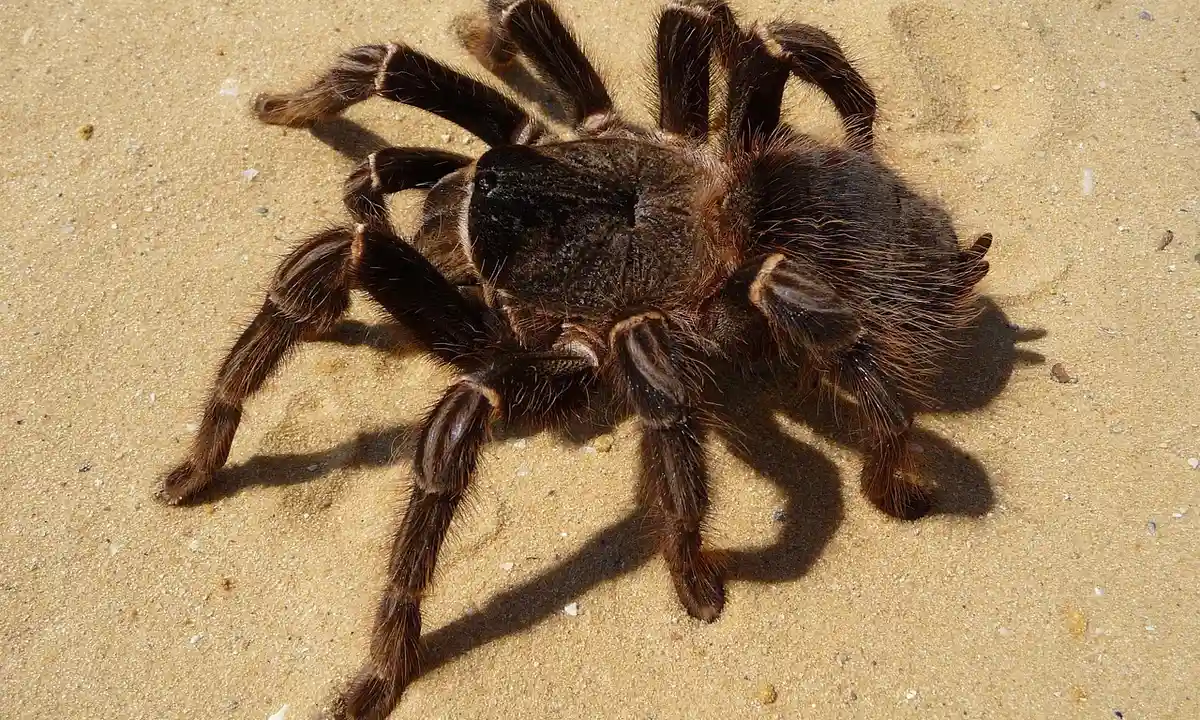
Courtship and Communication
Before any contact, the mature male tarantula performs a silent, intricate dance. He first builds a sperm web, a small silken platform, onto which he deposits a droplet of semen. He then carefully draws this into his specialized pedipalps, the modified appendages near his mouth. This act of loading his pedipalps is his sole biological preparation for fatherhood when he mates with a female.
Approaching the female’s burrow or web, his courtship begins. He uses his front legs to drum and vibrate on the substrate, sending species-specific signals. I’ve felt these vibrations through the table during introductions-a rapid, tapping whisper that says, “I am a mate, not a meal.” The female may respond with her own taps or remain motionless. A receptive female will typically emerge slowly, allowing him to get closer.
This communication is delicate. With my old-world Psalmopoeus murinus, “Flash,” even feeding responses are lightning fast, so I can only imagine the tension during a courtship. Successful breeding hinges on reading these subtle, tactile conversations between spiders, understanding their stridulation and other signals.
The Act of Copulation and Immediate Aftermath
If the female is receptive, the male will cautiously hook his front legs under her carapace, lifting her cephalothorax. He then inserts one loaded pedipalp into her epigynum, the female genital opening, to deposit his sperm packet. This lasts mere seconds. He may repeat the process with his second pedipalp before disengaging.
The immediate aftermath is a critical escape window. The male must retreat quickly, often using a pre-planned route. The female can become aggressive instantly, as her predatory instincts resurface. In my experience, this is when a keeper’s heart races, watching the male’s hurried, often clumsy, exit. I’ve rehoused males post-introduction that were missing legs, a stark reminder of the risks.
After separation, the female may begin grooming while the male seeks shelter. This entire ritual, from first tap to final retreat, exemplifies why we advocate for “Look, Don’t Touch”-any external disturbance during this time can lead to fatal stress for both animals.
Do Male Tarantulas Always Die After Mating?
The Biological Clock: Energy Cost and Senescence
Male tarantulas do not always drop dead the moment mating ends. Their fate is tied to a process called senescence, or biological aging, which is accelerated after their final molt to maturity. Think of the mature male as a clock that was already winding down; mating is a strenuous event that can hasten the final ticks.
Upon maturing, males stop growing and molting. Their primary drive becomes finding a mate, often at the expense of feeding. This journey consumes immense energy. Even my docile “Rosie,” a Grammostola rosea, would refuse food for months, but a mature male’s hunger strike is typically permanent. He is living on borrowed time.
Death after mating is common, but not guaranteed from the act itself. A male might survive for weeks or even months if he avoids other hazards. The real cause is a combination of depleted energy reserves, a metabolism in overdrive, and a body that is simply not built for longevity.
Risks During and After Mating
Beyond natural senescence, males face concrete dangers. A misplaced step can lead to a bite or a lost limb from the female. Exhaustion from travel and the mating ritual itself weakens them, making them vulnerable to dehydration or inability to catch prey. In captivity, a failed breeding attempt can leave a male so stressed he never recovers.
I keep my Burgundy Goliath, “Goliath,” in high humidity, but a wandering male from a drier species could easily desiccate during his search. Providing a safe, stress-free enclosure for a post-breeding male is a keeper’s final act of care, offering quiet and water until his time passes.
Sexual Cannibalism: How Common Is It?
The dramatic image of the female devouring the male is less a rule and more a situational risk. In the wild, a well-fed female in a stable territory may be less likely to cannibalize. In captivity, it often depends on the species’ temperament and the keeper’s timing.
Defensive, fast-moving species like Old World tarantulas (e.g., P. murinus) pose a higher risk than some slow-moving New World types. From conversations with other breeders, true sexual cannibalism during copulation is rarer than the male being attacked during his approach or retreat. Most experienced breeders will tell you that a cannibalized male often misread the female’s signals or was simply too slow. To avoid these common mating problems, breeders emphasize careful pair selection and close observation of courtship cues. Proper timing and stable housing also help reduce aggression during copulation.
I design my breeding introductions with multiple escape routes for the male, using clear tubes and barriers to manage first contact. This practice, learned over years, respects the process and minimizes preventable tragedy. The female’s need for security is paramount; if she feels threatened, her response is purely instinctual.
Factors Influencing Male Survival After Mating
Species Variation in Post-Mating Life
Not all males meet an immediate end after their final act. Survival time hinges greatly on species-specific biology. My old male Grammostola rosea lived for nearly a year after his sole breeding, a sluggish testament to some species’ lingering vitality. Contrast this with the rapid decline I’ve seen in mature male Pterinochilus murinus; their brilliant orange fades to a dull brown within weeks post-mating. Taxonomic lineage provides the blueprint, with New World terrestrials often outlasting Old World arboreals after reproduction.
Physiology dictates the pace. Fast-growing genera like Psalmopoeus have metabolisms that burn bright and short. Males from slower-growing species, such as many Brachypelma, possess greater reserves. Their systems simply take longer to exhaust. I record these differences in a breeding journal, noting how a male’s post-mating behavior-ceasing web maintenance, refusing food-signals his internal clock. Observing these subtle cues is your first clue to the inevitable timeline.
The Role of the Keeper in Captive Breeding
Our intervention is the single largest variable in captive male longevity. A hurried or stressful introduction guarantees a shorter lifespan for the male, if not immediate predation. I learned this early with a male Caribena versicolor; a poorly timed attempt led to a frantic escape and his demise days later. You control the environment, timing, and safety of the entire encounter, making your preparation paramount.
Successful pairings require meticulous planning. I maintain the female’s enclosure at her ideal parameters-for my Theraphosa stirmi Goliath, that’s 78°F and 80% humidity-before introducing the wary male. The goal is a calm, monitored liaison, followed by the male’s swift, careful extraction. Post-mating, I isolate the male in a quiet, simple enclosure with a water dish. This reduces stress and allows him to conserve energy. Respectful care here means prioritizing the animal’s peace over our curiosity for the breeding outcome.
Caring for a Mature Male Tarantula in Captivity
Habitat and Husbandry for the Wandering Male
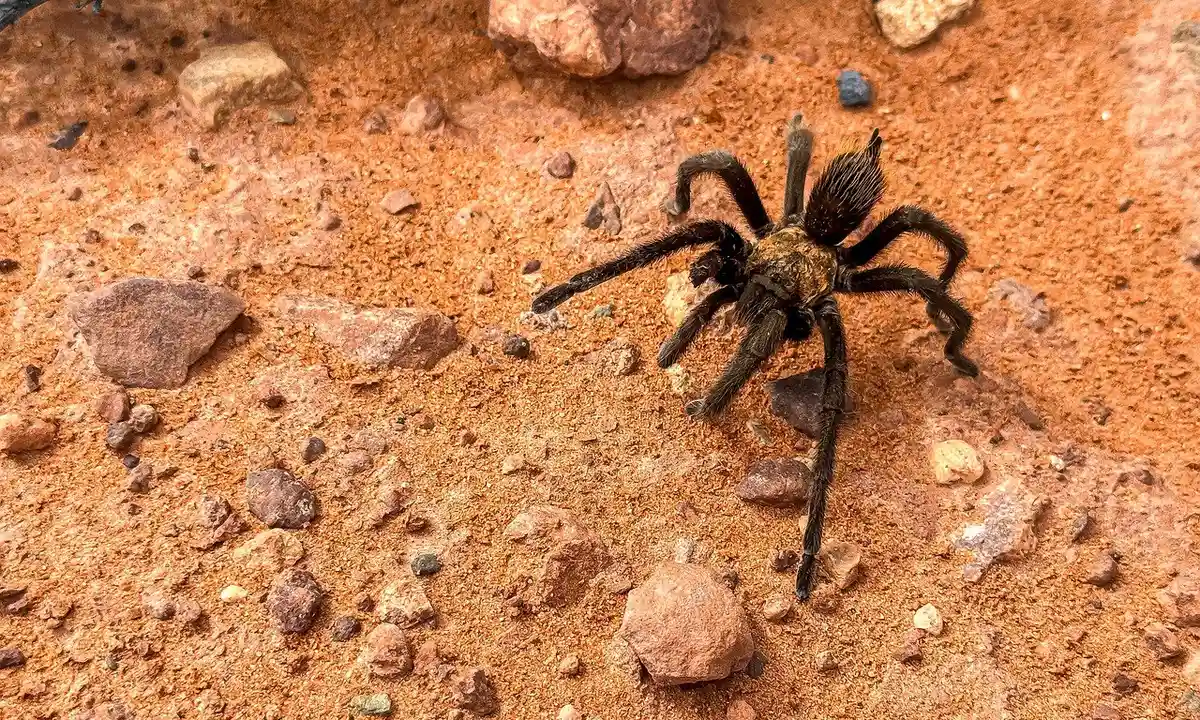
A mature male is a escape artist driven by instinct. Standard enclosures become hazards. For my wandering males, I use deep, smooth-sided plastic containers with secure, ventilated lids. Height is less critical than footprint; a long, low space prevents dangerous falls. Escape-proofing is non-negotiable, as a roaming male desiccates quickly and is easily injured.
Substrate should be simple and dry. I use a shallow layer of coconut fiber or a peat mix, just enough for footing. Complex bioactive setups are wasted here. Include a single, low-profile hide like half a cork bark flat and a sturdy, shallow water dish. Maintain ambient room temperature between 70-75°F. Humidity should be species-appropriate but generally on the lower side to prevent respiratory issues in a weakened animal. The enclosure’s purpose shifts from enrichment to secure hospice, minimizing stress and exertion.
Feeding and Monitoring Before and After Mating
Appetite plummets after a male matures. Do not force-feed. Offer a pre-killed cricket or small roach weekly, but expect refusals. Hydration is far more critical. I check the water dish daily, ensuring it is clean and full. The male’s abdomen will noticeably shrink, but a sharp, bony carapace is the true sign the end is near. Focus on providing constant access to water, not food, as their digestive systems shut down.
Monitor behavior closely. Increased lethargy is normal. Signs of distress include a curled posture or inability to right themselves. I perform gentle checks using a soft brush to encourage movement if concerned. Remember the “Look, Don’t Touch” principle; handling a fragile male imposes severe stress. My record for post-ultimate male care was 14 months with a Aphonopelma chalcodes, achieved solely through passive, observant husbandry. Your role transitions from keeper to witness, providing dignified care as their natural cycle concludes.
Ethical Considerations for Tarantula Breeding
Witnessing the final, poignant chapter of a male tarantula’s life can spark a deep desire to participate in this cycle. But breeding is not a casual endeavor. It is a serious commitment that extends far beyond the initial pairing, demanding significant resources and a clear ethical framework. This raises the question: are the core principles of ethical tarantula breeding principles ethical? A responsible approach should prioritize animal welfare and ensure offspring are placed in safe, suitable homes. Before seeking a mate for your tarantula, you must critically assess your motivations and capacity.
To Breed or Not to Breed: Assessing Your Role
Ask yourself: why do you want to breed? The answer dictates your path. Breeding to “see what happens” or because your male is wandering is insufficient justification. My first pairing, with a different Grammostola rosea years before Rosie, was born from naive curiosity. The successful sac yielded over 500 spiderlings. The overwhelming reality of housing, feeding, and rehoming that many tiny lives was a profound lesson.
Responsible breeding requires a pre-established plan for every possible outcome.
- Space & Resources: A single egg sac can produce hundreds of spiderlings. You need dedicated space for individual deli cups, a reliable source of pinhead crickets or fruit flies, and months of your time for maintenance.
- Genetic Responsibility: Avoid breeding common species with unknown lineage, which can flood the market and depress value. Never breed siblings or father-daughter pairings, as this weakens the captive gene pool. Seek unrelated mates from other breeders.
- Rehoming Strategy: Have a concrete plan for the spiderlings. This includes pricing, shipping logistics (if applicable), and vetting potential buyers to ensure they understand basic care. Are you prepared to care for every unsold spiderling for its full lifespan?
- Risk Acceptance: The female may kill the male before or after pairing. She may be infertile, or she may produce a viable sac only to cannibalize it later. You must be prepared for these natural, sometimes heartbreaking outcomes.
Contributing to Conservation and Captive Populations
When done with intention, breeding transcends hobbyism. Ethical breeders play a vital role in tarantula conservation and the health of the pet trade. The goal shifts from mere production to purposeful stewardship. To support that shift, create a comprehensive breeding plan for your tarantulas. A well-structured plan guides genetics, pairings, housing, and welfare to ensure responsible outcomes.
Many stunning tarantulas face severe threats in the wild, primarily from habitat loss. Species like the Brazilian Salmon Pink Birdeater (Lasiodora parahybana) are now commonly seen in captivity almost exclusively due to dedicated breeding programs. By establishing thriving, genetically diverse captive populations, we reduce pressure on wild collections and create an “ark” for vulnerable species. Conservation efforts are in place to protect endangered tarantula species in the wild. These efforts complement captive breeding by safeguarding habitats and monitoring wild populations.
Your role can be direct or supportive:
- Focus on At-Risk or Undercultivated Species: Instead of breeding another common curly hair, seek out species that are rare in captivity. Research their needs thoroughly; success with these can be a genuine contribution.
- Practice & Prove Your Skills: Master breeding with a hardy, common species first. Document everything: pairing dates, sac dates, yield, and growth rates. This data is valuable.
- Support Specialized Breeders: If large-scale breeding isn’t for you, you contribute by purchasing captive-bred specimens from those who do. This supports their work and ensures your pet has no wild-collected history.
- Share Knowledge, Not Just Spiderlings: Detailed breeding reports shared in forums or clubs advance collective knowledge. The precise humidity that triggered your Theraphosa stirmi (like my Goliath) to lay a sac, or the temperature that yielded the best hatch rate, helps others.
Breeding is the ultimate expression of our husbandry. It demands we look beyond our single enclosure and consider the wider impact of our actions on the species and the hobby. When undertaken with respect, preparation, and a conservation-minded outlook, it becomes one of the most rewarding chapters in an arachnoculturist’s journey.
FAQs
Is it true that all male tarantulas die immediately after mating?
No, immediate death is not a universal rule. While a mature male’s lifespan is drastically shortened after his final molt, death after mating is a common outcome but not an instant certainty. He may die from the physical stress and energy cost of the encounter, from predation by the female, or simply from reaching the end of his natural biological clock weeks or months later. His body is designed for a single reproductive mission, not longevity.
Does the female always kill and eat the male?
No, sexual cannibalism is not a guaranteed part of the process. A well-fed, receptive female may allow the male to escape after copulation. The risk is higher if the male is clumsy, the female is hungry, or she feels threatened. In many cases, the male dies from exhaustion and senescence rather than directly from the female’s fangs.
Can I do anything as a keeper to help a male live longer after mating?
Yes, your care can influence his remaining time. After breeding, house him separately in a secure, stress-free enclosure with easy access to fresh water. Maintain appropriate temperature and humidity, but avoid complex setups that require energy to navigate. Your goal is to provide a calm, hospice-like environment that allows him to conserve his dwindling energy reserves.
If a male doesn’t find a mate, will he live a full lifespan?
No. A male’s shortened lifespan is triggered by his ultimate molt into maturity, not solely by the act of mating. Once mature, he enters a state of senescence and his primary drive becomes wandering to find a female. He will typically stop eating and deplete his energy reserves, leading to his death within months to about a year, regardless of whether he successfully mates.
The Male’s Journey: A Keeper’s Role
For a mature male tarantula, the single most critical factor you control is his environment after his ultimate molt. Your primary job shifts from fostering growth to facilitating his natural drive, which means providing a spacious, clutter-free enclosure with a permanent, shallow water dish to combat the dehydration that plagues wandering males. His physiology is now on a timer, and your perfect setup is the stage for his final, instinctual act. That question—do male tarantulas live longer than females?—is commonly addressed in the ultimate maturity guide. Generally, in many species, mature males have shorter post-maturity lifespans than females, which makes this final stage especially critical to manage.
Observe this phase with quiet reverence. Watch the restless pacing, the constant palpal drumming on the glass, the focused intensity that replaces a juvenile’s skittishness. This is not stress in the typical sense; it is purpose. Your patience and non-interference are the greatest gifts you can offer. Resist the urge to handle or disrupt him. Instead, bear witness to the raw biological imperative playing out, understanding that allowing this cycle to complete naturally is the hallmark of respectful arachnoculture. In my own collection, watching a mature male’s determined, final explorations is a poignant reminder that our role is as stewards, not directors, of a life lived entirely on its own ancient, elegant terms.
Further Reading & Sources
- Eaten, Crushed or Starved; Male Tarantulas Trade Their Life to Impregnate a Mate | Scientific American
- THE LIFE CYCLE AND MATING HABITS OF THE MALE TARANTULA BY W. J. BAERG
- When Is Tarantula Mating Season & What To Look Out For
Arlo is a lifelong arachnid enthusiast who believes tarantulas are the world’s most misunderstood roommates. With years of hands-on experience in tarantula care, habitat setup, and species behavior, Arlo combines expert knowledge with a dash of humor to make spider ownership less scary and a lot more fascinating. From choosing the right enclosure to understanding why your eight-legged buddy is doing that weird little pose again, Arlo is here to help you become the best tarantula parent you can be, without getting tangled in the web of misinformation.
Breeding Tarantulas