
Can Tarantulas Regrow Lost Legs? The Molting Process Explained
In the hushed world of a tarantula enclosure, a missing leg is not a life sentence but a call for patience and precise care. This article cuts through the myths to show you exactly how the molting cycle allows for regeneration, what you must do to support it, and why a hands-off approach is non-negotiable. Yes, tarantulas can regrow legs, but only if the loss happens before their final molt and they have enough energy reserves for a successful shed.
- Origin: Global, from rainforests to deserts
- Type: Both New World (e.g., Grammostola) and Old World (e.g., Pterinochilus) species can regenerate
- Growth Rate: Directly tied to molting frequency; fast-growing slings may regrow a leg in one cycle, while adults can take years
Drawing from my years breeding everything from docile ‘pet rocks’ to defensive speedsters, this guide will give you the factual backbone and practical steps to navigate your tarantula’s recovery, from the first signs of pre-molt to the unveiling of a new, fully functional limb.
The Direct Answer: Can Tarantulas Regrow Lost Legs?
Yes, tarantulas possess a remarkable ability to regenerate lost limbs, but this ability is not guaranteed and operates under specific biological rules. The complete regrowth of a leg is only possible through the molting process, and its success depends entirely on the spider’s age and health. I’ve seen it firsthand with my old Chilean Rose, Rosie; she lost a leg in a clumsy fall years ago and regenerated a slightly smaller, but fully functional, replacement over two molts.
What Determines Successful Leg Regrowth?
Two primary factors dictate whether your tarantula will walk away from an injury with a new leg: its life stage and its physical condition. A spider’s body can only allocate resources to regeneration if it has enough in reserve.
The Role of Age and Growth Stage
Younger tarantulas, or “slings,” are regeneration champions. Their bodies are primed for rapid growth and frequent molting, sometimes every few months. A lost leg in a juvenile will often reappear, nearly perfect, after just one or two molts. For mature males, whose final molt signals the end of their life cycle, regrowth is impossible. Adult females, like my 15-year-old Rosie, can still regenerate, but the process slows dramatically and may take several molts to complete.
Overall Health and Nutritional Status
Molting is metabolically expensive. Regenerating a leg multiplies that cost. A poorly fed or dehydrated tarantula may sacrifice limb regrowth to ensure it can simply complete the ecdysis cycle alive.
- Nutrition: A protein-rich diet before a molt fuels the regeneration site. I always offer my Burgundy Goliath, Goliath, an extra cricket in the weeks I suspect a molt is coming.
- Hydration: Consistent access to fresh water is non-negotiable. The new limb forms within a fluid-filled sac.
- Stress: Constant disturbance can delay molting indefinitely, halting regeneration. My defensive OBT, Flash, is left completely undisturbed; his secrecy is key to his health.
Think of it as a biological budget: a healthy, well-fed spider can afford the luxury of a new limb.
How Molting Enables Leg Regrowth in Tarantulas
This is where the true magic happens. Regeneration isn’t instantaneous; it’s a meticulously planned construction project that occurs beneath the old exoskeleton.
The Regeneration Site: Forming a New Limb Before the Molt
Immediately after an injury, the tarantula’s body seals the wound. At the next molt cycle, special cells activate at the break point. They begin constructing a miniature, folded version of the new leg, encased in a soft, fluid-filled sac called a ‘limb bud’. This nascent limb is so delicate it’s often visible as a small, opalescent droplet under the old exoskeleton at the injury site. All growth happens here, in the secret space between the old skin and the new one being formed beneath it.
Ecdysis: Shedding the Old to Reveal the New
The molt itself is the grand reveal. The tarantula must successfully extract itself from its old carapace, and this is the most critical moment for the new limb.
- The spider rolls onto its back and begins pumping fluid to crack the old exoskeleton.
- It painstakingly pulls each old leg out of its casing. At the injury site, the new, soft leg bud is finally freed.
- After the tarantula rights itself, the regenerated limb is tiny, pale, and wrinkled. It is filled with hydraulic fluid.
- Over the next several hours, the new leg expands and hardens. It will often be slightly shorter or thinner than the others, especially after the first molt. Full size may take multiple cycles.
The successful inflation and hardening of that new limb is the final, vulnerable step in a biological miracle. This is why perfect humidity and zero disturbance during a molt are the cornerstones of good husbandry.
The Step-by-Step Tarantula Molting Process
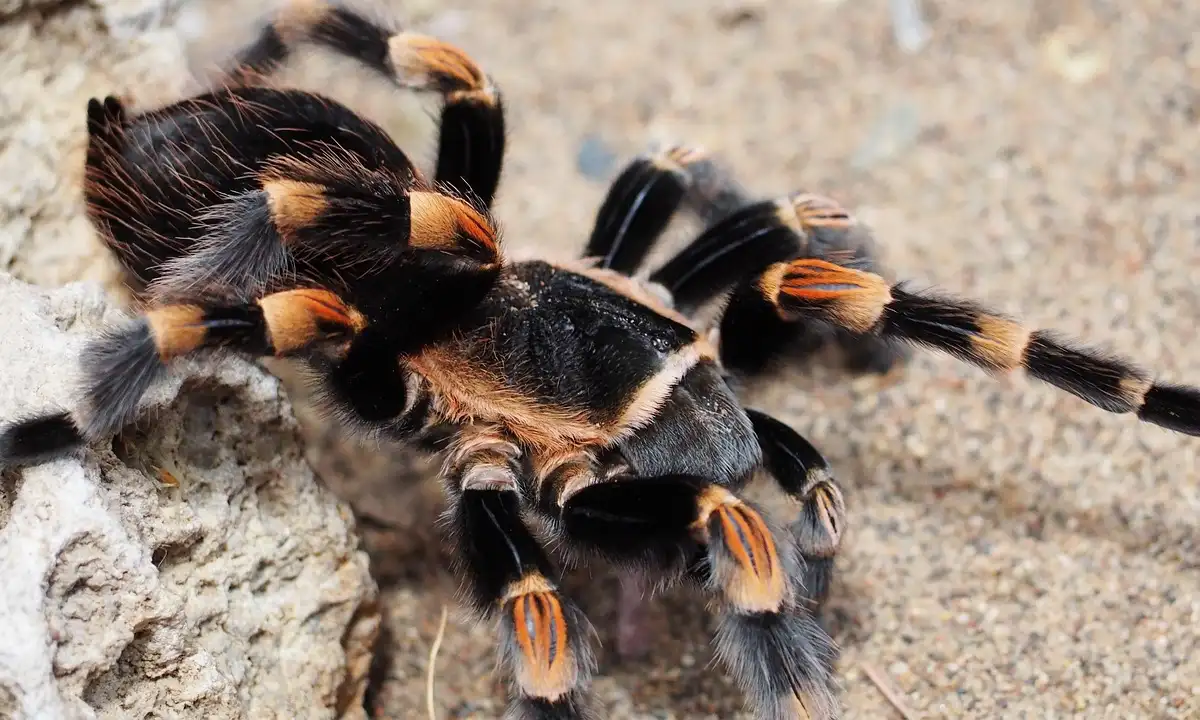
Stage 1: Recognizing Pre-Molt Signs
Behavioral Changes: Fasting and Reclusiveness
Your tarantula’s daily habits will change. They stop eating first. This fast can last from weeks to many months, which is completely normal behavior. My Grammostola rosea, Rosie, is a champion faster, once refusing food for five months before a molt. Some fasts are tied to the pre-molt cycle, so you may see guidance on when not to feed your tarantula and other common fasts.
They seek solitude. You might find them hidden deep in a burrow or behind cork bark. Minimize all enclosure maintenance during this time to reduce stress on the animal. I learned this when my Pterinochilus murinus, Flash, webbed its entire hide shut.
- Refusal of all prey items.
- Dramatic decrease in movement and exploration.
- Sealing off burrow entrances with silk (common in web-building species).
Physical Changes: Darkening Skin and Bald Patches
The abdomen becomes visibly darker and often glossy. This dark sheen is the new exoskeleton developing beneath the old one. The carapace may also appear duller.
Bald patches on the abdomen, caused by kicking urticating hairs, might look more pronounced. Observing these physical cues allows you to perfectly time your husbandry adjustments. For my Theraphosa stirmi, Goliath, I raise humidity the moment I see that telltale darkening.
- Abdomen turns black or deep blue.
- Skin appears tight and shiny.
- Existing bald spots may seem larger as the abdomen expands.
Stage 2: The Shedding Event (Ecdysis)
The tarantula will lay on its back or side. Never disturb a tarantula in this position, as the process is delicate and irreversible. The old exoskeleton cracks along the carapace edge.
Ecdysis is a slow, silent struggle. Legs and fangs are extracted with meticulous care. This entire event can take several hours, during which the spider is completely vulnerable. Watching my large Goliath emerge was a lesson in patient, quiet strength.
This is when leg regeneration happens. A previously lost leg will reappear as a small, pale bud that will grow larger with future molts. The new body is soft, wet, and extremely pale in color.
Stage 3: The Critical Post-Molt Period
The tarantula will right itself but remain still. Its new exoskeleton is like soft paper and requires days to harden. Do not offer food; a live cricket could fatally injure your pet.
Your only jobs are to provide humidity and peace. Ensure the water dish is full and gently overflow it to dampen one corner of the substrate. I wait a full ten days before offering food to my larger species.
This is the ultimate test of “Look, Don’t Touch” philosophy. Any handling or unnecessary enclosure movement risks physical damage and immense stress. Even my docile Rosie is left entirely alone after a molt.
- Keep the enclosure humid and quiet.
- Do not feed for 7-14 days, depending on size.
- Check for any stuck molt, especially on the book lungs or fangs.
How Often Do Tarantulas Molt? Age, Species, and Growth
Molting Frequency in Spiderlings and Juveniles
Growth is rapid in early life. Spiderlings can molt every 3-4 weeks, fueled by frequent, small meals. My OBT slings seemed to grow visibly between weekly feedings.
Rate depends on species, temperature, and food supply. Consistent warmth and regular feeding schedule accelerate the molting cycle in young tarantulas. Understanding tarantula molting cycles in spiderlings helps anticipate molts and tailor care. Monitoring molts is a key part of early development. I keep sling enclosures between 75-80°F for steady growth.
- Fast-growing species (e.g., Pamphobeteus, Phormictopus): Molt every few weeks as slings.
- Slow-growing species (e.g., Grammostola, Brachypelma): Molt every couple of months as slings.
Molting Slows Down: The Adult Tarantula Schedule
Adult female tarantulas molt for maintenance, not growth. A mature female may only molt once every 12-24 months, or even longer. My adult Rosie has settled into a pattern of molting about every 18 months. Guides on tarantula care often note that molting frequency varies by species, age, and condition. In general, younger tarantulas molt more often, while adults—especially mature females—slow down.
Adult males present a different story. After their ultimate molt into sexual maturity, males often have less than a year to live. They stop molting entirely and focus solely on finding a mate.
Keep a simple log. Recording the date and outcome of each molt provides invaluable data for your specific tarantula’s health and life cycle. This helps you predict fasting periods and adjust care proactively.
Risks and Complications During the Molting Process
The Danger of Stuck Exoskeleton and Limb Loss
Even for an experienced keeper, the molt is a white-knuckle event. The most common mechanical failure is a stuck exoskeleton. The old carapace won’t pop free, or a leg gets trapped mid-withdrawal. The tarantula may struggle violently, twisting and contorting. This is where permanent injury happens. A leg may snap, sacrificed to free the rest of the body. In my years of breeding, I have seen more limb loss from bad molts than from any predator or cage mate. The new, soft limb beneath can be damaged beyond repair, dooming that appendage until the *next* molt cycle.
How Humidity Directly Affects Molt Success
This is the single greatest husbandry factor you control. Think of the old exoskeleton as a complex, form-fitting suit of armor. To slip out, the tarantula must create a fluid layer between the old and new skin. Dehydration thickens that fluid, turning syrup into glue. For moisture-dependent species like my Theraphosa stirmi Goliath, I keep the substrate downright damp near his burrow. The air feels thick. For arid species like Grammostola rosea Rosie, a water dish and slightly moistened corner of substrate is enough. The goal is not a misted enclosure but a hydrated spider, achieved through a moisture gradient in the substrate itself. To translate that into practice, create a proper substrate moisture gradient for your tarantula—keep the area around the burrow damp, with a drier periphery. This setup helps the spider move and molt with less stress.
- Tropical/Burrowers (e.g., T. stirmi): Maintain 75-85% humidity. Pack damp substrate around burrow entrances.
- Arid/Terrestrial (e.g., G. rosea): 40-50% is sufficient. Always provide a full water dish.
- Fossorial (e.g., many Asian species): Deep, moist substrate is critical. They molt in their humid burrows.
Injury from Falls or Enclosure Hazards
A molting tarantula is a sack of liquid in a delicate new skin. A fall of even a few inches onto hard decor can rupture the abdomen, a fatal injury. I learned this early when a juvenile took a tumble off a cork bark ledge. Webbing helps; my Pterinochilus murinus Flash carpets every surface in silk, creating a natural safety net. You must strip the enclosure of any climbable decor placed above a hard fall distance-typically more than 1.5x the spider’s leg span. Use soft substrate like coco fiber or peat moss as a cushion. This is non-negotiable.
After the Molt: Recovery, Regeneration Timelines, and Care
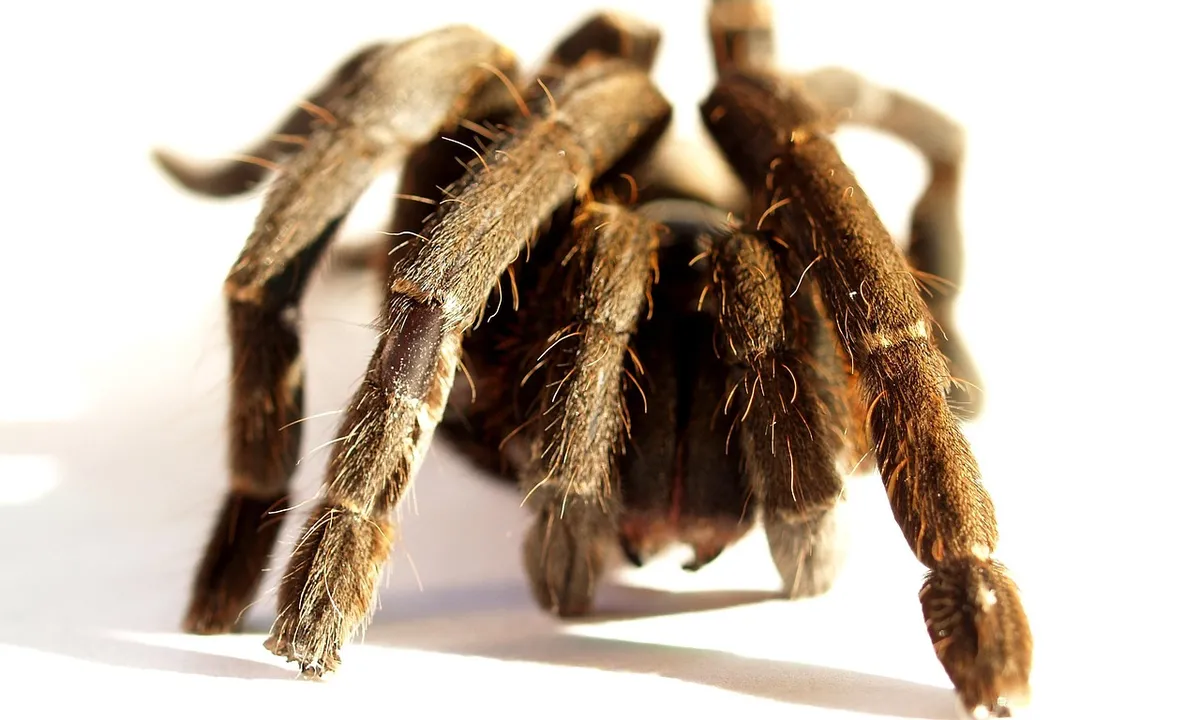
The First Hours: A Soft and Vulnerable Tarantula
The moment the spider pulls free, it enters its most defenseless state. Its new exoskeleton is pale, soft, and waxy. The fangs, a gleaming black in health, are now a soft, creamy brown and utterly useless. It will lie motionless, often on its back or side, as internal hydraulic pressure begins to expand and shape the new body. Absolute silence and zero disturbance are your only jobs during this period, which can last from several hours for a sling to a full day for a large adult. Even vibrations from walking near the enclosure can cause stress.
Observing the Results: Assessing Regrowth and Healing
Once the tarantula rights itself, you can begin a careful visual assessment. Look for the regrown limb. It will appear smaller, thinner, and often a shade or two lighter than the others-a “phantom limb” in its first stage. Count the legs. A successful full molt will also reveal the sex; the shed exuvia will show you. I always examine the discarded molt with tweezers and a magnifier; it’s a report card on the spider’s health and your husbandry. Check for any remaining pieces of old exoskeleton, particularly on the feet or book lungs, which can cause infection.
Your Care Plan: Water, Peace, and Patience
Do not feed your tarantula. Its fangs need days to a week to fully harden. Prey items can injure it or cause immense stress. My rule is to wait at least one full week for small tarantulas, and up to two weeks for large, heavy-bodied ones like Goliath. Only feed once the molt is fully hardened and the tarantula is active again. Start with a small prey item and monitor for any stress or refusal.
- Refill the Water Dish Immediately: The spider is desperately dehydrated and will drink deeply.
- Do Not Disturb: No handling, no cage maintenance, no poking. Let it sit in peaceful darkness.
- Resume Feeding Cautiously: After the hardening period, offer a smaller-than-usual prey item. Remove it uneaten within 24 hours.
The timeline for a regrown limb to reach full size and color match is typically two to three successive molts, a process of months or even years that demands your quiet stewardship. Watching a once-damaged spider restore itself is one of the hobby’s most profound lessons in resilience.
Supporting Your Tarantula’s Molt and Regeneration
Witnessing a successful molt is the ultimate reward for a keeper. Your role is to create a stable, low-stress environment where the spider’s innate biological programming can execute this delicate operation flawlessly. Think of yourself as the stage manager, ensuring all conditions are perfect for the star performer.
Optimal Husbandry for Molt Success
Molting is an intensely vulnerable period. Your tarantula is paralyzed, blind, and utterly defenseless for hours. The right setup minimizes physical risks and physiological stress. To help you navigate these risks, this is the start of a complete guide on tarantula molting problems and solutions. It covers common issues and practical fixes to keep your spider safe during molts.
I always double-check my enclosures in the days before a suspected molt. For my fast and defensive OBT, Flash, this means ensuring his thick web tunnel is intact and secure. For my humidity-loving Goliath Bird Eater, it’s verifying the moisture gradient in his substrate is perfect.
Hydration and Humidity: The Key to a Clean Split
Imagine trying to peel off a tight, dry wetsuit. That’s what a bad molt is like for a tarantula. Adequate hydration is the single biggest factor you can control.
- Internal Hydration: Always provide a clean, shallow water dish. Many tarantulas drink heavily pre-molt. My old Chilean Rose Hair, Rosie, will often sit at her dish for minutes at a time in the week leading up to her shed.
- Environmental Humidity (For Those That Need It): This is species-specific. My T. stirmi (Goliath) needs 75-85% humidity to molt cleanly, achieved by keeping one half of his deep substrate quite damp. For my arid-dwelling G. rosea (Rosie), a water dish and bone-dry substrate are all she requires. Misting an arid species directly pre-molt can be more harmful than helpful.
- The “Living Sponge” Phase: In late pre-molt, the tarantula forms a fluid layer between its old and new skin. This is the hydraulic system that powers the molt. If the spider is dehydrated, this fluid is insufficient, and the old exoskeleton may not split cleanly, leading to fatal complications.
Pre-Molt Nutrition: Building Resources for Growth
A tarantula isn’t just growing a new skin; it’s manufacturing an entirely new, larger set of fangs, muscles, and sensory hairs. This demands significant resources. The growth rate and development stage influence how quickly these changes unfold. Faster growth relies on shorter molting intervals and more resources.
- Feed Appropriately During the Feeding Phase: Offer nutritious prey like gut-loaded crickets or dubia roaches in the weeks and months before you see signs of pre-molt. This builds up the fat stores needed for the energy-intensive process of regeneration.
- Recognize the Fasting Signal: When your tarantula seals its burrow, loses interest in food, or develops a bald, darkening abdomen, stop offering food immediately. A live prey item in the enclosure during a molt is a deadly threat.
- Do Not Power-Feed: Attempting to “fatten up” a spider that has already entered pre-molt is dangerous and can cause abdominal rupture. Trust the process. Some species, like my Rosie, may fast for 9-12 months before a molt as adults.
Understanding the Limits of Leg Regeneration
While molting is a miraculous reset button, it is not a perfect one. Regeneration has clear biological constraints that every keeper should understand.
A newly regrown leg will always be slightly smaller and perhaps a shade lighter in color than the original, gradually catching up in size over successive molts. I’ve observed this in slings that lost legs during shipping; their first regenerated limb was a tiny, underdeveloped version, but by the third molt, it was nearly indistinguishable.
- The Instar Limit: A tarantula must have at least one more molt remaining in its life to regrow a limb. A mature male, who has reached his final molt, cannot regenerate lost appendages.
- Multiple Limb Loss: The spider can only dedicate so much biological material to regeneration. Losing four legs on one side in a single incident may overwhelm the system, leading to incomplete or failed regrowth. The priority is always vital functions-fangs, mouthparts, and internal organs.
- The “Nub” Phenomenon: Sometimes, especially in older tarantulas or after a traumatic injury, the spider may only regenerate a small, twisted, or non-functional nub. This is often due to damage to the underlying limb bud tissue at the break site.
- Molting Difficulties: A tarantula regenerating multiple large limbs is working with a dramatically different body geometry. I assist in rehousing by providing ample anchor points like cork bark, as a spider missing legs can struggle to right itself during the molt. The process is inherently riskier for them.
The ability to heal is a testament to their resilience, but it is a taxing process. Our goal is to prevent injury through safe, respectful handling practices and thoughtful enclosure design, giving our spiders the best possible chance at a long, complete life.
FAQs
Can all tarantulas regrow lost legs?
No, the ability to fully regenerate a leg is not universal and depends on the tarantula’s life stage. Spiderlings and juveniles are excellent at regrowth, often achieving it in one or two molts. Adult females can also regenerate limbs, but the process is slower. Mature males cannot regrow legs after their final molt, as they have no more molts remaining in their life cycle.
How does the molting process actually regrow a lost limb?
Regrowth occurs in the hidden space between the old exoskeleton and the new one forming beneath it. After an injury, special cells create a fluid-filled “limb bud” at the break point during the next molt cycle. This tiny, folded version of the new leg develops in secret and is only revealed and inflated when the tarantula successfully sheds its old skin during ecdysis.
What is the biggest risk to a tarantula during molting?
The most common serious risk is a stuck exoskeleton, often due to incorrect humidity. If the old skin does not split cleanly or a limb becomes trapped, the tarantula can injure itself, potentially leading to permanent limb loss or death. This is why providing a species-appropriate humidity level and absolutely zero disturbance during the shed is critically important.
How can I tell if my tarantula is about to molt?
Key pre-molt signs include a prolonged refusal to eat and increased reclusiveness. Physically, the abdomen will darken to a black or deep blue hue and appear shiny and tight as the new exoskeleton develops underneath. Many tarantulas will also seal off their burrows or hides with silk in the days leading up to the event.
How often should I expect my tarantula to molt?
Frequency depends entirely on age and species. Fast-growing spiderlings may molt every few weeks, while slow-growing juveniles may molt every few months. Adult females molt much less frequently, often only once every 12-24 months for maintenance. Adult males cease molting after their ultimate “mature molt” and enter the final stage of their life.
What should I do immediately after my tarantula molts?
Your primary duties are to provide water and peace. Ensure the water dish is full, as the tarantula will be severely dehydrated. Do not offer food, as its fangs are soft and vulnerable for at least a week. Most importantly, do not disturb or handle the spider, as its new exoskeleton requires several days to harden completely. These steps align with a first-24-hours, step-by-step acclimation guide for your new tarantula. Follow this plan to ease it into its new home.
The Final Molt
For a keeper, the singular most impactful factor you control for successful regeneration is hydration. A tarantula building new tissue, especially an entire limb, requires immense internal fluid pressure to split the old exoskeleton; a dehydrated spider cannot complete this critical process. Keep the water dish perpetually full, and for moisture-dependent species like my Goliath Bird Eater, maintain that elevated humidity gradient in the enclosure. Your vigilance directly fuels their remarkable biological repair.
Beyond the mechanics of molting, the true reward lies in quiet observation. Watch your tarantula meticulously lay down silken mats before the big event. Observe the subtle increase in webbing activity or the deepening of a burrow. I spend hours noting how my OBT, Flash, engineers its elaborate funnel web, a testament to patient instinct. This hobby rewards the watcher, the one who finds fascination in the slow arc of a leg being regrown over successive molts, rather than the fleeting thrill of contact. Like my old rose hair Rosie’s months-long fasts, tarantulas operate on a timeline of their own making. Your patience is the greatest respect you can offer them. To connect this to practical care, consider the 10 key signs your tarantula is about to molt. Recognizing these cues helps you time handling or interventions to minimize stress during the molt.
Further Reading & Sources
- r/tarantulas on Reddit: Can tarantulas regrow legs
- Tarantula Leg Regeneration | Things Biological
- Tarantula Lost its Leg! Regeneration & Autotomy – YouTube
Arlo is a lifelong arachnid enthusiast who believes tarantulas are the world’s most misunderstood roommates. With years of hands-on experience in tarantula care, habitat setup, and species behavior, Arlo combines expert knowledge with a dash of humor to make spider ownership less scary and a lot more fascinating. From choosing the right enclosure to understanding why your eight-legged buddy is doing that weird little pose again, Arlo is here to help you become the best tarantula parent you can be, without getting tangled in the web of misinformation.
Molting Process