
Breeding Challenges: Arboreal vs. Terrestrial Tarantula Reproduction
Successfully breeding tarantulas demands more than just pairing two spiders; it requires a fundamental shift in thinking based on whether your specimen navigates a vertical world or a horizontal one. The strategies, risks, and setups for a tree-dwelling Psalmopoeus versus a burrowing Grammostola are as different as the environments they evolved in. This guide breaks down those critical distinctions, from courtship rituals to sac security.
Quick Stats:
- Arboreal Examples: Psalmopoeus spp., Caribena versicolor, Poecilotheria spp.
- Terrestrial Examples: Grammostola spp., Aphonopelma spp., Brachypelma spp.
- Core Difference: Mating often occurs in the female’s web funnel (Arboreal) vs. on open ground (Terrestrial).
- Risk Profile: Faster, more agile escapes (Arboreal) vs. higher chance of female bulldozing the male (Terrestrial).
My goal is to give you the specific, environment-focused protocols to navigate the thrilling complexities of encouraging life in two very different dimensions.
Understanding Arboreal and Terrestrial Tarantula Biology
Defining Arboreal and Terrestrial Lifestyles
An arboreal tarantula, like my Pterinochilus murinus Flash, lives vertically. A terrestrial species, like my Grammostola rosea Rosie, lives horizontally. This fundamental difference dictates every aspect of their captive care and, critically, their breeding behaviors. Arboreal tarantulas possess longer legs for climbing, a lighter build, and an instinct to retreat upwards, while terrestrial tarantulas are heavier-bodied, with a posture suited for digging and ground-level ambush. Their enclosures reflect this: mine for Flash is tall with cork bark, while Goliath’s is wide and deep with damp substrate.
This lifestyle specialization creates distinct challenges for the breeder. Introducing a male to a female’s space is already a high-stakes event, but the spatial dimensions of that introduction vary wildly. You are not just managing two animals, you are managing two different environmental paradigms.
Sexual Dimorphism and Readiness for Breeding
Before any introduction, you must confirm both spiders are mature and correctly sexed. Males develop tibial hooks on their front legs and emboli on their pedipalps, which they use to transfer sperm. Females are typically larger and more robust. I sex my tarantulas by examining their molts, a skill that requires patience and a good magnifying glass. The most reliable sign of breeding readiness in a male is the presence of a sperm web, a special silken mat where he deposits and then collects his sperm onto his emboli. To make this process practical, follow a step-by-step guide to determine your tarantula’s sex. It will walk you through confirming maturity, distinguishing males from females, and identifying a sperm web in breeding-ready males.
Timing is everything. A mature male has a limited lifespan, often just 12-18 months post-final molt. He becomes nomadic, driven to wander. A female must be well-fed and settled, but not freshly molted; her new exoskeleton and reproductive tract need time to harden. Attempting a pairing with a female that has molted within the last 3-4 months is often futile and dangerous for the male.
Courtship and Mating Rituals Compared
Terrestrial Tarantula Courtship: The Ground Dance
For species like Goliath, the ritual is a slow, deliberate performance on the substrate. The male will approach the female’s burrow or hide, sensing her pheromones. He begins a series of vibrations, drumming his front legs and pedipalps on the ground. This “ground dance” is his communication, his way of announcing his intentions and species to avoid being mistaken for prey.
If receptive, the female may emerge or allow him to approach. The actual mating involves the male using his tibial hooks to lift her front end and quickly insert his emboli. In my experience with terrestrial pairs, the male often has a clearer escape route on the flat terrain, but the female’s strike is blindingly fast across a short distance. I’ve seen males spring backwards several inches in a single, desperate jump.
- The arena is flat, limiting vertical escape.
- Communication is through substrate vibration.
- The male’s approach is cautious and ground-based.
- The primary risk is the female’s lateral strike speed.
Arboreal Tarantula Courtship: Aerial Maneuvers
Watching an arboreal courtship, like with my OBTs, is a nerve-wracking ballet. The male must climb into the female’s three-dimensional, heavily webbed domain. His drumming is on bark and silken walls, creating a different acoustic signature. The female often remains in her funnel web, a lethal silken fortress.
The male must coax her out or carefully enter the web. Mating frequently occurs on a vertical surface. Arboreal males rely on their agility and longer legs to make a rapid, downward fleeing leap-a “bungee jump” escape that is impossible for terrestrials. The female’s attack, however, can come from any angle within her complex web. I’ve witnessed a female strike upwards or laterally with equal ferocity.
- The arena is vertical and complex with webbing.
- Communication is through web and bark vibration.
- The male must be an adept climber navigating her fortress.
- The primary escape tactic is a controlled, gravity-assisted fall.
Setting Up the Breeding Enclosure
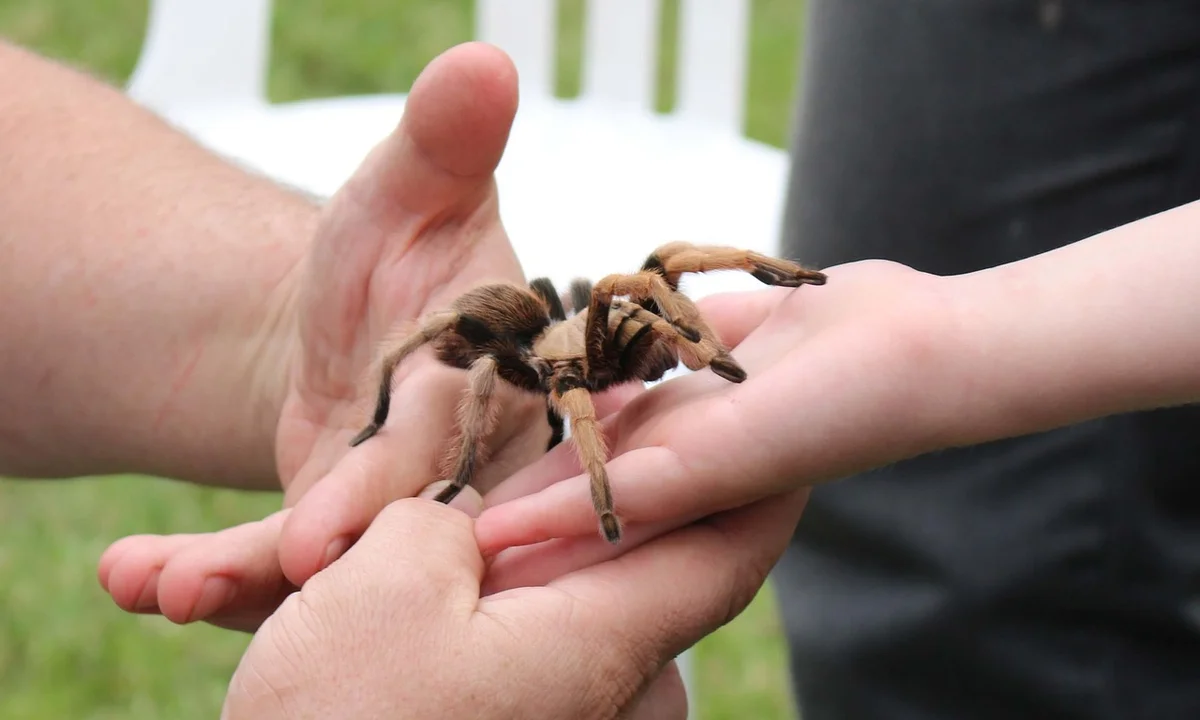
Successful breeding starts long before you introduce the pair. The enclosure itself is a critical variable. A poorly designed space increases stress and aggression. Your goal is to create a secure, species-appropriate environment that minimizes conflict and allows for natural courtship behaviors. I have set up dozens of these enclosures, and the difference between a terrestrial and arboreal design is not subtle.
Terrestrial Breeding Tank Essentials
For ground-dwelling species like my Chilean Rose Hair, Rosie, the focus is on horizontal space and substrate depth. You need enough floor area for the male to approach and, if necessary, retreat quickly. A standard 10-gallon tank oriented horizontally often works. The substrate choice is paramount, as it holds humidity and allows for natural digging behaviors that can calm the female. For a moisture-dependent species like my Burgundy Goliath, I use a deep mix of coconut fiber and peat moss that holds burrow shape.
Key components for a terrestrial breeding tank include:
- A substrate layer at least 4-6 inches deep for most species.
- A single, secure hide for the female, placed off-center.
- A shallow, sturdy water dish placed far from the hide.
- Minimal décor to leave open pathways for the male’s approach.
From experience, a cluttered tank led to a near-failed pairing for me once. The male became trapped against a decoration, and I had to intervene with a paintbrush. Simplicity and open sightlines are your allies in terrestrial setups.
Arboreal Breeding Enclosure Design
Arboreal reproduction, as with my Orange Baboon Tarantula Flash, happens in the vertical plane. Height is non-negotiable. A tall, front-opening enclosure is safest for you and the spiders. The male must be able to ascend and use height to deposit sperm on the female’s web. For arboreal species, you are essentially building a climbing frame that dictates the entire courtship dance. If you’re curious about the mating steps, a step-by-step guide to tarantula reproduction can walk you through the stages from courtship to sperm transfer.
Your design must provide:
- Substantial vertical height-at least 18 inches for larger species.
- Multiple anchored anchor points like cork bark tubes, branches, or artificial plants.
- Ample space for the female to construct her silken retreats and sperm webs.
- A secure, non-porous substrate layer (like coconut fiber) to maintain humidity without mold risk.
Humidity and Temperature Parameters
These physical parameters are not just numbers; they trigger reproductive readiness. Incorrect levels can halt courtship or lead to health issues. I monitor these with digital gauges, as the analog stick-on types are notoriously inaccurate.
General guidelines based on my breeding logs:
- Terrestrial (e.g., Theraphosa stirmi): 75-80°F (24-27°C), 75-85% humidity. My Goliath’s enclosure must feel like a warm, damp forest floor.
- Arboreal (e.g., Psalmopoeus murinus): 78-82°F (26-28°C), 70-80% humidity. Flash’s home is warmer, with humidity provided via overflow from a large water dish, not misting, which can disturb delicate sperm webs.
- For arid terrestrials like Grammostola rosea, I keep humidity near 60% and temperatures around 70-75°F (21-24°C).
Consistency is more vital than perfect numbers. A stable, species-appropriate climate signals security, making the female more likely to be receptive.
The Delicate Pairing Process
This is the moment of truth. All your preparation leads to the careful introduction of the male into the female’s enclosure. I always follow a “Look, Don’t Touch” philosophy here-your role is observer, not participant. Any handling during pairing introduces catastrophic stress and should be avoided at all costs.
Common Challenges in Terrestrial Pairings
The main risk is the female viewing the male as food, not a mate. Terrestrial males rely on ground speed and tactile cues. Common issues I’ve faced include:
- Female Aggression: A non-receptive female will charge with fangs bared. I once had a female Grammostola species pursue the male relentlessly, requiring a swift separation with a divider.
- Male Reluctance: Sometimes, the male simply will not drum or approach. This often means the female’s pheromones aren’t right, possibly due to an impending molt.
- Substrate Barriers: Deep, loose substrate can hinder the male’s movement. A slightly compacted pathway can help.
The slow, deliberate pace of terrestrial courtship is a double-edged sword. It allows you time to react, but also means the male is exposed in the open for longer periods. Always have a long pair of soft-tipped tweezers or a paintbrush ready to guide the male to safety if needed.
Heightened Risks in Arboreal Pairings
Arboreal pairing is a high-stakes ballet. The spiders are faster, more defensive, and use three-dimensional space. The risks are amplified. One missed signal can result in a fatal fall or a lightning-fast strike. My experience with Flash’s defensive nature means I would only attempt such a pairing with extreme caution and full focus.
Specific arboreal challenges include:
- Speed: The male’s approach and retreat are blisteringly fast. Your reflexes cannot match them.
- Webbing: The female’s dense web mat can trap the male, or obscure your view of their interactions.
- Escape Risk: During a panic, an arboreal tarantula can leap or sprint up the enclosure sides and out any gap. I learned this the hard way with a different Psalmopoeus species during a routine rehousing.
For arboreal species, I always conduct pairings in a completely sealed, escape-proof room. The silence of the enclosure just before introduction is often broken by the sudden, percussive drumming of the male’s pedipalps-a sound that means the process has begun. Your job is to watch, breathe, and be prepared to use a catch cup, not your hands, if disaster strikes.
Egg Sac Care and Incubation
The moment you see a silken egg sac in your tarantula’s enclosure, your care shifts from the spider to its potential offspring. Successful incubation balances precise humidity with absolute minimal disturbance, a test of patience and observation. I’ve learned that rushing this process, or over-managing it, leads to failure more often than not. It’s especially critical because tarantulas themselves don’t provide care for their spiderlings after birth.
Terrestrial Egg Sac Management
Terrestrial mothers, like my Grammostola rosea, often bury their egg sacs in a deep substrate chamber or guard them in a corner. The key is to maintain the substrate’s moisture gradient without making the sac itself wet. I keep the enclosure between 75-80°F (24-27°C) with a humidity level of 70-75%, measured by a digital hygrometer near the substrate.
From my experience with species like Theraphosa stirmi, I follow a strict protocol:
- Do not disturb the mother. Any stress can cause her to abandon or cannibalize the sac.
- Provide a shallow water dish on the opposite side of the enclosure to maintain ambient humidity.
- If you must check the sac after 30 days, use soft, long tweezers and move with deliberate slowness. A startled female can bolt and damage her eggs.
Terrestrial egg sacs feel like delicate, silken pillows and are surprisingly heavy for their size. The silence of the enclosure during this period is paramount; vibrations from loud music or slamming doors can trigger a defensive response.
Arboreal Egg Sac Strategies
Arboreal tarantulas, such as my Pterinochilus murinus (OBT), weave their egg sacs into dense, funnel-like webs high in their enclosure. Arboreal incubation requires managing humidity in the air column, not just the substrate. I maintain a higher ambient humidity of 75-80% for most species, with gentle cross-ventilation to prevent stagnant, mold-prone air. Do arboreal tarantulas need different humidity levels than terrestrial species? Generally, yes—their care often calls for higher ambient humidity and better air exchange, while many terrestrial species tolerate drier, more stable substrate conditions. For more details, see the comparison of arboreal vs terrestrial humidity.
Flash webbed her entire cork bark tube into a fortress, a common strategy. My approach differs from terrestrial care:
- I lightly mist the enclosure walls away from the sac, never directly spraying the web.
- I use a bioactive setup with live moss at the base to help regulate moisture naturally.
- The temperature is kept steady at 78-82°F (26-28°C), as arboreal species often originate from warmer, forest-edge habitats.
The iridescent sheen of a healthy arboreal sac, seen through the silken lattice, is a sign of good humidity control. Any attempt to remove an arboreal sac before the mother opens it is incredibly risky due to their speed and defensive nature.
Rearing Spiderlings: From Clutch to Independence
Once the egg sac opens, you’re faced with dozens to hundreds of tiny spiderlings. Your primary goals are safe separation, appropriate housing, and providing food small enough to trigger a feeding response. This stage is where many breeders experience losses, often due to stress or improper enclosure design.
Housing Newborn Terrestrial Spiderlings
For terrestrial species like G. rosea slings, I use small, shallow deli cups or condiment containers. A depth of substrate equal to their leg span prevents dangerous falls and allows for burrowing instincts. I use a slightly moistened mixture of coconut fiber and vermiculite.
- Ventilation: I make small air holes with a pin, not large enough for the sling to escape.
- Humidity: I keep it higher than for adults, around 80%, by damping one corner of the substrate weekly.
- Furnishings: A single, curled leaf or a tiny piece of cork bark provides a hiding spot and reduces open space.
I learned the hard way with my first T. stirmi clutch that overly deep water dishes drown spiderlings. Now, I only use a drop of water on the enclosure wall, replenished daily, for their hydration.
Housing Newborn Arboreal Spiderlings
Arboreal spiderlings, even from a fiercely defensive species like the OBT, need vertical space from day one. I house them in tall, narrow vials or small AMAC boxes with a secure lid. I hot-glue a small piece of cork bark or textured plastic to the side for climbing and webbing anchor points. These anchor points are essential for stable arboreal webbing, giving grip as they explore vertical surfaces. Properly placed anchors encourage natural webbing behavior and reduce stress during growth.
My setup for arboreal slings includes:
- Substrate: A thin layer of dry coconut fiber just for absorbing waste.
- Moisture: A lightly misted side of the vial, opposite the cork bark, every other day.
- Security: The entire enclosure must be escape-proof; I’ve had P. murinus slings scale silicone sealing and vanish through microscopic gaps.
The sudden strike of an arboreal sling at a pinhead cricket is a lightning-fast affirmation of correct housing. They feel secure when they can web vertically and retreat to a high hide.
Managing Stress and Feeding for Growth
Stress management is universal for all spiderlings. I adhere to a ‘look, don’t touch’ philosophy, as handling can cause fatal falls or internal injury from a defensive flick. I feed pre-killed or freshly molted pinhead crickets, fruit flies, or chopped mealworm segments twice a week.
- Growth Monitoring: After a molt, I carefully remove the exuvia with soft tweezers to sex the spiderling and check for abnormalities.
- Enclosure Upgrades: I move them to a larger home only after they have hardened post-molt, minimizing exposure.
- Group Housing: Some species can be kept communally for a short time, but I separate them at the first sign of aggression or cannibalism.
Consistent, quiet care and appropriately sized food are the twin engines of healthy spiderling development. I never feed in the same spot twice in a row to encourage natural foraging behavior and reduce predictability-induced stress. To tailor feeding to your tarantula’s needs, learn how to tell if it’s hungry or stressed. A concise feeding behavior guide can help you spot cues like activity level, posture, and appetite changes.
FAQs
What are the primary differences in mating rituals between arboreal and terrestrial tarantulas?
Terrestrial tarantulas perform a “ground dance,” drumming vibrations on the substrate in open spaces, with males relying on horizontal speed to escape lateral strikes. Arboreal tarantulas court in vertical environments, drumming on bark and webs, and mating often occurs on elevated surfaces where males execute controlled falls to flee. The female’s aggression is context-dependent: terrestrials attack across flat ground, while arboreals strike from multiple angles within complex webbed retreats. These behavioral differences also extend to how arboreal and terrestrial tarantulas hunt.
How does the enclosure setup for breeding differ for arboreal versus terrestrial species?
Terrestrial breeding requires wide enclosures with deep, moist substrate for burrowing and minimal décor to allow clear male approach and retreat paths. Arboreal breeding demands tall enclosures with anchored climbing structures like cork bark and ample vertical webbing space for female retreats. Humidity and temperature must be species-specific, focusing on substrate moisture for terrestrials and ambient air humidity for arboreals to trigger reproductive behaviors.
What are the specific challenges in pairing arboreal tarantulas compared to terrestrial ones?
Pairing arboreal tarantulas involves navigating dense, vertical webs where males risk entanglement and must rely on agile, downward leaps for escape, increasing the chance of falls or fast strikes from concealed females. Terrestrial pairings face challenges like female aggression on open ground and male reluctance due to substrate barriers, but the slower pace allows for easier observation. Arboreal species also pose higher escape risks and faster movements, making intervention with tools like catch cups more critical than with terrestrials. Handling considerations reflect temperament: arboreals are typically more skittish and fast, requiring quick, precise interventions; terrestrials, being slower and often calmer, may tolerate gentler, longer handling and closer observation before contact.
How do egg sac care and incubation requirements vary between these two types?
Terrestrial egg sacs are often buried or guarded in substrate chambers, requiring consistent substrate moisture without direct wetting to maintain humidity. Arboreal sacs are woven into high webbed retreats, needing careful management of ambient humidity through indirect misting and cross-ventilation to prevent mold. Incubation temperatures are similar, but terrestrials rely on substrate humidity gradients, while arboreals depend on air column regulation, with minimal disturbance to avoid sac abandonment.
What are the key considerations for successful sling rearing in arboreal vs. terrestrial tarantulas?
Terrestrial spiderlings thrive in shallow enclosures with moist, burrowable substrate to prevent falls and reduce stress, while arboreal slings require tall, escape-proof vials with vertical climbing surfaces like cork bark. Feeding involves offering appropriately sized prey, such as pinhead crickets, with terrestrials needing horizontal stability and arboreals vertical security for webbing. Consistent humidity and minimal handling are essential for both, but arboreal slings demand more focus on escape-proof designs and aerial hiding spots. These essential features—ground-hugging stability for terrestrials and tall, escape-proof vertical space for arboreals—define suitable enclosures. Recognizing them helps hobbyists tailor housing to each species’ ecology.
The Final Molt: Success Beyond the Pairing
The cornerstone of breeding success, whether for an arboreal P. murinus or a terrestrial T. stirmi, is not the initial introduction. The single most critical parameter for rearing spiderlings from either reproductive strategy is managing their microenvironment’s humidity to prevent fatal desiccation. For tiny arboreal slings, this means a well-ventilated but moist vial with a water droplet on the side. For terrestrial youngsters, it requires consistently damp substrate corners. Dehydration claims more spiderlings than any other cause in my breeding projects. To translate this into practical care, create a proper substrate moisture gradient for your tarantula, with moist zones where humidity is needed and drier areas to prevent over-saturation. This gradient lets spiderlings and adults regulate their hydration and behavior without constant misting.
Beyond the meticulous parameter control, your most vital tool is quiet observation. Watch the arboreal mother craft her silken egg sac nursery, a fortress of silk. Observe the terrestrial female’s deep burrow, a hidden chamber you may never see. Celebrate the soft crunch of a cricket, the slow patina of growth on a carapace, the patient wait for a molt. Rushing yields nothing. This hobby, especially breeding, is a practice in measured patience. Your reward is witnessing a fragment of a life cycle few see, a silent drama of instinct and survival unfolding in the quiet of an enclosure.
Further Reading & Sources
- giantspiders.com – The Tarantula As A Pet
- Tarantula Basics – Spider Shoppe
- Basic Arboreal Tarantula Husbandry | TARANTULAS.com
Arlo is a lifelong arachnid enthusiast who believes tarantulas are the world’s most misunderstood roommates. With years of hands-on experience in tarantula care, habitat setup, and species behavior, Arlo combines expert knowledge with a dash of humor to make spider ownership less scary and a lot more fascinating. From choosing the right enclosure to understanding why your eight-legged buddy is doing that weird little pose again, Arlo is here to help you become the best tarantula parent you can be, without getting tangled in the web of misinformation.
Breeding Tarantulas