
Do Arboreal Tarantulas Need Different Humidity Levels Than Terrestrial Species?
Arboreal tarantulas, with their iridescent sheen and silent climbs, are physiologically tuned for the moist, breezy air of forest canopies, while terrestrial species like my docile Chilean Rose Hair are engineered for the parched, stable earth of scrublands. This husbandry detail is not a minor tweak but a fundamental pillar of care. Drawing from years of breeding and keeping species from my fast-webbing OBT to my humidity-craving Goliath Bird Eater, I’ll break down the exact atmospheric needs. Yes, their humidity requirements are distinctly different, and mastering this prevents dehydration, fatal stuck molts, and chronic stress.
Quick Stats:
- Representative Arboreal (e.g., Psalmopoeus irminia): Origin: Venezuelan rainforests; Type: New World; Growth Rate: Fast; Humidity Context: Thrives in consistent 75-85% with ample ventilation.
- Representative Terrestrial (e.g., Grammostola rosea): Origin: Chilean scrubland; Type: New World; Growth Rate: Very slow; Humidity Context: Does best with a dry substrate and ambient humidity around 40-50%.
This guide will provide the specific humidity ranges and enclosure strategies to confidently steward both your tree-dwelling and ground-dwelling tarantulas through every life stage.
The Core Question: Humidity Needs by Lifestyle
A tarantula’s need for moisture is dictated less by its genus name and more by the ecological niche it evolved to master. Desert-dwelling tarantulas cope by staying in cool burrows and becoming nocturnal to cut water loss. Their moisture balance hinges on prey-derived water and behavioral choices that let them thrive in arid environments.
Ground-dwelling species experience humidity that radiates upward from the soil, while arboreal tarantulas intercept moisture from the air itself, from dew and rain-kissed leaves and bark. This difference in moisture sourcing highlights the essential features of terrestrial vs arboreal tarantula enclosures.
This fundamental difference shapes our entire approach to their captive environments.
Arboreal Tarantulas: Life in the Canopy
Think of species like the dazzling Caribena versicolor or the formidable Poecilotheria. Their world is vertical, a realm of air currents and layered humidity.
In their natural habitats, humidity often fluctuates between 70-85%, but it is rarely stagnant; breezes and daily temperature cycles prevent the air from becoming fetid.
My Poecilotheria metallica thrives not in a swamp, but in a well-ventilated enclosure where I maintain humidity via a large water dish and regular, light misting along one side of her cork tube.
Creating a Humid Microhabitat
The goal is to replicate that moist, airy canopy pocket. You cannot achieve this by simply dumping water into the substrate.
Successful arboreal humidity relies on three pillars: ventilation, water placement, and absorbent furnishings.
Follow these steps to build their aerial oasis:
- Prioritize cross-ventilation. Enclosures need ample mesh or drilled holes on opposing sides to allow air exchange, preventing mold.
- Provide a generous, anchored water dish at substrate level. Evaporation from this surface is your primary humidity engine.
- Incorporate a moisture reservoir. Pack a corner of the enclosure with damp sphagnum moss or use a substrate that holds moisture well, like a coconut fiber and topsoil mix.
- Lightly mist the webbing or enclosure walls every few days, avoiding direct spray on the tarantula. Observe where condensation forms-that’s your microhabitat at work.
- Use a digital hygrometer placed at mid-height in the enclosure, not on the substrate. This tells you the humidity in the airspace where your tarantula actually lives.
I learned this the hard way with my old-world arboreal, Flash. A stuffy, overly wet enclosure made her retreat and refuse food.Increasing the ventilation while maintaining the same water dish and moss reservoir created the humid, fresh air she needed, and her bold webbing construction resumed within days.
Terrestrial Tarantulas: Ground-Dwelling Climates
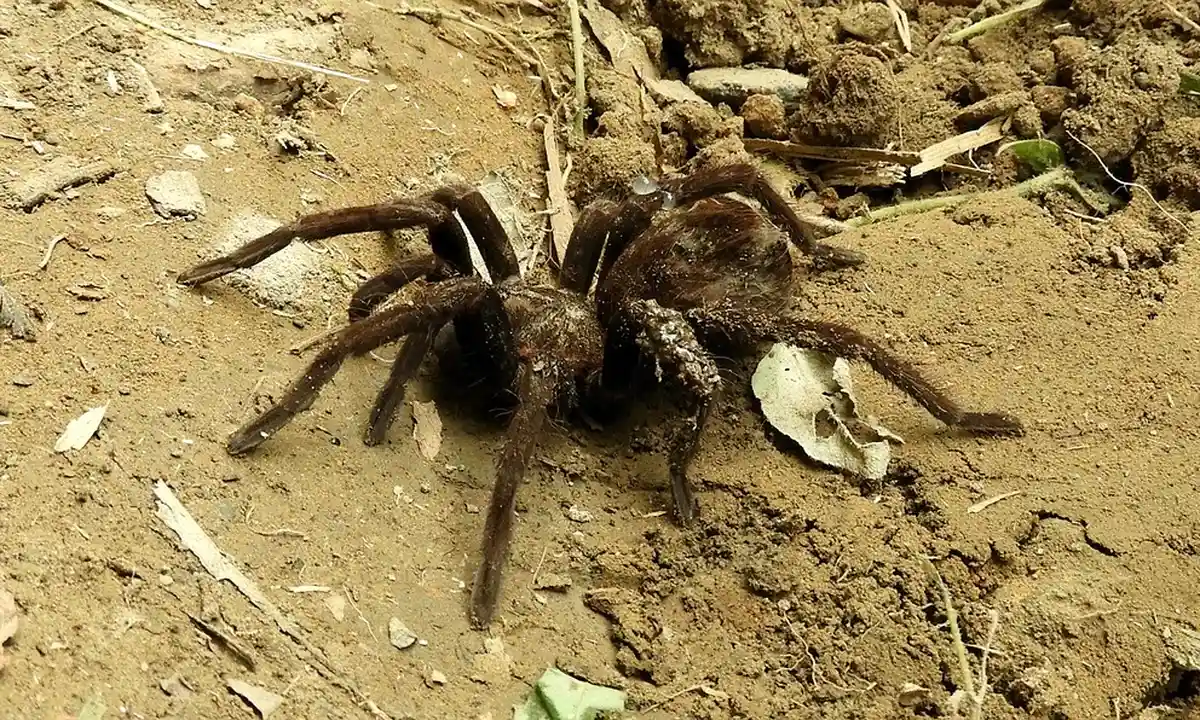
While arboreals live in a vertical world of evaporating water, terrestrial species are defined by the ground beneath them. Their humidity needs split dramatically based on whether that ground is a rainforest floor or a scrubland burrow.
Tropical Terrestrial Humidity
Think of the humid, warm air just above the soil in a jungle. Species like my Theraphosa stirmi, Goliath, thrive here. For these giants, I maintain a consistent 70-80% relative humidity. This is not a suggestion; it is a requirement for their health.
I achieve this with a deep, moisture-retentive substrate-a blend of coconut fiber and topsoil works perfectly. I pour water directly into the corners, soaking the lower layers while leaving the surface slightly drier. A large, full water dish is non-negotiable, as these tarantulas will drink often and the evaporation contributes to the microclimate. The enclosure should feel distinctly damp but never swampy. Inadequate humidity for these species leads to fatal molting complications.
Arid Terrestrial Humidity
This is the realm of the Chilean rose hair (Grammostola rosea) and its kin. My Rosie’s needs are the opposite of Goliath’s. Her humidity sits comfortably between 40-55%. The goal is a dry enclosure with a localized humid zone.
I use a shallower, well-packed substrate and provide a generous water dish. Once a month, I lightly dampen one quarter of the substrate, allowing it to dry completely over weeks. The key is offering a humidity gradient—your tarantula can choose a slightly damper area near the watered corner or stay bone-dry in its hide. To create a proper substrate moisture gradient for your tarantula, tailor the damp zone to its needs. Observe which area it uses and adjust the dampness accordingly. Over-humidifying arid species like this is a common error that can cause mold and stress.
Why Humidity Matters: Molting and Respiratory Health
Humidity is not just a number; it’s a physiological tool. Get it wrong, and the consequences are severe and often invisible until it is too late.
During ecdysis (molting), a tarantula must split its old exoskeleton and emerge, soft and vulnerable. The new exoskeleton is initially pliable. The humidity in the air directly affects the fluid pressure inside the tarantula, which is the hydraulic force needed to extricate itself from the old skin and then expand its new body to full size. Too dry, and the old exuvia becomes a brittle coffin. The tarantula can become stuck, losing limbs or its life. Too wet for an arid species, and the new skin may not harden correctly.
Respiration is the other critical factor. Tarantulas breathe through book lungs-stacked, leaf-like structures on their underside. These require a specific moisture level to facilitate oxygen exchange. Chronic low humidity can essentially desiccate these delicate tissues, leading to slow, irreversible respiratory failure. You won’t see a tarantula cough; you’ll see a gradual, puzzling decline. Keeping the right balance is crucial, as excessive moisture can also be detrimental. Too much moisture can cause its own set of problems, so maintaining proper humidity levels is key.
Your best monitor is the tarantula itself. A tropical species digging a lot or sitting high on the walls might be avoiding soaked substrate. An arid species perpetually in its water dish is screaming for a slight humidity bump. Watch for signs of incorrect humidity—persistent condensation or mold, or the tarantula lingering in damp spots or retreating from humid microhabitats. Observe, adjust, and always prioritize creating a gradient so your pet can find its own comfort zone.
Measuring Humidity: Tools and Trusting Your Eyes
Getting humidity right means using technology and trusting your own observations. I keep digital hygrometers in all my enclosures after a bad molt with an old world species taught me the cost of guessing.
Place the sensor at substrate level for terrestrial species like my Rosie, or mid-height for arboreals. Your tarantula lives in a microclimate you must measure precisely.
Using Humidity Meters and Cards
Digital hygrometers are my go-to for reliable numbers. I check them daily, noting how readings spike after misting my Goliath’s tank. Cheap analog dials often lag or fail. Color-changing humidity cards offer a quick visual cue, useful for a fast check.
Never rely on a single tool; your eyes are the best backup system you have. Look for condensation on the glass in my T. stirmi’s enclosure, a sign the 80% reading is correct. For drier species, watch for substrate that stays dusty and loose.
I calibrate my digital meters with a salt test kit twice a year. A faulty meter once let my OBT’s web-filled home get too damp. Consistent data prevents these subtle husbandry errors.
Creating the Right Environment: Practical Adjustments
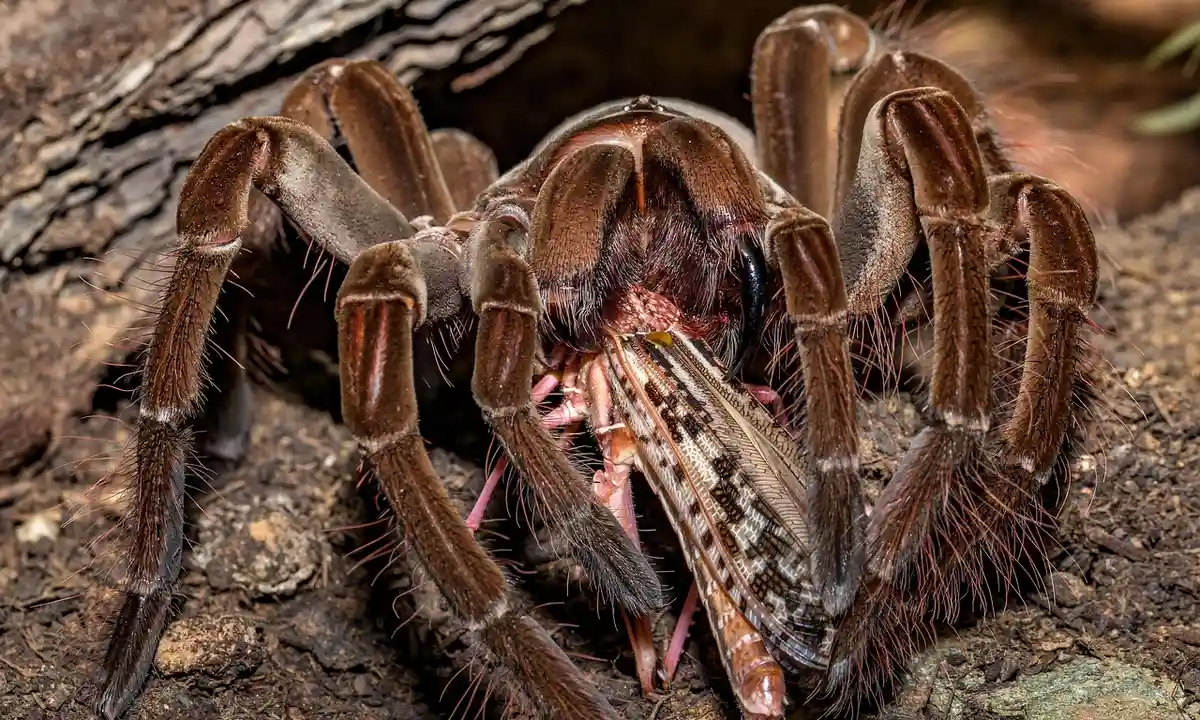
Adjusting humidity is a slow dance. Sudden changes can trigger stress or a failed molt. I make one small change, then wait a full day to observe the result.
Step-by-Step: Raising Enclosure Humidity
- Increase the water dish size. For my moisture-loving Goliath, I use a wide, shallow bowl that naturally evaporates.
- Add moisture to the substrate base. Pour water directly into a corner of the enclosure, letting the bottom layer soak it up while the top stays dry.
- Mist the enclosure walls lightly. Avoid spraying the tarantula directly, as this can cause defensive behavior.
- Reduce ventilation temporarily. Covering a portion of the mesh lid with acrylic glass helps retain moisture without stifling air flow.
- Incorporate moisture-retaining elements like sphagnum moss. I pack clumps around my Goliath’s hide to create a local humid zone.
Watch for condensation beads on the glass as your signal that humidity is climbing.
Step-by-Step: Lowering Enclosure Humidity
- Improve ventilation first. Uncover any blocked vents or drill small additional holes in acrylic enclosures.
- Switch to a smaller water dish. My Rosie’s dish is just a bottle cap, which limits evaporation.
- Replace damp substrate with dry, packed material. I use a mix of coconut fiber and topsoil that holds structure without holding water.
- Remove any wet decorations or moss. Let them dry completely outside the enclosure before returning them.
- Use a room dehumidifier if your entire collection struggles with high ambient moisture. This is a last, broad-scale step.
Patience here is non-negotiable; rushing a dry-out can crack a tarantula’s new exoskeleton after a molt.
Species Variation: The Exception to Every Rule
General care sheets offer a starting point, but your tarantula’s species—and its individual history—dictate the final verdict on humidity. Slavishly following generic “terrestrial” or “arboreal” guidelines can lead you astray, because microclimates in nature are wildly specific. Heating and humidity needs differ among popular tarantula species, so tailor warmth and moisture to the species you keep. Your most reliable tool is observation, not a fixed number.
Terrestrial Tarantulas Are Not a Monolith
Consider my own collection. Rosie, my Grammostola rosea, hails from the arid scrublands of Chile. Her substrate is bone-dry, and she hasn’t touched a water dish in weeks. Contrast this with Goliath, my Theraphosa stirmi. His name isn’t just for show; he’s a rainforest giant. Keeping Goliath on dry substrate would be a death sentence, as he requires constant 80% humidity to support his massive body and prevent fatal molting issues. Both are terrestrial, yet their needs are opposites.
For moisture-dependent terrestrials like Goliath:
- Use deep, moisture-retentive substrate like coconut fiber or topsoil.
- Pour water directly into a corner of the substrate to create a damp gradient.
- Provide a large, always-full water dish to aid ambient humidity.
- Monitor for condensation on the walls-a little is good, but swimming pools are not.
For arid-adapted terrestrials like Rosie:
- Ventilation is king to prevent stagnant, moist air.
- Offer a water dish, but don’t be alarmed if it seems ignored for months.
- Keep the substrate dry, perhaps lightly misting one far corner once a month at most.
- Trust their physiology; they are designed to withstand long droughts.
Arboreal Adaptations and Microclimates
Arboreal tarantulas, like my Old World Pterinochilus murinus Flash, live in a world of vertical gradients. In the wild, they retreat into silken tubes in tree hollows or under bark. This retreat creates a private, humidified chamber, while the outside air remains comparatively drier. Your job is to replicate this option, not to soak the entire enclosure.
Flash’s bright orange form is a constant reminder of his speed and defensiveness. Rehousing him taught me that arboreals feel exposed on open ground. His humidity needs are met through methodical setup:
- I provide a tall enclosure with ample cross-ventilation near the top.
- A vertical slab of cork bark is anchored securely, offering a canvass for his dense web tube.
- I keep the substrate slightly damp to gently elevate humidity from below.
- I never spray his webs or him directly. Instead, I lightly mist the side of the enclosure opposite his hide, allowing water to trickle down. He drinks from the droplets on his silk.
The golden rule for arboreals is to offer a humidity gradient-moisture at the base, drier air above-and let the spider choose. A stuffy, uniformly wet tall cage is a recipe for mold and respiratory problems. Watch your tarantula. If it consistently hangs out in its dry, webbed retreat, your humidity is likely perfect. If it presses against the ventilation holes, the air is too stagnant.
FAQs
Why is ventilation so crucial for arboreal tarantula enclosures?
Arboreal tarantulas evolved in forest canopies where humidity is high but air movement prevents stagnation. Proper cross-ventilation reduces mold risk and mimics the breezy microclimates they need. Without it, excess moisture can lead to respiratory issues or stress, even if humidity levels are correct. This directly ties into the five biggest humidity-ventilation mistakes tarantula care commonly encounters. Avoiding overreliance on humidity alone and ensuring proper airflow helps prevent stress and disease.
How do I accurately measure humidity for an arboreal tarantula?
Place a digital hygrometer at mid-height in the enclosure, where your tarantula spends most of its time. Avoid analog meters, as they can be unreliable, and use humidity cards for quick visual checks. Regularly calibrate your tools and watch for condensation on walls to confirm readings. To ensure optimal conditions, it’s crucial to start with a proper enclosure setup.
What happens if the humidity is too low for an arboreal tarantula?
Low humidity can cause dehydration, making molts difficult and increasing the risk of stuck exuvia or limb loss. It may also lead to chronic stress, reduced appetite, and long-term damage to their book lungs. Observing behaviors like excessive webbing or retreating can signal humidity issues.
Can I use misting as the primary method to increase humidity for arboreal species?
Misting should only supplement other humidity sources, not serve as the main method. Over-misting can stress tarantulas or promote mold. Instead, rely on a large water dish and damp substrate for steady evaporation, with light misting on enclosure walls as needed.
Are there any arboreal tarantulas that require lower humidity?
Most arboreal species thrive in higher humidity, but requirements can vary slightly by origin and species. Always research specific natural habitats, as some may tolerate moderate levels. Knowing the ideal temperature and humidity ranges for tarantula enclosures helps you set targets to aim for. Since ranges vary by species, tailor the gradient and adjust based on its behavior.
Long-Term Success
The single most consistent factor for healthy arboreal tarantulas is consistent airflow. While terrestrial species like my T. stirmi Goliath need consistently damp substrate to thrive, arboreal species demand ventilation that prevents the air from ever becoming stagnant and soggy. A stuffy, waterlogged enclosure is a far greater threat than a slightly low humidity reading.
Watch what your spider builds. A terrestrial species will sculpt the damp earth into tunnels and pits. An arboreal like my OBT, Flash, weaves a complex silken funnel in the cork’s vertical channel-a castle built from humidity and breeze. The hobby’s deepest joy lives in that quiet observation. Your patience, watching the web expand or the burrow deepen over weeks, is the truest sign of a habitat working. You are not just keeping an animal; you are providing the conditions for a fascinating, self-directed life to unfold.
Further Reading & Sources
- Humidity, Temperature, and Tarantulas | Tom’s Big Spiders
- Arboreal Tarantulas Care Guide | Ely Exotics
- Tarantula caresheet – Amateur Entomologists’ Society (AES)
Arlo is a lifelong arachnid enthusiast who believes tarantulas are the world’s most misunderstood roommates. With years of hands-on experience in tarantula care, habitat setup, and species behavior, Arlo combines expert knowledge with a dash of humor to make spider ownership less scary and a lot more fascinating. From choosing the right enclosure to understanding why your eight-legged buddy is doing that weird little pose again, Arlo is here to help you become the best tarantula parent you can be, without getting tangled in the web of misinformation.
Heating and Humidity