
Signs of Over-Hydration in Tarantula Enclosures: A Guide for Keepers of Rose Hairs, Goliaths, and More
Published on: February 24, 2026 | Last Updated: February 24, 2026
Written By: Arlo
Many tarantulas, from the arid-adapted Chilean Rose Hair to the humidity-loving Burgundy Goliath Bird Eater, are routinely subjected to enclosures that are simply too wet. Over-hydration is a common but dangerous mistake that can drown your tarantula’s respiratory system, trigger explosive mold growth, and create a habitat more suited to pests than to a spider. Using my experience with my own pets-like Rosie, who despises dampness, and Goliath, who needs humidity but not a swamp-this article will teach you to read the signs. Your first clues are often visual: a substrate that stays dark and clumpy, beads of water constantly on the glass, or a distinct lack of your tarantula on the floor.
-
Quick Stats: The Burgundy Goliath Bird Eater (Theraphosa stirmi)
- Origin: Northern South America
- Type: New World, Terrestrial
- Growth Rate: Fast
Mastering this aspect of care will let you provide a safe, dry-humid balance that supports your spider from fragile sling to formidable adult.
Why Over-Hydration Is a Silent Threat
In my years keeping tarantulas, I have learned that too much water can be more dangerous than too little. Over-hydration attacks from the ground up, compromising the very environment your tarantula relies on for security and health. Species like my Burgundy Goliath Bird Eater, Theraphosa stirmi, thrive in humid air around 75-80%, but the substrate must never become a soggy sponge. A waterlogged floor prevents natural burrowing behavior and creates a breeding ground for pathogens you cannot always see. This threat is silent because a tarantula will not cough or sneeze; it may simply become lethargic, refuse food, or succumb to a fungal infection long before you notice the cause.
I once adjusted my Goliath’s misting schedule slightly, aiming for optimal humidity, and within a week spotted the first white filaments of mold. Respiratory systems in arthropods are delicate, and saturated air combined with wet substrate can literally suffocate them over time. For desert species like my Chilean Rose Hair, Grammostola rosea, chronic dampness is a severe stressor that can halt feeding for months, as Rosie has demonstrated. The “Look, Don’t Touch” philosophy extends here: constantly disturbing a tarantula to check for wetness causes stress, so learning to read the enclosure itself is your best tool.
Spotting Trouble: Signs Inside the Enclosure
Your tarantula’s home will tell you everything if you know how to observe. Regular, quiet inspection is the cornerstone of preventing moisture-related illness without disturbing your pet. Look for these key indicators that your hydration balance has tipped into the danger zone, especially if you suspect dehydration.
Unwanted Growth: Mold and Fungus
Mold appears as fuzzy patches, often white, green, or black, on substrate, decor, or even webbing. This growth is a direct visual alarm that humidity and organic decay are too high. In bioactive setups, some fungal activity is normal, but spreading carpets of mold are not. My Orange Babbling Tarantula, Pterinochilus murinus (OBT), webs densely, and I learned that this webbing can trap moisture and sprout mold quickly if ventilation is poor.
- Common Sites: Under water dishes, in corners with little air flow, on uneaten prey items.
- Action: Immediately remove visible mold, replace affected substrate, and increase cross-ventilation.
- Prevention: Use springtails in bioactive enclosures; they are excellent mold consumers.
The Warning Scent: Foul or Musty Odors
A healthy tarantula enclosure has an earthy, neutral smell—like forest soil. A sharp, sour, or persistently musty odor is a sure sign of anaerobic bacteria or rotting organic matter festering in wet conditions. When I lean in to refill water dishes, I always take a brief sniff. This simple habit caught a decaying cricket in my OBT’s web hide, preventing a potential bacterial bloom. That foul scent means harmful microbes are active and releasing gases, creating an environment toxic to your tarantula. These odor cues are among the clearest signs your enclosure needs cleaning. Regular spot-cleaning and substrate refresh help prevent harmful buildup and keep your tarantula safe.
The Foundation Fails: Wet and Waterlogged Substrate
Substrate should be damp to the touch, not dripping. To test, squeeze a handful; only one or two drops should fall. If water streams out or the substrate compacts into a cold, dense ball, it is waterlogged and failing its primary function. This condition denies your tarantula a stable foundation and can lead to deadly scale rot on their abdomen. Are these signs indicating incorrect humidity in a tarantula enclosure? If you notice the substrate remaining too dry in places or staying overly damp overall, reassess humidity and ventilation.
- Desert Species (e.g., G. rosea): Substrate should be mostly dry, with a slightly damp corner.
- Humid/Tropical Species (e.g., T. stirmi): Maintain even dampness, but never let the bottom layer become a puddle.
My Goliath’s deep peat moss blend needs careful watering. I pour water into one corner only, allowing for moisture gradients she can choose from. A waterlogged floor is an emergency, requiring partial or full substrate replacement to restore safe drainage.
Breathing Trouble: Persistent Condensation
Condensation is water vapor cooling into liquid on enclosure walls. Light, temporary misting is fine, but persistent, heavy fogging on the glass or acrylic is a clear signal that humidity is too high and ventilation is too low. This constant wetness promotes mold and saturates the air, making it difficult for your tarantula to breathe through its book lungs.
- Quick Check: If condensation does not clear within an hour after misting, your ventilation needs improvement.
- Solution: Add more ventilation holes, especially in upper sections, to create air flow without creating a dry draft directly on the tarantula.
Observing the silent sheen of water on my Goliath’s enclosure walls taught me to adjust her ventilation before any health issues arose. Your goal is humid air, not a wet box. To ensure a properly ventilated and secure tarantula enclosure, use a lid with a tight seal and ample screened ventilation on the sides or top to promote air exchange without risking escapes. Regular checks after misting help confirm airflow is sufficient and that condensation won’t overwhelm the enclosure.
Reading the Animal: Signs on Your Tarantula
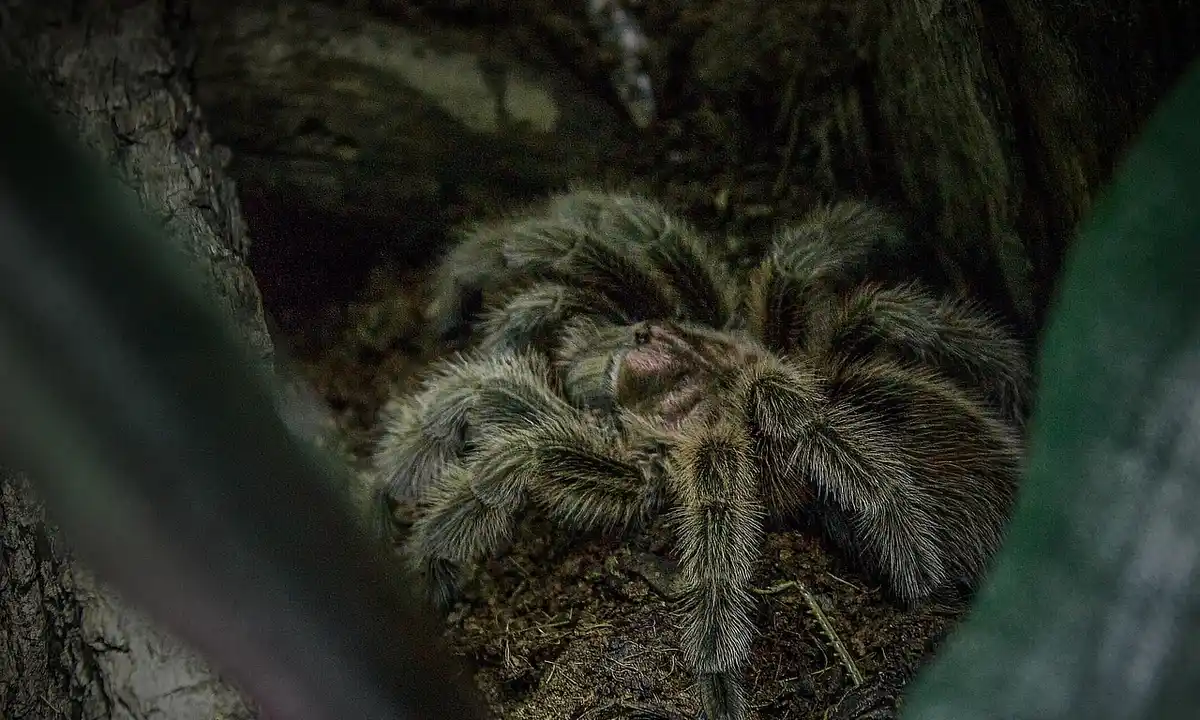
Your tarantula is a living hygrometer. Its behavior and physical state broadcast the enclosure’s condition, if you learn the signals. Ignoring these signs risks serious health issues, from bacterial blooms to fatal mycosis. Regularly recognizing warning signs and maintaining proper humidity, temperature, and cleanliness helps prevent these common health problems. Proactive care keeps your tarantula healthier and more resilient against illness.
Changes in Behavior and Appetite
A tarantula avoiding its typical microhabitat is sending a clear message. My Burgundy Goliath, who usually lounges in her damp corner, will climb the walls or perch on the highest leaf if her substrate becomes waterlogged. This is a classic sign of distress; they are seeking drier ground. Other common signs of stress or aggression include a raised posture, rapid leg movements, or a looming threat display when you approach. Recognizing these cues can help you minimize handling and adjust the enclosure to keep your tarantula calm.
Refusal to eat is a major red flag. While fasting is normal for some species, like my old Chilean Rose, a sudden loss of appetite in a moisture-loving tarantula can indicate the enclosure feels swampy and inhospitable.
- Ceased Webbing: Arboreal and heavy-webbers, like my OBT, may stop webbing entirely. Damp air prevents silk from setting properly, frustrating their natural instincts.
- Restlessness at Night: Excessive, aimless pacing along the enclosure walls, different from normal patrolling, often signals discomfort with the substrate conditions.
- Refusing a Burrow: A fossorial species abandoning its carefully dug home likely finds it too damp, cool, or potentially moldy.
Physical Distress on the Body
Look beyond behavior. Physical changes are urgent warnings. These are early warning signs that a tarantula may be sick. If you notice them, review care and consider consulting a veterinarian experienced with invertebrates. A tarantula’s abdomen should look taut and healthy, not discolored or oddly textured.
I once rescued a specimen whose abdomen had a strange, darkened patch. The culprit was prolonged contact with constantly wet substrate, leading to a localized bacterial infection. It required immediate isolation and substrate overhaul.
- Dull or Matted Setae: The urticating hairs on a New World tarantula’s abdomen can appear clumped or lack their usual sheen from constant high humidity.
- Pale or Whitish Discoloration: Patches on the abdomen or joints, especially in species with dark coloration, can be early signs of fungal growth.
- Difficulty Moving: In extreme cases, a tarantula may seem lethargic, clumsy, or unable to lift its body properly, as if weighed down.
The Web Tells a Story: Sagging or Sparse Webbing
Webs are structural marvels and environmental sensors. Perfect tarantula silk is strong and elastic. Tarantulas do spin silk, though not hunting webs. They use silk to line burrows and to drop draglines for sensing danger. In hyper-saturated air, it loses integrity.
My OBT, Flash, taught me this. When his enclosure’s cross-ventilation was blocked, his once-taut, dense funnel web began to sag and collapse in the center. The webbing had absorbed so much ambient moisture it could no longer support its own weight.
- Sagging Hammocks: Arboreal tarantula hammocks will dip or tear.
- Collapsed Tunnels: Burrowers that line their homes with silk may find the walls caving in.
- “Disappearing” Web: Heavy moisture can cause web strands to break down and seem to vanish, leaving only sparse, ragged threads.
What Went Wrong? Common Causes of Excess Moisture
Identifying the source is critical for correction. Most over-hydration stems from a few key husbandry missteps.
The most frequent error is routine overhead misting instead of direct watering. I see this constantly. Misting spikes air humidity briefly but soaks the surface layer, leaving the lower substrate bone dry. Tarantulas needing moisture, like my Goliath, get it from the ground, not the air. Pour water directly into a corner of the substrate until the bottom half is damp.
Inadequate drainage creates a hidden swamp. A deep layer of substrate without a gradient or a drainage layer in very wet setups will pool water at the bottom. This saturated zone wicks moisture upward, keeping the entire substrate damp long after watering. For tropical species, I always use a base layer of clay balls or gravel beneath the soil.
- Poor Ventilation: Stagnant, moist air has nowhere to go. Cross-ventilation (vents on opposing sides) is non-negotiable for all but the most arid species.
- Wrong Substrate Choice: Potting soil with water-retaining crystals or overly fine, compactable coconut fiber holds too much water. Mix in coarse additives like orchid bark or vermiculite for better texture.
- Overcompensating for Molts: A common panic. While a slight humidity bump can help, flooding the enclosure “to help with the molt” dramatically increases the risk of fungal infection during this vulnerable time.
- Ignoring Room Climate: Your tarantula’s microclimate exists within your room’s macroclimate. A damp basement or a humid summer week means you must reduce enclosure watering accordingly.
Finally, look for bio-indicators. The sudden appearance of springtails is normal. A bloom of fungus gnats, white mold on cork bark, or a foul, sour smell from the substrate are undeniable signs. These organisms thrive where your tarantula suffers, confirming the environment is too wet for too long.
Taking Corrective Action
When you confirm excess moisture, your response must be calm and methodical to avoid stressing your tarantula.
Immediate intervention focuses on removing water sources and boosting airflow to halt mold growth and respiratory threat.
Step 1: Immediate Habitat Adjustments
Your first goal is to dry the air without a full enclosure overhaul.
Increasing cross-ventilation is the most effective quick fix for a waterlogged habitat. With my moisture-loving Theraphosa stirmi, Goliath, I once overdid the humidity. I immediately propped open the lid with bottle caps and aimed a small room fan across the room at his enclosure. The visible condensation on the glass vanished within two hours.
- Take out any waterlogged decor, like sponges or dripping moss balls.
- Use a dry cloth to wipe all interior walls and lid to remove condensation.
- Move the water dish to the warmest side of the enclosure to accelerate evaporation.
These steps create a safer space while you plan the next move.
Watch your tarantula for signs of relief, like moving away from soaked corners or resuming normal posture.
Step 2: The Substrate Change-Out
If the substrate feels like a saturated sponge or has a sour smell, a complete change is non-negotiable.
A successful rehousing depends on preparation and patience, not speed. For my defensive OBT, Flash, I always set up a clear, smooth-walled temporary container first. I guide him with a long paintbrush, never using my hands. This prevents escapes and reduces his stress.
- Gently herd your tarantula into the temporary holding cup using a soft brush.
- Remove all old substrate and decor. Discard it far from your living space.
- Clean the empty enclosure with a 50/50 white vinegar and water solution. Rinse thoroughly and dry completely.
- Add new, barely damp substrate. For terrestrials like my G. rosea, I pack it down to about 5-6 inches deep to support burrowing.
- Let your tarantula walk back into its refreshed home on its own terms.
Step 3: Long-Term Watering Strategy
Misting is a flawed method that often creates wet surfaces and false humidity readings.
Permanent hydration comes from a generous, shallow water dish that is cleaned and refilled weekly. For species needing higher humidity, I use the bowl-and-overflow technique. I take my Goliath’s large dish, overflow it until the surrounding substrate is damp an inch down, and then let it dry out over days. This mimics natural seepage. You must observe the substrate’s texture and your tarantula’s behavior. If the peat feels cool and holds a shape when squeezed without dripping, the moisture level is perfect. Routine is less important than observation; let the animal and the enclosure conditions dictate your watering.
Building a Balanced Habitat from the Start
Smart initial choices prevent most moisture problems.
Selecting an enclosure with suitable ventilation is your first critical decision for humidity control.
Glass tanks often need modification with extra holes, while acrylic and plastic enclosures typically offer better pre-designed airflow.
I prefer acrylic for my arboreal P. murinus, Flash, because I can drill precise ventilation rows near the top and bottom to create a gentle chimney effect.
- Substrate Composition: Use a mix of coconut fiber, peat moss, and a small amount of vermiculite for moisture retention without waterlogging. I avoid pure potting soil.
- Substrate Depth: For terrestrial tarantulas, provide a depth at least equal to their diagonal leg span. This allows for burrowing and acts as a humidity buffer.
- Ventilation Placement: Drill or locate vents on opposite sides of the enclosure, with some higher up. This prevents stagnant, moist air pockets.
- Hygrometer Use: Place a digital hygrometer at substrate level in the middle of the enclosure. Check it daily for trends, but do not obsess over perfect numbers. Your tarantula’s healthy appetite and clear, firm molt are better success indicators than a specific humidity percentage.
Common Questions
What are the signs of mold growth in the enclosure?
Mold appears as fuzzy white, green, or black patches on the substrate, decor, or webbing. Its presence is a direct sign that humidity is too high and organic matter is decaying. You should immediately remove the mold, replace affected substrate, and increase ventilation to address the issue.
What does a foul or musty odor indicate?
A sour or musty smell signals the growth of anaerobic bacteria or rotting organic matter in overly wet conditions. This odor means harmful microbes are active and creating a toxic environment. It often accompanies waterlogged substrate and requires prompt corrective action.
How can you tell if the substrate is too wet?
Perform a squeeze test: a handful of damp substrate should release only one or two drops of water. If water streams out or it forms a cold, dense ball, it is waterlogged. This condition prevents proper burrowing and can lead to serious health issues for your tarantula. To support a proper substrate moisture gradient for your tarantula, aim for drier surface areas with a slightly moister burrow zone. This gradient helps your tarantula select a comfortable microclimate and burrow more naturally.
What changes in tarantula behavior suggest over-hydration?
Key behavioral signs include climbing the walls to seek drier ground, a sudden loss of appetite, and ceasing normal webbing activity. A burrowing species may abandon its hide if it becomes too damp. These are clear distress signals that the enclosure conditions are uncomfortable.
What visible condensation levels are problematic?
Light misting after watering is normal, but persistent, heavy condensation that coats the walls and doesn’t clear is problematic. This constant wetness saturates the air and promotes mold. It indicates that ventilation is insufficient and humidity is dangerously high.
Are there any specific signs on the tarantula’s body?
Look for a dull, matted appearance of the hairs (setae) on the abdomen or unusual pale or whitish discoloration. In severe cases, a darkened, patchy abdomen can indicate a bacterial infection from prolonged contact with wet substrate. These are urgent physical warnings.
The Observant Keeper
The single most powerful tool for managing moisture is a clean, full water dish, not a misting bottle. Your tarantula will drink when thirsty, and the evaporating water will contribute to the ambient humidity naturally. Note that improper heating and humidity control is a common mistake that can stress or harm your tarantula. Stick to stable temperatures and modest humidity levels, avoiding frequent misting.
True success in arachnoculture is measured in silent observation. Watch the intricate lattice of webbing your Pterinochilus murinus builds, a fortress of orange silk. Observe the meticulous excavation projects of a fossorial species, the careful sculpting of its subterranean home. Appreciate the sudden, breathtaking strike during feeding, a movement faster than your eye can truly follow. Patience is not just a virtue here; it is the very foundation of the hobby, allowing you to witness the subtle, magnificent behaviors these animals display when they feel secure.
Further Reading & Sources
- giantspiders.com – Common Ailments
- 3 Reasons Why Your Tarantula Is Sitting In Water – Cute Monster Care
- Keeping Moisture Dependent Tarantula Species | Tom’s Big Spiders
Arlo is a lifelong arachnid enthusiast who believes tarantulas are the world’s most misunderstood roommates. With years of hands-on experience in tarantula care, habitat setup, and species behavior, Arlo combines expert knowledge with a dash of humor to make spider ownership less scary and a lot more fascinating. From choosing the right enclosure to understanding why your eight-legged buddy is doing that weird little pose again, Arlo is here to help you become the best tarantula parent you can be, without getting tangled in the web of misinformation.
Heating and Humidity