
Tarantula Anatomy 101: Understanding Their Body Structure
Beyond the simple label of “eight legs and fangs,” a tarantula’s body is a masterpiece of evolutionary engineering, a silent and efficient machine honed for a life of predation and survival. This guide is your microscope. We will examine each major body part, from the iridescent sheen of the carapace to the delicate spinnerets, connecting their form directly to the function that impacts your daily care. Knowing what a pre-molt abdomen looks like or how urticating hairs work is not just academic-it’s the foundation of proactive, respectful husbandry that keeps your spider thriving.
Quick Stats:
- Taxonomic Family: Theraphosidae, a diverse group with over 1,000 described species.
- Global Distribution: Found on every continent except Antarctica, with hotspots in the Americas, Africa, and Asia.
- Lifespan & Growth: Exhibits extreme sexual dimorphism in lifespan; females of some species can live 20-30 years, growing through successive molts (ecdysis).
This detailed breakdown will give you the knowledge to interpret your tarantula’s health and behavior from sling to venerable adult.
The Living Armor: Exoskeleton and the Molting Process
Your tarantula’s entire world is defined by its outer shell. This exoskeleton is a masterpiece of biological engineering, providing structure, defense, and sensory connection all at once. Think of it not as a simple shell, but as a living, integrated suit of armor that your tarantula must periodically shed to grow.
What is the Tarantula Exoskeleton Made Of?
The primary building block is chitin, a tough, flexible polysaccharide, woven together with proteins that harden it. This creates a composite material both lightweight and remarkably strong. The exoskeleton provides waterproofing, shields internal organs from injury, and serves as the anchor point for all the spider’s muscles, which are attached internally. This internal muscle attachment is why tarantulas can exert such precise, powerful force with their legs and fangs despite their size. The colors you admire, from Rosie’s dusty pink to Flash’s fiery orange, are pigments locked within this cuticle.
How Molting Reshapes Tarantula Anatomy
Because the exoskeleton is rigid, growth requires shedding it in a process called ecdysis, or molting. Before the molt, a new, soft exoskeleton forms beneath the old one. Your tarantula will then absorb much of the old cuticle’s materials and secrete a fluid to separate the layers. This recycling is energy-intensive, explaining the long fasts species like my G. rosea are famous for. The spider then contorts itself, often on its back, to slowly work its body out of the old shell. The new exoskeleton is soft and vulnerable, and the tarantula will pump fluid into its body to expand before it hardens, gaining its new size.
Step-by-Step: Recognizing and Supporting a Safe Molt
From my years breeding, a successful molt is the most critical event in a tarantula’s life cycle. If you’re worried a tarantula is dying or failing to molt, it’s important to know how to tell the difference. Here is how to support it.
- Premolt Signs: A tarantula will often refuse food for weeks or months. The abdomen darkens and appears glossy as the new exoskeleton develops beneath. The spider may seal itself in its hide or web up heavily, as my OBT Flash always does.
- Creating the Stage: Ensure humidity is appropriate for the species. For my moisture-loving T. stirmi Goliath, I slightly increase moisture. For arid species, a water dish is sufficient. Never, ever disturb a tarantula that is in a premolt posture or actively molting. Stress can be fatal at this stage.
- During the Molt: The process can take hours. The spider is utterly defenseless. Do not touch it, offer food, or cause vibrations. Simply observe from a distance.
- Post-Molt Care: After the molt, the tarantula will lie on its back or side, hardening. It may not move for many hours. Wait at least 7-10 days before offering food, as the fangs need to sclerotize (harden). I wait until the carapace has lost its initial soft sheen and the fangs are a solid, dark black before attempting to feed. Always provide a full, clean water dish.
The Prosoma: Cephalothorax Command Center
All sensory input, feeding, and venom delivery are orchestrated from the front body section, correctly called the prosoma or cephalothorax. This fused head-and-chest segment is the tarantula’s tactical command center. Observing the prosoma’s orientation and the movement of its appendages tells you everything about your tarantula’s immediate state of mind.
Location and Landmarks of the Cephalothorax
The prosoma is the raised, often darker, shield-like front section of the body. On its top (the carapace), you will find the ocular tubercle, a small raised bump typically holding eight eyes arranged in a species-specific pattern. While most tarantulas have poor focused vision, those eyes detect light, shadow, and movement, crucial for spotting threats and prey. The underside of the prosoma houses the sternum and the points where all eight legs and the pedipalps connect.
Pedipalps: More Than Just Little Legs
Those shorter, leg-like appendages near the mouth are the pedipalps. They are essential multi-tools. In all tarantulas, they act as tactile sensors, tasting and feeling the environment. They are used to manipulate food during feeding. In mature males, the final segment transforms into specialized organs called palpal bulbs, which are used to transfer sperm to the female during breeding. Watching a tarantula tap its pedipalps is like watching it read its world through its fingertips.
Chelicerae and Fangs: The Business End
Below the eyes, you’ll see two downward-pointing, glossy black segments: the chelicerae. These are the bases for the fangs, which fold inward like a cat’s claw. This vertical, downward-striking motion is a key difference from snakes and is devastatingly effective for pinning prey. The venom glands are housed within the chelicerae, delivering their cocktail through ducts in the fangs. When a defensive species like Flash the OBT rears up, it’s displaying its chelicerae and readying a threat bite-a clear command to give it space.
Eight Legs of Grace: Structure and Movement
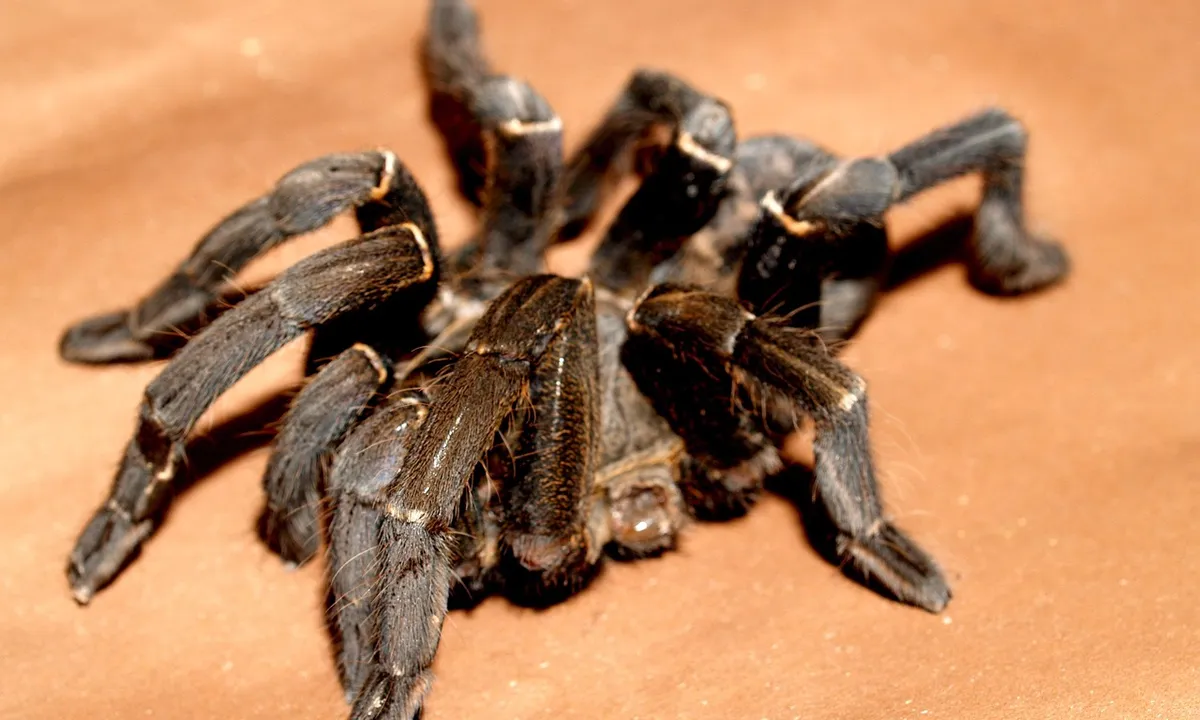
Watching a tarantula move is witnessing pure biomechanical grace. Their legs operate with a silent, hydraulic precision that has captivated me for years. Every aspect of their leg structure, from count to joint, holds practical lessons for creating a safe and stress-free habitat.
How Many Legs Do Tarantulas Have? The Basics
Tarantulas have eight walking legs, full stop. The two smaller appendages near the mouth are pedipalps, vital for sensing and handling food. Confusing pedipalps for legs is a common mistake, but that correct count of eight is your baseline for monitoring physical health. Leg integrity is directly tied to enclosure design. My old Chilean Rose Hair, Rosie, lives in a tank with ample floor space. I learned early that a tall enclosure with barren walls invites a terrestrial species to climb and risk a deadly fall. For powerful burrowers like my OBT, Flash, every piece of décor must be smooth; a sharp edge is a leg fracture waiting to happen.
Use this checklist to promote leg health:
- Terrestrial Space: Enclosure length should be at least 3x the tarantula’s leg span for safe maneuvering.
- Climbing Hazards: Limit tall features for ground-dwelling species. For arboreals, use secure cork bark, not slippery glass.
- Substrate Choice: Packable soil like coconut coir or topsoil mix supports natural digging without causing leg strain or collapse.
From Coxa to Tarsus: A Segment Guide
Each leg is a masterpiece of seven connected segments. Knowing their names and roles turns you into a better health detective. The sequence from body to tip is: coxa, trochanter, femur, patella, tibia, metatarsus, and tarsus.
- Coxa: The base plate attached to the cephalothorax. It provides the foundational anchor for leg movement.
- Trochanter: A short, pivotal segment. Damage here can cripple the entire leg’s range of motion.
- Femur: The long, robust thigh. This segment powers most of the leg’s forward thrust during walking.
- Patella: The knee. It allows the leg to fold close to the body, a common defensive posture.
- Tibia: Another extended segment. In mature males, you’ll often find tibial apophyses, or “hooks,” used during mating.
- Metatarsus: Adds length and fine control. Think of it as the lower leg or shin.
- Tarsus: The foot. It ends in sticky claw tufts (scopulae) and two minute claws for gripping surfaces.
After a molt, inspect the discarded exuviae; clean separation at each joint indicates a successful shed. I once noticed my Burgundy Goliath, Goliath, favoring one leg. By identifying the affected tibia, I could track its recovery, which thankfully resolved after his next molt.
Movement is a symphony of these parts. Tarantulas walk with a slow, alternating gait. Climbing involves delicate tarsal grip. The predatory strike is a hydraulic explosion, with the front legs and pedipalps shooting out faster than the human eye can reliably follow. This is why a “look, don’t touch” philosophy is non-negotiable; a defensive strike from a species like Flash is instantaneous. To support natural movement and prevent injury, focus on these elements:
- Fall Prevention: Keep the distance from the substrate to the lid minimal for heavy-bodied terrestrials. A ruptured abdomen from a fall is often fatal.
- Stress Climbing: A tarantula persistently climbing glass often signals discomfort. Check temperature gradients, humidity levels, and hide security.
- Feeding Safety: Always use long tweezers. The suddenness of a feeding response, like the orange flash of my OBT, reinforces the need for respectful distance.
The Opisthosoma: Abdomen, Breath, and Silk
That soft, rounded rear segment of your tarantula is a powerhouse of life processes. We call it the opisthosoma, though most keepers simply say abdomen. This section is where digestion, reproduction, and silk production happen. Its health is visible from the outside, telling you about hydration and stress levels. Monitoring the abdomen’s size and condition gives you a direct window into your tarantula’s well-being without ever needing to touch it.
Abdomen Anatomy: More Than a Big Belly
Under that hairy exterior, the opisthosoma houses critical organs. A long, tubular heart runs along its top. The digestive system fills much of the space, processing liquefied meals. Reproductive organs are here too. For keepers, the abdomen’s plumpness is a key indicator. A shriveled abdomen can signal dehydration. A very large, shiny one might mean a premolt condition. My old Chilean Rose, Rosie, shows this perfectly. She fasts for months, her abdomen slowly shrinking from a plump grape to a wrinkled raisin, then plumping up again after a successful molt. Respect these natural cycles by providing a constant water dish and never squeezing or poking the abdomen.
- Heart: Pumps hemolymph (insect blood) through the body.
- Digestive System: Includes the sucking stomach and digestive glands.
- Reproductive Organs: Sperm storage in females; ovaries and testes.
- External Care Clue: A firm, rounded abdomen usually means good hydration. A saggy or shriveled one needs attention.
Book Lungs: How Tarantulas Breathe
Tarantulas don’t have lungs like we do. They use book lungs. Imagine stacks of thin, watery pages inside a small pouch. Oxygen diffuses directly into their hemolymph from these pages. This system makes humidity a direct care factor. Dry air can make those “pages” stick together, hampering breathing. Proper enclosure humidity keeps these respiratory structures functioning smoothly and prevents respiratory stress, which is essential for many popular tarantula species.
Where Are Book Lungs Located and How Many Are There?
Look at the front underside of the opisthosoma. You’ll see two pairs of slits or pale areas. These are the openings to the book lungs. Most tarantulas have two pairs, total four book lungs. The exact needed humidity varies by species. My Burgundy Goliath Bird Eater, Goliath, thrives at 80% humidity because his species, Theraphosa stirmi, evolved in damp forest floors. My OBT, Flash, does well around 70%. For common pet species like Grammostola rosea, 60-70% is often sufficient. Always research your specific species’ needs, as incorrect humidity is a common source of health issues.
- Location: Ventral (underside) of the opisthosoma, near the pedicel.
- Number: Typically two pairs, four total book lungs.
- Husbandry Tip: Maintain species-appropriate humidity. Lightly mist one side of the enclosure or pour water into the substrate corner to create a gradient.
Spinnerets: The Silk Factories
At the very tip of the abdomen, you’ll find small, finger-like projections. These are the spinnerets. They are nozzles that draw liquid silk from internal glands and spin it into solid threads. Silk is not just for webs. Tarantulas use it for burrow lining, creating molting mats, wrapping prey, and making egg sacs. In arboreal tarantulas, silk forms anchor points for arboreal tarantulas that let them grip branches and move along vertical surfaces. The availability of sturdy anchor points in the enclosure shapes their webbing and comfort. Observing your tarantula’s silk work reveals its instincts and comfort level in your enclosure.
My OBT, Flash, is a prolific webber. He uses multiple silk types. He lays down non-sticky draglines to sense vibrations. He weaves dense, sticky funnel webs for protection and prey capture. Watching his spinnerets dance in silence, laying down line after line, is mesmerizing. Compare this to my Goliath, who uses thick mats of silk to reinforce his burrow walls. Provide enough substrate depth and anchor points like cork bark to allow for this natural silk-building behavior, which reduces stress.
- Silk for Webbing: Creates traps, trip lines, and shelter (common in arboreal and some terrestrial species).
- Silk for Burrowing: Lines tunnels to prevent collapse (common in fossorial species).
- Silk for Molting: Spun into a soft mat for the delicate molting process.
- Care Tip: Never disturb a tarantula’s silk structures. They are energy-intensive to build and crucial for its sense of security.
Sensory Hairs and Specialized Structures
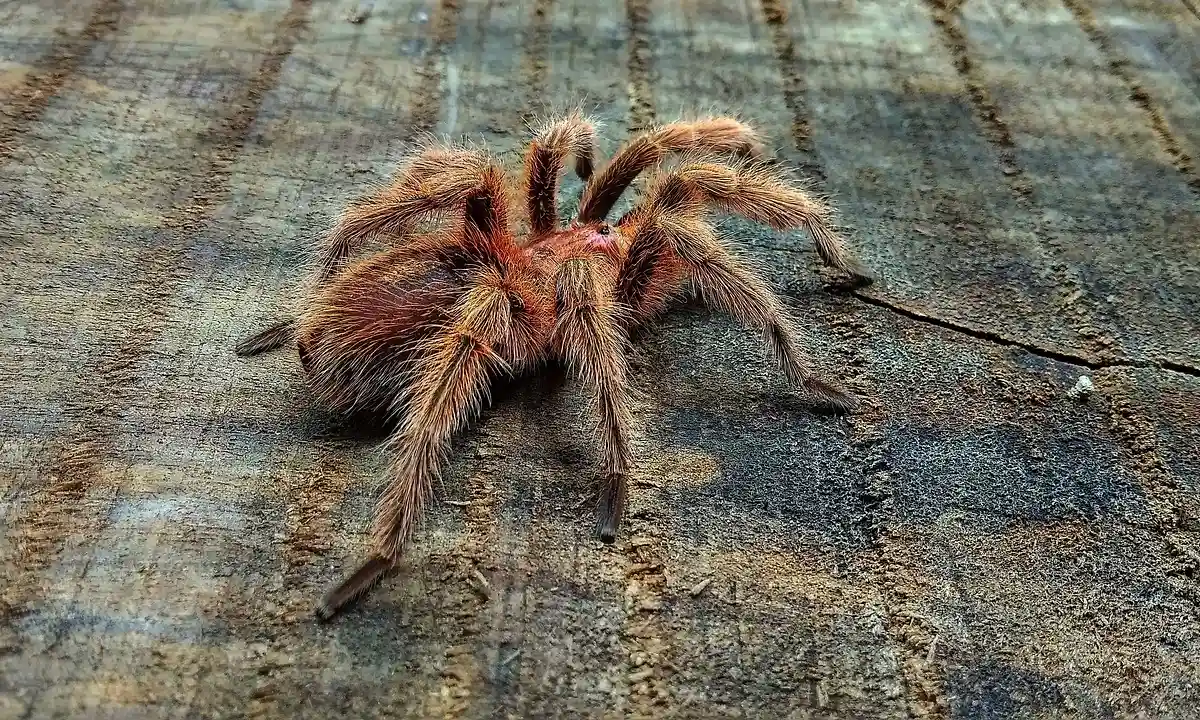
Beneath their often vivid colors, a tarantula’s body is blanketed in a sophisticated array of hairs. To the untrained eye, it’s just a fuzzy exterior. For the tarantula, this coat is a primary interface with the world. These hairs, known scientifically as setae, function as a complex sensory network, detecting everything from a cricket’s footfall to minute air currents. They are the reason a tarantula can be so exquisitely aware of its surroundings without the need for complex eyes.
The Role of Sensory Hairs (Setae)
Setae are not merely for touch. They are specialized tools, each type shaped for a specific purpose and rooted in a nerve-rich socket. Think of them as biological antennae. The most common type are tactile hairs, which bend and send nerve signals to the brain, mapping physical contact across the body and legs. This allows my Rosie, for instance, to feel the texture of her cork bark hide with incredible precision.
Other setae are tuned to vibrations. These hairs, particularly on the legs and pedipalps, can detect the faintest tremors through the substrate or air. This is their primary long-distance sense. A walking pinhead cricket sends a seismic message your tarantula reads perfectly. This acute vibration sensitivity explains why a heavy-handed approach to feeding or maintenance can startle even a docile species-to them, it feels like an earthquake.
Finally, chemosensory setae, often on the pedipalps and legs, allow tarantulas to “taste” their environment. They sample molecules in the air and on surfaces to identify prey, potential mates, or hazards. This is why you might see your tarantula tap the ground thoughtfully with its front legs; it’s gathering chemical information. In hunting, these cues help tarantulas locate and stalk prey, often waiting motionless until a target comes near. When prey is within reach, they strike swiftly and seize it, using venom to subdue it. The world of a tarantula is experienced not through sight, but through a symphony of touch, vibration, and chemical cues interpreted by its hairs.
Urticating Hairs: A Unique Defense
While most setae gather information, one type delivers a powerful message. New World tarantulas from the Americas possess urticating hairs-a potent defensive adaptation. These are not connected to nerves but are barbed projectiles stored on the abdomen. When threatened, a tarantula will use its hind legs to kick a cloud of these microscopic harpoons toward the perceived threat. My T. stirmi, Goliath, is a prolific hair-kicker, treating any sudden movement near his enclosure as a cause for a defensive volley.
The effects of these hairs range from a mild, itchy rash on human skin to severe ocular damage if they contact eyes, and they can be fatal to small mammals. Different species possess different types of urticating hairs, varying in potency and shape. This defense mechanism is the cornerstone of the “Look, Don’t Touch” philosophy, protecting both the keeper’s health and the tarantula from the stress of using its primary defense.
In enclosure care, this behavior directly influences how you perform maintenance. Before any deep cleaning or rehousing, I gently encourage the tarantula into a catch cup to avoid triggering a hair kick. A cloud of urticating hairs lingering in an enclosure or a room’s air is a persistent irritant. During quarantine, keep the tarantula in a secure catch cup during cleaning or quarantine enclosure while you clean. This minimizes disturbance, reduces airborne hairs, and helps prevent cross-contamination with other specimens. Respecting this defense means working around the animal’s instincts, not against them, ensuring a safer environment for everyone involved.
Anatomy in Action: Feeding, Defense, and Daily Life
Observing your tarantula is like watching a masterclass in biological engineering. Every flick of a leg and shift of the fangs reveals how form dictates function in their quiet world. I have seen this firsthand across hundreds of feedings and careful observations of my own spiders – which you can learn about in this beginner’s introduction to tarantulas. Their anatomy is not a static diagram but a dynamic toolkit for survival.
How Anatomy Drives Feeding Behavior
The strike is a blur, but the mechanics are precise. A successful hunt is a symphony conducted by specialized body parts working in perfect order. It begins not with sight, but with vibration. My OBT, Flash, remains motionless in his web tunnel, yet the sensory hairs on his legs map the exact location of a wandering roach.
Upon contact, the pedipalps and front legs seize the prey. The chelicerae then descend, not just to bite, but to inject a cocktail of venom and digestive enzymes. This venom subdues the prey and starts turning its insides into a liquid soup. The pedipalps, often mistaken for legs, become delicate hands that rotate the meal as the chelicerae mash and suck.
Follow this sequence to understand a typical feeding event:
- Detection: Sensory setae detect vibrations through air and substrate.
- Capture: Rapid leg movement traps the prey item.
- Envenomation: Chelicerae pierce the exoskeleton and inject venom.
- Preparation: Pedipalps manipulate the prey for optimal access.
- Consumption: The tarantula ingests only the liquefied nutrients.
Selecting the right prey size is a direct application of anatomical knowledge. I never offer a feeder insect wider than my tarantula’s carapace, which is roughly the size of its abdomen. An oversized cricket can injure your spider or cause debilitating stress. My old G. rosea, Rosie, exemplifies this; during her rare feeding windows, she will only accept a small cricket that her chelicerae can easily manage.
Defense Mechanisms Rooted in Body Structure
Tarantulas are architects of avoidance, not brawlers. Their defensive adaptations are brilliant, non-confrontational strategies honed by evolution. Flight is always the preferred option. When that fails, their physical form provides specific and effective solutions. Predators—birds, wasps, and snakes—pose constant threats in their natural habitat. These predators pose constant threats that reinforce their reliance on escape and concealment as primary defenses.
For New World species like my Theraphosa stirmi, Goliath, the abdomen is a weapon. Urticating hairs are barbed projectiles launched from the opisthosoma with precise flicks of the hind legs. Goliath kicks these hairs readily when he senses vibration, creating an irritating cloud. I wear a mask during his tank cleanings because inhaling these hairs is a severe irritant.
Old World tarantulas lack these hairs but compensate with other anatomical features. Potent venom and lightning speed, powered by powerful leg muscles, form their primary deterrent. Flash, my Pterinochilus murinus, combines a threatening posture with audible hissing from his stridulatory organs. His bright orange color is a natural warning sign in the wild.
Recognizing the body language of stress is a critical husbandry skill. These signs tell you your tarantula feels threatened and wants space immediately. By learning to read your tarantula’s body language, you can spot stress and defensive signs early and adjust care accordingly. This practice helps keep you and your tarantula safe.
- Elevated Prosome: The front body raised high, often with legs I and II lifted.
- Fang Display: Chelicerae spread wide to show the fangs.
- Abdominal Flicking: The deliberate kicking of urticating hairs.
- Stridulation: Producing a hissing sound by rubbing body parts together.
- Rapid Retreat: A sudden dash to the burrow or hide.
This physiology is why I firmly practice and promote “Look, Don’t Touch” care. Handling forces a defensive creature into a scenario where all its natural warnings must be ignored, which is profoundly stressful for the animal. I learned this respect after a rehousing where Flash moved faster than my eye could follow, a potent reminder that my curiosity should never override his instinct for safety. Observing their natural behaviors from outside the glass is the true reward of keeping these animals.
FAQs
What are pedipalps and what are they used for in tarantulas?
Pedipalps are the two shorter, leg-like appendages located near the tarantula’s mouth. They are essential sensory tools used for tasting, touching, and manipulating food. In mature male tarantulas, the tips of the pedipalps develop into specialized reproductive organs called palpal bulbs for sperm transfer.
Where are the book lungs located in tarantulas?
A tarantula’s book lungs are found on the underside of its abdomen (opisthosoma), near the front where it connects to the cephalothorax. You can typically see two pairs of slit-like openings. These organs are crucial for breathing, as oxygen diffuses directly into the spider’s bloodstream from their stacked, leaf-like structure.
How many book lungs do tarantulas typically have?
Most tarantulas possess two pairs of book lungs, for a total of four. This respiratory system is a key reason why maintaining proper, species-specific humidity in their enclosure is vital for their health, as it keeps these delicate structures functioning correctly.
What are spinnerets and what are they used for?
Spinnerets are small, finger-like projections at the tip of the abdomen that produce silk. While tarantulas do spin silk from their spinnerets, they rarely weave hunting webs. Instead, they primarily use silk to line burrows, create a safe molting mat, wrap prey, and secure egg sacs. Observing silk work is a great indicator of a tarantula’s natural behavior and comfort.
How do tarantulas molt and how is their anatomy affected?
Molting (ecdysis) is the process where a tarantula sheds its rigid exoskeleton to grow. During this vulnerable time, a new, larger exoskeleton forms underneath the old one. After the molt, the new exoskeleton is soft, and the tarantula must expand and harden it, which can temporarily change its coloration and increase its overall size.
Long-Term Success: Anatomy in Action
Every part of a tarantula’s body, from its book lungs to its spinnerets, has evolved for a single, powerful purpose: to survive the next molt. Your primary role as a keeper is to facilitate that process. The most critical parameter for any tarantula’s long-term health is providing a stable, secure environment with correct humidity, as dehydration is the single greatest molting hazard. My Burgundy Goliath, for instance, requires a consistently damp corner of his enclosure to thrive, while my old Chilean Rose Hair needs only a water dish and bone-dry substrate. Their anatomical needs dictate their care. Beyond humidity, other factors such as temperature, substrate quality, and prey availability influence lifespan across species. Tailoring care to each species’ natural habitat and life history helps ensure a longer, healthier life.
True mastery in this hobby is not measured by handling, but by observation. Watch for the intricate silken tapestry my OBT weaves each night. Marvel at the patient stillness of my ‘pet rock’ Rosie, a lesson in energy conservation. Enjoy the silent strike of a perfect hunt. Your patience to watch, learn, and provide stability is the greatest gift you can give these remarkable animals, allowing their ancient anatomy to function exactly as it should.
Further Reading & Sources
- Tarantula Anatomy | Blue Planet Aquarium
- Anatomy Of A Tarantula – Arachnifiles
- A slightly in-depth guide to tarantula anatomy and taxonomic terms | Tarantula Forum
Arlo is a lifelong arachnid enthusiast who believes tarantulas are the world’s most misunderstood roommates. With years of hands-on experience in tarantula care, habitat setup, and species behavior, Arlo combines expert knowledge with a dash of humor to make spider ownership less scary and a lot more fascinating. From choosing the right enclosure to understanding why your eight-legged buddy is doing that weird little pose again, Arlo is here to help you become the best tarantula parent you can be, without getting tangled in the web of misinformation.
Molting Process