
What Are the World’s Rarest Tarantula Species and Where Can They Be Found?
The world’s rarest tarantulas are not just spiders; they are biological masterpieces confined to tiny, precise slices of the globe, often seen by fewer eyes than some gemstones. This article maps the locations and stories of these elusive species, from misty mountain crevices to vanishing forest patches. You will learn that true rarity is defined by microscopic ranges and fragile ecosystems, not just captive scarcity.
Quick Stats:
- Origin: Micro-endemic regions like single mountains in Brazil or isolated valleys in India
- Type: Both New World and Old World, with many being obligate burrowers or specialized arboreal dwellers
- Growth Rate: Frequently slow, with some species requiring 7-10 years to mature, limiting population recovery
Drawing from my own husbandry of everything from pet-rock rose hairs to hair-flicking Goliaths, I assure you this guide will precisely chart where these rare tarantulas persist and why their conservation is interwoven with respectful fascination.
From Hobbyist to Historian: Why Rarity Captivates Us
Keeping common species like my Chilean rose hair, Rosie, teaches you patience and routine care. But learning about a tarantula like the electric blue Poecilotheria metallica transforms you. You start as a keeper of pets and become a steward of living history. The iridescent sheen of a rare carapace holds a story of a single mountain range in India. Its silence in an enclosure echoes a fragile ecosystem. Rarity shifts your focus from simple husbandry to active conservation, making every observation feel significant. I cherish my ‘pet rocks,’ but the pursuit of knowledge about vanishing species is what truly deepens this hobby.
This fascination isn’t about ownership. It’s about connection. When you study a species with only a few hundred wild individuals left, you are peering at a thread in nature’s web that could snap. My defensive OBT, Flash, will always web up his corner, but a rare tarantula’s survival hinges on our collective respect and restraint. We move from buying an animal to preserving a legacy. That journey is the most compelling part of advanced arachnoculture. To do this properly, we must commit to species-specific care—appropriate enclosure, humidity, temperature, and minimal handling. Ethical sourcing and careful husbandry turn fascination into responsible stewardship.
What Makes a Tarantula Species “Rare”?
Measuring Scarcity in the Wild and the Hobby
Rarity isn’t just about few spiders in collections. True scarcity is a mosaic of biological and human factors. A common pet store Grammostola rosea and a ghostly Typhochlaena from Brazil exist in completely different universes of availability. You must look at both wild numbers and captive viability to understand real rarity. Here are the key measures, from my experience tracking these elusive animals.
- Endemic species with tiny, isolated wild distribution. Think of a tarantula only found on one hillside, like some Homoeomma species. Their entire world could be a few square miles.
- Habitat loss and fragmentation. Logging or farming can erase a micro-habitat in a season. My burgundy Goliath (Theraphosa stirmi) needs vast, damp forest floors; losing even small tracts is devastating for such specialized species.
- IUCN Red List status (Critically Endangered, Endangered). This is the scientific benchmark. A “Critically Endangered” label, like for Poecilotheria metallica, means extreme wild risk.
- Legal export bans and CITES restrictions. Countries rightly protect their fauna. Bans can make a species vanish from the hobby legally, preserving wild stocks but halting conservation breeding.
- Difficulty in captive breeding programs. Some species have complex courtship rituals or sacs with few eggs. If they rarely breed in captivity, the hobby cannot create a sustainable population.
For instance, a tarantula can be common in hobbyist circles but Critically Endangered in nature. This creates an ethical paradox. The price tag on a rare spider often reflects hobby demand, not its true conservation status, which is a dangerous confusion.
The Delicate Balance: Wild Populations vs. Captive Lines
This is where theory meets practice. A robust captive breeding program can act as a lifeboat for a species. But if those captive lines are built from only a few wild-caught specimens, genetic diversity plummets. I’ve seen this tension firsthand. Captive-born babies are vital, but they must be managed to preserve genetic health, not just for pet supply.
Wild populations are barometers of ecosystem health. Removing even a few specimens for the hobby can tip a precarious balance. Conversely, a well-documented captive colony provides invaluable behavioral data. Our role is to support credible breeding consortia that prioritize species survival over individual collection. This means sometimes admiring a species only through photos and research, not an enclosure on your shelf.
Always advocate for “Look, Don’t Touch” with any tarantula, but with rare species, this philosophy is non-negotiable. Stress from handling can lead to refused meals or injury, a loss the population cannot afford. Your restraint is a direct form of respect for the animal’s role in the larger survival story. A common myth is that holding a tarantula equals affection. Real care means providing a stable habitat and minimizing handling, since touch can stress them. The goal is to ensure the silent strike in the forest still happens, not just the one in a terrarium.
Rare Jewels of the Indian Subcontinent
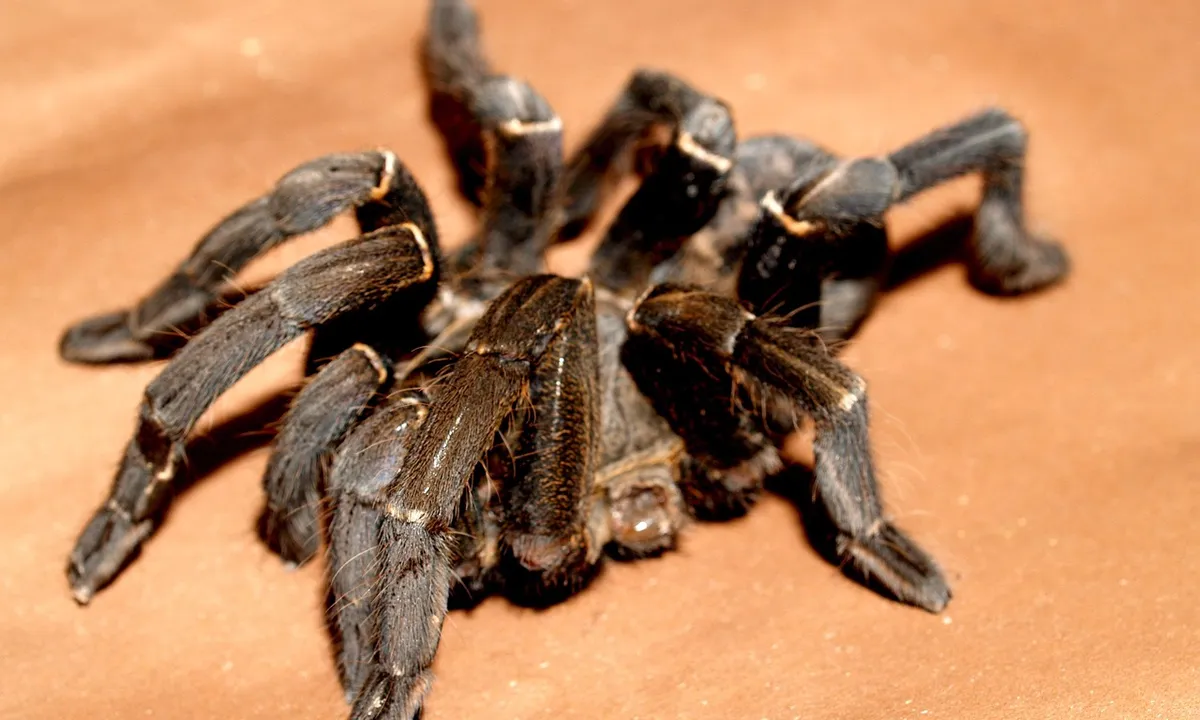
The forests of India and Sri Lanka are evolutionary treasure chests, sheltering some of the most visually stunning and imperiled tarantulas on the planet.
The Electric Blue Legacy: Poecilotheria metallica
No species captures the imagination like the Gooty sapphire ornamental, Poecilotheria metallica. Its carapace and legs shimmer with an impossible, metallic blue sheen, a color rare in nature. This spider is not just beautiful; it is critically endangered, confined to a single, severely fragmented forest reserve in Andhra Pradesh, India.
Their survival hinges on preserving a habitat smaller than 100 square kilometers, making each specimen in captivity part of a vital genetic ark. Keeping one is a profound responsibility. They require precise vertical enclosures with ample cork bark for hiding, temperatures of 75-82°F, and moderate humidity. Their speed is legendary, and their venom is considered medically significant. I treat my Pokies with a quiet reverence-maintenance is done with long tools, and the enclosure is a display to admire, not a box to open.
The Hidden Stripes: Poecilotheria fasciata
Often overshadowed by its blue cousin, the Sri Lankan ornamental, Poecilotheria fasciata, is a masterpiece of contrast. Its dark femur bears a stark, pale stripe, like a bolt of lightning on a stormy sky. This species is endemic to Sri Lanka and faces extreme threat.
Successful husbandry for *P. fasciata* replicates the high, dim canopy of its home, with a focus on vertical space and secure anchor points for its elaborate funnel webs. They share the same lightning-fast reflexes as other *Poecilotheria*. Breeding projects are crucial, as wild collection for this rarity is unsustainable and unethical.
Conservation in Action: Sri Lanka’s Fragmented Forests
The plight of these tarantulas is a direct map of habitat loss. Their arboreal lifestyle makes them vulnerable to deforestation and tea plantation expansion. Every captive-born *Poecilotheria* represents a reduction in pressure on wild populations, but it is not a replacement for conserving the complex ecosystems they come from. Conservation efforts are in place to protect endangered tarantula species and their habitats. These programs aim to safeguard wild populations while supporting ethical keeping and breeding practices. Responsible hobbyists support breeders who participate in species survival plans and never source wild-caught adults. The silence of a fragmented forest is the sound of biodiversity dwindling.
Elusive Treasures of Southeast Asia and Indonesia
Beyond the Indian subcontinent, the dense rainforests and deep loamy soils of Southeast Asia hide tarantulas that are more legend than common pet. This article examines 11 pervasive tarantula myths debunked by expert keepers, separating fact from fear. Seasoned keepers help set the record straight.
The Phantom of the Rainforest: Phormingochilus spp.
Species within the Phormingochilus genus, like the stunning P. everetti from Borneo, are the ghosts of the hobby. They possess an incredible, sometimes fiery orange iridescence on their carapace. Their rarity stems from a secretive nature and specific microhabitat needs.
These are obligate burrowers that may seal themselves away for months, requiring deep, damp substrate and incredible patience from the keeper. I have gone half a year seeing no sign of my juvenile except for subtle substrate disturbances and occasional silk at the burrow entrance. Their care is an exercise in faith and observation, not interaction.
Buried Rarity: Haplopelma and Cyriopagopus Deepwoods Species
While some Cyriopagopus (like the Hong Kong beauty) are well-known, countless deep forest and highland species are scarcely seen. Think of certain Haplopelma from Vietnam or obscure Cyriopagopus from remote Indonesian islands.
Their entire existence is spent in labyrinthine burrows or thick root systems, emerging only under the cover of profound darkness. Collecting them often involves delicate excavation, which itself damages their fragile habitat.
- Husbandry is specialized: often cooler temperatures (70-78°F) and consistently high humidity (75-85%).
- Enclosures must prioritize substrate depth-sometimes 10-12 inches-over floor space.
- These are not display tarantulas in the conventional sense. The joy comes from seeing a perfectly engineered burrow entrance or catching a rare midnight glimpse.
Their defensive nature is absolute; a perceived threat meets an immediate and decisive threat pose. Owning such a rarity is about providing a secure, secretive world that mimics the undisturbed forest floor, acknowledging you are a custodian of a shadow. In the ultimate guide to tarantula burrows, we explain why they dig and how to support that behavior. Understanding this helps you provide a secure, thriving home that honors their subterranean life.
South America’s Threatened Giants and Specialists
Beyond the Goliath: Rare Theraphosa and Pamphobeteus
Most keepers know the Burgundy Goliath, Theraphosa stirmi, for its impressive size. My own Goliath thrives at 80% humidity on a deep, moist substrate of coconut fiber and peat. But the genus holds rarer jewels. Theraphosa blondi, the true Goliath bird-eater, is now scarce in the wilds of Suriname and French Guiana. Its cousin, Theraphosa apophysis, the pinkfoot Goliath, is even more localized after its last molt, displaying striking pink tarsi. Finding these in captivity often signals captive breeding success, as wild populations face intense pressure.
Then there are the Pamphobeteus tarantulas, the “glamour giants” from the Andean slopes. Species like Pamphobeteus antinous or the plum-colored P. insignis are breathtaking. Males often sport iridescent purples and blues. Their care is specialized. They demand cool temperatures between 68-75°F (20-24°C) and humidity spikes to mimic mountain cloud forests. I use a moisture-retaining substrate mix that prevents waterlogging but keeps the lower layers damp. Their slow growth and specific needs make them rare in hobbyist hands, but thriving specimens are a conservation victory.
Husbandry for these giants hinges on space and moisture control.
- Enclosure: A deep, horizontal tank is non-negotiable for burrowers. For an adult, aim for a minimum of 24″ x 18″ of floor space.
- Substrate: A 8-10 inch deep mix of coconut fiber, peat moss, and vermiculite. This holds burrow structure and critical humidity.
- Hydration: A large, shallow water dish is refilled daily. I lightly mist one corner of the enclosure weekly, avoiding direct spray on the tarantula.
- Feeding: Their appetite is legendary. I offer my Goliath one large roach or a pre-killed fuzzy mouse every 10-14 days. Always remove uneaten prey to prevent mold.
Arboreal Enigmas: Tapinauchenius and Amazonian Specialists
Move your eyes upward. The Amazon’s canopy houses fleeting shadows like Tapinauchenius cupreus and T. violaceus. These tarantulas are bolts of copper and violet. They are reclusive, fast, and master webbers, much like my old world P. murinus, Flash. Their rarity stems from cryptic habits and inaccessible habitats. Observing a Tapinauchenius construct its silken tube amidst cork bark is a lesson in arthropod architecture.
Other specialists, like the Psalmopoeus species of the Guyana Shield, face similar obscurity. They require tall enclosures with ample vertical cork bark and anchor points for webbing. Humidity must stay high, around 75-80%, with cross-ventilation to prevent stagnant air. I achieve this with a screen top and lateral ventilation holes. A bioactive setup with springtails and dwarf isopods helps manage waste and mold in these humid environments, reducing stress for the animal.
Caring for these arboreal enigmas requires a different approach.
- Start with a tall enclosure. Height is more critical than floor space for these climbers.
- Provide a vertical slab of cork bark or similar material. This gives them a secure surface to web and hide against.
- Maintain humidity through a large water dish and occasional misting on the webbing, not the tarantula. Let the substrate’s top layer dry slightly between waterings.
- Feed them agile prey like crickets or flightless fruit flies. Their strike is a sudden, silent lunge from the web tunnel.
The Primary Threats: Why These Tarantulas Are Disappearing
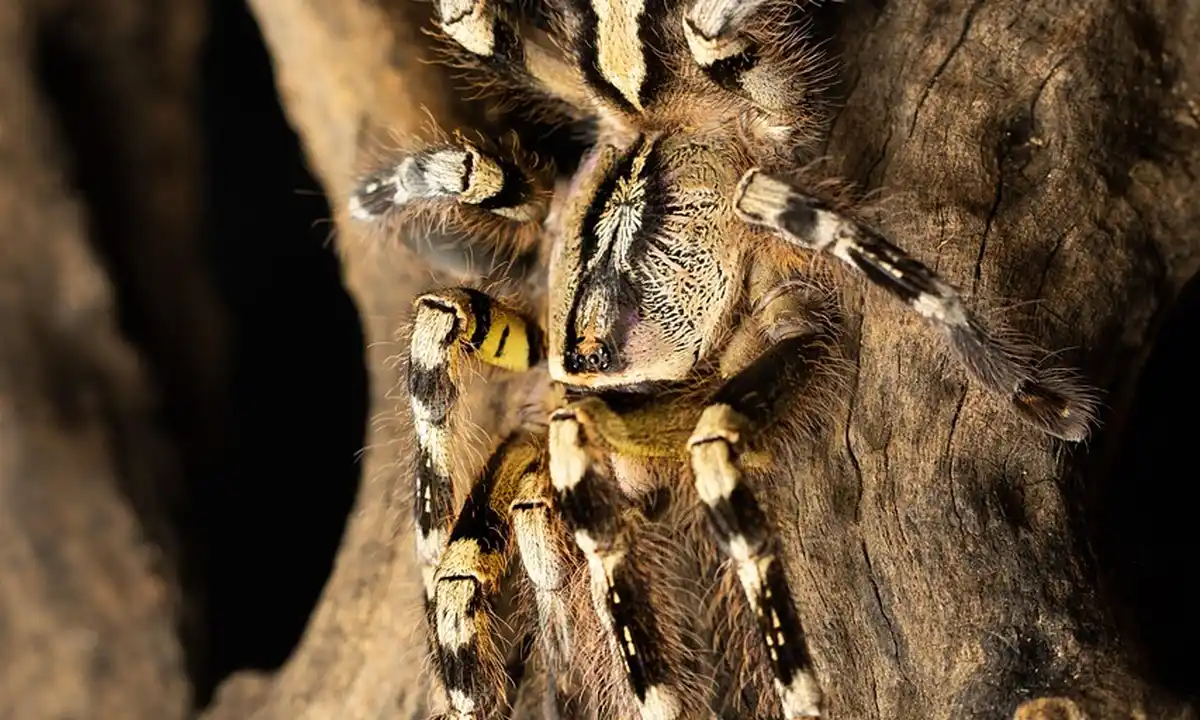
The Unseen Pressure: Habitat Loss and Fragmentation
The silent crisis is deforestation. A palm plantation or cattle pasture doesn’t just remove trees. It severs the microhabitats these tarantulas rely on. Species like the Pamphobeteus that need cool, damp forest floors cannot cross sun-baked clearings. Habitat fragmentation isolates tiny populations, leading to genetic bottlenecks and local extinction. This is why a specialist from a single valley in Peru can vanish so quickly.
Climate shifts compound the problem. Altered rainfall patterns can desiccate eggsacs or collapse burrows. In my care, I see how sensitive my Theraphosa is to humidity drops; in the wild, such changes are fatal. Conservation data is sparse, but the loss of even a few square miles of primary forest can erase an entire population of a rare species. Protecting these tarantulas means advocating for the preservation of intact, old-growth ecosystems.
The Black Market: The Impact of the Illegal Pet Trade
The demand for rarity fuels a dangerous trade. Wild-caught adults and eggsacs are smuggled out of countries, often with high mortality rates. I’ve seen the aftermath in confiscated shipments-dehydrated, stressed animals. This practice directly drains wild populations of reproductive adults. Purchasing a tarantula of unknown origin supports this cycle and risks introducing pests or diseases to captive collections.
Ethical keeping is the antidote. Always source tarantulas from reputable captive breeders. Ask for proof of lineage. The higher price for a captive-bred animal funds sustainable hobby growth. For example, the increasing availability of captive-bred Tapinauchenius species shows hobbyist success can reduce wild pressure. Our responsibility is to admire without owning, unless we can provide a lifetime of species-specific care from an ethical source. The core principles of ethical tarantula breeding include prioritizing welfare, transparent lineage, and genetic health to ensure durable, healthy captives. When these principles guide practice, captive-bred stock supports sustainable hobby growth without compromising spider welfare or wild populations. The “look, don’t touch” philosophy extends to the global ecosystem—appreciate these creatures by ensuring they thrive in their homes, first and foremost.
Responsibility in Rarity: Ethics for the Avid Keeper
Owning a rare species is a profound privilege. This privilege demands a level of commitment that transcends basic care, shifting your role from simple keeper to dedicated steward of a fragile lineage. The thrill of rarity must be matched by a deep sense of duty.
Choosing Your Source: Captive-Bred vs. Wild-Caught
The single most important ethical decision you will make is where your spider comes from. For rare species, this choice carries extra weight. Always, without exception, seek out captive-bred (CB) specimens from reputable, specialized breeders. Wild-caught (WC) animals, often cheaper, represent a direct drain on vulnerable wild populations. They frequently arrive stressed, dehydrated, and parasitized, leading to a hidden cost of suffering and a much shorter life in your care. I learned this early on; a wild-caught specimen I acquired years ago never thrived like my captive-bred animals, a silent lesson in sustainability.
Finding CB rare tarantulas requires patience. You must network within breeding communities and be prepared for waiting lists. Your patience is an active investment in the species’ future within the hobby, ensuring demand is met through responsible propagation, not depletion. When you pursue ethically sourced specimens, choose reputable breeders who practice captive breeding and maintain transparency about lineage and care. Ensure tarantulas are legally acquired and that your purchase supports welfare and conservation.
Husbandry as Stewardship: Perfecting the Micro-Habitat
General care sheets do not apply here. Your mission is to replicate a specific slice of the planet as closely as possible within an enclosure.
- Researching exact parameters is non-negotiable. Does your Poecilotheria need 78°F with 80% humidity, or does your desert dweller require 85°F with 40%? Guesswork risks fatal dehydration or lethal mold. Invest in accurate digital hygrometers and thermometers.
- Substrate is more than dirt; it’s climate control and architecture. A deep, moisture-retentive mix of coco fiber, peat, and vermiculite might be essential for a fossorial species from a cloud forest. For my Theraphosa stirmi (Goliath), a 10-inch deep, damp substrate maintains the humid microclimate she needs to thrive and avoids fatal abdomen ruptures.
- Growth rates can be glacial. Some rare tarantulas may molt only once every 12-18 months, even as juveniles. Do not panic or attempt to force-feed. Their slow pace is their biology, not a failure of your care. My Grammostola rosea (Rosie) has taught me more about patience through her year-long fasts than any other pet.
- The enclosure is a sanctuary, not a diorama. Prioritize security and correct parameters over a “pretty” setup for guests. Limit disturbances to essential maintenance. Your reward is observing natural behaviors in a calm, healthy animal, not handling a trophy. The defensive speed of my Pterinochilus murinus (Flash) is a clear reminder that his peace is more important than my curiosity.
Contributing to the Future: Supporting Conservation and Breeding Programs
True stewardship looks beyond your own tank. It means helping ensure these spiders exist for future generations, both in the wild and in responsible captivity.
- Financially support NGOs and research groups working in habitat countries like Brazil, Sri Lanka, or Madagascar. Conservation science is the only true defense against habitat loss, the greatest threat to rarity.
- Join and participate in species-specific breeding networks. Share data on molting, growth, and successful pairings. If you successfully breed a rare species, make offspring available to other serious keepers at a fair price to build the captive population.
- Use your rare spider as an ambassador. When someone asks about it, explain its unique ecology and the threats it faces. Replacing fear with fascination is a powerful tool for changing minds and building broader support for invertebrate conservation.
Common Questions
What actually makes a tarantula species considered “rare”?
Rarity in tarantulas is a combination of extremely limited wild range, low population numbers, and specific threats like habitat loss. A species isn’t just rare because it’s uncommon in the pet trade; true rarity is defined by a microscopic natural habitat, often a single mountain or isolated forest patch. Critically Endangered or Endangered status on the IUCN Red List is a key scientific indicator, alongside difficulties in captive breeding that prevent sustainable hobby populations.
Can you name a few of the absolute rarest species?
Certainly. The Gooty sapphire ornamental (Poecilotheria metallica) from a tiny forest in India is a famously rare, Critically Endangered species. Others include various Phormingochilus species from Borneo and obscure, deep-forest Haplopelma or Cyriopagopus from Southeast Asia, where many native tarantulas thrive. Certain highly localized Pamphobeteus from the Andes and some Amazonian Tapinauchenius specialists also rank among the world’s rarest tarantulas.
Where in the world are these rare tarantulas typically found?
They are almost exclusively found in isolated, micro-endemic regions. Key areas include specific forest reserves in India and Sri Lanka, remote islands and deep rainforests of Indonesia and Southeast Asia, and tiny, fragmented habitats in the Amazon basin and Andean cloud forests of South America. Their entire existence is often tied to a single type of ecosystem, like a particular valley or hillside, that is under threat.
What is the biggest threat to these rare species?
The primary threat is habitat loss and fragmentation from deforestation for agriculture or development. For species with a range of only a few square miles, this is catastrophic. The illegal pet trade also poses a significant threat by directly removing reproductive adults from already tiny wild populations, further jeopardizing their chance of survival.
Is it possible to keep these rare tarantulas in captivity?
Some are kept by extremely specialized breeders, but it is not a venture for beginners. Care is highly specific, replicating precise humidity, temperature, and enclosure setups to mimic their tiny native habitat. Success depends entirely on sourcing captive-bred specimens from ethical breeders, as obtaining wild-caught individuals fuels their decline and often results in unhealthy animals.
How can a hobbyist ethically engage with rare tarantula conservation?
The most ethical approach is to support conservation first. This means financially backing habitat protection NGOs and respecting international wildlife laws. In the hobby, only acquire captive-bred animals from reputable breeders with documented lineage, and never seek wild-caught specimens. Share knowledge to raise awareness, and consider participating in or supporting serious breeding programs aimed at preserving genetic diversity.
The Final Molt
Success with a rare species hinges on perfecting a single element of its native habitat. For many, this is atmospheric humidity. You must maintain a specific moisture gradient in the substrate, often by pouring water into a corner, to prevent fatal dehydration in humidity-dependent species like those from cloud forests or equatorial jungles. An enclosure that is merely “damp” is often insufficient; the microclimate around the spider must feel correct.
Beyond the humidity gauge, your greatest reward is witnessing undisturbed natural behavior. Watch for the meticulous placement of silk lines, the slow excavation of a burrow, or the patient, motionless ambush. These moments are the true trophy. I have spent hours observing my OBT, Flash, engineer its complex web fortress, a privilege far greater than any brief handling session. These spiders are living art and behavioral puzzles, not hands-on pets, and their long-term health depends entirely on your commitment to replicating a small, perfect piece of the world they are slowly disappearing from.
Further Reading & Sources
- r/tarantulas on Reddit: What’s the rarest/most expensive tarantula in your collection? I’ll start
- Rare Tarantula Breeds: A Guide to Exotic Spiders
- What is the rarest species of tarantula you own? | Arachnoboards
Arlo is a lifelong arachnid enthusiast who believes tarantulas are the world’s most misunderstood roommates. With years of hands-on experience in tarantula care, habitat setup, and species behavior, Arlo combines expert knowledge with a dash of humor to make spider ownership less scary and a lot more fascinating. From choosing the right enclosure to understanding why your eight-legged buddy is doing that weird little pose again, Arlo is here to help you become the best tarantula parent you can be, without getting tangled in the web of misinformation.
Popular Species