
What is a False Tarantula? Identifying Look-Alike Spider Species
In the arachnoculture hobby, the term “false tarantula” isn’t a slight, but a precise label for fascinating mygalomorph spiders that are not true tarantulas (Theraphosidae), yet are so visually and behaviorally similar they cause constant confusion. I’ve watched experienced keepers do a double-take at a pet shop, peering into an enclosure labeled “tarantula” at a creature that seems just slightly…off. This guide is your definitive reference for identifying these doppelgängers. The core answer is simple: a false tarantula is a spider from a different family, often the Dipluridae (funnel-web spiders) or Nemesiidae (wishbone spiders), that mimics the hefty, ground-dwelling form of a true tarantula.
Quick Stats: The Imposter’s Profile
- Origin: Global; common examples hail from North America, Australia, and Africa.
- Type: Mygalomorph (like tarantulas), but from separate biological families.
- Growth Rate: Typically slow, similar to many true tarantulas.
By the end of this guide, you will be equipped to spot the subtle anatomical and behavioral clues that separate a fascinating funnel-web from a true theraphosid, ensuring you know exactly what species you are observing and caring for.
Defining the “False Tarantula”
What Does “False Tarantula” Really Mean?
The phrase “false tarantula” pops up in online forums and pet trade conversations. It is a common name for large, hairy, ground-dwelling spiders that visually resemble true tarantulas but are not members of the Theraphosidae family. This label is purely colloquial, not scientific, and its casual use frequently leads to misidentification.
Someone might find a robust, eight-legged creature in their basement or see one for sale and wonder if it’s a tarantula they can care for. That initial curiosity is the perfect time to pause and look for key identifiers before assuming any husbandry rules apply—especially since not all are suitable for handling or are even true tarantulas. I’ve met keepers who accidentally housed a wolf spider like a tarantula, only to find it pacing from stress.
Why Correct Spider Identification Matters in Our Hobby
Placing an unidentified spider in a standard tarantula setup is a recipe for failure. Incorrect humidity levels-like keeping a dry-loving mimic in the 80% humidity my Goliath bird-eater needs-can cause rapid health decline. Temperature gradients, substrate depth, and feeding schedules all hinge on knowing exactly what species you have.
More critically, you might underestimate defensive behaviors or unknowingly house a spider with medically significant venom. The cornerstone “Look, Don’t Touch” philosophy becomes non-negotiable when dealing with an unknown spider, for both your safety and its well-being. Early in my breeding efforts, I acquired a spider traded as a “calm terrestrial,” which turned out to be a notoriously fast and defensive look-alike; the rehousing was a heart-pounding lesson in meticulous identification.
Accurate ID is the first act of respectful care. It transforms guesswork into informed, species-specific stewardship that reduces animal stress and increases successful keeping.
Key Differences: True Tarantula vs. Tarantula Look-Alike
Anatomical Clues for Rapid Identification
With a calm, observant eye, you can spot definitive physical differences. Start by examining the spider’s face, where eye patterns offer the quickest visual reference. True tarantulas have a distinctive ocular tubercle.
This raised bump holds eight eyes tightly clustered in two rows of four. The eyes of common false tarantulas, like wolf spiders or funnel weavers, are arranged in vastly different patterns that aid their active hunting lifestyles. Use this simple comparison for clarity:
| Feature | True Tarantula (Theraphosidae) | Common Look-Alike (e.g., Wolf Spider) |
|---|---|---|
| Eye Arrangement | Eight eyes in two compact rows on a central tubercle. | Eyes in three rows, often with two very large forward-facing eyes. |
Next, consider fang orientation. True tarantulas possess paraxial fangs that work in parallel, striking downward like daggers, while spiders like the infamous Sydney funnel-web have diaxial fangs that pinch together sideways. This fundamental anatomy dictates prey capture and venom delivery.
Finally, observe the body covering. True tarantulas are famous for their urticating hairs-specialized, barbed setae on the abdomen they flick as a primary defense, a trait absent in all false tarantulas. These features are a classic topic in tarantula anatomy 101, showing how different body regions relate to function. By focusing on the abdomen and its hairs, we connect anatomy to defense. The hair on a look-alike is usually simpler setae, though some can still irritate skin.
Behavioral and Ecological Distinctions
How a spider lives and hunts reveals its identity. True tarantulas are largely sedentary ambush predators, spending most of their time in or near a burrow or silken retreat. My old Chilean Rose Hair, Rosie, is a classic example; she may not move from her favorite corner for weeks.
In stark contrast, many frequent mimics are nomadic active hunters. A wolf spider will tirelessly patrol its territory, relying on sight and speed, which means its enclosure should prioritize floor space over deep substrate.
Silk use tells another story. Do tarantulas spin webs or produce silk? They produce silk, but not in the same way as classic sheet webs. True tarantulas employ silk mainly for burrow stability, egg sacs, and trip lines, though some Old World species like my OBT, Flash, build extensive funnel-like webs. False tarantulas such as agelenid funnel weavers construct non-sticky sheet webs leading into a silken tunnel, a architecture you’d never see from a Theraphosid.
Geography provides a major hint. Most true tarantulas in the hobby hail from tropical and subtropical zones, requiring consistent warmth, while numerous look-alikes are native to temperate regions and thrive at cooler room temperatures. If someone in North America finds a large hairy spider outdoors, it’s far more likely a local look-alike than an escaped pet tarantula. The world’s rarest tarantula species often live in highly restricted habitats. Where they occur is usually region-specific.
Common Tarantula Look-Alike Species: An Identification Guide
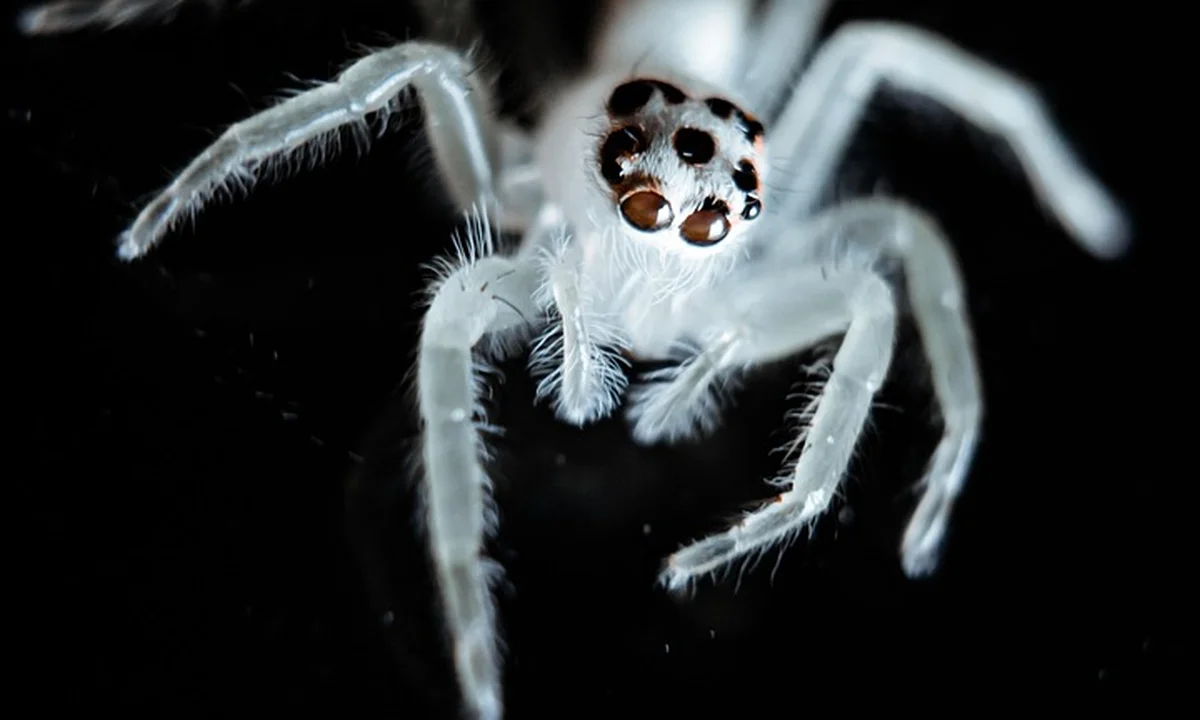
Many large, hairy spiders spark instant recognition, but not all are true tarantulas. I’ve seen seasoned hobbyists do a double-take. Correct identification starts with knowing key physical and behavioral clues that separate these families from the Theraphosidae.
Wolf Spiders (Family Lycosidae)
Encountering a wolf spider on a path always makes me pause. Their gait is a purposeful, swift dash, unlike the deliberate plod of my old Chilean rose hair, Rosie. Wolf spiders are robust, ground-dwelling hunters with dark, often brown bodies and strikingly prominent eyes arranged in three rows.
Look for the two large posterior median eyes that gleam like tiny headlights. Females carry their silken egg sacs attached to their spinnerets, and later, the spiderlings ride on her back. A full-grown wolf spider’s body might reach 1-3 cm, while a mature Grammostola rosea like Rosie has a body exceeding 5 cm.
Their venom is not medically significant for humans, but a defensive bite can be sharp and painful. I advocate for the same “Look, Don’t Touch” rule here-observe their fascinating hunting strategies from a respectful distance.
Huntsman Spiders (Family Sparassidae)
The first time I saw a huntsman in a friend’s shed, its speed was breathtaking. These spiders boast impressive legspans that rival some tarantulas, but their bodies are noticeably flattened with a crab-like leg posture for slipping under loose bark.
They lack the dense, plush hair of a tarantula like my Burgundy Goliath, presenting a sleeker, almost glossy appearance. Huntsmen are ambush predators, not web-builders, and their sudden, lateral movement is a key identifier. You’ll find them in warm climates, often in homes or under tree bark, not in deep burrows.
Funnel-Weaver & Ground Spiders (Families Agelenidae & Gnaphosidae)
These families account for many “is this a tarantula?” questions, especially in garages and basements.
Funnel-Weavers (Agelenidae)
Look for a horizontal, sheet-like web with a distinctive silken retreat or “funnel” at one edge. The spider itself is often brown with subtle stripes and waits motionless at the funnel’s mouth for vibrations on its web. This silent sit-and-wait strategy contrasts with the more mobile tarantula.
Ground Spiders (Gnaphosidae)
These are sleek, fast-moving hunters. Gnaphosids have dark, often brown bodies but are devoid of the dense hair that gives tarantulas their characteristic fuzzy texture. They pursue prey on the ground at night, which can lead to indoor sightings. That dark, swift spider in your basement is far more likely one of these than a lost tarantula.
Practical Steps for Identifying an Unknown Large Spider
When you find an impressive arachnid, curiosity is natural. I follow a strict protocol born from years in the hobby, both for my safety and the spider’s well-being. Rushed identification leads to stress for you and the animal, and potential missteps with defensive species.
The Safe Observation Protocol
This method keeps everyone secure. I used it just last month when a striking, unknown spider took up residence in my potted plant.
- Observe from a safe distance. Never attempt to corner or handle the spider. Note its general size and posture from at least a foot away.
- Photograph from multiple angles. Use your phone. A clear shot from above shows body shape and leg arrangement. A side profile can reveal if the body is flattened (like a huntsman) or robust (like a wolf spider). If safe, try to capture a close-up of the eye arrangement-this is a critical ID feature.
- Note the context. Write down or mentally record the habitat (under a log, on a web, in a basement), any web structure, and its behavior (running, still, hiding). This environmental data is invaluable.
Using Resources for Spider Identification
After you have notes and photos, it’s time to consult the experts. I always cross-reference my initial thoughts with knowledgeable communities before settling on an identification.
- Reputable online forums and social media groups dedicated to arachnid identification are excellent. I’ve posted blurry photos to a dedicated Facebook group and had entomologists provide genus-level IDs within hours.
- Regional field guides or university entomology department websites offer reliable, scientifically vetted information tailored to your geographic location.
- Exercise caution with basic image-search apps for definitive identification. These tools can be misleading with spiders, confusing harmless species with medically significant ones, and should never be your sole source of truth.
Should a False Tarantula Be Kept as a Pet?
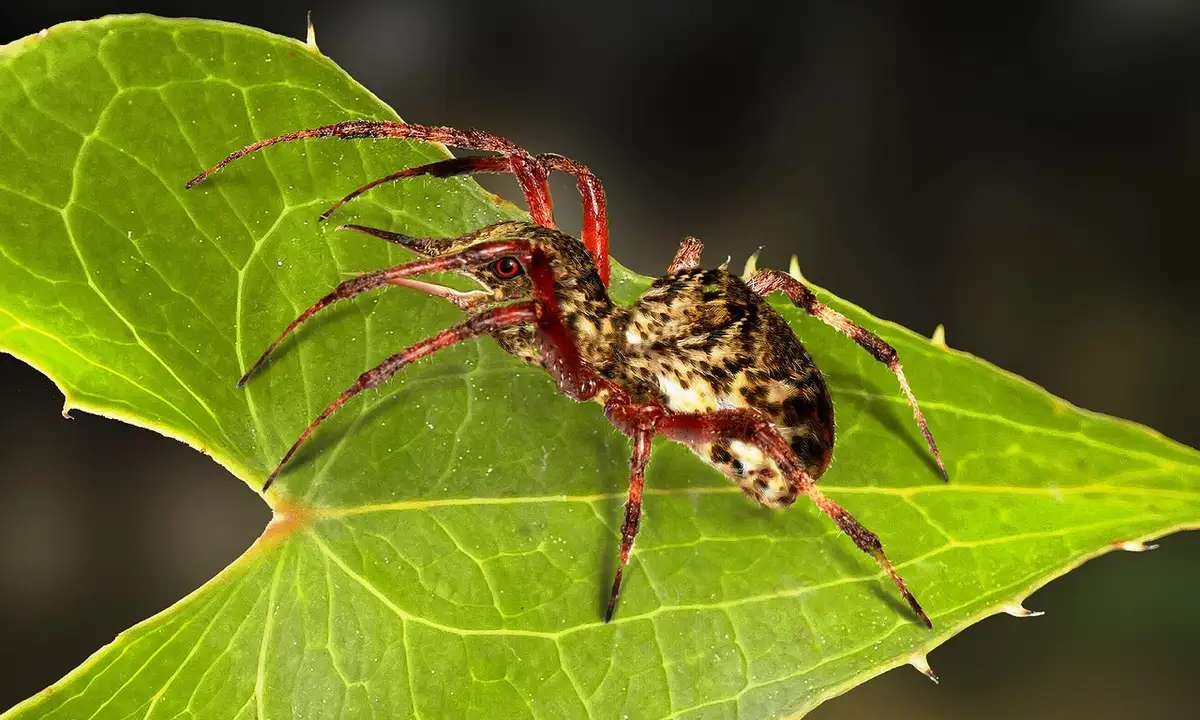
Husbandry and Temperament Considerations
Caring for a false tarantula is not simply a matter of dropping a true tarantula’s routine. Their needs often diverge sharply. Many look-alike species, like certain Trapdoor spiders or Funnel-weavers, are temperate climate natives requiring cooler, drier conditions than the warm, humid environments favored by popular tropical tarantulas like my Goliath Bird Eater. For accurate care, consult a tarantula species identification care guide to confirm the exact species before setting up the enclosure. Different species have distinct humidity, temperature, and substrate needs, and correct identification helps prevent costly mistakes. A setup perfect for a moisture-loving *Theraphosa* could swiftly become a fungal death trap for a spider adapted to Mediterranean scrubland.
Temperament presents another major divide. While some tarantulas, like my old Rosie, can be famously placid, most false tarantulas operate on a different neurological wavelength. They are often lightning-fast, incredibly nervous, and see an opened lid not as feeding time but as an escape route-a behavior known as bolting that makes even my OBT, Flash, seem deliberate. The sudden, darting sprint of a startled wolf spider is a heart-stopping event that highlights their unsuitability for any form of handling. Unlike tarantulas, which often display more predictable behaviors that can be interpreted with some experience, these spiders remain a step ahead.
Social housing is an absolute non-starter. These are solitary predators that will view any tank-mate, including a true tarantula, as either a threat or a meal, leading to cannibalism and stress-related death. Their enclosures must be singular fortresses, designed for observation only, with secure, often specialized lids to contain their escape artistry.
A Perspective from a Tarantula Breeder
After years of breeding tarantulas and observing other arachnids, my personal stance is one of cautious appreciation. While biologically fascinating, false tarantulas generally lack the predictable, long-term husbandry rhythms that make true tarantulas such uniquely rewarding captive animals. For readers seeking a tarantula lifespan guide by species, this perspective helps frame longevity. Knowing species-specific lifespans aids planning and husbandry decisions. The decades-long lifespan of a Grammostola, the mesmerizing molts, the species-specific feeding responses—these provide a deep, stable connection. Many look-alikes have shorter, more secretive lives, spending most of their time hidden in a burrow or funnel, offering only fleeting glimpses.
I advocate for enjoying these incredible spiders through macro photography, local field guides, or educational exhibits. Their true wonder is best observed within the ecological context they sustain, not necessarily extracted for a personal collection. The silence of a forest floor at dusk, waiting to spot a wolf spider’s eye-shine, is a memory far richer than any jar on a shelf.
I must strongly advise against the casual collection of wild spiders for the pet trade. Wild-caught specimens frequently carry internal parasites, suffer immense transport stress, and their removal can disrupt local food webs. Ethical, captive-bred tarantulas are readily available, ensuring a healthier animal and zero impact on native populations. The risks simply outweigh the novelty. For ethically sourced tarantulas, buy from reputable breeders or rescue programs and avoid wild collection. Ethical breeding practices support welfare and genetic health.
## Common Questions
How can I avoid accidentally buying a false tarantula from a seller?
Always purchase from reputable, specialized breeders or dealers who provide the spider’s full scientific name (genus and species). Research that scientific name before buying to confirm it belongs to the Theraphosidae family. Inspect the spider yourself or request clear photos of the eye arrangement and overall posture, as these are quick visual giveaways.
Can I house a false tarantula with my true tarantulas?
No, you should never cohabitate different spider species or even spiders from the same species in most cases. False tarantulas have different environmental needs and are solitary, predatory animals. Attempting to house them together will lead to cannibalism, extreme stress, and the death of one or both animals.
Are false tarantulas safe to handle like some true tarantulas?
Generally, no. Most false tarantula species, such as wolf spiders or funnel-weavers, are incredibly fast, nervous, and prone to bolting, making them very difficult to manage safely. Furthermore, while most are not medically significant, some look-alikes can have more potent venom or deliver a painful bite, and they lack the predictable defensive habits (like kicking urticating hairs) that experienced keepers anticipate with true tarantulas.
If I find one, what’s the biggest care adjustment compared to a true tarantula?
The most critical adjustments are often environmental and behavioral. Many common false tarantulas are temperate species requiring cooler, drier conditions than popular tropical tarantulas. Furthermore, their enclosures must prioritize escape-proof security and floor space for hunting, rather than deep substrate for burrowing, due to their active and skittish nature. Being aware of common tarantula enclosure setup mistakes to avoid is essential. Common mistakes include undersized enclosures, inappropriate substrate depth, or poor climate control.
The Final Molt
The single most critical factor for any look-alike spider is accurate species identification, as this dictates every other aspect of their care. Placing a moisture-dependent Mygalomorph in a bone-dry desert setup, or vice-versa, is a fast path to failure. Your research is their lifeline.
Beyond the correct parameters, your greatest reward is quiet observation. Watch the meticulous engineering of a funnel web, the patient ambush from a trapdoor, the silent vibration-sensing of a hunting spider. These are not pet rocks; they are intricate, instinct-driven architects. Success in this hobby is measured not in handling sessions, but in the thriving of an animal you’ve provided for perfectly. Patience isn’t just a virtue here-it’s the substrate everything else is built upon.
Further Reading & Sources
- How to Identify a Wolf Spider: 12 Steps (with Pictures) – wikiHow
- Common synanthropic spiders in California – Essig Museum of Entomology
- Look Alikes 😀 | Tarantula Forum
Arlo is a lifelong arachnid enthusiast who believes tarantulas are the world’s most misunderstood roommates. With years of hands-on experience in tarantula care, habitat setup, and species behavior, Arlo combines expert knowledge with a dash of humor to make spider ownership less scary and a lot more fascinating. From choosing the right enclosure to understanding why your eight-legged buddy is doing that weird little pose again, Arlo is here to help you become the best tarantula parent you can be, without getting tangled in the web of misinformation.
Popular Species