
How Do Tarantulas Mate? A Step-by-Step Guide to the Reproduction Process
Tarantula mating is a silent, intricate, and inherently dangerous ballet where a missed cue can be fatal. This is not a gentle affair of affection, but a high-stakes ritual of survival and sperm transfer. The process involves careful choreography, species-specific signals, and an ever-present risk of the female viewing the male as prey. My own experiences, from the tense introductions of my Goliath (Theraphosa stirmi) to the lightning-fast antics of my OBT (Pterinochilus murinus), have taught me that success hinges on understanding this raw, biological drama.
Quick Stats:
- Origin: Global, with rituals varying between New World (Americas) and Old World (Africa, Asia, Australasia) species.
- Type: Process is universal, but risks are heightened with faster, more defensive species.
- Growth Rate: Males mature faster, often seeking mates within a few years, while females can live for decades after their ultimate molt.
This guide will walk you through each critical phase, from preparing a suitable male and a receptive female to navigating the moment of contact and the crucial separation.
Tarantula Mating Basics: An Overview for Pet Owners
At its core, tarantula reproduction is a ritual of precise mechanics and immense risk. This process is driven by ancient instincts and specialized anatomy, where success depends on timing, communication, and often, a swift male retreat. To grasp what you might witness, we must first understand the physical tools and life stage mandates at play.
Defining Key Terms: Spermatophore, Spermatheca, and Pedipalps
Forget mammalian concepts. Tarantula reproduction involves indirect sperm transfer. The male’s primary tool is his pedipalps, the two leg-like appendages near his mouth; these become modified at maturity, developing into complex, bulbous structures called emboli that function as syringes. Before he even meets a female, he spins a small silken mat, deposits a droplet of sperm onto it from his abdomen, and then uses his pedipalps to draw that sperm into the emboli, creating a loaded spermatophore. From a tarantula anatomy 101 perspective, the pedipalps are key paired appendages near the mouth that, in males, become specialized reproductive structures called emboli. This anatomy-focused view helps explain how their body design enables such precise mating mechanics.
The female’s key structure is her spermatheca, a hidden internal chamber near her abdomen. This chamber is her sperm storage bank, designed to accept and hold the male’s package for months or even years, allowing her to fertilize multiple egg sacs from a single mating. The male’s delicate mission is to insert his emboli into her spermathecal openings and deposit his payload.
The Lifecycle Stage: Why Mature Males Wander
The behavioral shift in a mature male tarantula is profound. A female can live for decades, largely sedentary in her territory. A male’s life post-final molt, his “ultimate” molt, is measured in months. This final developmental stage triggers an irreversible biological imperative: find a female, or die trying. His sole purpose becomes wandering, driven by an acute sensitivity to female pheromones.
He stops building permanent burrows and may refuse food. You’ll see him pacing his enclosure, tapping his legs, driven by a restless energy my OBT, Flash, never showed as a juvenile. This wanderlust is why mature males are so often found in homes or gardens; they are biologically programmed explorers on a fatal quest, contrasting starkly with the patient, ambush-based lifestyle of females.
Signs Your Pet Tarantula is Ready to Breed
Determining readiness is the most critical step before attempting a pairing. Misjudgment often leads to a dead male. You must become a keen observer, looking for the unambiguous physical and behavioral signals each sex displays.
Identifying a Mature Male: Tibial Hooks and Bulbous Pedipalps
A male is only ready *after* his ultimate molt. Look for these definitive signs:
- Tibial Hooks: Small, hardened hooks on the front legs (tibia). Their sole function is to lift the female’s fangs during mating, a literal life-saving tool.
- Bulbous Pedipalps: The ends of his pedipalps will look swollen, glossy, and dark, resembling boxing gloves. These are his charged sperm reservoirs.
- Behavioral Restlessness: Constant pacing, climbing, and leg-tapping. A mature male will often spin a “sperm web,” a small, horizontal silken platform, which is his private preparation ritual.
Once these traits appear, his clock is ticking; you have a limited window for a successful introduction.
Recognizing a Receptive Female: Post-Molt Timing and Pheromone Trails
The female’s readiness is all about timing and subtle cues. Are signs female tarantula ready to mate? The cues below help determine that readiness. A non-receptive female is a lethal predator.
- The Critical Molt Window: A female is only receptive for a period *after* her adult molt, once her new exoskeleton has fully hardened, typically 2-8 weeks later. This is when her spermatheca is fresh and open for business.
- Presence of a Pheromone Trail: A receptive female will often lay down silken draglines laced with pheromones from her epigastric furrow. In a still enclosure, you might not see this, but a mature male will detect it instantly. For more on this topic, visit Presence of a Pheromone Trail.
- Behavioral Calm (Relative to Species): She should be well-fed and settled. My Goliath, when receptive, assumes a statuesque pose in her burrow entrance rather than a defensive threat posture. This does not mean she is tame; it means her instinct may temporarily prioritize mating over immediate aggression.
Never pair a male with a female that is in pre-molt, freshly molted, or appears hungry and defensive-it is a death sentence. I base this on the tense calm I’ve seen in my own females before introductions, a palpable shift in their usual demeanor.
The Step-by-Step Courtship and Mating Ritual
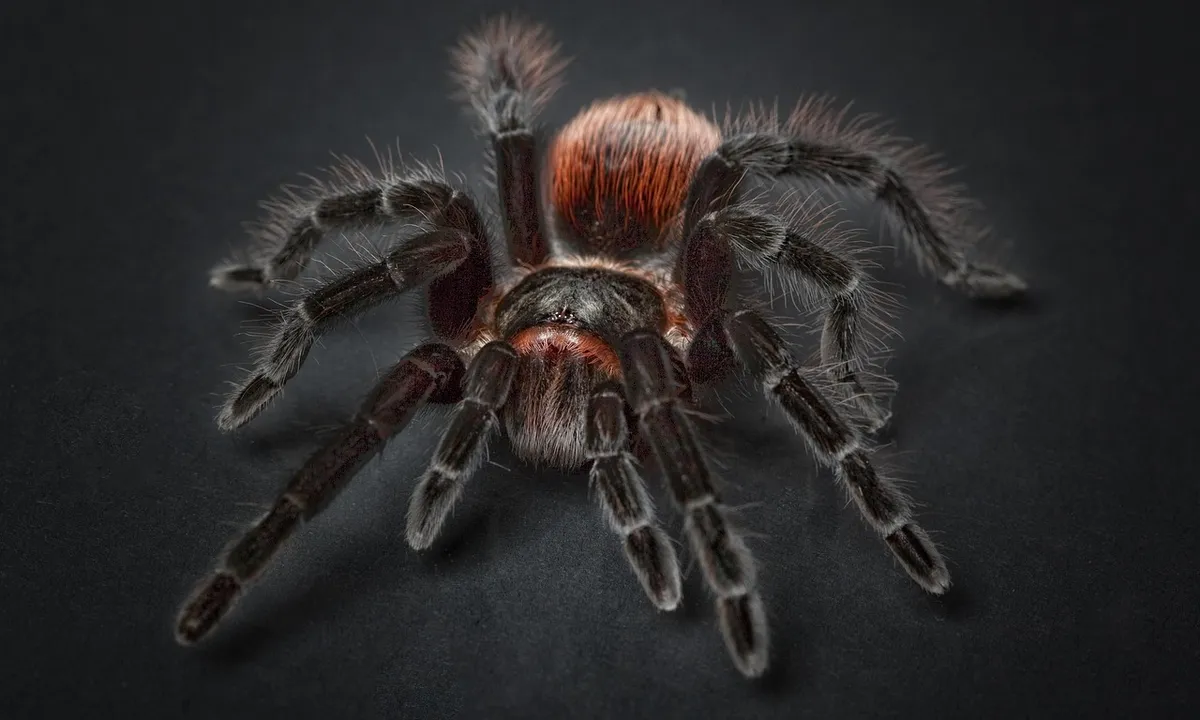
What follows is a silent, high-stakes ballet governed by instinct and chemical signals. Having tracked a receptive female, the male must now navigate the final, most dangerous steps.
How Males Locate Females: Pheromones and Vibrational Signals
A mature male’s entire existence shifts. He stops building burrows and feeding as voraciously, driven by a single purpose. He uses specialized sensory hairs on his legs and pedipalps to detect airborne pheromones-chemical “want ads” deposited by a female on her silk draglines. He can follow this scent trail for surprising distances, a testament to his evolved, singular focus on reproduction. In some species, he may also send out deliberate vibrations by tapping his body or drumming his pedipalps, testing for a receptive female’s presence without a visual confirmation.
The Courtship Dance: Leg Tapping and Sensory Cues
Upon finding a female’s retreat, the true performance begins. The male approaches with extreme caution, aware he is in another predator’s territory.
- Initial Contact and Announcement: The male will typically tap and drum near the entrance of the female’s burrow or web. These vibrations are a specific code, signaling “mate, not meal.” If receptive, the female may emerge or assume a passive, raised posture.
- The Approach Dance: The male edges closer, often with his front legs held high, performing rhythmic tapping or vibrating motions on the substrate or directly on the female. This intricate tapping is a continuous confirmation of his identity and intent, pacifying the female’s predatory response.
- Positioning for Transfer: If the female remains calm, the male will gently use his tibial hooks-spurs on his front legs-to lift her front end and cephalothorax. This critical maneuver gives him the clearance he needs and positions her fangs away from his body.
Sperm Transfer: The Function of the Pedipalps and Spermatophore
This is the climax of the ritual, over in seconds. Prior to seeking a female, the male constructed a spermatophore-a tiny, proteinaceous sac filled with his sperm-which he stores in his pedipalps.
- The Insertion: While holding the female elevated, the male will swiftly insert one pedipalp tip into the female’s genital opening, called the epigastric furrow. You may see a subtle, quick twitch.
- Deposit and Withdrawal: He releases the sperm packet from that pedipalp, withdraws, and often repeats the process with his other pedipalp to ensure successful transfer. The entire physical connection is breathtakingly brief, a fleeting moment of contact in a tense environment.
- The Separation: His final, most vital act is to disengage and retreat as fast as possible. The dance is over; survival is now the only goal.
Risks and Realities During the Mating Encounter
The beauty of the ritual is matched by its brutality. In the wild, this is often the male’s final act.
Understanding Female Aggression and Predation
Cannibalism is not malice; it is ecology. A well-fed female in captivity is less likely to view her suitor as food, but the instinct remains. From the female’s perspective, the male is a substantial, moving protein source that has entered her core territory. If his signals are unclear, if she is not truly receptive, or simply if she is hungry, the courtship can end in a sudden, fatal strike. I’ve witnessed my calm Grammostola rosea, Rosie, switch from placid to predatory in an instant when a male’s approach was too clumsy.
Male Survival Strategies: The Rush to Escape
The male’s behavior is a masterclass in risk management. His survival hinges on speed, precision, and distraction.
- Post-Mating Flight: His immediate, rapid retreat is his primary strategy. He may use his longer legs to catapult away.
- Distraction with a “Nuptial Gift”: Some species have been observed offering a prey item to the female during approach, literally buying time.
- Guarding the Exit: Wise males often initiate mating near the edge of the female’s web or burrow, ensuring a clear escape route.
In captivity, we can tilt the odds for the male’s survival, but never eliminate the risk. Always use a large, neutral enclosure for introductions, and ensure the female is well-fed days beforehand. Have a catch cup ready, but intervene only if absolutely necessary-this is their natural process. My experience with faster species like the OBT (Pterinochilus murinus) means planning for lightning-fast escapes on both sides, prioritizing the safety of the animals over our desire to observe. The philosophy remains: we look, we do not touch, allowing their ancient drama to unfold with minimal human disruption.
After Mating: Egg Sac Development and Maternal Care
From Spermatheca to Egg Sac: Internal Fertilization
The male’s departure signals the start of a hidden process. Inside the female, sperm journeys to her spermatheca, a storage organ near her ovaries. This isn’t a rushed event. I’ve watched mated females like my Grammostola rosea, Rosie, resume her “pet rock” demeanor for months before any action. The spermatheca allows her to fertilize eggs on her own biological schedule, often when humidity and temperature feel optimal.
When she is ready, her body secretes a fluid to hydrate dozens or even hundreds of eggs. Each egg passes over the spermatheca, receiving a coating of sperm in a silent act of internal fertilization. She then lays this sticky mass into a carefully prepared silk bowl. This entire sequence is a testament to efficient, patient reproduction, entirely devoid of external cues.
How the Female Tarantula Guards Her Silk-Wrapped Offspring
Construction begins immediately. Using her spinnerets, she envelops the egg mass in a layered capsule of silk. The final egg sac is a resilient, often pearlescent orb. My Theraphosa stirmi, Goliath, spun hers against a cork bark slab in her humid corner, a common choice for moisture-dependent species. A well-made sac is vital, acting as a microclimate that retains humidity and shields against mold and parasites.
Her guardianship is intense and methodical. You will observe her constantly adjusting the sac’s position. She uses her legs and fangs to gently turn it, preventing embryos from adhering to one another. This regular rotation is non-stop labor, ensuring even heat distribution and development.
Defense becomes her sole purpose. A brooding female perceives everything as a threat. My Pterinochilus murinus, Flash, once lunged at a water dripper near her web fortress. Disturbing a guarding female risks stress-induced abandonment or cannibalism of the entire sac. In captivity, intervene only with clear cause:
- If she discards the sac and moves away.
- If visible mold penetrates the silk layers.
- If she damages it herself through excessive manipulation.
For artificial incubation, replicate her care. Place the sac in a ventilated container with damp vermiculite, and turn it gently twice daily. Mimicking her maternal behavior is the only ethical path if you must assume her role.
The Hatching Process: From Eggs to Spiderlings
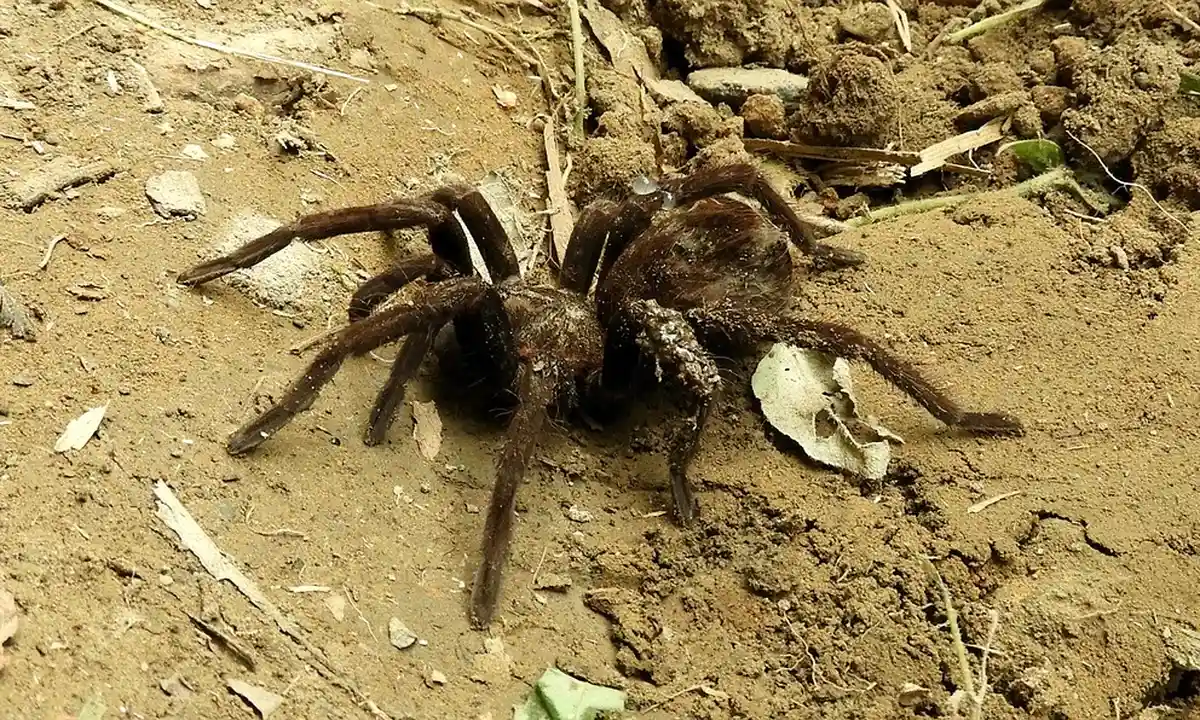
Timeline: How Long Until Tarantula Eggs Hatch?
Development time hinges on species and temperature. Generally, expect a span of 4 to 10 weeks. Warmer enclosures around 80-85°F (27-29°C) accelerate metabolism. My faster-developing species, like Old World tarantulas, often hatch closer to 4 weeks, while my New World terrestrials like G. rosea took a full 8 weeks. It’s interesting to see how this initial development speed impacts their overall growth rate and development.
Monitor for these subtle signs:
- The egg sac darkens slightly as embryos mature.
- It may feel more firm or heavy when handled carefully for inspection.
- Just before hatching, you might see faint, collective movement within the silk.
Resist the urge to open the sac; premature exposure kills developing spiderlings by desiccation. Patience is your most critical tool here.
Emergence and Dispersal: The First Days of Spiderlings
Hatching doesn’t mean immediate escape. Spiderlings first emerge as “eggs with legs” (post-embryos), then molt inside the sac to become first instars. They then cut their way out, appearing as perfect, tiny tarantulas. These first instar spiderlings will cluster on the remains of the sac, a behavior that conserves moisture and provides safety in numbers. Understanding their molting cycles—how often they molt and what triggers a molt—helps explain growth and changing behaviors across instars. For more detailed information, check out the article on Understanding their molting cycles. Observing molt timing can also show how environment and nutrition influence development in spiderlings.
This cluster phase lasts several days. Then, instinct triggers dispersal. In a natural setup, they will wander to find their own space. For breeders, prepare for this moment to ensure survival:
- Have many small, escape-proof enclosures ready (deli cups with air holes work).
- Provide a moisture source, like a lightly misted wall or a damp cotton ball fragment.
- Offer miniscule prey, like pinhead crickets, after their first post-dispersal molt.
Even at this tiny size, the ‘Look, Don’t Touch’ rule is absolute, as their fragile bodies are easily injured. I learned this after a failed attempt to gently guide a stray sling, resulting in a fatal rupture. Their first days are about quiet observation, ensuring they have the simple resources to begin their independent lives.
Practical Breeding Considerations for the Pet Owner
Breeding tarantulas is less about direct intervention and more about creating the precise conditions for instinct to take over. You are a stage manager, not a participant. Your primary responsibilities are safety and timing, ensuring both spiders survive the encounter. To do this responsibly, you should create a comprehensive breeding plan for your tarantulas. It should cover pair selection, timing, enclosure needs, and safety contingencies. My attempt with my OBT, Flash, was a masterclass in planning for speed and aggression.
Setting Up for Success: Enclosure Tips for Breeding Pairs
Never introduce the female into the male’s territory. The male must be the traveler. I prepare a neutral, sparse enclosure or use the female’s tank after modifying it. The goal is to minimize hiding spots where one could ambush the other.
First, I remove all deep burrow ornaments and extra décor from the female’s enclosure, leaving her primary hide accessible but not a fortress. This reduces her defensive territory and gives the male a clearer escape route. I ensure the substrate is packed firm, not loose, so the male has stable footing for his crucial pedipalp insertions and subsequent retreat.
I always have a long, soft-tipped paintbrush and a clear plastic cup ready. These are my tools for gentle guidance and emergency separation. The process is silent, intense, and happens with startling speed. Lighting should be dim to reduce stress. Room temperature should be stable, ideally matching the species’ preferred range-for many, that’s between 75-80°F (24-27°C).
Post-Mating Care: Feeding the Female and Separating Offspring
Whether successful or not, remove the male immediately after he disengages. Offer the female a substantial, protein-rich meal like a large roach within 24 hours. A well-fed female is less likely to view her future offspring as a food source. If a sac is produced, do not disturb it. The female will rotate it and guard it fiercely. Incubation times vary wildly by species, from weeks to several months.
Once the spiderlings (slings) have emerged and dispersed from the sac, they must be separated. Crowding leads to cannibalism. I use small delicup containers with ventilation holes, a damp corner of substrate, and a bottle cap lid for water. They can be housed communally for only a very short time, if at all. Knowing when and how to separate tarantula spiderlings is crucial for their survival.
Breeding Do’s and Don’ts: A Quick Guide
- DO confirm both spiders are well-fed and mature. A freshly molted female is not receptive.
- DO use a long tool to gently guide the male if he seems hesitant or lost.
- DON’T leave the pair unsupervised, even for a minute. Have separation tools in hand.
- DON’T breed medically significant or highly defensive species as a first attempt. Start with a more predictable genus like Grammostola.
- DO research the specific gestation and incubation period for your species. Patience is non-negotiable.
- DON’T prematurely remove the egg sac. You risk damaging the eggs or triggering the female to consume them.
- DO prepare dozens of small sling enclosures in advance. You will need every one.
FAQs
What happens to the male tarantula after mating?
If he survives the encounter, the male’s biological purpose is complete. His life after mating is typically very short, often just a few months. He may continue to wander and attempt to mate with other females until he eventually dies of natural causes or predation. In many tarantula species, the male’s life ends soon after mating. This makes the mating period a climactic part of the tarantula lifecycle.
How does the female tarantula fertilize her eggs internally?
After mating, the female stores the male’s sperm in a specialized organ called the spermatheca. When she is ready, often weeks or months later, her ovaries produce eggs. As each egg passes by the spermatheca, it is coated with sperm, fertilizing it just before she lays it into her silk egg sac.
What are spiderlings and how do they emerge from the egg sac?
Spiderlings are baby tarantulas. They develop inside the egg sac, going through initial growth stages. Once developed, they use their fangs to cut their way out of the protective silk. They initially cluster together on the sac before dispersing to live independently. In many tarantula species, the female guards the egg sac and may care for the spiderlings for a period after they hatch.
What are the biggest risks for the male tarantula during mating?
The primary risk is the female viewing him as prey instead of a mate, leading to cannibalism. This risk is highest if the female is hungry, not truly receptive, or if the male makes an error in his courtship signals. His survival depends on precise communication and a swift escape after sperm transfer.
How does the female tarantula care for her egg sac?
The female is a dedicated guardian, constantly rotating the sac with her fangs and legs to prevent the eggs from sticking and to ensure even development. She fiercely defends it from any perceived threats. The silk sac itself provides a critical microclimate, retaining necessary humidity for the eggs.
The Quiet Art of Waiting
The most critical factor for success after a mating attempt is not temperature or space, but moisture. A gravid female requires consistently available hydration to support her developing eggs, and even a single missed drink can lead to a failed sac. Her water dish must be kept clean and full at all times. The visual signal of her abdomen, plump and glossy, is your best guide. A healthy, well-hydrated female will often retreat to her burrow or hide and become more secretive as she nears egg-laying.
Resist the urge to check on her constantly. The silence of the enclosure is not emptiness, but industry. She may be weaving the delicate silk cradle for her eggsac, a process that demands total privacy. Your role now is one of quiet stewardship: provide food if she accepts it, maintain the humidity she prefers, and observe from a respectful distance. The timeline from mating to a viable eggsac can span many months, a profound lesson in the hobby’s slow, rewarding rhythm. Watch for the subtle changes in her webbing or the deepening of her burrow. These small behaviors are the real story, far more fascinating than any hurried outcome.
Further Reading & Sources
- Tarantula Mating: How It Works
- How Do Tarantulas Mate?
- Animal Sex: How Tarantulas Do It | Live Science
Arlo is a lifelong arachnid enthusiast who believes tarantulas are the world’s most misunderstood roommates. With years of hands-on experience in tarantula care, habitat setup, and species behavior, Arlo combines expert knowledge with a dash of humor to make spider ownership less scary and a lot more fascinating. From choosing the right enclosure to understanding why your eight-legged buddy is doing that weird little pose again, Arlo is here to help you become the best tarantula parent you can be, without getting tangled in the web of misinformation.
Breeding Tarantulas