
What Are the Signs a Female Tarantula is Ready to Mate?
In the silent theater of arachnoculture, the female tarantula is the discerning director-her consent for breeding is expressed not in words, but through a precise language of posture, physiology, and patience. Recognizing her readiness separates stressful encounters from successful pairings. Your most reliable signs are a confirmed mature molt, a noticeably full abdomen, and a calm, investigative demeanor when sensing a male’s presence. I learned this through careful observation, like watching my docile G. rosea Rosie ignore a male for weeks, only to become subtly attentive after a fresh molt.
Quick Stats:
- Origin: Varies wildly by species, influencing humidity and temperature needs for conditioning.
- Type: New World (e.g., Theraphosa) or Old World (e.g., Pterinochilus); this drastically alters defensive propensity during introductions.
- Growth Rate: A faster rate leads to earlier sexual maturity, but ultimate size and age are the true benchmarks for readiness.
This guide details the specific, often fleeting, cues that signal a female’s receptivity, helping you act with confidence at the right moment.
Physical Signs of Mating Readiness in Female Tarantulas
Abdomen Size and Condition
A female tarantula’s abdomen is a clear health indicator. For breeding, you want a plump, well-hydrated abdomen, not one that is shriveled or overly distended. A robust abdomen shows she has sufficient nutrient reserves for egg production, a non-negotiable prerequisite for a successful mating. My old Chilean Rose Hair, Rosie, has maintained that classic dusty pink, rounded abdomen for years, a sign of good care even if she’s a reluctant eater. An abdomen that is bald from kicking urticating hairs, like my T. stirmi Goliath’s often is, can still be healthy, but watch for any sudden leanness, especially if she’s gravid.
Epigynal Plate Changes
The epigynal plate is a sclerotized structure located on the underside of the abdomen, between the book lungs. In a mature female, this plate becomes visibly darkened and more pronounced. You need a recent molt to inspect this safely, as trying to examine a live tarantula causes immense stress and risks a bite or hair flicking. After a mature molt, the epigynal plate will be fully formed and dark, often described as a shiny, dark patch. This is your definitive physical proof she is an adult. I sex all my tarantulas using their molts, a peaceful method that respects the animal’s space. If you’re following a step-by-step guide to determine your tarantula’s sex, start with confirming a recent molt before inspecting reproductive structures. A complete guide will also cover male indicators such as pedipalp structure or tibial hooks to help you compare features safely.
Age and Instar Stage
Chronological age is less reliable than developmental stage. A female is ready after her ultimate molt, the molt where she reaches sexual maturity. This varies wildly by species. A fast-growing species like an OBT (P. murinus) may mature in two years, while a slow-growing Grammostola like Rosie can take a decade. Keep meticulous records. My P. murinus, Flash, reached maturity rapidly, her bright orange color intensifying with each instar. Do not attempt to pair a female before she has hardened completely after this final molt; her new exoskeleton and epigynal plate need weeks to solidify.
Behavioral Signals of Female Receptivity
Courtship Behaviors and Communication
A receptive female will often respond to a male’s courtship taps and vibrations. She may lift her front legs and carapace, a posture that makes her epigynum accessible. This is a critical moment of non-verbal communication where the female’s stillness signals permission for the male to approach. An aggressive stance, rearing up with fangs exposed, means immediate separation is required. I’ve seen this delicate dance succeed and fail; it requires patient observation and a readiness to intervene.
Appetite and Activity Shifts
A ready female may show a voracious appetite, building resources, or she may refuse food entirely as her focus shifts. Any sharp behavioral change from her normal baseline can be a clue, so knowing your tarantula’s individual personality is key. Rosie’s long fasting periods are normal for her, but for another species, a sudden food strike could coincide with breeding readiness. Conversely, a typically reclusive fossil like a rose hair might become unusually active near the enclosure entrance. During pre-molt or other natural fasting periods, many tarantulas stop feeding on their own. In line with the when not to feed guidance, pause feeding during these times and resume only after the molt is complete.
Increased Silk Laying
Many females will intensify their webbing activity when receptive. They may lay down thick mats of silk or construct a special “sperm web” where they will store the male’s deposited sperm after mating. This frenetic silk production is a tangible, observable sign of hormonal changes and nesting behavior. My OBT, Flash, always webs excessively, but for a less prolific species, a sudden burst of new, dense webbing in a mature female is a strong behavioral flag. This is why providing ample anchor points for silk is part of good husbandry.
The Molt Cycle and the Sexual Receptivity Window
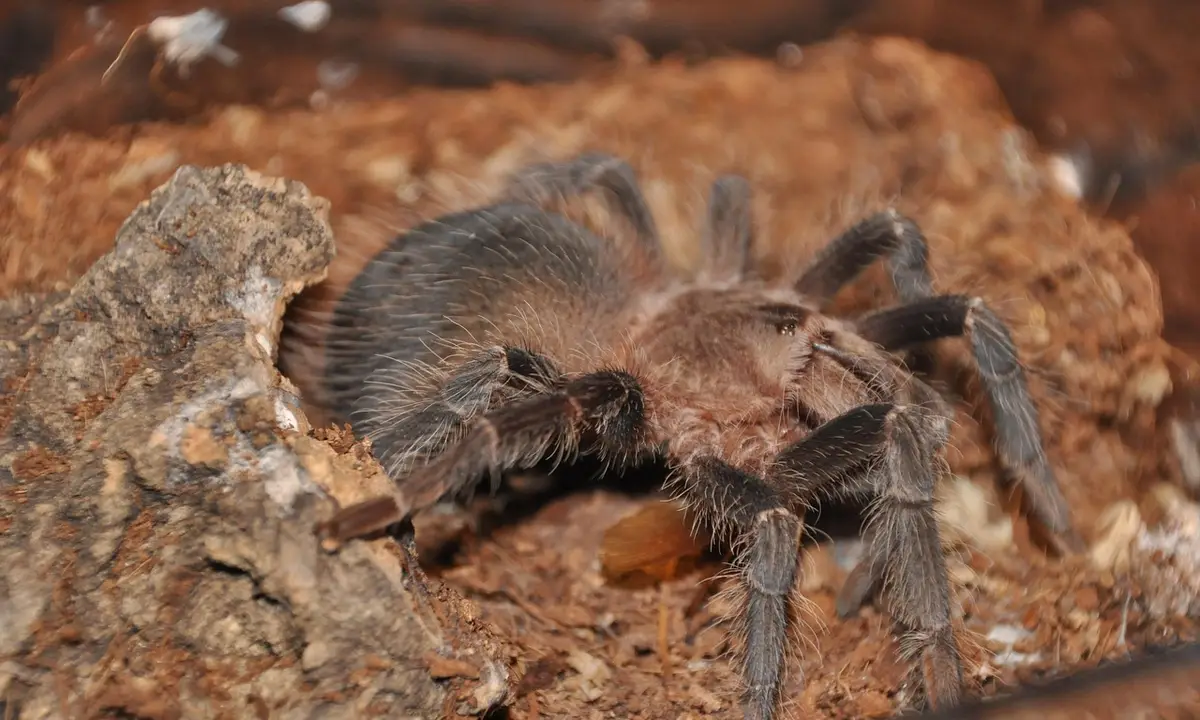
In my fifteen years with Rosie, my Grammostola rosea, I have seen how a female tarantula’s biology is governed by the silent rhythm of her molts. Sexual receptivity is not a constant state but a fleeting biological window that opens only after her final mature molt, when her reproductive system is fully formed and functional. This connection between molting and reproductive readiness is precise and non-negotiable, a fact every breeder must respect to ensure success and safety.
Post-Molt Receptivity Timeline
The countdown begins once her new exoskeleton hardens, a process taking up to two weeks. I document this timeline for every female, as my Burgundy Goliath Bird Eater (Theraphosa stirmi) presented a receptive window of roughly two to five months post-molt. While species vary, a general framework applies. Follow these stages closely.
- Weeks 1-2 (Hardening Phase): No interaction. The female is vulnerable and rebuilding internal structures. Do not feed or introduce a male.
- Weeks 3-8 (Peak Receptivity): This is the prime time. Many females exhibit increased exploratory behavior and may lay down fresh silk. For slower-growing species like Grammostola, this window can extend longer.
- Months 3-6 (Closing Window): Receptivity wanes. The female’s interest in mating diminishes, and she may permanently reject male advances. Missing this period often means waiting for her next molt cycle, which could be years away.
Fast-growing arboreals like my OBT, Pterinochilus murinus, may have a receptivity window as short as a few weeks. Accurate record-keeping of molt dates is your most critical tool for timing introductions correctly.
Signs a Female is Not Ready
Introducing a male to an unreceptive female is a recipe for disaster, often ending in a cannibalistic attack. From a tense rehousing of my defensive OBT, I learned that stress signals are a clear sign to halt any breeding attempt immediately. Watch for these definitive warnings.
- Defensive Posturing: She raises her front legs high, revealing her fangs. She may make sudden, threatening lunges.
- Retreat and Hiding: She flees to her burrow or refuge and seals the entrance with soil and silk, refusing engagement.
- Pre-Molt Indicators: A dark, shiny abdomen and a complete loss of appetite signal she is focusing energy on an impending molt, not mating. My Rosie famously fasts for months beforehand.
- Aggressive Striking: She attacks anything that moves near her, including paintbrushes or feeding tongs, with no courtship tolerance.
Respect these signals by immediately removing the male and adhering to a strict “Look, Don’t Touch” protocol to minimize external stress on the animal.
Environmental and Seasonal Cues for Breeding
Tarantulas are finely tuned to environmental rhythms, and replicating these cues can trigger breeding readiness. Successfully breeding my moisture-loving Theraphosa stirmi required meticulously simulating the humidity and temperature drops of its native rainforest. This approach moves beyond basic husbandry into the realm of behavioral encouragement. To implement this responsibly, create a comprehensive breeding plan for your tarantulas. A clear plan helps you track cues, pairings, and outcomes across generations.
Simulating Natural Conditions
Your goal is to gently convince the female’s physiology that it is the optimal season for reproduction. I achieve this by creating a controlled seasonal shift over 4-6 weeks, focusing on three key parameters: temperature, humidity, and photoperiod. Here is a step-by-step method based on my experience.
- Initiate a Cool-Down Phase: Gradually lower nighttime temperatures by 5-10°F (3-6°C). For many species, aim for a low of 70-75°F (21-24°C). Use a thermostat for safety.
- Increase Humidity Methodically: For tropical species, raise ambient humidity to 75-85% via more frequent misting or a deeper, damper substrate layer. For arid species, a slight increase followed by a drying period can mimic seasonal rains.
- Adjust Light Cycles: Reduce daily light exposure by 1-2 hours to simulate shorter days, using an automatic timer to ensure consistency and avoid disturbing the enclosure.
- Offer Prey Strategically: Slightly increase feeding frequency to build nutrient reserves, mimicking natural abundance before breeding seasons.
These changes must be incremental; abrupt shifts will stress the tarantula and defeat the purpose. Understanding the ideal temperature and humidity ranges for your tarantula’s species helps guide these adjustments. Ideal ranges can vary by species, but many tarantulas thrive around 70-85°F and 60-80% humidity. Monitor the enclosure’s climate with digital hygrometers and thermometers.
Monitoring Female Response
The true test of your environmental setup is the female’s behavioral shift. A receptive female will often announce her readiness through subtle but observable changes in daily routine and enclosure modification. Watch for these positive indicators after implementing seasonal cues.
- Enhanced Web Production: She may weave extensive silk mats or lines, especially near the enclosure entrance. My OBT webs everything when conditions are right, creating a pheromone-laden landscape.
- Increased Patrol Behavior: She spends more time moving deliberately around the enclosure, particularly during crepuscular hours, instead of remaining hidden.
- Acceptance of Male Introductions: When a male is presented, she responds with calm, reciprocal tapping rather than aggression or flight. This is the ultimate sign of readiness.
- Drumming Response: She may vibrate her body or palpate the ground in response to the male’s courtship vibrations, a clear communication of interest.
If no positive response is observed after several weeks, return to standard maintenance conditions. Breeding should be a dialogue with the animal, not a forced event; patience and observation always yield the best results for both keeper and tarantula. After mating, monitor for post-mating cues and any signs of stress or egg sac development. Post-mating care emphasizes stability, minimal disturbance, and patience as you wait for further reproductive cues.
Species Variation in Mating Signals
Not all females broadcast their readiness in the same way. Species-specific rituals and temperaments dramatically alter what “receptive” looks and sounds like. A behavior that is a gentle invitation for one can be a deadly threat from another.
Comparing Common Pet Tarantulas
From my own collection, the contrasts are stark. My fifteen-year-old Grammostola rosea, Rosie, is the quintessential “pet rock.” Her receptiveness is a passive, quiet state. She may simply cease her typical reclusive behavior and sit prominently in the open. Her once-irritable personality softens. My Orange Bitey Thing, the Old World Pterinochilus murinus Flash, operates on a different spectrum entirely. For her, readiness is an active, heightened state of awareness. Her already considerable speed increases, and her constant webbing may take on a new, more frantic pattern. She is never docile, only selectively tolerant.
New World vs. Old World Behaviors
This dichotomy between my Rosie and Flash illustrates the fundamental divide. New World tarantulas (from the Americas) often rely more on ritualized, non-contact communication. A receptive female may perform a species-specific “drumming” or tapping with her palps and front legs in response to the male’s approach. She is signaling through vibration. Old World tarantulas (from Africa, Asia, Australia) frequently possess more potent venom and lack urticating hairs. Their courtship can be far less ceremonial and more direct. An Old World female’s lack of immediate, explosive aggression is often the primary signal of her receptiveness. The male’s approach is inherently riskier, and his courtship must be swift and precise. Beyond drumming, tarantulas may use stridulation and other signals—rubbing body parts to produce sounds—and other vibrational or tactile signals to communicate intent or receptivity. The way these signals are interpreted can influence whether a male’s advance is successful or risky.
For heavy-bodied, humidity-loving species like my Theraphosa stirmi, Goliath, the physical signal can be architectural. A receptive female may create a broad, flat silk mat near her burrow entrance. This “mating mat” provides a stable platform for the precarious act of coupling. Failing to see this prepared space is a clear sign to delay introduction.
Preparing for the Mating Introduction
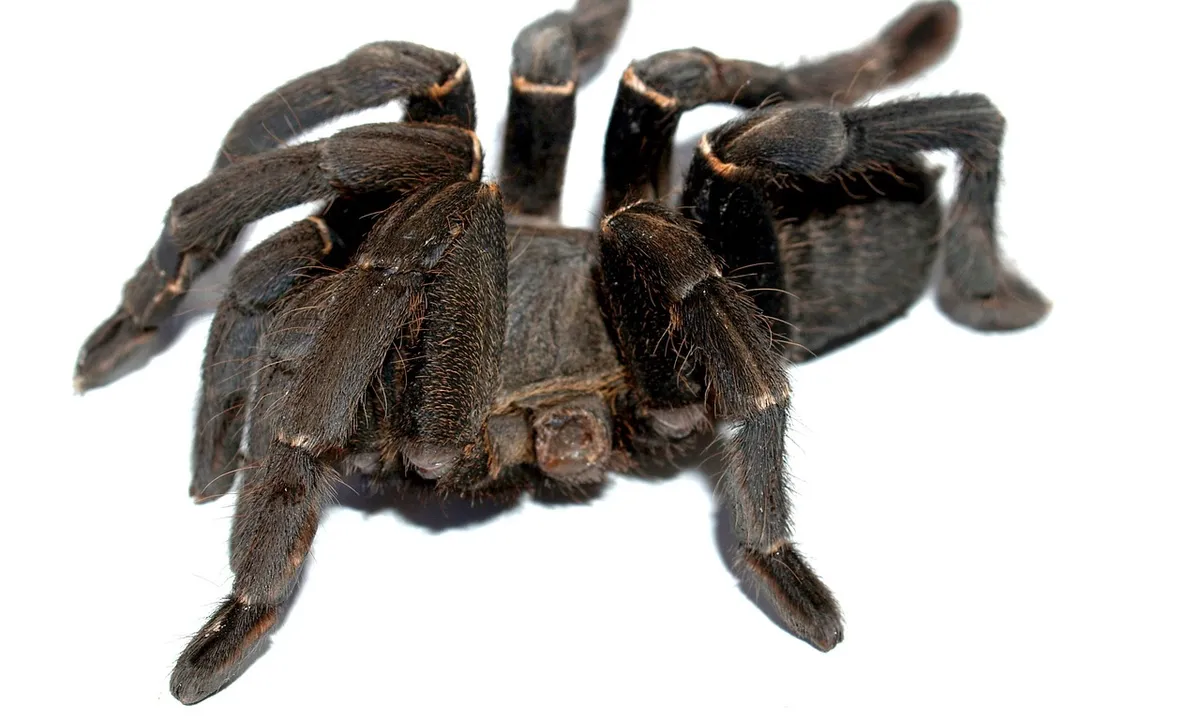
This is the moment where theory meets practice, and your role shifts from observer to stage manager. Proper preparation is the single greatest factor you control to ensure safety and success. Rushing this process benefits no one, especially the animals.
Assessing Female Readiness Safely
You must confirm her signals without causing stress. I follow a strict, non-invasive protocol:
- The Enclosure Check: First, look for the physical signs: a fresh, complete molt (documented), good body condition, and, for some species, that silk mat. Is her water dish full? Is the humidity correct?
- The Probing Test: Using long, soft-tipped forceps or a clean, dry paintbrush, I gently tap or stir the substrate near her retreat. I mimic the vibrations a male might make. A receptive female may move forward curiously. A defensive one will rear up, slap, or flee. If she shows any threat posture, the attempt is cancelled immediately. I learned this the hard way years ago with an unexpectedly defensive female.
- Timing is Everything: Introductions are always done in the evening or at night during the tarantula’s active period. The female’s enclosure is the stage-never introduce the female to the male.
Male Courtship Response and the Mating Dance
Once the female is deemed potentially receptive, the male is introduced. His behavior tells the second half of the story. A knowledgeable male will immediately begin “drumming” his palps and legs, transmitting complex vibrational love songs through the substrate. He is announcing his presence and intent.
Watch for this sequence:
- The male approaches with cautious, stuttering steps, his front legs held high to sense her chemical cues (pheromones).
- If the female remains still or taps back, he will draw nearer, often hooking his tibial apophyses (front leg hooks) under her fangs to lift her.
- The actual sperm transfer is a breathtakingly fast event. He will then disengage with a hurried, often clumsy, retreat. Your job now is to be ready to swiftly but calmly remove the male using a catch cup, as the female’s post-mating aggression is a very real and immediate danger.
The silence of the enclosure after a successful pairing is profound, broken only by the soft rustle of the male being carefully moved to safety. You have witnessed one of nature’s most high-stakes rituals.
Signs of a Successfully Mated or Gravid Female
Witnessing a successful pairing is just the beginning. The female’s behavior in the weeks following the mating encounter tells the true story. A successfully mated female, now gravid, undergoes a subtle but profound transformation. Her primary focus shifts entirely from predation to preparation, a change you’ll notice first in her appetite and her architecture.
Post-Mating Behavioral Changes
In my years breeding, I’ve learned to read these quiet signals. The most immediate and reliable sign is a complete refusal of food. A once-eager eater like my old G. rosea, Rosie, might already be a “pet rock,” but a gravid female of any species becomes adamant. She will ignore or even threat-posture at prey, a clear sign her energy is directed inward.
Her web work intensifies dramatically. She may seal the entrance to her burrow or hide with thick layers of silk, creating a private nursery. For terrestrial species, this often means constructing a large, flat “web mat” on the substrate. This silk mat serves as the foundational cradle for her future egg sac, and its creation is a definitive milestone. Arboreal tarantulas will heavily web up a retreat or a silken tube. The enclosure falls into a deep, purposeful silence. Unlike typical spider webs for catching prey, these structures are more about protection and nurturing.
Physically, her opisthosoma (abdomen) becomes noticeably larger, tighter, and glossier. This isn’t from feeding-it’s from the developing eggs inside. You may see her spending long hours positioned over her web mat, abdomen gently touching the silk, as if in constant contact with the project to come.
Egg Sac Readiness and Care
The culmination is the laying of the egg sac. This usually happens under the cover of darkness. One morning, you’ll see it: a perfect, pale, silken sphere, often about the size of a ping-pong ball for larger species. The female will immediately cradle it, using her fangs and pedipalps to rotate it regularly to prevent the eggs from sticking.
Your role now shifts from observer to steward of the environment. Disturbance is the greatest danger. Do not attempt to remove the sac. A stressed female may eat it or damage it. Your care priorities become:
- Absolute Stability: No enclosure cleaning, no rehousing, minimal vibrations.
- Elevated Humidity: For most species, bump humidity slightly (5-10% above normal) to prevent the sac from drying out. For moisture-dependent species like my T. stirmi, Goliath, I maintain a consistently damp substrate corner.
- Quiet Observation: Check only to ensure she is still tending to the sac. Use a dim light.
The incubation period is species and temperature-dependent, ranging from 4 to 10 weeks. As the time nears, you might hear faint clicking from the sac-the sound of spiderlings moving. When she eventually tears it open, a bustling mass of tiny, pale spiderlings will emerge. This is the moment for careful, planned intervention, as you’ll need to separate the spiderlings into their own enclosures within a few days to prevent cannibalism. But for those first days, simply watch. The silent, diligent work of the female is complete.
FAQs
How does a female tarantula’s receptivity change with her molt cycle?
A female is only sexually receptive for a specific window after her final, mature molt. This peak period typically occurs several weeks after her exoskeleton has fully hardened and can last from a few weeks to several months, depending on the species. After this window closes, she will likely reject males until after her next molt, which could be years away for some tarantulas. Meticulous record-keeping of her molt dates is essential for timing introductions correctly.
What age or size indicates a female tarantula is mature enough to mate?
Chronological age is less important than physical maturity, which is confirmed by her ultimate molt. A reliable rule of thumb is that a female is generally mature when her carapace (the hard shell on her back) is at least 50-60% of her total body length. However, this varies significantly by species; a fast-growing OBT may mature in 2-3 years, while a slow-growing Chilean Rose Hair can take over a decade. The definitive proof is inspecting her shed exoskeleton for a fully formed, darkened epigynal plate.
How can you tell if a female tarantula has already been mated or is gravid?
A successfully mated, gravid female will exhibit distinct behavioral shifts, most notably a complete and sudden refusal of food. She will also intensify her webbing, often creating a large, flat silk mat or heavily sealing her retreat. Physically, her abdomen will become very large, tight, and glossy as it fills with eggs, distinct from a normal well-fed abdomen. These are clear signs she is preparing an egg sac and should be kept in a stable, low-stress environment.
Cultivating Patience, Reaping Rewards
The single most important factor for a female tarantula’s reproductive health is sustained, species-appropriate hydration from the moment she matures. A gravid female channels immense resources into producing eggs; chronic low humidity can lead to a failed molt, infertile eggs, or a fatal inability to split her old exoskeleton. For my moisture-dependent T. stirmi, Goliath, that means a perpetually damp substrate corner. For my arid G. rosea, Rosie, it means a water dish she can access and a light, occasional overflow. Her body must be perfectly prepared to utilize the sperm she stores, which is why maintaining proper humidity is so vital.
Beyond parameters, your most valuable tool is quiet observation. Watch for the subtle increase in web mat density, the slight broadening of her abdomen, the deliberate pace of her movements. I learned more about reproductive readiness from Flash’s frenzied retreat-barricading and Rosie’s stoic fasts than any generic guide. This process unfolds in spider time, not human time. Success is not forcing an introduction, but providing the stable, stress-free environment where her natural instincts can culminate in a successful sperm web or an egg sac. The true reward is witnessing the silent, intricate biology of your animal, a process that demands respect and patient stewardship above all else.
Further Reading & Sources
- Tarantula Mating: How It Works
- How Do I Identify The Signs Of A Receptive Female Tarantula For Mating? – Tarantula Zone
- How to Tell If a Tarantula Is Male or Female | Pets on Mom.com
Arlo is a lifelong arachnid enthusiast who believes tarantulas are the world’s most misunderstood roommates. With years of hands-on experience in tarantula care, habitat setup, and species behavior, Arlo combines expert knowledge with a dash of humor to make spider ownership less scary and a lot more fascinating. From choosing the right enclosure to understanding why your eight-legged buddy is doing that weird little pose again, Arlo is here to help you become the best tarantula parent you can be, without getting tangled in the web of misinformation.
Breeding Tarantulas