
Can You Overfeed a Pet Tarantula? (Risks and Prevention)
In the precise art of arachnoculture, feeding is a curated event-a burst of movement in an otherwise still enclosure, but the line between nourishment and excess is dangerously thin. This article dissects the real risks of overfeeding, from abdominal rupture to lethal molting complications, and provides clear, prevention-focused husbandry. Yes, you can absolutely overfeed a tarantula, and doing so quietly undermines their health in ways many keepers don’t see until it’s too late.
- Feeding Nature: Opportunistic; will often consume prey offered regardless of need.
- Primary Risk: Abdominal distension, leading to rupture or fatal molt issues.
- Key Indicator: Abdomen size should not consistently exceed 1.5 times the carapace width.
Drawing from years of breeding and rescues, this guide will show you how to master feeding schedules and body condition monitoring to safely shepherd your spider from delicate sling to mature adult.
The Short Answer: Yes, Overfeeding is a Serious Husbandry Error
Unlike a dog that will beg endlessly, a tarantula’s biology is calibrated for feast and famine cycles in the wild. Overfeeding is a genuine, impactful husbandry error that directly compromises your tarantula’s health and safety. It will not kill them overnight from something like organ failure, but it drastically increases the risks of two major threats: traumatic injury and a fatal molt.
An overfed abdomen becomes a heavy, fluid-filled sac. For a climbing species, this turns every ascent into a perilous gamble; a fall onto a hard abdomen can be lethal. For all species, that swollen state puts immense pressure on the old exoskeleton during the molting process, often leading to fatal complications. I’ve seen the result in rehomed specimens-a permanently scarred, disfigured creature that survived a bad molt but bears the marks of its previous owner’s over-kindness.
Spotting the Signs: How to Tell If Your Tarantula is Overweight
You must learn to “read” your tarantula’s body. The primary indicator is the abdomen (opisthosoma). A healthy tarantula is not emaciated, but it should appear proportional and functional. Early warning signs of a sick tarantula often include a shriveled or shrunken abdomen.
-
Physical signs: Look for an abdomen that is disproportionately large, shiny, and stretched taut like a balloon. The skin between the sclerites (the darker plates) will be pale and visibly strained. A telltale secondary sign is a large, bald spot on the abdomen, caused by excessive kicking of urticating hairs-a clear signal of chronic stress, often from discomfort. My Goliath, when overstimulated by too much prey activity, will rapidly create such a patch.
-
Behavioral signs: Watch for a marked reluctance to move. A tarantula carrying excess weight will often become a complete “pet rock,” staying in one spot for weeks. They may refuse prey even when their abdomen is large, a clear sign they are satiated. You might also observe difficulty climbing or a noticeable wobble when they try. These cues are covered in the feeding behavior guide, which helps you decide whether your tarantula is hungry or stressed. If you’re unsure, refer to the guide’s quick checklist for feeding signals.
-
Visual Comparison:
Aspect Healthy Abdomen Overfed Abdomen Size Relative to Carapace Roughly 1 to 1.5 times the carapace size. Often 2 to 3 times (or more) the carapace size. Appearance Rounded but firm, with visible sclerite patterning. Globular, shiny, and stretched taut; sclerites appear widely separated. Texture Matte finish with a fine covering of hairs. Shiny, sometimes semi-translucent skin; may have a large bald patch.
Trust the visual cues over a rigid feeding schedule-my 15-year-old G. rosea, Rosie, has gone over 18 months without food, a fast that would be catastrophic for my always-hungry T. stirmi. Each species and individual has its own metabolic rhythm.
The Real Dangers: Health Risks of an Overfed Tarantula
An overfed tarantula faces immediate physical threats beyond simple obesity. The gravest danger is a distended, heavy abdomen becoming a fatal liability during a fall. Even a short drop within the enclosure can cause the abdomen to split open. This rupture leads to an incurable leak of hemolymph—the spider’s lifeblood—resulting in a slow, unavoidable death. In short, tarantulas can die from falling if they’re dropped or mishandled, underscoring the importance of careful handling.
Internal systems also suffer under constant strain. A perpetually engorged abdomen places significant pressure on the tarantula’s internal organs and its delicate hydraulic system used for movement. This can lead to sudden, messy regurgitation of prey, which fouls the enclosure and stresses the animal. These are not natural age-related issues; they are direct, preventable causes of a shortened lifespan.
The Molt Connection: Why Overfeeding Complicates Shedding
The molting process, or ecdysis, is the most vulnerable time in a tarantula’s life. To shed its old exoskeleton, the spider must carefully extract a larger new body from a smaller old shell. An oversized abdomen acts like an anchor, physically trapping the tarantula in its old skin. I’ve seen the tragic result in rehomed specimens: a spider stuck halfway, its swollen posterior hopelessly lodged. This condition, dysecdysis, is often a death sentence. This is precisely the kind of topic covered in a complete guide to tarantula molting problems and solutions. It offers practical steps to recognize dysecdysis early and how to intervene to improve outcomes.
Think of it as trying to squeeze out of a tight wetsuit while wearing a overstuffed backpack. The new, soft exoskeleton can harden awkwardly around the trapped body, leading to deformities or the loss of limbs. For species like my OBT, Flash, who molt frequently while young, maintaining a leaner profile is critical for clean, successful sheds. I feed my fast-growing slings and juveniles well, but I always pull back feeding well before I see signs of a pre-molt dimming.
Getting the Diet Right: Portion Size and Prey Frequency
-
Prey Size
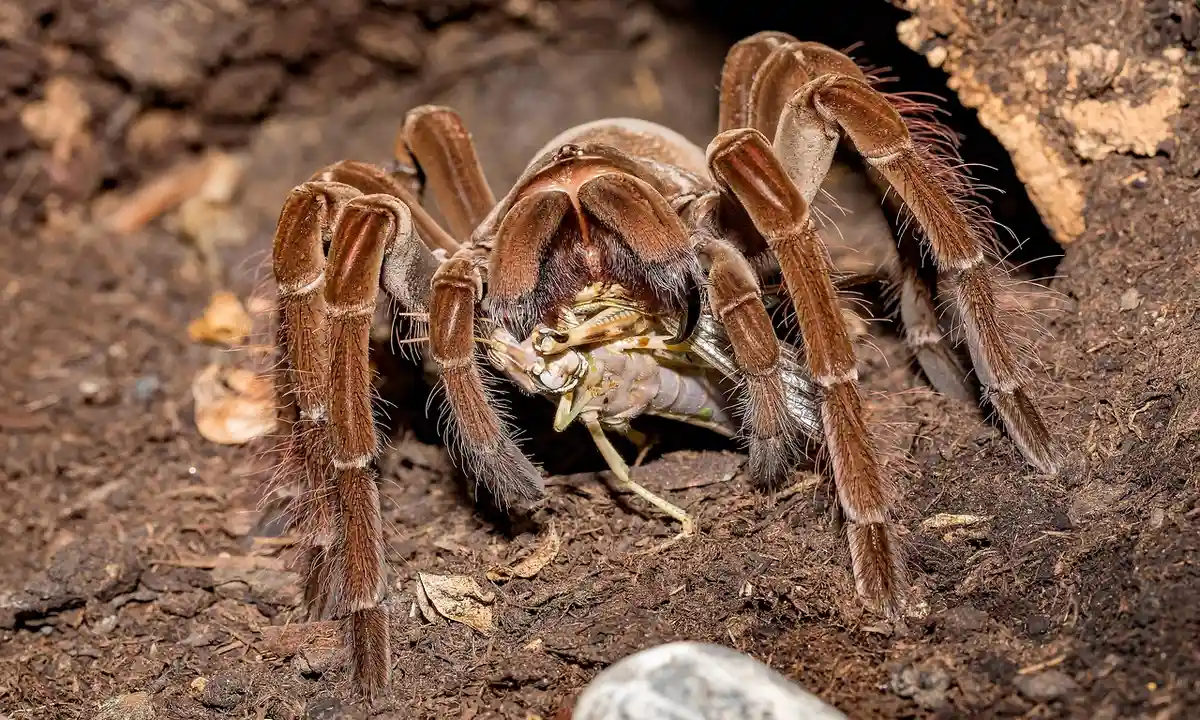
The golden rule is simple: the feeder insect’s body should be no larger than the tarantula’s carapace (the solid head-thorax plate). A cricket that dwarfs the spider’s body is a recipe for injury and refusal. For my 4-inch Goliath, an adult dubia roach is perfect; for a 1-inch sling, a pinhead cricket or a pre-killed mealworm segment is ideal. -
Feeding Frequency by Life Stage
- Spiderlings (Slings): Offer food 2-3 times per week. They are building mass rapidly and often refuse food only when entering pre-molt.
- Juveniles: Feed once a week. This supports growth while allowing the abdomen to normalize between meals.
- Adults: This depends heavily on species. Fast-metabolism species like my T. stirmi may eat every 10-14 days. Many mature New World terrestrials, like my Grammostola rosea “Rosie,” enter notorious multi-month fasts where offering food is pointless. Forcing food during a fast is a common keeper error.
-
The Abdomen Rule
Your best tool is visual. A healthy tarantula’s abdomen should be roughly 1 to 1.5 times the size of its carapace—plump, but not glossy and stretched tight like a balloon. Feed until it reaches that plump state, then stop. Only offer another meal when the abdomen visibly reduces in size. This cyclical feeding mimics natural feast-and-famine cycles and promotes long-term health. Want a full picture of how big pet tarantulas can get? Our complete size guide breaks down adult sizes by species and growth timelines.
Immediate Steps: What to Do If You’ve Overfed Your Tarantula
-
Stop feeding immediately. Do not offer more prey, even if it refuses and the prey item dies. The priority is halting further intake. I have left a cricket in with my Grammostola rosea, Rosie, for over 24 hours out of stubborn hope, only to remove it uneaten. That hope is counterproductive when the abdomen is already large.
-
Ensure constant access to a clean, full water dish. Hydration is critical for internal organ function and the metabolic processing of that large meal. A shallow dish, like a bottle cap for slings or a ceramic sauce dish for adults, must be present and cleaned weekly. My Theraphosa stirmi, Goliath, will often sit with his front legs in the water after a large meal, a clear sign of his need for it.
-
Remove all climbing elements to prevent a dangerous fall. An overfed tarantula is top-heavy and clumsy. A fall from even a modest height can rupture the distended abdomen, which is almost always fatal. Lower the enclosure height if possible, or at minimum, take out any decorative wood or rocks that provide significant elevation. Think of creating a safe, terrestrial space. Decor can pose hidden hazards that are easy to overlook. This ties into décor dangers: 5 common enclosure items that harm your tarantula, underscoring the value of a simple, secure setup.
-
Practice patience. It can take weeks or months for the spider to process the food and commence a fasting period. Do not panic. Your role now is that of a quiet custodian: provide water, keep the enclosure clean and safe, and observe. A healthy tarantula’s physiology is built for these cycles of feast and famine. After a molt, wait until the new exoskeleton has hardened and the tarantula is active again before offering food—this is typically several days to a couple of weeks. Feeding too soon can injure the spider or lead to failed molts. For more detailed information, refer to guidance on timing after molting.
Building a Healthy Routine: Long-Term Prevention of Overfeeding
-
Advocate for a feeding schedule based on observation, not a rigid calendar. I gauge feeding by two factors: abdomen size relative to carapace (aiming for 1 to 1.5 times larger) and species-specific behavior. My fast-growing T. stirmi gets a large roach weekly, while my adult G. rosea may eat one cricket every month or two. Let the spider’s body tell you when it’s hungry.
-
Emphasize the necessity of a shallow water dish at all times. This is non-negotiable husbandry. A tarantula can survive long fasts without food but will dehydrate rapidly without water. The dish also aids in maintaining proper microclimate humidity, especially for species like Goliath that require 75-85% ambient humidity.
-
Stress the importance of an appropriate, safe enclosure setup. Prioritize ample floor space over excessive height for terrestrial species. A good rule is a length and width at least 3 times the spider’s diagonal leg span. This provides roaming room for digestion and eliminates the need for risky tall décor.
-
Encourage monitoring via a simple journal. Note the date, prey type offered, whether it was eaten, and any notable behaviors or molts. This log creates a personal history for your pet. I can look back and see that my Pterinochilus murinus, Flash, typically fasts for six weeks before molting, a pattern that would otherwise cause unnecessary worry.
-
Reinforce the “Look, Don’t Touch” philosophy. Minimizing handling reduces stress for the animal, allowing it to exhibit natural feeding behaviors. More importantly, it keeps your focus on observational care. You become adept at reading the subtle signs of a content spider versus one that is stressed or ill.
FAQs
Can you overfeed a tarantula?
Yes, you can absolutely overfeed a tarantula. Unlike mammals, a tarantula’s opportunistic feeding instincts mean it will often consume prey even when not nutritionally necessary. This behavior makes them entirely reliant on their keeper’s judgment for proper portion control, as they lack a natural “full” signal to stop eating.
How can you tell if a tarantula is overweight?
The primary indicator is a disproportionately large, shiny abdomen that appears stretched taut, often exceeding 1.5 times the size of its carapace. You may also see a large bald spot from excessive hair kicking due to stress and discomfort. Behaviorally, an overfed tarantula may become very sedentary and show reluctance to climb or move.
How often should you feed a tarantula?
Feeding frequency depends greatly on the tarantula’s life stage and species. Fast-growing spiderlings may eat 2-3 times a week, while juveniles typically do well on a weekly schedule. Adult feeding varies widely, with some species eating every 10-14 days and others entering voluntary fasts that can last for many months, during which food should not be offered. Finding the best diet and feeding schedule is essential for a healthy tarantula. By tailoring prey size and feeding frequency to the tarantula’s life stage, you can support steady growth and long-term health.
What is the correct portion size for a tarantula?
The prey item should never be larger than the tarantula’s carapace (the hard head-thorax plate). A good rule is to select feeders with a body length roughly equal to or smaller than the spider’s body excluding its legs. Appropriately sized prey minimizes the risk of injury and refusal, ensuring safer, less stressful meals.
How does overfeeding affect a tarantula’s health and lifespan?
Overfeeding directly increases the risk of a fatal abdominal rupture from a fall and can cause lethal complications during molting. The constant internal pressure from a distended abdomen strains organs and can lead to regurgitation and chronic stress. These are preventable issues that significantly compromise a tarantula’s quality of life and can shorten its natural lifespan.
How can you prevent overfeeding a pet tarantula?
Prevent overfeeding by using the visual “abdomen rule” as your guide rather than a rigid calendar schedule. Allow the abdomen to reduce in size between meals, aiming to maintain it at roughly 1 to 1.5 times the carapace size. Providing a safe enclosure with minimal fall risk and keeping a simple feeding journal to track patterns are also highly effective long-term strategies.
Long-Term Success
In the end, sustainable tarantula keeping revolves around recognizing and respecting a spider’s natural physiology, not our human desire to nurture through food. The single most important parameter for a healthy adult tarantula is not constant feeding, but the consistent, long-term acceptance of its fasting periods. My own G. rosea, Rosie, taught me this through her epic, multi-month fasts that once sent me into a novice panic. Her success, and that of all my spiders, hinges on providing perfect, stable husbandry while they manage their own appetites on a timeline we cannot rush. This includes the pre-molt window, a natural fasting phase where feeding is paused to support a clean shed. Beyond molts, there are other deliberate fasts that a responsible guide will outline—times to pause feeding and focus on stable housing and health.
Shift your focus from the food dish to the animal’s fascinating behaviors. Watch your terrestrial species meticulously pat down its burrow entrance at dusk. Observe an arboreal spider like my OBT, Flash, artfully reinforce its silken tunnel. Notice how my moisture-loving T. stirmi, Goliath, will often sit with his front legs dipped in his water dish, hydrating in his own way. This patient observation is the true reward of the hobby. Your most vital tool is not a pair of feeding tongs, but your own attentive eyes, learning the silent language of your eight-legged charge. Success is measured in clean molts, natural activity, and a spider that thrives on its own terms, at its own deliberate pace.
Further Reading & Sources
- Can I overfeed my tarantula? | Arachnoboards
- r/tarantulas on Reddit: I overfed my tarantula!
- Power Feeding Tarantulas | Tom’s Big Spiders
Arlo is a lifelong arachnid enthusiast who believes tarantulas are the world’s most misunderstood roommates. With years of hands-on experience in tarantula care, habitat setup, and species behavior, Arlo combines expert knowledge with a dash of humor to make spider ownership less scary and a lot more fascinating. From choosing the right enclosure to understanding why your eight-legged buddy is doing that weird little pose again, Arlo is here to help you become the best tarantula parent you can be, without getting tangled in the web of misinformation.
Feeding Frequency