
What Are the Early Warning Signs of a Sick Tarantula? A Guide for Keepers of All Species
Tarantulas are masters of stillness, their stoic silence making the subtle shift from health to distress a profound challenge to detect. In my years of breeding and observing everything from a ‘pet rock’ Grammostola rosea to a lightning-fast Pterinochilus murinus, I’ve learned their language is written in minute details of posture, appetite, and texture. This guide translates those whispers into clear action for you.
- Origin: Global (Applies to captive-bred specimens from all habitats)
- Type: Both New World and Old World
- Growth Rate: Variable by species, but health issues can affect all life stages
This guide will walk you through the critical, often-missed signs of a tarantula in trouble, empowering you to move from a passive observer to an informed caretaker ready to act.
1. Baseline Health: Recognizing Normal Tarantula Behavior
To spot the abnormal, you must first know normal. A healthy tarantula is a creature of instinctive, predictable patterns. They web according to their lineage, hunt with precision, and move with a purpose suited to their species. My fifteen-year-old Grammostola rosea, Rosie, defines normal as a profound stillness. Her dusty pink carapace might not shift position for weeks, a placid “pet rock” in her terrestrial enclosure. This is her healthy baseline. In stark contrast, my orange baboon tarantula (Pterinochilus murinus), Flash, maintains a frenetic normal. He constantly modifies his dense silk funnel, and any intrusion near his enclosure is met with a lighting-fast defensive posture. Both are perfectly healthy. Your first and most critical husbandry skill is learning your individual tarantula’s unique version of “normal.”
Observe the rhythms. A healthy tarantula will have responsive movements. Gently blowing air across the enclosure should elicit a slight leg shift or repositioning. They maintain a plump, rounded abdomen (unless actively in pre-molt) and exhibit clean, coordinated locomotion. A tarantula molt guide often notes that molts vary by species and age. Recognizing these species- and age-dependent patterns helps interpret when and why a molt occurs. Molting cycles, while variable, follow a rough age-dependent pattern: frequent for spiderlings, annual or less for adults. My Theraphosa stirmi, Goliath, for instance, molts like clockwork every 12-14 months, retreating to his burrow for weeks prior. Documenting these cycles and behaviors in a simple journal creates an invaluable health reference.
2. Behavioral Early Warning Signs
The earliest indicators of trouble are almost always behavioral shifts. These are subtle departures from the established baseline you’ve learned to recognize. An inactive species becoming hyperactive, or an active webber abandoning its silk, speaks volumes. I monitor three core areas: appetite, activity level, and posture. Sudden, uncharacteristic change is your primary red flag, more telling than any single physical symptom.
- Track Food Refusal: Note the start date of any fasting. A mature female refusing food for two weeks is typical; a growing juvenile rejecting prey for a month is cause for investigation.
- Observe Daily Activity: Does your tarantula still patrol at night? Has it left its hide or favorite corner in the past week? Total immobility in a normally mobile species is a concern.
- Test Responsiveness: A gentle stimulus (a soft paintbrush tap or light air puff) should get a reaction. A completely non-responsive tarantula, especially one out in the open, is in a serious state.
2.1 Refusal to Eat and Weight Loss
Fasting is a normal part of tarantula life, most commonly linked to an impending molt. My Rosie has gone over eight months without a meal, only to molt and resume hunting. The key is context. However, not every long fast signals an imminent molt; tarantulas may fast for other reasons such as age, environmental stress, or digestion cycles. A pre-molt guide helps you distinguish true pre-molt fasting from these other fasts so you know when not to feed. A plump abdomen and darkened, shiny exoskeleton signal a healthy pre-molt fast. A worrisome fast involves a tarantula with a shrinking, wrinkled, or disproportionately small abdomen. I assess body condition visually from above; a healthy abdomen should be roughly the same size or slightly larger than the carapace, not shriveled like a raisin.
Weight loss becomes visible in the abdomen’s loss of turgor. The once-taught, rounded opisthosoma appears deflated and puckered. In severe cases, the tarantula may struggle to stand, its body appearing too light for its legs. Conversely, a grossly distended, shiny abdomen long after feeding could indicate a hydration issue or internal problem. Use the premolt period as a comparison; if the abdomen isn’t darkening and premolt posturing isn’t happening, prolonged refusal to eat warrants closer habitat checks.
2.2 Lethargy and Decreased Activity
Lethargy in a tarantula is defined by prolonged, uncharacteristic immobility and a dulled response to stimuli. It’s more than just resting. It’s a profound stillness that contradicts the spider’s innate behaviors. Even my docile Rosie will shift her weight, drink water, or slowly turn around in her enclosure over the course of a week. A lethargic tarantula may remain in an awkward, uncurled position for days, its legs not tucked neatly underneath. Sluggish reflexes, like a slow-motion withdrawal from a paintbrush, are a telling middle ground between healthy caution and morbid stillness.
Compare this to species norms. For Flash, my OBT, lethargy would be him ignoring a cricket wandering through his web matrix. His normal is an immediate, violent strike. For a terrestrial species, it might be failing to retreat from the open when the enclosure lid is removed. This decreased activity often pairs with a poor appetite. The most severe state is immobility-a complete lack of voluntary movement, sometimes with the legs partially splayed, indicating systemic failure. When you see this, the window for intervention is often very small.
3. Physical Symptoms of Illness
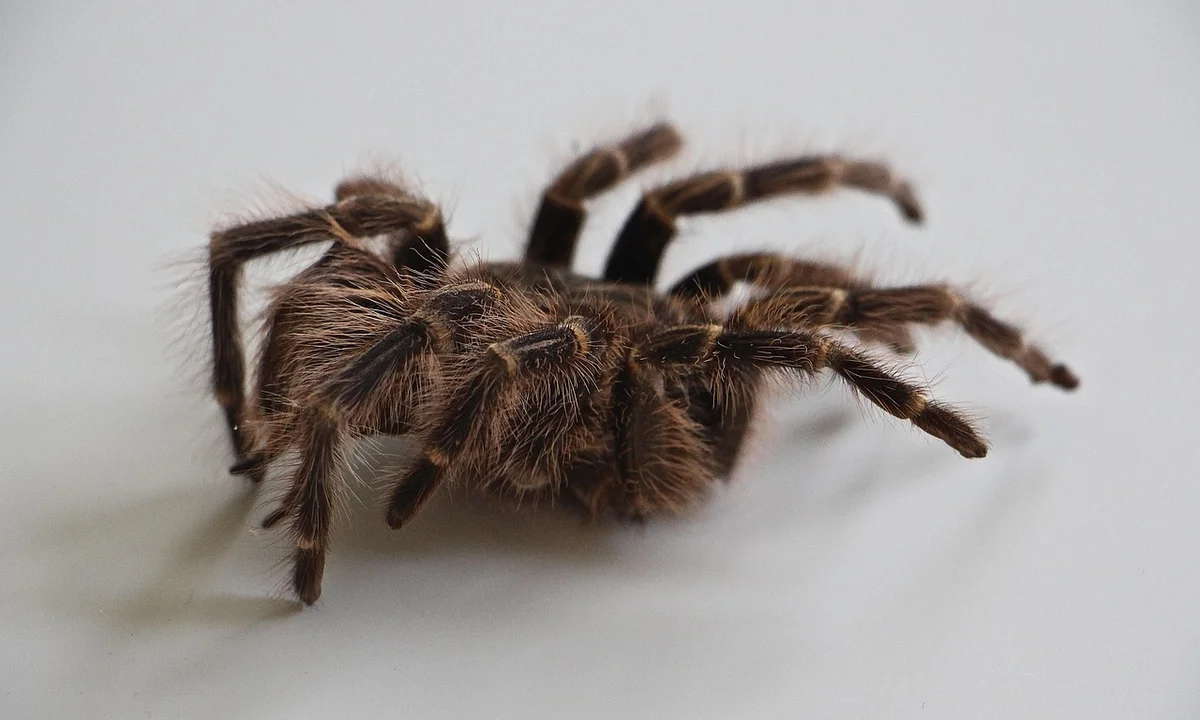
Your tarantula’s body is a direct window into its health. Learning to read these physical cues allows you to act long before a minor issue becomes a crisis. Tarantula anatomy 101 gives you a clear map of the body—cephalothorax, abdomen, legs, and spinnerets—so you can tie cues to specific parts. I categorize these signs into three key areas: the abdomen, movement, and the skin itself.
3.1 Abdominal Abnormalities
The abdomen, or opisthosoma, is a vital health indicator. A plump, rounded abdomen typically signifies good hydration and feeding. Any deviation from this norm warrants immediate attention and a change in your care routine.
A shriveled, wrinkled, or shrunken abdomen is the classic sign of dehydration. The skin may look like crumpled paper. I saw this once with my old-world tarantula, Flash, after a heating mishap dried out his enclosure too quickly. First, always ensure a full, clean water dish is available; sometimes, that’s all it takes. For severe cases, I gently overflow the water dish to dampen a corner of the substrate, creating a hydration station without drowning the area.
A distended, abnormally swollen, or hard abdomen can signal impaction or internal issues. This is not a well-fed plumpness but a taut, bulbous distortion. Impaction, often from ingesting substrate or a bad prey item, blocks the digestive tract and is a grave concern. For my moisture-loving T. stirmi, Goliath, I use only fine, digestible substrates to prevent this very risk during his enthusiastic feeding strikes.
3.2 Leg and Movement Issues
Tarantula locomotion should be silent, fluid, and purposeful. Any hitch, shake, or curl in their movement is a glaring red flag for neurological or physical distress. In some cases, a tarantula may enter a stiff, ‘death curl’ as its final posture. A deeper guide on tarantulas explains this death curl in depth and how to interpret it.
Watch for legs curling tightly underneath the body, a symptom often called “death curling.” Tremors, twitching, or a drunken, uncoordinated gait are equally alarming. These signs can point to exposure to chemical toxins, severe dehydration, or the aftermath of a bad fall. I learned the hard way with an early escapee that household cleaners are a silent threat; now, I only use water and vinegar for cage cleaning.
A tarantula that struggles to right itself or drags its abdomen may have a ruptured abdomen or internal injury. Immediate isolation in a bare, padded enclosure with a water dish is the safest first response to prevent further injury. This minimizes stress while you assess the situation. Many common health issues are preventable with proper care. Regular checks of humidity, water availability, and enclosure cleanliness help prevent these problems.
3.3 Color Changes and Skin Problems
The integument, or exoskeleton, should have a consistent color and texture for the species’ life stage. Sudden pallor or darkening unrelated to an impending molt can indicate systemic stress or circulatory issues.
Look closely at the mouthparts. A gaping, visibly protruding stoma (the mouth opening) is abnormal. This “gaping mouth” can signify everything from a simple piece of substrate caught in the fangs to a serious infection. Use a soft, damp paintbrush to very gently probe, but stop at the first sign of defensive behavior.
Signs of an abnormal past molt include retained exuviae, especially on the eyes or book lungs. Retained skin looks like a dull, opaque patch stuck on the new, shiny exoskeleton and can cripple sensory functions. My docile G. rosea, Rosie, once had a tiny piece of molt stuck on one pedipalp for weeks after a difficult shed, reminding me that even “easy” species need perfect humidity during that critical time.
4. Molting Distress: A Critical Red Flag
Ecdysis is the most vulnerable process in a tarantula’s life. Problems during the molt are not just isolated incidents; they are profound early warnings of underlying health weakness. A smooth molt requires excellent hydration, perfect nutrition from the previous instar, and absolute peace.
Recognizing distress signals is crucial. Watch for these specific signs:
- A molt that lasts more than several hours for a juvenile or adult.
- The tarantula becoming stuck partway out, often with legs or the carapace trapped in the old skin.
- Retained exuviae, particularly a dried cap of old skin left on the cephalothorax.
- An unusual posture during the molt, like being flipped on its back for an extended period without progress.
Intervention is a last resort and must be done with the goal of minimizing stress above all else. Here is my step-by-step guide for an assisted molt, refined from tense personal experiences:
- Prepare a hospital enclosure: a small, clean plastic container lined with damp paper towels.
- Using soft, silicone-tipped tweezers or a fine paintbrush, gently attempt to moisten and loosen the retained molt with distilled water. Never pull.
- If a limb is stuck, apply water only to the old exuviae, not the new limb, and wait for it to soften.
- In extreme cases, a single drop of mild, unscented dish soap in water can break surface tension and help seepage, but rinse immediately after.
- The moment the tarantula frees itself, cease all handling and return it to its quiet, dark enclosure with a water dish.
Remember, a failed molt often stems from cumulative care issues, so use it as a catalyst to review your entire husbandry protocol. The silent, still effort of a healthy molt is the ultimate sign of your successful care.
5. Common Environmental Causes of Sickness
Most tarantula health issues stem from their environment. Your care setup directly influences their hydration, digestion, and stress levels. I learned this the hard way years ago with an early setup that was too dry, leading to a frightening dehydration scare. To tell if your tarantula is dehydrated, look for a sunken abdomen and reduced activity. Make sure a shallow water dish is always available.
Husbandry errors create a cascade of problems. A small mistake in humidity can trigger a refusal to eat. A cramped hide can cause chronic stress, weakening the immune system. Observing a symptom is your cue to audit the enclosure’s fundamental parameters first.
Beyond the substrate, consistent temperature and fresh air matter. Stagnant, stuffy conditions foster bacterial and fungal growth you cannot see until it’s advanced.
| Observed Warning Sign | Possible Environmental Cause | Immediate Husbandry Check |
|---|---|---|
| Lethargy, shriveled abdomen, sitting over water dish | Chronic dehydration from low humidity or lack of a water source. | Measure humidity with a gauge. Ensure water dish is always full and accessible. |
| Refusal to eat (excluding pre-molt) | Stress from excessive disturbances, incorrect temperature, or a substrate that is too damp for the species. | Check temperature gradients. Assess enclosure placement for noise/vibration. Verify substrate moisture is species-appropriate. |
| Regurgitation (bolus left uneaten) | Handling or disturbance soon after feeding, or prey that was too large. | Enforce a strict 48-hour no-disturbance period after feeding. Review prey size. |
| Frequent hair-flicking, threat postures | Chronic stress from an enclosure that is too open, lacks a proper hide, or is in a high-traffic area. | Add more clutter and a secure hide. Relocate the enclosure to a calmer location. |
| Abnormal gait, difficulty climbing | Injury from a fall due to insufficient substrate depth or slick enclosure walls. | For terrestrial species, substrate depth should be at least 1.5x the leg span. Add textured panels for climbing species. |
This is why I advocate for bioactive or bio-inspired setups. A deep, moisture-retentive substrate layer, like a mix of coconut fiber, peat, and vermiculite, creates a stable microclimate. A properly layered substrate acts as a buffer, holding humidity for burrowers like my Goliath and providing drainage to prevent swampy conditions. Live plants like moss can help regulate moisture and provide sensory enrichment without disturbance.
6. Action Plan: When and How to Respond
Seeing a potential problem requires a calm, methodical response. Your primary goal is to reduce the animal’s stress while correcting the issue. Panic helps no one, especially the tarantula. Being aware of common signs that a tarantula is stressed or defensive helps you respond appropriately. Look for cues like a defensive posture, rapid leg movements, or retreating before handling.
When to Adjust Care at Home
For minor signs linked to clear environmental factors, you can intervene immediately.
- For Dehydration: Fill a shallow, wide water dish and place it near the tarantula. You can gently guide them toward it with a soft brush. For severe cases, a single, light misting on the enclosure wall nearby can provide droplets to drink. Do not spray the tarantula directly.
- For Appetite Loss: Remove any uneaten prey immediately. Double-check temperature and humidity. Then, leave the tarantula completely alone for a full week before attempting to feed again. Constant offering increases stress.
- For General Stress: Cover three sides of the enclosure with background paper. Ensure the hide is secure and the room is quiet. I once moved Flash’s enclosure away from a common hallway, and his frantic webbing decreased within days.
When to Seek Veterinary Help
Exotic veterinarians with arachnid experience are rare but invaluable. Seek one for symptoms beyond simple husbandry correction.
- Uncoordinated Movement or Dragging Limbs: This can indicate a neurological issue, severe dehydration, or internal injury from a fall.
- A Swollen, Darkened Abdomen: While a full abdomen is normal, a hard, blackened, or asymmetrical swell could be a sign of a hemocoelic infection, often fatal without intervention.
- Prolonged Fluid Leakage from the mouth or abdomen, or the presence of mites visible moving on the tarantula’s body.
- Any Obvious Trauma: such as a ruptured abdomen or a limp, dangling limb.
During any observation or intervention, the “Look, Don’t Touch” rule is paramount. Handling a sick tarantula induces massive stress, can worsen injuries, and risks a defensive bite or hair flicking. For beginners, handling tarantulas is generally discouraged; safe observation from a distance is the recommended approach. If handling is ever necessary, do it briefly and with proper tools under experienced guidance. Use soft-tipped tweezers to remove prey or debris. Guide movement with a gentle paintbrush. Your calm, respectful distance is the best medicine you can offer while you diagnose and correct their world.
FAQs
What should I look for first if I think my tarantula is sick?
Your first step is to look for behavioral changes that deviate from your tarantula’s unique “normal” baseline. Watch for sudden appetite loss, unusual lethargy, or a complete lack of response to gentle stimuli. These subtle shifts in daily activity are often the earliest and most telling warnings before physical symptoms appear. Learning to read your tarantula’s body language can [help you identify stress or defensive signs](https://eightleggedlife.com/how-to-read-your-tarantulas-body-language-stress-and-defensive-signs) early on.
Are behavioral changes or physical signs more important to notice?
Behavioral changes are typically the earliest warning signs and should always be your first clue. A physical symptom, like a shriveled abdomen or odd movement, often means the issue has progressed. By monitoring behavior-like food refusal or decreased activity-you can often identify and correct a problem in its initial stages.
Why is a difficult molt considered such a serious warning sign?
A problematic molt is a critical red flag because it indicates underlying weakness often caused by cumulative husbandry issues. Difficulties like being stuck mid-molt or retaining old skin suggest problems with hydration, nutrition, or environmental conditions. It serves as a clear signal to thoroughly review and correct your entire care regimen.
My tarantula seems off. Should I check its environment?
Yes, absolutely. The vast majority of health issues stem from environmental factors. Before assuming illness, you must audit the enclosure for incorrect humidity, temperature, stress sources, or hazards. An immediate husbandry check is always the correct first response to any observed sign of distress.
When should I try to fix a problem myself versus seeking a vet?
You can adjust care at home for issues clearly linked to the environment, like mild dehydration or stress-related fasting. However, you should seek a specialized exotic veterinarian for severe physical symptoms like uncoordinated movement, a hard/swollen abdomen, obvious trauma, or any fluid leakage. When in doubt, prioritizing a vet consult is safest.
A Tarantula’s Quiet Season
Through all the signs and symptoms, one tool remains paramount. Your most vital resource in detecting a sick tarantula is not a thermostat or a hygrometer, but a practiced, patient eye that knows its normal, individual behavior. Consistent, quiet observation is the bedrock of proactive care. Recognizing early signs helps prevent common tarantula health problems, letting you intervene before issues worsen. This proactive vigilance keeps tarantulas healthier and less stressed.
Embrace the stillness. My old Chilean Rose Hair, Rosie, will fast for eight months without a flicker of concern, while my OBT, Flash, would signal distress by abandoning her intricate web tunnels. Their normal is not a textbook’s normal. Find joy in the silent engineering of a burrow, the precise grooming of pedipalps after a meal, the patient ambush. True success in this hobby is measured not in handling sessions, but in witnessing a creature thrive on its own terms, secure in an environment you’ve thoughtfully crafted just for it.
Further Reading & Sources
- Tarantula spider bite Information | Mount Sinai – New York
- Signs of Illness in Tarantulas- Case Studies | Arachnoboards
- giantspiders.com – Common Ailments
Arlo is a lifelong arachnid enthusiast who believes tarantulas are the world’s most misunderstood roommates. With years of hands-on experience in tarantula care, habitat setup, and species behavior, Arlo combines expert knowledge with a dash of humor to make spider ownership less scary and a lot more fascinating. From choosing the right enclosure to understanding why your eight-legged buddy is doing that weird little pose again, Arlo is here to help you become the best tarantula parent you can be, without getting tangled in the web of misinformation.
Common Diseases