
Are Wolf Spiders Related to Tarantulas? Unraveling Spider Family Trees
Published on: July 26, 2026 | Last Updated: July 26, 2026
Written By: Arlo
At a glance, a large, hairy wolf spider scurrying across your porch can look remarkably like a tarantula that’s escaped its enclosure, leading many to wonder if they’re close kin. This visual similarity is a classic case of convergent evolution, where different animals develop similar traits to solve the same ecological problems-like being a large, ground-dwelling predator. While both are mygalomorphs, sharing ancient body plans, they belong to distinct families separated by millions of years of evolution. This guide will untangle their biological threads and explain why your pet tarantula’s care is worlds apart from that of a wild wolf spider.
Quick Stats: A Side-by-Side Look
- Wolf Spider (Family Lycosidae): Global distribution, found on every continent except Antarctica. Rely on speed and keen eyesight to actively hunt.
- Tarantula (Family Theraphosidae): Primarily tropical and subtropical regions. Ambush predators or opportunistic hunters that rely more on vibration and touch.
- Key Shared Ancestral Trait (Mygalomorphae): Both possess downward-striking fangs (paraxial) and two pairs of book lungs, unlike most “true” spiders (Araneomorphae).
We will trace their separate evolutionary paths from a common ancient ancestor to the very different creatures they are today, giving you the clarity to identify and appreciate each one.
Key Takeaways: Clearing the Cobwebs
- Wolf spiders and tarantulas are not close relatives. They share the same scientific order but diverged onto vastly different evolutionary paths hundreds of millions of years ago.
- The critical split is between two infraorders: Mygalomorphae (tarantulas and their kin) and Araneomorphae (wolf spiders and most “modern” spiders).
- This fundamental difference dictates their anatomy, particularly how their fangs move, which influences everything from feeding style to defensive behavior.
- For keepers, this taxonomy translates to care: understanding that a tarantula’s biology and needs are profoundly different from a common wolf spider’s reinforces species-specific husbandry.
The Spider Family Tree: A Tale of Two Lineages
Shared Roots in Araneae
Imagine a massive, ancient family reunion where every single spider on Earth is a distant cousin. This is the Order Araneae. All spiders, from the tiniest jumping spider to my massive Theraphosa stirmi Goliath, trace their lineage back to a common arachnid ancestor. They share the blueprints for eight legs, silk-producing spinnerets, and venom-injecting chelicerae. Think of it like all cars having wheels, an engine, and a chassis-but a Formula 1 racer and a family sedan are built for entirely different purposes and operate on divergent principles.
The Great Evolutionary Split: Mygalomorphae vs. Araneomorphae
Deep in evolutionary time, spiders underwent a monumental divergence. One branch led to the infraorder Mygalomorphae, the “primitive” spiders. Tarantulas (family Theraphosidae) are the most famous members. Their defining trait is fangs that strike parallel to the body axis, driving straight down into prey like pickaxes. I see this every time I feed my OBT, Flash; her strike is a powerful, direct stab, a hallmark of her mygalomorph heritage.
The other branch, Araneomorphae, includes over 90% of all spider species, like wolf spiders (family Lycosidae). Their fangs work like pincers, pivoting sideways to pinch prey. This seemingly small anatomical shift unlocked a world of evolutionary possibilities. This fang orientation is the single most telling feature separating my pet tarantulas from the wolf spiders I might find in my garden. It influences web-building, hunting strategies, and even how they manage venom. While my docile Grammostola rosea Rosie might simply refuse a cricket, a wolf spider is built for active pursuit-a different lifestyle altogether.
Spotting the Difference: Anatomy and Lifestyle
Fang Orientation and Silk Use
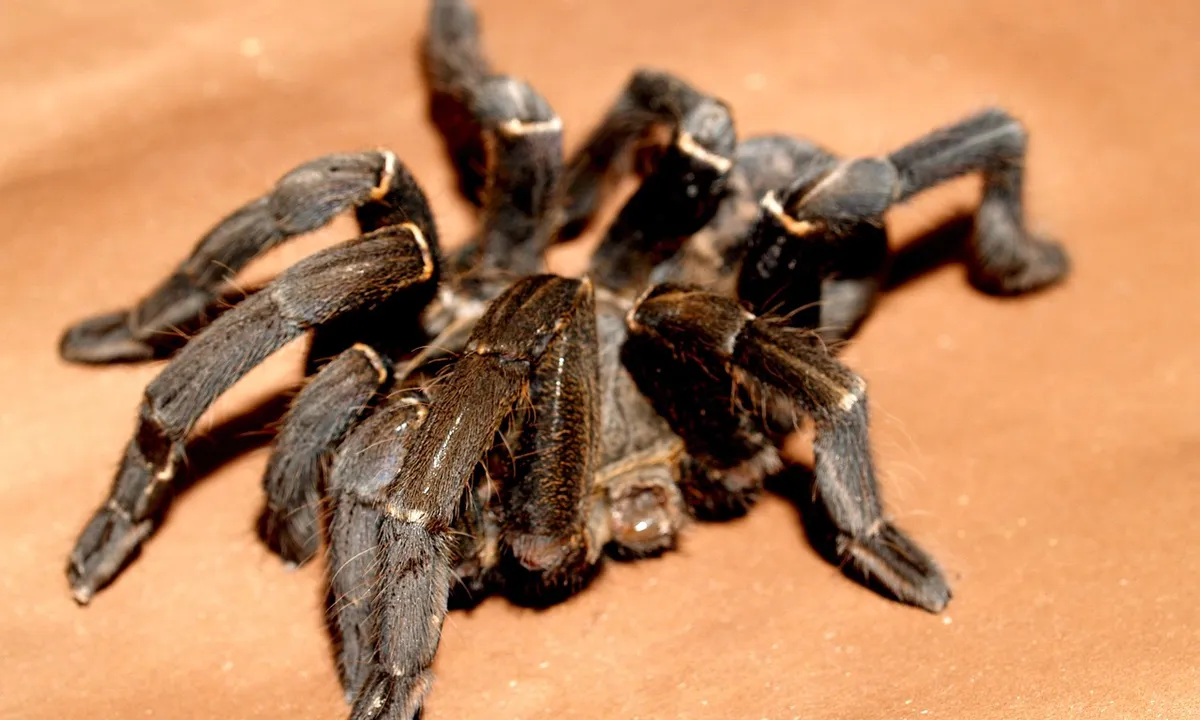
Look closely at a tarantula’s face and you’ll see its fangs, or chelicerae, point straight down like a vampire’s stake. This is called orthognath, or “downward bite,” orientation. They strike with a powerful, vertical piston motion to subdue prey. In contrast, wolf spiders possess labidognath fangs; they pivot sideways, pinching together like pincers.
This fundamental anatomical split dictates their entire predatory style and is a primary reason they belong to separate infraorders.
Their relationship with silk further separates them. Wolf spiders are classic cursorial hunters—they chase down prey and rarely build webs for capture. A female wolf spider’s most iconic use of silk is crafting a silken egg sac, which she attaches to her spinnerets and lugs everywhere until the spiderlings hatch. Tarantulas, like my OBT Flash, use silk extensively as builders. They line their burrows, create elaborate tunnel systems, and even weave silken “trip wires” and sheet webbing to detect vibrations. Do tarantulas spin webs and produce silk? They do produce silk and use it to line burrows, construct retreats, and create trip wires, though they don’t rely on webbing to catch prey like many other spiders.
Size, Lifespan, and Eyes
Scale is a dramatic separator. My oldest tarantula, Rosie the Grammostola rosea, is about five inches in legspan and has lived 15 years-a lifespan measured in decades. A large female wolf spider might reach two inches and live for just over a year. The sheer mass of a tarantula, with some species exceeding 200 grams, creates a completely different physical presence than even the heftiest wolf spider.
Peer into their faces and you’ll see another world of difference. Tarantulas have eight relatively small eyes clustered on a raised “ocular tubercle.” They perceive light, shadow, and movement, but primarily navigate the world through vibrations felt in their legs and body (limited visual capabilities). Wolf spiders, as active visual hunters, possess a distinctive eye arrangement: a row of four small eyes, two large forward-facing principal eyes above, and another pair of medium-sized eyes set further back.
Those two large, forward-facing eyes give wolf spiders remarkably sharp vision for a spider, allowing them to track and ambush prey across the ground in daylight or moonlight. My tarantulas would never spot a cricket from a foot away, but a wolf spider absolutely could.
Common Misconceptions: Danger, Toxicity, and Identity
“Are Wolf Spiders Tarantulas?”
The answer is a definitive no. While both are spiders (order Araneae), their family trees branch off very early. Tarantulas belong to the family Theraphosidae within the infraorder Mygalomorphae, characterized by those downward-striking fangs and long-lived, often burrowing lifestyles. To connect these taxonomic notes to practical care, a tarantula species identification and care guide helps you match species with specific enclosure, humidity, and feeding needs. It also covers distinguishing features and habitat differences across Theraphosidae to guide proper husbandry.
Wolf spiders are in the family Lycosidae under the infraorder Araneomorphae, the “true” or “modern” spiders, which includes over 90% of all spider species. Their side-pinching fangs are the norm here. Think of them as very distant cousins who took wildly different evolutionary paths millions of years ago.
“Are They Dangerous or Poisonous to Humans?”
First, a critical distinction: these creatures are venomous (injecting toxins), not poisonous (toxic if ingested). Both possess venom to subdue their insect prey, but its impact on humans is typically minimal. A wolf spider bite might cause localized pain, redness, and itching-comparable to a bee sting. Most tarantula venoms are mild for humans, often less impactful than the wolf spider’s, though reactions are always individual.
For tarantula keepers, the greater defensive concern is rarely the bite, but the urticating hairs. Species like my Burgundy Goliath Bird Eater (Theraphosa stirmi) possess thousands of tiny, barbed hairs on their abdomen. When threatened, they kick these clouds into the air. Inhaling them can cause serious respiratory distress, and skin contact leads to intense itching and rash that can last for weeks. This is a defensive adaptation wolf spiders completely lack. In many cases, people ask: which is more dangerous—the urticating hairs vs bites? Generally, the hairs present the greater immediate hazard, while bites are rarer and usually less harmful, though venom can be problematic in some species or sensitive individuals.
True danger from either is exceptionally rare. The focus should always be on respectful observation, not interaction. I keep a “look, don’t touch” policy for the safety of both myself and my animals-a stance that respects the nature of both these remarkable, but very different, arachnids.
Why This Matters for Tarantula Care
Knowing this family tree isn’t just academic trivia. This evolutionary split is the key to understanding your tarantula’s fundamental needs and behaviors, shaping everything from enclosure design to interpreting its mood. When you look at your pet through this ancient lens, their care becomes a logical, respectful practice.
Reading Body Language Through an Evolutionary Lens
Imagine trying to understand a cat by watching a squirrel. Their reactions are worlds apart. The same is true for mygalomorphs and araneomorphs. A wolf spider’s first response to threat is a blindingly fast sprint, a reflex honed by its modern, active lifestyle. Your tarantula, with its older, heavier physiology, simply cannot move that way.
Instead, a stressed tarantula employs a slower, deliberate language. My OBT, Flash, doesn’t run first. He rears up, presenting his fangs and that vivid orange abdomen-a clear, stationary warning. My Burgundy Goliath, true to her name, prefers a different tactic: a quick kick of her abdominal urticating hairs. These are calculated threat displays, not panicked flights. Recognizing this slower, postural vocabulary prevents you from misinterpreting a defensive stance as simple movement, which is critical for safe interaction.
Respecting the “Why” Behind Husbandry
Their evolutionary paths dictate their physical needs. A wolf spider is a cursorial hunter-it pursues prey across the ground. Many tarantulas, however, are fossorial or obligate burrowers. This isn’t a preference; it’s a biological imperative written into their very old DNA.
For species like my Goliath, a deep, moist substrate isn’t a luxury. Providing 8-10 inches of packed, moisture-retentive substrate directly satisfies a primal need for security and humidity regulation that dates back millions of years. A wolf spider’s shallow wanderings require a different setup entirely. By understanding that your tarantula’s care stems from its ancient niche as a burrowing predator, you see the deep substrate, the hide, and the humidity not as arbitrary boxes to check, but as essential components of its world. For more on selecting the right depth for your spider’s substrate, consider deep vs shallow substrate.
Appreciating Your Tarantula’s Unique Place in Nature
When you watch your tarantula, you are observing a legacy of patience. I spend hours watching Flash meticulously reinforce the silken curtains around his burrow’s entrance, each movement deliberate and slow. Contrast this with the frantic, efficient dashes of a wolf spider hunting in a field. Your tarantula operates on an older, more measured rhythm, a testament to a survival strategy that has succeeded through eons without needing excessive speed.
This perspective cements a “Look, Don’t Touch” ethic. Handling isn’t just risky due to venom or hairs; it fundamentally disrespects their nature as tactile-sensitive, deliberate creatures that find no enrichment in being held. True appreciation comes from observing the silent strike, the careful grooming of pedipalps, and the architectural wonder of a web-lined burrow-behaviors that connect your pet directly to its ancient mygalomorph heritage.
FAQs
Are wolf spiders a type of tarantula?
No, wolf spiders are not tarantulas. They belong to entirely different families within the spider order. Wolf spiders are in the family Lycosidae under the infraorder Araneomorphae, while tarantulas are in Theraphosidae under Mygalomorphae. This evolutionary split means their anatomy, behavior, and care needs are distinct, which is crucial for proper tarantula husbandry.
Is it dangerous to confuse a wolf spider with a tarantula?
Confusing them can lead to misunderstandings about care and safety. While both are venomous, tarantulas pose unique risks like urticating hairs that wolf spiders lack. For pet owners, this distinction emphasizes the need for species-specific handling protocols, such as avoiding direct contact with tarantulas to prevent irritation from hairs.
Are wolf spiders more poisonous than tarantulas?
Neither is poisonous; they are venomous, and their venom is primarily for subduing prey. Wolf spider bites may cause localized pain similar to a bee sting, but tarantula venom is often milder for humans. However, tarantulas’ urticating hairs can cause significant discomfort, making proper identification vital for assessing risks in a pet care context.
Can I care for a wolf spider like a pet tarantula?
No, their care requirements differ drastically due to evolutionary adaptations. Tarantulas often need deep substrate for burrowing and specific humidity levels, while wolf spiders are active hunters requiring more space to roam. Compared with many other spiders, tarantulas are mygalomorphs with stockier bodies and downward-curving fangs. These differences shape their care needs versus more active araneomorph spiders. Understanding these differences helps ensure appropriate enclosures and diets for your pet tarantula’s well-being.
Why does the wolf spider vs. tarantula distinction matter for owners?
It matters because it informs proper husbandry and safety practices. Knowing that tarantulas have slower, deliberate defensive behaviors versus the swift escapes of wolf spiders helps owners interpret body language correctly. This knowledge reinforces a “look, don’t touch” approach, prioritizing the tarantula’s natural instincts and health.
The Final Molt
Whether your eight-legged charge is a tarantula or a wolf spider, long-term success hinges on one non-negotiable rule: you must design the enclosure around its fundamental foraging strategy, providing deep, mold-resistant substrate for obligate burrowers and sprawling, clutter-free floor space for nomadic hunters.
The richest reward comes from silent observation. I learn more from watching Rosie sit motionless for weeks than from any feeding frenzy. Witness the sudden strike of a wolf spider or the meticulous webbing of an OBT like Flash-these are ancient dramas playing out in glass. Patience is not passive; it is the active choice to provide security and then step back. Your spider’s natural behavior is the ultimate sign of a job well done.
Further Reading & Sources
- Wolf Spider vs Tarantula: What Are the Differences? – A-Z Animals
- Lycosa tarantula – Wikipedia
- Comparing Tarantula Spiders and Wolf Spiders: What’s the Difference? |
Arlo is a lifelong arachnid enthusiast who believes tarantulas are the world’s most misunderstood roommates. With years of hands-on experience in tarantula care, habitat setup, and species behavior, Arlo combines expert knowledge with a dash of humor to make spider ownership less scary and a lot more fascinating. From choosing the right enclosure to understanding why your eight-legged buddy is doing that weird little pose again, Arlo is here to help you become the best tarantula parent you can be, without getting tangled in the web of misinformation.
Tarantula Myths and Misconceptions