
Can You Train a Tarantula? The Limits of Arachnid Operant Conditioning
Published on: April 9, 2026 | Last Updated: April 9, 2026
Written By: Arlo
The Chilean Rose Hair (Grammostola rosea) is often touted as a perfect beginner’s ‘pet rock,’ a spider of such profound stillness that keepers inevitably wonder if that placid exterior hides a mind that can learn. We watch our dogs sit on command and our cats come for treats, so the question arises: can you train a tarantula? The answer is not a simple yes or no, but a fascinating exploration into the fundamental wiring of an arachnid’s brain. While you cannot train a tarantula to perform tricks for affection or food, you can condition certain instinctive behaviors through immense patience and precise timing, revealing the stark boundaries of their world.
Quick Stats: Grammostola rosea (Chilean Rose Hair)
- Origin: The arid scrublands of central Chile
- Type: New World, Terrestrial
- Growth Rate: Exceptionally slow
This guide will dissect the science of arachnid learning, using my own fifteen-year-old G. rosea, Rosie, as a case study in serene indifference, to show you what is possible and what remains firmly in the realm of fantasy.
Operant Conditioning 101: How Learning Works in Arachnids
At its core, operant conditioning is a type of associative learning. An animal learns to connect a specific action it performs with a consequence that follows. Think of it not as teaching a trick, but as the animal discovering a reliable cause-and-effect relationship in its environment. For a vertebrate like a dog, the sequence is complex: “Sit” (verbal cue/stimulus) -> Dog sits (action) -> Gets a treat (positive reinforcement) -> Brain links all three. For a tarantula, the process is far more fundamental and tightly linked to immediate survival needs.
The key difference lies in cognitive hardware. A tarantula’s “brain” is a collection of neural ganglia, with a significant portion devoted to processing sensory input and coordinating eight legs. This decentralized system is brilliant for instinctual, hardwired behaviors but offers little room for the flexible problem-solving we see in mammals. Their learning is less about intellectual understanding and more about modifying an instinct based on recent, repeated experience.
The Building Blocks: Stimulus, Reward, and Reinforcement
Let’s define these terms with your tarantula’s world in mind. A stimulus is any detectable change in the environment-a vibration, a shadow, a puff of air. A reward must be something the tarantula inherently values, like food or the cessation of an annoyance. Reinforcement is the process that strengthens the association between an action and its outcome.
| Type | Goal | Tarantula-Relevant Example | Realistic Outcome |
|---|---|---|---|
| Positive Reinforcement | Increase a behavior | Tarantula touches a target stick, receives a cricket. | May learn to approach the stick as a food predictor. |
| Negative Reinforcement | Increase a behavior | Gentle air puff (annoyance) stops when tarantula moves into a hide. | May learn to retreat to the hide to avoid the puff. |
| Positive Punishment | Decrease a behavior | Getting flicked with urticating hairs when disturbing the tarantula. | Likely increases stress and defensiveness; not ethical or effective. |
| Negative Punishment | Decrease a behavior | Removing a prey item when the tarantula assumes a threat pose. | Tarantula is unlikely to connect the removed prey with its posture. |
The most applicable concept for keepers is unintentional negative reinforcement: if tapping on the glass makes your tarantula retreat, and you stop tapping, you’ve reinforced its retreat behavior. It learned that retreating made the annoying vibration stop.
Arachnid vs. Vertebrate Brain: A Neurological Comparison
Understanding the physical limits helps manage expectations. A vertebrate brain has centralized, layered structures like the cerebrum for complex thought and memory. A tarantula’s nervous system is more like a distributed network.
- Complexity: Vertebrate brains have billions of neurons with vast interconnectivity for learning and emotion. Tarantulas have a few hundred thousand neurons, primarily for sensory-motor coordination.
- Learning Type: Vertebrates excel at latent learning (learning without immediate reward) and cognitive mapping. Tarantulas are masters of procedural, stimulus-response learning tied directly to immediate needs like feeding or avoiding danger.
- Memory: A vertebrate can remember a complex sequence for years. A tarantula’s memory is highly context-specific and often short-lived, fading without consistent, recent reinforcement.
This doesn’t make them inferior, just different. Their brilliance is in instinctual efficiency, not abstract learning.
Evidence from Arachnology: What Research Tells Us
Formal studies on tarantula cognition are rare, but research on other spiders provides crucial insights. The scientific consensus shows spiders are capable of basic operant conditioning, but within a very narrow window related to core survival functions. Laboratory success depends on exploiting a spider’s existing behavioral repertoire, not creating new ones.
Landmark Studies in Spider Operant Conditioning
Research typically focuses on spiders with complex hunting behaviors, like jumping spiders (Salticidae), which have superior vision and planning skills.
- Jumping Spider Route Learning (Tarsitano & Jackson, 1997): Spiders were required to detour around a transparent barrier to reach prey. Many succeeded, showing an ability to plan a route using visual cues. This indicates spatial problem-solving but is light-years beyond what a primarily tactile tarantula might achieve.
- Tarantula Lever-Pressing (Babu, 1965): In a classic experiment, tarantulas were conditioned to press a lever to receive a water reward. They learned the association. The critical caveat is that the behavior (pressing down) is already part of their natural locomotion, and the reward (water) addressed a direct physiological need. They weren’t learning a “trick”; they were learning a reliable water source location tied to a simple action.
- Web-Building Adjustments: Numerous studies show orb-weavers can adjust web geometry based on past prey capture success and available anchor points. This is a slow, iterative form of operant conditioning applied to an innate behavior.
A key weakness in applying this to pets is that these studies use controlled deprivation (of food/water) to motivate learning, a practice not suitable or ethical for hobbyist husbandry.
Interpreting Scientific Data for Pet Care
So, what does this mean for you and your tarantula? The research confirms they can learn simple associations, but this has limited practical application in pet care.
- You cannot train out instinct. You will not condition a defensive P. murinus like my OBT, Flash, to become docile. Its threat responses are hardwired for survival.
- Learning is context-bound. A tarantula that learns a feeding cue in its enclosure will not transfer that knowledge to a different environment, like your hand.
- The most powerful “training” is habitat design. This is where the science truly applies. By providing consistent cues-a specific vibration for feeding, a gentle brush to guide movement during rehousing-you work with their neurology. You are not training a pet; you are designing an environment where its instincts operate predictably and safely.
In my experience, the closest thing to “training” is the habituation your G. rosea might show. After 15 years, my Rosie ignores the shadow of my hand during maintenance, but will still startle at a sudden, unfamiliar vibration. She learned a specific stimulus is not a threat, but that learning is fragile and highly specific.
Trainable Behaviors for Pet Tarantulas: Realistic Expectations
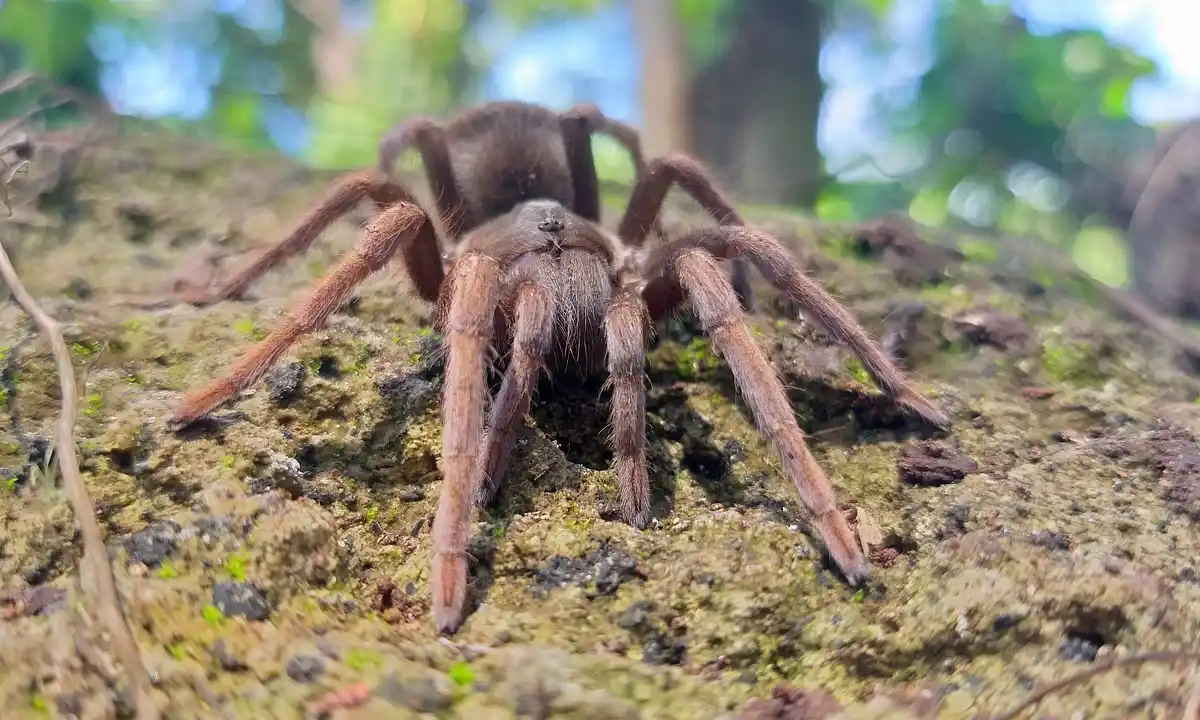
The question isn’t whether a tarantula can learn a trick. It’s whether we can subtly shape predictable, instinctive behaviors into a reliable pattern using consistent, positive associations. Their world is one of stimulus and hardwired response. Do tarantulas communicate understanding through stridulation or other signals? If they do, what would that mean for training and interpretation of their responses?
Success depends entirely on the individual spider’s temperament. My Grammostola rosea, Rosie, is so unflappable she might notice a pattern. My Pterinochilus murinus, Flash, operates on pure defensive instinct; conditioning is not on his agenda.
This table clarifies what we might hope to influence versus what is immutable.
| Potentially Influencable (Through Classical Conditioning) | Instinct-Dominated (Fixed Action Patterns) |
|---|---|
| Emerging from a burrow or hide for food. | Defensive threat postures, biting, or hair-kicking. |
| Moving toward a specific area of the enclosure during feeding. | Web-spinning design and location. |
| Anticipatory leg movement or posture shift before feeding. | Burrow construction methods and depth. |
| Reduced startle response to non-threatening enclosure maintenance. | Courtship rituals and mating behaviors. |
| Molting sequence and post-molt vulnerability. |
Conditioning a Pre-Feeding Response: A Step-by-Step Guide
This is the most cited example of potential conditioning. The goal is not to “call” your tarantula, but to see if it associates a gentle cue with the arrival of food. I have tried this with varying success.
-
Choose a consistent, gentle stimulus. This must be distinct from normal enclosure vibrations. A soft, rhythmic tap on the acrylic with a fingernail or a specific dimming of the room light works. Never blow air or tap the glass sharply.
-
Immediately present food. Within two seconds, introduce the prey item using long tongs. The timing is critical; the stimulus must predict the food directly.
-
Repeat consistently for many feedings. You may need to do this for ten, twenty, or more consecutive feedings before observing any potential change in behavior. Patience is non-negotiable.
-
Observe for any association, but do not force it. After many repetitions, present the stimulus without food. Does the tarantula briefly orient or move forward? That is a potential sign of association. If there is no reaction, the link was not made. Reading the tarantula’s food-dance cues can help you interpret readiness to eat. When the tarantula is ready to eat, you may see it orient toward the feeder or assume a poised stance. Success is not guaranteed and varies wildly by individual species and specimen.
The Myth of Taming: Why Instincts Dominate
Taming implies a reduction of wild instinct. With tarantulas, this is a dangerous fantasy. Their behaviors are fixed action patterns, neural pathways etched by millions of years of evolution. Are these common behaviors meaningful indicators of their state? Do tarantula behaviors indicate stress or simply reflexes?
Aggression, webbing, and burrowing are not choices. They are irrevocable biological imperatives. My P. murinus, Flash, is a perfect example. His bright orange body is a warning label. He has never once hesitated to assume a threat posture when I open his enclosure for maintenance. His dense, silken web is his castle and his trap. No amount of gentle interaction will alter his defensive programming. I respect this. My goal is to maintain his world without triggering those instincts. Attempting to “tame” this out of an Old World tarantula is a direct path to a bite or a severely stressed animal.
Even a docile species like my Theraphosa stirmi, Goliath, is ruled by instinct. Her frequent flicking of urticating hairs is not a trained behavior; it is her primary defense. She isn’t being “naughty.” She is being a tarantula.
Practical Methodology: Safe and Ethical Training Techniques
Any interaction with a tarantula must be framed by its welfare. Our curiosity must never supersede their need for security. Legal and ethical considerations often determine whether rare tarantulas can be kept and under what terms. Keepers must ensure proper sourcing and permit compliance while upholding welfare standards. This philosophy makes “Look, Don’t Touch” the only ethical handling policy for routine care. Conditioning trials are a form of enrichment for the keeper, not the spider. We must proceed with immense caution.
The framework is simple: if the spider shows any sign of stress, the experiment is over. Their comfort is the only meaningful data point.
Designing a Conditioning Trial: Parameters and Precautions
If you choose to explore conditioning, these parameters will help keep the tarantula safe.
- Session Length: The “session” is the moment of the stimulus and food presentation. It lasts seconds. Do not prolong interaction.
- Trial Frequency: Conduct a trial only on normal feeding days, no more than once a week for adults. Do not harass your tarantula daily.
- Reward Value: Use a high-value reward-their preferred, appropriately-sized live prey. This is the only positive reinforcement available.
- The Absolute Rule: If the tarantula retreats, hides, or shows a threat posture in response to the stimulus, stop immediately. Do not try again. You are now predicting a negative event, which increases stress and defeats the purpose.
Signs of Stress to Watch For During Training
Stress is easy to see if you know the signs. Learning to read your tarantula’s body language helps you spot stress, defensive signs, and other signals of discomfort. A stressed tarantula cannot learn; it is in survival mode. Cease all conditioning attempts if you observe:
- Rapid Flight: A startled, scrambling retreat to its hide or burrow.
- Persistent Hiding: Refusing to emerge for food after the stimulus, when it previously would.
- Threat Postures: Rearing back with front legs raised, exposing fangs (a “head-up” threat), or tapping the ground in warning.
- Flicking Urticating Hairs: Using hind legs to kick a cloud of irritating bristles from the abdomen. My T. stirmi does this often; it’s a clear “leave me alone” signal.
- Abandoning Food: Striking prey and then leaving it, which is atypical behavior.
Pushing past these signals is unethical and will destroy any chance of creating a neutral or positive association. The well-being of the animal is the singular measure of a keeper’s success.
The Hard Limits of Arachnid Adaptability
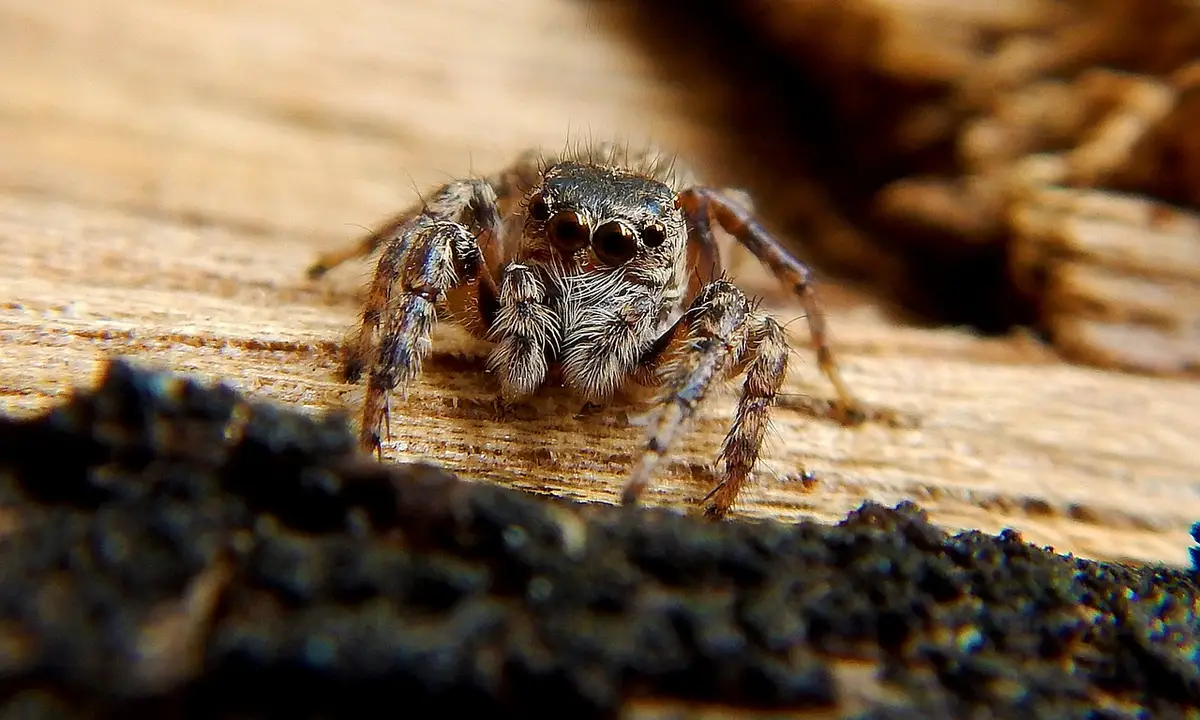
While we can observe basic associative learning, a tarantula’s brain is a marvel of minimalist efficiency, not complex plasticity. Their neural architecture is wired for survival in a specific ecological niche, not for the flexible problem-solving we see in vertebrates. This fundamental biological reality places a firm ceiling on any training ambitions.
Memory and Retention: How Long Do Associations Last?
Research on spiders, particularly jumping spiders, shows that learned associations are often fleeting and context-bound. A study might show a spider remembering a route or a prey type for a few days, but this memory decays without reinforcement and rarely transfers to new situations. This ephemeral memory is a stark contrast to the lifelong recall possible in mammals and birds, underscoring the vast evolutionary distance. In my own collection, Rosie (G. rosea) may learn that the vibration of the tongs sometimes means food, but if I skip a feeding week, that association dissipates entirely.
When Instinct Overrides Learning: Fixed Action Patterns
These are immutable behavioral sequences triggered by specific stimuli. You cannot train a tarantula out of them. The threat posture, the flicking of urticating hairs, the precise choreography of the molt—these are hardwired. I have seen this firsthand with my OBT, Flash; no amount of gentle exposure will stop his immediate defensive web-and-threat-posture routine when the enclosure lid is opened. During a rehousing, my T. stirmi, Goliath, will always rely on his instinct to kick hairs first, not on any past experience that I am not a threat. Trying to condition against these instincts is futile and massively stressful for the animal. Urticating hairs are the tarantula’s first line of defense. Venom serves as a secondary defense only if the threat persists after the hairs are deployed. This is why it’s essential to understand a tarantula’s defensive mechanisms: Hairs first, venom second, or as an alternative, consider that tarantula defense involves both hairs and venom, with hairs being the initial response.
How Stress and Environmental Factors Impair Learning
A tarantula operating outside its ideal parameters has zero cognitive bandwidth for learning. Its entire physiology is focused on basic homeostasis. Key stressors that shut down this capacity include:
- Incorrect Humidity: A moisture-dependent species kept too dry, like a T. stirmi, is in a constant state of physical stress.
- Temperature Fluctuations: Sudden drops or spikes force their metabolism into chaos.
- Excessive Vibrations and Light: Constant traffic or room lighting interprets their world as full of predators.
- Frequent Enclosure Intrusions: Every unneeded probe is perceived as an attack, keeping the animal in a perpetual state of alert.
Many of these stress responses stem from common heating and humidity mistakes. Keeping temperatures and humidity within the tarantula’s species-specific range helps prevent these stressors and supports normal behavior. You cannot expect any behavioral adaptation from a creature that is merely struggling to survive its environment.
Applying Learning Theory to Enhance Tarantula Care
The true value of understanding tarantula learning is not in teaching tricks, but in refining our husbandry to minimize their stress. We can use principles of consistency and predictability to create an environment where their natural behaviors can flourish without anxiety. This is the ethical and practical application of behavioral science. We know tarantula learning and problem solving can occur with the right cues. This recognition informs enrichment that respects their cognitive abilities.
Creating a Predictable Environment for Reduced Stress
Predictability equals safety in the tarantula’s world. My routine for sensitive species like Goliath is methodical:
- Stable Parameters: His humidity stays at 78-82%, temperature at 78°F, verified by digital gauges. No guesswork.
- Consistent Feeding Schedule: Prey is offered the same evening every week. The vibration pattern of the tongs becomes a non-threatening signal.
- Minimal Invasive Maintenance: Water is topped up from the front. Spot-cleaning occurs only when absolutely necessary and with slow, deliberate movements.
- Dedicated Space: His enclosure is in a low-traffic area, away from direct sunlight and loud noises.
Key facts about habitat requirements for the Goliath bird-eating tarantula underpin this approach. By aligning humidity, temperature, and space with its needs, we support predictability and safety.
This rigid consistency doesn’t train him to perform, but it does train his environment to be non-threatening, which is the ultimate goal.
Observation as the Ultimate Tool for Understanding
Forget trying to condition your tarantula; instead, condition yourself to be a superb observer. The most valuable data comes from silent vigilance: noting the preferred hide corner, the time of day they are active, the subtle changes in posture before a molt. My 15 years with Rosie have taught me her unique “pet rock” rhythms-her months-long fasting periods are normal for her. I learned by watching, not by intervening. This patient observation allows you to meet the tarantula on its own terms, providing care that aligns with its innate needs and individual personality.
FAQs
Can tarantulas be trained through operant conditioning?
Yes, but in a very limited sense. Tarantulas can learn simple associations, such as linking a specific action to a reward, but this is based on instinctive behaviors tied to survival needs like feeding. It does not resemble training vertebrates for tricks, as their cognitive capacity is minimal. Success depends on patience and precise timing, with no guarantee of results.
What are the limits of operant conditioning in tarantulas?
The limits are strict due to their neural architecture. Tarantulas have a decentralized nervous system optimized for instinct, not flexible learning. Their memory is short-lived and context-specific, and fixed action patterns like defense or web-building cannot be trained out. Learning is also hindered by stress and requires consistent reinforcement to persist.
What behaviors can be conditioned in a tarantula?
Only innate behaviors related to immediate needs can be influenced, such as emerging from a hide for food or moving toward a feeding cue. Complex or defensive behaviors, like threat postures or hair-flicking, are hardwired and unchangeable. Conditioning success varies by species and individual temperament, often resulting in subtle responses rather than trained tricks.
How does arachnid learning compare to vertebrate learning?
Arachnid learning is far more primitive. Vertebrates have complex brains capable of abstract thought and long-term memory, while tarantulas rely on basic stimulus-response associations. Their learning is procedural and tied directly to survival, lacking the cognitive depth for problem-solving or emotional bonds seen in mammals or birds.
What factors limit learning in tarantulas?
Stress from poor husbandry-such as incorrect humidity, temperature fluctuations, or frequent enclosure intrusions-severely impairs learning. Their instincts dominate in suboptimal conditions, shifting focus to survival. Additionally, their neural limitations mean associations are fragile and fade quickly without regular reinforcement.
Can tarantulas learn complex tasks?
No, tarantulas cannot learn complex tasks. Their brain structure supports only simple operant conditioning, like pressing a lever for water, which exploits existing locomotion. Multi-step or abstract tasks are beyond their capabilities, as they lack the neurological hardware for advanced learning or memory retention seen in vertebrates.
The Final Molt
After countless rehousings and observing the stark behavioral differences between my pet rock Rosie and my lightning-fast Flash, one truth stands clear. Your tarantula’s health and demeanor hinge entirely on consistent, species-specific husbandry, not on any learned response; for moisture-dependent giants like my Theraphosa stirmi, Goliath, this means keeping the substrate genuinely damp to prevent fatal dehydration. Perfect this foundation first. For anyone aiming to properly care for advanced tarantulas, thorough research and consistent, species-specific husbandry are non-negotiables. Build a setup that mirrors their natural conditions and monitor diligently.
The real joy comes from witnessing innate behaviors unfold in a proper setup. I spend hours watching Flash weave her complex, orange-silk fortresses or noting the precise moment Goliath flicks urticating hairs at a perceived threat. Your greatest skill as a keeper is the patience to sit quietly and appreciate the natural drama of feeding, digging, and molting without interruption. This observant respect is the highest form of care we can offer.
Further Reading & Sources
- r/tarantulas on Reddit: Worried my t is bored
- AP Practice Chapter 7 Flashcards – Easy Notecards
- Are tarantulas capable of learned behavior? | Page 2 | Arachnoboards
Arlo is a lifelong arachnid enthusiast who believes tarantulas are the world’s most misunderstood roommates. With years of hands-on experience in tarantula care, habitat setup, and species behavior, Arlo combines expert knowledge with a dash of humor to make spider ownership less scary and a lot more fascinating. From choosing the right enclosure to understanding why your eight-legged buddy is doing that weird little pose again, Arlo is here to help you become the best tarantula parent you can be, without getting tangled in the web of misinformation.
Understanding Tarantula Behavior