
Do Tarantulas Fart? The Science of Spider Digestion
In the hushed world of arachnoculture, where we marvel at the iridescent sheen of a carapace and the sudden strike of a feeding response, the mundane inner workings of a tarantula’s body are often overlooked-until a quirky question bubbles up. This article cuts through the speculation to examine the fascinating reality of spider digestion, from external enzyme baths to metabolic waste. Through a biological lens, tarantulas lack the digestive machinery to produce intestinal gas, making flatulence, as we commonly define it, a non-event in their silent enclosures.
Quick Stats:
- Origin: Global, from the rainforests of South America to the arid scrublands of Africa.
- Type: Includes both New World (e.g., Grammostola) and Old World (e.g., Poecilotheria) genera, with differing defensives like urticating hairs or potent venom.
- Growth Rate: Wildly variable; contrast the decade-long journey of a G. rosea with the explosive growth of an OBT like my own “Flash,” who webbed his entire enclosure in months.
This exploration of their internal processes will demystify feeding behaviors and equip you to support your spider’s health from delicate sling to venerable adult.
The Direct Answer: Do Tarantulas Pass Gas?
- Tarantulas do not exhibit flatulence like mammals. You will never hear a fart from your spider’s enclosure.
- The primary reason is their digestive process lacks the bacterial fermentation that produces significant intestinal gas. Mammalian guts host microbes that generate gas, but tarantulas rely on external enzyme action.
- In my years of care, the enclosures for my pets, like the ever-still Rosie or the humid-happy Goliath, are profoundly silent. I have never witnessed any audible or behavioral sign of gas passage. The absence of farting is a key indicator of how fundamentally different arachnid digestion is from our own.
Anatomy of Arachnid Digestion: The Tarantula’s Gut
Imagine a factory designed for pure efficiency, not comfort. A tarantula’s gut is a three-part system utterly unlike our own long, winding digestive tract.
- Foregut (The Sucking Stomach): This is a powerful pump. After venom and digestive enzymes turn prey to soup outside the body, strong muscles contract to draw the liquid inward.
- Midgut (The Processing Center): Lined with digestive glands called midgut ceca, this area secretes more enzymes. A structure called the gastric mill may grind tiny particles. This is where nutrient absorption happens, with no room for gas-producing bacteria.
- Hindgut (Waste Management): Here, water is reclaimed and waste is solidified into a dry, white uric acid pellet for excretion.
Compare this to human digestion. We ingest solids, our stomach churns them, and our intestines host a bacterial ecosystem that ferments fiber, producing gas. A tarantula’s process is cleaner and more direct. Think of its body as a highly efficient, external-internal processing lab. Prey is deconstructed in the vial of its own exoskeleton before the tarantula ever takes a sip.
The External Feast: How Tarantulas Liquefy Their Prey
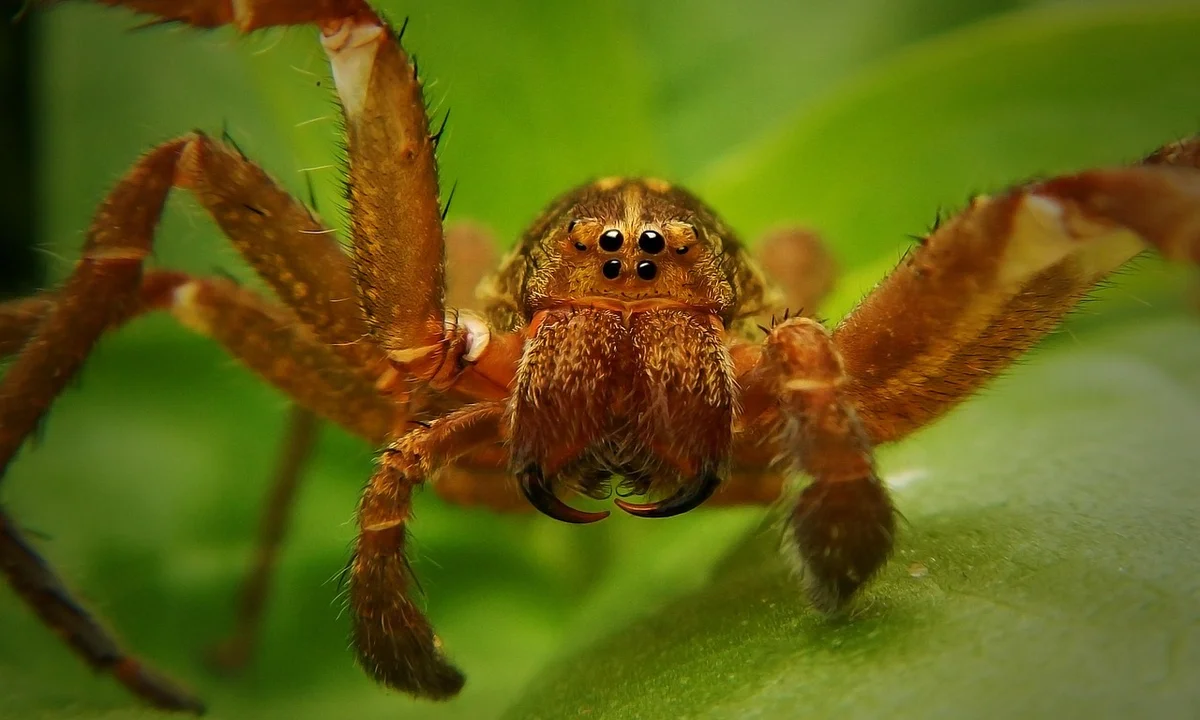
Tarantula feeding is a quiet, efficient, and frankly fascinating display of external digestion. They don’t chew. Instead, they perform a precise chemical disassembly of their prey, turning solids into a drinkable slurry. To read when it’s ready to eat, I watch for the tarantula’s food dance—a subtle tremor of the legs, a slow reorientation toward the prey, and a patient pause before the strike. Those cues signal the moment of readiness and heighten the drama of the feeding. Observing this process up close, from my OBT Flash’s frantic strikes to my rose hair Rosie’s deliberate ambushes, reveals a consistent biological script.
-
Step 1: Enzymatic Injection
The strike is over in a flash. The tarantula uses its chelicerae (the fangs) not just to puncture, but to inject a potent cocktail of digestive enzymes and paralyzing venom. This cocktail is the true beginning of the meal. I’ve watched my Goliath subdue a large roach; the insect stops moving within seconds as this fluid begins its work internally. It’s fascinating to observe how tarantulas hunt and capture their prey before this point.
-
Step 2: External Breakdown
The tarantula may retreat, letting the enzymes do their job. Over minutes or hours, these proteins and enzymes liquefy the prey’s internal tissues and organs. This transforms the insect’s body into a nutrient-rich “soup,” still contained within the exoskeleton. You might see the prey item look deflated or darker in color during this phase. When choosing between live prey and pre-killed options, digestion proceeds similarly once the prey is ingested. Live prey can stimulate hunting behavior, while pre-killed prey reduces the risk of injury to the tarantula and the keeper.
-
Step 3: The Suction Meal
Returning to the prey, the tarantula uses its powerful, muscular foregut (located in the prosoma, or front body section) like a biological pump. It inserts its short, straw-like mouthparts and actively sucks up the liquefied contents. You can sometimes see a gentle pulsing motion around the mouth as this happens. In tarantula anatomy 101, this shows how the prosoma houses the feeding apparatus, tying into the front-to-back body plan that underpins their feeding strategy.
-
Step 4: Internal Absorption
The nutrient soup travels into the midgut, where specialized cells called diverticula absorb the usable proteins, fats, and other compounds. This is where the tarantula finally “eats,” absorbing what it needs directly into its body. The efficiency is remarkable; very little goes to waste.
This entire process explains the most common keeper observation: the leftover “bolus.” After feeding, you’ll find a shrunken, dried-out husk of the insect. This is the exoskeleton and any indigestible parts, discarded after the meal. My juvenile tarantulas often leave tiny, perfect cricket shells, while my Goliath produces impressive roach carcasses that I spot-clean during weekly maintenance.
Gas, Microbes, and Metabolism in Spiders
So, where does the gas come in? For tarantulas, the answer is simple: almost none is produced in the first place.
- Tarantulas lack the complex, fermenting gut microbiome that mammals and some herbivorous reptiles rely on. They don’t eat plant cellulose or fibrous matter that requires bacterial breakdown, a major source of intestinal gas in other animals. Their diet of purely liquefied animal protein is metabolized with high efficiency.
- Any minimal metabolic gas produced as a byproduct of cellular processes is likely dissolved in their hemolymph (blood equivalent) or handled internally through other pathways. There is no biological need or mechanism for expelling significant intestinal gas.
- Direct scientific literature on “spider flatulence” is, unsurprisingly, scarce. However, decades of arachnid physiological studies consistently show a digestive system geared toward liquid intake and minimal solid waste, leaving no room for gas accumulation.
For pet tarantulas, the absence of gaseous byproducts means one less husbandry concern for their enclosure air quality. You’ll never need to worry about ventilating a bioactive tank due to spider digestion, a stark contrast to keeping many reptiles or mammals.
Waste Management: The Byproducts of Spider Digestion
What remains after the efficient liquid meal is a small amount of highly concentrated waste. Spider excretion is a two-part system, and recognizing it helps with enclosure care.
- The primary waste is a thick, white paste of uric acid. This is the spider’s equivalent of urine, excreted from the anus. It’s nitrogenous waste processed into a dry paste to conserve water. You’ll often see it sprayed on the glass or substrate as a chalky smear.
- Darker, more solid fecal matter may also be excreted occasionally. This is the truly indigestible particulate from the meal. Both waste types are first held in a specialized chamber called the stercoral pocket, located in the hindgut, where moisture is extracted to create a dry, manageable excretion.
In practice, this means you will see small white or dark spots in the enclosure, often on the glass walls. The odor is minimal to non-existent if you maintain a clean tank. I spot-clean these deposits during my weekly visual checks using a damp paper towel. This efficient, dry waste system is another brilliant adaptation, especially for my arid species like Rosie. Contrast this with the wet, odorous, and bacterially complex waste of a mammal, and you appreciate the elegant simplicity of the arachnid digestive tract.
Digestive Health and Common Issues in Captivity
-
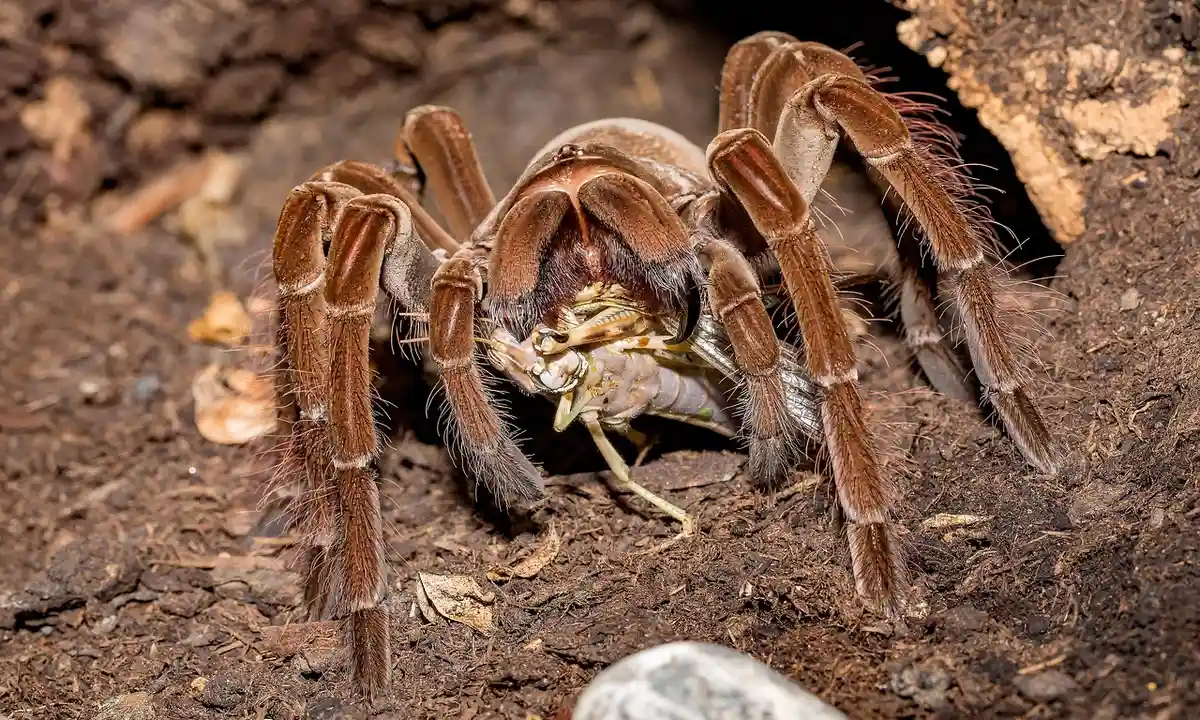
Captive tarantulas face several digestive challenges that wild specimens rarely encounter. Impaction is a serious risk when tarantulas ingest particles of unsuitable substrate, like coarse wood chips or sharp sands, which can clog their delicate digestive tract. Watch for early signs like a swollen, hard abdomen and a marked drop in appetite. This helps you intervene before impaction takes hold. I once lost a juvenile to impaction from a misguided peat-moss blend, a hard lesson in substrate selectivity. Dehydration silently cripples digestion; a parched spider cannot produce enough digestive fluids to liquefy its meal. Prolonged fasting, as my old G. rosea Rosie demonstrates with her multi-month hunger strikes, can slow metabolism to a crawl, but this is often normal for some species.
-
Prevention hinges on meticulous husbandry. Maintain species-specific humidity: aim for 75-85% for moisture-dependent giants like Theraphosa stirmi (Goliath’s genus), but a mere 60-70% for arid types like Grammostola rosea. Always provide a clean, shallow water dish-evaporation alone isn’t enough. Use safe, digestible feeders like gut-loaded crickets; avoid wild-caught insects that may carry pesticides or parasites. Your substrate choice is critical; a deep, packable mix of coconut fiber and sphagnum moss retains humidity without clinging dangerously.
-
A healthy digestive system announces itself through clear behaviors. Look for a strong feeding response, where your tarantula readily pounces on appropriate prey, a sign its internal enzymes are primed. After eating, a firm, dark bolus of indigestible parts should be left in the enclosure. Normal waste excretion appears as small, white patches of urates—not to be confused with mold. For a quick reference, see a visual guide on tarantula poop—what’s normal and what’s not. These visuals help you distinguish healthy urates from anomalies. Regular activity levels between meals also indicate smooth internal processing.
-
Know when a problem exceeds home care. Seek a vet or breeder if you see a shriveled abdomen with persistent dehydration, a visible lump in the abdomen that doesn’t pass after weeks, or complete lethargy paired with refusal of water. A tarantula lying curled on its back is likely molting, not dying, but if it remains in a death curl for hours with no molting signs, expert intervention is urgent. I consulted a breeder when Goliath once refused food and water; a simple humidity adjustment was the cure.
Feeding Your Tarantula: Diet’s Role in Efficient Digestion
-
Optimal prey forms the foundation of good digestion. Gut-loaded crickets, dubia roaches, and mealworms are staple feeders because their soft bodies break down easily in the tarantula’s digestive soup. “Gut-loading”-feeding nutritious greens to the insects 24 hours before offering them-transfers vital vitamins to your spider. Avoid hard-shelled beetles or adult superworms; their tough exoskeletons can be difficult to process and may cause impaction.
-
Prey size directly dictates digestive effort and time. A mealworm for a sling is digested in days, while a large roach for an adult may take over a week to fully process, during which the tarantula is often lethargic and vulnerable. The species of feeder also matters; dubia roaches are meatier and may sustain a spider longer than a watery cricket. Matching prey size to your tarantula’s body (no larger than its abdomen) prevents regurgitation and metabolic stress.
-
Metabolism varies wildly by species. My OBT Flash, with his fast, defensive nature, boasts a rapid metabolism, often accepting food weekly and digesting with swift efficiency. In stark contrast, Rosie the Chilean rose hair might eat only once every few months, her digestion proceeding at a glacial pace. Heavy-bodied terrestrial tarantulas like Goliath require substantial meals but longer intervals between them to fully empty their digestive tracts before a molt.
-
Feeding frequency must align with life stage and species. Spiderlings (slings) can be fed two to three times weekly to support growth, while most adults thrive on one appropriately sized meal every one to two weeks. Observe your tarantula’s abdomen; a plump, rounded shape indicates satiety, while a shrunken one signals hunger. Reducing feeding frequency as a molt approaches prevents complications, as undigested food can fuse with the new exoskeleton during ecdysis. For detailed guidance on what and when to feed, check out the best diet and feeding schedule for a healthy tarantula.
Common Questions
What is the science behind spider digestion?
Spider digestion is a highly efficient, external-to-internal process. Instead of chewing food internally, tarantulas inject digestive enzymes into their prey to liquefy its soft tissues. They then suck up the resulting nutrient “soup.” This system lacks the complex gut bacteria found in mammals, fundamentally changing the byproducts of digestion, such as waste and gas. This guide explains the unique digestive processes in spiders.
Do spiders produce gas during digestion?
Tarantulas do not produce significant intestinal gas like mammals do. Their diet of liquefied animal protein and absence of a fermenting gut microbiome mean there is no biological process to generate noticeable flatulence. Any minimal metabolic gas produced is handled internally and not expelled. For more on their unique physiology, check out The Science of Tarantula Metabolism: How Temperature Affects Appetite and Growth.
How does spider digestion differ from human digestion?
The core difference lies in the location of breakdown. Humans digest food internally within a long tract containing gas-producing bacteria. Tarantulas digest prey externally with enzymes before consumption, leading to a liquid meal that is absorbed with high efficiency. This results in dry, pasty waste instead of the wet, gaseous waste typical of mammalian systems.
What are the byproducts of tarantula digestion?
The main byproducts are dry, white uric acid paste (similar to concentrated urine) and occasional dark fecal matter. These are consolidated in a specialized chamber called the stercoral pocket, where water is reabsorbed before excretion. You will not find gaseous byproducts, but rather these small, solid waste deposits in the enclosure.
Can tarantulas experience digestive issues?
Yes, though their issues differ from mammalian ones. The primary concerns are impaction from ingesting substrate, dehydration hindering enzyme production, and complications from unsuitable prey. Signs of trouble include a shrunken abdomen, a persistent lump, or complete lethargy, which require prompt attention from an experienced keeper or veterinarian.
The Final Molt
The single most important husbandry factor for any tarantula’s health, including its digestive function, is providing constant access to fresh, clean water. A shallow dish is non-negotiable. Even my moisture-dependent T. stirmi, Goliath, and my arid-adapted G. rosea, Rosie, who once went 14 months without a meal, will regularly visit their water dishes. Dehydration is a silent killer that stresses every bodily system.
Beyond the water dish, the real joy of arachnoculture lies in quiet observation. Watch for the patient ambush of my Rosie, the frantic web-tapestry construction of my OBT Flash, or the deliberate excavation work of a fossorial species. Your tarantula’s behaviors are a direct reflection of its well-being. A change in these routines often speaks louder than any physical symptom. Cultivate patience. These are not pets of instant gratification, but of profound, slow revelation. The hobby rewards those who are content to simply look, learn, and provide a safe, respectful space for a fascinating life to unfold.
Further Reading & Sources
- How Tarantulas Digest | Pets on Mom.com
- Tarantulas Digest BEFORE They Eat Prey? Spider Digestion EXPLAINED! – YouTube
- Tarantula – Wikipedia
Arlo is a lifelong arachnid enthusiast who believes tarantulas are the world’s most misunderstood roommates. With years of hands-on experience in tarantula care, habitat setup, and species behavior, Arlo combines expert knowledge with a dash of humor to make spider ownership less scary and a lot more fascinating. From choosing the right enclosure to understanding why your eight-legged buddy is doing that weird little pose again, Arlo is here to help you become the best tarantula parent you can be, without getting tangled in the web of misinformation.
Feeding Frequency