
What is a Tarantula Hawk Wasp? Identification and Pain Index
The Tarantula Hawk is not merely a wasp; it is a winged executioner whose life cycle is a brutal, beautiful ballet with a tarantula as its unwilling partner. In the American Southwest, its metallic blue-black body and rust-colored wings are a warning sign understood by everything from reptiles to humans. This guide will demystify this infamous insect, explaining how to identify it, why its sting is legendary, and the grim ecological role it plays. For tarantula keepers, understanding this predator is a crucial part of appreciating the raw natural drama we try to replicate in our enclosures.
Quick Stats:
- Origin: Americas, with high diversity in desert Southwest U.S.
- Type: Spider Wasp (Pompilidae family)
- Primary Prey: Tarantulas (Theraphosidae)
- Notable Trait: One of the most painful insect stings known
This guide will walk you through identifying a Tarantula Hawk, decoding the science behind its catastrophic sting, and understanding the fate it delivers to its eight-legged prey.
What is a Tarantula Hawk Wasp?
Scientific Classification and Common Names
Tarantula hawks are not true hawks, but large, solitary spider wasps from the genera Pepsis and Hemipepsis. They belong to the family Pompilidae. The name is a direct reference to their chosen prey: adult tarantulas.
In the field, you might hear them called “horse killers” in some regions, a dramatic nod to their notoriously painful sting. The most common species kept in insectariums or studied is often Pepsis formosa.
Their iridescent, blue-black bodies and often bright orange wings are a stunning example of aposematic coloration, a natural warning sign to potential predators.
Geographic Range and Habitat
These wasps are found on every continent except Antarctica, but their diversity peaks in the deserts and scrublands of the southwestern United States, Mexico, and South America. My own encounters in Arizona have been unforgettable.
They thrive in arid and semi-arid environments. You will find them in:
- Desert scrub and sandy washes
- Pinyon-juniper woodlands
- Even urban areas with enough open, dry soil for burrowing
Their presence is a sign of a healthy ecosystem, one that can support both the wasp and its sizable spider prey. For tarantula keepers in these areas, it’s a potent reminder of the complex food web our pets originate from. This perspective ties into my tarantula boredom guide on environmental enrichment for spiders. It offers practical ideas to keep your tarantula engaged and thriving.
The Tarantula Hawk Life Cycle: A Parasitoid’s Strategy
The Hunt: Paralyzing the Tarantula
The hunt is a brutal, precise affair. The female wasp does not kill the tarantula immediately. Instead, she seeks out a suitable host, often by investigating burrows or catching a wandering male. Tarantulas themselves face predators such as birds, snakes, and small mammals. This predator pressure shapes where they hide and how they defend themselves.
After a formidable struggle, she delivers a targeted sting that injects a potent neurotoxic venom. This venom paralyzes the tarantula completely, leaving it alive but immobile—a fresh food source for her future offspring. Many New World tarantulas defend themselves with urticating hairs that irritate would-be predators, and some will bite to deliver venom when threatened.
The tarantula’s fate is sealed, but it feels no pain. From a keeper’s perspective, this is a sobering natural check on tarantula populations, and a key reason we provide secure, escape-proof enclosures. Equally important is ensuring the enclosure is properly ventilated, so air can circulate and humidity stays in check. A well-ventilated, secure enclosure protects the tarantula’s health and helps prevent mold and respiratory issues.
From Egg to Adult Wasp
With the tarantula subdued, the wasp drags it to a pre-dug burrow or a suitable crevice. She lays a single, white egg on the spider’s abdomen and then seals the chamber.
- The egg hatches in a few days into a hungry larva.
- The larva feeds on the non-vital tissues of the living tarantula, avoiding major organs to keep its meal fresh for weeks.
- After consuming its host, the larva spins a silk cocoon within the burrow.
- It overwinters as a pupa, emerging the following summer as a magnificent, winged adult.
The entire, remarkable cycle turns one life into another, with the tarantula providing all the nourishment needed. Tarantulas are ambush predators that hunt and capture prey with powerful fangs. The adult wasp then feeds solely on nectar, particularly from milkweed and mesquite flowers. This ecological role as both predator and pollinator makes the tarantula hawk a fascinating, if formidable, creature.
How to Identify a Tarantula Hawk Wasp
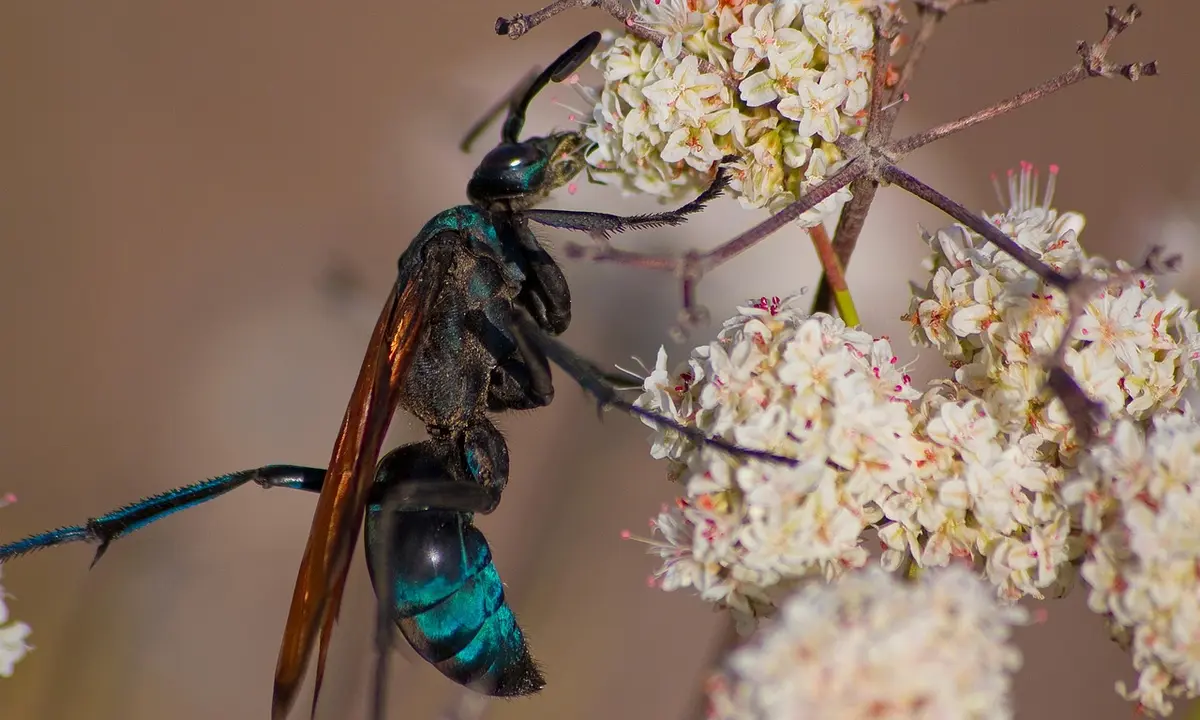
Spotting one of these impressive insects is straightforward once you know the signature traits. Their striking appearance and unmistakable flight make them one of the most recognizable wasps in their native habitats.
Size and Coloration: The Visual Clues
Tarantula hawks (genus Pepsis and Hemipepsis) are not subtle. They command attention.
- Size: They are large, with bodies often reaching 2 inches in length. Their wingspan can be even more impressive, sometimes exceeding 4 inches.
- Body Color: Look for a deep, iridescent blue-black or black body that shines with a metallic sheen in direct sunlight.
- Wing Color: This is their most famous feature. Wings are typically a rich, bright orange or amber. Some species have darker, smoky wings, but the orange-winged varieties are most iconic.
- Antennae: Their antennae are long, curved, and distinctly orange or reddish in color, unlike many other dark wasps.
If you see a large, dark wasp with orange wings gracefully investigating the ground, you are almost certainly looking at a tarantula hawk.
Behavioral Cues and Flight Pattern
Their behavior is as distinctive as their looks. You will rarely see them at a picnic; they are hunters, not scavengers.
- Flight Pattern: They exhibit a characteristically low, fast, and direct flight, often just inches above the soil. I’ve observed them in the Southwest flying along desert paths like tiny, urgent reconnaissance planes.
- Ground Hunting: Females spend much of their time walking on the ground, using their antennae to tap and probe for tarantula burrows or wandering spiders. This focused, deliberate walking is a key identifier.
- Nectar Feeding: Despite their fearsome reputation, adults feed solely on nectar. They are frequent, if somewhat loud, visitors to milkweed, mesquite, and other robust flowers.
This combination of low flight and ground-focused searching separates them from other large wasps that buzz erratically around eaves or trees.
The Tarantula Hawk Sting: Pain Index and Medical Facts
The reputation of the tarantula hawk sting is legendary in entomology, and for good reason. It is engineered by evolution to incapacitate a large, powerful arachnid, making its effect on humans spectacularly intense but remarkably brief.
Schmidt Sting Pain Index Rating
The late entomologist Justin Schmidt, who created the index, famously described the tarantula hawk sting as “blinding, fierce, shockingly electric.” It earns a perfect 4.0 rating, the highest possible.
- Immediate Sensation: The pain is instantaneous and utterly overwhelming, often described as a white-hot electrocution.
- Short-Term Aftermath: The intense peak lasts for about three to five minutes. During this time, the affected person can do little but scream, swear, or lie down. I know seasoned keepers who have been stung, and they all report the same total, albeit temporary, incapacitation.
- Subsiding Pain: After those few minutes, the acute pain vanishes almost completely, often leaving behind only a dull ache or tenderness at the sting site.
The experience is memorably traumatic but mercifully short-lived, a trade-off that makes it more of a natural curiosity than a long-term threat for humans.
Is the Sting Dangerous to Humans or Pets?
Despite the extreme pain, the sting is almost never medically dangerous to a healthy person. The venom is highly specialized for arthropods, not mammals.
- For Humans: The primary risk is a reaction to the sheer shock of the pain, such as falling or injuring oneself. The venom itself is not considered toxic to humans. Allergic reactions are possible but exceptionally rare compared to honeybee or yellow jacket stings.
- For Pets: Dogs or cats curious enough to snap at one may receive a sting on the muzzle or inside the mouth. This would cause severe, acute pain and distress, potentially leading to drooling, pawing at the face, or vocalizing. While veterinary consultation is wise, the primary concern is managing the animal’s pain and panic, not systemic toxicity.
- For Your Tarantulas: This is the real threat. A female wasp near your home could theoretically locate an outdoor or escapee tarantula. Always ensure your enclosures are securely latched. I am meticulous about this, having once had a close call with an adventurous juvenile.
Respect their space, and they will respect yours. Observing a tarantula hawk is a privilege, a chance to watch a breathtaking predator that shares a deep, ancient link with our own eight-legged pets and their hunting behaviors.
Are Pet Tarantulas at Risk from Tarantula Hawks?
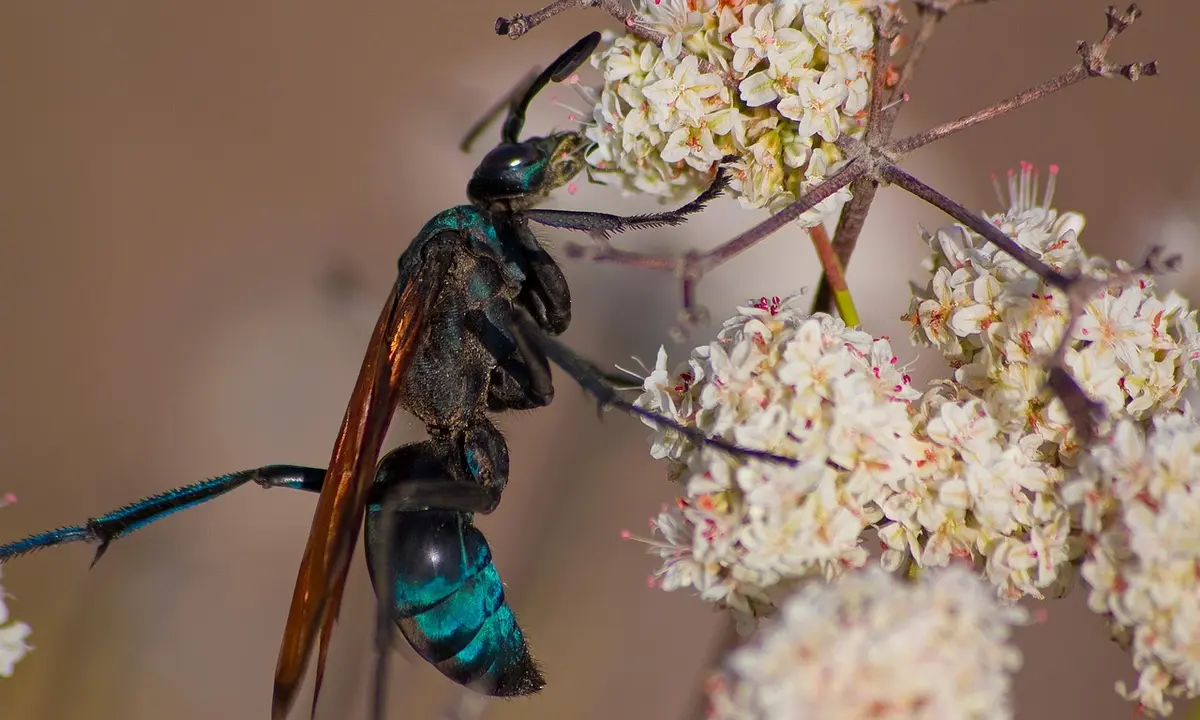
A spider keeper’s first sighting of a tarantula hawk near their home can trigger a deep, primal fear. I’ve watched their dark, iridescent wings flash in the Arizona sun outside my window, and my immediate thought always flies to my collection. The risk to a properly housed pet tarantula is astronomically low, but understanding the “why” is the key to peace of mind. These wasps are masters of hunting in a vast, wild landscape, not breaching modern containment. Unlike wild tarantulas, pet ones are kept secure and isolated.
Securing Your Tarantula’s Enclosure
Your primary defense is physics. A tarantula hawk cannot phase through glass or plastic. The goal is to eliminate any point of entry larger than a millimeter.
- Ventilation Security: This is your #1 priority. All mesh or screen vents must be covered with fine fiberglass window screen (hardware cloth) glued securely over the outside. Standard aquarium mesh lids are often too wide.
- Seal All Gaps: Check where aquarium lids meet glass, or where plastic tub lids seal. Any gap you can slide a piece of paper through is a potential corridor.
- No Outdoor Time: Never leave an enclosure open or place your tarantula outside for “fresh air” or a photoshoot. The risk from birds, ants, or wasps is never zero.
Tarantula hawks are attracted to the vibrations of a large, moving spider, so a sealed, silent enclosure renders your pet virtually invisible to them.
Understanding the Real Threat Level
Let’s contextualize the danger. In over a decade of keeping, including in prime tarantula hawk territory, I have never had a wasp attempt to breach an enclosure. Their entire reproductive strategy is built on finding wild tarantulas in their own burrows.
- Wild vs. Captive: A wasp searches for burrows in the ground, not for sterile boxes on a shelf. The cues-smell, specific vibration patterns, soil type-are completely absent in our homes.
- The Greater Threats: For your pet, household pesticides, escaped crickets, mold, and falls from height are orders of magnitude more likely causes of harm than a tarantula hawk.
- Exception for Breeders: The only credible, though still rare, risk is for those who keep mature male tarantulas outdoors or in open-air breeding cages to call for females. This mimics wild conditions and could attract attention.
Your vigilance is better directed toward maintaining stable humidity and preventing falls than worrying about a wasp invasion.
Living in Tarantula Hawk Territory: Safety and Coexistence
Respecting these insects from a distance is the mantra. Their role in the ecosystem is vital, and they have zero interest in you-until provoked.
Avoiding Encounters in the Yard or During Field Collection
I’ve encountered them while digging for clay for substrate, and the rules are simple. They are often seen low to the ground, investigating holes, or feeding on nectar from specific flowers.
- Wear Closed-Toe Shoes: Never dig in soil or turn logs barefoot. Their sting is in the abdomen, but stepping on one is a guaranteed bad day.
- Observe First: Before kneeling down to examine a area, scan for low-flying, large, dark insects with bright orange wings.
- Leave Them Be: If one is investigating a hole, back away slowly. It is hunting, and you are not its target. Never swat at it.
- Nectar Sources: Be cautious around milkweed, mesquite, and other nectar-rich plants they frequent. They are often focused and docile while feeding.
Moving with calm, deliberate motions signals you are not a threat, allowing both of you to go about your business.
What to Do If You Are Stung
Forget everything you know about bee stings. The pain from a tarantula hawk is neurologic, not merely inflammatory. It is immediate, blinding, and all-consuming.
- Get to Safety Immediately: Move away from the area to avoid a second sting. The pain will be so severe you risk collapsing. Do not drive.
- Do Not Rub the Area: The stinger is smooth and not left behind, but rubbing can worsen the envenomation.
- Clean and Ice: Wash with soap and water. Apply an ice pack to the site. This does little for the nerve pain but can reduce swelling.
- Lie Down: The first 2-5 minutes are critical. Find a safe place to lie down and vocalize as needed. The acute, excruciating pain typically subsides to a deep throb within 10-15 minutes.
- Monitor for Reaction: While the venom is not typically medically dangerous, any signs of difficulty breathing, swelling of the throat, or dizziness require immediate emergency medical attention.
The aftermath is a profound respect for the creature, a story you will tell forever, and a powerful reminder of why we advocate for observing, not touching, the formidable animals in our care.
FAQs
How can I tell a Tarantula Hawk apart from other large wasps?
Look for the unique combination of a very large (up to 2-inch), iridescent blue-black body and bright orange or rust-colored wings. Their antennae are also distinctly curved and orange. Most other large, dark wasps like cicada killers have different wing colors (yellowish or clear with dark veins) and more erratic flight patterns, not the tarantula hawk’s characteristic low, fast skim over the ground.
Why are they so brightly colored?
The striking metallic blue-black body and orange wings are a classic example of aposematic coloration, a natural warning system. This bold appearance signals to potential predators like birds and lizards that they are dangerous and pack an incredibly painful sting. This allows them to hunt openly with minimal interference from other animals.
What does it mean if I see one walking on the ground?
If you observe a tarantula hawk walking deliberately on the soil, tapping its antennae, you are almost certainly watching a female hunting. This ground-focused behavior is a key identifier, as she is searching for tarantula burrows or wandering spiders. It’s a clear sign to give her space, as she is actively engaged in her reproductive hunt, especially during mating season when activity levels peak.
Are there any wasps that look similar but are harmless to my tarantula?
Yes, some other spider wasps or large solitary wasps can be superficially similar in size and dark color, but few share the exact orange-winged and blue-black body combo. Many mimics lack the same intense iridescence. Regardless, any wasp investigating your tarantula’s enclosure should be cause to double-check your security, but only true tarantula hawks pose a specialized threat.
When and where am I most likely to see one?
You are most likely to spot them in warm, dry months during peak daytime heat in arid regions. They are often seen in open areas, desert washes, or near nectar sources like milkweed and mesquite flowers. For pet keepers, this seasonal activity is good to note, but remember, their hunting grounds are outdoors, not inside your secure home.
Beyond the Sting
The most critical parameter for any tarantula living in tarantula hawk territory is an absolutely secure enclosure. A warped lid, a warped door seal, or an unclipped screen top is an open invitation for disaster. To avoid common tarantula enclosure mistakes, make sure lids stay secure, seals remain intact, and screens stay clipped. A flawless, gap-free enclosure is non-negotiable; it is the barrier that separates your fascinating pet from a painfully efficient natural predator.
Let this knowledge deepen your appreciation for your tarantula’s innate behaviors. That frantic digging, that heavy webbing over the burrow entrance, that defensive posture—these are ancient, hard-coded survival strategies. Do tarantulas burrow, and how do they choose and extend their tunnels? Understanding their digging behavior reveals how each burrow meets needs for safety, humidity, and hunting. Watching my OBT, Flash, create a dense silk fortress, I see not just a defensive spider, but an animal shaped by millennia of evolutionary pressure. Your patience in providing security and then quietly observing is the greatest respect you can offer. The real success in this hobby is measured in silent observations: a successful molt, a burrow extended, a delicate silken tube glowing in the evening light.
Further Reading & Sources
- Tarantula hawk – Wikipedia
- Tarantula Hawk (U.S. National Park Service)
- Tarantula hawk | Description, Prey, Size, Distribution, Sting, & Facts | Britannica
Arlo is a lifelong arachnid enthusiast who believes tarantulas are the world’s most misunderstood roommates. With years of hands-on experience in tarantula care, habitat setup, and species behavior, Arlo combines expert knowledge with a dash of humor to make spider ownership less scary and a lot more fascinating. From choosing the right enclosure to understanding why your eight-legged buddy is doing that weird little pose again, Arlo is here to help you become the best tarantula parent you can be, without getting tangled in the web of misinformation.
Popular Species