
Why Are People So Afraid of Tarantulas? Overcoming Arachnophobia
Published on: April 13, 2026 | Last Updated: April 13, 2026
Written By: Arlo
The fear of tarantulas, a specific branch of arachnophobia, is less about the animal itself and more about a profound clash between ancient human wiring and modern misunderstanding. This article looks at the deep-seated reasons behind this fear and offers a clear path toward seeing these creatures as the complex, fascinating animals they are, not as monsters.
Quick Stats: The Tarantula Reality Check
- Origin: Found on every continent except Antarctica.
- Venom Potency: For most species, medically insignificant to humans, comparable to a bee sting.
- Primary Defense: Urticating hairs (New World) or a fast retreat (Old World), not aggression.
- Lifespan: Remarkably long-lived; females can live 10-30+ years.
This guide will help you separate Hollywood myth from biological fact, building a foundation of knowledge that replaces instinctive fear with respectful curiosity.
The Roots of Arachnophobia: Why Our Brains See a Threat
Evolutionary Psychology: A Primal Response to Movement and Form
Our brains are wired to prioritize sudden, jerky motion in our peripheral vision-a legacy from ancestors for whom such movement often signaled danger. Tarantulas, like my P. murinus Flash, can move with startling speed when provoked. That darting blur triggers a deep-seated alertness. This instinctual response is about pattern recognition, not the actual threat posed by the animal in front of you. Contrast Flash with my G. rosea Rosie, whose glacial pace defies every scary stereotype. Understanding this primal wiring is the first step in rewiring your own perception.
Media and Cultural Stereotypes: From Horror Films to Halloween Decor
Pop culture has cemented the tarantula as a villainous prop, often shown crawling on sleeping faces or delivering instant, deadly bites. I’ve lost count of the times someone has joked about my Burgundy Goliath, T. stirmi, being a “man-eater.” These fictional portrayals create a persistent feedback loop that equates eight legs with malice, overshadowing the silent, meticulous reality of tarantula behavior. The creatures in my care are more likely to be digging, grooming, or sitting perfectly still than plotting any cinematic horror.
The Biology of Discomfort: Urticating Hairs and Venom Perception
The physical defenses of tarantulas are real but wildly misunderstood. New World species like my Goliath possess urticating hairs—a cloud of microscopic barbs kicked from their abdomen that can irritate skin and eyes. This is a potent deterrent against predators, but for keepers, it’s a manageable husbandry consideration, not a reason for fear. These defenses work in tandem: urticating hairs and venom act as the first irritant that can deter threats. Venom serves as a backup tool if escape fails. The mere idea of “venom” conjures images of toxicity, yet for the vast majority of species, the venom is tailored for subduing crickets, not harming people. The discomfort is often psychological, amplified by unfamiliarity.
Separating Fact from Fiction: The Truth About Tarantula Danger
Venom Potency: A Comparative Reality Check
Let’s talk numbers. The venom of a typical pet tarantula, like a Chilean Rose Hair (G. rosea), is far less potent in terms of human impact than a honey bee’s. I’ve been keeping tarantulas for years and have never required medical attention from a bite. For context, a bee sting delivers about 50 micrograms of venom; a tarantula’s bite might deliver less, with effects often comparable to a wasp sting for most species. The few with medically significant venom, like some Old World types, are not beginner pets and are treated with utmost respect in the hobby.
Defensive, Not Aggressive: Interpreting Threat Displays
Tarantulas do not hunt humans. What looks like aggression is pure defense. When my OBT, Flash, raises its front legs and shows its fangs, it’s screaming “leave me alone!” in spider language. Recognizing these threat displays as signs of stress, not malice, fundamentally changes how you interact with them. I advocate for a “Look, Don’t Touch” philosophy because handling causes the animal distress and risks a defensive bite or hair-flicking. Their goal is always to escape, not engage.
- Rear-up with front legs raised: A clear “back off” signal.
- Stridulation (hissing): Some species, like P. murinus, produce sound by rubbing body parts together.
- Urticating hair flicking: A targeted volley, not a random act. My Goliath does this if vibrations near its enclosure are too strong.
The Size Misconception: Large Does Not Equal Dangerous
My T. stirmi, Goliath, has a leg span nearing ten inches-a truly imposing animal. Yet, its size correlates with its humidity needs and appetite, not with increased venom strength. In the tarantula world, some of the smallest species, like certain Old World arboreals, possess more potent venom than the largest giants. Fear based on size alone ignores biology. A large tarantula’s primary dangers are its urticating hairs and the mechanical damage a bite can cause, not toxicity. Respect their space, and they remain breathtaking display animals, not threats.
The Silent Roommates: Observing Harmless Tarantula Behaviors
Grooming, Webbing, and Exploration: The Daily Rituals
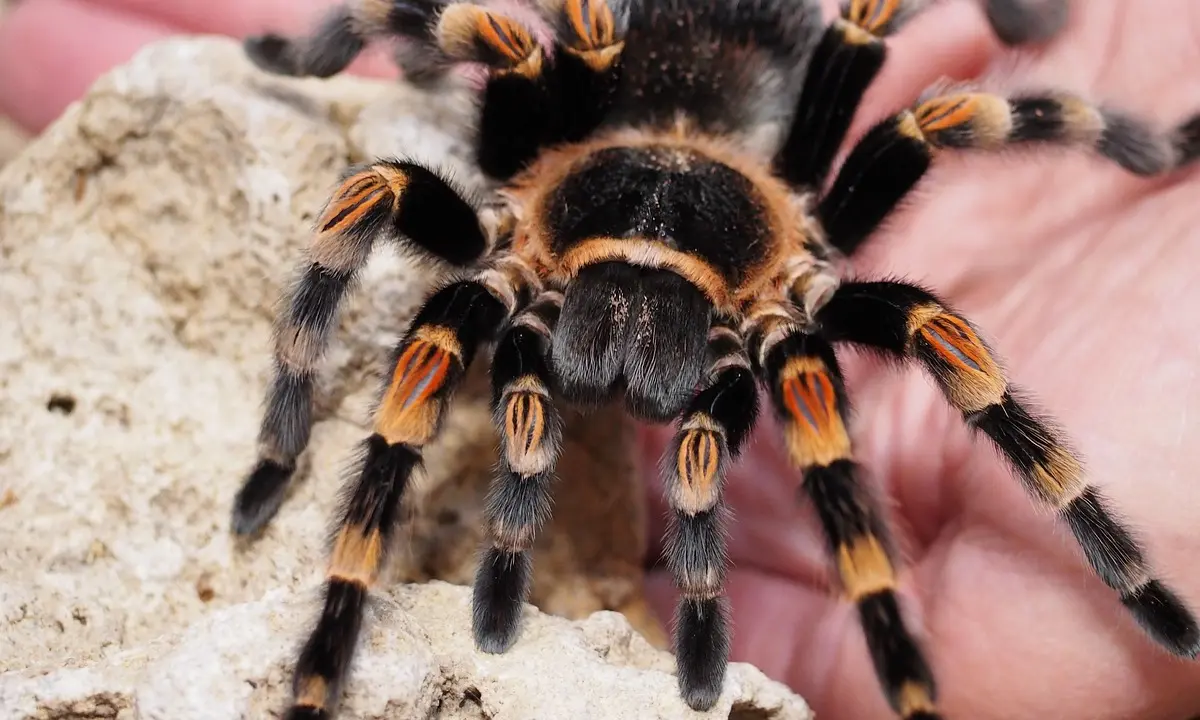
True tarantula keeping is a quiet spectator sport. Their daily routines are slow, methodical, and devoid of the aggressive energy their reputation suggests. My Chilean Rose Hair, Rosie, will spend hours in a single spot, occasionally lifting a leg to clean it with her pedipalps in a motion as delicate as a cat washing its paw. This is not a threat; it’s basic maintenance.
For web-dwelling species like my Orange Bitey Thing, Flash, webbing is an act of creation and security. He doesn’t just lurk; he architects. He lays down silken tripwires, carpets his cork bark, and constructs a funnelled retreat. Watching him tap and weave is to watch an artist build a safety net. Exploration is a slow-motion affair, a cautious testing of the air with pedipalps, not a frantic scramble to escape. Even my large Goliath, when he roams at night, moves with a deliberate, heavy grace that vibrates the substrate.
The Feeding Ritual: A Study in Precision, Not Savagery
The feeding response is often where fear meets misunderstanding. People imagine a frenzied attack. What you actually see is a masterclass in efficient energy use. A tarantula will often wait, perfectly still, until the cricket walks into the perfect range. Then it’s a lightning strike-a single, precise bite to inject venom. The prey is immobilized almost instantly.
What happens next is not a messy feast, but a slow, enzymatic process. The tarantula pumps digestive fluids into the prey, turning its insides to a soup it can then ingest. It is clinical and quiet. My defensive OBT, Flash, does this from the safety of his web. My docile Rosie often ignores food entirely for months. Seeing this delicate, almost fastidious process completely reframes the act from one of “savagery” to one of biological necessity—especially considering the metabolic factors that influence their appetite and growth.
The Molting Process: Vulnerability, Not Monstrosity
Nothing dismantles the myth of the monstrous arachnid faster than witnessing a molt. In the days before, the tarantula refuses food, becomes lethargic, and often develops a bald, darkening abdomen. It is at its most vulnerable. When the time comes, it will lay on its back-a position many mistake for death.
The hours-long struggle to emerge from its old exoskeleton is a profound display of fragility and renewal. I’ve watched my T. stirmi, Goliath, flex and pulse for hours to slowly free himself. The new creature that emerges is soft, pale, and utterly defenseless, its fangs and claws like soft plastic. This is not a monster; it is an animal undergoing a traumatic, life-giving transformation. You learn respect, not fear, by observing this sacred quiet.
How Knowledge Disarms Fear: Education as Your First Tool
Ecological Role: Tarantulas as Pest Regulators
Fear often melts away when you understand an animal’s job in the world. Tarantulas are masterful, sit-and-wait predators of insects and other arthropods. So, how do tarantulas hunt and capture their prey? They typically ambush from a concealed spot, then seize it with a swift strike and inject venom to immobilize it. In their native habitats, from deserts to rainforests, they are a crucial natural pest control, keeping populations of crickets, cockroaches, and other invertebrates in check.
They are not out to hunt anything larger than themselves. Their ecological purpose is one of balance. In a home, a tarantula in its enclosure is the ultimate quiet neighbor-it makes no noise, demands little, and simply exists as a living piece of natural history. Reframing them from “threat” to “beneficial resident” is a powerful cognitive shift, especially since they pose little threat themselves.
Biology and Lifespan: Understanding the Animal
Cold, hard facts are the best weapons against irrational fear. Let’s break down the realities:
- Venom Potency: For the vast majority of species kept as pets, the venom is comparable to a bee sting. My G. rosea’s venom is medically insignificant to humans. While some species like the OBT have more potent venom, they are not “deadly.” The primary goal of their venom is to subdue small prey, not to defend against giants like us.
- Primary Defense: Their first line of defense is always escape. The second is flicking urticating hairs (for New World species), which cause itchy irritation, not poisoning. Biting is an absolute last resort.
- Lifespan: This is a key point. Many female tarantulas live for decades. My Rosie is 15. This longevity forces a perspective shift; you are not caring for a short-lived bug, but a long-term commitment with a individual history. They are slow-growing, deliberate animals.
- Metabolism: They operate on a different clock. They can go months without food, require little space, and spend most of their time in a state of restful awareness. Their slow pace is the opposite of the chaotic, aggressive movement people fear.
When you learn that a tarantula’s main wish is to be left alone in a secure, quiet spot, the fear of being “attacked” becomes absurd. You hold all the power to provide safety, and in return, they offer a lifetime of fascinating, silent observation. A common misconception is that tarantulas are aggressive. In reality, they are usually shy and will retreat when given space.
A Path to Comfort: Practical Steps to Reduce Your Anxiety
Controlled Exposure: Start with Pictures, Then Videos, Then the Enclosure
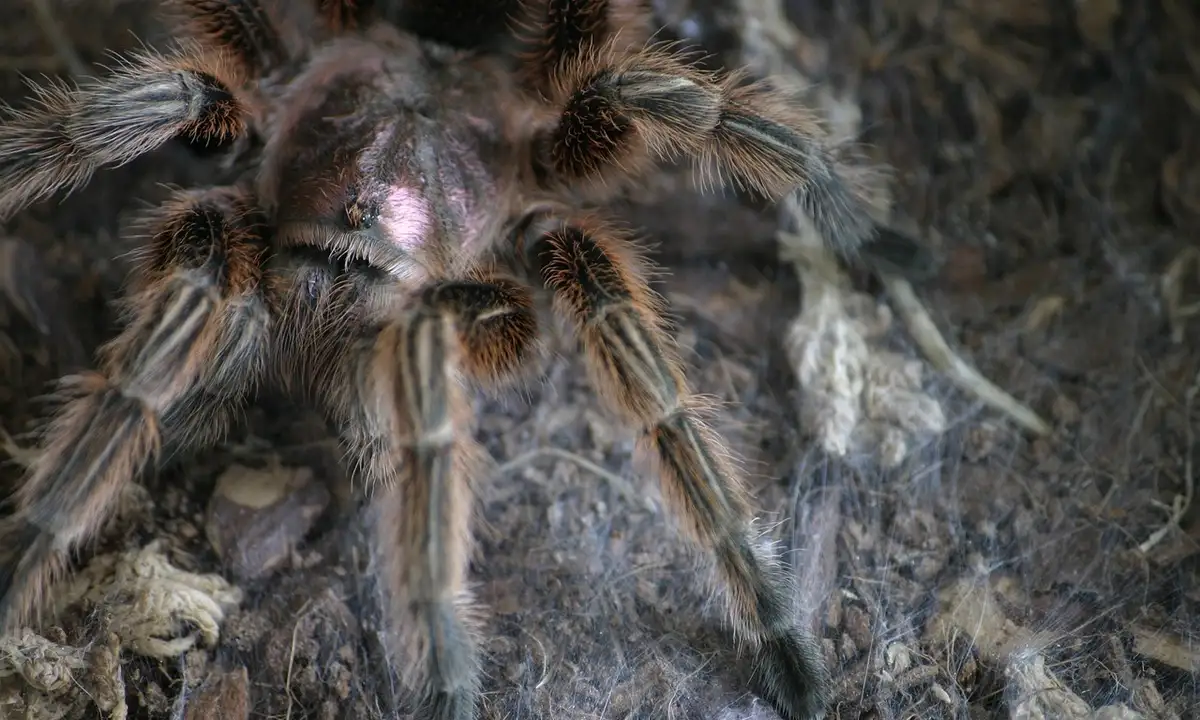
Your brain can learn new associations, and systematic exposure rewires the fear response without overwhelming you. Begin with static images of calm species, like my Chilean Rose Hair Rosie, whose dusty pink coloration is more elegant than alarming. I often show friends photos of her in a gentle pose, focusing on the intricate patterns of her setae. Progress to high-definition videos that capture slow, deliberate movements-the careful extension of a leg during grooming, not the predatory strike. Finally, observe a living tarantula inside its secured enclosure from a comfortable distance. This graduated approach builds familiarity at your pace.
- Week 1: View still images of docile New World tarantulas daily.
- Week 2: Watch feeding and exploration videos for 5-10 minutes.
- Week 3: Visit a pet store or fellow keeper to view an enclosure from across the room.
- Week 4: Sit calmly beside the enclosure for a short observation session.
Creating a Safe Observation Space: The Keeper’s Role
The physical setup is crucial for mutual comfort. I always place enclosures on stable, waist-high shelves so you are looking across, not down, which feels less confrontational for both species. Ensure the lid or door has a secure latch-knowing my Burgundy Goliath Bird Eater Goliath is contained, even when he kicks urticating hairs, prevents panic. Use soft, indirect lighting to avoid casting your shadow over the tank, a gesture that reduces stress for the animal and keeps the scene calm for you. This controlled environment frames the tarantula as a subject of study, not a threat.
- Use a sturdy stand or shelf that does not vibrate.
- Verify all enclosure closures are escape-proof before each viewing.
- Position the enclosure so the interior is fully visible without needing to lean close.
- Keep the surrounding area uncluttered to minimize startle reflexes.
Breathing and Grounding: Managing the Physiological Response
When anxiety spikes, your body reacts before your mind can reason. I use a simple 4-7-8 breathing technique during rehousings: inhale for 4 seconds, hold for 7, exhale for 8, to steady my hands and quiet my heartbeat. Focus on tangible details-the temperature of the room, the silence of the enclosure, the precise placement of a cork bark hide. During one escape incident with my OBT Flash, this grounding method prevented a hurried reaction that could have harmed us both. Acknowledge the fear without letting it dictate your actions.
- Practice breathing exercises away from the enclosure first.
- Name five neutral things you see in the room to anchor yourself.
- Keep your observations short; even 2 minutes of focused watching is progress.
- Remember, the tarantula’s primary desire is to hide, not to engage.
From Fear to Fascination: Applying This in Pet Tarantula Care
Choosing a First Tarantula: Docile ‘Ambassadors’
Your first tarantula should be a predictable, slow-moving teacher. Species like Grammostola rosea, the Chilean Rose Hair, are ideal for beginners because their prolonged fasting periods and sedentary nature allow for low-pressure observation. My Rosie has gone eight months without a meal, simply sitting in a regal pose. Avoid Old World species like Pterinochilus murinus initially; my OBT Flash’s speed and defensive posture are for experienced keepers. Look for New World terrestrials known for calm dispositions.
- Top choices: Grammostola pulchra (Brazilian Black), Tliltocatl albopilosus (Curly Hair), Aphonopelma chalcodes (Arizona Blonde).
- Key traits: Readily available captive-bred juveniles, minimal hair-flicking, tolerance for minor husbandry fluctuations.
- Avoid arboreals and fast-growing species for your first enclosure.
- Purchase from reputable breeders who can verify the spider’s health and lineage.
Setting Up for Observation: The Viewing-Friendly Enclosure
A well-designed tank turns care into a captivating window on natural behavior. I use front-opening glass terrariums for my terrestrials, as this access point minimizes disturbance and provides an unobstructed view of burrow entrances and silk lines. For Goliath, I maintain a deep, damp substrate of coconut fiber and peat moss to support his humidity needs while allowing me to see his impressive leg span when he emerges. Add a shallow water dish and a cork bark hide placed against the glass to encourage visible activity.
- Select an enclosure that is wider than it is tall for terrestrial species.
- Provide 5-8 inches of substrate for burrowing; pack it down firmly.
- Position hides and décor to create “viewing lanes” into the tarantula’s world.
- Use LED strips placed above the enclosure, never inside, to highlight colors without raising heat.
The “Look, Don’t Touch” Philosophy: Respect as the Foundation
Handling is a risk to the tarantula and a potential trigger for you; observation fosters deeper respect. Tarantulas are not domesticated, and even a docile animal like Rosie can have a bad day, resulting in a bite or dropped urticating hairs that cause irritation. My defensive OBT Flash reminds me that our role is custodial, not interactive. The fascination comes from witnessing natural behaviors-the meticulous webbing, the silent molt, the precise strike-all of which are inhibited by handling stress. This philosophy protects your pet and transforms your fear into focused curiosity.
- Handling can cause falls leading to fatal abdominal ruptures.
- Urticating hairs from New World species like Goliath can embed in skin and eyes.
- Medically significant venom, while rare in fatalities, requires caution.
- Use soft-tipped tongs for maintenance to maintain a safe boundary.
Common Questions
What are common misconceptions about tarantulas?
A major misconception is that tarantulas are aggressive and actively seek to bite humans. In reality, they are reclusive and defensive, with biting as an absolute last resort. Another myth is that all tarantulas are deadly, when their venom is typically no more medically significant than a bee sting for most common pet species. People also often believe their large size correlates with danger, but some of the most potent venoms belong to smaller, obscure species not in the pet trade. With that in mind, a realistic risk assessment for keeping tarantulas as pets shows that bites are uncommon and rarely dangerous when proper care is followed. Careful husbandry, appropriate enclosures, and respectful handling minimize risk.
What are the benefits of tarantulas in the ecosystem?
Tarantulas play a crucial role as natural pest controllers, helping to manage populations of insects and other arthropods in their habitats. Their burrowing activities can also help aerate soil and improve its quality. Understanding why tarantulas dig—how burrows shelter them from extreme temperatures, regulate moisture, and serve as ambush sites for prey—helps explain their ecological importance. By occupying a specific predatory niche, they contribute to the overall balance and biodiversity of their environments, from deserts to rainforests. This topic is a central part of the ultimate guide to tarantula burrows and why they dig.
What is the difference between a tarantula and other spiders?
Tarantulas are mygalomorphs, meaning they have downward-striking fangs and two pairs of book lungs, unlike most common spiders which have pincer-like fangs that move sideways and a different respiratory system. They are generally much larger, heavier-bodied, and more long-lived than typical house spiders. Furthermore, many tarantulas are ambush predators that rely on strength and venom from a burrow or retreat, rather than building intricate webs to catch prey. To learn more about how they differ, dive into their unique characteristics here.
How can education reduce fear of tarantulas?
Education replaces sensationalized myths and blank fear with concrete facts about tarantula biology and behavior. Learning about their true defensive nature, low-risk venom, and harmless daily rituals builds a framework of understanding. This knowledge empowers individuals to reinterpret what they see, transforming an unknown threat into a known, and often fascinating, animal.
What are some harmless tarantula behaviors people should know?
Tarantulas spend most of their time in quiet, predictable activities like meticulous grooming of their legs and pedipalps, similar to a cat cleaning itself. Many species engage in elaborate but non-threatening web-weaving to create safe retreats and sensory trip lines, not aggressive traps. Perhaps the most vulnerable and revealing behavior is molting, where they lie on their backs to slowly shed their exoskeleton, demonstrating profound fragility, not aggression. These common behaviors often signal the tarantula’s state or needs, not aggression. Interpreting them helps us read what they are trying to communicate about comfort, threat, or health. For more information on what do tarantula behaviors mean, explore the details provided.
The Final Molt
After fifteen years with my Chilean Rose Hair, Rosie, and through countless rehousings of faster species like Flash, one principle stands absolute. The most critical parameter for any tarantula, and the first step in replacing anxiety with awe, is providing a securely locked enclosure with the correct substrate moisture-bone dry for desert species like Grammostola, consistently damp for tropical giants like Theraphosa stirmi-because a spider in optimal health exhibits natural, calm behaviors instead of stress-driven reactions. Get this foundation wrong, and you invite problems that feed fear; get it right, and you build a stage for quiet observation.
True confidence comes not from touching, but from watching. I spend hours noting the iridescent sheen on Goliath’s carapace after a misting, or the silent, deliberate way Rosie rearranges her burrow. Patience is your finest tool. When you stop expecting interaction and start appreciating the meticulous web architecture of an OBT or the sudden, efficient strike at a cricket, you witness an animal perfectly adapted to its world. That respectful distance is where fascination permanently molt out of fear.
Further Reading & Sources
- Tarantulas for overcoming arachnophobia | Arachnoboards
- Overcoming arachnophobia | Tarantula Forum
- A Spiderless Arachnophobia Therapy: Comparison between Placebo and Treatment Groups and Six-Month Follow-Up Study – PMC
Arlo is a lifelong arachnid enthusiast who believes tarantulas are the world’s most misunderstood roommates. With years of hands-on experience in tarantula care, habitat setup, and species behavior, Arlo combines expert knowledge with a dash of humor to make spider ownership less scary and a lot more fascinating. From choosing the right enclosure to understanding why your eight-legged buddy is doing that weird little pose again, Arlo is here to help you become the best tarantula parent you can be, without getting tangled in the web of misinformation.
Tarantula Myths and Misconceptions