
Are Tarantulas Aggressive? Understanding Species-Specific Temperament
Published on: February 20, 2026 | Last Updated: February 20, 2026
Written By: Arlo
Tarantulas are not inherently aggressive; their behavior is a complex tapestry of defense mechanisms, evolved instincts, and individual personality shaped by millennia in diverse habitats. In my years keeping everything from a docile ‘pet rock’ like Rosie, my G. rosea, to the lightning-fast Flash, my OBT, I’ve learned that labeling them as ‘aggressive’ misses the true story. This article dissects the myths, explaining why a tarantula’s famous threat posture is usually sheer fright. The quick answer is that true, unprovoked aggression is exceptionally rare; what keepers interpret as anger is almost always a stressed animal trying to survive. We’ll explore the key factors that predict behavior, helping you read the signs and provide better care.
- Quick Stats:
- Origin: Species hail from every continent except Antarctica, with temperaments finely tuned to their native environment-from arid scrublands to humid jungles.
- Type: Broadly categorized as New World (the Americas, often possessing urticating hairs) or Old World (Africa, Asia, often relying on speed and potent venom).
- Growth Rate: A general trend exists: slower-growing species (like many Brachypelma) often display calmer dispositions than fast-growing, high-metabolism species (like many Psalmopoeus).
This guide will equip you with the knowledge to interpret tarantula behavior accurately, allowing you to foster a low-stress environment for any species, ensuring their well-being from fragile sling to formidable adult.
Debunking the Myth: Are Tarantulas Naturally Aggressive?
New keepers often worry about aggression, but this usually stems from a fundamental misunderstanding of tarantula behavior. Tarantulas are not aggressive creatures; they are defensive animals whose actions are rooted in fear and self-preservation, not malice or predation.
There is a critical difference between aggression and defensiveness that shapes all husbandry decisions. Aggression implies an unprovoked, offensive action, which is simply not in a tarantula’s behavioral repertoire when it comes to humans. Their world is one of reaction, not initiation.
I see this spectrum daily with my own tarantulas. My Grammostola rosea, Rosie, is the quintessential “pet rock.” Rosie’s prolonged fasts and motionless poses demonstrate a tarantula’s primary desire: to be left in peace, not to engage. Contrast her with my Pterinochilus murinus, Flash, who reacts to any intrusion with a lightning-fast defensive posture. Flash isn’t “angry”; he’s terrified of the giant disturbance.
To clarify their actions, here are the key behavioral drivers:
- Defensiveness: A reaction to a perceived threat. This includes rearing up, threat postures, kicking hairs, or retreating.
- Prey Drive: The instinct to hunt. This is triggered by specific cues like the vibration of a cricket, not by a human hand.
- Territoriality: Some species will defend their burrow or web. This is still a defensive act, not an offensive hunt.
So, for anyone searching “are tarantulas aggressive to humans,” the direct answer is no. A tarantula has no evolutionary reason to view you as food, only as a potential predator it must survive.
How Tarantulas Perceive the World: Sensory Input and Threat Response
Understanding tarantula temperament requires a shift in perspective-to theirs. Tarantulas are essentially blind to details, perceiving the world as a landscape of vibrations, air currents, and vague shadows. Their entire threat assessment is built on this limited sensory input. So what do these common behaviors mean, and do they reveal anything about tarantula temperament? And how should we interpret these actions in the context of everyday care and observation?
Their bodies are covered in specialized tactile hairs (setae) that detect the slightest air movement or substrate vibration. A passing shadow or a footfall near the enclosure isn’t a visual event to them; it’s a potentially dangerous seismic rumble. What you intend as harmless maintenance, they may process as an approaching threat.
Here is the typical step-by-step chain of events when a tarantula feels threatened:
- Detection: Sensory hairs pick up vibrations or air pressure changes from movement.
- Freeze: The tarantula often becomes motionless, assessing the danger.
- Orientation: It turns its body and front legs toward the vibration source.
- Warning Display: For defensive species, this is the raised front legs, exposed fangs, and hissing stridulation.
- Defensive Action: The final choice: flee to a hide, kick urticating hairs, or deliver a dry or venomous bite as an absolute last resort.
Your enclosure setup directly influences this process. An overly exposed tank with bright lights or constant foot traffic can keep a tarantula in a near-constant state of low-grade alert, making defensive reactions more frequent. I use deep substrate, cork bark hides, and ambient room lighting to create a secure environment that minimizes false alarms.
The Role of Urticating Hairs and Venom
These are often mislabeled as offensive weapons, but they are purely defensive adaptations. My Theraphosa stirmi, Goliath, kicks a cloud of hairs at the mere vibration of his water dish being moved, a perfect example of a pre-emptive, non-contact defense. It is a clear “stay back” signal.
Venom is metabolically expensive to produce and is primarily for subduing prey. Even for species with medically significant venom, a defensive bite against a human is a waste of resources and a grave risk to the tarantula, which is why it is a final option. The goal is always to deter, not to engage.
Urticating hairs are a hallmark of New World tarantulas (from the Americas). Are they dangerous? Understanding the real risks helps you assess exposure and safety. Here are common examples and effects:
- Grammostola, Brachypelma, Aphonopelma: These genera have barbed hairs that cause skin irritation and intense itching, akin to fiberglass.
- Theraphosa (Goliath species): Their hairs are particularly potent and can cause severe respiratory distress if inhaled, and a painful rash on skin.
- Lasiodora, Nhandu: Known for prolific hair-kicking, their hairs are very effective irritants.
Respecting these defenses means working around them, not testing them. When I service Goliath’s humid enclosure, I move slowly and use long tools, prioritizing his comfort and my safety without direct interaction. This “look, don’t touch” philosophy respects their nature and keeps everyone secure.
Factors That Shape Your Tarantula’s Demeanor
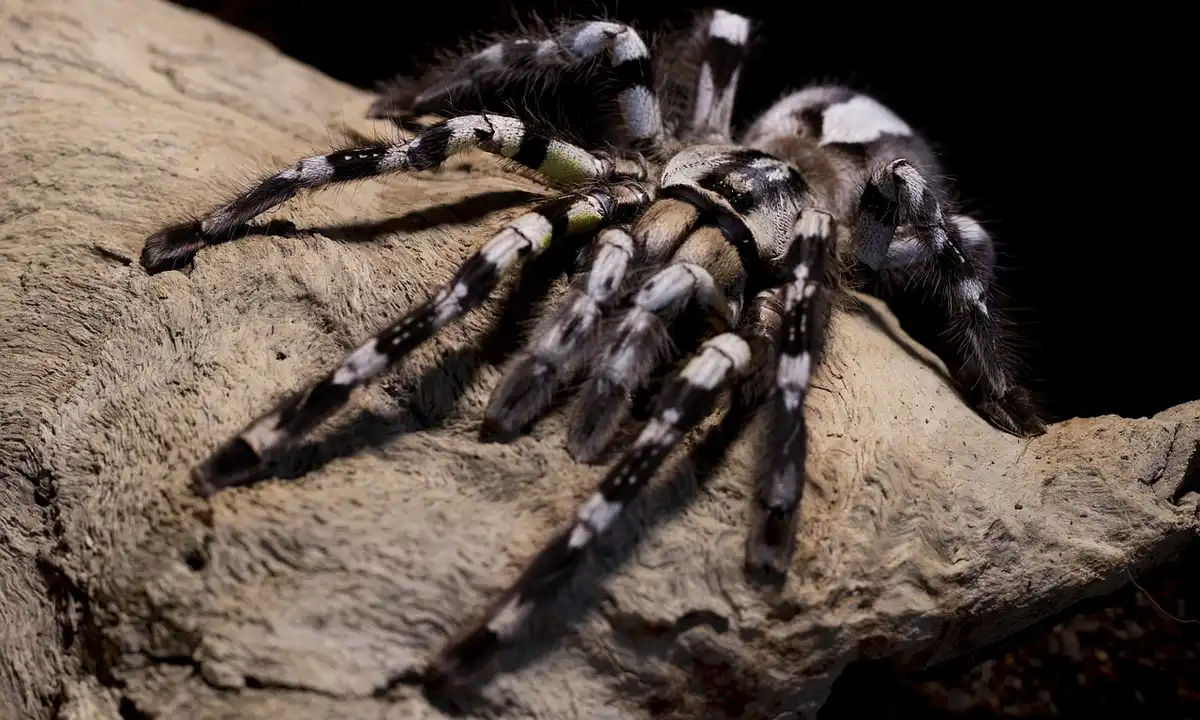
Labeling a tarantula simply as “aggressive” ignores the complex web of influences on its behavior. Think of temperament as a recipe, where species is the main ingredient, but other elements dramatically alter the final result. Observing these factors helps you understand your pet, not just manage it. Learn to read your tarantula’s body language—watch for stress indicators and defensive postures. Recognizing these signs helps you respond calmly and prevent escalation.
| Factor | How It Influences Behavior | Specific Data & Notes |
|---|---|---|
| Species | The strongest baseline predictor. Genetics dictate instinctive responses. | A Chilean Rose Hair (like my Rosie) is physiologically wired for stillness, while an OBT is wired for a rapid defense. |
| Individual Variability | Personality exists! Two tarantulas from the same sac can act differently. | I’ve had a famously docile species give a threat posture, while a defensive species remained calm. Expect surprises. |
| Health & Stress | Discomfort breeds defensiveness. A stressed tarantula is more likely to act out. | Low humidity for a tropical species like my T. stirmi causes obvious agitation. Parasites or injury can also alter behavior. |
| Age & Gender | Life stage and sex drive behavior. Mature males have one priority. | Juveniles are often more skittish. Mature males become relentless wanderers, losing interest in food and showing increased boldness. |
| Molting Cycle | A vulnerable, energy-intensive process that changes everything. | In pre-molt, they become reclusive and refuse food. Post-molt, they are soft and extremely defensive. A normally calm tarantula will threat posture if disturbed during this time. |
| Enclosure Setup | Husbandry directly impacts security. An insecure tarantula is an anxious one. | Insufficient hides cause chronic stress. Excess vibration from speakers or foot traffic can trigger defensive displays. Proper space, anchor points, and privacy reduce defensive reactions. |
Species-Specific Temperament Profiles for Common Pet Tarantulas
While individual spiders vary, species trends are a keeper’s most vital tool. This table is a launchpad for research, not a definitive label for your individual spider. My personal experiences with my three are woven in as real-world examples.
| Common Name (Scientific) | Typical Temperament | Key Care & Behavior Note |
|---|---|---|
| Chilean Rose Hair (Grammostola rosea/porteri) | Docile, “Pet Rock” | My Rosie is the archetype: immobile for weeks, often refuses food for months. Their extreme stillness is often mistaken for perfect docility, but they can have sudden, grumpy moments. |
| Curly Hair Tarantula (Tliltocatl albopilosus) | Docile, Occasionally Skittish | A superb beginner choice. Often burrows as juveniles. They can flick urticating hairs if startled, but rarely threat posture. |
| Mexican Red Knee (Brachypelma hamorii) | Docile, Calm | Iconic and usually slow-moving. They prefer to flee or flick hairs rather than bite. Their stunning colors make them a centerpiece display animal. |
| Burgundy Goliath (Theraphosa stirmi) | Nervous, Prone to Hair-Flicking | My Goliath is a dedicated hair-flicker. She senses vibrations and reacts instantly with a cloud of irritating hairs. Their immense size combined with this defensive tactic demands respectful, low-disturbance care. |
| Orange Baboon Tarantula (OBT) (Pterinochilus murinus) | Defensive, Fast, Aggressive | My Flash lives up to the reputation: lightning-fast, perpetual heavy webbing, and a consistent threat posture. They are not for beginners; their speed and medically significant venom require advanced preparation and extreme caution. |
| Asian Fossorial Species (e.g., Cyriopagopus, Haplopelma) | Defensive, Reclusive, Fast | These Old World burrowers are often seen only at night. They possess potent venom and a lightning-fast strike. Encounters are rare but high-risk. |
New World vs. Old World Generalizations
This geographical shorthand is a fundamental safety concept. New World tarantulas (from the Americas) typically possess urticating hairs as a primary defense. Their venom is generally milder, akin to a bee sting for most humans. When threatened, they often face away and kick a cloud of these irritating hairs—like my Goliath does. Thus, their primary defense is the irritating hairs. Venom is typically a secondary tool used only if the threat persists or the hairs fail to deter.
Old World tarantulas (from Africa, Asia, Australia) lack urticating hairs. Evolution has armed them with faster reflexes, more potent venom, and a tendency to stand their ground. Their primary defense is a swift, decisive bite. My OBT, Flash, is a perfect case study: she invests energy in webbing a fortress and stands ready to defend it. Old World tarantulas are considered more dangerous due to these traits.
This means husbandry for Old Worlds demands extra precautions: more secure enclosure lids, tools for maintenance, and a strict “look, don’t touch” philosophy. Their speed turns a simple rehousing into a high-focus event. Understanding this divide is your first step in choosing a tarantula that matches your experience and comfort level.
Reading the Signs: Defensive Displays Versus True Aggression
My OBT, Flash, once spent an entire hour in a threat posture after I changed his water dish. He wasn’t being aggressive; he was terrified. Understanding this critical difference transforms how you interact with and care for your tarantula. True aggression, in the sense of a predatory drive directed at a keeper, is exceptionally rare. What we witness are almost always defensive stress responses.
A Step-by-Step Guide to Tarantula Behavior
Watch your tarantula’s body language like a silent film. Here is how to interpret the scenes.
Defensive Signs: “Please, go away.”
- Threat Posture: The tarantula rears up, lifting its first two pairs of legs and its fangs. The abdomen lowers. This iconic stance maximizes the visual size of the spider and prepares it to strike downward if pressed.
- Hair Kicking (Urticating Setae): My T. stirmi, Goliath, is a master. Using its back legs, it flicks a cloud of microscopic, barbed hairs from its abdomen. These cause intense itching and are a potent long-range deterrent.
- Rapid Retreat: A sudden, darting scramble into its hide. Speed does not equal aggression; it equals a desire to escape a perceived threat.
- Hissing/Stridulation: Some Old World species, like my OBT, produce a sharp hiss by rubbing body parts together. It’s an audible warning shot.
Aggressive Signs: “You are food.”
- This behavior is reserved almost exclusively for prey. It lacks the preliminary warning displays. The tarantula will often orient itself quickly and strike with shocking speed, delivering a neutralizing bite. The posture is forward, not reared up.
When you see any defensive display, your only job is to stop whatever you are doing and give the animal space. Back away slowly. Assess what caused the stress-was your vibration too close? Is the enclosure secure? Correct conditions prevent repeated confrontations.
The Reality of Bites
A bite is a final, desperate defense. It represents a complete failure of the keeper to read earlier, quieter warnings.
Pain and medical significance vary wildly. New World species (from the Americas) typically have venom comparable to a bee sting for most people, though their urticating hairs are often more problematic. Old World species (from Africa, Asia, etc.) lack urticating hairs but possess more potent venom that can cause severe muscle cramps, nausea, and pain for days.
I have kept fast, defensive species for years without a bite because I respect their space. Provoking a defensive bite is always a human error, not a malicious choice by the animal. Our role is to be careful stewards, not to test their boundaries.
Tailoring Care to Temperament for a Thriving Tarantula
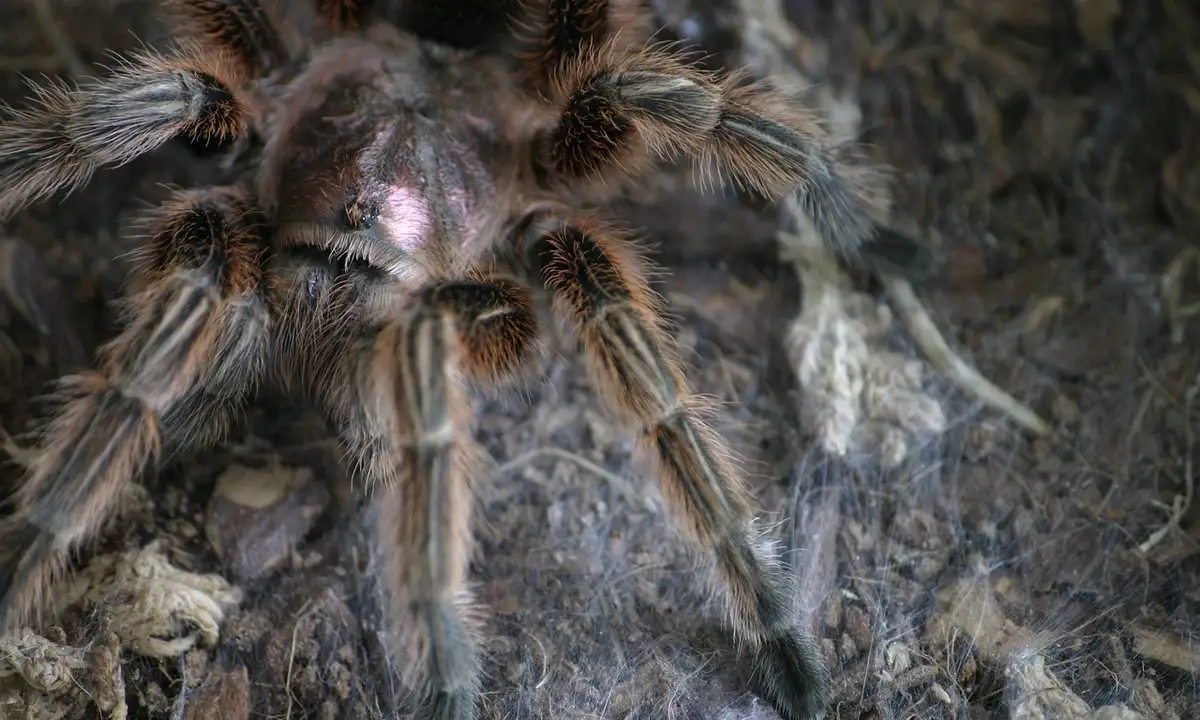
Husbandry is not one-size-fits-all. Your tarantula’s natural behavior should dictate your setup and routine. A stressed animal is an unhealthy animal, and proper housing is the first line of defense against stress.
Care Adjustments by Temperament Type
For Docile, “Pet Rock” Species (e.g., Grammostola rosea)
- Focus on providing a stable, low-stimulation environment.
- Standard terrestrial enclosure with a hide and a shallow water dish suffices.
- Their calm nature means you can perform maintenance with minimal drama, but still use gentle movements.
For Defensive, Skittish, or Fast Species (e.g., Old World Tarantulas, many arboreals)
- Secure Enclosures: Latching lids are non-negotiable. I add small clips to my OBT’s tank for peace of mind.
- Deep Substrate: Allows for burrowing and provides a safe retreat. It also cushions falls for heavy-bodied species.
- Multiple Hides & Visual Barriers: Cork bark flats and hollows, anchored plants, or cork tubes create a maze of security.
- The Right Tools: Use long (12-inch) soft-tipped tweezers for feeding and tank maintenance to keep your hands at a safe distance.
I am a staunch advocate for the “Look, Don’t Touch” philosophy for all species, without exception. Many people assume that holding a tarantula is a sign of affection, but tarantulas don’t experience affection the way mammals do. Handling is a stress response for them, not a gesture of care. Handling provides zero benefit to the tarantula and imposes immense stress. The risks—a fall causing a fatal rupture, a startled bite, or a flick of urticating hairs—far outweigh any fleeting novelty for the keeper.
Bioactive setups, with live plants and a clean-up crew of springtails and isopods, can subtly reduce stress. The micro-activity of the clean-up crew provides minor, natural enrichment and helps maintain a stable, healthy substrate that feels more like a real ecosystem to your pet.
Acclimation and Reducing Stress
Bringing a new tarantula home is a critical time. Your goal is invisibility.
- Pre-set the Enclosure: Have the habitat fully ready with damp substrate, hides, and a water dish before the tarantula arrives.
- The Gentle Transfer: In a safe, enclosed area (like a bathtub), gently guide the tarantula from its shipping vial into its new home using the vial or a soft brush. Do not grab or prod.
- The Blackout Period: Place the enclosure in a quiet, dim area and do not disturb for 5-7 days. No feeding, no prying, no tapping on the glass.
Common stress sources include excessive vibration from speakers or slamming doors, direct bright light, an overly large and exposed enclosure, and frequent physical disturbances.
I learned patience the hard way rehousing my juvenile Goliath bird eater. In a too-large temporary tub, she panicked, kicking a dense cloud of hairs and bolting unpredictably. The process took over an hour of calm, quiet waiting as she slowly found her way into the new enclosure on her own terms. Rushing would have guaranteed disaster. Tarantula care is often an exercise in stillness, in letting the animal move at its own deliberate pace.
A Breeder’s Perspective: Observing Individuality and Building Respect
In my years of keeping and breeding, I’ve learned that species labels are only a starting point. Individual personality is everything. My old Chilean Rose Hair, Rosie, is the definition of a ‘pet rock.’ She once went 14 months without a single meal. Yet, on one quiet evening, a cricket brushed her pedipalp. In a blur of dusty pink, she struck with a speed I’ve only seen in my Old World species. It was a potent reminder: even the most docile tarantula is a predator wired by millions of years of instinct.
Conversely, my Burgundy Goliath Bird Eater, Goliath, fits the ‘defensive’ profile perfectly. He is quick to kick clouds of urticating hairs at the slightest disturbance. But when his humidity is perfect and the enclosure is dark, I’ve watched him methodically groom each massive leg, a picture of serene focus. My Orange Babbler Tarantula, Flash, webs frenetically and assumes a threat posture if I look at her wrong. But her defensive nature manifests as a breathtaking dedication to engineering a silken fortress, not mindless aggression.
Interpreting these behaviors is a learned language, and fluency transforms your role from owner to true steward. You start to see the nuance: the difference between a curious leg lift and a pre-strike pose, the specific tilt of the carapace that means “I am hunting” versus “I am stressed.” I once misread Rosie’s prolonged fasting as illness, but learned it was simply her slow, resilient rhythm. This learning curve doesn’t end, and that’s what makes the hobby so deeply engaging.
This leads to the core ethic I advocate for: our primary job is to provide security, not seek interaction. Every attempt to handle a tarantula is, from the animal’s perspective, a potential predator attack. The stress can cause falls, ruptured abdomens, or trigger hair-kicking and biting. My respect for Goliath’s urticating hairs means I use long tongs and move slowly. My respect for Flash’s speed means her enclosure is meticulously secured before any maintenance. Their well-being is directly tied to our willingness to suppress our desire to touch.
The greatest joy in arachnoculture comes from quiet observation, from learning the unique cadence of each life in your care. Watch how yours drinks, how it rearranges substrate, where it chooses to rest. You will discover a fascinating individual, not just a specimen. Build respect through understanding, and you’ll find these creatures are not aggressive or docile, but simply-and wonderfully-themselves.
Common Questions
Are tarantulas aggressive?
There’s a common misconception that tarantulas are aggressive. To unpack that idea, it’s important to recognize that tarantulas are defensive, not aggressive. Tarantulas are not aggressive in the way mammals can be; they are defensive. Their actions are driven by fear, self-preservation, and instinct, not malice or a desire to attack. What is often labeled as aggression is almost always a stress response to a perceived threat. True, unprovoked offensive behavior towards something they do not view as prey is exceptionally rare.
Are tarantulas aggressive to humans?
No, tarantulas are not aggressive to humans. They have no evolutionary reason to see a person as food. If a tarantula acts defensively towards a human, it is because it feels threatened, not because it is hunting. Your presence registers as a potential predator, triggering a fight-or-flight response centered on survival, not aggression. In the wild, tarantulas face natural predators such as birds, snakes, and small mammals. These threats help shape their defensive behaviors and avoidance strategies.
Will a tarantula attack a human for no reason?
A tarantula will not attack a human unprovoked. Any defensive action, such as a threat posture or bite, is a last-resort reaction to a perceived danger. These behaviors follow a clear escalation from freezing and warning displays. Responsible care that minimizes stress and avoids provoking the animal will virtually eliminate any chance of a defensive encounter. Viewed as pets, tarantulas present a relatively low risk to people when kept by knowledgeable owners. A realistic risk assessment emphasizes proper housing, minimal handling, and recognizing signs of stress to prevent defensive actions.
I see debates online about aggression. Why is there so much conflicting info on forums like Reddit?
Online forums like Reddit contain valuable anecdotes but often conflate defensive behavior with true aggression. Terminology varies between keepers, and individual tarantula personality plays a huge role. A stressed or poorly housed specimen may act more defensively, which can be misinterpreted as an inherently “aggressive” species trait by inexperienced keepers.
Should I trust “aggression” labels I see in Reddit posts or comments?
Use Reddit and similar forums as a source of diverse experiences, not absolute fact. Always prioritize reputable care guides and species profiles from established breeders or scientific sources. Remember that a single keeper’s experience with one individual does not define an entire species, and husbandry practices drastically influence behavior.
If they’re not aggressive, is it safe to handle my tarantula?
Handling is strongly discouraged, regardless of a species’ temperament. It provides no benefit to the tarantula and imposes significant risk and stress. A fall can be fatal, and a startled tarantula may resort to defensive measures like biting or flicking urticating hairs. For beginners, handling tarantulas is not safe nor recommended. The safest and most respectful practice is to enjoy them through observation only.
Long-Term Success
Your tarantula’s health ultimately hinges on the balance between two elements: humidity and ventilation. The single most important parameter is not achieving a perfect humidity percentage, but providing a clear moisture gradient within a well-ventilated space so your spider can always find its preferred microclimate. My Burgundy Goliath thrives with a swampy corner, while my OBT would perish in those same conditions. Observe, adjust, and trust the spider’s instincts.
True mastery in this hobby is measured in quiet observation. Watch the meticulous architecture of a new web, the patient excavation of a burrow, or the iridescent sheen of a fresh carapace. Your patience is the most vital tool in your kit. Respect the animal’s space, provide for its needs, and you will be rewarded with a fascinating, long-lived display of natural behavior. The greatest joy comes not from handling, but from witnessing a life perfectly adapted to its world.
Further Reading & Sources
- Tarantula Species: The Different Types of Tarantulas and Where They Li – Dragon’s Diet
- A Guide to Keeping Tarantulas by Experience Level – HubPages
- The Best Tarantula Species for Beginners | Tom’s Big Spiders
Arlo is a lifelong arachnid enthusiast who believes tarantulas are the world’s most misunderstood roommates. With years of hands-on experience in tarantula care, habitat setup, and species behavior, Arlo combines expert knowledge with a dash of humor to make spider ownership less scary and a lot more fascinating. From choosing the right enclosure to understanding why your eight-legged buddy is doing that weird little pose again, Arlo is here to help you become the best tarantula parent you can be, without getting tangled in the web of misinformation.
Understanding Tarantula Behavior