
Will a Pet Tarantula Bite Its Owner? Understanding Pet Tarantula Behavior
Published on: September 4, 2026 | Last Updated: September 4, 2026
Written By: Arlo
The pet tarantula’s reputation as a hair-trigger biter is a myth woven from fear, not fact. In my 15 years of arachnoculture, nurturing everything from the placid ‘pet rock’ to the lightning-fast orange enigma, I have witnessed more retreats than threats. A tarantula’s bite is a last-ditch defense, not an act of malice, and with informed care, it is an exceedingly rare event. This article will dissect the why, when, and how of tarantula behavior to separate instinct from fiction.
Quick Stats: The Chilean Rose Hair (Grammostola rosea)
- Origin: Arid scrubland of Chile
- Type: New World (equipped with urticating hairs)
- Growth Rate: Glacial; a sling may take a decade to reach full size
Drawing from countless rehousings and the silent language of my own collection, this guide will equip you to read your tarantula’s mood and create a habitat where biting is never on the menu.
The Reality of Tarantula Bites in Captivity
The chance of a pet tarantula biting its keeper is remarkably low. In over a decade of keeping dozens of specimens, from my docile G. rosea to my defensive P. murinus, I have never been bitten. Statistically, a bite is an exceptional event, not a routine hazard of the hobby.
Common fears imagine a predatory spider hunting its owner, but captive tarantulas are reclusive animals that prefer to be left alone. Their primary instincts are to hide, eat, and avoid confrontation. I once rehoused Flash, my Orange Baboon Tarantula, a species famed for its defensiveness. When I gently encouraged him from his old enclosure with a soft brush, he chose a blindingly fast retreat into his new home, not an attack. Flight wins over fight almost every time.
A defensive bite typically only occurs under specific, acute stress:
- Direct Provocation or Trapping: This is the most common scenario. Accidentally pinning a tarantula against your skin during handling or while working in the enclosure leaves it no escape route.
- Mistaken Identity During Feeding: A tarantula may strike at warm, vibrating objects introduced into its space. If your finger mimics prey movement near a hungry tarantula, a bite is possible.
- Sudden, Severe Startle: A major fall, a crushing threat, or an intense vibration can trigger a panicked defensive response.
Why Tarantulas Bite: Understanding Defensive Behavior
Tarantulas lack the complex brain structures for emotions like aggression or spite. Their actions are pure, instinctual defense. However, tarantulas’ temperaments vary by species, with some being more skittish and others more placid. Understanding these species-specific temperaments helps distinguish defensive behavior from genuine aggression. Viewing a bite as ‘aggression’ misunderstands the animal; it is a last-ditch survival reflex.
They follow a predictable escalation sequence. First comes threat posturing: the tarantula rears up, lifting its front legs and carapace to appear larger, exposing the brilliant fangs. For New World species like my Goliath, the next step is flicking urticating hairs-a potent irritant. The bite is the final option. The strike itself is a quick, downward stab, often followed by an immediate retreat.
Common triggers that can push a tarantula to this final stage include:
- Sudden, heavy vibrations (a dropped enclosure, loud bangs).
- Direct physical contact, especially from above.
- An intrusive object (like tongs or a hand) penetrating deep into its hide.
- The spider feeling physically trapped with no avenue for escape.
Decoding Tarantula Body Language: Stress and Threat Cues
Learning to read your tarantula is the best way to prevent stress and avoid bites. A calm tarantula moves with slow, deliberate purpose. It may rest in the open, groom itself meticulously, or explore its enclosure at night with quiet grace.
Stressed or threatened tarantulas display clear, observable warnings:
- Rearing Up: The classic threat pose, front legs and body lifted high.
- Fang Display: The chelicerae part, revealing the glistening, black fangs.
- Stridulation: Some species, like my OBT, produce a sharp hissing sound by rubbing body parts together.
- Rapid, Erratic Movement: Panicked sprinting across the enclosure is a sign of acute stress.
- Hiding & Refusing Food: Prolonged concealment and fasting can indicate chronic, lower-level stress.
Respecting these signals and backing off immediately is the cornerstone of safe, ethical keeping. The table below contrasts key behaviors:
| Calm Signs | Stressed/Defensive Signs |
|---|---|
| Slow, exploratory walking | Fast, jerky, or frantic running |
| Resting placidly in the open | Rearing up into a threat posture |
| Gentle grooming of legs and pedipalps | Flicking urticating hairs (New World) |
| Taking prey eagerly and calmly | Refusing food or attacking prey with unusual violence |
| Subtle, normal webbing activity | Sealing off its hide or webbing erratically |
Assessing the Risk: Venom, Fangs, and Urticating Hairs
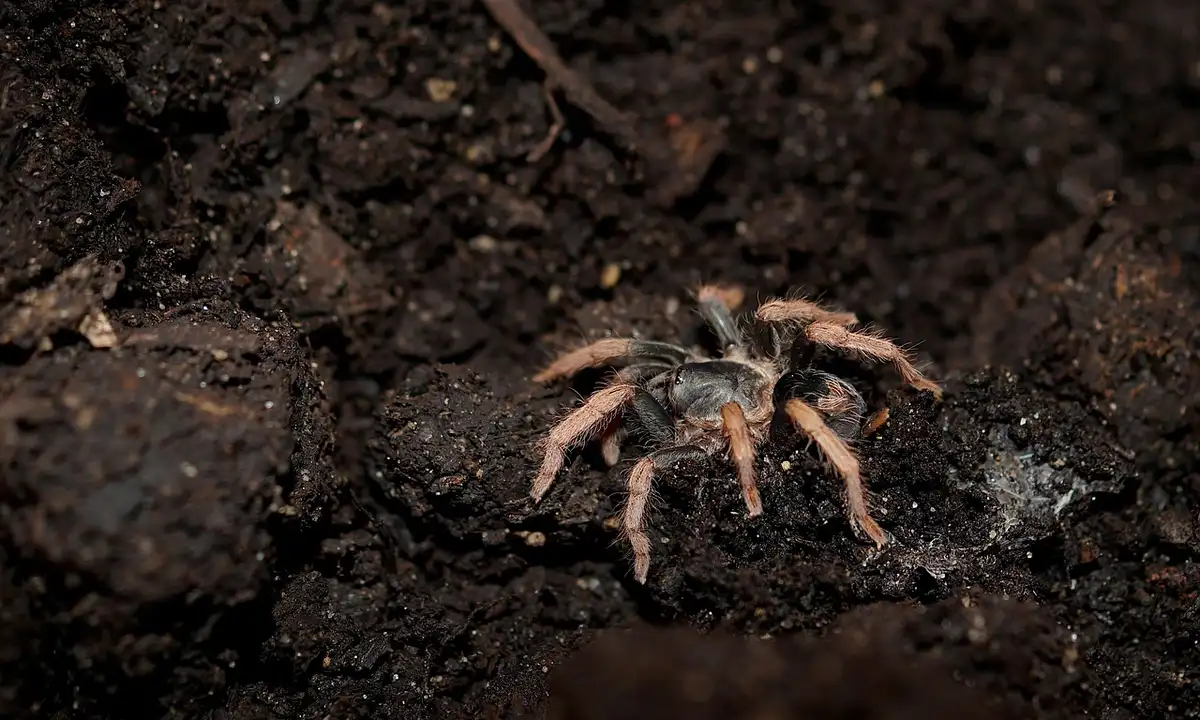
Evaluating bite risk means looking at two main factors: venom potency and physical defenses. For the vast majority of pet tarantulas, a bite is a last-resort defense, not an act of aggression. Their primary goal is to avoid conflict entirely.
Tarantula venom is designed to subdue insect prey. For humans, effects vary wildly. Medically significant species, like some from Asia and Africa, possess venom that can cause severe muscle cramps, localized necrosis, or days of intense pain. In contrast, most New World species kept as pets have venom comparable to a bee or wasp sting.
New World tarantulas from the Americas have a remarkable backup defense: urticating hairs. These microscopic, barbed hairs are flicked from the abdomen, creating a cloud of irritation that targets eyes, skin, and respiratory tracts. My Burgundy Goliath, for instance, will kick a dense cloud with startling speed when startled, a far more likely response than a bite. When people ask which is more dangerous—the urticating hairs or a bite? In most cases, the hairs present the bigger immediate threat, causing irritation and potential allergic reactions, while bites are rarer and usually milder by comparison.
If a bite does occur, symptoms are typically localized. Common reactions include immediate sharp pain, redness, swelling, and itching that may persist for several hours. Systemic reactions like nausea or muscle cramps are rare and generally linked to Old World species or individual sensitivity.
Handling a tarantula needlessly elevates the risk of a defensive bite or hair-flicking. Respecting their space is the single most effective way to ensure both your safety and the spider’s well-being. The silent, sudden strike is a stress response we must work to avoid. For beginners, handling tarantulas is generally not recommended. If handling is ever necessary, seek guidance from an experienced keeper and proceed with extreme caution.
Old World vs. New World Tarantulas: A Key Distinction
Geography plays a crucial role in the defense strategies of different tarantula species. New World tarantulas, like my docile Chilean Rose Hair, are equipped with urticating hairs and generally possess milder venom. Their first line of defense is often a threat posture followed by a flick of those irritating hairs.
Old World tarantulas from Africa, Asia, and Australia lack urticating hairs entirely. This absence means they rely on potent venom, exceptional speed, and a fiercely defensive posture as their primary protections. My OBT, Flash, will vanish into its web tunnel or assume a striking pose in a blur of motion if threatened.
This biological difference directly impacts risk. Bite likelihood and potential severity are inherently higher with Old World species due to their defensive nature and stronger venom. I learned this firsthand during a careful rehousing of Flash, where its speed demanded absolute focus and patience.
Species-Specific Temperament and Bite Likelihood
Individual personality exists, but species tendencies are a reliable guide. Choosing a species that matches your experience level is the cornerstone of predictable cohabitation. Beginners should always start with more predictable, slow-moving New World tarantulas.
My own collection showcases this spectrum. Rosie, my Grammostola rosea, is the classic ‘pet rock’-docile and unlikely to bite. Goliath, the Theraphosa stirmi, prefers hair-flicking but can be defensive. Flash, the Pterinochilus murinus, is fast, defensive, and its bite is considered medically significant.
| Species (Common & Latin) | Typical Temperament | Primary Defense Mechanism |
|---|---|---|
| Chilean Rose Hair (Grammostola rosea) | Docile, calm, often stationary | Urticating hairs (rarely used), threat posture |
| Mexican Redknee (Brachypelma hamorii) | Generally calm, slow-moving | Urticating hairs |
| Burgundy Goliath Bird Eater (Theraphosa stirmi) | Nervous, prone to hair-flicking | Urticating hairs (used readily), hissing stridulation |
| Brazilian Black (Grammostola pulchra) | Exceptionally docile, bold | Urticating hairs (very rarely used) |
| Orange Bitey Thing / OBT (Pterinochilus murinus) | Defensive, fast, reclusive | Potent venom, rapid escape or threat display |
| Indian Ornamental (Poecilotheria regalis) | Nervous, lightning-fast, defensive | Potent venom, rapid escape |
This table underscores a vital point. For a first tarantula, species like the Chilean Rose Hair or Mexican Redknee offer a manageable introduction to arachnoculture with minimal bite risk. Their calm demeanor allows you to learn husbandry fundamentals without the high-stakes pressure of a defensive Old World specimen.
Observing behavior is more rewarding than forcing interaction. The iridescent sheen of a carapace under the light and the meticulous construction of a silken retreat provide fascination without ever needing to touch. This “look, don’t touch” philosophy builds a respectful relationship where bites become a non-issue.
Proactive Husbandry: Minimizing Bite Risk Through Care
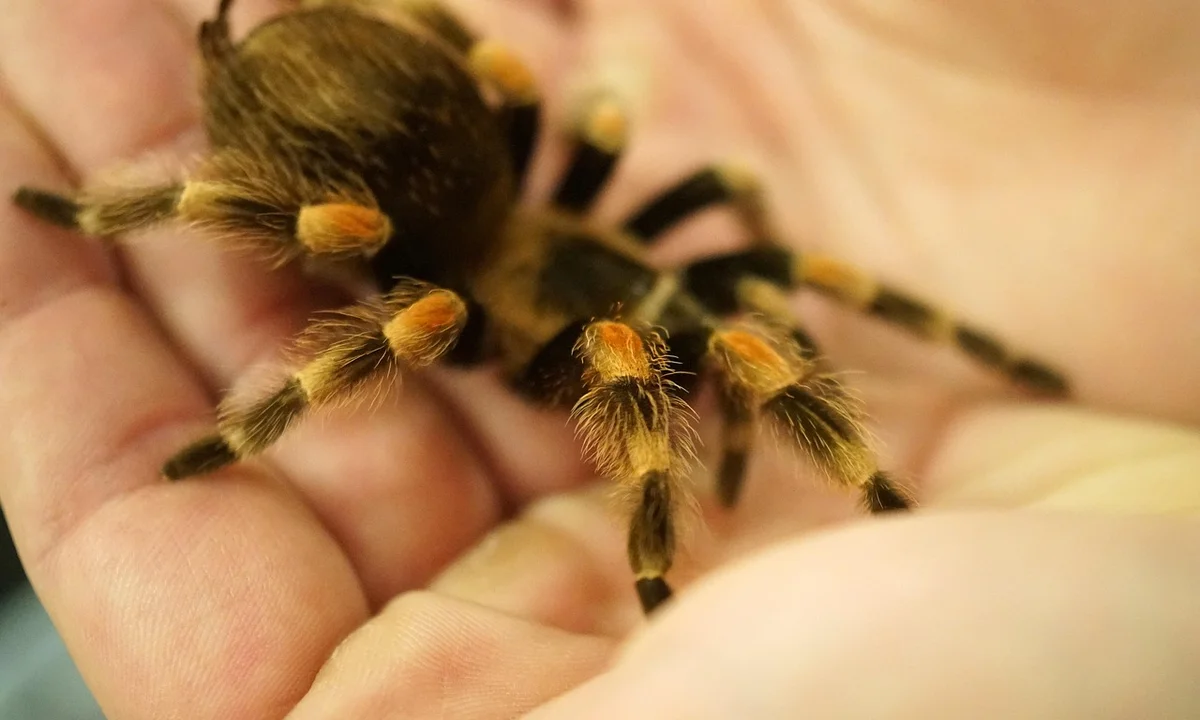
A bite is rarely an act of aggression. It is almost always a final, desperate defense triggered by perceived threat or acute stress. Your primary goal as a keeper is to craft an environment and routine that eliminates those triggers.
Building a secure, low-stress home is your most powerful tool for preventing defensive behavior.
The Foundation: Stress-Free Enclosure Design
Think like a prey animal. A tarantula needs to feel hidden and stable.
- Provide a Secure Enclosure. The enclosure must have a secure, ventilated lid. For terrestrial species like my old Rosie, ensure the substrate is deep enough for burrowing-at least 1.5 times their leg span. For climbers like my OBT, Flash, secure all décor to the sides and provide ample anchor points for webbing.
- Always Offer a Hide. Every single tarantula, regardless of species reputation, must have a proper hide. A cork bark flat, a half-pot, a curved piece of wood-this is their safe room. A tarantula without a retreat is a perpetually anxious tarantula.
- Use Appropriate Tools. Your hands are not husbandry tools. Use long, soft-tipped tweezers for feeding and removing leftovers. Use a gentle paintbrush for guidance. This maintains a respectful distance and keeps your scent away from their space.
- Minimize Unnecessary Intrusion. Every time you open the lid, you are a potential predator casting a shadow. Schedule maintenance. Spot-clean only when needed, and do it quickly and calmly. Their world should not be in constant upheaval.
Learning Their Language: Reading Mood
Tarantulas communicate through posture. A relaxed tarantula moves slowly or sits still. A stressed tarantula will often lift its front legs and carapace in a threat posture, like my Goliath does before a hair-flicking session. Some, like Flash, will retreat to their funnel web at the slightest vibration. Recognizing and respecting these signals—by backing off—is the cornerstone of safe interaction. In addition to posture, many tarantulas also use stridulation or substrate vibrations to communicate, though these signals vary by species and context.
I advocate firmly for the “Look, Don’t Touch” philosophy. Handling provides zero benefit to the tarantula and immense risk. I learned this viscerally years ago during a routine rehousing of a seemingly calm specimen. A sudden noise startled it, resulting in a lightning-fast escape across my desk. The ten minutes of heart-pounding containment, using cups and brushes, underscored the truth: these are wild animals whose first instinct is flight, not friendship. Forcing contact is for our curiosity, not their welfare.
Safe Enclosure Maintenance and Rehousing Protocols
Rehousing is the highest-risk activity we undertake. Patience and preparation are everything.
- Prepare the New Enclosure First. Have the new home completely ready-substrate packed, water dish in, hide placed-before you even look at the old enclosure. This minimizes the time the tarantula is in transit.
- Create a Controlled Environment. Work inside a large, empty bathtub or a plastic storage bin. These walls will contain any unexpected sprints.
- Gather Your Tools. You will need: a large catch cup (clear deli cup), a soft paintbrush or piece of cardboard, and your long tweezers. Have them all within reach.
- The Gentle Guide Method. Open the old enclosure. Using the brush, gently encourage the tarantula to walk into the catch cup. Never poke or chase. Place the cup over the tarantula if it is against a flat surface, then slide cardboard underneath to secure it.
- The Secure Transfer. With the tarantula safely in the catch cup, place the cup into the new enclosure. Remove the lid or slide the tarantula out gently. Allow it to exit on its own time. Do not shake or force it.
Move with slow, deliberate motions; sudden movements trigger a panic response you cannot outrun. Let the tarantula set the pace, even if it takes twenty minutes of stillness before it decides to explore.
If a Bite Occurs: Response and First Aid
Despite all precautions, accidents can happen. A misplaced hand during cleaning, a startled tarantula during maintenance-knowing how to respond calmly is critical.
Immediate First Aid Steps
- Remain Calm. Do not jerk your hand or fling the tarantula. Gently encourage it to release and disengage.
- Secure the Tarantula. If it has escaped, deal with your injury first, then contain the tarantula safely using the cup-and-cardboard method when you are able.
- Clean the Wound. Wash the bite area thoroughly with soap and warm running water for at least five minutes. This helps prevent secondary bacterial infection.
- Manage Swelling and Pain. Apply a cold compress or ice pack (wrapped in a cloth) to the area to reduce swelling and pain. Elevate the limb if possible.
- Monitor Closely. Watch for symptom development over the next several hours.
When to Seek Medical Attention
Most New World tarantula bites, like from a Chilean rose hair, are comparable to a bee sting for most people. Pain levels can vary between bites and individuals, and understanding your pain and any accompanying symptoms helps gauge severity. Do tarantula bites hurt? People report a range of sensations, from tingling to sharp pain, which can help you assess how serious a bite is. The venom of Old World tarantulas (like an OBT) is significantly more potent and can cause severe muscle cramps, localized pain, and systemic effects. Seek professional medical care if:
- The bite is from an Old World species.
- You experience signs of a severe allergic reaction: difficulty breathing, swelling of the lips/tongue/throat, dizziness, or a spreading rash.
- Severe, radiating pain or muscle cramps persist or worsen.
- The bite area shows signs of a serious infection: increasing redness, warmth, pus, or red streaks moving up the limb.
Always inform medical staff of the exact species if known. Capture a clear photo of the tarantula if it is safe to do so for identification. Your calm and informed response ensures the best outcome for both you and your pet.
Common Questions
Will my tarantula bite me if it’s scared?
A bite is a last-resort defense when a tarantula feels trapped and has no escape route. Their first instinct is almost always to flee or, for New World species, to flick urticating hairs. You can avoid provoking a defensive bite by moving slowly, respecting its space, and never pinning it against your skin. Bites happen mainly when a tarantula feels trapped or threatened. Knowing these triggers of tarantula bites helps with prevention.
Do tarantulas recognize or get aggressive with their owners?
Tarantulas do not have the cognitive capacity for recognition, bonding, or aggression as mammals understand it. Their behavior is driven by instinct and immediate stimuli. Actions we interpret as “aggressive,” like rearing up or biting, are purely defensive responses to perceived threats. It is a common misconception that tarantulas are inherently aggressive; in reality, most species prefer to retreat or freeze when faced with danger, only attacking when cornered. This nuance helps unpack the myth that tarantulas are always dangerous or aggressive.
Why is handling generally discouraged if bites are so rare?
Handling provides no benefit to the tarantula and significantly increases stress and risk. A sudden noise or movement can trigger a panic sprint or fall, which is far more dangerous to the fragile spider than to you. Ethical, safe keeping prioritizes observing your pet in a secure, low-stress enclosure.
Are bites from all tarantula species equally severe?
No, severity varies greatly. New World species (from the Americas) typically have milder venom, often compared to a bee sting. Old World species (from Africa, Asia, Australia) lack urticating hairs and rely on more potent venom, which can cause severe pain, cramping, and medically significant symptoms.
What is the single best way to prevent a bite?
The most effective method is proactive, stress-free husbandry. This includes providing a secure enclosure with a proper hide, using long tools for maintenance, and minimizing unnecessary intrusions. By ensuring your tarantula feels safe and undisturbed, you eliminate the primary reasons for a defensive bite. A safe habitat is the key to minimizing tarantula bite risk. A stable, enriched environment reduces stress and defensive responses.
The Final Molt
Building a long-term partnership with a pet tarantula hinges on your skill in reading their subtle signals and providing an environment where they feel utterly secure. The single most important factor for a bite-free, low-stress experience is keeping the enclosure setup appropriately for your specific species, effectively eliminating the primary reason a tarantula would ever need to bite a keeper. A stressed animal is a defensive one, and most defensive encounters stem from an incorrect habitat, frequent disturbances, or misinterpreted interactions.
Your greatest reward is not a handling session, but the silent observation of their natural artistry. You’ll witness the patient engineering of a burrow, the sudden, explosive precision of a feeding strike, and the meticulous weaving of silk into complex tunnels. I’ve spent entire evenings just watching my OBT, Flash, methodically web his entire enclosure into a golden fortress, a behavior far more fascinating than any brief hold could ever be. This hobby thrives on patience. It teaches you to measure success not in days, but in molting cycles, in the slow expansion of a burrow, in the quiet confidence of a spider that knows it is safe. Enjoy the show they put on, on their own terms.
Further Reading & Sources
- Are Tarantulas Dangerous? | Poison Control
- What to Do If Your Pet Tarantula Bites – The Tye-Dyed Iguana – Reptiles and Reptile Supplies in St. Louis.
- r/spiders on Reddit: Tarantulas bite humans?
Arlo is a lifelong arachnid enthusiast who believes tarantulas are the world’s most misunderstood roommates. With years of hands-on experience in tarantula care, habitat setup, and species behavior, Arlo combines expert knowledge with a dash of humor to make spider ownership less scary and a lot more fascinating. From choosing the right enclosure to understanding why your eight-legged buddy is doing that weird little pose again, Arlo is here to help you become the best tarantula parent you can be, without getting tangled in the web of misinformation.
Understanding Tarantula Behavior