
What Are Tarantulas? A Complete Beginner’s Introduction
Published on: December 3, 2025 | Last Updated: December 3, 2025
Written By: Arlo
Tarantulas are not the monsters of cinema, but sophisticated, ancient predators whose velvet hairs sense the faintest air currents and whose stillness is a masterclass in patience. You are looking at the ultimate ambush artist, an animal whose biological design has been perfected for over 350 million years. This guide will cut through the myths, answering your first big question: a tarantula’s bite is a last resort, and for most popular species, the venom is comparable to a bee sting. Their true defense is a cloud of microscopic, irritating hairs kicked from their abdomen, a far more common and effective strategy.
Quick Stats:
- Family: Theraphosidae
- Native Range: Every continent except Antarctica
- Size Range: From a 1-inch dwarf species to the 10-inch legspan of a Goliath bird eater
- Lifespan: Females can live 10-30 years; males typically 2-7 years
This guide will demystify their anatomy, decode their behavior, and give you the specific, experience-tested husbandry knowledge to confidently provide for one of nature’s most mesmerizing creatures.
Tarantulas Defined: Biology and Natural History
The Anatomy of a Tarantula
Think of a tarantula as a masterclass in efficient design, built for a life of ambush. Their body is divided into two main sections: the cephalothorax (prosoma) and the abdomen (opisthosoma).
The eight legs attach to the cephalothorax. Up front, you see two smaller limb-like structures called pedipalps; these act as sensory feelers and, in mature males, become specialized mating organs. The true mouthparts are the formidable chelicerae, tipped with hollow fangs that deliver venom. Observing the chelicerae from a safe distance reveals a fascinating, rhythmic movement as the tarantula ‘chews’, dissolving its prey with digestive fluids.
One defining feature of most New World tarantulas is the presence of urticating hairs on their abdomen. These are not simple hairs. They are microscopic, barbed projectiles. When threatened, species like my T. stirmi, Goliath, will rapidly kick a cloud of these hairs from their abdomen with their back legs. These hairs provide a venom-free, mechanical defense by causing irritation in potential predators. If the threat continues, tarantulas can also bite and deliver venom as a secondary line of defense.
Venom and Bite: Separating Myth from Reality
All tarantulas possess venom, but its purpose and potency vary wildly. The primary use is for subduing prey-turning a cricket’s insides into a liquid meal. For humans, the reality is far from Hollywood horror.
New World tarantula venom is typically mild for humans, often compared to a bee sting in potency. The greater risk from a defensive bite is mechanical damage from the large fangs, which can cause a deep, painful puncture wound prone to secondary infection. Old World tarantulas lack urticating hairs and often possess more medically significant venom, demanding greater respect.
A tarantula’s bite is always a last resort. They would rather flee, threaten, or kick hairs. In over a decade of keeping, my only close calls have been with urticating hairs, not fangs. The hairs cause intense itching and a rash that can last for weeks, a powerful deterrent against casual handling. (Learn more about urticating hairs vs bites).
The Tarantula Life Cycle: From Egg to Adult
The journey is a slow, mesmerizing series of transformations. It begins with a careful courtship, after which the female produces an egg sac-a silken cradle she guards ferociously. Inside, dozens to thousands of eggs develop into tiny, pale spiderlings.
Growth happens through molting, or ecdysis. The tarantula builds a new, larger exoskeleton underneath its old one. When ready, it flips onto its back, and the old carapace splits. It laboriously extracts itself, leaving behind a perfect, fragile ghost of its former self. This process is incredibly vulnerable; any disturbance can be fatal, and the new exoskeleton takes days to harden. I’ve watched my 15-year-old G. rosea, Rosie, go through this over two dozen times, each time leaving me in awe of the silent, biological machinery at work.
They mature slowly. Males often reach maturity in a few years and live only a short time after their ultimate molt. Females can live for decades; Rosie is a testament to that, having been an adult when I got her years ago. You are not buying a pet for a year, but potentially a lifelong, quiet companion.
Are Tarantulas Suitable Pets? A Realistic Look
Tarantulas are not pets in the traditional, interactive sense. They are display animals, living art. Their suitability hinges entirely on your expectations. For anyone pursuing a deeper understanding, a tarantula species identification care guide can help you match the right species to your setup and responsibilities. It emphasizes that accurate identification matters because care requirements vary by species.
- Pros: Incredibly low maintenance. They require minimal space, eat infrequently (sometimes refusing food for months, like Rosie), and create no noise or odor. Their care costs are very low after initial setup.
- Cons: They cannot be cuddled or trained. They are fragile and can be fatally injured by a short fall. They are escape artists, and a loose Old World specimen poses a serious risk. Their lives are predictable cycles of feeding, webbing, and molting, not playful interaction.
They are perfect for the detail-oriented observer, the person who finds joy in a perfect web tunnel or the iridescent sheen of a freshly molted carapace.
Understanding Tarantula Behavior and Temperament
Temperament varies by species and individual. We broadly categorize them as defensive, skittish, or docile, but these are human labels for instinctive reactions.
- Defensive/High-strung: My P. murinus, Flash, exemplifies this. A bright orange bolt of lightning that treats every intrusion as a threat. It will rear up in a threat posture, preferring to flee or web, but will bite if cornered.
- Skittish/Flighty: Many arboreal species fall here. They sprint for cover at the first vibration. The primary risk is an accidental fall during a rehousing.
- Docile/Slow-moving: Like my G. rosea. These tarantulas often default to freezing when disturbed. This stillness is not affection, but a defensive strategy to avoid detection; they can still bite if persistently provoked.
Understanding these modes is key to reducing their stress-and yours. Always move slowly, predict their escape routes, and use gentle guidance with a soft brush or deli cup.
The “Look, Don’t Touch” Philosophy
This is the non-negotiable cornerstone of ethical tarantula keeping. Handling provides no benefit to the animal and introduces massive risk.
- Risk to the Tarantula: A fall of even a foot can rupture their abdomen, causing a slow, fatal death. Their exoskeleton is surprisingly delicate.
- Risk to You: A startled tarantula may bite or kick urticating hairs. For some species, the consequences are medically significant.
- Stress: Handling is profoundly stressful for them. They are not equipped to understand it. You see bonding; they see a giant predator.
The true joy of the hobby comes from expert care and observation. Creating a secure, species-appropriate enclosure where your tarantula feels safe enough to display natural behaviors is the ultimate goal and reward. Watching my T. stirmi meticulously maintain its burrow or my OBT create a complex silken funnel is infinitely more satisfying than holding a terrified animal. Our role is not to dominate, but to be quiet, respectful stewards of their remarkable lives.
Fundamental Care: Housing, Feeding, and Environment
Choosing and Setting Up the Enclosure
Think of the enclosure as your tarantula’s universe. Its design directly impacts health and behavior. I use sturdy, escape-proof tanks with locking lids for all my spiders. My OBT Flash once exploited a tiny gap during a rehousing, reminding me that their curiosity and speed demand absolute security. For terrestrial types like my Grammostola rosea Rosie, select a container that is wider than it is tall. Arboreal species require height and vertical anchors like cork bark. It’s crucial to choose the right enclosure based on the species’ needs.
Size is critical. An oversized cage can stress your tarantula and let prey insects hide. The ideal enclosure length should be roughly two to three times your tarantula’s leg span, providing room to roam without risky falls. Ventilation is a balancing act; cross-ventilation panels prevent stagnant, mold-prone air, especially for moisture-dependent species.
Substrate, Humidity, and Hydration
This trio forms the foundation of your tarantula’s microclimate. Substrate choice affects everything from burrow stability to humidity retention. I prefer a blend of coconut fiber and sterilized topsoil for most of my collection, as it holds moisture well and packs firmly for digging. For my heavy-bodied Theraphosa stirmi Goliath, I provide a deep, damp substrate layer of at least 6 inches to support his weight and mimic his humid forest floor home. This deep versus shallow substrate debate is particularly relevant for burrowing species like the Goliath.
Humidity needs are species-specific. Measuring with a digital hygrometer is non-negotiable. My Goliath thrives at 80-85% humidity, while my arid-adapted Rosie does fine at 60-70%. You can maintain humidity by pouring water into a corner of the substrate, not by frequent misting which often just wets the surface and stresses the animal. Always provide a shallow, clean water dish. I use bottle caps for slings and small ceramic dishes for adults; even desert species will drink.
Diet and Feeding Your Tarantula
Tarantulas are obligate carnivores, but their eating habits are famously irregular. I feed my spiders live prey like gut-loaded crickets or dubia roaches. The prey item should be no larger than the tarantula’s abdomen to avoid injury and refusal. A typical feeding schedule for an adult might be one or two insects every week or two, but always be ready for fasts.
My Rosie, for instance, has refused food for over eight months at a time, which is normal for many mature Grammostola. Do not panic during a fast; simply remove uneaten prey to avoid it bothering your tarantula, and ensure fresh water is always available. Observe the abdomen; a plump, rounded opisthosoma means your spider is well-fed. A shriveled one may indicate dehydration or the need for a meal. After molting, wait at least a week until the fangs harden to a deep black before offering food again.
Remember the core ethic: we are observers, not handlers. Feeding time is for watching the fascinating, silent strike, not for touching. This minimizes stress for the tarantula and keeps you safe from urticating hairs or defensive bites.
Selecting Your First Tarantula: Beginner Species Guide
Your choice of first tarantula shapes your entire experience. I learned this after my OBT, Flash, redecorated his enclosure overnight with a dense, defensive web curtain. Starting with a predictable, slow-moving terrestrial species builds confidence and foundational care skills. This guide focuses on proven beginner-friendly tarantulas that let you observe fascinating behaviors without high stress-for you or the spider.
Top Terrestrial Species for New Keepers
Terrestrial tarantulas live on the ground. They are typically slower, easier to contain, and tolerate minor husbandry fluctuations. Here are my top recommendations based on years of breeding and care.
Focus on spiders known for calm temperaments and straightforward care requirements. These species forgive the occasional beginner error while offering a lifetime of quiet observation.
- Grammostola rosea (Chilean Rose Hair): My Rosie, a 15-year-old female, is the classic “pet rock.” She thrives on neglect. A deep, dry substrate layer is key. They prefer temperatures of 70-80°F and low humidity. Be prepared for fasts that can last months; Rosie once refused food for over a year.
- Tliltocatl albopilosus (Curly Hair Tarantula): This species is a confident eater and grows a beautiful, fuzzy coat. They are burrowers, so provide at least 6 inches of moist, packable substrate like coconut fiber. They do well at room temperature, around 72-78°F.
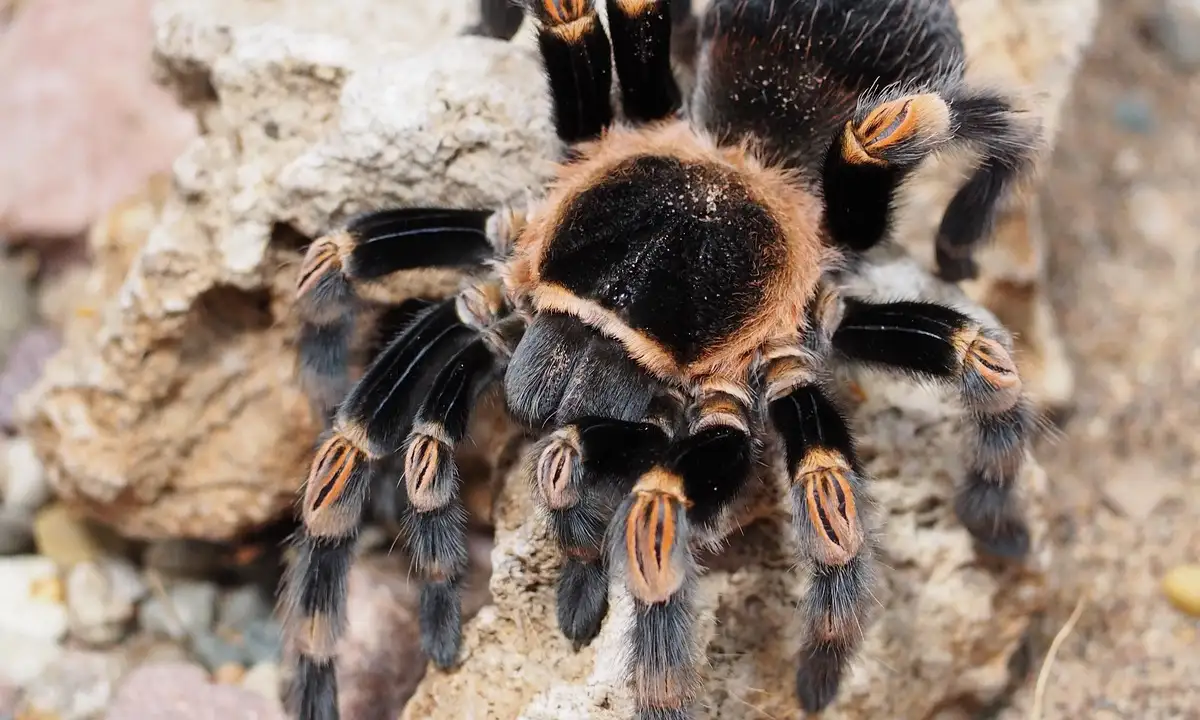
- Brachypelma hamorii (Mexican Red Knee): With stunning coloration and a famously docile nature, this is a showcase species. They are slow-growing and long-lived. Keep them on dry substrate with a water dish and a small humid hide. Their urticating hairs are potent, so “look, don’t touch” is a must.
General care for these terrestrials follows a simple template. A secure lid, a deep layer of substrate for burrowing, a water dish, and a simple hide are all you need for success. I use a mix of 70% coconut fiber and 30% pesticide-free topsoil for most of my terrestrial tanks.
| Species | Temperature | Humidity | Key Behavior |
|---|---|---|---|
| G. rosea | 70-80°F | Low (40-50%) | Sedentary, long fasts |
| T. albopilosus | 72-78°F | Medium (60-70%) | Eager burrower |
| B. hamorii | 75-82°F | Low-Medium (50-60%) | Calm, display-oriented |
Arboreal and Dwarf Tarantula Considerations
Arboreal tarantulas live in trees, and dwarf species stay small. Both categories require more precise care and are generally faster. Considering dwarf tarantula species, their compact size is a clear pro. The flip side is that many are very fast and require meticulous humidity and temperature control. I do not recommend them for a first tarantula, but informed hobbyists can find great joy in their unique challenges.
Arboreals, like Old World genera, need vertical space with cork bark to climb. Their speed is breathtaking. My OBT Flash can cross his enclosure in a blur if disturbed. Their venom is medically significant, and their defensive posture-a raised front leg and a hissed threat-is a clear boundary. Dwarf species, like those in the Cyriocosmus genus, need smaller enclosures but can be skittish and difficult to observe.
If you are determined to start with an arboreal, consider these steps.
- Choose a New World arboreal like Caribena versicolor. They are more predictable and have less potent venom.
- Prioritize escape-proofing. Use front-opening enclosures with tight seals. I learned this after a juvenile avicularia vanished during a rehousing; we found her three days later on a curtain.
- Master humidity. Many arboreals need 70-80% humidity and cross-ventilation to prevent stagnant air, which is fatal.
Dwarf tarantulas offer a compact option. Their small size means smaller prey and more delicate rehousing procedures. A fall from even a short height can rupture their abdomen. Use soft-tipped forceps for feeding and practice patience. Watching a dwarf tarantula meticulously web its tiny burrow is a lesson in precision, but it requires a keen, calm eye.
Common Questions
What is the absolute best tarantula for a total beginner?
The Tliltocatl albopilosus (Curly Hair Tarantula) is often considered the top choice for a first-time keeper. It is famously docile, an enthusiastic eater, and has very forgiving care requirements. Its hardy nature and fascinating burrowing behavior provide a perfect introduction to tarantula husbandry without high stress.
Are there good beginner tarantulas suitable for smaller spaces?
Yes, several dwarf tarantula species, like those in the Cyriocosmus genus, are excellent for compact enclosures. While they can be quick and rehousing requires care, their small adult size makes them manageable. Their full lifecycle and fascinating web-building can be observed in a modestly sized terrarium.
Can I keep an arboreal tarantula as my first tarantula?
It is generally not recommended, as arboreal species are typically much faster and more defensive. If you are determined, a New World arboreal like Caribena versicolor is the most suitable starting point. Success requires meticulous escape-proofing and precise humidity control from day one.
What should beginners in the UK or Australia look for specifically?
Keepers in the UK and Australia should prioritize species that thrive at stable room temperature, as consistent heating can be a challenge. Hardy, dry-environment species like Grammostola rosea are ideal. Additionally, ensure the enclosure maintains the species’ ideal temperature and humidity ranges to reduce stress and health issues. In practice, this means monitoring both heat and moisture levels and adjusting as needed. Always source your tarantula from a reputable, local breeder to ensure health and legal compliance.
Does the gender of a beginner tarantula matter?
For beginners, a female tarantula is often recommended due to her significantly longer lifespan. This allows you to develop your care skills with a long-term companion. Many beginner-friendly tarantulas have a long typical lifespan, which helps new keepers plan and learn over the years. Knowing the typical lifespan also helps set expectations for care and milestones as you gain experience. While females are sometimes more expensive, the investment is worthwhile for the decades of observation they can provide.
I live in a humid place like Florida. What’s a good starter species?
In humid climates, selecting a species that prefers moisture is wise to avoid constant environmental adjustments. The Tliltocatl albopilosus (Curly Hair) or Brachypelma hamorii (Mexican Red Knee) are excellent choices. Their medium humidity needs align well with ambient conditions, making maintenance simpler.
The Long-Term Success
In the deep quiet of their enclosures, your tarantula’s life unfolds on a timescale of seasons, not days. The single most critical husbandry skill you will cultivate is not about feeding, but about water. Providing a clean, shallow water dish that is always full is non-negotiable for every species, as dehydration is a far more common killer than hunger. Your spider will drink more than you think, and for moisture-dependent species like my Goliath, that dish is the anchor for the entire humid microclimate she needs.
Beyond the water dish, your true reward lies in quiet observation. You will learn the signature architecture of your OBT’s dense silk tunnels, the patient ambush strategy of a rose hair, and the dramatic, silent strike of a feeding bird eater. Growth is measured in molts, not months. I have spent weeks watching my old rose hair, Rosie, simply exist, and in that stillness is a profound lesson in patience. Success in this hobby is a quiet pact of respect, where you provide the stage and have the privilege to watch an ancient, fascinating life play out.
Further Reading & Sources
- The Best Tarantula Species for Beginners | Tom’s Big Spiders
- r/tarantulas on Reddit: What’s the best tarantula to have for beginners?
- Best Beginner Tarantula Species – Fear Not Tarantulas – Fear Not Tarantulas, Inc.
Arlo is a lifelong arachnid enthusiast who believes tarantulas are the world’s most misunderstood roommates. With years of hands-on experience in tarantula care, habitat setup, and species behavior, Arlo combines expert knowledge with a dash of humor to make spider ownership less scary and a lot more fascinating. From choosing the right enclosure to understanding why your eight-legged buddy is doing that weird little pose again, Arlo is here to help you become the best tarantula parent you can be, without getting tangled in the web of misinformation.
Understanding Tarantula Behavior