
13 Critical Mistakes New Tarantula Owners Make (And How to Fix Them)
Published on: January 17, 2026 | Last Updated: January 17, 2026
Written By: Arlo
Tarantula keeping is a hobby built on quiet observation, not interaction, where the most frequent errors arise from applying dog or cat logic to an animal governed by instinct and delicate physiology. I’ve mentored many new keepers who, enchanted by the sudden strike of a feeding spider or the iridescent sheen of a fresh molt, accidentally jeopardize their pet’s health through common misconceptions. This guide details 13 specific, fixable mistakes I’ve seen with my own spiders-from Rosie’s fasting spells to Goliath’s humidity needs-to set you on a path of confident, respectful care.
Quick Stats:
- Origin: Species hail from diverse ecosystems, like the arid Chilean scrub (G. rosea) or humid Amazonian basins (T. stirmi).
- Type: Broadly split into New World (often docile, with urticating hairs) and Old World (typically fast, defensive, and lacking those hairs).
- Growth Rate: Ranges dramatically; a Grammostola species may mature in 5-10 years, while an OBT like my Flash can reach adulthood in under 3.
This article will equip you to sidestep these pitfalls and cultivate a thriving habitat for your tarantula, from its fragile sling stage through to a robust, mature adult.
Enclosure and Habitat Configuration Errors
Misjudging Space and Dimension
Terrestrial and arboreal tarantulas have opposing spatial needs. A terrestrial like my Grammostola rosea, Rosie, requires generous floor space to wander safely. A fall from more than 1.5 times their leg span can be fatal, as a ruptured abdomen is often inescapable. For her, I use an enclosure about three times her leg span in width. These differences reflect the essential features of tarantula enclosures. Terrestrial enclosures need ample floor space; arboreal ones need vertical height and climbing support. Conversely, arboreal species demand vertical height with anchored branches; a lack of climbing space stresses them. My P. murinus, Flash, though not strictly arboreal, uses every inch of vertical webbing anchor I provide.
Fumbling Humidity and Temperature
Incorrect moisture management suffocates enclosures. Daily misting creates a wet, stagnant environment perfect for mold and mites. For my humidity-loving Theraphosa stirmi, Goliath, I achieve 75-80% humidity by pouring dechlorinated water directly into one quarter of the substrate. You must use a digital hygrometer placed at substrate level; strip gauges are notoriously inaccurate and can cost your pet its health. Temperature should be a stable ambient 72-78°F (22-26°C); avoid heat mats under the tank which can cause deadly substrate overheating and dehydration.
Selecting Hazardous Substrate
Cedar or pine shavings release phenolic compounds toxic to arachnids. Overly damp, waterlogged soil packs down, preventing burrowing and promoting harmful bacterial growth. A simple, safe substrate is a blend of coconut fiber and organic, fertilizer-free topsoil, which holds burrow structure and maintains healthy moisture gradients. I use a nearly brick-deep layer for Goliath to dig, while Rosie’s mix is kept much drier. The substrate should feel cool and crumbly, never muddy.
Neglecting Escape-Proofing
A lightweight, ill-fitting lid is a recipe for a heart-pounding escape. Tarantulas are adept at exploiting tiny gaps with surprising strength. Weight your lid with books or use enclosures with locking clips, especially for powerful, fast species like Old World tarantulas. I learned this after a juvenile once pried open a corner during a late-night rehousing. Fine mesh screens can also snag and break delicate tarsal claws; opt for acrylic lids with drilled ventilation holes instead.
Blueprints for a Safe Habitat
Follow these steps to build a secure, species-appropriate home.
- Choose the enclosure shape first: long and low for terrestrial, tall for arboreal.
- Add a hide that fits the tarantula snugly, like cork bark flat or a clay pot, to provide security.
- Drill or provide ventilation holes on at least two opposite sides for cross-ventilation.
- Pour water into a single corner of the substrate to create a damp zone, leaving the rest dry.
- Anchor all climbing decor firmly to the base to prevent collapses.
Feeding and Nutritional Missteps
Offering Oversized Prey
A feeder insect larger than the tarantula’s carapace poses a serious threat. It can injure the spider during a struggle or be outright refused, leading to unnecessary stress and wasted food. The ideal prey size is no larger than the tarantula’s body, excluding legs, to ensure a safe, successful capture. I feed my large Goliath roaches the size of his chelicerae, while my smaller slings get pinhead crickets. An oversized cricket can actually intimidate a tarantula into a defensive posture, similar to how some predators and threats can stress them in captivity.
Overfeeding and Underfeeding
Constant feeding leads to an obese tarantula with a distended abdomen, complicating the molting process. Insufficient feeding results in a shrunken, lethargic spider unable to generate energy for its next shed. Observe the abdomen: it should resemble a plump teardrop, not a taut balloon or a wrinkled raisin. Most adults thrive on one appropriately sized meal every 10-14 days. My G. rosea, Rosie, exemplifies normal fasting, sometimes refusing food for eight months without any weight loss.
Abandoning Live Prey
Leaving a live cricket or roach unattended for days is a silent hazard. In a confined space, the prey can harass a tarantula, especially one in pre-molt vulnerability, and even inflict wounds. Always remove any uneaten live prey within 12 hours to prevent stress or injury to your spider. For tarantulas showing pre-molt signs like darkening coloration or webbing up their hide, I only offer pre-killed insects. I witnessed a cricket annoy a molting juvenile for hours before I intervened; now I never take the chance.
Implementing a Better Feeding Routine
Correct these errors with straightforward adjustments.
- Match prey type to size: dubia roaches or crickets for most, flightless fruit flies for tiny slings.
- Stick to a schedule but be flexible: feed juveniles weekly, adults bi-weekly, and pause for obvious pre-molt.
- Remove all uneaten prey, live or dead, after one day to keep the enclosure clean and stress-free.
- Recognize species-specific habits; a Grammostola fasting is normal, but a Theraphosa refusing food warrants attention.
Handling and Stress Induction
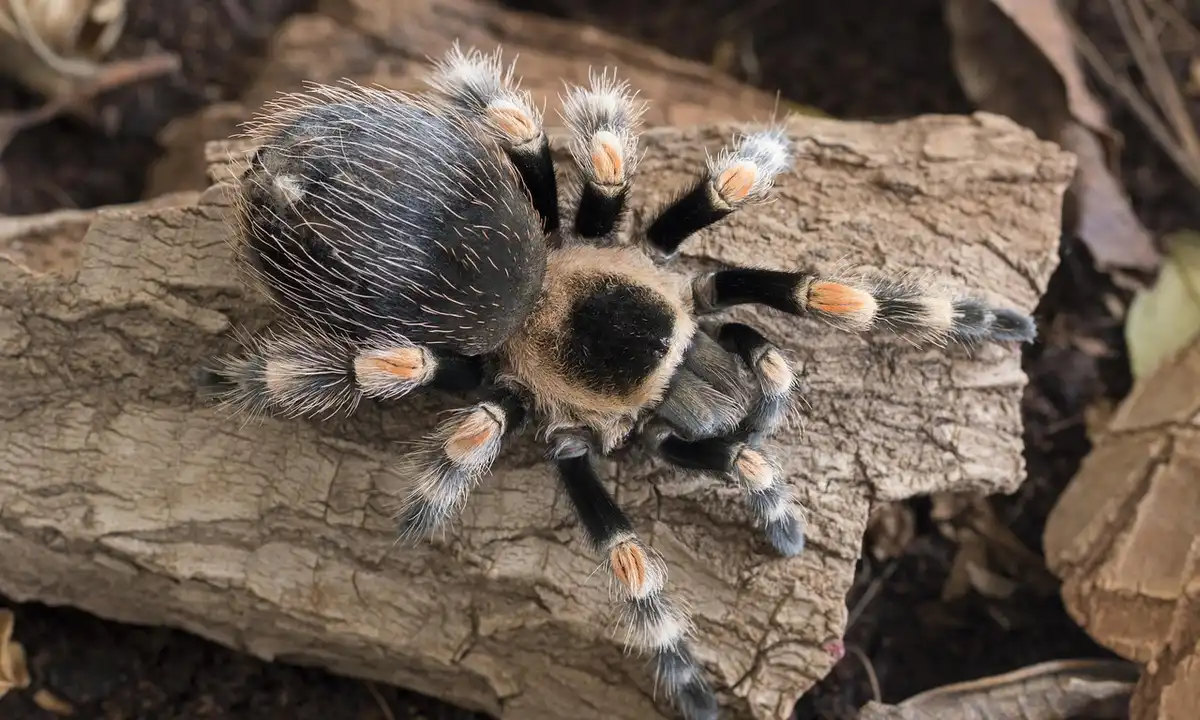
Many new keepers view handling as a right of passage. This mindset is one of the fastest ways to compromise your tarantula’s welfare. My fundamental rule, forged over years with spiders like my docile Rosie and defensive Flash, is to practice “look, don’t touch” husbandry for the safety of both keeper and animal.
The Tangible Dangers of Over-Handling
A tarantula’s abdomen is not armored; it’s a hydraulic-filled sac essential for movement and respiration. A fall from even a modest height can rupture it, causing a slow, fatal leak. Being dropped is a common scenario in captivity, turning a modest fall into a potentially fatal event. Tarantulas can die from falling when they are dropped, underscoring the danger of mishandling. Beyond falls, defensive mechanisms pose real risks.
- Urticating Hair Kicks: New World species like my T. stirmi, Goliath, possess these barbed abdominal hairs. When threatened, they kick a cloud of irritation into the air. In your eyes or lungs, they cause itching, rash, and severe respiratory discomfort.
- Venom Exposure: While most tarantula venom is not lethal to humans, a bite from a defensive Old World species like an OBT (P. murinus) is intensely painful and medically significant, requiring professional care. A startled tarantula will always choose flight or fight over being a placid pet.
Silent Stress: The Invisible Enemy
Stress isn’t always a dramatic bolt. It’s a constant, low-grade pressure that suppresses feeding, inhibits natural behaviors, and can trigger sudden escapes. Two major sources are excessive physical disturbance and environmental vibration, which tarantulas perceive as predator threats.
- Frequent Rehousing: Each move destroys the spider’s security web, a map of its world. I’ve seen tarantulas like Flash fast for weeks after an unnecessary enclosure change.
- Loud Noises & Vibrations: Placing an enclosure on a speaker shelf or near a slamming door transmits shockwaves. This can cause a tarantula to refuse food or adopt a perpetual, anxious posture.
Steps to Cultivate a Calm Environment
Your goal is to be a quiet, unobtrusive curator. Here is my practiced protocol for minimizing stress.
- Limit Enclosure Openings: Open the lid only for necessary maintenance-watering, spot-cleaning, or prey introduction. Every open top is a perceived cave-in.
- Use Deliberate, Calm Movements: Move slowly and predictably. Sudden shadows or jerky hands trigger primal flight responses.
- Engineer Security: Provide a snug, dark hide and ample substrate for burrowing. A spider that can disappear on its own terms is a confident spider. My Goliath’s stress-induced hair-kicking reduced by 80% after I gave him a deeper cork bark retreat.
A Personal Lesson: The Great OBT Escape
Early in my keeping, I underestimated Flash’s speed during a routine rehousing. I was complacent. In a blur of orange, he was up my arm and onto the curtains. The next hour was a masterclass in patient, panicked focus, using long paintbrushes and deli cups to guide him safely home. That escape drilled into me that planning-having a large, clear tub and all tools ready-is non-negotiable. It’s not about dominating the animal; it’s about facilitating its safety with humble preparation.
Molting and Preventive Health Oversights
Ecdysis, or molting, is the most vulnerable and miraculous process in a tarantula’s life. Missteps here are often irreversible. Treat a molting tarantula with the same quiet reverence you would a sleeping newborn; any disturbance risks its life.
The Perils of Improper Molting Care
During the molt, your tarantula is literally struggling out of its old exoskeleton. It is paralyzed, soft, and utterly defenseless. Sometimes people worry it’s dying, but a proper molt will finish and the spider will harden. If the molt stalls or the spider shows no sign of recovery after shedding, seek guidance from a vet or an experienced tarantula keeper.
- Fatal Disturbance: A tap on the glass, an attempt to “help,” or even a loud noise can cause the spider to abort the process. This can leave it trapped, leading to lost limbs or a fatal rupture of the new, soft abdomen.
- Stuck Molts: Often caused by insufficient humidity or hydration in the weeks leading up to the molt. The old exoskeleton hardens around the new, effectively strangling the spider.
Recognizing the Pre-Molt Phase
Your tarantula will broadcast its needs. Missing these signs is a critical error.
- Physical Changes: The abdomen darkens to a deep, glossy black or blue as the new skin forms beneath. The spider may appear lethargic and refuse food for weeks.
- Behavioral Cues: Many species, like my G. rosea Rosie, seal themselves into their hide with thick mats of silk. This is a “do not disturb” sign. When your tarantula refuses food, stop offering it immediately; a live cricket in the enclosure during a molt is a deadly hazard.
Post-Molt: The Critical Recovery Window
The new exoskeleton is soft and pliable, hardening over days or weeks. This period demands specific care.
- Absolute Quarantine: Do not open the enclosure for at least 7-10 days for slings, or up to 2-3 weeks for large adults. Their fangs are still soft and white, making feeding impossible and defense futile.
- Hydration is Key: Ensure a full, clean water bowl is always available. The spider will drink heavily to rehydrate and expand its new body. I’ve watched my tarantulas drain bowls overnight post-molt.
- Resist Inspection: The urge to see the new, vibrant colors is strong. Wait until the spider is mobile and its exoskeleton has hardened completely before any interaction.
Routine Preventive Health Checks
Proactive observation prevents major crises. Integrate these quick checks into your weekly feeding routine.
- Monitor for Parasites: Look for tiny, moving mites on the spider or in the enclosure, often around the mouthparts or book lungs.
- Check for Leg Lesions: Inspect joints and tips of the legs for dark spots or damage, which can be entry points for infection.
- Note Abnormal Behavior: A tarantula that is constantly climbing the walls, sitting awkwardly, or unable to right itself may indicate humidity issues, chemical exposure, or neurological problems. The silence of the enclosure is your canvas; any change in the normal, quiet patterns of your spider is a message worth decoding.
Species Selection and Research Deficiencies
Choosing a tarantula based on looks alone is a fast track to failure. Incorrect species identification leads directly to harmful husbandry. Keeping a moisture-dependent giant like the Burgundy Goliath Bird Eater (Theraphosa stirmi) on bone-dry substrate will dehydrate it, risking a fatal stuck molt. In short, the key facts for this species are its habitat requirements—high humidity, damp substrate, and stable temperatures. Getting these right is essential to proper care and to avoid the mistakes described above. My own T. stirmi, Goliath, requires his peat-moss blend kept consistently damp, with humidity hovering near 80%.
Lack of pre-purchase research leaves owners terrified. Bringing home a defensive, fast species like the Orange Babbling Tarantula (Pterinochilus murinus) without preparation is asking for trouble. My OBT, Flash, can web his entire enclosure in a day and his rehousing required a clear bin, long tools, and my full focus to manage his startling speed.
Never rely on generic pet store care sheets. Their information is often outdated or overly simplistic. I source my guidelines from dedicated breeder forums and scientific databases, where specifics about temperature gradients and hydration methods are precise and proven.
Selecting the right tarantula involves deliberate steps. Follow this list to start correctly.
- Match temperament to your experience. Beginner-friendly species like the Chilean Rose Hair (Grammostola rosea) are forgiving and slow.
- Always verify the Latin name. Common names like “Rose Hair” can refer to different species with varying needs.
- Research the native habitat. Is it an arid scrubland or a humid rainforest? Set up the enclosure completely before purchase.
- Connect with experienced keepers. Listen to their stories about rehousings or escapes to gauge real-world care.
Neglect in Routine Maintenance and Observation
An enclosure is not a set-and-forget system. Neglect allows mold to bloom from food remains and waste, while a filthy water bowl becomes a bacterial soup. Compacted substrate prevents burrowing and ruins humidity retention, a problem I routinely fix during my semi-annual substrate changes for Goliath.
Infrequent visual checks let small problems explode. Early signs of mites, a limp posture, or a loss of appetite go unseen. A quick daily glance saved one of my slings from a mite outbreak I spotted as tiny moving specks before they could multiply.
Consistency prevents disasters. Implement this straightforward maintenance schedule.
- Weekly: Use long tweezers for spot-cleaning boluses (inedible prey parts) and any moldy patches.
- Monthly: Scrub the water bowl with hot water and a dedicated brush, then rinse thoroughly.
- Every Six Months: Fully replace the substrate for most adults, sooner for humid species or if mold persists.
Daily observation is your most powerful tool. It is not handling; it is respectful witnessing. Noting the silence of the enclosure, the iridescent sheen of a pre-molt carapace, or a change in web structure tells you everything about well-being. My old rose hair, Rosie, teaches patience through her months of fasting, which I only understand because I watch her daily without intrusion.
Common Questions
What is the most common mistake new tarantula owners make?
Applying “dog or cat logic” and treating a tarantula like a traditional pet is the most fundamental error. This mindset leads to over-handling, excessive disturbance, and improper feeding schedules. Successful keeping requires understanding that tarantulas are delicate, instinct-driven animals that thrive on quiet observation, not interaction. To help you avoid common feeding missteps, this guide highlights the top 10 tarantula feeding mistakes to avoid at all costs. Mastering feeding discipline is essential for their health and longevity.
Why is poor enclosure security a major concern?
A poorly secured lid invites dangerous escapes, as tarantulas are surprisingly strong and can exploit tiny gaps. An escaped spider risks fatal falls, dehydration, or being accidentally crushed. For fast, defensive species, an escape also poses a significant safety risk to the keeper and others in the home.
What are the risks of co-habiting tarantulas?
Tarantulas are solitary, cannibalistic predators and should never be housed together. Co-habitation leads to immense stress, injury, and ultimately, one tarantula killing and eating the other. This applies even to slings from the same sac, as they will eventually see each other as food, especially when hunting and capturing prey.
How can a lack of research before purchase lead to problems?
Choosing a tarantula based solely on appearance often results in an owner being unprepared for its specific needs or temperament. For beginner pet owners, it’s important to consider which tarantula species are best for novices—those with calm temperaments and forgiving care requirements. Without research, you might accidentally acquire a fast, defensive Old World species as a first pet, or fail to provide the correct humidity for a moisture-dependent one, directly jeopardizing its health.
Why is neglecting regular enclosure maintenance a mistake?
Skipping routine cleaning allows harmful mold to grow from leftover prey and waste, while a dirty water bowl breeds bacteria. Compacted, soiled substrate loses its ability to hold proper burrows and humidity. This neglect creates an unhealthy environment that stresses the tarantula and can lead to infections or mites.
The Final Molt
The single most transformative practice is learning your specific tarantula’s moisture language. For moisture-dependent species like my Goliath, the substrate must have a consistently damp bottom layer, as chronic dehydration is a silent killer; for arid species like my Rosie, a bone-dry enclosure with a water dish is perfect, and pouring water into the substrate will cause more stress than any handling ever could. To support this, create a gentle substrate moisture gradient so your tarantula can select its preferred microhabitat. A well-managed gradient helps regulate humidity exposure, supports healthy molts, and reduces stress. This one parameter dictates respiratory health, successful molts, and overall vitality.
Beyond the substrate, your greatest resource is quiet observation. Watch the meticulous engineering of a funnel web by an OBT like Flash. Appreciate the patient, weeks-long excavation of a fossorial species. The hobby unfolds in slow, beautiful moments-a successful hunt, the sudden iridescent sheen of a post-molt carapace, the deliberate rearrangement of silk. Success is measured not in handling milestones, but in providing a space where these natural, fascinating behaviors can play out in security. Your patience and willingness to watch are the true marks of a dedicated keeper.
Further Reading & Sources
- Top Tips For New Tarantula Owners
- Top 10 Common Mistakes in the Tarantula Hobby (and How to Avoid Them) – The Bio Dude
- My Biggest Tarantula Mistake (That Almost Killed Spidey)
Arlo is a lifelong arachnid enthusiast who believes tarantulas are the world’s most misunderstood roommates. With years of hands-on experience in tarantula care, habitat setup, and species behavior, Arlo combines expert knowledge with a dash of humor to make spider ownership less scary and a lot more fascinating. From choosing the right enclosure to understanding why your eight-legged buddy is doing that weird little pose again, Arlo is here to help you become the best tarantula parent you can be, without getting tangled in the web of misinformation.
Understanding Tarantula Behavior