
Substrate Selection Mistakes: 7 Types to Never Use for Your Tarantula
For a creature so exquisitely attuned to its world, a tarantula’s substrate is not just flooring-it’s the bedrock of its entire sensory and physical existence, and choosing incorrectly can have silent, profound consequences. I have watched my OBT, Flash, reject entire sections of an enclosure because the texture was wrong, and I once spent a frantic night cleaning damp wood chips from my T. stirmi’s sensitive feet after a misguided early experiment. This guide dissects the seven most common and dangerous substrate choices, explaining not just the “never,” but the critical “why.”
Quick Stats:
- Origin: Varied (Deserts, Rainforests, Grasslands)
- Type: Both New World (bristled) and Old World (often fast)
- Growth Rate: Species-dependent, from slow (G. rosea) to rapid (P. murinus)
My promise is straightforward: by the end of this guide, you will be equipped to sidestep these pervasive errors, creating a secure foundation that supports natural behaviors from fragile sling to formidable adult.
Why Your Tarantula’s Floor Matters So Much
Substrate is far more than decoration. It is a functional landscape that manages humidity through evaporation, provides structural integrity for burrows, and safely encapsulates waste and feeder remains. Choosing the wrong floor material doesn’t just look bad-it actively undermines your tarantula’s health and security.
Many common, readily-available materials are silently hazardous. They can cause respiratory failure, physical injury, or slow chemical poisoning. I once used a bagged “jungle mix” for my OBT, Flash. For days, he avoided an entire corner, webbing only on the glass. When I finally investigated, I found sharp, moldy bark chunks in that section. His instinctual aversion prevented a potential injury.
7 Hazardous Substrates and Why to Avoid Them
This list is built from years of collective hobbyist experience and painful lessons. Reference it before you buy anything for your tarantula’s enclosure. Décor dangers are real—this guide covers 5 common enclosure items that can harm your tarantula and how to avoid them.
1. Cedar and Pine Wood Shavings
These softwoods release volatile oils called phenols. For a tarantula’s delicate book lungs, these fumes are toxic. Prolonged exposure leads to respiratory distress, visible lethargy, and can be fatal, making this arguably the worst substrate choice available. The aromatic scent we enjoy is a warning sign of their toxicity.
2. Bark Chips, Mulch, or Reptile Forest Bedding
While marketed for forest reptiles, these products are a physical menace to tarantulas. The pieces are too large and irregular to support a burrow. A fall from the enclosure wall onto a sharp edge can rupture the abdomen. What looks like a natural forest floor to us is a hazardous terrain of unstable, pointed obstacles to your spider, especially if it’s a ground-dwelling type.
3. Soil Containing Fertilizers or Pesticides
Bagged topsoil or potting mix often contains added chemicals. These systemic additives do not dissipate. Symptoms of exposure include leg twitching, a death curl, or sudden, unexplained death. I now read every bag label twice, searching for the words “organic” and ensuring no mention of fertilizers, pesticides, or moisture-retaining crystals. It is a non-negotiable step.
4. Pure Sand or Gritty Mixes
Pure sand collapses instantly. It holds no burrow shape and retains zero humidity. The fine, abrasive grains can damage the delicate tarsi (feet) of your tarantula. A small percentage of sand can be blended into a primary substrate for some arid species, but using it alone fails every core function required of a substrate.
5. Gravel, Small Rocks, or Pebbles
This offers no biological utility. It cannot manage humidity or absorb waste. The primary risk is traumatic injury. A fall from even a modest height onto an unyielding stone surface can be catastrophic for an abdomen with no internal skeletal support. It also completely denies any natural burrowing instinct.
6. Vermiculite or Perlite
These lightweight, expanded minerals are common in horticulture. The main danger is ingestion. If a tarantula catches prey on this material, it can accidentally consume these indigestible particles, leading to fatal internal impaction. Airborne dust from dry vermiculite may also irritate book lungs.
7. Scented or “Clumping” Reptile Substrates
These are engineered for completely different animals. Artificial dyes and perfumes introduce unknown chemicals. Clumping agents, designed to solidify when wet, pose a severe sticking risk to a tarantula’s mouthparts or spinnerets. Products designed for mammalian waste management have no place in a tarantula’s world where subtle, chemical-free stability is the goal.
The Hidden Dangers of a Bad Substrate Choice
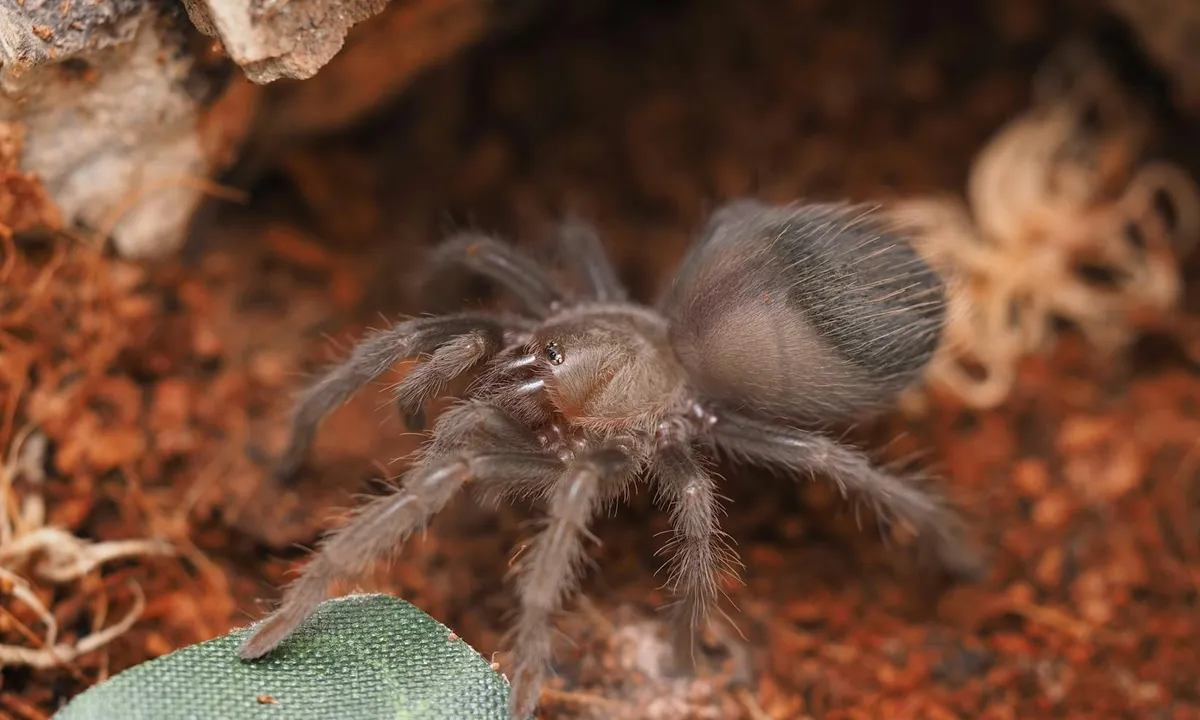
Watching a tarantula navigate poor substrate is a lesson in silent stress. On sharp gravel, each movement becomes a cautious, tentative step. The delicate tarsi, or foot pads, can be abraded, leading to micro-injuries that invite infection. Physical stress from an unsuitable floor manifests in refusal to eat, frantic climbing, and a general state of alert that wastes the animal’s energy. I once used a decorative sand mix for a juvenile terrestrial, and it spent weeks perched on the glass, never once exploring its domain. Getting the substrate and humidity right helps prevent common health issues beginners worry about—failed molts, dehydration, and fungal infections. In short, a safe, appropriate setup is a practical form of preventative care.
Respiratory damage is a more insidious threat. Fine, dusty substrates or those prone to molding when damp can be inhaled through the book lungs, located on the underside of the abdomen. Chronic exposure to airborne particulates or mold spores can lead to fatal respiratory distress, a slow decline often missed until it’s too late. My Burgundy Goliath, a humidity-loving species, taught me this when a batch of peat moss developed white fuzz; I rehoused him immediately into fresh coco fiber.
Chemical toxicity represents the most acute danger. Many bagged soils contain fertilizers, pesticides, or vermiculite treated with fire retardants. These compounds are absorbed through the tarantula’s relatively thin cuticle or ingested during grooming, causing neurological damage or organ failure. The long-term health impact is stark: a tarantula on a safe, diggable substrate molts more cleanly, eats consistently, and exhibits natural behaviors, directly supporting a full lifespan. Compare the skittish, exposed tarantula on gravel to my Chilean Rose Hair, Rosie, settled deep in her proper earth-one is surviving, the other is truly living. Proper substrate is just one aspect of keeping your tarantula healthy.
Selecting and Using Safe Substrates
After understanding the risks, the path forward is clear and constructive. Choosing the right foundation is the single greatest act of preventative care you can provide. Your goal is to replicate a secure, manageable slice of the forest floor or grassland that supports natural instincts. This philosophy of “Look, Don’t Touch” extends to their environment-giving them what they need to thrive without unnecessary interference.
Proven Safe Base Materials
Three primary materials form the cornerstone of safe tarantula husbandry. Each has distinct properties that suit different needs. These materials must also suit the enclosure style—terrestrial vs arboreal. Understanding the essential features of terrestrial versus arboreal tarantula enclosures guides their use.
- Coco Coir (Coconut Fiber): This is my personal workhorse. It’s affordable, retains humidity well without compacting, and is typically pH neutral. I find it excellent for moisture-dependent species like my Theraphosa stirmi.
- Peat Moss: Excellent for moisture retention and acidity, which can discourage mold. Ensure it is pure, horticultural-grade with no added wetting agents or fertilizers.
- Chemical-Free Topsoil: The most natural option. It must be explicitly labeled organic and free from fertilizers, perlite, and vermiculite. It provides a sturdy texture for burrow construction.
For most of my collection, including terrestrial and fossorial species, I use a simple, effective blend. My preferred mix is 70% pressed coco coir bricks (rehydrated) and 30% screened, chemical-free topsoil for added structure. This combination holds a burrow beautifully and maintains humidity gradients.
Mixing and Preparing Your Substrate
- Sourcing and Checking Ingredients: Always read the entire ingredient list. For topsoil or peat, call the manufacturer if the label is vague. I avoid anything with “miracle” in the name or lists of unknown additives.
- Hydrating to the Correct Moisture Level: For most species, you want substrate that is damp but not wet. Take a handful and squeeze it firmly. Perfect hydration is when only one or two drops of water escape, and the ball holds its shape without crumbling. For arid species like Grammostola rosea, I let the mixed substrate dry out almost completely before use.
- Packing it into the Enclosure: For obligate burrowers, pack the substrate firmly to support tunnel walls. For terrestrial tarantulas, a moderate pack prevents collapse. For my arboreal OBT, Flash, I only use a shallow layer for anchoring her web tubes-packing is irrelevant.
Depth Guidelines by Tarantula Type
Adequate substrate depth is non-negotiable enrichment. It provides security, aids in humidity microclimates, and allows for natural digging behaviors. Denying depth is denying your tarantula a fundamental tool for managing its own stress. For a deeper look at tarantula burrows, why they dig, and how to support it, see our ultimate tarantula burrow guide. Use this table as a starting point for your setup.
| Tarantula Type | Minimum Substrate Depth | Notes |
|---|---|---|
| Arboreal (e.g., Psalmopoeus) | 1-2 inches | Depth is for moisture and anchoring anchor points; focus on vertical space. |
| Terrestrial (e.g., Grammostola) | 3-5 inches | Allows for shallow digging and burrow starter holes. My Rosie uses every inch. |
| Obligate Burrower (e.g., Haplocosmia) | 6-8 inches or more | Fill the enclosure halfway or more with packable substrate. They will engineer the rest. |
Maintaining a Healthy Tarantula Terrarium
- Your choice of substrate sets the stage, but consistent, observant care keeps the environment stable and secure for your spider.
Monitoring and Adjusting Humidity
Your substrate is the silent partner in humidity control, holding moisture at the root level where it matters most. A good hygrometer is your best friend, giving you real data instead of guesses about the air your tarantula breathes. I keep one in each of my enclosures, positioned away from direct water sources for an accurate middle-ground reading. Note that species have different ideal temperature and humidity ranges for their enclosures. Keeping both within those ranges supports a healthy tarantula home.
Watering technique directly impacts your substrate’s performance. For deep moisture, I always pour dechlorinated water directly into one corner of the enclosure, allowing it to seep downward. This method creates a humidity gradient and lets your tarantula choose its preferred level of dampness, which is far less stressful than overall misting. Misting only dampens the surface, encourages mold, and can startle a sensitive tarantula like my OBT, Flash. Getting the substrate right and keeping it well-maintained matters for long-term enclosure health. The best substrates regulate moisture, resist mold, and support natural tarantula behavior, making maintenance easier.
Contrast this with my two very different pets. My Burgundy Goliath Bird Eater, Goliath, thrives at 75-85% humidity, which his deep coco fiber and peat mix maintains beautifully when I keep one-third of the enclosure damp. My Chilean Rose Hair, Rosie, would develop health issues in that swamp; her bone-dry substrate only sees a few ounces of water in a single corner every month or so. Knowing your species’ origin is the key to replicating these needs.
Spot Cleaning and Full Substrate Changes
A simple weekly check is all most enclosures need. I use long tweezers to gently remove prey remnants, called boluses, and any noticeable mold patches. Spot-cleaning a wet area often means you’re over-pouring; adjust your water amount to keep the substrate from becoming saturated and unsafe. This routine minimizes disturbance and keeps the environment fresh.
Full substrate changes are rare events in my practice. I only perform a complete change during a major rehousing into a larger enclosure, or if a serious mold bloom or mite infestation occurs. For a burrowing species, a full change destroys their intricate tunnel work and is incredibly disruptive. My old rose hair, Rosie, has been in her current setup for nearly three years with only spot cleaning.
During any maintenance, your tarantula’s stress is the top priority. I always ensure the spider is securely contained in a catch cup before I ever open the enclosure for cleaning, a non-negotiable rule that has prevented escapes. Work calmly and quickly, and always return your pet to a familiar layout of hides and anchor points to help it settle back in. If you need to transport or rehouse your tarantula, use a secure, ventilated container and keep it contained during the move. Once relocated, recreate a familiar layout in the new enclosure to help it settle.
FAQs
What is the worst substrate for tarantulas?
Cedar or pine wood shavings are arguably the worst substrates you can use. These softwoods release toxic volatile oils called phenols, which are extremely harmful to a tarantula’s delicate book lungs. Prolonged exposure can lead to fatal respiratory distress. The pleasant, aromatic scent is a clear warning sign of this toxicity.
Why is soil with fertilizers or pesticides so dangerous?
Chemical residues in soil are not something a tarantula can avoid. These additives are absorbed directly through the tarantula’s cuticle or ingested during grooming. Exposure can cause severe neurological symptoms like leg twitching or lead to sudden, unexplained death. This is why only soil explicitly labeled as 100% organic and additive-free is safe.
Can you use sand alone as a substrate?
No, pure sand fails all essential substrate functions. It collapses immediately, making burrowing impossible, and its abrasive texture can damage a tarantula’s sensitive feet. Furthermore, it retains zero humidity, creating an unstable environment. While a small amount can be mixed in for some arid species, it should never be used alone.
Why are gravel or small rocks a bad choice?
Gravel offers no functional benefits like humidity control or waste absorption. The primary danger is severe physical trauma; a fall from even a short height onto an unyielding rock surface can rupture a tarantula’s delicate abdomen. It also completely denies their natural instinct to dig and burrow for security.
Is standard potting soil safe for tarantulas?
Most commercial potting soils are unsafe. They commonly contain synthetic fertilizers, moisture-retaining crystals, perlite, or vermiculite. Even soils marketed as “natural” can have hidden additives. You must meticulously check the ingredient list for a pure, organic topsoil with no chemical amendments.
What are the risks of using vermiculite?
The main risk with vermiculite is fatal internal impaction. A tarantula can easily ingest these indigestible, expanded mineral particles while feeding or grooming. Additionally, the fine, dusty particles can become airborne and irritate the tarantula’s book lungs. It provides no structural benefit for burrowing and should be avoided entirely.
The True Goal: A Thriving Spider
Your ultimate aim is not just avoiding poor materials, but creating a functional foundation that supports your tarantula’s entire life. The perfect substrate is your primary tool for managing the single most vital environmental factor: a species-appropriate moisture gradient. Whether you keep a desert dweller like my old G. rosea or a swamp monarch like my T. stirmi, your ability to maintain correct humidity hinges entirely on your substrate choice and how you hydrate it. It’s essential to know how to create a proper moisture gradient tailored to your spider’s needs.
Beyond the parameters, the right earth unlocks fascinating natural behaviors. You’ll witness intricate burrow engineering, meticulous web mat weaving, and the patient ambush from a self-made hide. The hobby’s deepest joy comes from this quiet observation. Patience is not merely a virtue here; it is the lens through which the slow, deliberate beauty of these animals comes into focus. Give your spider the right foundation, step back, and let it simply be a spider. That is the mark of a thoughtful keeper.
Further Reading & Sources
- Top 10 Common Mistakes in the Tarantula Hobby (and How to Avoid Them) – The Bio Dude
- Bad Substrate Choice: My Baby Tarantula Hates Their New Home!
- r/tarantulas on Reddit: Gimme your substrate recipes!
Arlo is a lifelong arachnid enthusiast who believes tarantulas are the world’s most misunderstood roommates. With years of hands-on experience in tarantula care, habitat setup, and species behavior, Arlo combines expert knowledge with a dash of humor to make spider ownership less scary and a lot more fascinating. From choosing the right enclosure to understanding why your eight-legged buddy is doing that weird little pose again, Arlo is here to help you become the best tarantula parent you can be, without getting tangled in the web of misinformation.
Substrates and Decor