
Ideal Temperature and Humidity for Your Tarantula: A Keeper’s Guide from G. rosea to T. stirmi
Published on: February 28, 2026 | Last Updated: February 28, 2026
Written By: Arlo
Every tarantula, from the patient Chilean Rose Hair to the humidity-loving Goliath Bird Eater, carries a precise climate blueprint written by its native habitat. Ignoring this blueprint is the fastest way to induce stress, hinder molts, or cause health decline. Based on my years breeding and keeping diverse species-from my arid-adapted Rosie to my moisture-dependent Goliath-this article delivers the exact data you need. There is no universal setting; ideal ranges are a spectrum from the dry 65-75°F for desert species to the humid 78-82°F for rainforest giants.
- Quick Stats: (Illustrated with Grammostola rosea)
- Origin: Arid scrublands of Chile
- Type: New World (equipped with defensive urticating hairs)
- Growth Rate: Slow, often taking years to reach maturity
This guide provides the specific environmental husbandry required to safely shepherd your spiderling into a thriving adult specimen.
The Foundation of Tarantula Care: Temperature and Humidity
In the silent world of a tarantula enclosure, temperature and humidity are the invisible architects of life. Getting these elements right is not advanced husbandry; it is the fundamental respect we owe these animals as keepers. They govern every biological rhythm, from the delicate split of a molt to the efficient processing of a cricket.
Think of your tarantula as a finely tuned instrument. Its body cannot generate its own heat, and its book lungs require specific moisture levels to function. Proper humidity ensures a successful, safe molt, while stable temperature keeps its internal engine running smoothly. My Burgundy Goliath, for instance, will only thrive when the air feels thick and tropical, a direct reflection of his Amazonian roots.
What is the Ideal Temperature Range for a Tarantula?
The sweet spot for most terrestrial and arboreal species lies between 70°F and 80°F (21°C to 27°C). Your primary goal is to maintain a stable, room-temperature environment within this band, avoiding sudden drafts or hot spots. A consistent 75°F is superior to a fluctuating cycle between 70°F and 80°F.
Provide a gentle gradient by ensuring one side of the enclosure is not in direct sunlight or pressed against a cold wall. This allows your tarantula to perform its own subtle thermoregulation. Overheating is a rapid and serious threat; temperatures sustained above 85°F (29°C) can cause lethal dehydration. Conversely, prolonged exposure below 65°F (18°C) can suppress appetite and dangerously slow metabolism. In scientific terms, Temperature effects on tarantula metabolism increase with temperature, which can boost appetite and support growth within safe limits. Maintaining a warm but safe microclimate helps align feeding behavior with its metabolic needs.
You only need a few simple tools for perfect management:
- A digital thermometer with a probe to check the temperature at substrate level.
- A thermostat for any supplemental heat source, which is non-negotiable for safety.
- Your own common sense-if you are comfortable in a t-shirt, your tarantula likely is too.
How Temperature Governs Metabolism and Behavior
Temperature acts as the throttle for your tarantula’s entire system. A drop of just five degrees can turn a voracious juvenile into a fasting statue, as digestion grinds to a near halt. This is the cold-blooded reality of arachnid biology.
I observe this directly with my Grammostola rosea, Rosie. In a cooler room, she embodies the ‘pet rock’ persona completely, entering fasts that last many months. Warmer conditions within the ideal range can promote faster growth in spiderlings, but never rush this natural process at the expense of their stress levels.
Behavior transforms with temperature. My fast-paced Pterinochilus murinus, Flash, is a whirlwind of webbing and threat poses at 78°F. In a cooler setup, his defensive reactions slow, which might seem convenient but actually masks his normal, healthy instincts. We must provide the conditions that allow them to express their natural behaviors, not just those that make them easier for us to manage.
What is the Ideal Humidity Range for a Tarantula?
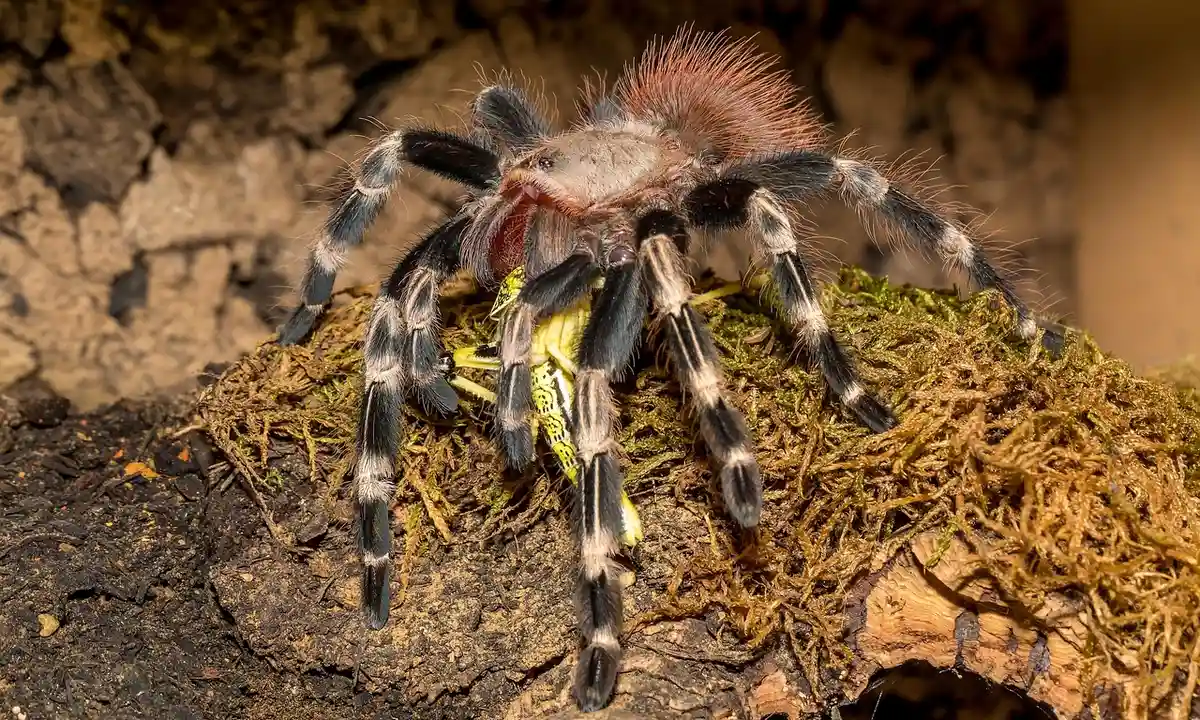
In your tarantula’s enclosure, relative humidity measures the water vapor in the air. A general safe spectrum for many species lies between 60% and 80%, but fixating on one number is a recipe for failure. My years keeping everything from pet rocks to hair-kickers taught me humidity is a dance, not a dial. The real secret is the link between air humidity and substrate moisture. A damp substrate acts like a slow-release humidity reservoir, while a dry one keeps the air thin and desert-crisp. To translate this into care specifics, aim to create a gradual substrate moisture gradient in the enclosure so the tarantula can choose its preferred microhabitat. Achieve this by dampening one side more than the other and letting the substrate naturally maintain a dry-to-wet range.
The Vital Role of Humidity in the Molting Process
Molting is your tarantula’s most vulnerable act. Adequate humidity softens the old exoskeleton, letting it split cleanly so your spider can emerge without lethal damage. An environment that’s too dry creates a brittle shell that can trap limbs. Too wet, and you invite mold to attack the soft, new skin. I learned this watching my old Chilean Rose Hair, Rosie, during her long fasts. Her pre-molt silence demanded my attention.
Here is my step-by-step routine for supporting a molt:
- Observe pre-molt signs: a dark, shiny abdomen, refusal of food, and prolonged stillness.
- Gently increase moisture by overflowing the water dish onto one side of the substrate, creating a gradient.
- Eliminate all disturbances. Do not feed or attempt to handle.
- Post-molt, leave the discarded exoskeleton for at least 24 hours; your tarantula may consume it.
Species-Specific Needs: From Desert to Rainforest
Your tarantula’s origin story dictates its humidity needs. The dusty pink Grammostola rosea and the dark, imposing Theraphosa stirmi live in opposite worlds, and their enclosures must reflect that. My Rosie’s home is a dryscape, while Goliath’s is a humid bog. Even microclimates matter: arboreal types need moist air with breeze, while terrestrials rely on damp earth. That contrast highlights a key point: essential enclosure features differ for terrestrial vs arboreal tarantulas. Terrestrials benefit from deep, stable substrate and secure burrows, while arboreals thrive with vertical space, climbing options, and good airflow.
| Arid Species (e.g., Grammostola) | Tropical Species (e.g., Theraphosa) |
|---|---|
| Ideal Humidity: 40-60% | Ideal Humidity: 70-85% |
| Substrate Strategy: Mostly dry with a single moist corner | Substrate Strategy: Uniformly damp, deep for burrowing |
| Ventilation: High, cross-ventilation is critical | Ventilation: Moderate to retain moisture but prevent stagnation |
| Personal Example: Rosie’s simple, dry enclosure | Personal Example: Goliath’s humidity-heavy setup |
Arid Species Enclosure Setup
Creating a home for a desert species like my Rosie means embracing dryness with intention. Use a shallow layer of dry coconut fiber or topsoil, damping only one corner to offer a hydration choice without raising overall humidity. Cross-ventilation is non-negotiable to whisk away any trapped moisture. A large, shallow water dish is always present. This low-humidity care is not passive; it requires vigilant observation without touch, honoring the spider’s space.
- Substrate: Keep it dry. A slightly moist corner provides a microclimate for hydration.
- Ventilation: Maximize airflow with multiple vents to mimic arid breezes.
- Water Dish: Always full. It’s for drinking and minor local humidity.
- Philosophy: Respect the “pet rock” nature. Look, enjoy, but do not disturb.
Tropical Species Enclosure Setup
Replicating a rainforest floor for a species like Goliath demands consistent moisture. Pack the enclosure with several inches of damp substrate like peat moss and coconut fiber mix, which holds water like a sponge. Ventilation holes should be present but fewer than in an arid setup to maintain humidity. I regularly overflow Goliath’s water dish, watching the substrate drink it in. Stagnant air is the enemy here, leading to mold and respiratory risk.
- Substrate: Must be deeply damp to the touch. It should retain moisture for days.
- Ventilation: Provide sufficient but not excessive airflow to prevent foul air pockets.
- Water Management: Keep the dish overflowing periodically to recharge substrate humidity.
- Monitoring: Watch for condensation on glass and any mold growth, adjusting ventilation as needed.
Reading the Signs: Is Your Tarantula Too Hot, Cold, Dry, or Damp?
Your tarantula communicates through posture and action, not sound. Learning to interpret these silent signals is the key to preventing climate-related stress before it becomes a health crisis. To do this effectively, you must read your tarantula’s body language for stress and defensive signs. Watch for signals like raised legs, flattened body, twitching, or urticating hairs as cues to give them space or adjust enclosure conditions. I once missed the early signs with my Burgundy Goliath Bird Eater, Goliath, who began kicking clouds of urticating hairs whenever I approached his enclosure during a dry winter. He wasn’t being defensive; his environment was simply too arid.
Signs of Incorrect Temperature
As ectotherms, tarantulas rely on ambient heat to regulate their metabolism. A tarantula that is too cold will slow down dramatically, while one that is too hot will seek escape from the heat. In many regions, winter slows tarantula activity and can trigger brumation. In contrast, warm summer months tend to increase activity and feeding.
- Too Cold (Below 70°F/21°C): You will see severe lethargy and a complete loss of appetite. My Chilean Rose Hair, Rosie, transforms into an absolute ‘pet rock,’ refusing food for months if her room chills. Legs are often tucked tightly beneath the body to conserve warmth.
- Too Hot (Above 85°F/29°C): Watch for unusual height-seeking, like climbing walls and staying off the substrate. The tarantula may press its cephalothorax against the cool glass. In extreme cases, you might see a stress curl-legs drawn inward tightly-which is a dire emergency.
Signs of Incorrect Humidity
Moisture levels directly impact respiratory health and the success of the molt. Ignoring humidity signs can lead to stuck molts or fatal fungal infections.
- Too Dry: Look for excessive hair-kicking without provocation, like Goliath’s display. The tarantula may abandon a perfectly good burrow. The most critical sign is a difficult, incomplete molt where the old exoskeleton sticks like brittle plastic.
- Too Wet: Constant condensation on the enclosure walls, a sour or musty smell, and fuzzy mold growth on decor or substrate are clear warnings. Your tarantula will avoid the substrate, perching high up. Prolonged dampness invites mycosis, a stealthy killer.
Practical Management: Safely Adjusting Your Enclosure Climate
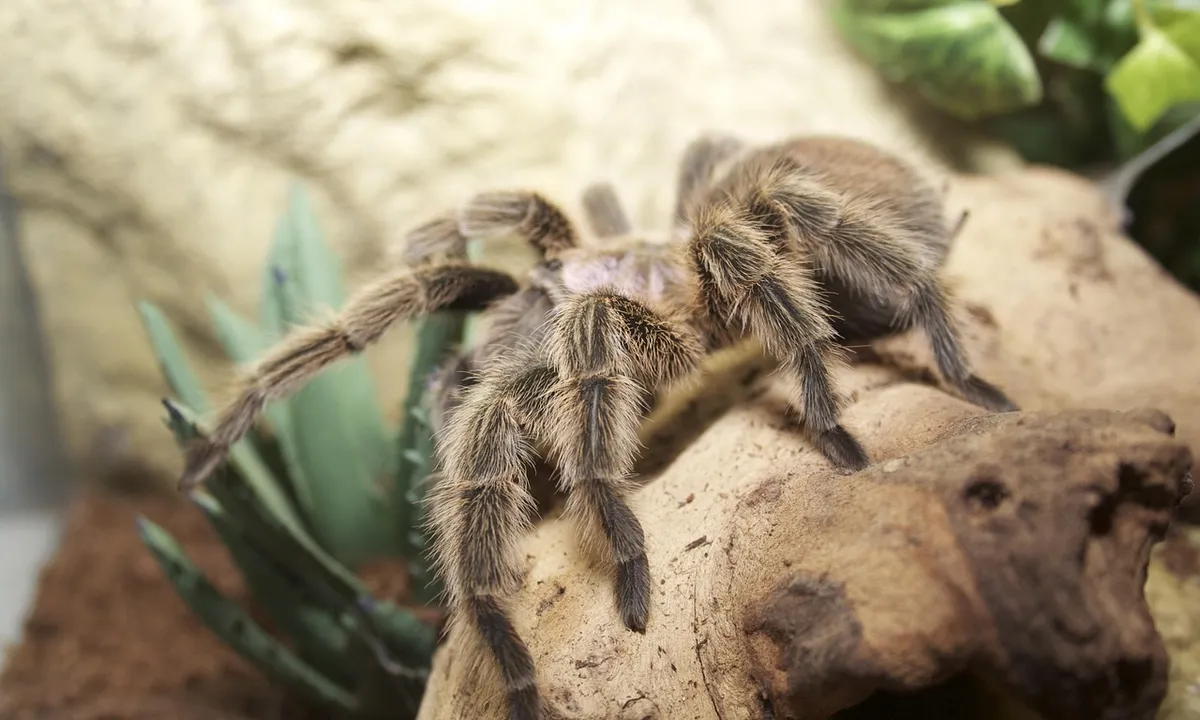
Always change your tarantula’s environment slowly and from a distance. Sudden, direct adjustments cause more stress and risk injury, contradicting the respectful ‘Look, Don’t Touch’ philosophy. There’s a common myth that holding your tarantula is a sign of affection, but tarantulas don’t bond through touch like mammals do. In reality, handling can be stressful and isn’t necessary for a positive relationship. Your goal is to mimic gentle, natural shifts in the room’s air.
How to Safely Increase Enclosure Temperature
If your thermometer reads too low, avoid the urge to place a heater inside the tank. Indirect warming is safer, preventing thermal burns and dangerous hot spots. Follow these steps in order.
- Adjust the room’s thermostat. Raising the ambient temperature of the entire room is the safest, most even method.
- Use a small space heater on a low setting, placed at least five feet from the enclosure. It should warm the air, not beam heat directly.
- Only use a heating pad as a last resort. Affix it to the upper side of the enclosure glass, never underneath. This creates a gentle gradient for the tarantula to choose its comfort zone.
How to Safely Increase Enclosure Humidity
Think of adding moisture like a light rain shower in the forest. You want to humidify the air, not drench your tarantula or its hiding place. I use these methods for my moisture-loving T. stirmi. Humidity and ventilation go hand in hand, and avoiding the 5 biggest humidity-ventilation mistakes is crucial in tarantula care. This overview will help you spot and avoid them, keeping your tarantula healthy and comfortable.
- Overflow the water dish. Gently pour water from the dish onto the surrounding substrate to create a deep, moist patch that evaporates slowly.
- Switch to a larger, shallow water dish. Increased surface area boosts passive evaporation.
- Use a moisture-retentive substrate mix. Coconut fiber blended with sphagnum moss retains humidity effectively without packing down.
- Lightly mist the enclosure walls and decor early in the day. Never spray the tarantula directly. This allows droplets to evaporate before lights out, preventing stagnant dampness.
Essential Tools: Monitoring for Precision and Peace of Mind
You cannot manage what you do not measure. Guessing humidity by how foggy the glass looks is a recipe for failure, especially for moisture-dependent species like my T. stirmi, Goliath. I learned this the hard way years ago with a different tarantula, watching it struggle in an enclosure I thought was damp enough. For consistent care, you need reliable data, and that starts with ditching the cheap analog dials.
Digital hygrometer/thermometer combos are the undisputed standard for serious keepers. They are affordable, widely available, and far more accurate than their analog counterparts. The probe design is key. For terrestrial species like my Chilean Rose Hair, Rosie, the probe must sit at the substrate level. Heat rises and humidity layers; the conditions at the top of a ten-inch tall enclosure are irrelevant to a spider that lives on the ground.
- For terrestrials (e.g., Grammostola, Brachypelma): Secure the probe directly on the substrate, near the spider’s typical hide or burrow entrance. This tells you the climate in its actual living space.
- For arboreals (e.g., Avicularia, Caribena): Place the probe mid-height, near their favored webbing or cork bark perch. My OBT, Flash, has his probe right in the center of his elaborate web tunnel network.
- For fossorials (burrowers): The probe on the surface is your best indicator, as you cannot monitor deep in the burrow. Ensure the substrate depth is correct to allow for a stable gradient.
The goal is to know the environment where your tarantula spends its life, not where you find it convenient to stick a gauge. A reading at spider-level eliminates guesswork and prevents you from mistakenly adjusting the entire enclosure based on inaccurate data.
While high-tech automated systems exist, I advocate for simple, manual tools for most hobbyists. A digital meter and a spray bottle offer more than enough control. Automated misters and foggers can malfunction, leading to sudden floods or dangerous spikes in humidity. They also distance you from the daily, observant interaction that good husbandry requires. The quiet moment of checking the gauge, noting a slight dip, and lightly moistening one corner of the enclosure is a ritual of care. This hands-on approach builds a deeper understanding of your specific enclosure’s microclimate and your pet’s needs.
Place your tools wisely, trust the numbers they give you, and use that knowledge to create stability. Your tarantula’s health and your own peace of mind depend on this simple, precise practice.
FAQs
Do temperature and humidity requirements vary between tarantula species?
Yes, requirements vary drastically based on a species’ native habitat. Arid species like the Chilean Rose Hair (Grammostola rosea) thrive in lower humidity (40-60%), while tropical giants like the Goliath Bird Eater (Theraphosa stirmi) require consistently high humidity (70-85%). Their temperature preferences can also differ, with many tropical species favoring the warmer end of the 70-80°F spectrum. Getting the heating and humidity right is essential for those popular species. Many hobbyists use thermostatically controlled heat sources and humidification to maintain stable humidity in enclosures. Always research the specific needs of your tarantula’s genus and species for optimal care.
What are the signs of a tarantula being too cold or too hot?
A tarantula that is too cold will become severely lethargic, often tucking its legs tightly under its body, and will refuse food for extended periods. Signs of overheating include unusual height-seeking behavior, like constantly climbing the enclosure walls to escape warm substrate, and pressing its body against the cooler glass. In extreme heat stress, a tarantula may curl its legs inward in a defensive posture, which is a critical emergency requiring immediate intervention.
What are the signs of a tarantula enclosure having incorrect humidity?
Signs of an environment that is too dry include excessive kicking of urticating hairs without provocation and a tarantula abandoning its burrow. The most serious sign is a difficult, incomplete molt where the old exoskeleton sticks. An enclosure that is too wet will have constant condensation on the walls, a musty smell, and visible mold growth on decor or substrate, which can lead to dangerous respiratory infections (mycosis).
How can I safely increase the temperature in a tarantula enclosure?
Always increase temperature indirectly to avoid creating dangerous hot spots. The safest method is to raise the ambient temperature of the room the enclosure is in. If needed, use a small space heater placed several feet away on a low setting. As a last resort, a heating pad can be attached to the upper *side* of the enclosure glass, never underneath, and must always be controlled by a thermostat.
How can I safely increase the humidity in a tarantula enclosure?
Increase humidity gradually by mimicking a natural, gentle moisture source. The most effective method is to regularly overflow the water dish onto the surrounding substrate, creating a deep, damp patch that evaporates slowly. Switching to a larger, shallow water dish increases surface area for evaporation, and using a moisture-retentive substrate mix (like coconut fiber and sphagnum moss) helps maintain stable levels. Light misting of the walls early in the day can also help.
How should I monitor temperature and humidity in the enclosure?
Use a reliable digital thermometer/hygrometer combo with a probe. For terrestrial species, place the probe at substrate level near their hide, as this is where they live. For arboreal species, place the probe mid-height near their webbing or perch. Avoid analog dials, as they are often inaccurate. This setup provides precise data from your tarantula’s microclimate, allowing for informed adjustments.
Long-Term Success
Mastering enclosure climate is not about rigid rules, but about creating a stable, species-appropriate slice of habitat. For tarantulas like my Theraphosa stirmi, Goliath, the single most critical parameter is unwavering high humidity-maintain a damp substrate area at all times to support their respiratory function and prevent a fatal, stalled molt. Your diligence here directly fuels their health and longevity.
With the environment secured, your real work begins: observation. Watch the meticulous webbing of an OBT like Flash, or the silent, hours-long stillness of a Grammostola rosea like Rosie. The greatest reward in this hobby comes from the patient, quiet study of their natural behaviors, not from interaction. Your consistent care provides the stage for their fascinating, secretive lives to unfold.
Further Reading & Sources
- Humidity, Temperature, and Tarantulas | Tom’s Big Spiders
- Tarantula caresheet – Amateur Entomologists’ Society (AES)
- Tarantula Heat, Temperature, Humidity – All You Need to Know – Care Guides For Pet Lizards
Arlo is a lifelong arachnid enthusiast who believes tarantulas are the world’s most misunderstood roommates. With years of hands-on experience in tarantula care, habitat setup, and species behavior, Arlo combines expert knowledge with a dash of humor to make spider ownership less scary and a lot more fascinating. From choosing the right enclosure to understanding why your eight-legged buddy is doing that weird little pose again, Arlo is here to help you become the best tarantula parent you can be, without getting tangled in the web of misinformation.
Heating and Humidity