
Caring for the Green Bottle Blue Tarantula (Chromatopelma cyaneopubescens)
The Green Bottle Blue Tarantula is a living jewel of the arachnid world, famed for its electric blue legs, fiery orange abdomen, and metallic green carapace that shimmers under the light. Often called the GBB, this New World species is a cornerstone of modern arachnoculture, captivating keepers with its vibrant colors, relentless webbing, and surprisingly hardy nature. From my own experience breeding tarantulas like the fast-webbing OBT and the humidity-loving Goliath, I can say the GBB’s care is uniquely straightforward, making it an excellent choice for those ready to move beyond a ‘pet rock’ like my Chilean Rose.
Quick Stats:
- Origin: Paraguana Peninsula, Venezuela
- Type: New World (terrestrial webber)
- Growth Rate: Fast
This guide details the precise enclosure setup and care routines I use to successfully raise a GBB from a delicate, penny-sized sling into a spectacular, fully webbed adult.
Understanding Chromatopelma cyaneopubescens: The Green Bottle Blue
The Green Bottle Blue tarantula is a living jewel. Its scientific name, Chromatopelma cyaneopubescens, hints at its brilliance: “cyaneo” for blue, “pubescens” for hairy. Hailing from the arid scrublands of Paraguana, Venezuela, this species is a study in contrast. Adult legs flash a metallic, electric blue. The carapace shines with a greenish-gold sheen, while the abdomen is a vibrant, warning orange, covered in long, red-orange setae.
This is one of the most visually rewarding tarantulas to keep, transforming from a muted spiderling into a breathtakingly colorful adult.
It earns its reputation as a fantastic beginner species through hardiness, a strong feeding response, and incredible webbing. While typically defensive, preferring a threat pose or a swift retreat over a direct attack, their speed demands respect. I’ve watched my own fast tarantula, Flash the OBT, create dense silk tunnels, but a GBB’s webbing is an architectural masterpiece. They often blanket every surface in a thick, white layer of silk, creating a stunning, intricate home.
Watching a GBB meticulously line its enclosure with silk, creating a perfect, private world, is one of the true joys of arachnoculture.
Selecting the Perfect Enclosure: Size, Safety, and Style
Your enclosure choice directly impacts your tarantula’s health and behavior. Essential features you prioritize differ for terrestrial vs arboreal species, so tailoring the enclosure to their lifestyle is key. Terrestrial tarantulas need secure ground space and appropriate substrate, while arboreal tarantulas benefit from vertical space and climbing structures. Here’s a comparison of common options:
- Plastic Containers: Durable, affordable, and easy to modify. Drill small ventilation holes on the long sides for cross-ventilation. They hold humidity well, making them ideal for most setups.
- Glass Terrariums: Aesthetically pleasing and offer clear viewing. They can be heavier and more expensive. You must replace any standard metal mesh lid with an acrylic or modified version to prevent dangerous leg snags.
Regardless of material, the lid must lock or clip securely. A determined tarantula can lift a surprising weight.
Enclosure Size by Life Stage
Providing the right amount of space is critical. Too large an enclosure can stress a small spiderling, making it difficult to find food and water.
| Life Stage | Leg Span | Enclosure Size (L x W x H) | Notes |
|---|---|---|---|
| Spiderling | 0.5″ – 1.5″ | 4″ x 4″ x 4″ (e.g., deli cup) | Small space ensures easy prey capture. |
| Juvenile | 1.5″ – 3″ | 8″ x 8″ x 10″ | Increased horizontal space for webbing begins. |
| Adult | 5″ – 6″ | 12″ x 10″ x 12″ (10-gallon equivalent) | Focus on floor space over height. A 5-10 gallon tank oriented lengthwise is perfect. |
A common mistake is prioritizing vertical height; GBBs are terrestrial weavers who need room to create their dense silk mats and tunnels across the substrate.
Ventilation and Secure Lid Solutions
Green Bottle Blues thrive in dry conditions, making airflow non-negotiable to prevent stagnant, mold-prone air. Cross-ventilation-holes on opposing sides of the enclosure-is the goal.
Metal screen or mesh lids are a severe hazard. A tarantula’s tarsal claws can easily get trapped, leading to lost legs or a fatal fall. Safer alternatives include:
- Acrylic Sheet Lid: Drill dozens of small (1/8″) holes in a sheet of acrylic to fit your tank top.
- Modified Plastic Lid: For containers, drill multiple small ventilation holes around the upper sides, never just the top.
- Commercial Terrestrial Lids: Some brands now offer secure, well-ventilated lids designed specifically for tarantulas.
Investing time in a safe, ventilated enclosure is the first and most concrete act of responsible tarantula keeping. After a scary incident where my Goliath got a leg caught years ago, I now test every lid by gently running a cotton ball over it—if it snags, it’s a danger to my tarantula. In addition to lid security, I also verify that the enclosure is properly ventilated; good airflow helps regulate humidity and air quality. A secure, well-ventilated setup is essential for the tarantula’s well-being.
Building the Foundation: Substrate and Decor Setup
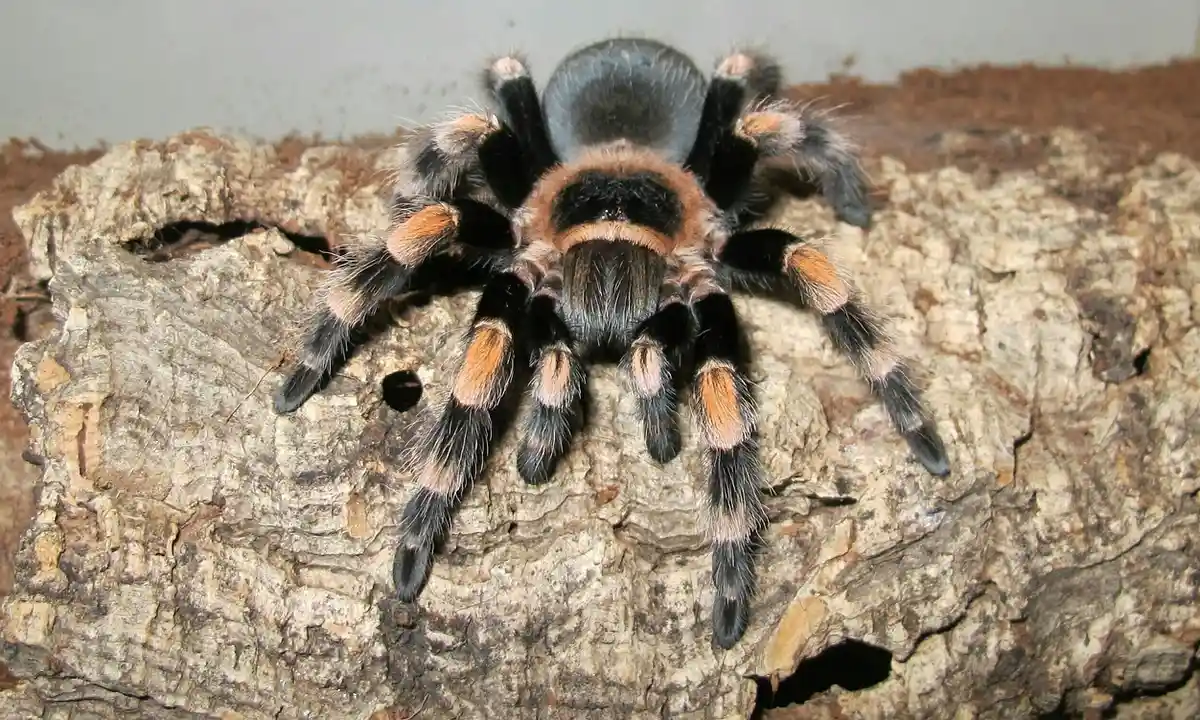
Your GBB’s enclosure is a functional sculpture, and the substrate is its canvas. This is not just dirt on the bottom; it’s the foundation for burrow starts, the medium that holds humidity, and the anchor for a stunning web palace. Getting this foundation right prevents a host of problems and directly encourages the natural, web-heavy behavior we adore in Chromatopelma cyaneopubescens.
Choosing and Preparing Your Substrate
I cycle through three main substrate components in my tarantula room: coco coir (or peat), pesticide-free topsoil, and excavator clay. For my GBB, Flash, I use a simple 70/30 mix of coco coir to topsoil. The coir is excellent for holding a shape when packed, and the topsoil adds a bit of texture and nutrient-free bulk. I avoid vermiculite with this species, as its bright particles can stick to a tarantula’s feet and get woven into the web, which I find unsightly. These choices are among the best substrates for tarantula enclosures. They’re easy to maintain, keeping humidity and cleanliness manageable between cleanings.
Pack the substrate firmly to a depth of 4 to 6 inches. These tarantulas will excavate and reshape it to their liking, but a firm start prevents unwanted collapses. Create a very slight slope, with one area of the enclosure about an inch higher than the other; this simple topography helps with water drainage and provides visual interest. Make sure to consider the appropriate depth of the substrate for your specific tarantula species.
During setup, I lightly moisten about one-third of the substrate mix until it holds together in a loose ball, then let it air out for a day before installing it. The rest stays bone dry. This creates an immediate humidity gradient-a moist retreat is available, but most of the floor is arid, mimicking their native patchy environment.
Essential Decor: Hides, Anchors, and the Water Dish
Decor serves clear purposes: security, anchor points, and hydration. Here is your essential shopping list.
- Cork Bark Flat or Round: This is the primary hide. Place it upright against the glass or laid flat partially buried in the substrate. I lean a flat piece against the back wall; it provides a secure dark space behind it and a vertical climbing surface for webbing.
- Artificial Foliage (Silk or Plastic): Choose plants with lots of stems and leaves. These are the primary anchor points for the heavy webbing. I cluster two or three small bushes at different heights.
- Shallow, Wide Water Dish: A bottle cap or ceramic dish for small slings, a reptile dish for juveniles and adults. Always place the dish on a flat piece of cork bark or a small ceramic tile to prevent substrate from being kicked into it and to minimize moisture wicking into the dry substrate below.
- Optional: Twigs or Driftwood: Additional vertical structures give more options for web lines. Ensure they are sanitized by baking.
Arrange your decor before introducing the tarantula. Position the cork hide and plants to encourage webbing across open space, creating that classic “web funnel” effect. Leave some open substrate floor space near the front for easy viewing and spot cleaning.
Creating the Ideal Climate: Temperature, Humidity, and Lighting
GBBs thrive on stability. Wild temperature swings or constant soggy substrate will cause more harm than a slightly “imperfect” but consistent reading. Your goal is to replicate the warm, dry scrubland with pockets of higher humidity, not a tropical rainforest. I maintain my GBB’s enclosure between 75°F and 82°F (24-28°C) with a humidity range of 60-70% as measured in the center of the enclosure.
Maintaining Proper Temperature Ranges
Room temperature is usually sufficient. If your room drops below 70°F (21°C), supplemental heat is needed. Never use an under-tank heater; tarantulas burrow to cool down, and heating from below can cause fatal dehydration or stress.
I use a small space heater for the entire tarantula room, controlled by a thermostat. For a single enclosure, a low-wattage heat mat can be attached to the side or back of the enclosure, never more than one-third of the surface area. A digital thermometer probe placed at substrate level, away from the heat source, gives you the true ambient temperature your tarantula experiences.
Monitoring Humidity and Water Sources
Forget the spray bottle for daily misting. That only spikes humidity and can disturb your tarantula. My method is simpler: I pour a generous amount of dechlorinated water directly into the pre-moistened corner of the substrate every two to three weeks, or whenever the hygrometer shows a consistent dip below 60%. This setup creates a natural substrate moisture gradient your tarantula can use to regulate humidity. A proper gradient provides a humid retreat and a drier area for activity.
A digital hygrometer is non-negotiable; the cheap analog dials are notoriously inaccurate. Place its probe or unit at the enclosure’s mid-height. Signs of excessive humidity include constant condensation on the glass, a persistently wet substrate surface, or fluffy white mold. Signs of excessive dryness include your tarantula spending all its time over the water dish or a bone-dry substrate that pulls away from the enclosure walls.
The shallow water dish is your primary humidity regulator and vital hydration source. Keep it topped up with clean water at all times. The evaporation from this dish provides a stable, ambient source of humidity that perfectly complements the deeper moisture gradient in your substrate. This two-source system, learned from keeping moisture-dependent species like my Theraphosa stirmi, provides choice and stability, which is the cornerstone of good husbandry.
Feeding Your GBB: Prey, Schedule, and Fasting
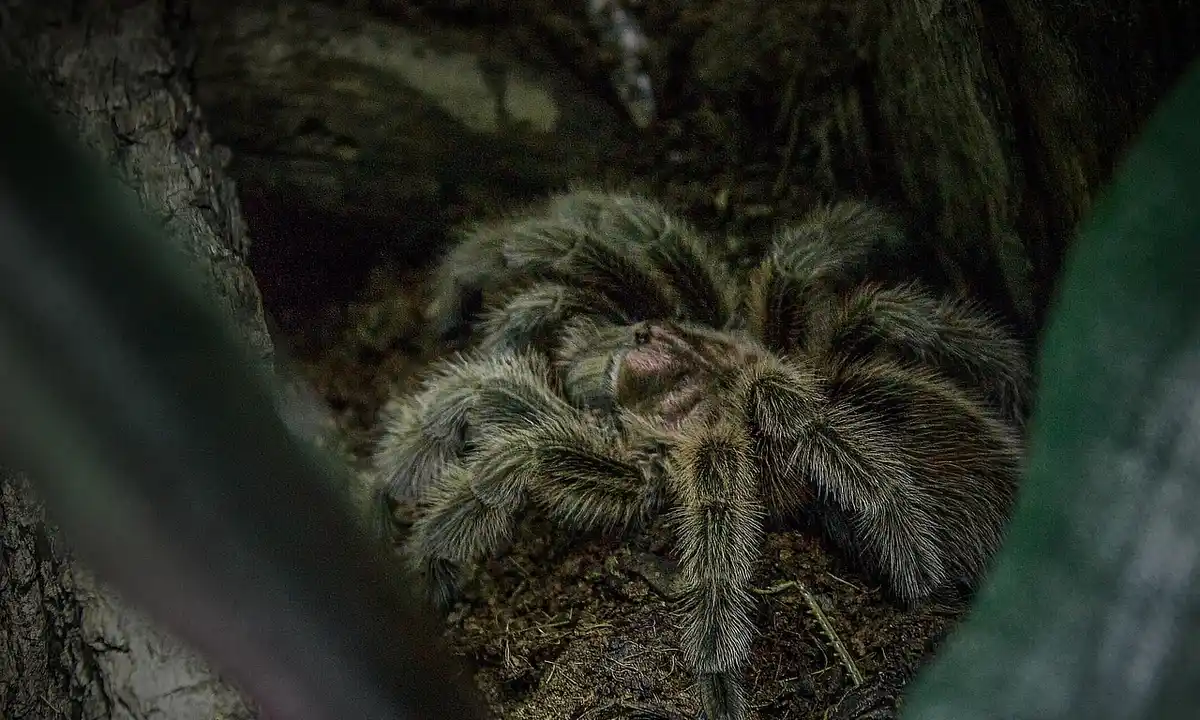
Watching a GBB hunt is witnessing pure predatory efficiency. Their intense coloration is not just for show-it’s the last thing many a cricket will see. A proper feeding regimen is less about rigid rules and more about observing your spider’s natural rhythm and responding to it. My own collection, from my “pet rock” G. rosea to my voracious T. stirmi, has taught me that fasting is a feature, not a failure.
Prey Size Selection and Feeding Technique
Prey that is too large can injure your tarantula or cause a defensive, stressful reaction. The goal is a manageable meal. I use a simple, visual rule. Any offered prey insect should be no larger than the tarantula’s carapace, or roughly half to three-quarters the size of its abdomen. This ensures a safe, confident strike.
- Suitable Prey: Crickets, dubia roaches, discoid roaches, and mealworms (in a dish) are all excellent staples. Variety is beneficial.
- Feeding Technique: Gently drop the prey near the tarantula’s web. Avoid dropping it directly on the spider. The vibration will trigger a hunt. If the prey is ignored after a few minutes, it’s fine to leave it overnight.
- The Crucial Rule: Remove any uneaten live prey after 24 hours. A roaming cricket can stress a molting tarantula.
Recognizing Pre-Molt and Feeding Refusals
This is where new keepers often panic. A refusal to eat is your tarantula’s way of telling you a critical process has begun. My G. rosea, Rosie, has taught me patience by fasting for eight months at a time. A tarantula that is not eating but has a plump, darkening abdomen is not starving-it is preparing for rebirth.
- Abdomen darkens, often becoming a shiny, inky black.
- Lethargy increases; the spider may seal itself in its web tunnel.
- Appetite completely disappears, sometimes for many weeks.
During this pre-molt fast, stop offering food. The only thing you must provide is a shallow water dish. Disturbance can complicate the delicate molting process.
Life Cycle Care: Molting, Webbing, and Health Monitoring
The GBB’s life is a cycle of construction, consumption, and renewal. Your role as keeper is to provide stability and observe without interfering, allowing these natural behaviors to unfold in the safety of their enclosure. Success is measured in clean molts and expansive, intricate webs.
The Molting Process: From Preparation to Recovery
Ecdysis, or molting, is the most vulnerable time in a tarantula’s life. They are literally rebuilding their entire body, from fangs to exoskeleton. Privacy during a molt is non-negotiable; any disturbance can lead to fatal complications like limb loss or a stuck carapace.
- Pre-Molt: As described above, feeding ceases. The spider begins laying down a silken “molting mat.” Humidity becomes critical-ensure the water dish is full.
- The Molt: The tarantula will flip onto its back. Do not mistake this for a death curl; it is a normal, necessary position. The old exoskeleton splits, and the spider will slowly, arduously extract itself. This can take hours. Do not touch, poke, or “help.”
- Post-Molt: The new exoskeleton is soft and pale. The spider will lie still, hardening. Their fangs, now dark red and soft, will solidify to black. Do not offer food for at least 7-10 days, until the fangs are fully hardened. Just provide water.
Webbing Behavior and Enclosure Maintenance
A GBB doesn’t just web-it architects a complete silk-lined habitat. This dense webbing is a security blanket, a tripwire for prey, and the spider’s entire world. Resist the urge to “clean” this webbing away; destroying it is profoundly stressful and counter to their natural behavior. My P. murinus, Flash, has taught me to appreciate a heavily webbed enclosure as a sign of a content spider.
- Maintenance Philosophy: Practice spot-cleaning only. Use long tongs to remove boluses (prey remains) and feces when seen.
- Substrate Changes: A full substrate change is rarely needed, perhaps once every two years for an adult. It is a major stress event. When you must, be prepared for a dramatic rehousing as the spider will cling to its webbing.
- Water Dish Management: Gently clear webbing from the water dish as needed. They will often fill it with substrate or silk; this is normal. Just clean and refill it.
Identifying Stress and Promoting Health
Health in tarantulas is often assessed by what they are *doing*, not just how they look. A healthy GBB is an active webber, with a rounded (not shriveled) abdomen and a prompt feeding response. Stress is silent but visible; it’s your cue to re-evaluate the environment, not to handle the animal. Stress body language tells you when to leave them alone. My T. stirmi, Goliath, communicates his displeasure with a cloud of urticating hairs-a clear sign to give him space.
- Signs of Health: Active webbing, a plump abdomen, drinking from the dish, and a calm, alert posture.
- Signs of Stress: A persistent threat posture, frequent kicking of urticating hairs (creating a bald patch on the abdomen), hiding deep without webbing activity, or frantic climbing on the glass.
- The Core Practice: The single best thing you can do for your GBB’s long-term health is to embrace “Look, Don’t Touch.” Handling provides zero benefit to the spider and introduces risk of a fall, a bite, or a bolting escape. Your observation is the care; your restraint is the kindness.
FAQs
Is the Green Bottle Blue tarantula a good species for a first-time keeper?
Yes, the GBB is widely considered an excellent beginner tarantula due to its hardiness and strong feeding response. Their care requirements for a dry, well-ventilated enclosure are straightforward to maintain. However, their speed and defensive nature require a respectful, hands-off approach, making them a great “look, don’t touch” pet for a responsible novice.
Where can I find a reliable GBB tarantula care sheet or PDF guide?
Many reputable tarantula forums, specialty breeders, and arachnocultural websites offer free, downloadable care sheets. This article itself serves as a comprehensive digital care sheet. For a PDF, you can often find them on breeder sites or by searching for the scientific name, *Chromatopelma cyaneopubescens*, paired with “care sheet PDF.” While these sheets cover general care, accurate species identification is essential, as care recommendations vary by tarantula species. A dedicated tarantula species identification care guide can help readers verify their species through key markings and measurements before applying care practices.
How often should I feed my Green Bottle Blue tarantula?
Feed spiderlings once or twice a week and juveniles every 7-10 days, adjusting based on abdomen size. Adults typically do well on a schedule of one or two appropriately sized prey items every 10-14 days. It is crucial to recognize and respect pre-molt fasting periods, where feeding should stop entirely until after the tarantula has hardened post-molt. In addition to pre-molt fasting, some care guides note other temporary fasting windows for reasons like recent molts or routine health checks. Always consult a reliable tarantula care guide to determine when not to feed and for how long.
Can I handle my GBB tarantula?
Handling is strongly discouraged. While not the most aggressive, GBBs are fast and defensive, preferring to flick urticating hairs or retreat. Handling provides no benefit to the tarantula and poses significant risks, including falls, escape, or a defensive bite. Their well-being is best supported through expert enclosure setup and observation.
My GBB isn’t eating. Should I be worried?
Not necessarily. A common reason for refusal to eat is an impending molt. If the abdomen is plump and darkening, this is normal pre-molt behavior. Adult tarantulas can also fast for extended periods. Simply remove any uneaten prey after 24 hours and ensure a full water dish is available. Only be concerned if a fast is paired with a shriveled abdomen.
What makes the GBB a “good for beginners” tarantula if it’s fast and defensive?
Its “beginner-friendly” label primarily comes from its resilience and simple habitat needs. They are forgiving of minor husbandry fluctuations, eat readily, and display fascinating web-building behavior. The recommendation assumes the keeper is committed to a hands-off philosophy, appreciating the tarantula as a display animal rather than a handling pet.
A Legacy in Silk and Color
While the Green Bottle Blue’s beauty is instant, its true care is a slow and steady promise. Your primary, non-negotiable duty is to provide a dry environment with constant access to fresh water, as chronic dampness is a far greater threat to their health than a slightly low humidity reading. I learned this the hard way years ago with my Chilean Rose Hair, Rosie, by misinterpreting “arid” as “bone-dry,” leading to a difficult molt. For your GBB, a water dish and a slight moisture gradient in the substrate are all the humidity management it will ever need.
Beyond the parameters, your reward is a front-row seat to an astonishing architectural performance. Watch as it methodsically transforms its space into a silken funnel, decorating the strands with substrate and debris. Observe the patient ambush, the sudden strike that defies its previous stillness. This spider is a sunset in a desert bloom, a living sculpture in constant, slow motion. The greatest tool in your kit isn’t a mister or a heat lamp, but your own patience; growth happens on a scale of months and years, not days. Provide the right foundation, then step back and let the animal simply be. In that quiet observation, you’ll find the deep, lasting joy of the hobby.
Further Reading & Sources
- Green Bottle Blue Tarantula Care – The Tarantula Collective
- Chromatopelma cyaneopubscens | Green Bottle Blue | Care Guide
- Chromatopelma cyaneopubescens (GBB) Care | Tom’s Big Spiders
Arlo is a lifelong arachnid enthusiast who believes tarantulas are the world’s most misunderstood roommates. With years of hands-on experience in tarantula care, habitat setup, and species behavior, Arlo combines expert knowledge with a dash of humor to make spider ownership less scary and a lot more fascinating. From choosing the right enclosure to understanding why your eight-legged buddy is doing that weird little pose again, Arlo is here to help you become the best tarantula parent you can be, without getting tangled in the web of misinformation.
Enclosures and Sizes