
How to Determine the Sex of Your Tarantula (A Step-by-Step Guide)
Knowing if your tarantula is male or female is more than a label; it reveals the arc of its life, from potential size and lifespan to its role in the delicate web of breeding. For years in my arachnoculture, from confirming my docile G. rosea Rosie was female to anticipating the wanderlust in a mature male, accurate sexing has been foundational. This guide cuts through the guesswork with clear, step-by-step methods. The most reliable answer often lies in the silent, discarded skin of a molt.
- Quick Stats:
- Applicability: All tarantula species and genera
- Primary Method: Exuvia (molt) examination
- Optimal Timing: After a successful juvenile or adult molt
- Key Anatomical Sign: Spermathecae in females; modified palpal bulbs in mature males
This guide will provide the specific techniques and observational skills needed to accurately determine the sex of your tarantula at every stage, from fragile sling to formidable adult.
Why Knowing Your Tarantula’s Sex Matters
Identifying your tarantula’s sex moves you from a casual keeper to an informed caretaker. This single piece of biological data directly shapes your long-term care strategy, financial planning, and even your emotional preparedness. The difference between male and female is not just anatomical; it’s a roadmap to their future.
Females are the marathon runners of the tarantula world. A female Grammostola rosea like my Rosie can live 20 years or more. Males, in stark contrast, are sprinters. After their final molt into maturity, they enter a phase called the “ultimate molt” and typically live only 1-3 more years. Knowing you have a male prepares you for this abbreviated, frantic life stage where his sole purpose becomes finding a mate.
This knowledge dictates housing. A mature male Pterinochilus murinus like Flash would become a relentless escape artist, his wanderlust fueled by pheromones. You would need to shift from a standard terrestrial setup to a fortress-like enclosure with impeccable security. For breeders, accurate sexing is everything. Pairing two females leads to stress and potential cannibalism, a waste of resources and risk to the animals.
From my own experience, suspecting my old-world tarantula was female changed how I invested in its enclosure. I built a permanent, bioactive display knowing it could be a decade-long resident. For my suspected male Avicularia, I enjoyed his vibrant colors but was financially and mentally ready for his shorter life. For more details on tarantula lifespan differences, especially between males and females, check out this guide.
The Gold Standard: Sexing a Tarantula with a Molt (Exuviae)
Examining a shed exoskeleton is the most reliable, non-invasive method for sexing a tarantula. During the molting process, the old skin peels away, revealing intricate internal structures that differ between sexes. You are looking for a specific organ inside the discarded husk. This is a key topic in the complete guide tarantula molting problems solutions, which walks you through interpreting molts and addressing common issues. Recognizing what the shed reveals helps you spot problems early and support a healthy molt.
In females, we look for the spermathecae. This is a sclerotized (hardened) reproductive organ used to store sperm. In males, we search for the epiandrous fusillae, a small patch of specialized spinnerets located just above the epigastric furrow where the molt separates. Finding either is a definitive answer.
Step-by-Step Molt Examination
Patience and good lighting are your best tools. A molt is incredibly fragile, especially from a small spiderling.
- Retrieve the Molt: Wait at least 24 hours after the tarantula has finished molting and moved away. Gently remove the exuviae with soft tweezers.
- Rehydrate: Place the dry, brittle molt in a small, shallow dish. Add a drop or two of room-temperature water with a dash of dish soap (to break surface tension). Let it soak for 10-30 minutes until pliable.
- Locate the Area: Under a bright light, identify the inside of the abdomen (the opisthosoma). Look for the book lungs-two pairs of pale, striated patches. Between the front pair of book lungs lies the epigastric furrow.
- The Crucial Dissection: Using fine tweezers and maybe a pin, carefully open the abdomen by teasing apart the thin skin. Your target area is directly inside, opposite the epigastric furrow.
- Identify: For a female, you may see one or two small, shiny, often darkened or reddish “pockets” or flaps-the spermathecae. For a male, look for a small, pale, possibly slightly fuzzy patch of very short silk spigots-the epiandrous fusillae. A jeweler’s loupe or USB microscope is invaluable here.
I’ve spent hours hunched over a backlit magnifier, the iridescent sheen of a carapace reflecting the lamp, patiently teasing apart a paper-thin molt from a 2-inch spiderling to finally spot those two tiny, dark hooks that confirmed “female.” The silence of the room amplifies the triumph.
How to Properly Store a Molt for Later Inspection
Sometimes you need to save the molt for a better look. Improper storage can ruin it.
- Initial Drying: Let the molt air-dry completely on a paper towel for a day before storage. Do not apply heat.
- Rigid Container: Place the completely dry molt in a small, hard container like a pill vial or specimen jar. Cushion it with a bit of cotton ball or tissue paper.
- Label Immediately: Write the tarantula’s name/species and molt date on the container with permanent marker. Memory fades.
- For Permanent Records: You can carefully mount the opened, critical section on a microscope slide with a drop of water and a coverslip for crystal-clear viewing under magnification.
A properly stored molt is a permanent biological record of your tarantula, allowing for verification and even sharing with other breeders for a second opinion. I have tiny vials on my shelf holding molts from years ago, each one a chapter in a spider’s life.
Examining a Live Tarantula: The Ventral Sexing Method
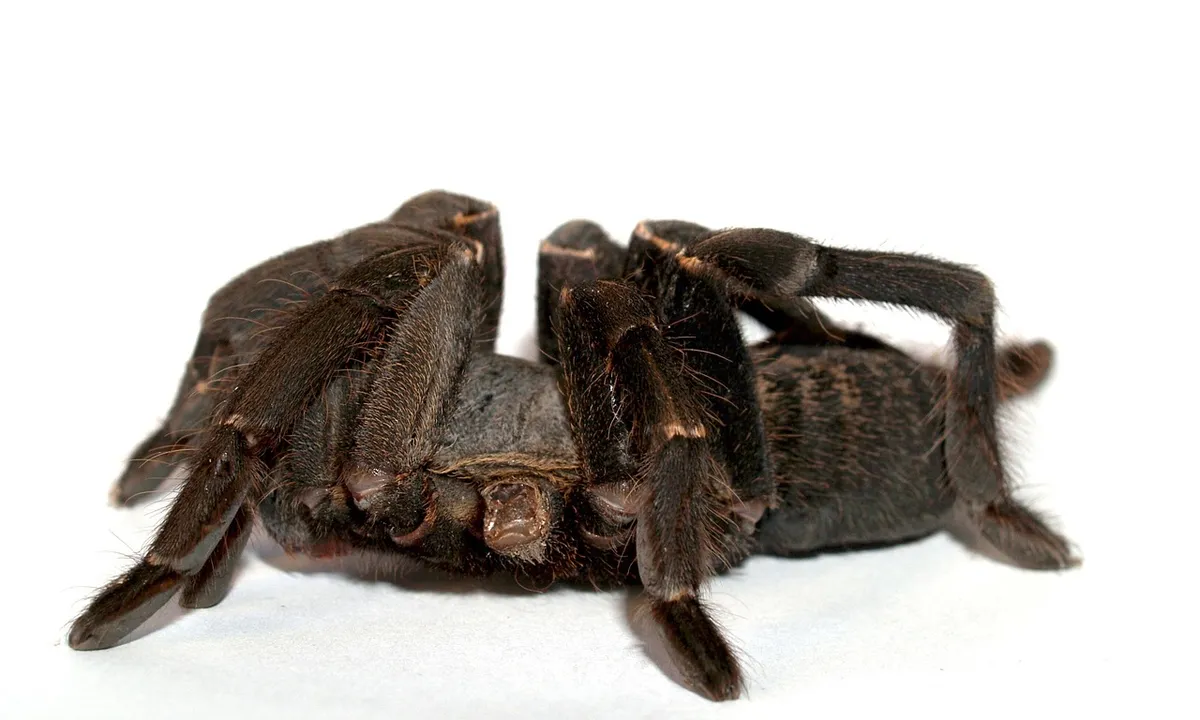
Sexing a tarantula without a molt requires a clear view of its underside. This method relies on observation, not manipulation, aligning perfectly with a respectful “Look, Don’t Touch” philosophy that minimizes stress for your pet. You are looking for subtle, permanent anatomical differences present from a young age. If you’re trying to tell a tarantula’s age, look for age signs indicators like molt history and size relative to species norms, though individual variation can complicate precise aging.
Essential Safety and Preparation
Your safety and the spider’s calm are paramount. For defensive or fast species like my P. murinus, Flash, I would never attempt this—the risk is too high. For a docile, stable tarantula like my G. rosea, Rosie, it can be done with extreme care, especially when following proper methods for transporting and rehousing.
- Use a Clear Container: Gently coax the tarantula into a large, clean deli cup or similar transparent enclosure. I have done this countless times during cage cleanings.
- Elevate the Container: Place the cup on a stable stand or over a small box, allowing you to look upward through the bottom.
- Employ Brilliant Lighting: A small LED flashlight or a phone light shone from the side will illuminate the abdomen’s details.
- Work Close to the Ground: Perform this over a soft, confined area like a bathtub or large bin to mitigate any fall risk should the improbable happen.
- Patience is the Tool: Wait for the tarantula to settle in a calm, spread-out posture. Do not shake, tap, or prod the container to force movement.
Identifying Key Anatomical Features
With your tarantula safely contained and illuminated, focus on the area between the book lungs—the two pale, paired patches on the lower abdomen. This is a good entry point for tarantula anatomy 101, helping you understand the basic body plan. You’ll see how the prosoma (cephalothorax) and opisthosoma (abdomen) connect, with key features like book lungs and spinnerets.
- The Epigastric Furrow: This is the central horizontal seam or crease. All tarantulas have this; it is the baseline reference point.
- Finding the Spermathecae (Females): In a mature female, look for a small, distinct, often darkened area directly above the epigastric furrow. It may appear as a barely-visible lump, a tiny slit, or what I describe as a set of faint parentheses marks ( ). This structure stores sperm after mating.
- The Absence (Probable Males): In males and very young females, the area above the furrow will appear smooth, flat, and featureless. Without a visible spermatheca, you cannot definitively confirm a male from a ventral view alone-you can only note the absence of a female structure, making this a “probable male” identification.
The Unmistakable Signs of a Mature Male Tarantula
When a male tarantula reaches his ultimate molt, the maturation molt, his body undergoes dramatic, irreversible changes. These are not subtle clues but bold announcements of his biological purpose: to find a mate. Are molting and reproduction connected? The maturity molt signals readiness to mate, though actual mating involves courtship and timing beyond the molt. Once you see these signs, you know with absolute certainty.
Physical Changes: Tibial Hooks and Pedipalp Bulbs
Two structures emerge that are impossible to miss on a mature male.
- Tibial Hooks (Tibial Apophyses): On the first pair of legs, the tibia segment develops hard, curved hooks. These are not for combat. During mating, he uses these hooks to lift the female’s fangs and hold her carapace steady, a critical maneuver for his safety. They look like small, dark grappling hooks.
- Pedipalp Bulbs (Emboli): The ends of his pedipalps-the shorter, leg-like appendages near the mouth-transform. They swell into distinct, bulbous, often shiny structures. These are his sexual organs, used to transfer sperm to the female. They resemble tiny boxing gloves or rounded bulbs. This is the single most definitive visual sign.
Behavioral Shifts: Wandering and Webbing
His physiology dictates a new, urgent behavior. The calm, secretive creature you knew vanishes, replaced by a relentless wanderer driven by a single instinct.
- The Permanent Prowl: He will rarely settle. He paces the enclosure’s perimeter, climbs the walls, and stands for hours at the vent holes. My male Goliath species tarantula became a different animal, constantly on the move.
- Sperm Web Construction: Before embarking, he will spin a small, hammock-like web of special silk. He will deposit a drop of sperm onto it, then carefully load his pedipalp bulbs. You may find this delicate, triangular web in his enclosure.
- Loss of Appetite: Feeding often stops completely. His biological clock is ticking, and hunting is no longer a priority.
- Increased Fragility: Post-maturity, males have a significantly shortened lifespan-often just months to a year. Their focus on wandering makes them more prone to falls and injury. Extra caution during enclosure maintenance is vital.
Sexing Challenges: Spiderlings and Juvenile Tarantulas

Young tarantulas present a unique puzzle for the breeder and hobbyist. Their tiny size and rapid growth phases make definitive gender identification a task of patience. As they mature, males and females often differ in lifespan and temperament, which also impacts ongoing care costs. Knowing these male vs female tarantula differences helps hobbyists plan purchases and husbandry.
Why Sexing Young Tarantulas is Difficult
A spiderling’s anatomy is a miniature, underdeveloped version of an adult’s. The key sexual structures, like the spermathecae in females, are often microscopic or not fully formed until after several molts. Trying to discern them is like trying to read fine print from across a room.
Ventral observation-peering at the underside-is exceptionally unreliable here. The epigastric furrow area is just too small and underdefined. Furthermore, spiderlings are fragile. Attempting to maneuver them for a clear ventral view risks injury from a fall or from the stress of handling.
Best Practices for Juvenile Tarantula Sex Determination
Patience and a good magnifying glass are your greatest tools. Follow this prioritized approach:
- Preserve and Inspect Every Molt. This is your single best method. As the tarantula grows, its molts become larger and clearer. Even a partial molt from a 2-inch juvenile can reveal more than trying to examine the live animal.
- Use Ventral Clues as Hints, Not Proof. You can look for the general shape of the epigastric furrow. A wider, more pronounced area might hint at a female, but do not purchase or make breeding plans based on this alone.
- Never Risk the Spider’s Safety. I would never attempt to hold my P. murinus “Flash” for ventral sexing; his speed and defensiveness make it a dangerous endeavor for us both. The “Look, Don’t Touch” philosophy is critical here, as stressing a juvenile can interrupt feeding and growth.
- Track Growth Rate as a Secondary Indicator. Generally, mature female tarantulas grow larger and live decades longer than males. A juvenile that molts frequently and puts on significant size could be female, while one that seems to plateau in size earlier could be a maturing male. This is not a diagnostic tool, but part of the overall picture.
Limitations, Accuracy, and Common Mistakes
Even with the best techniques, sexing tarantulas has its inherent limits. Knowing these prevents costly or disappointing assumptions. For more reliable results, many hobbyists use a tarantula sexing tool to help distinguish male from female specimens.
How Reliable is Ventral Sexing Compared to Molt Analysis?
Think of it as an educated guess versus laboratory confirmation.
- Ventral Sexing Accuracy: Highly variable. For large, calm, adult specimens of certain species, an experienced eye might be 70-80% confident. For juveniles, obscure species, or darker tarantulas, accuracy plummets. Lighting, the tarantula’s posture, and abdominal fullness can all create misleading shadows and shapes.
- Molt Analysis Accuracy: Near 100% when done correctly on a complete, intact molt. You are examining the actual physical sexual organs (spermathecae), not an external hint of them. The only limitation is the molt’s condition; if it’s torn or shriveled, key details may be lost.
In my years keeping everything from docile “pet rocks” like my G. rosea to massive hair-kickers like T. stirmi, I have never once made a final determination on gender without confirming it via a molt. Every other method is simply a placeholder.
Frequent Errors in Tarantula Gender Identification
Several pitfalls trip up both new and experienced keepers.
- Misreading the Epigastric Furrow: A dark, hairless patch between the book lungs is normal. Mistaking this for a “flap” (epiandrous fusillae) found in some males is common. True male structures are much more subtle.
- Confusing Book Lungs for Spermathecae: On a molt, the two white, oval book lungs sit forward of the spermathecae. New hobbyists often point to these and declare “female!” True spermathecae are typically smaller, paired, and located directly in the center of the epigastric furrow area.
- Relying on Color or “Attitude”: Some species have minor sexual dimorphism, but most do not. A defensive nature is not a male trait; my female OBT is the most defensive animal I own. Personality is individual, not gendered.
- Giving Up Too Early on a Molt: A dried, crumpled molt can be rehydrated with a drop of water and gentle maneuvering with soft tweezers. Taking five extra minutes to soften and carefully unfold the abdomen can reveal the secrets hidden in a seemingly ruined shed.
FAQs
What tools do I need to sex my tarantula?
For molt examination, you need fine-point tweezers, a bright light source, and a magnifying tool like a jeweler’s loupe or USB microscope. To safely examine a live tarantula ventrally, you require a clear, secure container and a small flashlight. Patience and a steady hand are your most important tools to avoid stressing the animal or damaging a fragile molt.
What exactly is the epigastric furrow and how is it used in sexing?
The epigastric furrow is a horizontal seam on the tarantula’s underside, located between the first pair of book lungs. It serves as the exit for the reproductive organs. In ventral sexing, you examine the area directly above this furrow for the presence of a female’s spermathecae, which may appear as a small darkened patch or slit.
How does sexing a juvenile tarantula differ from an adult?
Sexing juveniles is far less reliable because their sexual structures are tiny and not fully developed. The molt method is still best, but the spermathecae may be microscopic. Ventral sexing is highly unreliable on spiderlings due to their size and the lack of defined features, so conclusions should always be considered tentative until confirmed by a later, larger molt.
Can I accurately sex a tarantula just by its behavior or general appearance?
Generally, no. While a mature male exhibits unmistakable behaviors like constant wandering, relying on general traits like color or “attitude” is highly inaccurate. Most species lack obvious sexual dimorphism in color or markings, and temperament is individual. Physical examination of a molt or specific adult male structures (tibial hooks, palpal bulbs) is required for certainty.
Is ventral sexing a live tarantula safe for the spider?
It can be safe if done with extreme care and only on a docile, calm specimen using the “look, don’t touch” method of observation through a clear container. For defensive, fast, or skittish species, it is not safe and risks a bite or a dangerous fall for the tarantula. For beginners, handling tarantulas is generally discouraged in favor of safe observation. If handling is ever attempted, it should be minimal, slow, and only with a calm, docile subject. When in doubt, always wait for a molt instead.
The Art of Patient Observation
Your dedication to proper husbandry is the bedrock of any successful attempt to determine your tarantula’s sex. For a clear, analyzable molt, your single most critical task is maintaining the precise humidity and hydration your specific species requires for a flawless shed. This is exactly where essential pre-molt tarantula care comes in: by preemptively stabilizing humidity and hydration, you prepare for a successful shed. Monitoring subtle pre-molt cues and adjusting the enclosure ahead of time minimizes stress and supports a clean exoskeleton. A spider struggling in overly dry conditions risks a torn, incomplete exuviae, leaving you with an unreadable puzzle. Every drop in the water dish and every light misting on the enclosure wall contributes to this vital biological event.
Beyond the shed itself, the real joy of sexing lies in the quiet study it encourages. Watching your P. murinus like Flash weave its intricate, silken fortress, or your T. stirmi like Goliath meticulously sculpt its burrow, trains your eye for detail. You learn the rhythm of their lives. This patient observation is your greatest tool. Over the years, watching my old G. rosea, Rosie, I noticed subtle changes in her proportions long before a molt confirmed her gender. The answer often reveals itself not in a single dramatic moment, but through a series of quiet, connected observations over time. Your role is to provide the stable environment and then witness the fascinating story your tarantula is living, one molt at a time.
Further Reading & Sources
- giantspiders.com – Sex Determination
- Sex determination. | Theraphosids (tarantulas) of the World. Keeping and breeding in captivity
- Sexing Tarantulas Using Molts | Tom’s Big Spiders
Arlo is a lifelong arachnid enthusiast who believes tarantulas are the world’s most misunderstood roommates. With years of hands-on experience in tarantula care, habitat setup, and species behavior, Arlo combines expert knowledge with a dash of humor to make spider ownership less scary and a lot more fascinating. From choosing the right enclosure to understanding why your eight-legged buddy is doing that weird little pose again, Arlo is here to help you become the best tarantula parent you can be, without getting tangled in the web of misinformation.
Breeding Tarantulas