
Caring for the Orange Baboon Tarantula (OBT): Managing the ‘Orange Bitey Thing’
The Orange Baboon Tarantula, Pterinochilus murinus, earns its ominous hobby nickname ‘Orange Bitey Thing’ through a potent mix of blazing speed, a defensive nature, and that unmistakable, warning-flare orange color. This is not a beginner’s pet, but a fascinating display animal that demands a keeper’s full attention to detail. Based on my years with my own OBT, Flash, who has webbed every surface of his home into a dense funnel, this guide cuts through the myths. Providing correct care transforms a potentially stressful pet into a mesmerizing display of natural behavior, all from the safety of the other side of the glass.
Quick Stats:
- Origin: East Africa
- Type: Old World, terrestrial with strong fossorial (burrowing) instincts
- Growth Rate: Fast; slings can reach maturity in 2 to 3 years with proper feeding
This guide delivers the specific, step-by-step husbandry you need to responsibly nurture an OBT from a tiny, fiery sling into a stunning, web-enshrouded adult.
Meet the Orange Baboon Tarantula (Pterinochilus murinus)
Native to the scrublands and savannas of central and southern Africa, Pterinochilus murinus is a creature of intense presence. Its common names—OBT and the colloquial “Orange Bitey Thing”—tell a story of vivid color and formidable reputation. This tarantula does not simply exist in its environment; it transforms it. For hobbyists seeking to identify this species and learn proper care, our tarantula species identification and care guide offers clear, species-specific details. It covers distinguishing features, habitat notes, and safety considerations.
Adults can reach a leg span of up to 6 inches, with females typically being larger and longer-lived than males. The bright orange carapace and legs, contrasted with a darker, often russet abdomen, create a visual warning signal you cannot ignore. Under direct light, the carapace can show an almost iridescent sheen, a beautiful detail on a famously defensive animal.
Defensive is the operative word. This species possesses incredible speed, potent venom considered medically significant, and a willingness to assume a dramatic threat posture. My own OBT, Flash, lived up to his name by webbing his entire enclosure into a dense silken fortress within 48 hours of rehousing. His speed during feeding is a blur, a sudden strike that reminds me of the absolute respect he commands.
For these reasons, the OBT is firmly not a beginner’s tarantula and embodies the ‘look, don’t touch’ philosophy perfectly. The joy in keeping one comes from observation, not interaction, as you witness a master architect and predator at work.
Scientific Names and the ‘Bitey’ Reputation
The formal name is Pterinochilus murinus, but the hobby knows it as the Orange Baboon Tarantula, OBT, or the bluntly descriptive “Orange Bitey Thing.” This nickname was earned through consistent defensive behaviors. When threatened, they rear up, exposing their fangs and striking with alarming speed. Their venom can cause intense pain, muscle cramps, and lasting discomfort.
Unlike my Burgundy Goliath, who relies on kicking urticating hairs, the OBT’s first line of defense is often a bite. They are not inherently aggressive but are profoundly defensive and have a very low stress threshold, making hands-off care the only safe and ethical approach.
A Striking Visual Profile
The OBT’s visual appeal is undeniable. The entire body is clad in dense orange setae, often with a darker, almost black accent pattern on the abdomen. In certain light, the carapace shines with a subtle coppery gloss. Be prepared for this view to change, however. A happy OBT is a prolific webber, and they will rapidly sheet over walls, decor, and even the water dish with layers of dense, opaque silk. You may go from having a display animal to guarding a mysterious, orange-hued silk cave-which is exactly what they want.
Setting Up the Perfect OBT Enclosure
Creating the right habitat is your primary tool for managing this species successfully. A proper setup minimizes stress for the tarantula, which in turn minimizes defensive behavior. The goal is to provide security, hydration, and ample opportunity for natural web-building and burrowing instincts. A secure, escape-proof enclosure also helps minimize bite risk by reducing stress and defensive responses. With calm handling and routine safety checks, this safe habitat approach protects both you and the tarantula.
Choosing Enclosure Size and Type
For an adult OBT, focus on floor space over height. A 10-gallon tank laid on its side or a specialized terrestrial enclosure with a footprint of roughly 12×12 inches is ideal. The single most critical feature is a secure, locking lid with cross-ventilation. I use enclosures with front-opening doors and multiple locking points after witnessing the explosive speed of an OBT during a rehousing. Stagnant air is a killer, so excellent ventilation is non-negotiable to prevent mold in their humid setup.
Substrate and Burrow Depth
OBTs appreciate a degree of humidity and will often dig. Use a moisture-retentive substrate like coconut fiber or a peat moss mix. Pack it down firmly to support tunnel construction. Provide a substrate depth of 4 to 6 inches to allow for proper burrowing, which gives them a profound sense of security. This depth also helps maintain a stable humidity gradient within the enclosure.
Essential Decor: Hides, Anchors, and Hydration
Decor serves specific purposes. A large piece of cork bark flat placed against the substrate provides a starter hide and a primary anchor for their silk. Add some sturdy fake plants or thin branches to give more web attachment points. A shallow, sturdy water dish, kept full at all times, is absolutely essential for hydration and microclimate. Place it away from the area you expect to become the main burrow to avoid constant silking-over.
Step-by-Step Enclosure Setup
- Select your escape-proof enclosure and ensure its ventilation holes are small enough to prevent a leg hook from finding purchase.
- Add your 4-6 inch deep layer of substrate, slightly dampened at the base but dry on top.
- Securely place your main hide (cork bark) and ancillary web anchor points, pressing them into the substrate.
- Position the water dish on the opposite side of the enclosure from the hide.
- Double-check every latch, clip, and seal. Introduce your OBT using a large catch cup method, and then do not disturb them for a week as they settle.
Maintaining Ideal Climate: Temperature and Humidity
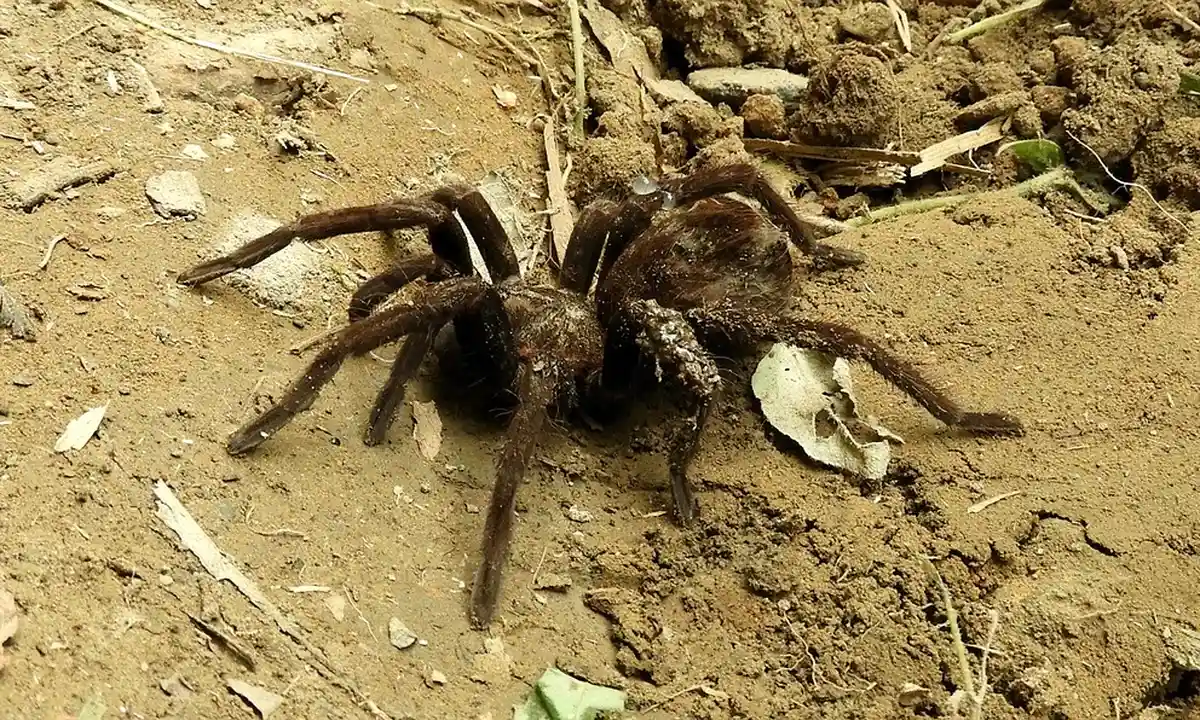
Creating a stable environment for Pterinochilus murinus demands specific numbers and observation. My Burgundy Goliath Bird Eater, Goliath, thrives in a constant 80% humidity swamp, but the OBT requires a drier, airier setup to mirror its African scrubland origins. This precise balance prevents health issues and allows natural web-building behaviors.
Temperature Range and Heating Methods
The ideal temperature range is 75-85°F (24-29°C). Room temperature in most homes sits perfectly within this band, making direct heating elements both dangerous and unnecessary. I learned this after a heat mat nearly overheated a sling enclosure. Now, I only use a small space heater for the room during cold snaps.
- Consistent ambient warmth is better than a localized hot spot.
- Place enclosures away from drafty windows or air conditioning vents.
Humidity Range and Ventilation Balance
Target a humidity range of 60-70%. I achieve this by lightly misting one corner of Flash’s enclosure every week, but the priority is always cross-ventilation to prevent mold. Her dense web would trap moisture and rot without good airflow. I use a digital hygrometer for trustable data, a tool I also rely on for Goliath’s muggy tank.
- Mist sparingly, only to dampen the top layer of substrate.
- Choose enclosures with ventilation on opposite sides for a healthy air exchange.
Feeding Your OBT: Diet and Schedule
Feeding an OBT is a high-speed event that rewards patience. Their aggressive feeding response contrasts sharply with my Chilean Rose Hair, Rosie, whose months-long fasts are normal, but for an OBT, refusing food often signals an upcoming molt. A structured regimen keeps them healthy and reduces stress.
Appropriate Prey Items and Sizes
Suitable feeder insects include gut-loaded crickets, dubia roaches, and the occasional mealworm. Prey size should never exceed the width of the tarantula’s abdomen to prevent injury. I once made the mistake of offering a roach that was too large, and Flash defensively kicked hairs instead of striking. In the dubia roaches vs crickets debate, many keepers find dubias safer for larger tarantulas. Crickets, meanwhile, can be more engaging for smaller or more active feeders.
- Gut-loaded crickets: A staple that provides essential hydration.
- Dubia roaches: A nutritious, less-escape-prone alternative.
- Mealworms: Use as a rare treat; their high fat can lead to obesity.
Feeding Frequency and Technique
Feed juveniles once a week and adults every 10-14 days. Drop the prey item in front of the burrow or web tunnel and immediately step back to observe the sudden strike from a safe distance. Tarantulas are ambush predators that hunt by waiting for prey to come near and striking quickly. They subdue prey with venom and often drag it back to the burrow. This is a pure ‘Look, Don’t Touch’ moment. Remove any uneaten prey after 24 hours to avoid it bothering your tarantula.
- Use long, soft-tipped tweezers to place the feeder insect.
- Witness the ambush; OBTs are astonishingly fast and precise.
- Record the date and response to anticipate molting periods, as fasting for several weeks beforehand is common.
Understanding OBT Molts and Health
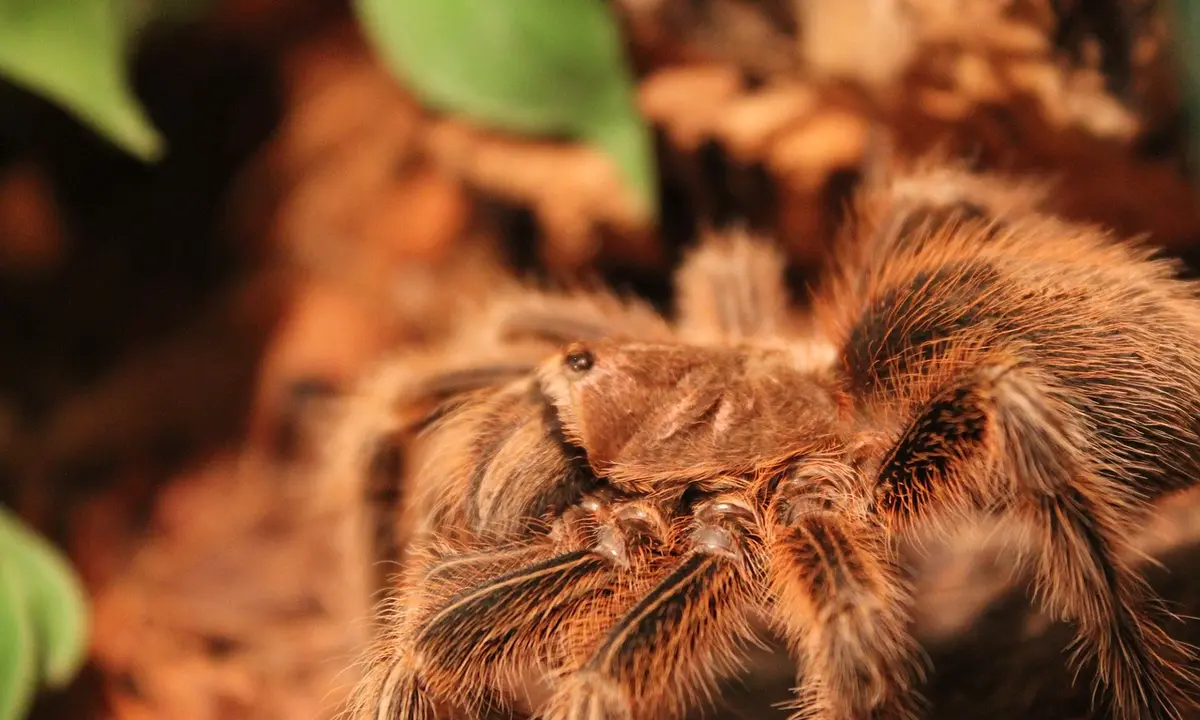
Witnessing a tarantula molt is one of the hobby’s great privileges. For a keeper, it’s a critical health indicator. The process, called ecdysis, is when your spider sheds its old exoskeleton to grow. An OBT like my Flash moves with such speed in daily life, but during a molt, it becomes profoundly, vulnerably still. Recognizing the stages is key to providing proper support, especially when ensuring it can regrow any lost legs.
The Molting Process: Signs and Care
OBTs typically molt while lying on their backs within their silken retreats. You may not see the main event, but you’ll see the clues.
- Identify pre-molt signs. The abdomen darkens and develops a glossy, almost polished appearance as the new skin forms beneath. Appetite vanishes completely. Your once-exploratory spider will seal itself into its web tunnel or hide, sometimes for weeks. Never offer food during this time, as a live prey item can injure the vulnerable tarantula.
- During the molt, your only job is non-interference. The enclosure should be left in peace. I provide a very slight humidity bump by gently overflowing the water dish once, ensuring the substrate nearby is damp but not wet. Any disturbance can cause a fatal fall or a stuck molt.
- Post-molt patience is non-negotiable. After the ceremonial flipping onto its back and the arduous extraction, your OBT will be soft and brilliantly colored. Its fangs, now pale and soft, need time to sclerotize (harden). Wait a full 7-10 days after you see it upright and mobile before attempting to feed. Its first meal post-molt should be a smaller, pre-killed prey item.
Common Health Issues and Prevention
OBTs are robust, but their speed and nature make certain issues more pressing.
- Dehydration is a silent threat. A shriveled, wrinkled abdomen is the primary sign. An OBT’s arid origins don’t mean it doesn’t need water. Provide a clean, full water dish at all times. I use shallow bottle caps for my slings and small ceramic dishes for adults, placed away from the main burrow entrance.
- Stuck molts are often preventable. While OBTs don’t need tropical humidity, completely bone-dry conditions during a molt can cause the old exoskeleton to cling. That slight humidity bump mentioned earlier is my insurance policy. A stuck molt is an emergency requiring expert intervention.
- Vigilance prevents larger problems. During your routine observations, check for any leaks (dark fluid), missing limbs, or abnormal lethargy. Injuries can occur from falls or prey fights. A missing limb will regenerate over successive molts. The best medicine is consistent, stress-free husbandry that minimizes the need for invasive enclosure maintenance.
Safety First: Behavior and Escape Prevention
This isn’t just about keeping you safe from a bite. It’s about creating a protocol that respects the animal’s defensive instincts and eliminates the chaos of an escape. My rehousing of Flash at 3 inches remains one of my most adrenaline-fueled hobby moments, perfectly illustrating why systems matter.
Why Handling is Strongly Discouraged
The “Look, Don’t Touch” philosophy is built on mutual respect. For an OBT, handling is pure predation stress.
- The venom is medically significant. An OBT bite is not a dry bite. It delivers a potent cocktail that causes intense pain, muscle cramps, and swelling that can last for days. It’s a defensive weapon we must avoid provoking.
- They possess urticating hairs. While not as prolific as a Goliath’s, OBTs can and will kick these barbed hairs from their abdomen. Contact with skin causes itching and rash; in the eyes or lungs, the effects are severe.
- The stress to the animal is immense. A startled OBT moving at lightning speed can fall, suffering a fatal rupture of its abdomen. Our desire for contact cannot justify their risk. The true joy of keeping this species comes from observing its natural, fascinating behaviors from behind the glass.
Safe Maintenance and Rehousing Protocols
Every interaction follows a script. Preparation is everything.
- Tools are your best friends. Long, 12-inch soft-tipped tweezers are essential for removing boluses (food remains), adjusting décor, or offering prey. Your hands never need to enter the strike zone.
- Contain the workspace. I always place the entire enclosure inside a large, empty plastic storage bin before opening the lid. This creates a secondary containment field. When I rehoused Flash, this bin caught him on his first, predictable sprint for freedom.
- Have guiding tools ready. Keep a clear plastic deli cup and a soft, wide paintbrush dedicated to this purpose. To encourage movement, you gently brush the tarantula’s hind legs-never prod or grab. The cup is for containment, not trapping.
Essential Escape Prevention Tips
An escaped OBT is a household emergency. These tips make that scenario almost impossible.
- Physically secure the lid. Simple plastic lid clips or a small luggage lock for locking lids are mandatory. These spiders are powerful and can lift surprisingly heavy weights.
- Always perform a visual confirmation. Before you even unlock a clip, know exactly where your tarantula is. Is it in its burrow? On the glass? That knowledge dictates your next move.
- Control the environment. Close the room’s door and windows. Ensure no fans are blowing. Move other pets out. Have a clear, clutter-free floor. This controlled calmness allows you to focus entirely on the task, not on potential disaster.
FAQs
What size enclosure is best for an OBT sling versus an adult?
For a sling, start with a small, secure deli cup or vial with ample cross-ventilation. As it grows, you will need to rehouse it into progressively larger enclosures. An adult requires a terrestrial tank with a focus on floor space, such as a 10-gallon aquarium on its side or a comparable front-opening terrarium.
Why is the OBT absolutely not recommended for beginner tarantula keepers?
This species possesses a potent, medically significant venom and an incredibly fast, defensive strike. Their low stress tolerance and tendency to bite rather than flee make them unpredictable for inexperienced handlers. Successful care requires strict adherence to “look, don’t touch” protocols and advanced preparation for maintenance. In this guide, we answer common questions about whether pink toe tarantulas are venomous, discuss their temperament, and outline essential care practices. Understanding these factors helps hobbyists choose the right setup and handling approach.
How often will I actually see my OBT if it webs everything up?
It is very common for a settled OBT to coat its entire enclosure in layers of dense, opaque silk, creating a “silk cave.” You may only see it at the burrow entrance during feeding time or at night. This extensive webbing is a sign of a secure and content tarantula, even if it reduces visibility.
My OBT has refused food for weeks. Is this an emergency?
Not necessarily. A prolonged fast is the most common sign of an impending molt. Ensure fresh water is always available and do not attempt to feed it, as live prey can injure a molting tarantula. If the abdomen appears plump and there are no signs of injury, patience is key—it will eat after its new exoskeleton hardens. These observations are among the 10 key signs your tarantula is about to molt. Knowing them helps you provide proper care.
What is the single most important safety feature for an OBT enclosure?
A secure, locking lid is non-negotiable. These tarantulas are powerful and surprisingly adept at exploiting weak points. Use enclosures with multiple locking points or add secondary clips, as a simple friction-fit lid is not sufficient to prevent a determined escape attempt by an OBT. Proper ventilation and security are crucial in any tarantula habitat.
Long-Term Success with Your OBT
For the Orange Baboon Tarantula, consistent dryness with perfect ventilation is non-negotiable; a damp enclosure invites respiratory distress and mold, while a dry one with a full water dish mirrors the arid air of its African homeland. I maintain Flash’s terrarium with bone-dry substrate and cross-ventilation holes on multiple sides, a lesson learned after a scare with a stuffy container. This one parameter forms the bedrock of their health. Heating and humidity are the next piece of the puzzle for popular tarantula species, each needing a climate that mirrors its native habitat. While dryness is essential for the Orange Baboon, many other species require careful humidity control and gentle warmth to thrive.
Your reward for this diligent care is a front-row seat to breathtaking natural behavior. Witness the meticulous webbing that turns decor into a silken orange labyrinth. Enjoy the silent, patient ambush from a hidden funnel. True keeping means embracing the “Look, Don’t Touch” philosophy, finding deep satisfaction in observing their complex world without intrusion. My patience during Flash’s month-long burrow sealing before a molt was always rewarded with a larger, more vibrant spider. This hobby teaches that the greatest moments come from quiet observation.
Further Reading & Sources
- Orange Baboon Tarantula (Pterinochilus murinus) Care – The Tarantula Collective
- Pterinochilus murinus – Orange Baboon Tarantula Care Guide This species is my favourite. OBTs come with a bad reputation and… – @pinksexoticpets on Tumblr
- Pterinochilus murinus – Wikipedia
Arlo is a lifelong arachnid enthusiast who believes tarantulas are the world’s most misunderstood roommates. With years of hands-on experience in tarantula care, habitat setup, and species behavior, Arlo combines expert knowledge with a dash of humor to make spider ownership less scary and a lot more fascinating. From choosing the right enclosure to understanding why your eight-legged buddy is doing that weird little pose again, Arlo is here to help you become the best tarantula parent you can be, without getting tangled in the web of misinformation.
Popular Species