
Do Tarantulas Poop, Pee, and Fart? A Guide to Spider Digestion
You’ve watched your tarantula in its silent enclosure for hours, but one fundamental question remains: how does this eight-legged creature handle the basic business of life? Spider digestion is a quiet, efficient, and strangely fascinating process, utterly alien to our mammalian experience. This guide explains exactly what happens inside that hairy abdomen, what you’ll see in the enclosure, and what it all means for you as a keeper. The short answer is yes, they do poop; they don’t pee in the way we understand; and while they don’t technically “fart,” their digestive system does produce gas.
- Quick Stats:
- Origin of Query: Universal keeper curiosity.
- System Type: External pre-digestion with a sucking stomach.
- Waste Output: Solid uric acid paste (feces), no liquid urine.
This guide will take you inside the tarantula’s unique biology, from the moment it strikes its prey to the final, often-surprising, white deposit on the glass, so you can better understand the health and rhythms of your eight-legged charge.
The Tarantula Digestive System: An Overview
Imagine if you could only drink your meals. For a tarantula, that’s not a choice; it’s biology. Their digestive process begins not inside, but outside their body. This is called external digestion.
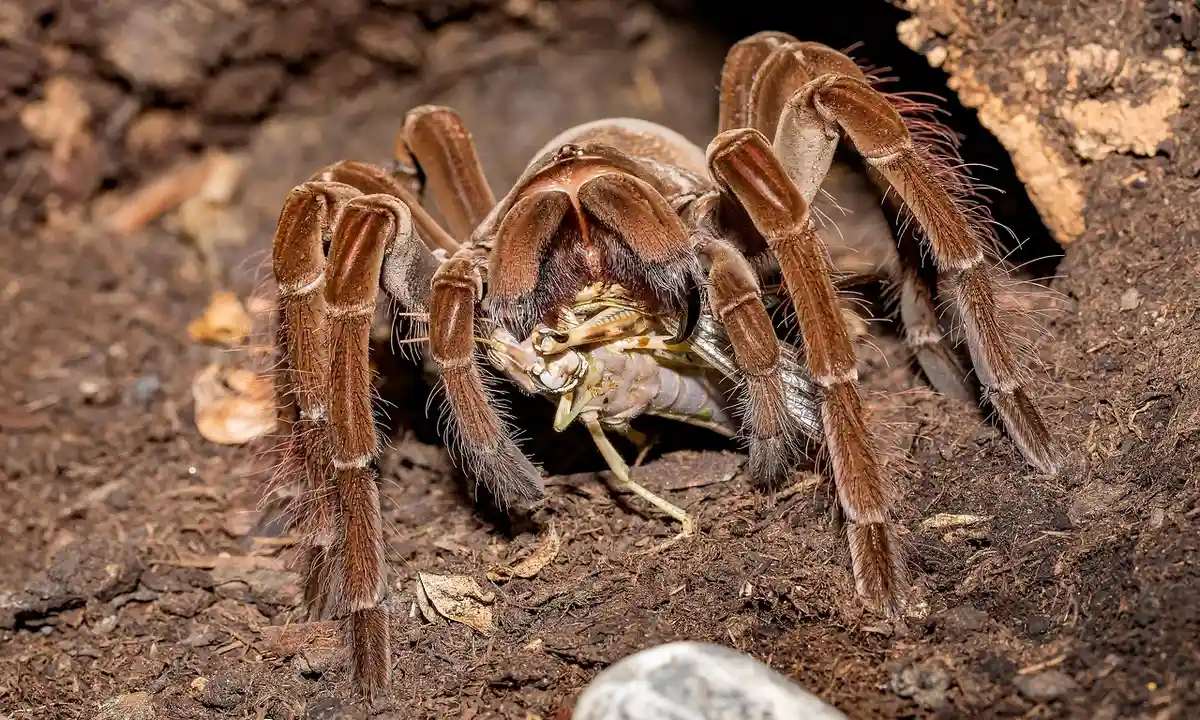
After a tarantula delivers its venomous bite, it regurgitates powerful digestive enzymes directly onto its prey. I’ve watched my OBT, Flash, do this countless times—the sudden strike, then the patient wait as those enzymes work. They turn the insect’s internal tissues into a liquefied protein soup. In humans, [bites are typically defensive](https://eightleggedlife.com/why-do-tarantulas-bite-humans-causes-and-prevention), not predatory, and understanding what triggers them helps with prevention. Proper handling, avoiding unnecessary contact, and recognizing signs of stress are key to staying safe around tarantulas.
The tarantula then uses its strong, straw-like mouthparts, called the chelicerae, to suck up this nutritious slurry. Think of it as the spider version of a protein smoothie.
This external pre-processing makes their internal system incredibly efficient and simple. The liquified food passes into the midgut, where nutrients are absorbed. Waste then travels to the hindgut and eventually to the cloaca, a single opening for all waste.
Spider metabolism is slow and supremely efficient. My 15-year-old Chilean Rose Hair, Rosie, is a perfect example. She can go months without eating, her body conserving every possible molecule from her last meal. This efficient system means they produce very little waste relative to their size and meal frequency.
Do Tarantulas Poop? The Reality of Fecal Pellets
Absolutely, tarantulas poop. The technical term is excretory waste or feces. You will find it in their enclosures, and it’s a completely normal sign of a healthy, functioning digestive system. In this visual guide, you’ll learn what tarantula waste typically looks like and what’s normal versus not. We’ll cover color, consistency, and when to monitor or seek advice.
Tarantula feces typically appears as small, oval pellets. The color can range from chalky white to a very dark gray or brown, often depending on the prey item consumed. A fresh dropping may have a slight moist sheen, but it dries quickly into a hard, crumbly pellet that is easy to clean.
Frequency varies wildly. A large, frequently-fed tarantula like my Burgundy Goliath Bird Eater (T. stirmi) might leave deposits weekly. My docile G. rosea, Rosie, might only produce a single, startlingly large pellet every few months, usually on the wall of her enclosure just to keep me on my toes.
Common places to find poop include enclosure walls, on decor like cork bark, or on the substrate near their burrow or favorite sitting spot. They often choose a specific corner as a “bathroom.”
Normal Fecal Pellet Characteristics:
- Size: Proportionate to the tarantula. A large species’ waste can be the size of a small pea.
- Color: White, off-white, gray, dark brown. It is not typically jet black.
- Texture: Dry, hard, and crumbly when old. Slightly pasty when very fresh.
- Odor: Generally odorless to humans once dry.
- Composition: Primarily composed of uric acid, the nitrogenous waste product.
It is important not to confuse fecal pellets with two other things: discarded boluses (the dried, indigestible insect exoskeleton) and kicked urticating hairs. Finding normal feces is a small, quiet confirmation that your tarantula’s internal machinery is working as it should.
Do Tarantulas Pee? Liquid Excretion in Arachnids
Tarantulas do not produce liquid urine like mammals. Instead, they use Malpighian tubules, slender organs that filter waste from their hemolymph, the insect version of blood. These tubules extract nitrogenous waste and convert it into uric acid, a white, pasty substance that is excreted along with their solid waste. This system is remarkably water-efficient, a vital adaptation for life in arid environments.
Visible liquid urine is exceptionally rare in tarantula enclosures. The uric acid paste often dries quickly, leaving behind a small, chalky white spot alongside the darker fecal matter. In my 15 years with Rosie, my Grammostola rosea, I have only once seen a slightly damp excretion, and that was after she drank deeply from her water dish. This is a key reason why maintaining proper hydration is so important, even for species from dry climates.
Think of tarantula waste elimination like a bird’s. Birds also excrete uric acid as a white paste, conserving precious water weight for flight. Your tarantula’s efficient, paste-like excretion is a brilliant piece of desert-adapted physiology, not a sign of incomplete digestion. If you do see any liquid, it’s typically a sign of excellent hydration or the very initial release of the waste paste before it dries.
Do Tarantulas Fart? Gas and Arachnid Physiology
The question of tarantula flatulence is a fun one, but the answer leans strongly toward no. Tarantulas lack the complex, gas-producing gut bacteria and lengthy intestinal fermentation chambers that cause farting in mammals. Their digestive process is largely external, with enzymes liquefying prey outside their body before ingestion.
Their respiratory system also makes farting improbable. Tarantulas breathe through book lungs, which are layered structures for passive gas exchange. Any minimal metabolic gases, like carbon dioxide, are likely diffused directly through these book lungs or their cuticle, not stored and expelled as a puff. From a digestion standpoint, any gas produced would be minimal and likely diffused through the gut and tissues rather than expelled as a fart. In short, tarantulas are not known to fart in the way mammals do. If you’d like to know more, you can read about it in the article Do tarantulas fart? I have never witnessed or heard of a definitive “tarantula fart” in all my time breeding, including with my voracious Theraphosa stirmi, Goliath.
While some internal microbial activity might occur, it is negligible. The silent, efficient physiology of a tarantula, focused on conservation and stealth, simply doesn’t include the biological machinery for audible gas release. When you see your tarantula’s abdomen pulse gently, that’s likely book lung movement or internal hydraulic pressure for movement, not gastrointestinal gas.
Step-by-Step: The Spider Digestion Process
Observing a tarantula’s feeding ritual reveals a marvel of biological engineering. Their entire digestive process is built around a simple fact: spiders cannot chew. Many tarantulas hunt by stalking or ambushing their prey, then seize it with a swift strike. They use venom to immobilize their target before digestion begins. From the initial strike to the final waste pellet, every step is optimized for liquid consumption.
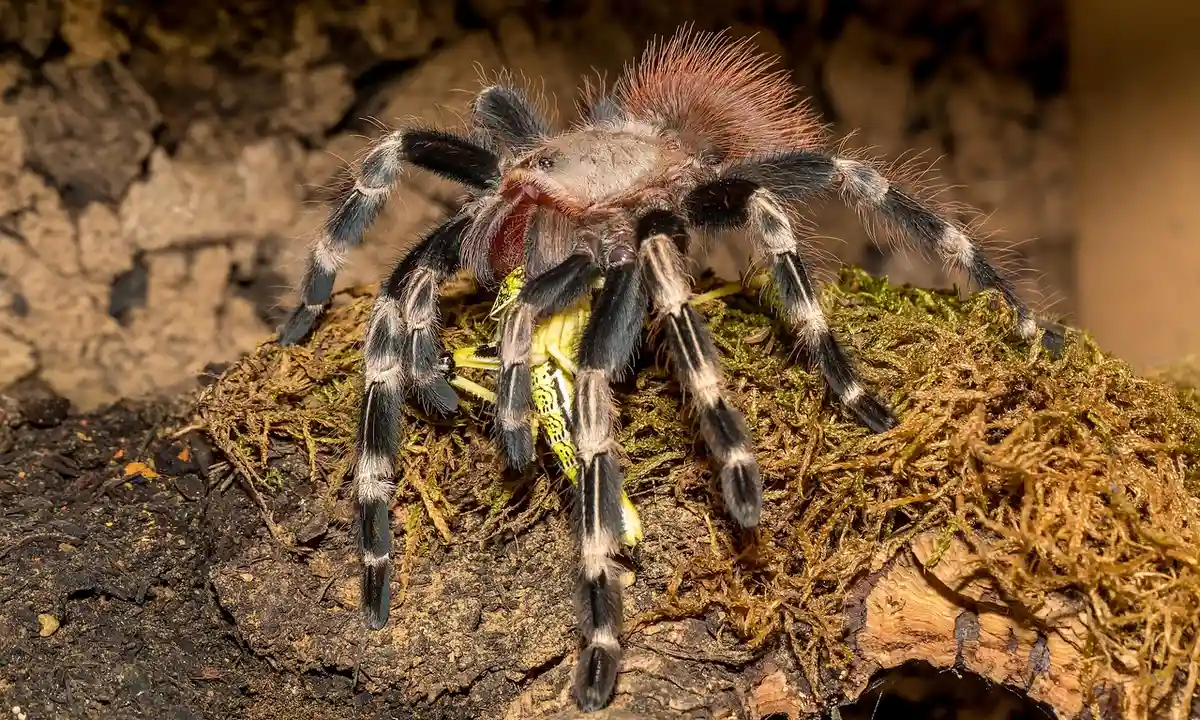
- Prey capture and enzyme injection. The hunt ends with a rapid stab of the fangs. This delivers venom for subduing prey and, more crucially, begins pumping digestive enzymes directly into the victim’s body. I’ve watched my OBT, Flash, do this in a blur of orange-the cricket stops moving almost instantly.
- External liquefaction. Injected enzymes work like a biological blender, turning internal tissues into a broth. This external digestion means the tarantula only consumes what it can liquefy. With my bird eater Goliath, a large roach becomes a hollowed-out shell in under an hour.
- Sucking of nutrients. The tarantula uses its powerful pharynx, a muscular sucking stomach, to draw the nutrient soup into its mouth. You can sometimes see the mouthparts working rhythmically. This is a quiet, focused process.
- Internal digestion in midgut. Once ingested, the liquid food passes into the midgut where nutrients are absorbed. This area has blind-ended tubes called diverticula that increase surface area for absorption, fueling growth and the immense energy needs of molting.
- Waste formation in hindgut. Indigestible solids, primarily the prey’s exoskeleton chitin, are moved into the hindgut. Here, the body reclaims as much water as possible, compacting the remains into a dense packet. Efficient water reabsorption is vital in arid habitats.
- Excretion of fecal pellets. The tarantula positions its abdomen and expels the waste through the anus, located just above the spinnerets. The result is a single, dry pellet that often sticks to enclosure glass. Finding these white or beige specks is a clear sign your spider is processing meals correctly.
Reading the Signs: Waste and Tarantula Health
Your tarantula’s waste is a non-negotiable health report. Regular, calm observation of these pellets forms the backbone of proactive care. Shifts in this basic bodily function are your first clue that husbandry may need tweaking.
Normal feces are dry, crumbly, and typically off-white to dark brown. Frequency depends entirely on feeding schedule and species metabolism. My Chilean rose hair, Rosie, might produce a pellet only once every few months during one of her famous fasts, which is perfectly normal for her.
Abnormal Excretion: Indicators and Potential Causes
Deviations from the norm warrant closer attention. Here are key signs to monitor.
- Runny, Watery, or Unusually Green Feces: This often signals a bacterial or protozoan gut infection, frequently linked to contaminated prey. It requires immediate action to prevent systemic illness. I quarantine and gut-load all feeder insects for my collection to avoid this risk.
- Prolonged Absence of Feces: While fasting is common, a complete lack of waste paired with a noticeably shrunken abdomen can indicate severe dehydration or malnutrition. Check water dish availability and prey size. My moisture-dependent T. stirmi, Goliath, will stop producing waste if his humidity drops too low.
- Consistent Defecation in the Water Dish: If your tarantula repeatedly soils its water bowl, it might be attempting to correct low humidity or reacting to enclosure stress. I had to adjust Flash’s ventilation when he started this behavior, as his substrate was drying out too fast.
- Straining or Difficulty Excreting: Abdominal lifting with no result is rare but serious. It can suggest impaction from substrate particles or severe dehydration. This underscores the need for a clean environment and appropriate moisture. A shallow water dish is always my first line of defense.
Your role is that of a quiet custodian, not a constant interactor. Stress from unnecessary handling can directly disrupt digestion and excretion. If you notice persistent issues, methodically review temperature gradients, humidity levels, and prey sources before considering any direct intervention.
Husbandry for Health: Managing Excretion in Captivity
Waste is an inevitable byproduct of a healthy tarantula. Your management of it directly impacts your pet’s well-being. A dirty enclosure is a stressful one, harboring potential mold and mites. Think of your role not as a janitor, but as a habitat curator, maintaining a pristine environment where your spider can thrive without distraction. That includes properly handling your tarantula during enclosure maintenance to minimize stress.
The Foundation: Substrate for Absorption and Cleanliness
Your substrate is your primary tool for managing waste. It must balance moisture retention with quick drying where waste is deposited. From my deep substrate bins for my moisture-loving Theraphosa stirmi to the arid setup for my Grammostola rosea, the principle is the same.
I use and recommend a mix of coconut fiber (coir) and sterile, additive-free topsoil. This blend is forgiving. It holds enough moisture for burrow integrity but dries sufficiently on the surface to prevent the waste bolus from creating a perpetually damp, sour patch. Avoid pure potting soils with fertilizers or perlite, as these can harm your tarantula and make waste identification a messy puzzle. When selecting substrate, it’s essential to consider the specific needs of your tarantula species and maintain the enclosure accordingly. Choosing and maintaining the right substrate can impact your tarantula’s health and your ability to monitor its waste effectively.
For arboreal species like my Psalmopoeus, I use a thinner layer of this mix topped with cork bark; their waste often dries on the glass or decor, making spot-cleaning a visual task.
The Weekly Waste Walkthrough
This routine takes five minutes and is your best defense against enclosure issues.
- During feeding or watering, visually scan the enclosure floor and walls.
- Identify the white urate smear and the darker, clay-like fecal bolus.
- Using long tweezers, gently lift the waste bolus. If attached to webbing, cut the surrounding silk free.
- For urate smears on glass, a damp cotton swab does the trick after the spider has moved away.
- Check the water dish. Dump, scrub with a dedicated brush (no soap), and refill with fresh water.
- Observe. Is waste accumulating in one corner? This tells you your spider’s preferred “bathroom” spot.
This simple observation ritual transforms waste management from a chore into a critical health check, letting you monitor appetite and digestion without disturbing your pet.
Cleanliness as a Catalyst for Calm
Tarantulas are not messy by choice. A build-up of excrement and old prey bits elevates humidity unpredictably and can attract pests. My defensive P. murinus, “Flash,” becomes noticeably more reactive if her intricate web tunnels are littered with debris. She feels exposed. Removing waste promptly reduces this environmental stress. Keeping the enclosure clean helps prevent common tarantula health problems. Regular waste removal reduces mold, mites, and respiratory risks, supporting their overall well-being.
Furthermore, a clean enclosure is a readable one. When you maintain a consistent spot-cleaning routine, any sudden change—like a complete lack of waste for weeks—becomes a glaring signal to assess your tarantula’s pre-molt status or health. The silence of the enclosure isn’t just peace; it’s data. My old rose hair, Rosie, once went eight months without a single visible bolus during a prolonged fasting period, a fact I could only track because her substrate was otherwise pristine. If you notice odors, mold, or crusted residue on the substrate or glass, those are clear signs your enclosure needs cleaning. Staying on top of routine cleaning helps prevent health issues and keeps conditions stable.
FAQs
How often do tarantulas poop, and what does it look like?
Defecation frequency depends on the tarantula’s feeding schedule and metabolism. You might see small, dry pellets weekly or only once every few months. The feces are typically a chalky white to dark brown color, appearing as crumbly specks or slightly pasty smears on enclosure walls or decor.
Why is there never liquid urine in my tarantula’s enclosure?
Tarantulas do not produce liquid urine like mammals to conserve water. Their bodies convert nitrogenous waste into a solid, white paste called uric acid, which is excreted with their feces. Any dampness is usually just the fresh uric acid before it dries quickly, and visible liquid is exceptionally rare.
Is it true tarantulas cannot fart?
Essentially, yes. They lack the complex gut bacteria and long intestinal tract that produce gas in mammals. Their digestion is mostly external, and any minimal metabolic gases are diffused passively through their book lungs or cuticle, not stored and released audibly.
What makes spider digestion so efficient?
Efficiency comes from external pre-digestion, where enzymes turn prey into liquid before consumption. Internally, a simple system absorbs almost all nutrients and water, leaving very little waste. This slow, efficient process allows tarantulas to thrive on infrequent meals.
The Patient Path of the Tarantula Keeper
Everything in tarantula care, from feeding frequency to waste management, circles back to the quality of the environment you provide. The most critical factor for a healthy, functioning tarantula is not a specific humidity percentage, but providing consistent, appropriate moisture in the substrate for your species. A bone-dry enclosure for a moisture-dependent Theraphosa stirmi is a path to dehydration and impaction, while a sopping-wet home for an arid Grammostola rosea invites mold and stress. A practical way to achieve this is by creating a subtle substrate moisture gradient in the enclosure. This means a damp base for burrowers and a drier layer on top, so your tarantula can regulate its own moisture needs. Your diligence with the water dish and occasional overflows onto the substrate directly supports the internal processes that keep their world, and yours, clean.
Beyond managing the practical, embrace the observational. The real joy is in the quiet study: the meticulous repair of a tunnel, the slow, deliberate placement of a new silk line, the patient ambush. A tarantula that refuses food for months, like my old Rosie, is not failing-it is following a deeper, slower rhythm. Your patience is the ultimate tool. Watch for the subtle signs of a content animal: a clean, web-lined burrow, regular drinking, and that confident, calm posture in the open. That is the true measure of success.
Further Reading & Sources
- How Tarantulas Digest | Pets on Mom.com
- Internal anatomy | Theraphosids (tarantulas) of the World. Keeping and breeding in captivity
- Tarantulas Digest BEFORE They Eat Prey? Spider Digestion EXPLAINED! – YouTube
Arlo is a lifelong arachnid enthusiast who believes tarantulas are the world’s most misunderstood roommates. With years of hands-on experience in tarantula care, habitat setup, and species behavior, Arlo combines expert knowledge with a dash of humor to make spider ownership less scary and a lot more fascinating. From choosing the right enclosure to understanding why your eight-legged buddy is doing that weird little pose again, Arlo is here to help you become the best tarantula parent you can be, without getting tangled in the web of misinformation.
Feeding Frequency