
The G. rosea Keeper’s First 30 Days: A Week-by-Week Survival Guide
The Grammostola rosea, your Chilean Rose Hair, is the quintessential ‘first tarantula’ with a deeply misunderstood secret life. This dusty-pink icon, often sold as the ultimate beginner pet, possesses a stoic and confounding nature that can bewilder a new keeper. This guide provides a concrete, week-by-week roadmap to navigate your new spider’s silent world, prevent common pitfalls, and build a foundation for a decades-long partnership. If your rosea refuses to eat for weeks on end, do not panic-this is their normal, infuriatingly patient rhythm.
Quick Stats:
- Origin: The scrublands of Chile
- Type: New World, terrestrial
- Growth Rate: Glacial. My own ‘Rosie’ is 15 and still growing.
This guide will transform your initial uncertainty into confident, observant care, turning a fragile sling or a stoic adult into a thriving, long-lived specimen.
Before Day One: Preparation is Your Best Tool
Choosing a Suitable First Species
-
Grammostola rosea, the Chilean Rose Hair, is a classic first tarantula. My Rosie embodies this: a docile, dusty-pink companion who contentedly fasts for months, requiring only a dry enclosure and a water dish.
-
Brachypelma species like the Mexican Redknee (B. hamorii) offer vibrant colors and a slow pace. They appreciate a bit more humidity and a cork hide to retreat into when feeling shy.
-
Aphonopelma chalcodes, the Arizona Blonde, is a hardy desert specialist. Their golden carapace and patient demeanor make them excellent for observing the subtle signs of an upcoming molt.
-
Steer clear of Old World tarantulas for your first venture. Species like the OBT (P. murinus) – my lightning-fast, orange Flash – possess potent venom and a defensive nature unsuitable for beginners. For beginner tarantula owners, it’s wiser to choose New World species. They tend to be calmer and more forgiving, making them better-suited for first-time pet owners. If you’re looking for specific recommendations, check out the best tarantula species for beginners.
The Essential Quarantine and Observation Enclosure
-
Select a simple, clear plastic container with a secure, ventilated lid. Transparency allows you to monitor behavior without disturbance, and security prevents surprising escapes.
-
Add minimal, easy-to-sanitize decor like a half-cork round and a few magnolia leaves. These provide essential hiding spots and anchor points for webbing without harboring mites.
-
Set up with 3 to 4 inches of packed coconut fiber substrate and a shallow water dish. This depth supports burrowing instincts and helps maintain stable humidity around the dish.
-
Place the finished enclosure in a quiet, low-traffic area with stable room temperature. A calm bookshelf or spare room avoids the stress of vibrations and sudden light changes.
Week 1: The Silent Arrival and Acclimation
The Critical Rehousing Process
-
Prepare a large, open tub as a workspace to contain any falls or sudden sprints. Have a clear deli cup and a soft makeup brush ready before you even open the shipping box.
-
Gently place the unopened shipping vial into the quarantine enclosure and remove the lid. Allow the tarantula to exit voluntarily; this minimizes stress and avoids defensive reactions. Proper quarantine begins here: keep the tarantula isolated for observation before introducing it to other enclosures. During quarantine, monitor for signs of illness or stress and maintain stable conditions.
-
Guide any hesitant movement with the cup and brush, never your hands. I recall Goliath’s sudden hair-kicking cloud during a rehousing-the brush provided a safe barrier.
-
Securely fasten the enclosure lid the moment the tarantula is fully inside. This methodical approach is the cornerstone of the “Look, Don’t Touch” ethic, prioritizing safety for all. Also ensure the enclosure is properly ventilated to maintain good air quality and humidity control. Adequate ventilation supports tarantula health while keeping the setup secure. You can learn more about proper ventilation techniques in this article: how to properly ventilate and secure a tarantula enclosure.
Establishing Your Baseline: Humidity, Temperature, and Ventilation
-
Use a digital hygrometer at substrate level to track humidity accurately. For moisture-dependent species like my T. stirmi Goliath, maintain 80-85% humidity with damp substrate and a large water dish.
-
Keep ambient temperatures steady between 70-78°F (21-25°C). A small space heater for the room is safer and more effective than adhesive heat mats.
-
Ensure cross-ventilation with small holes on two opposite sides of the enclosure. This airflow prevents stagnant, mold-prone conditions, especially in humid setups.
-
Tailor the environment to your species’ origin. Contrast my Goliath’s humid needs with my G. rosea Rosie’s, who thrives in a bone-dry setup with humidity rarely above 50%.
The Art of Doing Nothing: Your First Week of Observation
-
Observe nightly for web-building, a positive sign of settlement. The silent, deliberate placement of silk is your tarantula crafting a security system.
-
Monitor hiding behavior and leg positioning. A tarantula with legs tucked tightly under its body is stressed, while relaxed legs splayed outward signal comfort.
-
Expect and accept a refusal to eat. Fasting for a week or more after transit is normal; my Rosie has taught me patience through her multi-month hunger strikes.
-
Resist any handling or interior adjustments during this fragile period. Your primary duty is to provide a stable, unchanging environment where the tarantula can acclimate unseen.
Week 2: Reading Behaviors and First Feeding
Interpreting Your Tarantula’s Body Language
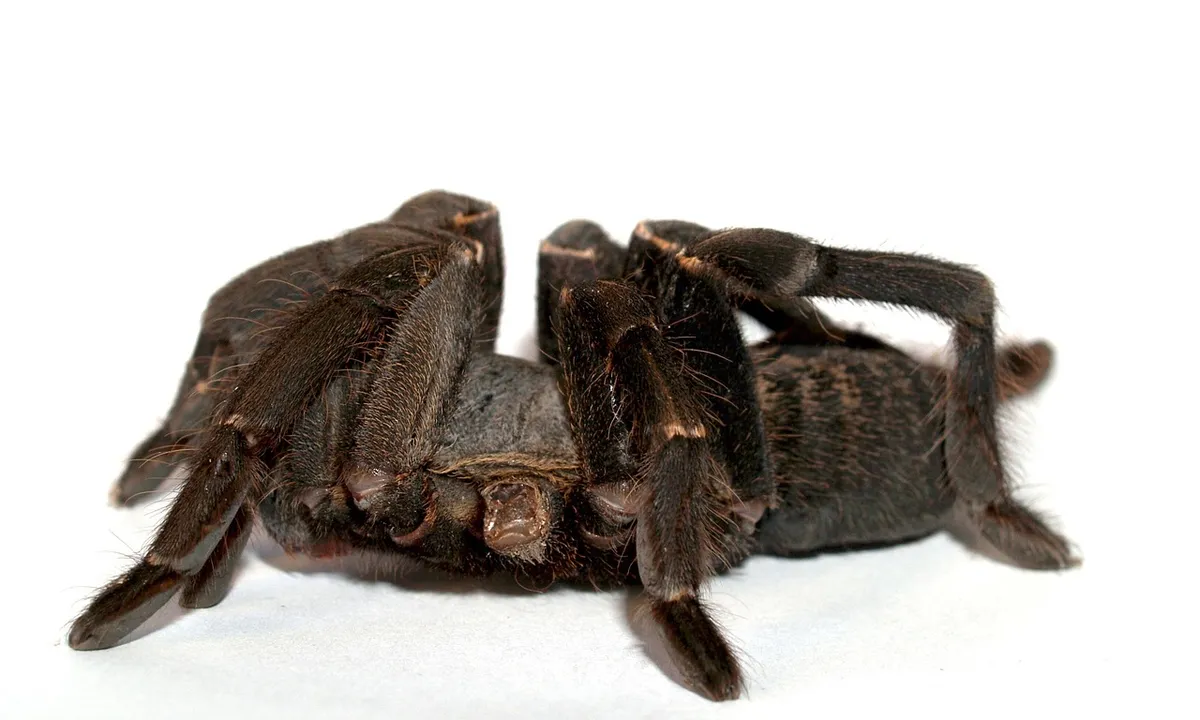
Your tarantula communicates through posture and stillness, not sound. Decoding these silent signals is your first step toward confident, stress-free keeping. Watch for these common behaviors, many I’ve seen with my own spiders. You can learn to read your tarantula’s body language to recognize stress and defensive signs early. This awareness helps you adjust your care and interaction to keep them calm.
- Threat Pose: Front legs high, fangs bared, body low. My OBT, Flash, instantly assumes this defensive stance if his web is disturbed. It’s a clear warning to retreat.
- Grooming: A slow, meticulous cleaning of legs and pedipalps. This self-care ritual indicates a calm, content spider. Notice the careful rubbing of tiny hairs.
- Hunting Stance: A sudden, perfect freeze. The body tenses, front legs lift slightly, and the carapace seems to focus. My Goliath bird eater holds this pose before her powerful strike.
- Premolt Lethargy: A refusal to eat and prolonged hiding. The abdomen darkens to a deep, iridescent blue or black. My Grammostola rosea, Rosie, embodies this for months, becoming a true ‘pet rock’.
- Hair-Kicking: A rapid, defensive brush of the back legs against the abdomen. My T. stirmi, Goliath, does this often, releasing a cloud of irritating urticating hairs. I always wear safety glasses during her enclosure maintenance.
The First Feeding Attempt: Prey Size and Safety
The first successful feed builds your confidence. Patience and precision here set the stage for a healthy feeding response. Follow these steps closely.
- Select appropriate prey. The prey item should be no larger than your tarantula’s abdomen. For spiderlings, use pinhead crickets or small dubia roach nymphs. For my juvenile Goliath, I use adult dubia.
- Safely introduce the prey. Use long, soft-tipped feeding tongs to gently drop the prey near the tarantula. Never use your fingers. I’ve seen Flash strike the tongs with shocking speed.
- What to do if the tarantula refuses. Remove any uneaten live prey after 24 hours. Crickets can nibble on a vulnerable, molting tarantula. With Rosie’s long fasts, I’ve learned to simply wait.
- Observing the hunting strike and feeding process. Witness the silent, explosive lunge and the injection of venom. Feeding is a slow, methodical process. Do not disturb; this is a private moment.
Week 3: Proactive Maintenance and Problem-Solving
Routine Care: Hydration and Spot Cleaning
Less is always more. Effective maintenance means supporting health while preserving the spider’s sense of security in its space.
- Hydration: Refresh the water dish with dechlorinated water every 3-4 days. I use shallow bottle caps for all my tarantulas. Check for substrate or debris kicked in by the spider.
- Spot Cleaning: Use long tweezers to remove boluses (dried prey carcasses) and old, soiled webbing. Perform this during the day when your tarantula is typically resting. Avoid probing near burrow entrances or dense webbing.
Troubleshooting Common Early Husbandry Issues
Persistent Refusal to Eat
This is rarely an emergency. Long fasts are a normal part of tarantula biology, especially for some species like the Chilean rose hair.
- Identify premolt signs: a dark, shiny abdomen and reduced movement. My Rosie has fasted for over eight months before a molt.
- Understand species norms. Grammostola species are famous for prolonged fasts. Offer food every two weeks, but remove it promptly if ignored.
- If no molt is imminent, verify your enclosure temperature is between 70-80°F and the tank is in a low-traffic area. Relocation stress can suppress appetite for weeks.
Mold or Excess Moisture in the Enclosure
Mold indicates an imbalance. Swift, targeted action can resolve this without a full, stressful rehousing.
- Increase ventilation immediately. Add more air holes to acrylic enclosures. For glass tanks, slightly propping open the lid can help.
- Perform a spot substrate change. Use a spoon to remove the moldy section and replace it with fresh, slightly dry substrate.
- For a long-term solution, add a clean-up crew. In bioactive setups, springtails will efficiently consume mold and fungi, creating a self-regulating environment.
Excessive Hiding or Skittishness
Hiding is a sign of feeling safe, not sick. Your job is to ensure the environment supports this natural instinct without unnecessary stress.
- Evaluate the hide. It should be snug, allowing the tarantula to feel the walls. My OBT, Flash, often completely seals his hide with silk for total privacy.
- Assess enclosure placement. Is it on a busy desk or near a TV? Move it to a quieter location. Constant vibrations can make a tarantula perpetually nervous.
- Accept species-specific behavior. Old world tarantulas like P. murinus are often reclusive. Provide ample cover and enjoy observing from a respectful distance.
Week 4: Settling Into a Rhythm and Planning Ahead
Documenting Your Observations: Start a Log
Your tarantula is not a generic pet; it is an individual with unique rhythms. I keep a simple notebook for each of my spiders, and this practice revealed that my Grammostola rosea Rosie refuses food for exactly 90 days before a molt. Recording basic events like feeding attempts, water bowl refills, and odd behaviors builds a priceless personal care guide. Reading your tarantula’s feeding dance—the poised posture and subtle leg-taps that signal it’s ready to eat—can tell you when to offer prey. For more insights on this, check out Reading your tarantula’s feeding dance. Documenting these cues alongside feeding attempts helps you time meals and reduces stress for your spider. Note the date you see a bald spot form or when webbing intensifies. This log transforms guesswork into knowledge, helping you predict cycles and reduce stress for your animal.
- What to track: Feeding dates and prey refusal. Water refills. Onset of bald spots (urticating hair kicking). Strange postures or new web tunnels. Molt dates and success.
- Method: A physical notebook by the enclosures works perfectly. Digital notes in your phone are fine, too. Consistency matters more than detail.
Considering Enrichment and Bioactive Elements
Beyond the substrate, a world of subtle upgrades awaits. These changes are less for the tarantula, which needs only correct fundamentals, and more for your joy as an observer. Enrichment creates a dynamic micro-habitat that encourages natural behaviors, giving you a front-row seat to fascinating instincts. My OBT, Flash, immediately used cork bark slabs I added, weaving dense silken tunnels that let me watch her hunt from outside the glass.
- Anchor Points: For webbers like Pterinochilus murinus, vertical cork bark or fake vines provide scaffolding. This prevents sagging webs and increases usable space.
- Safe Live Plants: For humid species like my Theraphosa stirmi Goliath, pothos or bromeliads thrive in the moisture and offer hiding spots. Ensure plants are pesticide-free and potted separately for easy removal.
- Clean-up Crew: Introducing temperate springtails and dwarf white isopods creates a bioactive foundation. They break down waste and mold, reducing your maintenance. I’ve found they thrive best in enclosures with 70%+ humidity.
Recognizing the Signs of an Impending Molt
Ecdysis, or molting, is the most critical and vulnerable period in your tarantula’s life. Disturbance can be fatal. The cardinal rule of premolt is this: when you suspect it, stop all feeding and do not open the enclosure. A dropped cricket can injure a soft tarantula. Learn these signs early. My Goliath’s abdomen turns a deep, glossy black weeks before she seals her burrow. After the molt is complete and the new exoskeleton has hardened, wait about 24–48 hours before feeding. This cooling-off period lets the tarantula recover and reduces the risk of injury to its soft new tissues.
- Darkened Abdomen: The skin becomes stretched and darkens as the new exoskeleton forms beneath.
- Bald Spot: Many species kick urticating hairs, creating a bare patch on the abdomen. This is normal.
- Refusal to Eat: This is the most common sign. A tarantula may fast for weeks or months. Rosie has gone 8 months without food before a molt.
- Lethargy and Heavy Webbing: Activity plummets. Many tarantulas will create a dense “molt mat” of silk to lie on.
When you see these signs, simply ensure the water dish is full and then observe from a distance. The silence of the enclosure during this time is a sign of your respectful care.
Beyond the First Month: Evolving as a Keeper
From Survival to Stewardship: The Long-Term Mindset
The initial setup phase is over. Now, your focus shifts from weekly tasks to the decades-long arc of your tarantula’s life. Stewardship means planning years ahead, like sourcing a permanent adult enclosure for a species that will reach a 10-inch legspan. My juvenile Goliath is in a 10-gallon tank, but I already have the 20-gallon front-opening terrarium for her final home. Consider the lifelong commitment; many tarantulas outlive cats.
This mindset changes how you view problems. A clogged water bowl isn’t a chore-it’s a daily check on a vital resource. A burrow collapse is a chance to carefully provide better substrate support. Your goal is seamless, invisible care that lets the animal simply live its life.
Connecting with the Community
No keeper is an island. The collective wisdom of experienced arachnoculturists is your best resource for solving odd problems and learning advanced techniques. Reputable online forums and care groups are filled with people who have made every mistake so you don’t have to. I learned how to safely rehouse my defensive OBT by watching detailed videos shared by breeders.
- Resources: Seek out forums with active moderators and a culture of evidence-based care. The Arachnoboards community and specialized Facebook groups for genus like Theraphosa are invaluable.
- Continued Learning: Websites like Eight Legged Life offer species-specific guides that go beyond basics. Use them to cross-reference your husbandry.
- Shared Experiences: Post clear photos of your setup for feedback. Share your log findings. The community thrives on these detailed, personal accounts.
FAQs
What is the most important thing for a beginner tarantula keeper to remember?
Patience and observation are foundational, as tarantulas thrive on stability and minimal interference. Focus on providing a secure, species-appropriate enclosure rather than handling, which can cause stress or injury. Consistent monitoring of humidity, temperature, and behavior will help you adapt to their unique rhythms and prevent common issues. Tailor your heating humidity requirements to the species’ preferred range, as heating humidity requirements vary among popular tarantula species. Some popular species thrive in higher humidity, while others need a drier setup.
Where can I find a downloadable PDF of a comprehensive tarantula care guide?
Many reputable arachnid communities and websites offer free PDF care sheets tailored to specific species. Check resources like Arachnoboards, specialized tarantula care blogs, or veterinary sites for updated, evidence-based guides. Always cross-reference multiple sources to ensure accuracy, as husbandry practices can evolve over time.
How often should I feed my beginner tarantula, like a Chilean Rose Hair?
Feeding frequency varies by age and species, but adults typically eat once a week or every two weeks. Be prepared for prolonged fasts, especially in species like Grammostola rosea, which may refuse food for months. Always offer prey smaller than the tarantula’s abdomen and remove uneaten live prey after 24 hours to avoid harm. For more detailed advice, check out this guide on diet and feeding schedules for healthy tarantulas.
What are the top mistakes new tarantula owners make?
Common pitfalls include overhandling, overfeeding, and incorrect enclosure setup like inadequate ventilation or wrong humidity levels. Using heat mats directly on glass can lead to burns, and disturbing a tarantula during molting can be fatal. Researching species-specific needs and joining keeper communities can help you avoid these errors.
Is it safe to handle my pet tarantula?
Handling is generally discouraged due to risks of falls, stress, and defensive behaviors like hair-flicking or biting. Tarantulas are fragile and may interpret handling as a threat, potentially leading to injury. It’s safer to observe them in their enclosure, following the “look, don’t touch” ethic for their well-being and yours. For beginners, handling tarantulas is not recommended; instead, prioritize observation and proper enclosure care. If handling ever becomes necessary for a specific task, seek guidance from an experienced keeper and proceed with caution.
How can I connect with other tarantula keepers on platforms like Reddit?
Join active subreddits such as r/tarantulas to ask questions, share experiences, and learn from seasoned keepers. Engage in discussions by posting clear photos of your setup for feedback, and always verify advice with reliable sources. These communities offer invaluable support for troubleshooting and advancing your care knowledge. These communities also cover common health issues beginners often encounter and how to prevent them. By learning from others’ setups and experiences, you can reduce the risk of health problems in your tarantula.
Long-Term Success
The single most consistent truth in my years of keeping is that for a Chilean Rose Hair like my old Rosie, the primary husbandry goal is not humidity, but providing a completely dry substrate with a water dish she may ignore for months. Over-hydration kills more of these hardy spiders than neglect. This principle applies across species: learn your animal’s core, non-negotiable need.
Now, step back. Let the enclosure become a living diorama. Watch the slow, deliberate dance of its legs as it repairs its burrow. Enjoy the sudden, silent strike at a cricket. Your primary tool is no longer a spray bottle or tweezers, but your own patient observation. True success is measured in clean molts, natural behaviors, and the quiet pride of providing a lifetime of proper care. The first 30 days are over. Welcome to the decades-long journey.
Further Reading & Sources
- G. rosea simple care guide | Arachnoboards
- Rose Hair Owners Please Read! How to REALLY take care of your G. rosea | Arachnoboards
- Chilean Rose Hair Care – The Tarantula Collective
Arlo is a lifelong arachnid enthusiast who believes tarantulas are the world’s most misunderstood roommates. With years of hands-on experience in tarantula care, habitat setup, and species behavior, Arlo combines expert knowledge with a dash of humor to make spider ownership less scary and a lot more fascinating. From choosing the right enclosure to understanding why your eight-legged buddy is doing that weird little pose again, Arlo is here to help you become the best tarantula parent you can be, without getting tangled in the web of misinformation.
Popular Species