
Common Signs Your Tarantula is Stressed or Aggressive: Decoding Behavior from G. rosea to P. murinus
Published on: September 16, 2026 | Last Updated: September 16, 2026
Written By: Arlo
Tarantulas inhabit a world of silent communication, where a raised leg or a hurried retreat speaks volumes. Their reputation for aggression is largely a myth; these are animals of profound patience, whose defensive displays are clear indicators of perceived threat or environmental stress. Drawing from my own arachnoculture experience-from Rosie, my docile ‘pet rock’ G. rosea, to Flash, my lightning-fast P. murinus-this guide will help you interpret the specific postures and actions that signal discomfort. The most immediate sign of stress is often a rapid retreat into a hide, a universal request for privacy across both New and Old World species.
Quick Stats: The Chilean Rose Hair (Grammostola rosea)
- Origin: Arid regions of Chile
- Type: New World, terrestrial
- Growth Rate: Exceptionally slow; reaching maturity can take over a decade
Mastering this behavioral language allows you to become a more perceptive keeper, directly reducing stress triggers and supporting your tarantula’s well-being through every life stage.
Decoding Behavior: Stress Versus Normal Activity
Watching a tarantula’s daily rhythms is like learning a silent language. Normal activity has a relaxed, purposeful quality. You’ll see your tarantula methodically laying down silk lines during night explorations, a sign of territory mapping, not panic. Grooming, where they carefully clean their pedipalps and legs, indicates a settled, secure animal. Even a slow, deliberate walk across the enclosure is usually just a patrol.
Stress signals are different. They are sudden, repetitive, or secretive. Context is your best tool for translation. Is your typically visible tarantula now permanently hiding after a rehousing? That’s likely temporary stress. Is your nocturnal P. murinus, like my Flash, sprinting in daylight? That’s a major red flag.
Here is a quick comparison to help you interpret the actions in your enclosure.
- Normal/Calm: Nighttime webbing or digging, gentle grooming, slow exploratory walks, resting in the open or in a favored hide.
- Stressed/Agitated: Frantic, constant climbing on walls; abrupt, jerky movements; prolonged, rigid stillness when exposed; hiding for days on end when previously visible.
Clear Physical Signs of Tarantula Stress
When a tarantula feels threatened over time, its body and habits will tell you. These are not fleeting moments but persistent changes. A chronic refusal to eat is one of the most common signs, and it can last for startlingly long periods, especially in some species. My Grammostola rosea, Rosie, once fasted for over fourteen months, which is a stressful watch for any keeper, though normal for her.
Other physical indicators are more direct. Glass tapping, or climbing the same corner repeatedly, often signals an unsuitable environment. Seeking constant, deep concealment when the animal used to be bold shows a desire to vanish. A general reduction in mobility, becoming a literal “pet rock,” can indicate discomfort.
- Prolonged Fasting: Beyond a typical pre-molt fast, a continued refusal of food can indicate environmental stress.
- Constant Hiding: A tarantula that never emerges, even at night, is likely not comfortable.
- Abnormal Climbing: Mature terrestrials frequently climbing walls often seek better conditions.
- Lethargy: A noticeable, lasting drop in normal movement or response to stimuli.
Hair Flicking and Urticating Setae
This is the most unambiguous signal a New World tarantula can give. Flicking urticating hairs is a primary defense. When a tarantula, like my Theraphosa stirmi Goliath, lifts its abdomen and rapidly kicks back with its hind legs, it is sending a cloud of irritating bristles toward a perceived threat. It’s definitely more concerning than any bite. Urticating hairs can be more dangerous than tarantula bites, causing irritation and discomfort. It is a definitive “back off” maneuver.
The visual proof is often left on the animal. A bald patch, or urticating patch, develops on the abdomen. This area looks distinctly darker and smoother compared to the fuzzy surrounding setae. While the hairs regrow after a molt, a chronically bald abdomen suggests a tarantula that feels constantly threatened. This is a clear sign to reassess its housing, location, and how much you disturb it.
Threat Postures and Defensive Displays
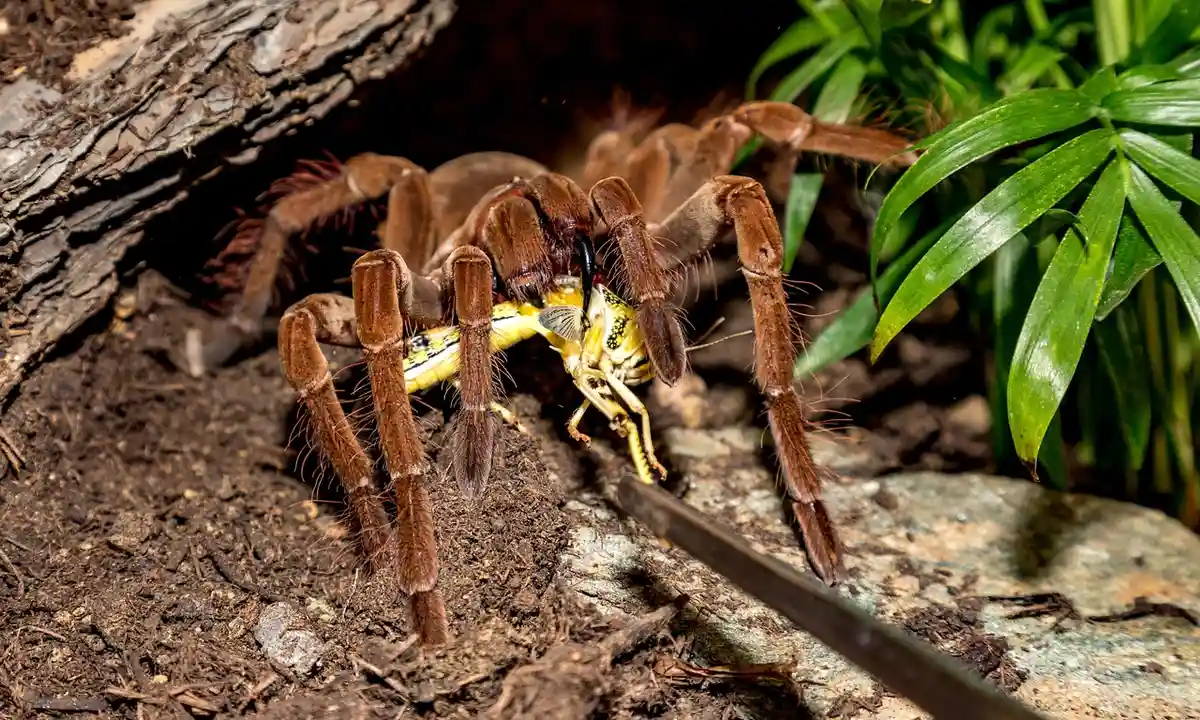
A stressed tarantula communicates its discomfort through a clear, escalating visual language. Learning this sequence is your key to avoiding bites and reducing their stress. By learning to read your tarantula’s body language—stress cues and defensive signs—you can respond appropriately to prevent escalation. This escalating behavior is not random aggression but a desperate plea for space, and ignoring it is how accidents happen.
- Pedipalp Twitching and Leg Flicking: The first, subtlest sign. The pedipalps (the smaller front appendages) may quiver, or a back leg will flick rapidly toward a perceived threat. This is often a release of urticating hairs. My T. stirmi, Goliath, does this if I move his water dish too abruptly.
- Front Legs Raised: The tarantula lifts its first pair of legs, sometimes the second, off the substrate. This is the universal “stop” signal. The height of the raise often correlates with the level of agitation.
- Chelicerae Flashing (Fang Exposure): While reared up, the tarantula will part its chelicerae to reveal the glistening, black fangs. This is a direct, unambiguous warning. This “fang flash” is the last visual cue before a potential defensive strike, which is a downward punch, not a hunting lunge.
- Full Rear-Up Threat Posture: The animal raises its entire front end high, presenting its fangs and often tapping its front legs menacingly. At this point, it is primed to defend itself.
A predatory lunge for food is fast, forward, and low to the ground. A defensive strike from a threat posture is a deliberate, downward motion aimed at the source of the provocation.
The Meaning Behind a Raised Posture
That iconic image of a tarantula on its hind legs is not one of aggression, but of profound fear. This is a common misconception—the belief that tarantulas are inherently aggressive. Unpacking their behavior shows most reactions are defensive, not predatory. A tarantula in a full threat posture is terrified and has run out of all other options; it is demonstrating its weaponry in the hope you will back down. Provoking an animal in this state—by poking, continued blowing, or attempting to handle—is cruel and dangerous.
My old-world tarantula, Flash the OBT, assumes this posture if I even look at his enclosure sideways. It’s his way of saying the conversation is over. I immediately cease all activity, lower the room’s lights, and leave him be for a day. Respecting this display is fundamental to ethical keepership.
Abnormal Movement Patterns and Agitation
Calm tarantula movement is slow, deliberate, and confident. Stress shatters this composure, creating patterns that scream anxiety. Chronic pacing or skittishness is a major red flag that the enclosure itself is a source of stress, demanding an immediate husbandry review.
- Perimeter Pacing: Constant, frantic walking along the enclosure walls, often following the exact same path. This indicates the tarantula finds its current conditions unacceptable-it could be incorrect humidity, substrate, lack of a hide, or vibrations.
- Skittishness and Jerky Motions: Abnormally fast, jittery leg movements in response to minor stimuli like a shadow or distant sound. A calm tarantula might freeze; a stressed one scrambles.
- Tremors or Shaking Legs: Noticeable vibration in the legs while the tarantula is standing still. This can be a sign of physiological stress or, in some cases, a pre-molt weakness, so context is critical.
- Unnatural Arching or “Tippy-Toes”: Holding the abdomen unusually high off the substrate or walking with an exaggerated, stiff gait. This can signal discomfort from overly damp substrate or a reaction to chemical irritants.
Contrast this with the serene movement of a content tarantula: my G. rosea, Rosie, might take an hour to cross her enclosure, each step a careful placement. Observing these abnormal movements early allows you to become a troubleshooter, adjusting temperature, humidity, or enclosure layout to restore your tarantula’s quiet confidence.
Common Environmental Stressors in Captivity
Stress in a tarantula is almost always a reaction to its environment. These are not pets that “get used to” poor conditions; they endure them until they cannot. Their physiology is directly linked to the world you create in their enclosure. An error in husbandry is not a minor mistake; it’s a constant, low-grade assault on their senses.
These are the primary external triggers I’ve cataloged over years of keeping everything from docile Grammostola to defensive Old World species.
- Incorrect Humidity or Temperature: This is the most common culprit. My T. stirmi, Goliath, will immediately begin kicking urticating hairs if his deep, moist substrate starts to dry out. Conversely, an arid species like my G. rosea sitting in soggy soil will retreat to the highest corner and stay there for weeks. A consistent, species-appropriate gradient is non-negotiable.
- Excessive Vibration or Noise: Tarantulas sense the world through vibrations in their legs and sensitive hairs. Loud music, slamming doors, or frequent enclosure tapping sends panic through their system. I learned this when Goliath would threat-posture every time my old refrigerator motor kicked on across the room.
- Overly Bright Lighting: These are creatures of shadow and dusk. Direct sunlight or a bright LED lamp fixed on the enclosure is akin to an interrogation spotlight. It forces them into perpetual hiding, disrupting natural cycles.
- An Insufficient or Absent Hide: A tarantula without a secure retreat is a permanently anxious tarantula. The hide must be snug, dark, and have a single, defensible entrance. An oversized, open hide offers no psychological security.
- Invasive Maintenance: The most predictable stress event is rehousing or deep-cleaning. Even a necessary rehousing is a massive stressor, and your goal is to make it fast, calm, and efficient. I once watched my normally reclusive P. murinus, Flash, bolt up my arm and onto the ceiling because I fumbled a catch cup. The process itself, no matter how careful, is a profound disruption.
Subtle and Overlooked Indicators of Discomfort
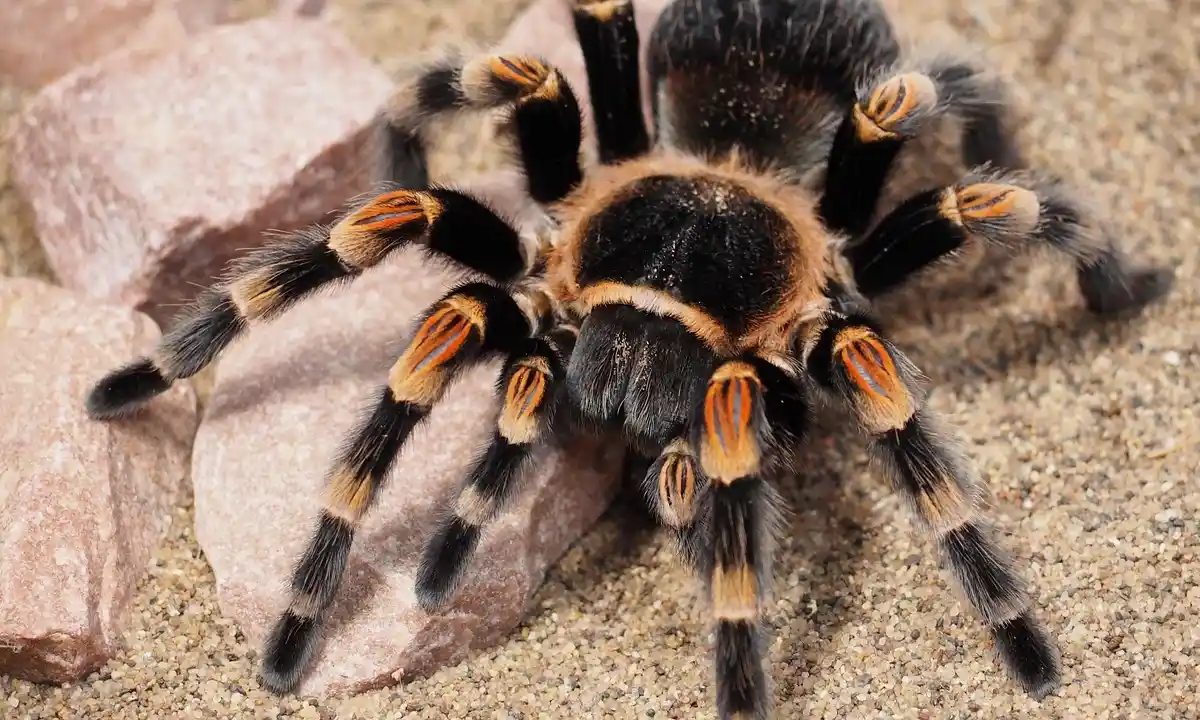
Not every tarantula will threat-posture or flick hairs. Many, especially New World species, express distress through quiet withdrawal. An absence of obvious aggression does not equate to an absence of significant stress. You must become an observer of routines and minor deviations. Knowing their usual behavior patterns helps in identifying such stress.
Watch for these easy-to-miss signals.
- Prolonged, Conspicuous Hiding: All tarantulas hide, but a specimen that has vanished for months on end, refusing to even sit at the burrow entrance at night, is communicating profound unease. My Rosie, a noted “pet rock,” once buried her hide’s entrance with substrate and disappeared for four months-not to molt, but because her enclosure was in a slightly too-high traffic area.
- Changes in Web Architecture: For heavy webbers like Old Worlds or my P. murinus, their web is a calibrated extension of their senses. A stressed tarantula may web frantically and haphazardly, sealing itself into a thick, opaque funnel. Alternatively, it may neglect its web entirely, leaving it tattered and unrepaired, which is a major red flag.
- Lack of Substrate Interaction: A healthy terrestrial tarantula will periodically tamp down and rearrange its substrate, especially around a burrow. A complete lack of interaction-a perfectly smooth, untouched surface for a species that normally digs-indicates a withdrawal from its environment.
- General Lethargy That Isn’t Pre-Molt: We expect lethargy before a molt. Unexplained lethargy is different. This is a catatonic stillness, often in an awkward, exposed position, not the purposeful stillness of a predator. The tarantula seems disengaged from its surroundings, not conserving energy within them.
Learning these subtle cues transforms your care. You stop reacting to emergencies and start preventing them. You begin to see the enclosure through your tarantula’s eight eyes, creating a space of security rather than just containment.
Actionable Steps for a Stressed or Aggressive Tarantula
Watching a tarantula display defensive behaviors can be unsettling, but your response sets the tone for recovery. A calm, methodical keeper is the best medicine for a stressed arachnid. Follow this protocol to de-escalate the situation and restore peace.
-
Immediately Cease All Interaction
Stop whatever you are doing. This means halting rehousing attempts, closing the enclosure if it’s open, and stepping back. Do not try to “calm” it with tools or your hands. My OBT, Flash, once threatened a paintbrush for a solid hour after I merely adjusted a web anchor; giving him that space was the only solution. Your inaction is the first and most powerful action you can take.
-
Reassess and Correct Environmental Parameters
Stress often stems from an environment that is just barely wrong. Use this quiet period to audit the enclosure, but do not disturb the tarantula to do so.
- Humidity & Hydration: Is the water dish full and clean? For moisture-dependent species like my T. stirmi, Goliath, I check that the substrate is damp but not swampy. For arid species like my G. rosea, Rosie, I ensure there’s ample dry substrate and cross-ventilation.
- Security & Hides: Does it have a proper, snug retreat it can fully disappear into? An exposed tarantula is a nervous tarantula. Sometimes, simply adding more substrate to deepen a burrow or adjusting a cork bark piece can work wonders.
- Temperature & Traffic: Is the enclosure in a high-traffic area or in direct sunlight? Moving it to a quieter, consistently warm (70-80°F) location can reduce vibrational stress dramatically.
Ideal temperature and humidity ranges vary by species, but most tarantulas thrive with stable conditions. Consult species-specific guides to dial in those ranges and maintain a balanced enclosure.
-
Minimize Disturbances for Days or Weeks
After making corrections, become a ghost. Limit your presence to silent observations and essential maintenance like water dish refills. This period of quiet is non-negotiable for rebuilding the tarantula’s sense of security. I’ve left rehousing attempts for over a month after a major threat display, waiting for a clear sign of settled behavior. The enclosure should be a zone of predictable silence. If transport or a rehouse is necessary, use a secure, ventilated container and minimize handling to reduce stress. Have the new enclosure prepared in advance and complete the transfer during a calm moment.
-
Adjust Feeding Routines if Needed
Do not offer food immediately. A defensive tarantula is not a hungry tarantula; a live prey insect adds more stress. Wait at least a full week after the animal appears settled. If it refuses a meal, remove the prey item immediately. Fasting is a common stress response and is far less dangerous than the trauma of a live cricket harassing your pet. My old rose hair has taught me that a tarantula’s metabolism operates on a timescale we must learn to respect.
-
Commit to the “Look, Don’t Touch” Philosophy
This incident is a data point. It informs you that handling is an intense stressor for this individual, or that certain maintenance activities trigger defensiveness. Long-term welfare means appreciating them as observational subjects, not tactile pets. The fascination lies in witnessing their natural behaviors-the meticulous grooming, the careful web construction, the sudden, precise strike-all of which are stifled by the shadow of constant interaction. Your reward is a confident, thriving animal that acts like itself.
FAQs
What does it mean when a tarantula rears up on its hind legs?
When a tarantula rears up on its hind legs, it is exhibiting a threat posture driven by fear, not aggression. This display signals that the tarantula feels severely threatened and is warning you to back away, often accompanied by fang exposure. It is a defensive last resort before a potential strike. Respecting this by immediately ceasing interaction is essential for reducing stress.
Why might a tarantula flick urticating hairs, and is this a sign of stress?
Tarantulas flick urticating hairs as a direct defense mechanism when they feel stressed or threatened. This action releases irritating bristles from their abdomen toward a perceived danger, serving as a clear “back off” signal. It is a definitive sign of stress, particularly in New World species, and frequent flicking can lead to a bald patch. This behavior indicates a need to reassess the tarantula’s environment and level of disturbance. Tarantulas have various ways to protect themselves, including using their hairs and venom.
What environmental factors commonly cause tarantula stress?
Common environmental stressors include incorrect humidity or temperature levels, excessive vibration or noise, overly bright lighting, and lack of a secure hide. These factors disrupt the tarantula’s natural habitat, leading to behaviors like constant hiding or abnormal climbing. Ensuring species-appropriate conditions with minimal disturbances is crucial for preventing chronic stress in captivity.
Can a tarantula be stressed without showing obvious signs?
Yes, tarantulas can experience stress without displaying overt signs like threat postures or hair flicking. Subtle indicators include prolonged, deep hiding, changes in web patterns, neglect of substrate interaction, or unexplained lethargy not linked to pre-molt. These behaviors suggest underlying discomfort and require attentive observation to identify and correct environmental issues. If such changes persist or are accompanied by a reduced appetite or weight loss, they can be early warning signs that the tarantula is sick rather than merely stressed. In that case, consider consulting an exotic pet veterinarian to assess health and care.
What should you do if you observe signs of stress or aggression in your tarantula?
First, immediately stop all interaction and give the tarantula space. Then, calmly reassess and correct environmental factors such as humidity, temperature, and hide security. Minimize disturbances for an extended period to allow recovery, and avoid handling or feeding until the tarantula appears settled. This approach helps restore a sense of safety and reduces further stress. By stabilizing their environment, you can help prevent common tarantula health problems such as dehydration, molting issues, and infections. Proactive, low-stress care supports long-term health and reduces risk of stress-related issues.
Beyond the Threat Pose: Building a Confident Tarantula
Recognizing stress is your first step toward exceptional care. The most powerful tool for alleviating that stress is consistent, species-specific husbandry. For nearly all tarantulas, from my moisture-loving Goliath to my arid-adapted Rosie, providing the correct substrate moisture level is the single most critical parameter for long-term health and a calm demeanor. A dehydrated tarantula is an irritable one, and an environment that is too damp can be just as harmful. Getting this balance right removes a fundamental source of discomfort.
True success is measured not in a lack of threat postures, but in the quiet observation of natural, confident behavior. Watch for the meticulous webbing of my OBT, Flash, as she remodels her entire world each night. Appreciate the patient ambush hunting of a well-fed rose hair. Your patience is the substrate upon which their trust is built. The most rewarding moments in this hobby are not interactions, but observations-the silent, fascinating study of a life perfectly adapted to its own, peaceful corner of your home.
Further Reading & Sources
- Sneaky Signs Of Stress Your Tarantula May Be Displaying
- What are the signs of a stressed Tarantula? | Arachnoboards
- 5 Signs That Your Tarantula Is Stressed And How To Help – Cute Monster Care
Arlo is a lifelong arachnid enthusiast who believes tarantulas are the world’s most misunderstood roommates. With years of hands-on experience in tarantula care, habitat setup, and species behavior, Arlo combines expert knowledge with a dash of humor to make spider ownership less scary and a lot more fascinating. From choosing the right enclosure to understanding why your eight-legged buddy is doing that weird little pose again, Arlo is here to help you become the best tarantula parent you can be, without getting tangled in the web of misinformation.
Understanding Tarantula Behavior