
Caring for Dwarf Tarantula Species
The miniature tarantulas of the hobby, often overlooked in favor of their giant cousins, are masters of small-space living, packing immense personality into a tiny, intricate package. This article examines the specific advantages and challenges of keeping dwarf species, from their space-saving enclosures to their often lightning-fast behaviors. While their small size can be a major benefit, it demands a sharp eye and a respect for their proportional speed and defensive nature.
Quick Stats:
- Origin: Global, with diverse species from the Americas, Africa, and Asia.
- Type: Both New World and Old World species are common.
- Growth Rate: Typically fast to moderate, reaching mature size in 2-3 years.
This guide details the precise husbandry needed to successfully nurture these captivating miniatures from delicate sling to stunning adult.
What Exactly is a Dwarf Tarantula Species?
In tarantula keeping, the term “dwarf” isn’t just a casual description-it’s a specific category defined by a maximum adult legspan. True dwarf species will typically not exceed 4 inches (10 cm) from leg tip to leg tip, with many maturing at a stunningly petite 2 to 3 inches. This places them in stark contrast to the classic “pet rock” tarantulas many envision.
To visualize the scale, compare the adult size of a common beginner species to a few popular dwarfs.
| Tarantula Type | Example Species | Typical Adult Legspan |
|---|---|---|
| Standard Terrestrial | Grammostola rosea (like my Rosie) | 5 – 5.5 inches |
| Large Terrestrial | Theraphosa stirmi | 9 – 10+ inches |
| Dwarf Terrestrial | Cyriocosmus elegans | 2 – 2.5 inches |
| Dwarf Arboreal | Neoholothele incei | 3 – 4 inches |
The magic of dwarfs isn’t just in their size, but in the concentrated beauty it allows. Popular genera like Cyriocosmus, Hapalopus, and Neoholothele pack incredible color patterns, metallic sheens, and intricate abdominal designs into a tiny, observable package. A Cyriocosmus elegans, with its jet-black body and brilliant red heart-shaped pattern, is a living jewel no larger than a bottle cap.
The Compelling Advantages of a Dwarf Spider Pet
For the modern hobbyist, dwarf tarantulas solve several practical challenges with elegant efficiency.
Space and Cost Efficiency
My Chilean Rose Hair, Rosie, lives comfortably in a 10-gallon tank. My Goliath requires even more floor space. A dwarf tarantula, conversely, thrives in an enclosure the size of a large deli cup or a small terrarium. This extreme space-efficiency means you can create a detailed, species-appropriate micro-habitat on a bookshelf or desk with minimal financial outlay for the enclosure and substrate. The low visual impact makes them ideal for shared living spaces or curated collections.
Manageable Temperament
While exceptions exist (always research the species!), many dwarfs possess generally docile, reclusive natures. Their primary defense is to retreat. This predictable behavior allows for relaxed, low-stress observation and dramatically reduces any perceived bite risk, perfectly aligning with a respectful “Look, Don’t Touch” husbandry philosophy. You can enjoy their daily routines without the anxiety that can accompany a fast, defensive species.
Concentrated Activity and Artistry
Don’t let their size fool you. Dwarf tarantulas are often prolific webbers and dedicated architects. Species like the Trinidad Olive (Neoholothele incei) will rapidly transform a simple enclosure into a complex, silken funnel-web city, while fossorial dwarfs execute meticulous burrowing projects. You witness an entire ecosystem being engineered on a small, observable scale. Their smaller prey size also makes feeding a discreet, quiet event.
Surprising Longevity
Perhaps the most fascinating aspect is their lifespans. While they mature faster than larger tarantulas, many female dwarfs can live for 8 to 12 years or more. You are not committing to a fleeting pet, but to a long-term, captivating study of a miniature eight-legged life, offering years of subtle observation and discovery. They prove that immense character is not bound by physical size.
The Realistic Challenges and Potential Drawbacks
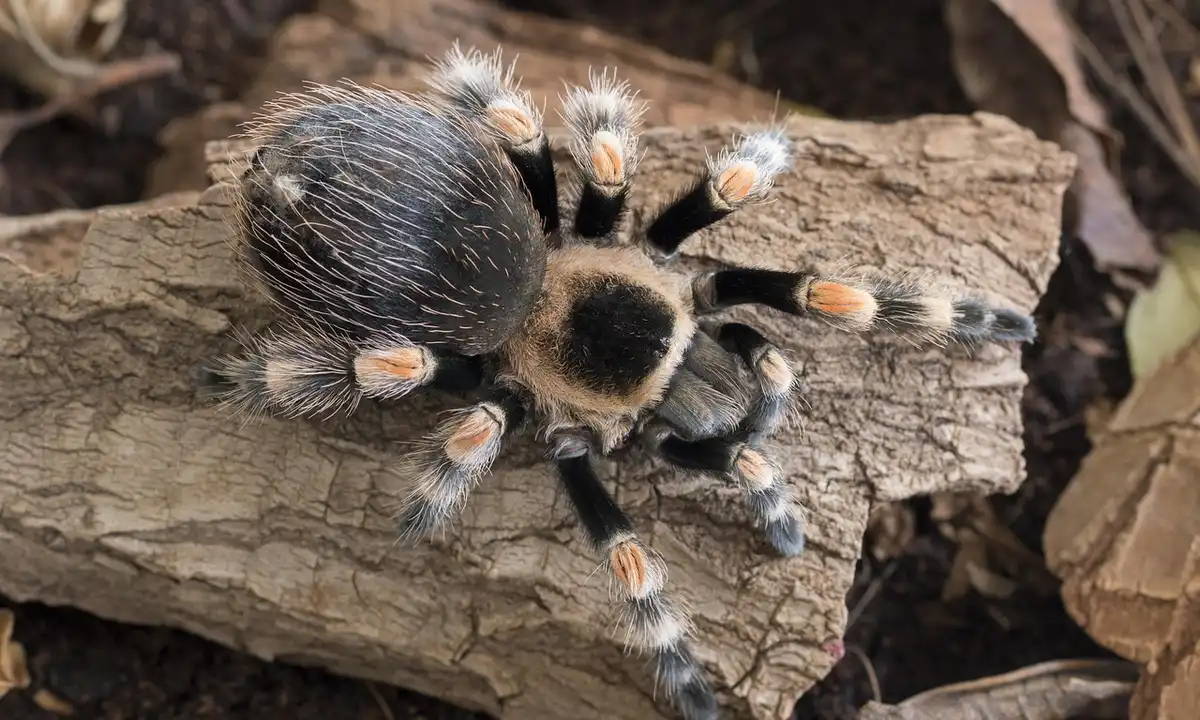
Dwarf tarantulas offer a unique thrill, but their care demands a finer touch. Their small size makes them exquisitely sensitive to environmental shifts that a larger tarantula might simply endure. Many species, like those in the Cyriocosmus genus, originate from precise microhabitats requiring stable, moderate humidity between 65-75% and a steady temperature range of 72-78°F. A drop of just a few degrees can trigger a hunger strike or delay a crucial molt. That’s why heating and humidity control matter for popular dwarf tarantula species. A thermostat-controlled heat source paired with a digital hygrometer helps keep the enclosure at the stable 65-75% humidity and 72-78°F.
-
Heightened Sensitivity: These spiders thrive on consistency. I keep my dwarf enclosures in a room with a dedicated thermostat, avoiding spots near windows or vents. From experience, a fluctuating environment stresses their tiny systems far more quickly than my burly Goliath.
-
Escape Prevention is Critical: A gap you wouldn’t notice can be a highway for a dwarf. Secure lids are non-negotiable. I use containers with silicone-gasketed lids or fine mesh screens glued securely over ventilation holes. During rehousing, I always work inside a large, clear plastic tub-a lesson learned after a frantic search for a fleeing Hapalopus sling.
-
The ‘Small Prey’ Problem Sourcing food is a genuine hurdle. Adult dwarf tarantulas may only take pinhead crickets or flightless fruit flies. I culture my own fruit flies and order pinheads in bulk, as local pet shops rarely stock them reliably. For the tiniest slings, I sometimes offer pre-killed prey to eliminate any risk.
-
Monitoring Health and Molts Seasonal molts can be easy to miss. Their faint premolt dullness or a small, hidden retreat requires sharp, regular observation. I use a bright, pen-sized flashlight to gently check for subtle signs like abandoned prey or changes in web structure without disturbing the spider.
-
Breeding and Availability Many dwarf species have complex breeding cycles or are wild-caught, impacting supply. A common species like Cyriocosmus elegans might be affordable, but a sought-after Dolichothele diamantinensis commands a higher price due to breeding challenges. This variation means researching your desired species thoroughly before purchase.
Essential Dwarf Tarantula Care: The Foundation
The Perfect Small Enclosure: Setup and Safety
-
Selecting the Right Container: Ventilation and security define this choice. I prefer clear plastic deli cups for slings and small acrylic terrariums for adults. The lid must snap or lock firmly; a simple flip-top is an invitation for escape. Drill or melt small ventilation holes on opposite sides for cross-flow.
-
Choosing and Preparing Substrate: A deep, packable substrate is key. I use a mix of coconut fiber and peat moss, lightly moistened until it holds a ball shape without dripping water. This retains humidity for burrow integrity. Provide a substrate depth at least double the spider’s leg span for digging species.
-
Adding Minimalist Decor: Overcrowding crushes the sense of scale. A single piece of cork bark or a curved leaf provides a secure hide. Always include a shallow water dish-a bottle cap or polymer clay dish works-to maintain ambient humidity and provide a drinking source.
-
Establishing Environmental Stability: Place the enclosure in a quiet, temperature-stable area. I use a space heater for the room, not heat mats under tiny tanks, to avoid dangerous hot spots. The goal is silent, consistent warmth and gentle air movement to prevent stagnant, mold-prone pockets.
Managing Moisture: A Guide to Moderate Humidity
-
Creating a humidity gradient prevents a soggy, unhealthy environment. I only moisten one-quarter to one-third of the substrate, leaving the rest bone dry. This lets the spider choose its preferred moisture level, mimicking the natural gradient of a forest floor.
-
Overflowing the water dish is a messy and imprecise method. It often leads to pooling. I prefer the controlled approach: using a spray bottle to dampen a specific corner of the substrate every few days, depending on how quickly it dries. This targets moisture without drenching the entire home.
-
For dwarf species from arid scrublands, like some Euathlus, dryness is a health requirement. I keep their substrate completely dry, offering a water dish alone. Any added moisture dramatically increases the risk of mold growth, which can attack a dwarf tarantula’s book lungs with devastating speed.
Feeding Your Tiny Predator: Prey and Schedules
Feeding a dwarf tarantula is an exercise in precision. The wrong prey size is more than a nuisance; it can stress or injure your small predator. My OBT, Flash, has shown me that even a large cricket leg can be seen as a threat in a confined space. The golden rule is simple: prey should be no larger than the spider’s abdomen, roughly half its body length. When it comes to feeding methods, many keepers debate live prey versus pre-killed options. Live prey can spark hunting instincts, but pre-killed prey often reduces risk in tight enclosures.
Appropriate live prey options form a specific menu:
- Flightless Fruit Flies (Drosophila melanogaster): The perfect starter for slings and many adult dwarfs. Their small size and constant movement trigger strong feeding responses.
- Pinhead or 1/8″ Crickets: The staple diet for most juvenile and adult dwarf species. Ensure they are truly “pinhead” size for smaller specimens.
- Chopped Mealworm or Waxworm Segments: Use clean forceps to offer a wriggling segment. This is excellent for less active web-dwellers who may not chase prey.
- Small Roach Nymphs: Red runner or lobster roach nymphs are nutritious and move enticingly, but ensure they cannot burrow deep into substrate.
Feeding frequency is not set by a calendar, but by the spider’s life stage and abdomen size.
- Slings (Spiderlings): Offer appropriately tiny prey every 3-4 days to support rapid growth. A plump abdomen is a good sign.
- Juveniles to Adults: Shift to a weekly feeding schedule. An adult dwarf may only need one small cricket every 7-10 days. Watch the abdomen, not the clock.
Dwarfs, like my old rose hair Rosie, are masters of the premolt fast. They can stop eating for weeks. A sudden, prolonged food refusal is the most common sign of an impending molt. In a small enclosure, an uneaten cricket poses a real risk to a vulnerable, soft spider. If prey is ignored after 24 hours, or if you suspect premolt, remove it immediately. I use long, soft-tipped tweezers for this delicate operation, moving slowly to avoid startling the tarantula.
Lifespan, Molting, and Unique Behavioral Traits
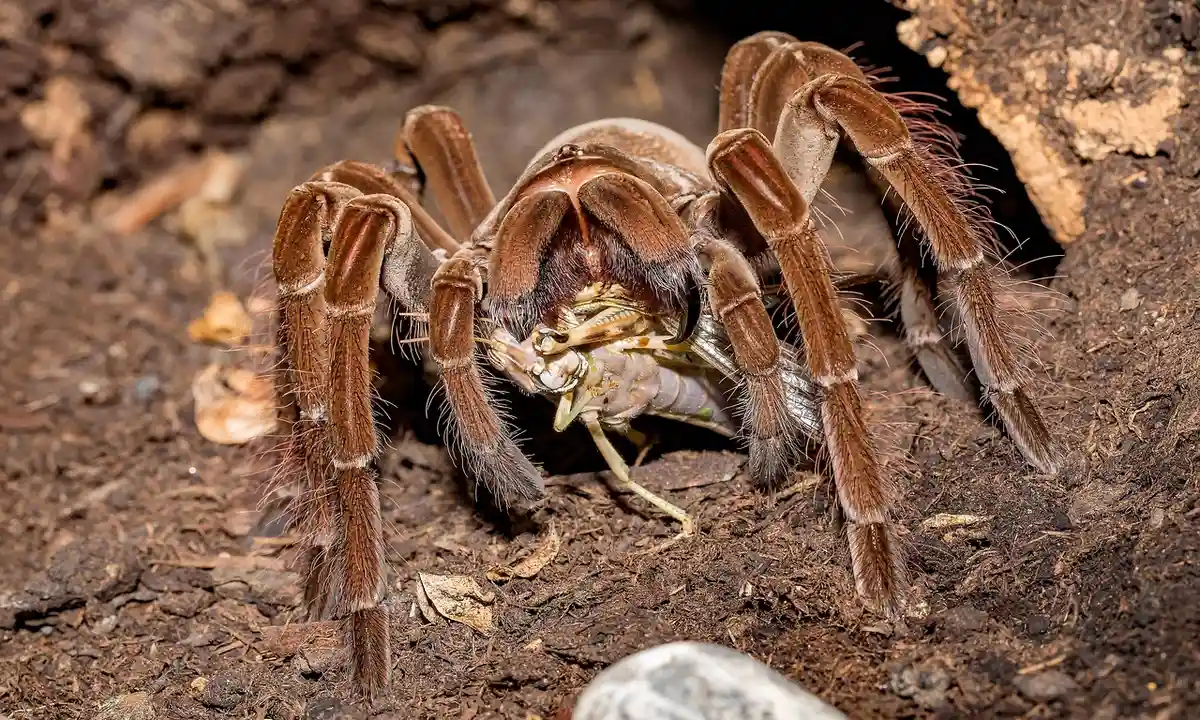
The compact size of dwarf tarantulas comes with a different biological clock. While my female G. rosea may live 20+ years, most female dwarfs have a lifespan of 8 to 12 years. Males, as with all tarantulas, live shorter lives, typically 2 to 4 years after maturing. This shorter commitment can be appealing for hobbyists wanting to experience a full tarantula lifecycle without a multi-decade responsibility. For readers curious about which species live the longest, our lifespan guide by species breaks down how long each tarantula can live. It highlights factors that influence longevity and helps hobbyists compare long-lived options.
Witnessing a dwarf tarantula molt is a fascinating, delicate process. The entire exoskeleton, including the fangs and book lungs, is shed in one piece. For a dwarf, this cast-off skin is astonishingly small and perfect. Post-molt, their new coloration is often vibrantly fresh. The most critical precaution is absolute non-disturbance for at least a week, or until the fangs have hardened from a soft, black color to their normal shade. No feeding attempts, no cage cleaning. Just offer a shallow water dish and let them solidify in peace. After this period, you can resume feeding once the molt has fully settled and the fangs have hardened. Start with very small prey and observe their feeding response before offering more.
Their small stature is balanced by outsized behavioral personalities.
- Prolific Webbing: Species like Cyriocosmus or Hapalopus often carpet their entire enclosure in dense, matted silk. My OBT’s webbing style is aggressive and total; dwarf weavers create intricate, felt-like tunnels and funnels. It is a sign of a content, settled spider.
- Rapid Burrowing: Many dwarfs are lightning-fast excavators. They can disappear into a network of tunnels in a substrate deep with moisture. You may only see a trapdoor of silk or a pair of eyes at the entrance at night.
- Cryptic Coloration: Their beauty is often subtle and tactical. Think of the iridescent sheen on a Neischnocolus carapace or the leaf-litter browns and tans of a Cyclosternum. They are artists of camouflage, blending seamlessly into a bioactive setup.
Observing these concentrated behaviors in a small, manageable enclosure is the unique joy of keeping dwarf tarantulas; they offer a full tarantula experience in a microcosm. Knowing whether your dwarf tarantula will be housed terrestrial or arboreal highlights the essential features of the enclosure. Terrestrial setups benefit from deeper substrate and hiding spots, while arboreal setups require vertical space and a secure lid for climbing.
Selecting Your First Dwarf: Beginner-Friendly Species
Choosing your inaugural dwarf tarantula is a thrilling moment. The key is balancing visual intrigue with predictable behavior and straightforward care. My advice is to prioritize temperament and established hardiness over rare coloration for your first venture into small-scale arachnoculture. For beginner pet owners, these traits often mark the best tarantula species to start with—calm, predictable behavior and forgiving care. These three species offer a fantastic starting point.
1. Chilean Tiger Rump (Neoholothele incei)
Formerly known as *Heterothele villosella*, this species is a cornerstone of the dwarf hobby for excellent reason. Their reputation for being prolific webbers and generally docile makes them a captivating, low-stress introduction. You’ll witness entire enclosures transformed into silken funnels.
- Care Needs: Maintain moderate humidity (60-70%) and provide a deep, moist substrate corner for burrowing. They thrive at room temperature, between 70-78°F.
- Temperament & Appeal: Typically very calm. Their olive-grey body is offset by a stunning, coppery-orange “tiger-striped” abdomen, best viewed under good lighting.
- Sourcing & Price: Widely available from specialty online breeders. Slings: $20-$30. Adult females: $50-$70. They grow relatively quickly and reproduce readily in captivity.
2. Trinidad Dwarf (Neischnocolus sp. “Trinidad”)
This New World terrestrial is a personal favorite for its undeniable charm and robust nature. They possess a certain ‘big tarantula’ personality in a tiny, durable package, often seen actively foraging at the enclosure front. When choosing between arboreal and terrestrial tarantulas as pets, think about habitat needs. This will help you pick the best fit for your space and experience.
- Care Needs: Easy. A slightly moist substrate and a water dish suffice. They are adaptable to a range of humidity levels but appreciate a brief, light misting once a week.
- Temperament & Appeal: Curious and sometimes brisk in movement, but rarely defensive. They sport a handsome dark brown to black body with subtle lighter banding on the legs, giving them a sleek, polished look.
- Sourcing & Price: Commonly found through online reptile and invertebrate expos. Slings: $25-$40. Adult females: $60-$80. Their hardiness makes shipping less stressful for the animal.
3. Guyana Dwarf (Hapalotremus sp.)
For the keeper drawn to vibrant color, the Guyana Dwarf is a spectacular choice. This species proves that breathtaking beauty does not require a dangerous or overly sensitive animal, making it an ideal ‘step-up’ dwarf for those past their first sling.
- Care Needs: Requires consistently higher humidity (70-80%) and excellent ventilation to prevent stagnant air. Provide a cork bark hide and damp substrate.
- Temperament & Appeal: Remarkably docile for such a vivid tarantula. Mature females are electric blue-legged with a rich, velvety black carapace and abdomen-a true living jewel.
- Sourcing & Price: Sought after, so check with established dwarf specialty breeders. Slings: $40-$60. Adult females: $80-$120+. Purchasing a confirmed female is worth the investment for the long-term color display.
Always source from reputable breeders who can provide species identification and captive-bred lineage. Wild-caught specimens, while sometimes cheaper, often carry parasites and immense stress, leading to a difficult acclimation and a shorter lifespan in your care. A few extra dollars for a healthy, captive-bred spider supports ethical hobby practices and gives you a better start. I’ve rehoused dozens of dwarf slings, and the peace of mind from a trusted source is invaluable.
Common Questions
What are the potential drawbacks or challenges of caring for dwarf tarantulas?
Their small size makes them escape artists, requiring absolutely secure enclosures. You also need a reliable source of appropriately tiny prey, like pinhead crickets or fruit flies. They can be more sensitive to environmental fluctuations in humidity and temperature than some hardy, larger species.
Are dwarf tarantulas generally more or less defensive than their larger relatives?
While temperament varies by species, many popular dwarf tarantulas are known for being reclusive and quick to retreat rather than stand and defend. This often makes them less defensively prone than some larger Old World tarantulas, aligning well with observation-based care, though their speed can be startling.
What is the typical lifespan of a dwarf tarantula, and how does it compare to other tarantulas?
Female dwarf tarantulas often live 8 to 12 years, which is generally shorter than the 20+ years possible for large terrestrial species like the Chilean Rose Hair. Males, as with all tarantulas, have shorter lifespans, typically maturing and passing within 2-4 years. These lifespan differences are part of the broader male vs female tarantula differences, which can also affect temperament. They can also influence long-term care decisions and costs, with longer-lived females requiring ongoing upkeep compared to shorter-lived males.
What are some popular beginner-friendly dwarf tarantula species, and why are they recommended?
Species like the Chilean Tiger Rump (*Neoholothele incei*) and the Trinidad Dwarf (*Neischnocolus* sp.) are highly recommended. They are prized for their generally docile temperaments, captivating behaviors like prolific webbing, and relatively straightforward, forgiving care requirements compared to more sensitive dwarfs.
How does the cost of purchasing and maintaining a dwarf tarantula compare to a larger species?
The initial cost for the spider itself can be similar or even higher for sought-after dwarf species. However, maintaining them is often less expensive due to significantly smaller enclosure costs, less substrate, and tiny food items. The primary savings are in space and long-term housing materials.
The Final Molt
For all their tiny grandeur, dwarf tarantulas have one non-negotiable need. Their small body mass makes them vulnerable to rapid dehydration, so maintaining a permanently damp corner of substrate is not a suggestion—it is the single most critical element of their long-term care. Letting their enclosure dry out completely is a fast track to a fatal outcome. However, excess moisture can be dangerous too. Watch for signs of overhydration such as a consistently damp substrate and heavy condensation or mold growth.
Success with these species is measured in millimetres and moments. You must trade the expectation of a large, showy pet for the quiet thrill of spotting a new tunnel entrance in the moss or witnessing the overnight construction of a silken canopy. Your greatest tool is a patient eye. The reward is an intimate view of a complete, intricate, and breathtakingly small predator’s world, all contained within a space no larger than a shoebox.
Further Reading & Sources
- Trinidad Dwarf Tarantula (Cyriocosmus elegans) Care – The Tarantula Collective
- Cyriocosmus elegans (Trinidad Dwarf Tarantula)
- Gold Banded Sunburst Dwarf Tarantula (Neischnocolus sp. Panama) Care – The Tarantula Collective
Arlo is a lifelong arachnid enthusiast who believes tarantulas are the world’s most misunderstood roommates. With years of hands-on experience in tarantula care, habitat setup, and species behavior, Arlo combines expert knowledge with a dash of humor to make spider ownership less scary and a lot more fascinating. From choosing the right enclosure to understanding why your eight-legged buddy is doing that weird little pose again, Arlo is here to help you become the best tarantula parent you can be, without getting tangled in the web of misinformation.
Popular Species