
Common Heating and Humidity Mistakes That Can Harm Your Tarantula: Lessons from a G. rosea
The Chilean Rose Hair (Grammostola rosea) is frequently labeled a ‘beginner’s pet rock,’ but this stereotype overlooks its precise needs for arid stability. I’ve kept my G. rosea, Rosie, for 15 years, and her prolonged fasting spells taught me that even the hardiest tarantula suffers from subtle environmental errors. This article examines the widespread heating and humidity missteps I’ve witnessed, mistakes that can lead to dehydration, failed molts, or fatal stress. The most frequent error is assuming all tarantulas need warm, humid air-many, like Rosie, require dry substrate with a water dish and minimal ambient moisture.
- Quick Stats:
- Origin: Arid scrublands of Chile
- Type: New World, terrestrial
- Growth Rate: Exceptionally slow
This guide will help you sidestep these common pitfalls, providing the specific environmental control needed to support your tarantula’s health from vulnerable sling to resilient adult.
Getting the Heat Wrong: From Dangerous Devices to Temperature Spikes
Many keepers, especially newcomers, instinctively reach for reptile heating gear, but these tools become hazards inside a tarantula’s world. The most common mistakes involve applying heat directly to the enclosure.
- Heat Mats: Placed under or on the side of a tank, they create a dangerous hot spot. Tarantulas burrow to cool down, not to bake.
- Heat Lamps: These produce intense, drying radiant heat from above. They can desiccate your tarantula and cause severe thermal shock.
- Ceramic Heat Emitters: While they don’t emit light, their focused heat ray is just as risky when pointed at an enclosure, creating a miniature desert.
These devices risk cooking your tarantula because they create a steep thermal gradient it cannot escape. Radiant heat from a lamp or emitter overheats the carapace while leaving the substrate cool, confusing the animal’s thermoregulation. I learned this early when a heat mat caused my old rose hair, Rosie, to permanently abandon her burrow, choosing a stressed perch in the coolest corner. Thermal shock during a sudden temperature drop or spike can weaken a tarantula, leading to a fatal failed molt. Reading a complete guide on tarantula heating will tell you whether a heat lamp is ever needed and how to meet their warmth safely. In most cases, stable ambient temperatures are enough.
The goal is a stable, gentle warmth, not a basking zone. The only safe method is to heat the air in the room itself, not the individual enclosure. I use a small, thermostatically-controlled space heater set to a consistent 72-78°F (22-26°C) for my collection. This raises the ambient temperature for all my tarantulas uniformly, whether it’s for Goliath’s tropical needs or Flash’s arid preference, without dangerous localized hotspots. In practice, most tarantulas have species-specific ideal temperature and humidity ranges, so aim to stay within that band. Humidity can be adjusted with substrate choices and occasional misting to support those ranges.
The Humidity Balancing Act: Avoiding Swings and Stagnant Air
-
Extremes in either direction create health crises. Low humidity, often below 60%, risks dehydration and can cause a tarantula to get stuck during ecdysis, as the old exoskeleton dries too fast. Excessive humidity, consistently above 85%, fosters mold blooms and bacterial growth, which can lead to fatal respiratory infections. My Burgundy Goliath Bird Eater, T. stirmi, thrives at 75-80% humidity, but I must avoid turning his enclosure into a soggy, airless swamp.
-
Frequent misting with a spray bottle is a flawed primary strategy. It causes sharp, unpredictable humidity spikes followed by rapid drops. This cycle stresses tarantulas, and the direct spray can startle them. My OBT, Flash, would bolt and hide at the first hiss of a spray bottle, making it clear this method disrupts their peace.
-
Stability comes from controlled evaporation via a deep water dish and a moist substrate corner. I always use a wide, shallow water bowl that my tarantulas can drink from and that steadily evaporates. For moisture-dependent species, I pour water directly into one corner of the substrate—usually coco fiber—until it is damp deep down. This creates a gradual humidity release that lasts for weeks, providing a gradient the tarantula can choose. Heating and humidity needs vary by species. Popular tarantula species such as the pinktoe tarantula and Chilean rose hair often benefit from stable warmth and adequate humidity.
-
Proper ventilation is the non-negotiable partner to moisture. Stagnant, wet air is a death sentence. Enclosures must have cross-ventilation-holes on opposite sides-to allow for air exchange. This prevents condensation from forming on the walls, a sure sign of poor airflow that can quickly lead to mold. A well-ventilated tank with a water bowl and a moist corner creates a stable, healthy microclimate.
Reading the Room: Signs Your Tarantula is Stressed by Temperature or Humidity
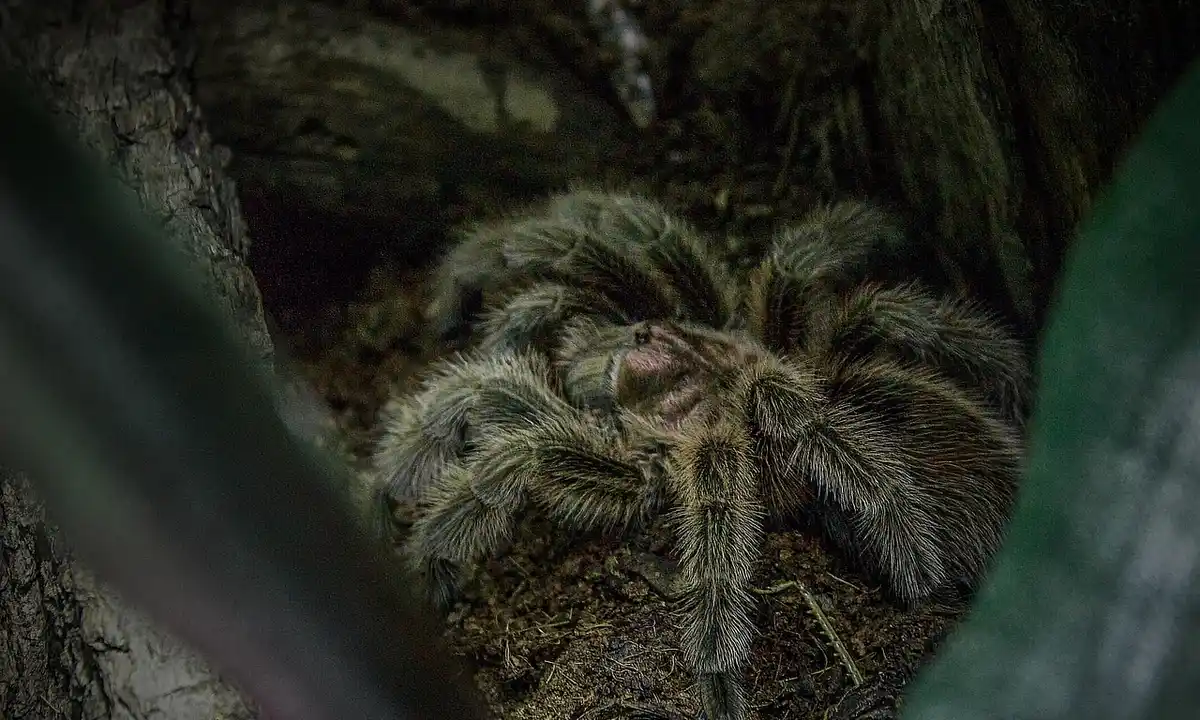
Your tarantula communicates discomfort through silent, physical cues you must learn to read. Overheating manifests in unnatural postures held for hours, a clear deviation from normal rest. Learn to read your tarantula’s body language for stress and defensive signs, so you can respond calmly. Recognizing these cues helps prevent unnecessary handling.
Clear behavioral signs of overheating include:
- Prolonged high posture, with legs fully extended and the abdomen lifted off the substrate.
- Persistent crowding into the enclosure’s coolest corner, often away from any heat mat.
- Unusual climbing on walls, not for exploration but in a search for relief.
- Rapid, frantic movement when disturbed, more so than typical species-defensive behavior.
Dangerously low ambient temperature, typically below 70°F (21°C), slows bodily functions. A cold tarantula becomes lethargic, often refusing food even during its usual feeding windows.
Signs of low temperature stress are:
- Profound lethargy and lack of movement for multiple days.
- Consistent refusal of live prey, which may eventually die and mold in the enclosure.
- Slowed growth and dramatically extended premolt periods.
- A dull, listless appearance, lacking the subtle alertness of a healthy spider.
Humidity errors leave different marks. Constant moisture buildup creates a perfect environment for fluffy white mold, which can invade delicate book lungs. Conversely, substrate that is too dry pulls hydration from a tarantula’s body, leading to a shrunken abdomen and difficult molts. My Burgundy Goliath Bird Eater (Theraphosa stirmi) will immediately kick urticating hairs if her deep peat begins to dry out, enforcing her need for 80-90% humidity.
I observe these nuances across my collection. My docile Chilean Rose Hair (Grammostola rosea) will sit for months on bone-dry substrate, while my defensive OBT (Pterinochilus murinus) meticulously webs his entire home to trap his own humid microclimate. Their innate behaviors are your most honest husbandry guide.
The Foundation Matters: How Your Substrate Choice Controls the Climate
-
Selecting the wrong substrate is a foundational error that undermines all other climate control efforts. A poorly chosen base layer can either trap stagnant moisture, encouraging harmful mold and mites, or fail to retain any water, leading to chronic dehydration. This forces you into a cycle of incorrect adjustments that stress your animal.
-
Compare these common substrate types for their moisture handling and breathability. Choosing the right substrate also informs how you maintain the enclosure over time. Regular maintenance—spot-cleaning and periodic substrate refreshes—helps keep humidity, airflow, and cleanliness in balance. The best choice often involves blending materials to match your specific tarantula’s natural history.
- Coconut Fiber (Coir): Retains humidity well, is affordable and sterile. It can compact over time, reducing aeration. Ideal for tropical species when mixed with other materials.
- Topsoil Mixes (organic, fertilizer-free): Provides excellent structure for burrowing and maintains stable humidity gradients. It must be sifted to remove debris. My go-to for most terrestrial tarantulas.
- Peat Moss: Holds water exceptionally and its slight acidity can deter mold. Can be dusty and is less sustainable. I use it for my moisture-loving T. stirmi.
- Vermiculite or Sphagnum Moss (as additives): These are not standalone substrates. Vermiculite acts like a water reservoir; sphagnum moss boosts surface humidity. Use them sparingly to modify a primary mix.
-
Creating a moisture gradient gives your tarantula the power of choice. This step-by-step method replicates the natural shift from damp burrow depths to drier surface areas. Maintaining a proper substrate moisture gradient helps your tarantula regulate humidity and minimize stress. It also gives it dry and damp zones to explore as needed.
- Fill the enclosure with your prepared substrate to an appropriate depth-at least 1.5 times your tarantula’s leg span for terrestrials.
- Select one side of the enclosure. Using a watering can, thoroughly moisten only this section, about one-third of the total substrate area.
- Leave the remaining substrate completely dry. The line between damp and dry should be visually distinct.
- Place the water dish on the dry side. This prevents spillover from accidentally flooding the moist zone.
- Maintain the gradient by adding water only to the damp section. Never soak the entire enclosure floor.
Trust But Verify: Why Your Gauge Probably Lies
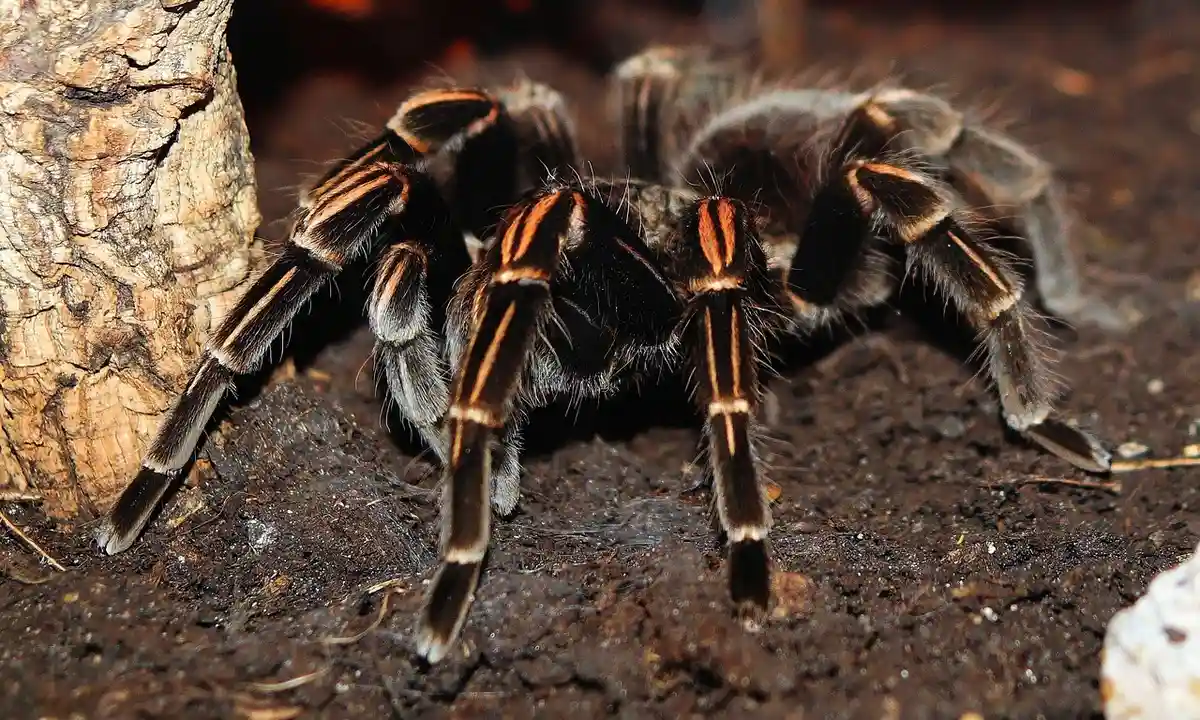
That little dial stuck to the glass with a suction cup? It is likely feeding you fiction. Cheap analog hygrometers are notoriously unreliable, often off by 20% or more. Temperature strips are not much better. Relying on them is like trying to bake a cake with a broken oven thermometer.
Your first investment should be a quality digital thermometer/hygrometer combo unit, placing the sensor probe in the middle of the enclosure, away from direct moisture and heat sources. This gives you the ambient reading that matters. Position the main unit outside for easy viewing. Even then, calibrate your trust. Numbers are a guide, not gospel.
The most reliable gauge is your own observation. Press your finger into the substrate. Does it feel cool and hold a shape? That is moisture. Is it bone-dry and dusty? Time to add water. Watch your tarantula. A desert species constantly perched high on the walls might be avoiding a wet floor. A tropical tarantula refusing to burrow could find its substrate too dry and loose. For more tips on maintaining the right environment, see signs of incorrect humidity in a tarantula enclosure.
The condition of the enclosure itself-the presence of mold, condensation, or springtails-tells a more honest story than any digital display ever could. I learned this after nearly over-drying my OBT Flash’s enclosure, chasing a perfect “low humidity” number while his webbing became brittle. His behavior, not the gauge, corrected my mistake.
Species-Specific Climate Guide: From Desert “Pet Rocks” to Humidity-Loving Giants
| Species Type | Temperature Focus | Humidity Strategy | Personal Note |
|---|---|---|---|
| Desert (e.g., Grammostola rosea) | Avoid constant heat sources. Room temperature (70-78°F) is perfect. They tolerate cool nights well. | A full water bowl is sufficient. Keep substrate completely dry to prevent mold and bacterial blooms. | My Rosie, a true ‘pet rock’, has thrived for 15 years with just a water dish. Adding moisture caused her stress and a hunger strike. |
| Humid/Tropical (e.g., Theraphosa stirmi) | Consistent, warm ambient temperature (75-82°F). Avoid drastic drops. | Use deep, moisture-retentive substrate. Pour water directly into a corner to wet the lower layers. Provide a large water bowl and cross-ventilation. | Goliath’s enclosure requires a careful balance: swampy bottom layers for humidity, plenty of ventilation holes above to prevent stagnant, fungal air. |
| Opportunistic Burrowers (e.g., P. murinus) | Provide a gentle, ambient heat gradient if your room is cool. One side near 78-80°F, the other room temp. | Offer a moisture gradient. Keep most of the enclosure dry, but slightly dampen one corner for webbing anchor points. Let the water bowl overflow occasionally. | Flash, my OBT, built his dense web funnel in the damper corner. I now add moisture where I want his construction zone to be. |
FAQs
What are the ideal temperature ranges for my tarantula’s species, and how can I maintain them without causing harm?
Ideal temperatures depend on the species; for example, desert tarantulas like Grammostola rosea thrive at 70-78°F, while tropical species such as Theraphosa stirmi need 75-82°F. Maintain these ranges by heating the room ambiently with a thermostatically-controlled space heater, not the enclosure directly. This avoids dangerous hotspots and ensures a stable, gentle warmth that mimics their natural environment.
How can I safely increase humidity in my tarantula’s enclosure without promoting mold or bacterial growth?
Safely boost humidity by using a large water dish for steady evaporation and moistening one corner of the substrate deeply. Choose moisture-retentive substrates like coconut fiber or peat moss for humidity-dependent species. Always pair this with cross-ventilation-holes on opposite sides of the enclosure-to allow air exchange and prevent stagnant, mold-prone conditions.
What are the signs that my tarantula is too hot, too cold, or experiencing incorrect humidity levels?
Overheating may cause prolonged high posture or frantic climbing, while cold stress leads to lethargy and refusal to eat. Incorrect humidity often shows as mold growth (too high) or a shrunken abdomen and difficult molts (too low). Observe your tarantula’s behavior, like unusual webbing or hiding, as early warnings of environmental distress.
What is the safest method to heat my tarantula’s enclosure, and which heating devices should I avoid?
The safest method is to heat the entire room uniformly with a thermostat-controlled space heater set to your species’ ideal range. Avoid heat mats, heat lamps, and ceramic heat emitters placed on or near the enclosure, as they create risky hotspots that can cause thermal shock, dehydration, or fatal stress for your tarantula. If you’re weighing heating mats vs heat lamps for tarantula enclosures, this definitive guide can help you choose the safer option. It explains how each method delivers heat, where hotspots are likely to form, and how to size and position equipment to minimize risk.
How often should I mist or water the enclosure, and how can I ensure proper ventilation to prevent stagnant, humid air?
Mist infrequently, if at all; instead, water the substrate corner periodically based on species needs and substrate dryness. Ensure proper ventilation by using an enclosure with cross-ventilation holes to promote air flow and prevent condensation. Monitor humidity with a digital hygrometer, and adjust watering to maintain a balance without creating soggy, stagnant conditions.
From Humidity Gauge to Biologist’s Eye
Mastering tarantula husbandry means shifting focus from a set number on a gauge to the living evidence in the enclosure. The single most vital parameter is not humidity or heat alone, but the balance of ventilation and moisture that prevents stagnant, mold-prone air from accumulating around your spider. A well-ventilated enclosure with a damp corner is safer than a stuffy, swampy box. In practice, this means properly ventilating a secure tarantula enclosure: install secure vents that promote air exchange without providing gaps for escape. Regularly inspect seals and monitor humidity to keep air moving while preventing damp pockets.
Your true tools are patience and observation. Watch Flash weave her fiery orange fortress of silk. Witness Goliath’s deep burrow excavation. See Rosie’s months of serene stillness. Their behaviors are the ultimate report card on your husbandry, far more honest than any digital display. In this quiet hobby, success is measured not in handling sessions, but in the silent, fascinating life unfolding behind the glass.
Further Reading & Sources
- Humidity, Temperature, and Tarantulas | Tom’s Big Spiders
- giantspiders.com – Heating & Humidity
- Top 10 Common Mistakes in the Tarantula Hobby (and How to Avoid Them) – The Bio Dude
Arlo is a lifelong arachnid enthusiast who believes tarantulas are the world’s most misunderstood roommates. With years of hands-on experience in tarantula care, habitat setup, and species behavior, Arlo combines expert knowledge with a dash of humor to make spider ownership less scary and a lot more fascinating. From choosing the right enclosure to understanding why your eight-legged buddy is doing that weird little pose again, Arlo is here to help you become the best tarantula parent you can be, without getting tangled in the web of misinformation.
Heating and Humidity