
Heating and Humidity Requirements for Popular Tarantula Species
In tarantula husbandry, mastering environmental controls is not a suggestion-it is the silent, non-negotiable foundation that separates a vibrant, thriving spider from one merely surviving. Get these elements wrong, and you risk dehydration, fatal molting complications, or a perpetually stressed animal. Based on my years breeding and keeping everything from pet rocks to lightning-fast defensive species, this guide dissects the precise heating and humidity needs for three commonly kept tarantulas. The quick answer: while most species do fine at standard room temperature, humidity is the variable that demands your sharp attention and varies wildly from a dry desert to a steam-filled rainforest.
- Quick Stats for Featured Species:
- Origin: Arid Chile (Grammostola rosea), Humid Guyana (Theraphosa stirmi), Arid Savannahs of Africa (Pterinochilus murinus)
- Type: New World Terrestrial (G. rosea), New World Terrestrial/Fossorial (T. stirmi), Old World Terrestrial (P. murinus)
- Key Climate Focus: Low Humidity (G. rosea), Very High Humidity (T. stirmi), Moderate Humidity with Focus on Ventilation (P. murinus)
This guide provides the species-specific data and step-by-step methods to safely steward your tarantula from delicate sling to formidable adult.
Why Temperature and Humidity Are Non-Negotiable in Tarantula Care
For a tarantula, the air is not just empty space; it is a physical medium that dictates the pace of its entire biological clock. Temperature directly governs metabolism-a cooler spider is a slower, more lethargic one, while consistent warmth supports digestion, movement, and critical healing processes. Humidity is the unsung partner in this dance, ensuring the old exoskeleton can separate cleanly during a molt and that book lungs function without desiccating. Getting these parameters right isn’t about luxury; it is the foundation that determines successful molts, long-term health, and ultimately, the natural lifespan of your animal.
I witnessed this intimate connection firsthand with my Burgundy Goliath Bird Eater, Theraphosa stirmi. For months, Goliath’s humidity hovered around 75%, and she was active, drinking often, and voracious. A faulty heater dropped the room’s ambient temperature a mere 5 degrees Fahrenheit for a week. Her behavior shifted palpably: she sealed her burrow entrance, refused food, and became uncharacteristically still. Restoring the warmth reversed the behavior within days. They are exquisitely tuned to their environment, and their behavior is your first and best gauge of its suitability.
Ignoring these factors invites a cascade of preventable health crises. The core risks are stark and interrelated:
- Dehydration & Organ Failure: Chronic low humidity desiccates a tarantula from the inside out, damaging internal organs long before a shriveled abdomen becomes visible.
- Failed Molts (Dysmolt): The number one killer of captive tarantulas. Inadequate humidity causes the old exoskeleton to stick, trapping the spider, often fatally.
- Respiratory Infection: Stagnant, overly wet substrate combined with poor ventilation creates a breeding ground for harmful bacteria and fungi that attack the book lungs.
- Chronic Stress: Constant struggle against an incorrect environment weakens the immune system, leading to refusal to eat, lethargy, and increased susceptibility to other issues.
The Essential Toolkit: How to Measure Your Enclosure’s Climate
Accurate Tools You Cannot Skip
Guessing has no place in responsible tarantula keeping. Your toolkit must provide precise, reliable data. Invest in a quality digital thermometer/hygrometer combo unit with a remote probe; this single device is the cornerstone of informed husbandry. The probe’s placement is critical: anchor it at the substrate level in the middle of the enclosure, far from any water dish or direct heat source, to read the conditions where your tarantula actually lives. A secondary, non-contact laser temperature gun is invaluable for spot-checking surface temperatures and ensuring heat mats (if used) are not creating dangerous hot spots, supplementing your other tools for tarantula care.
I must be unequivocal here: those small, round analog dial gauges with adhesive backs are worse than useless. They are dangerously inaccurate, often off by 20% or more, and their adhesive can pose a fatal entanglement risk if a tarantula dislodges it. Trusting an analog gauge is akin to flying blind with a broken altimeter-you will not know there’s a problem until it is too late.
Understanding Your Readings: Ambient vs. Microclimates
The number on your hygrometer represents the ambient humidity within the enclosure’s air space, a general guide you maintain through substrate moisture and ventilation. Your room’s ambient temperature is the starting point, which you may need to augment with gentle, controlled heating for tropical species. However, a stable reading is not the full story. A well-set-up enclosure should offer a moisture gradient and a temperature gradient, allowing the tarantula to choose its preferred microclimate. In addition, ensure the enclosure is properly ventilated with secure, escape-proof vents to maintain air exchange without risking escapes. Adequate ventilation supports stable humidity and temperature gradients, helping the tarantula access its preferred microclimate.
One side of the substrate can be slightly damp, the other bone dry. A gentle heat source on one end creates a warmer zone, leaving a cooler “heat shadow zone” at the opposite end. This choice is vital for the animal’s comfort. Ventilation plays a key role here; it prevents stagnant, soggy conditions and manages condensation. Watch for persistent condensation on the walls, as this can signal the dew point is being reached inside-a sign to increase ventilation slightly to balance humidity without creating a wet box. Your tarantula’s chosen resting spot will tell you which microclimate it prefers, especially when considering perfect temperature and humidity ranges.
Heating Requirements: Creating a Safe Thermal Gradient

Tarantulas are ectotherms, absorbing warmth from their environment. Your goal is not to bake them, but to provide a gentle, consistent ambient temperature that supports digestion and natural activity.A steep thermal gradient-like a hot side and a cold side-is less critical for tarantulas than for reptiles; they thrive best in an evenly warm room.
Safe Heating Methods for Tarantula Enclosures
- Primary Method: Heating the Room
The safest, most effective method is to warm the entire room with a space heater equipped with a thermostat and tip-over protection. I keep my tarantula room between 72-75°F year-round. This eliminates hot spots and allows every enclosure to share the same stable climate.
- Secondary Method: Small Heat Mat on Side
If room heating is impossible, a small heat mat can be attached to the side of the enclosure, never the bottom. It must cover no more than 25% of the side panel and must be connected to a reliable thermostat probe placed directly on the glass inside the heated area. I’ve used this for single enclosures in cooler rooms, setting the thermostat to 78°F to create a slight warm zone.
- Methods to Avoid
Heat lamps desiccate enclosures and can fatally cook a tarantula. Under-tank heaters risk molting tarantulas burning their soft abdomens. Heat rocks are notorious for causing severe burns. I’ve seen the aftermath of a heat lamp left on a screen lid; the tarantula died from dehydration and heat stress. These tools are not suitable for our pets, especially when used improperly, as described in common heating and humidity mistakes that can harm your tarantula.
Ideal Temperature Ranges for Popular Groups
These ranges represent ideal ambient air temperatures. A drop of a few degrees at night is natural and acceptable.
| Group | Example Species | Ideal Daytime Range | Notes |
|---|---|---|---|
| Arid/Temperate | Grammostola rosea (Rose Hair), Brachypelma albopilosum (Curly Hair) | 70-78°F (21-26°C) | My Rosie has thrived for 15 years at room temperature (72°F). These species are very forgiving of cooler, drier conditions. |
| Tropical/Arboreal | Avicularia spp. (Pink Toes), Caribena versicolor | 75-82°F (24-28°C) | Consistent warmth supports their faster metabolism. Good ventilation is critical alongside this heat. |
| Fast-Growing/Tropical Terrestrial | Theraphosa stirmi (Goliath), Pamphobeteus spp. | 75-80°F (24-27°C) | My Goliath’s growth and appetite noticeably slow if temps dip below 74°F. They need steady, warm humidity. |
Humidity Requirements: Beyond Just Misting
Humidity is one of the most misunderstood aspects of tarantula care. We are not trying to create steamy, foggy air. For tarantulas, correct humidity is about the moisture content and evaporation from the substrate, which creates a microclimate in their burrow or hide. An analog gauge stuck to the wall is often inaccurate and irrelevant. Enclosure signs can mislead when taken in isolation. Instead, focus on substrate moisture and the tarantula’s behavior as a better guide.
How to Provide Humidity Correctly
- Overflow the Water Dish
When refilling the dish, let a generous amount spill over into the surrounding substrate. This wicks moisture deep down and allows for slow, passive evaporation. I do this weekly for my tropical species.
- Dampen a Corner of Substrate
Use a bottle to pour water directly into one corner or one half of the enclosure until the lower layers are soaked, but the top inch remains mostly dry. The tarantula can choose its preferred moisture level. This creates a natural substrate moisture gradient for your tarantula, letting it select the area that best fits its needs. Maintaining that gradient helps mimic natural burrow conditions. This is my primary method for my T. stirmi’s swamp-like needs.
- Use Moisture-Retentive Substrates
A blend of coconut fiber and additive-free, organic topsoil holds moisture perfectly. It releases humidity slowly and prevents waterlogging at the surface.
- Advise Against Direct Misting/Fogging
Spraying water droplets stresses the animal, wets its delicate hairs, and promotes mold growth. Foggers can cause respiratory issues and spike humidity too high, too fast. I never mist my tarantulas’ enclosures directly.
Target Humidity Levels for Popular Species
Think of these categories as a guide for how damp the substrate should be, from bone-dry to genuinely wet. The “air humidity” is a byproduct of this ground moisture.
| Group | Example Species | Substrate Moisture Goal | Personal Notes |
|---|---|---|---|
| Arid | Grammostola rosea, Aphonopelma chalcodes | Dry. A full water dish is sufficient. Let the substrate become completely dry between any overflow. | My Rosie’s enclosure substrate is like dry, packed earth. Adding moisture here would cause her stress. |
| Humid/Tropical | Avicularia spp., Brachypelma albopilosum | Moderate. Keep 1/3 to 1/2 of the substrate damp, with the surface allowed to dry slightly. Good cross-ventilation is non-negotiable. | My arboreals get a damp corner and an overflowed dish. The ventilation prevents stagnant, stuffy air. |
| Swamp-Dweller | Theraphosa stirmi (Burgundy Goliath), Hysterocrates spp. | High. The majority of the substrate should be kept moist, even soggy at the bottom layers. The surface may feel cool to the touch. | My Goliath’s enclosure has a deep, wet substrate base. The silence of his hide is broken by the sound of him digging in the damp earth, which is exactly what he needs. |
Step-by-Step: Setting Up Heating and Humidity for a New Tarantula
Getting the climate right before your tarantula arrives is the single greatest kindness you can offer. I’ve learned this through panicked rehousings where conditions weren’t stable. Follow this sequence for a flawless start. Similarly, when you’re transporting or rehousing, use a secure, ventilated container to minimize stress. Safe transport helps ensure a smooth, safe rehouse for your tarantula.
-
Research your species’ native habitat.
This is not a vague suggestion. “Arid” means something specific. My Grammostola rosea (Rosie) comes from scrubland where humidity can plummet below 50%. Conversely, my Theraphosa stirmi (Goliath) needs a rainforest-like 80%. Knowing their origin transforms guesswork into informed husbandry.
-
Select appropriate substrate for its moisture needs.
Arid species need a substrate that drains quickly, like a sandy soil mix. For humidity-lovers, I use a deep base of moisture-retentive coco fiber or peat moss. The wrong substrate makes consistent climate control nearly impossible.
-
Set up enclosure without the tarantula.
Place hides, decor, and a water dish in the dry enclosure. This lets you adjust layouts and pour water without stressing an animal. I once tried to reposition a cork bark with Flash, my OBT, inside-it was a lesson in patience and speed I do not recommend.
-
Install thermometer/hygrometer and heating (if needed).
Use digital probes placed at substrate level, not analog stick-ons. For heating, I only use a space heater to warm the room or a thermostat-controlled heat mat on the side of the enclosure. Never place heat mats underneath, as tarantulas burrow to escape heat and will cook themselves.
-
Pre-moisten substrate to achieve correct moisture depth.
For arid species, I lightly dampen the bottom third of the substrate, leaving the top bone-dry. For Goliath, I pour dechlorinated water into the corners until the entire substrate base is damp, even slightly muddy at the very bottom. This creates a humidity gradient without surface wetness.
-
Monitor conditions for 24-48 hours to ensure stability.
Watch the numbers. Does humidity crash in 12 hours? Does the heat mat cycle correctly? This waiting period is critical. I’ve caught wildly inaccurate hygrometers during this phase that would have led me to drown a desert species.
-
Introduce the tarantula.
Gently guide your new pet into its ready-made home. The silence of an enclosure with perfect parameters is profoundly different; the animal will often explore and settle more quickly, exhibiting less stress.
Troubleshooting Common Heating and Humidity Problems
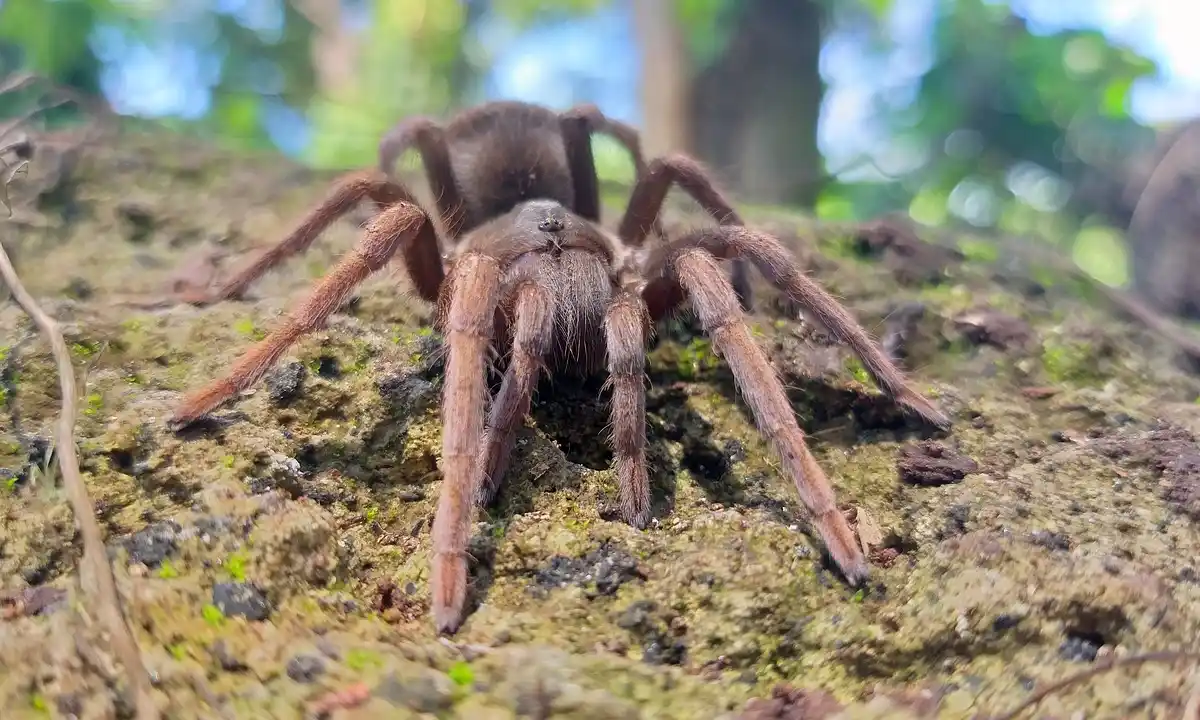
Even with perfect setup, conditions drift. Catching problems early is a skill honed by quiet observation.
Signs of Incorrect Temperature
- Too Cold: Lethargy is the big one. Rosie will become an even more permanent ‘pet rock,’ refusing food for months. A prolonged premolt is another red flag-their metabolism slows to a crawl.
- Too Hot: Pacing the enclosure walls or assuming a tall, stretched “tiptoe” stance. They will seek the highest corner, away from the substrate heat. My OBT, Flash, once did this for hours before I realized the afternoon sun was hitting his shelf.
Signs of Incorrect Humidity
- Too Dry: The most tragic sign is a bad molt. A crumpled carapace or legs stuck in the exuvia are direct results. In daily life, a shriveled, wrinkled abdomen (not just small) indicates dehydration.
- Too Wet/Stagnant: Fuzzy white or green mold blooms on decor, or a sudden population of grain mites. The tarantula itself will avoid the substrate, spending all time on the walls or hide. Stagnant, wet air is a far greater killer than slightly dry air for most species.
Quick Fixes for Climate Control
- For low humidity: Use a wider, shallow water dish to increase surface area for evaporation. Add moisture to a single corner of the substrate only, not the whole thing.
- For high humidity: Drastically increase cross-ventilation. Add more holes opposite each other. Replace the top layer of substrate with dry material to wick moisture up.
- For low temp: Adjust your room space heater a few degrees, or check the thermostat setting on your heat mat. Never increase heat without verifying the humidity won’t also plummet as a result.
Special Considerations for Unique Species
General temperature and humidity ranges provide a solid foundation, but individual species can have demanding, non-negotiable needs. Mistaking a swamp dweller for a desert species can lead to a rapid, heartbreaking decline. Here are the nuanced requirements for some popular, yet environmentally distinct, tarantulas.
The Swamp Dwellers: High Humidity Giants
Tarantulas like the Theraphosa stirmi (Burgundy Goliath Bird-eater) and its relatives are denizens of moist South American forest floors. My own Goliath thrives in an atmosphere that would suffocate many other species. The goal is to replicate the damp, earthy air of a rainforest understory without creating a soggy, fungal mess.
- Deep, Moist Substrate is Non-Negotiable: I provide a substrate layer at least 6-8 inches deep of moisture-retentive materials like coconut fiber, peat, and topsoil. I pour water directly into the corners of the enclosure until the bottom third of the substrate is genuinely damp to the touch, while the top remains slightly drier.
- The Water Dish is a Lake: A large, sturdy water dish is constantly kept full. They will drink from it and often drag substrate into it, which you must clean out. This dish acts as a primary humidity reservoir.
- The Condensation Conundrum: You will see condensation on the glass. This is normal, but persistent, heavy condensation on all sides is a danger sign. It signals stagnant air, which is a death sentence for these giants, leading to mold and respiratory issues. You must have ventilation-both low on the sides and high up-to allow for gentle air exchange.
- Humidity Target: Aim to maintain an ambient humidity of 75-85%. A digital hygrometer is essential. I achieve this through the damp substrate and large water dish, with occasional overflow from the dish, not by frequent misting which disturbs the tarantula.
The Dry-Climate “Pet Rocks”
At the opposite extreme are species like the Grammostola rosea (Chilean Rose Hair). My Rosie, a 15-year-old specimen, has taught me patience. These tarantulas hail from arid scrublands and are built for endurance, not humidity. Their greatest threat is often our desire to provide “more” care, which translates to excess moisture.
- Bone-Dry is Best: The substrate should be completely dry. I use a mix that includes dry coconut fiber and sand for drainage. The only moisture source is a always-full water dish placed on the dry substrate.
- Feast-or-Famine Adaptation: In nature, they experience long droughts punctuated by brief rainy periods. In captivity, this is why they may refuse food for months on end-a behavior that is perfectly normal and stresses new keepers far more than the tarantula.
- Humidity Target: Ambient room humidity (40-55%) is perfectly adequate. Do not mist their enclosure. The risk of fungal growth in a moist, warm environment for a dry-climate species is extremely high. Their hydration comes from internal water reserves and drinking from their dish.
The Arboreal Moisture Lovers
Tree-dwelling genera like Avicularia and Caribena (Pink Toes) present a unique challenge. They need moisture but cannot tolerate stagnant air. In the wild, they live in sun-dappled, breezy tree hollows and palm fronds. Stagnant, moist air in an enclosure is the fastest killer of these beautiful spiders.
- Cross-Ventilation is Critical: Their enclosures must have ventilation on the front and the top, or on two opposing sides. This creates a chimney effect, allowing fresh air to circulate and prevent the buildup of stale, humid air.
- Hydration Strategy: Always provide a water dish. I occasionally overflow it slightly to dampen a portion of the substrate, or gently mist one side of the enclosure webbing. The tarantula will drink from droplets on its web. The goal is a brief spike in humidity that then dissipates through the ventilation.
- Humidity Target: Aim for a gradient. Let humidity rise to 70-80% after watering, then allow it to fall back to 60-70% as ventilation does its job. Constant, peak humidity without airflow is a recipe for disaster. Watch for restless pacing or the tarantula hanging low in the enclosure-these can be signs of respiratory distress.
Common Questions
What are the safe temperature ranges for different tarantula species?
Ideal temperatures vary by the tarantula’s natural habitat. Arid species like the Chilean Rose Hair thrive at standard room temperature, between 70-78°F. For tropical species like Pink Toes or Goliath Bird-eaters, maintaining a warmer range of 75-82°F supports their metabolism and digestion. It’s more critical to provide stable, ambient warmth than a sharp thermal gradient within the enclosure.
How do I provide the correct humidity for my tarantula?
Correct humidity is primarily achieved through substrate moisture, not misting. For arid species, a full water dish is sufficient with completely dry substrate. Humid species require a portion of the substrate to be kept damp, often by overflowing the water dish or watering a corner. For swamp-dwellers like the Theraphosa stirmi, the majority of the substrate should be kept moist to mimic their rainforest floor environment.
How often should I check and adjust humidity levels?
You should monitor humidity with a digital probe hygrometer daily. Adjustments are not made on a fixed schedule but in response to your readings and the substrate’s condition. Typically, re-wetting a portion of the substrate or overflowing the water dish is needed weekly, but this depends heavily on your room’s climate and the enclosure’s ventilation.
What is the safest way to heat a tarantula enclosure?
The absolute safest method is to heat the entire room with a thermostatically controlled space heater. If that’s not possible, a small heat mat can be used on the *side* of the enclosure, but it **must** be connected to a thermostat with its probe inside the tank. You must avoid heat lamps, under-tank heaters, and heat rocks, as they create dangerous hot spots and dehydration risks.
Do any popular species have very unique heating or humidity needs?
Yes, some species have non-negotiable, specific requirements. The Theraphosa stirmi (Goliath) requires very high humidity (75-85%) and deep, moist substrate like a swamp. Conversely, the Grammostola rosea (Rose Hair) needs bone-dry conditions and is easily stressed by added moisture. Arboreal species like Pink Toes need high cross-ventilation alongside their humidity to prevent stagnant, deadly air.
What are the clear signs that my temperature or humidity is wrong?
Signs of incorrect temperature include lethargy and prolonged fasting (too cold) or constant pacing and a tall “tiptoe” stance (too hot). For humidity, a shriveled abdomen or a bad, stuck molt indicates conditions are too dry. Conversely, mold growth, mite blooms, and the tarantula avoiding the substrate signal an environment that is too wet and stagnant.
The Final Molt
Your tarantula’s long-term health hinges on one skill: matching your care to its evolved needs. For moisture-dependent species like my Goliath, constant access to damp substrate is non-negotiable, while for arid specialists like my Rosie, ample cross-ventilation prevents fatal respiratory issues. The numbers are your guide, but the spider’s behavior is your ultimate confirmation. Tarantulas’ lifespans are shaped by several factors—species biology and the environment you provide, including humidity, temperature, and space. Tailoring care to these factors supports longer, healthier lives.
The true reward comes in the quiet observation. Watch the meticulous engineering of a tunnel, the silent ambush from a burrow, or the iridescent sheen of a fresh exoskeleton. I learned more from Flash’s frantic webbing during a rehousing than any care sheet could teach. This hobby unfolds in months and years, not days. Your patience provides the stable environment where natural, fascinating behaviors can safely play out.
Further Reading & Sources
- Humidity, Temperature, and Tarantulas | Tom’s Big Spiders
- Tarantula Heat, Temperature, Humidity – All You Need to Know – Care Guides For Pet Lizards
- giantspiders.com – Heating & Humidity
Arlo is a lifelong arachnid enthusiast who believes tarantulas are the world’s most misunderstood roommates. With years of hands-on experience in tarantula care, habitat setup, and species behavior, Arlo combines expert knowledge with a dash of humor to make spider ownership less scary and a lot more fascinating. From choosing the right enclosure to understanding why your eight-legged buddy is doing that weird little pose again, Arlo is here to help you become the best tarantula parent you can be, without getting tangled in the web of misinformation.
Heating and Humidity