
Can Tarantulas Climb Walls? A Look at Spider Feet and Adhesion
Published on: July 6, 2026 | Last Updated: July 6, 2026
Written By: Arlo
Tarantulas defy their bulky reputation with a secret weapon for vertical travel: thousands of microscopic hairs on their feet. For arboreal species, climbing smooth glass is not a trick but a fundamental lifestyle, a fact I respect every time I see my OBT, Flash, perched silently on the ceiling of his web-filled enclosure. This article examines the precise biomechanics behind this ability, from the molecular adhesion of setae to the practical implications for your care. The clear answer is yes, many tarantulas can climb walls, but this skill varies dramatically by species, life stage, and surface condition.
Quick Stats:
- Origin: Tropical forests of South America (exemplified by arboreal genera like Avicularia)
- Type: Primarily New World arboreal tarantulas
- Growth Rate: Moderate to fast; lighter juveniles are often more adept climbers than heavy-bodied adults
This guide will illuminate the science of spider feet, providing the knowledge to create secure, species-appropriate habitats that support their climbing nature from fragile sling to powerful adult.
The Adhesive Anatomy: How Tarantula Feet Work
When we imagine a tarantula climbing, we might picture tiny grappling hooks or sticky pads. The reality is far more intricate. A tarantula’s foot is a multi-tool, evolved for a variety of terrains, from rough bark to slick leaf surfaces. Each foot, or tarsus, is a masterclass in biological engineering, combining brute-force claws with a delicate adhesive system you need a microscope to see.
Key Components of a Climbing Foot
Look closely at the end of a tarantula’s leg. You’ll find three distinct structures working in concert. First, the two prominent, curved claws for hooking into coarse textures like cork bark or burrow walls. Beneath these claws lies a dense pad of hair called the claw tuft, or scopula. This is where the magic happens.
- Claws: The primary tools for climbing on porous, textured surfaces. They provide the “grip” for most terrestrial tarantula activities.
- Claw Tuft (Scopula): A dense brush of thousands of microscopic hairs called setae. Each seta splits into hundreds of even tinier split-ends called spatulae.
- Spatulae: These are the final point of contact. They are so small they interact with surfaces at a molecular level, exploiting weak atomic attractions (van der Waals forces) to stick.
This system means the tarantula isn’t secreting a glue. Adhesion is a dry, mechanical process where billions of spatulae make fleeting, powerful contact with the microscopic imperfections on any surface.
The Role of Humidity in Adhesion
This is a critical husbandry point many overlook. While the adhesion is dry, humidity directly impacts its efficiency. The claw tuft hairs can absorb minute amounts of atmospheric moisture. In a suitably humid environment (think 70-80% for tropical species like my T. stirmi Goliath), this slight hydration can increase pliability and surface contact of the spatulae.
In a bone-dry enclosure, those same hairs can become brittle and less effective. I’ve observed my moisture-dependent species show noticeably more confident climbing on enclosure glass when their humidity is in the ideal range, a direct link between your husbandry and their natural behavior. For arid species like my old G. rosea Rosie, this is less critical, but proper hydration is still key to their overall health and mobility.
Testing the Limits: What Surfaces Can Tarantulas Climb?
Knowing the theory, we can predict performance. The rule is simple: The smoother the surface, the greater the challenge for a tarantula’s foot. A surface must have microscopic texture or porosity for the spatulae to find purchase; absolute smoothness is a tarantula’s kryptonite.
The Glass Terrarium Challenge
Can they climb glass? The answer is nuanced. Most terrestrial tarantulas, especially heavy-bodied adults, will struggle with clean, vertical glass. Their claws find nothing to hook, and the surface is often too smooth for optimal spatulae contact. However, young juveniles and lighter species often manage it easily.
One personal rehousing story stands out. My P. murinus Flash, an Old World species, scaled the side of a pristine, dry glass bowl without a moment’s hesitation. It was a stark reminder that arboreal-inclined species, even those not truly arboreal, often possess superior climbing aptitude. You must never rely on glass being an absolute barrier; always use a secure, ventilated lid regardless of your tarantula’s lifestyle.
Ceilings and Overhangs: A Different Struggle
Climbing a wall is one feat. Walking upside-down is another order of magnitude. Here, gravity works against the adhesive system. For a tarantula to traverse a ceiling, it must generate enough adhesive force from its claw tufts alone to counter its entire body weight. Many heavy terrestrial tarantulas simply cannot do this.
Their technique often changes. You might see them moving more slowly, placing each foot with deliberate care to maximize contact. A fall from the ceiling of a tall enclosure can be fatal due to abdominal rupture. This is a primary reason I advocate for keeping terrestrial species in enclosures no more than 1.5 times their diagonal leg span in height-it minimizes fall risk. My burgundy Goliath, despite her size, has never attempted her acrylic ceiling, wisely sticking to her humid, terrestrial domain.
Species-Specific Climbing Behaviors in Pet Tarantulas
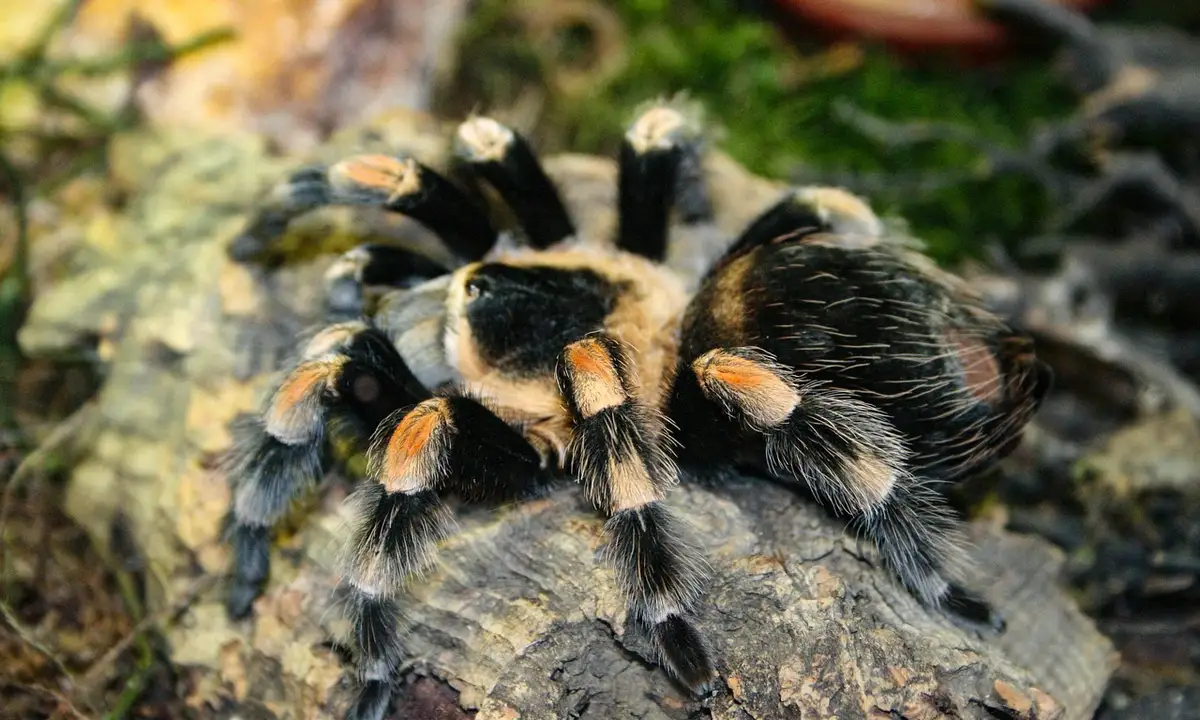
Not all tarantulas interact with vertical spaces in the same way; their climbing prowess is a direct reflection of their evolutionary niche. Observing whether your tarantula is a confident climber or a reluctant one offers vital clues about its comfort and enclosure needs. From the silent, deliberate ascent of an arboreal species to the occasional, exploratory scramble of a terrestrial dweller, each behavior tells a story, especially when considering the right enclosure for their lifestyle.
Arboreal Tarantulas: Built for Height
Species like the Pink Toe (Avicularia avicularia) or the Trinidad Chevron (Psalmopoeus cambridgei) are biomechanical specialists for life above ground. Their lighter bodies, longer legs, and densely-packed scopulae on their feet grant them an almost gravitational defiance on bark, leaves, and glass. In my breeding projects, I’ve watched arboreal slings construct elaborate web tunnels in the highest corners of their enclosures, rarely touching the substrate below.
They possess a deliberate, secure grip that differs from the more tentative climbing of ground dwellers. For these animals, a tall enclosure with vertical cork bark and anchor points for webbing isn’t just nice-it’s non-negotiable for their mental and physical well-being. A lack of climbing space can lead to constant, stressed pacing at the enclosure bottom.
Terrestrial Tarantulas: Occasional Climbers
Your classic “pet rock” like my Chilean Rose Hair, Rosie (Grammostola rosea), spends most of her time on the ground. Terrestrial tarantulas can and will climb, but their heavier, stockier builds make it a cautious, often clumsy affair. This behavior is usually exploratory—a search for food, a reaction to substrate moisture, or a sign of general discontent with their setup. By contrast, fossorial tarantulas spend most of their lives in burrows underground. A deeper look at ground dwellers reveals how lifestyle—fossorial versus terrestrial tarantulas—shapes their behavior, body form, and enclosure needs.
My Burgundy Goliath Bird Eater (Theraphosa stirmi), for instance, will sometimes scale the cork bark after a misting, likely following the humidity gradient. You should interpret frequent climbing in a terrestrial species as a potential husbandry red flag warranting a check on temperature, humidity, or hiding places.
Burrowing Species and Surface Interaction
True obligate burrowers, like many Aphonopelma species, show the least interest in climbing. Their world is the substrate, and surface excursions are brief, usually for hunting or drinking. I provide deep, packed soil for natural digging, which satisfies this instinct and minimizes unwanted wall-scaling. If a burrower is constantly on the walls, it often signals an enclosure that is too damp, too small, or lacking a proper starter burrow.
Climbing-Related Risks in Captivity: Falls and Escapes
The ability to climb introduces two primary dangers in our care: the internal risk of a fatal fall and the external risk of an escape. Both scenarios are preventable with informed enclosure design and a respectful, hands-off approach to husbandry.
Why Tarantulas Fall: Loss of Grip and Physics
A tarantula’s grip relies on thousands of microscopic hairs (setae) and capillary forces. This system fails on overly smooth, dusty, or greasy surfaces, leading to a sudden, catastrophic loss of adhesion. The real danger lies in physics: a heavy-bodied terrestrial tarantula has a relatively large, fragile abdomen. A fall from even 6 inches onto a hard surface can cause a rupture, which is almost always fatal. This is the kind of accident that makes tarantulas die from falling when they are dropped or mishandled. Even a short drop in captivity can be lethal, underscoring the need for careful handling.
I learned this lesson early when a mature Brachypelma hamorii lost its footing on a slick acrylic wall during a rehousing. Maintaining a modest enclosure height for terrestrial species-no more than 1.5 times their diagonal leg span-drastically reduces fall distance and injury risk. Humidity also plays a role; overly dry conditions can reduce the effectiveness of their adhesive forces.
Preventing Escape: More Than Just a Lid
A secure lid is your first defense, but a determined, stressed tarantula is a master of finding weakness. Preventing escape is a holistic practice that starts with reducing the animal’s desire to flee in the first place. This means providing correct humidity, ample hiding spots, and a quiet location. Proper ventilation is also essential: good airflow helps maintain stable humidity and prevents mold and stagnant air that could stress the tarantula. For more on how to achieve proper ventilation, you can visit this link.
- Enclosure Security: Use latching lids or heavy, well-ventilated tops. For powerful species like my OBT, Flash (Pterinochilus murinus), I use enclosures with front-opening doors and secure sliding locks, as their speed and strength can pop weak lids.
- Gap Management: Check for and seal any openings wider than the carapace. Ventilation holes must be tiny; I use a soldering iron for precise, safe holes in plastic.
- The “Look, Don’t Touch” Philosophy: Unnecessary handling is a top cause of escapes and falls. Respecting their space minimizes stress-induced climbing and keeps both you and the tarantula safe from sudden, frantic movements. My role is to curate a secure, enriching world for them to inhabit, not to force interaction.
Designing a Safe Enclosure: Discouraging Dangerous Climbs
Knowing a tarantula’s climbing capability is the first step; applying that knowledge to enclosure design is what keeps them secure. The goal is not to frustrate a natural behavior, but to channel it safely and eliminate the catastrophic consequences of a long fall. My large Theraphosa stirmi, Goliath, has a heavy body that makes any tumble a potential abdominal rupture risk, so his home is built with gravity in mind. By the same token, avoiding common tarantula enclosure mistakes—such as insufficient vertical space, slick surfaces, and unsecured lids—is essential. A thoughtful setup channels climbing safely and minimizes fall risk.
Substrate Depth as a Safety Cushion
This is your single most effective safety feature. A deep substrate layer serves two critical functions: it absorbs impact and it limits the height from which a tarantula can fall. Which depth is best really depends on the tarantula’s natural behavior. Burrowers benefit from deeper substrates, while more terrestrial species can do well with a shallower layer that still cushions falls. I measure this from the top of the substrate to the lid. For terrestrial species like my Grammostola rosea, I maintain a distance no greater than 1.5 times their diagonal leg span. For heavyweights like Goliath, I keep it even less. For more insights, consider the differences between Deep vs Shallow Substrate.
- For small terrestrials (under 4″ legspan): A minimum of 6 inches of substrate, with 8-10 inches being ideal for serious burrowers.
- For large terrestrials (like T. stirmi): 8-12 inches of packed, moist substrate. This supports their weight and dampens any fall from their preferred low-level climbing on cork bark.
- For obligate burrowers: Fill the enclosure halfway or more with substrate. They will appreciate the digging space and their climbing is minimal.
A generous substrate bed transforms a hazardous vertical space into a manageable one, effectively lowering the “ceiling” of the habitat. Witnessing Rosie suddenly lose her grip and tumble softly into her deep peat was a quiet lesson in the necessity of this buffer.
Strategic Decor Placement
Decor isn’t just for aesthetics; it’s terrain management. Think of it as designing a landscape that offers enrichment without creating dangerous staircases to the top. My Pterinochilus murinus, Flash, is an expert at turning any connected surface into a silk highway to the lid.
- Avoid “Bridging”: Never place tall pieces of wood, rocks, or plants directly against the enclosure walls. This creates a direct ladder. Position them inward, surrounded by substrate.
- Mind the Corners: The silicone seams in glass terrarium corners often provide just enough texture for a determined climber. Keep decor away from these areas to break the climbing path.
- Secure All Items: Any heavy wood or stone must be buried at the base or firmly secured. A tarantula digging underneath can topple unstable decor.
- Use Horizontal Space: Focus on creating ground-level complexity with hides, leaf litter, and shallow cork flats. This encourages natural foraging and exploration at a safe height.
By interrupting direct vertical pathways, you allow for climbing exploration on a micro-scale while preventing access to dangerous heights. It’s about managing the environment, not the animal’s instincts.
The Bioactive Setup Advantage for Natural Climbing
A well-built bioactive enclosure is the pinnacle of ethical tarantula keeping, and it naturally addresses climbing behavior in a brilliant way. The complex, living environment provides so much ground-level stimulus that the urge to scale the walls often diminishes completely. The soil is alive with springtails, the foliage is real, and the humidity cycles are natural. This sensory richness reduces stress-based pacing and climbing.
In my bioactive tanks, the focus shifts from preventing climbs to providing safe, naturalistic climbing surfaces that satisfy the need without the risk. The living plants and microfauna create a stable ecosystem where the tarantula is just one part of a functioning whole. The silence of a bioactive enclosure, broken only by the occasional rustle of an isopod, is a sign of a deeply content arachnid. It’s essential to choose tarantula-safe plants for bioactive enclosures to ensure the well-being of your spider.
Choosing Climbing Surfaces in a Bioactive Tank
Your materials must be safe, secure, and functional for the entire ecosystem. Avoid treated woods or stones that can leach chemicals into the soil.
- Cork Bark Rounds & Flats: The gold standard. They are soft, moisture-resistant, and their textured surface is perfect for gentle grip. Bury a large round partially to create a stable, climbable hill.
- Ghost Wood or Mopani Wood: These dense, hardwood pieces are beautiful and long-lasting. Their intricate shapes offer multiple levels and hiding spots. Soak them first to ensure they sink into the substrate.
- Live Plants as Structure: Sturdy, tarantula-safe plants like Snake Plants (Sansevieria) or Pothos (Epipremnum aureum) have strong stems and root masses. When planted securely, their bases and leaves become part of the terrain, not just decoration.
- Stone Slates: Flat pieces of slate stacked or angled create secure, cool hides and low-angled ramps. Their mass makes them immovable once settled.
The key is integration. A piece of ghost wood should be half-buried, with plants growing around its base. This creates a stable, multi-textured landscape where a climb is a short, purposeful journey from one secure zone to another, not a desperate reach for the lid. In such an environment, you’ll observe true natural behavior-a deliberate exploration of a complex world, one careful step at a time.
Observing and Interpreting Your Tarantula’s Climbing Behavior
Watching a tarantula scale its enclosure is a study in silent, fluid motion. Its eight legs move with a deliberate, hydraulic grace. Your tarantula’s relationship with climbing is a primary behavioral cue, offering a direct look into its comfort level. Most species will explore vertically with confidence when conditions are right.
When Climbing Signals a Problem
Constant climbing, especially frantic attempts at the lid or glass, is rarely simple exploration. It is a distress signal. From my years of breeding, I interpret this behavior as the spider’s ultimate attempt to escape unsuitable conditions. Here are the primary culprits, in order of urgency.
- Excess Moisture or Flooding: For arid species like my old Chilean Rose, Rosie, a damp substrate is torture. Her response was always the same: a slow, persistent climb to the highest corner, refusing to descend until the peat moss had dried out. For moisture-dependent species like my Goliath, the opposite can be true-substrate that’s too dry and dusty will trigger escape behavior.
- Extreme Temperature: Heat rises. An enclosure placed too close to a heat source, or under a hot lamp, creates a thermal gradient the spider instinctively flees. The floor becomes an oven, and the lid is the only perceived refuge. Always heat the room, not the tank.
- Poor Substrate Choice or Depth: A thin layer of gravel or overly damp coconut fiber provides no purchase for digging. A terrestrial tarantula denied its burrowing instinct will climb, seeking security it cannot find below. A deep, friable substrate is a psychological anchor for a ground-dwelling spider.
- Pest Infestation: Mites or springtails in overwhelming numbers can harass a tarantula, driving it up the walls to avoid the irritation. A thorough enclosure change is the only solution.
- Premolt Vulnerability: A tarantula in heavy premolt often becomes clumsy. Its tarsal claws lose grip, and its body is swollen and fragile. If you see your spider slipping or struggling on surfaces it once mastered, it is likely signaling its impending molt. Lower the fall risk immediately.
Respecting the Instinct: Creating Enrichment Without Risk
We cannot-and should not-eliminate the climbing instinct. Instead, we craft an environment that allows for safe expression of natural behaviors. The goal is enrichment that respects the animal’s fragility. A heavy fall can be fatal, rupturing the abdomen.
Providing textured, secure climbing surfaces within a safe distance from the substrate is the cornerstone of thoughtful enclosure design. I design all my enclosures with this physics in mind.
- Physical Structures: Use cork bark slabs, twisted grapevine, or sterilized driftwood. Anchor them firmly against the side, creating a textured highway. My old Rosie has a favorite cork slab she climbs nightly, her tarsal claws clicking softly on the bark, before descending to her hide.
- Sensory Enrichment: For arboreal species, layer webbing anchors. Provide tall plants (real or silicone), branches, and fake foliage. My OBT, Flash, weaves an intricate funnel web between anchored cork pieces; the structure itself is her climbing gymnasium.
- The “Look, Don’t Touch” Philosophy: Enrichment is for observing, not for handling. A well-decorated enclosure provides all the mental stimulation your tarantula needs. Chasing a cricket or engineering its web is far more enriching than being held. I learned this after a near-disaster years ago when a startled juvenile took a heart-stopping leap from my hand. The silence of that fall still haunts me.
FAQs
Can all pet tarantulas climb walls?
No, this ability varies greatly by species and life stage. Arboreal tarantulas, like Pink Toes, are expert climbers equipped for life on vertical surfaces. Heavy-bodied terrestrial species, like many Grammostola, can climb but are more cautious and prone to falling due to their weight. Juveniles of most species are typically more adept climbers than large adults.
Why is my terrestrial tarantula suddenly climbing the walls constantly?
Frequent, frantic climbing in a terrestrial species is often a sign of stress or unsuitable enclosure conditions. Common causes include substrate that is too wet or too dry, incorrect temperature, lack of a proper hide, or pest infestations. You should assess and adjust your husbandry parameters if this behavior persists.
Can tarantulas climb smooth glass or acrylic?
Many can, but it’s not guaranteed. Clean, dry glass presents the greatest challenge. Lightweight arboreal species and slings often manage it easily, while heavy terrestrials may struggle. You should never rely on smooth walls as a primary containment method; a secure, ventilated lid is always essential to prevent escapes.
How can I prevent my tarantula from falling and getting hurt?
The key is managing enclosure height and providing a safety cushion. For terrestrial species, keep the distance from the substrate to the lid no more than 1.5 times the tarantula’s diagonal leg span. Use a deep layer of substrate to absorb impact and strategically place decor to prevent creating “ladders” to dangerous heights. To apply these tips, follow our best enclosure setup tarantula step-by-step guide. It walks you through measurements, substrate depth, lid safety, and decor placement to create a safe, comfortable enclosure.
I saw a tarantula climbing a ceiling in a game (like Palworld) or on Reddit. Is that realistic?
While some light arboreal species can traverse ceilings, it is a significant physical feat. For most pet tarantulas, especially heavy terrestrials, walking upside-down is very difficult and risky. Portrayals in media often exaggerate this ability, and in captivity, frequent ceiling climbing can indicate stress or an enclosure that is too tall.
Do I need to worry about my tarantula escaping?
Yes, escape prevention is a critical part of responsible ownership. A determined or stressed tarantula can be a surprisingly adept escape artist. Always use an enclosure with a secure, locking lid, ensure ventilation holes are smaller than its carapace, and address any husbandry issues that may cause stress-induced climbing.
The Final Molt
For species that scale the vertical world, consistent moisture is the non-negotiable key to their adhesive success. A slightly damp substrate provides the humidity gradient necessary to keep those thousands of scopula hairs flexible and functional at the microscopic level. Let it dry out completely, and you may as well have a tarantula on skates-its primary mode of transport compromised.
Beyond the substrate, your real reward is observation. Watch the architecture of a sprawling web mat, the deliberate placement of each silken thread. Witness the silent, gravity-defying ascent up enclosure glass, a testament to evolutionary engineering. Your patience in providing a proper, stable environment is what allows these natural behaviors to unfold. The hobby, at its best, is about creating a space where the animal can simply be itself, on its own terms and using its own spectacular feet.
Further Reading & Sources
- Can Tarantulas Climb Walls? Climbing Prowess of Tarantulas | by Aexsha Teramera | Medium
- Tarantulas (Araneae: Theraphosidae) use different adhesive pads complementarily during climbing on smooth surfaces: experimental approach in eight arboreal and burrower species – PMC
- How Can Tarantula’s Climb Walls? Full Explanation – Exotic Pets World
Arlo is a lifelong arachnid enthusiast who believes tarantulas are the world’s most misunderstood roommates. With years of hands-on experience in tarantula care, habitat setup, and species behavior, Arlo combines expert knowledge with a dash of humor to make spider ownership less scary and a lot more fascinating. From choosing the right enclosure to understanding why your eight-legged buddy is doing that weird little pose again, Arlo is here to help you become the best tarantula parent you can be, without getting tangled in the web of misinformation.
Understanding Tarantula Behavior