
Do Tarantulas Have Wings? Debunking the Flying Spider Myth
Published on: March 5, 2026 | Last Updated: March 5, 2026
Written By: Arlo
Let’s clear the air immediately: no tarantula possesses wings or the anatomical ability for true, powered flight. The persistent myth of the “flying spider” is a fascinating case of mistaken identity and physics, often stemming from a spider’s surprising ability to traverse air currents in a controlled fall. This article will dissect the arachnid anatomy that makes wings impossible, explain the real behavior behind the legend, and identify which creatures are often wrongly blamed.
Quick Stats:
- Origin: Global, terrestrial and arboreal habitats.
- Type: Both New World and Old World species.
- Growth Rate: Varies widely by species, from rapid to very slow.
This guide will equip you with the biological facts and observational skills to confidently separate tarantula reality from airborne fiction, ensuring your care is grounded in science.
The Core Myth: Do Any Spiders Truly Fly?
Let’s be precise: no spider, anywhere, possesses wings or the musculature for flapping flight. The persistent myth of “flying spiders” stems from a breathtaking, but wholly different, natural phenomenon called ballooning.
Ballooning is a dispersal method used by many small spiders and spiderlings. The spider climbs to a high point, faces the wind, and releases strands of silk from its spinnerets. These silken lines catch the air current, acting as a parachute or a kite. When the lift generated is greater than the spider’s weight, the animal is pulled off its perch and carried aloft, sometimes for hundreds of miles.
I’ve witnessed this with common garden spiderlings in my yard. On a still morning, you’ll see a field glittering with thousands of these silk lines, a silent exodus. The spider is a passive passenger, at the mercy of the wind and atmospheric electricity-a process called “kiting.” They are not directing their path; they are cast into the aerial plankton.
This leads to startling but true reports of spiders “raining from the sky” or being found on ships far out at sea. The animals are ballooning, not flying. For a keeper, the relevance is clear: a tiny, wind-blown spiderling could theoretically land anywhere, including near human habitation, seeding the myth of sudden, aerial apparitions.
Tarantula Anatomy 101: Built for Ground, Not Air
Now, let’s examine why a tarantula will never, ever be found ballooning. Their entire physiology is an argument for terrestrial life. Compare my pets: my juvenile OBT, Flash, weighs more than hundreds of ballooning spiderlings combined.
First, consider mass. A tarantula’s body is dense and heavy, built with powerful fangs and robust musculature for subduing prey. My Burgundy Goliath, T. stirmi, has a leg span approaching ten inches. The physics are simple: the surface area of silk required to lift such mass does not exist in the tarantula’s biological toolkit. That brings us to tarantula anatomy 101, where we map how this body plan enables such capabilities. A quick look at the exoskeleton, prosoma, leg segmentation, and spinnerets shows how structure underpins function like grip, leverage, and silk production.
Second, examine their structure and behavior:
- Heavy Cephalothorax: This fused head-and-body section houses large fang muscles and a dense carapace, creating a front-heavy build.
- Terrestrial Locomotion: Their legs are designed for powerful, grounded movement-crawling, digging, and climbing bark-not for becoming airborne. My old G. rosea, Rosie, exemplifies a deliberate, grounded pace.
- Sedentary Nature: Most tarantulas are ecological “sit-and-wait” predators. Long-distance dispersal is not in their strategy; they colonize new areas slowly, generation by generation.
- Silk Use: Tarantulas use silk for lining burrows, creating trip lines, and crafting egg sacs. They do not produce the vast, gossamer sheets of floating silk needed for aeronautics. Although tarantulas use silk, mainly to line retreats and anchor draglines; webs used to capture prey are not their primary hunting strategy.
I think of my defensive OBT, Flash. When threatened, her instinct is to dive into her thick silken tunnel or make a startlingly fast ground-level dash back to her hide. Every survival instinct is geared toward the substrate, the solid earth, and the sanctuary of a burrow-the absolute antithesis of launching into the open air. The very idea is as foreign to their biology as a bird deciding to dig a permanent subterranean nest.
When Spinners “Fly”: The Truth About Spiderling Ballooning
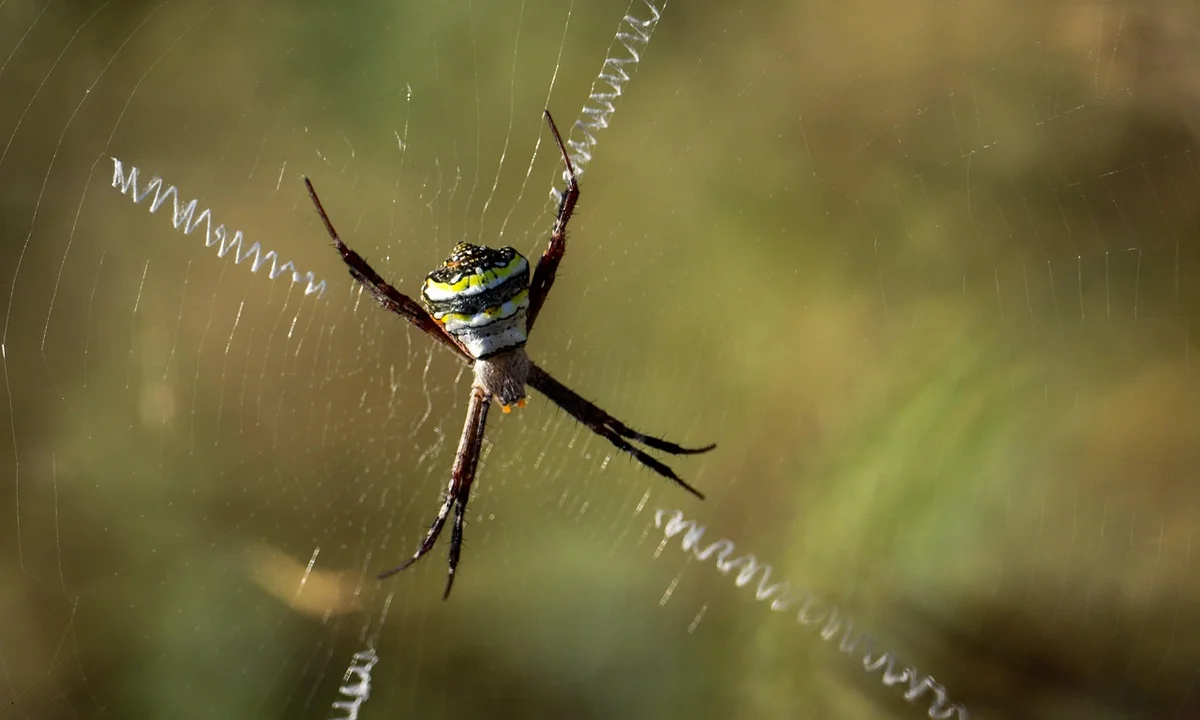
While no tarantula possesses wings, the origin of the flying spider myth finds a kernel of truth in a spectacular behavior called ballooning. This is not flight, but a form of aerial dispersal used by countless tiny spiderlings, including some from the tarantula family.
After emerging from their egg sac, spiderlings will often climb to a high point. They then face the wind and release delicate strands of silk from their spinnerets. The silk catches the breeze, acting like a parachute or a balloon. If the lift is sufficient, the spiderling is carried aloft, sometimes for astonishing distances. This silent, wind-powered journey is the closest any spider comes to true flight, and it’s a breathtaking strategy for colonizing new territories.
In my own breeding projects, I’ve witnessed this preparatory behavior. Dozens of Grammostola rosea slings, each no larger than a pencil eraser, would scramble to the top of their vials after a gentle disturbance, assuming the classic “tiptoe” posture. The room, however, was still. Without that crucial air current, their silk merely draped down like fine threads. They were programmed for a journey that never launched.
Leaps and Bounds: Tarantula Mobility Myths vs. Reality
Beyond ballooning, confusion arises from a tarantula’s startling speed and agility. They do not jump like a grasshopper, but certain species can make rapid, short-distance lunges. This defensive or predatory move can be misconstrued as a “hop” or even a glide. These leaps serve to surprise prey or to escape threats, not to gain height. When they do lift off, it’s a quick, short burst rather than a long, high jump.
Compare two of my spiders: Rosie, my Chilean Rose Hair, moves with the deliberate pace of a tectonic plate. My Orange Bitey Thing (OBT), Pterinochilus murinus, is a different story. When provoked, her movement is a blurred, orange streak-a defensive lunge so fast it seems to teleport. This explosive speed, especially from a startlingly colorful animal, fuels legends of jumping spiders writ large.
True spiders, like jumping spiders (Salticidae), possess specialized physiology for athletic, targeted leaps. Tarantulas lack this. Their movement is powered by hydraulic pressure in their legs. A terrified tarantula can move with shocking urgency, but it’s a scramble, not a coordinated jump. The risk is a fall, which can be fatal for their heavy, fragile abdomens.
Why the Myth Persists: From Folklore to Misidentification
The enduring idea of flying tarantulas is woven from several threads: cultural stories, honest mistakes, and the simple eeriness of arachnids.
- Folklore & Exaggeration: Travelers’ tales have long embellished the creatures of foreign lands. A large, hairy spider descending on a dragline at night, backlit by a campfire, easily transforms into a “flying beast” in retelling.
- Misidentification of Other Arachnids: This is a prime culprit. Vinegaroons (whip scorpions) and certain amblypygids (tailless whip scorpions) possess large, leg-like pedipalps that can resemble wings at a glance. Their flat, swift bodies scuttling up walls look fundamentally different from a typical spider.
- The “Flying” Arboreal Dwellers: Arboreal tarantulas, like those in the Avicularia genus, are incredibly light and agile. A panicked individual leaping from a branch to escape a predator can appear to flutter or glide, especially given their sometimes lighter, fluffier appearance.
- The Human Mind Seeks Patterns: We try to fit the unknown into known categories. A large, fast-moving arthropod in the air? For many, “flying insect” is the default, even when the animal has eight legs.
The persistence of the myth reminds us that respectful observation trumps assumption; taking a moment to look closer reveals a far more fascinating reality. I once had a friend swear he saw a “flying tarantula” in his garage. It was, upon calm inspection, a magnificent but utterly wingless wolf spider hunting moths under the light. The truth was better than the fiction.
Practical Keeper Insights: Safety and Secure Housing
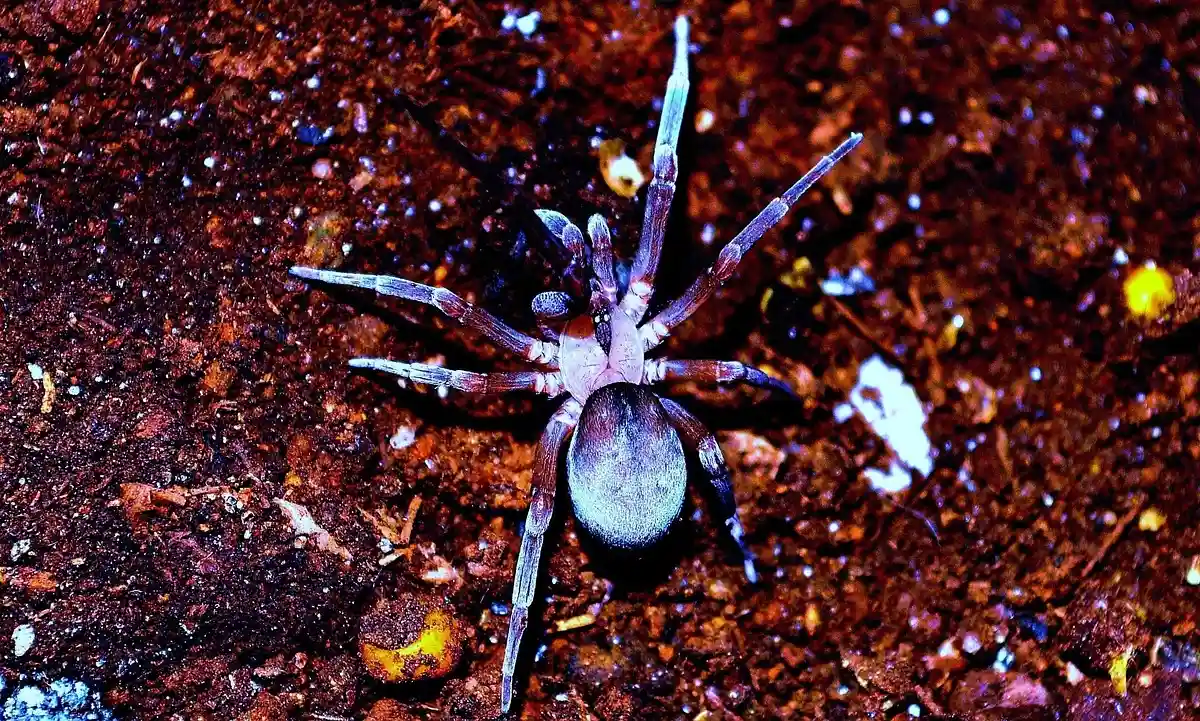
Since tarantulas lack wings, their escape attempts are purely terrestrial, but a fast species like an OBT can seem to teleport. Secure housing is your first and most critical line of defense for both keeper and spider safety. A tight-fitting lid with reliable clasps is non-negotiable, especially for arboreal or opportunistic climbers. In practice, essential features differ by lifestyle. Terrestrial vs arboreal tarantula enclosures need to be carefully considered; terrestrial tarantulas need ample floor space and deep substrate, while arboreal species require vertical space and sturdy climbing surfaces.
Ventilation must balance airflow with security. I use enclosures with acrylic or glass walls and fine mesh tops. You must check for gaps where the carapace could pry an opening, as even a docile Grammostola rosea like my Rosie can wander. For my humidity-loving Theraphosa stirmi, Goliath, I ensure cross-ventilation prevents stagnant, mold-prone air.
Substrate depth directly impacts security and stress. A deep layer allows for natural burrowing, which is a calming behavior. Providing ample substrate lets your tarantula feel hidden and reduces the urge to climb the walls in search of shelter. For my pet rock Rosie, a shallow dig suffices, but Goliath will move impressive amounts of damp coconut fiber.
Mitigating Common Hazards
Consider these elements for a safe habitat:
- Anchor all decorations. Unsecured cork bark or caves can topple during a molt or burrowing.
- Manage humidity at the substrate level. Pour water directly into a corner instead of misting, which spikes humidity and can disturb the tarantula.
- Choose a water dish with safe edges. A shallow bottle cap or ceramic dish prevents drowning for even the smallest slings.
I learned the importance of secure décor when Flash, my Orange Babbler Tarantula, webbed a piece of wood to the lid and used it as a ladder. A frantic rehousing taught me to glue all heavy structures directly to the enclosure bottom. This prevents collapses that could injure a molting tarantula.
The “Look, Don’t Touch” Philosophy in Practice
Handling is a significant risk, not a rite of passage. Defensive species like P. murinus possess medically significant venom. Even a calm tarantula can fall, suffering a fatal rupture of its abdomen. New World tarantulas like Goliath defend themselves with urticating hairs, causing intense itching and respiratory irritation if kicked toward your face.
Your safety protocol should include wearing safety glasses during cage maintenance, especially with hair-kickers. Respectful care means appreciating them as observational pets, not handling props. I have never intentionally handled Flash; our relationship is built on observing her intricate, golden web tunnels from outside the glass.
Observing Your Pet: Appreciating Ground-Based Behaviors
Without wings, tarantulas express their entire world through ground-based movement. Watching these behaviors offers a window into their health and natural history far more rewarding than any fleeting hold. The silence of the enclosure is punctuated by deliberate, eight-legged motion, which often prompts observers to consider their speed and behavior.
Each species has a signature style. My elderly G. rosea, Rosie, exemplifies the “pet rock” aesthetic. Her weeks of perfect stillness are a masterclass in energy conservation, broken only by a rare, slow walk to her water dish. In contrast, my T. stirmi, Goliath, is a bulldozer. You can hear his feet rustle the substrate as he patrols at night,重塑 his burrow entrance.
Key Behaviors to Watch For
These actions tell the story of your tarantula’s well-being:
- Webbing: From Flash’s dense, matted silken fortresses to the subtle trip lines Goliath lays, webbing is territorial mapping and sensory extension.
- Hunting Posture: The sudden freeze, a slow leg lift, and the lightning strike of the fangs. It is a silent, efficient drama.
- Site Preparation: Before molting, a tarantula may seal its burrow or lay down a thick silken mat. This is a critical “do not disturb” sign.
- Water Dish Interaction: Watching a tarantula dip its chelicerae to drink is a subtle, intimate glimpse into daily life.
The iridescent sheen of a fresh carapace after a successful molt is the ultimate reward for patient observation. I monitor my tarantulas with a dim flashlight at night, which reveals their secret lives without disruption.
Interpreting Activity and Stress
Constant climbing on the glass often signals an issue: wrong humidity, incorrect temperature, or an insecure enclosure. A content terrestrial tarantula spends most of its time on or in the substrate. Appreciate the diversity; the defensive posture of an OBT with raised front legs is as fascinating as Rosie’s profound stillness.
My personal joy comes from logging these behaviors. Noting the seasonal changes in appetite or the meticulous webbing before a molt turns keeping into a form of naturalist study. You learn the individual personality of each spider, from Goliath’s predictable humidity-seeking to Flash’s unpredictable, swift repairs of her web. Their world is ground-level, tactile, and silent, and by watching, you become part of it.
FAQs
Can my pet tarantula ever become airborne?
No, your tarantula cannot become airborne. Their body is far too heavy and dense for the silk-ballooning behavior used by tiny spiderlings. Every aspect of their anatomy, from their heavy cephalothorax to their terrestrial legs, is evolutionarily designed to keep them firmly on the ground or on solid surfaces like enclosure walls. Unlike smaller spiders that can climb and adhere to vertical surfaces, tarantulas rely on their strength and grip to navigate their environment.
If they can’t fly, how do tarantulas escape or move around?
Tarantulas escape through terrestrial means: walking, climbing, and sometimes making startlingly fast, short lunges. They are powerful climbers and can scale glass, acrylic, and silicone seals. This is why a secure, locking lid is the most critical component of any tarantula enclosure, as a determined tarantula will exploit any tiny gap to walk out. Equally important is proper ventilation. Use a lid with fine mesh or vents to allow airflow without compromising security.
Should I worry about my tarantula jumping or gliding?
You do not need to worry about gliding, but some species can lunge defensively or make a controlled fall. This is not true, directed flight but a rapid movement that can cover a short distance. For your safety and the spider’s, it’s best to work over a secure, padded surface during enclosure maintenance to prevent a dangerous fall.
Does the “flying spider” myth affect how I house my tarantula?
Yes, but not because of flight. The myth highlights their surprising speed and climbing ability. Your housing should focus on absolute security with a well-ventilated, locking lid and smooth walls to prevent escapes. Providing adequate substrate and hides also minimizes stress-driven climbing, keeping your tarantula safely grounded and content.
What should I do if my tarantula climbs to the top of its enclosure?
Frequent climbing can indicate stress from improper humidity, temperature, or a lack of hiding places. First, check your habitat parameters and ensure a proper, deep burrow or hide is available. For arboreal species, climbing is natural, but for terrestrials, consistent top-dwelling suggests the enclosure needs adjustment to make the ground level more appealing and secure.
The Final Molt
From my time with Rosie’s steadfast calm to Flash’s defensive speed, one husbandry truth stands clear. Your tarantula’s safety and well-being hinge on an escape-proof enclosure with a secure, ventilated lid, eliminating any risk of a dangerous fall that could be misconstrued as flight. This foundational practice minimizes stress and anchors all other care.
The true magic of arachnoculture unfolds in quiet observation. I cherish watching Goliath methodically pat down his damp substrate or seeing Flash vanish into his orange silk fort. Patience reveals their unique personalities and natural behaviors, offering a front-row seat to a captivating, silent world that hands-off respect protects and preserves.
Further Reading & Sources
- Mythical Marvels: Truth Behind Flying Tarantulas and Tarantulas with Wings | by Aexsha Teramera | Medium
- Tarantula With Wings: Are Flying Tarantulas Real or Myth? – A-Z Animals
- r/NatureIsFuckingLit on Reddit: 🔥 🔥 Antheraea Polyphemus – basically a tarantula with wings! 🔥 🔥
Arlo is a lifelong arachnid enthusiast who believes tarantulas are the world’s most misunderstood roommates. With years of hands-on experience in tarantula care, habitat setup, and species behavior, Arlo combines expert knowledge with a dash of humor to make spider ownership less scary and a lot more fascinating. From choosing the right enclosure to understanding why your eight-legged buddy is doing that weird little pose again, Arlo is here to help you become the best tarantula parent you can be, without getting tangled in the web of misinformation.
Tarantula Myths and Misconceptions