
Do Tarantulas Recognize Their Owners? The Surprising Truth About Spider Memory
Published on: December 21, 2025 | Last Updated: December 21, 2025
Written By: Arlo
Staring into the eight simple eyes of a tarantula, like my docile Rosie or lightning-fast Flash, it’s natural to project a sense of familiarity. Tarantulas operate on a framework of instinct and conditioned response, not emotional memory or recognition as we understand it. This article separates keeper hope from arachnid reality, exploring the precise mechanisms of spider learning. While they lack the brain structures for complex memory, tarantulas can learn to associate specific stimuli, like your shadow or vibrations, with a consistent outcome, such as food.
- Quick Stats: For a Common Pet Tarantula (Grammostola rosea – Chilean Rose Hair)
- Origin: Arid scrublands of Chile
- Type: New World, terrestrial
- Growth Rate: Glacial; females may take a decade to reach full size
By examining peer-reviewed science and my own husbandry notes, this guide will clarify what your tarantula’s behaviors truly mean for your relationship with it.
The Science of Spider Memory: What We Know
Decoding spider cognition requires moving beyond mammal-centric ideas of intelligence. Research indicates that arachnids possess a capacity for simple learning and memory, often mediated by their specialized sensory systems. Studies on jumping spiders, like those in the genus Portia, show they can plan detours and remember prey locations-evidence of problem-solving beyond hardwired instinct.
Arachnid Cognition: Learning Beyond Instinct
Your tarantula is not a robot. While driven by instinct, tarantulas demonstrate behavioral plasticity, meaning they can adapt their actions based on experience. A common example is habituation, where a spider learns to ignore consistent, non-threatening stimuli. My Chilean Rose Hair, Rosie, used to retreat when I opened her enclosure for misting. After years of this routine, she now remains placid, suggesting she has learned this specific vibration pattern does not signal danger.
This learning is context-specific. A tarantula may associate the opening of its lid with feeding time, a connection formed through repeated experience rather than abstract thought. In my breeding projects, I’ve observed that females often become more alert to vibrations during pre-molt, a learned sensitivity to their vulnerable state.
Memory Duration: How Long Do Spiders Remember?
Memory retention is tied to survival relevance. A tarantula’s memory likely lasts for days or weeks, focused on immediate environmental patterns rather than long-term relationships. Research on web-building spiders shows they can remember prey capture sites for several days. For a pet tarantula, this might translate to remembering a safe hide location or a consistent food source area within the enclosure.
From my experience, memory seems strongest for negative events. An unpleasant rehousing or a fall can make a tarantula skittish around similar scenarios for weeks, a clear sign of retained caution. My OBT, Flash, once escaped during a rehousing and was gently guided back with a paintbrush. For months afterward, any approach with a similar tool prompted a defensive posture, a memory I had to work carefully to override.
How Tarantulas Perceive the World: Sensory Clues to Recognition
If a tarantula seems to “know” you, it’s reading a suite of sensory signatures, not your face. Recognition, for a spider, is a mosaic of familiar chemical scents, vibration rhythms, and blurred visual stimuli that together signal a non-threat.
Olfactory Cues: The Scent of Safety and Familiarity
This is the primary channel. Tarantulas “taste” the air and surfaces with chemoreceptive hairs on their legs, pedipalps, and mouthparts, building a detailed chemical map of their world. They detect the pheromones of other spiders, the scent of prey, and even the lingering oils from human skin. These cues also help explain what attracts tarantulas to a site. Prey odors and the vibrations they detect can draw them toward a source of food.
Detecting Chemical Signatures
Every time you interact with an enclosure—adding water, moving décor—you leave a microscopic chemical signature. A tarantula may grow accustomed to your unique scent profile, differentiating it from the more alarming smell of a stranger. Tarantulas can also communicate through substrate-borne vibrations and, in some species, stridulation or tapping sounds. Such signals may complement chemical cues, helping the spider differentiate a routine handler from a stranger. I notice this with my Burgundy Goliath Bird Eater, Goliath. When my partner feeds him, he often flicks urticating hairs in defense. When I perform the same action, he typically just shifts position, perhaps reacting to a familiar chemical cue associated with routine care.
Visual Cues: Seeing Blurry Shapes and Movement
Tarantula vision is poor, but not useless. Their eight eyes typically detect light, shadow, and movement as vague shapes, helping them distinguish day from night and sense large approaching objects. They cannot see fine details like human facial features. This limited but specialized vision is well suited to their hunting style, which relies on motion and contrast rather than detail. In short, tarantulas perceive a world of light, shadow, and movement rather than sharp images.
A sudden movement outside the glass will often trigger a freeze or retreat response. Consistent, slow movement associated with maintenance, however, may become a recognized part of their environmental landscape, reducing stress over time. My fast-moving OBT, Flash, will often cease his rapid pacing if I enter the room slowly and predictably, but will dart into his web tunnel if someone moves abruptly.
Tactile and Vibration Cues: Feeling the Environment
This sense is paramount. Setae (body hairs) and sensitive leg tips allow tarantulas to feel microscopic vibrations through substrate and air, interpreting the world as a complex symphony of tremors. The cadence of your footsteps, the specific rhythm of you tapping the enclosure before feeding, even the vibration of your voice-these can all become familiar.
The “Look, Don’t Touch” philosophy is crucial here, as handling floods the tarantula with unfamiliar, stressful vibrations and chemical signals it cannot interpret as safe. In a bioactive setup, I’ve seen my tarantulas grow indifferent to the consistent vibrations of clean-up crew insects, but immediately orient toward the distinct, irregular vibrations of a cricket being dropped in. Your care routine creates a vibration fingerprint they learn to tolerate.
Behavioral Evidence: Does Your Tarantula Know You?
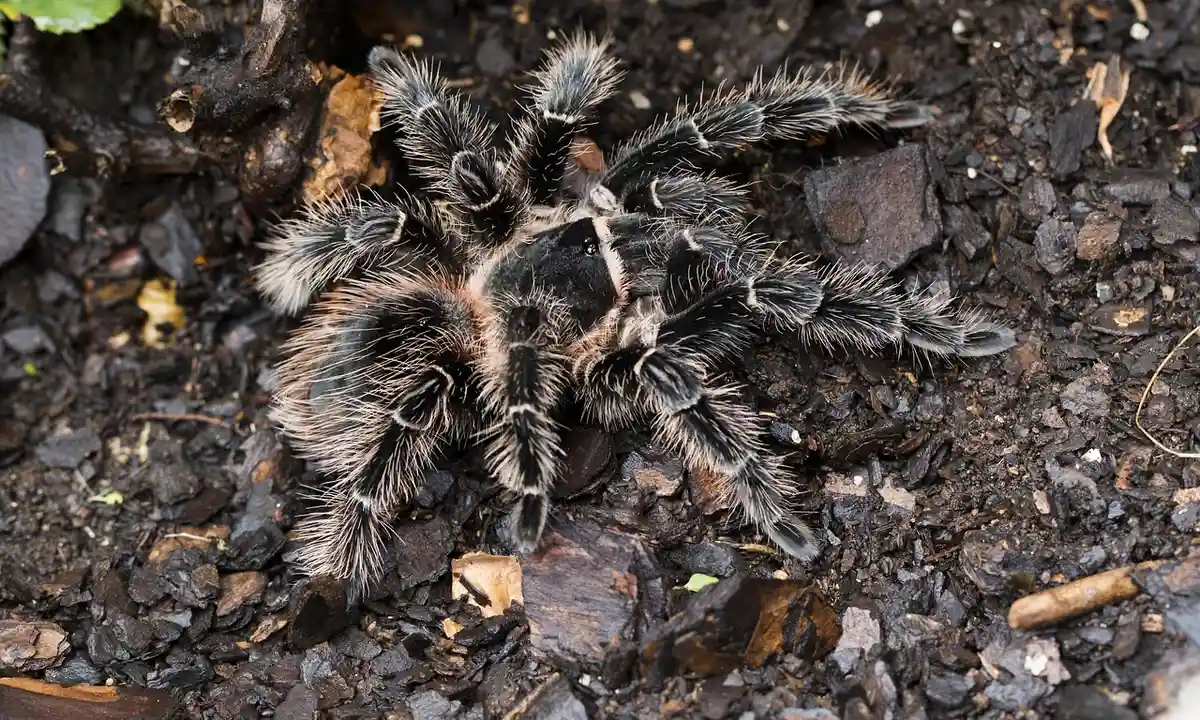
Signs of Habituation and Reduced Defensiveness
Habituation is a simple, non-associative learning process where an animal stops reacting to a repeated, harmless stimulus. In tarantula care, this often looks like your spider becoming less defensive over time as it learns your presence isn’t a threat.
My old Chilean Rose Hair, Rosie, exemplifies this. For years, she would retreat into her cork hide at the slightest shadow. Now, at 15, she might merely adjust a leg when I open her enclosure. This calm demeanor isn’t affection or recognition; it’s a nervous system efficiently conserving energy by ignoring predictable, non-dangerous events.
Contrast this with my Orange Baboon Tarantula, Flash. His bright orange body still flares into a threat pose if I look at him wrong. Species with strong defensive instincts may show minimal habituation, proving that baseline temperament is a powerful filter for all behavior. When it comes to Orange Baboon Tarantula (OBT) care, temperament guides how you interact, feed, and house Flash. Their defensive streak means minimal handling and steady, respectful maintenance are the safest path.
Watch for these indicators of habituation in your tarantula:
- No longer immediately fleeing to its hide when you approach the tank.
- Ceasing to kick urticating hairs during routine enclosure maintenance.
- Remaining placid, perhaps just rotating its carapace to track you, during water changes.
Responses to Routine and Caretaking Actions
Tarantulas are exquisite observers of environmental patterns. Their responses to your care rituals are typically learned associations, not a bond with you as a person. Are these common tarantula behaviors meaningful? What do they mean for interpreting their needs?
My Burgundy Goliath, Goliath, will often lumber out from her burrow when she hears the distinct hiss of my spray bottle. She has connected that sound with the subsequent rise in humidity, a condition her species (Theraphosa stirmi) physiologically craves.
I’ve noted that many of my tarantulas, even docile ones, become subtly more alert on feeding days. If you maintain a schedule, your tarantula may wait near a common prey drop point, responding to the timing and micro-vibrations, not your identity. Reading the tarantula’s food dance—the subtle postures and cues it uses as it gauges prey—can tell you when it’s truly ready to eat. With practice, you’ll recognize these signals without disturbing its rhythm.
Common routine-based responses I’ve documented include:
- Movement towards the front glass when room lights dim in the evening, signaling the start of their active period.
- Increased palpation of the substrate after a water dish refill, sensing the localized humidity change.
- Assuming a characteristic, forward-leaning posture when the enclosure lid is unlatched, anticipating the possibility of food.
The Role of Conditioning in Tarantula Behavior
Associative Learning: Linking Cues with Events
Associative learning occurs when an animal forms a connection between a neutral signal and a meaningful outcome. For tarantulas, the world is a map of vibrations, light shifts, and chemical cues linked to survival events.
Think of it like a Pavlovian response, but for spiders. Your tarantula isn’t happy to see you; it’s prepared for an event it predicts based on consistent preceding cues.
I learned this sharply during a rehousing of Flash. His lightning-fast advance wasn’t directed at me, but at the long paintbrush I use to guide him. He had associated the brush’s touch with movement, a conditioned response that underscores why we must interpret behavior through the lens of learning, not emotion.
Practical Examples from Feeding and Maintenance
Daily husbandry provides the clearest window into tarantula conditioning. These learned behaviors are practical tools for reducing stress during essential care.
Here is a breakdown of common actions and the associations tarantulas can form:
| Your Action | Potential Cue | Tarantula’s Learned Association |
|---|---|---|
| A gentle double-tap on the glass before feeding | Specific vibration frequency | Prey is imminent, may elicit a feeding stance. |
| Using tongs to remove leftover prey | Sight and vibration of metal tools | Disturbance without threat, may cause less retreat than a bare hand. |
| Turning on a dedicated lamp for evening viewing | Specific light wavelength and intensity | Onset of nocturnal activity cycle, may encourage exploration. |
With Goliath, I use a soft makeup brush for gentle guidance. She now typically freezes when touched with it, having learned this contact doesn’t lead to harm, a small victory for low-stress maintenance.
These conditioned responses are not steadfast. A sudden slam or an irregular schedule can quickly unravel this learning, reminding us that our management of their environment is the true cornerstone of their behavior.
Implications for Pet Tarantula Care: Safety and Enrichment
The “Look, Don’t Touch” Philosophy and Stress Reduction
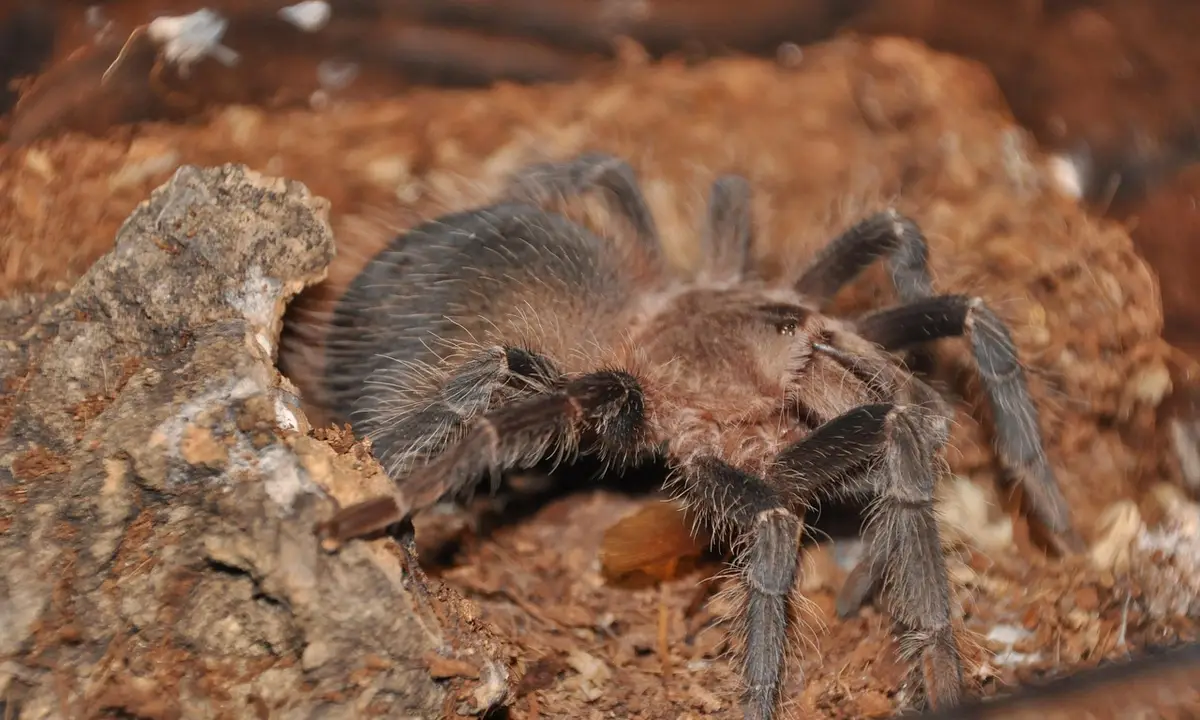
Understanding that your tarantula lives in a world of vibrations and chemical cues changes everything. It transforms handling from a bonding activity into a significant stress event. Your tarantula does not seek affection; your hand is a large, warm, vibrating predator that triggers a primal flight-or-fight response. My Burgundy Goliath, T. stirmi, immediately flicks a cloud of urticating hairs if I disturb her substrate during maintenance. This isn’t malice; it’s a programmed defense against a perceived threat. Recognizing these stress cues helps you avoid escalating aggression. Common signs your tarantula is stressed or feeling threatened include defensive leg raises, body flattening, rapid leg movements, or kicking hairs.
Stress has tangible health consequences. A startled tarantula can bolt, risking a fatal fall. Defensive postures waste energy. For a molting animal, acute stress can be lethal. The kindest thing you can do is appreciate them as breathtaking living art, not as a creature to be held. I keep my fast Old World species, like my P. murinus “Flash,” with deep respect and secure lids, observing his intricate web tunnels from a safe distance.
Enrichment Strategies for Mental Stimulation
If tarantulas learn through environmental feedback, we can provide a habitat that engages their natural instincts. Enrichment is about offering choice and complexity, not toys. In my tarantula boredom guide, environmental enrichment for spiders helps keep them mentally engaged. Here are practical ideas to implement this in your enclosure.
- Substrate and Layout: Use a deep, packable substrate like coconut fiber or topsoil to allow for digging. My G. rosea “Rosie” spends weeks rearranging her burrow entrance. Provide multiple hides-cork bark flats, half-logs, or curved coconut shells-so the tarantula can choose its preferred ambush spot or retreat.
- Prey Variety and Presentation: Alternate between crickets, roaches, and mealworms. Occasionally, place the prey on the opposite side of the enclosure from the tarantula’s hide, encouraging it to venture out and detect the vibrations.
- Architectural Opportunities: For heavy webbers like my OBT, anchor points like branches or fake plants are essential. Watching them engineer a complex, layered funnel web is witnessing pure, focused instinct.
The most profound enrichment is a stable, predictable environment where your tarantula feels secure enough to express its full range of natural behaviors. A calm tarantula is more likely to be seen out in the open, going about its secretive business.
Debunking Myths: What Tarantulas Don’t Feel
Myth: Tarantulas Form Emotional Bonds
We project our social mammalian needs onto our pets. A tarantula’s brain is not wired for companionship, loyalty, or love. My 15-year-old G. rosea tolerates my presence, but her docile nature is a species trait, not a personal affection for me. When she sits placidly during enclosure cleaning, it’s because she has assessed me as a non-threatening part of the landscape, not because she’s “happy to see me.”
Interpreting a lack of defensive behavior as bonding is a dangerous misunderstanding. It can lead to complacency around medically significant species or disappointment when the animal’s behavior remains consistent regardless of care. Their reliability is their charm; they are perfect examples of wild instinct contained, not domesticated partners.
Myth: They Recognize Human Faces or Voices
Tarantulas have poor eyesight, seeing the world in blurry light and shadow. The intricate details of a human face are invisible to them. They react to the bulk, movement, and-most importantly-the vibrations of your body, not your smiling face. Your voice is likely just a low-frequency rumble.
They may, however, learn a predictable vibration pattern. The consistent two-tap signal I use before feeding my T. stirmi may now trigger a slight forward movement, a food anticipation response. This is associative learning, not recognition. You are a significant, recurring event in their environment, not an individual friend. Accepting this truth allows you to care for them on their own terms, reducing their stress and deepening your own appreciation for their alien elegance.
FAQs
Can I form a bond or emotional connection with my tarantula?
No, tarantulas are not capable of forming emotional bonds or experiencing affection. Their behaviors are driven by instinct, learned associations, and a fundamental drive to survive. What may appear as “bonding” is almost always habituation, where the spider learns your presence is not a threat, or conditioning, where it associates you with a routine event like feeding. This also addresses the common handling myth: holding a tarantula isn’t affection. In fact, many tarantulas tolerate or even dislike being handled, so frequent contact can be stressful. Appreciating your tarantula as a fascinating, instinct-driven animal, rather than expecting a social relationship, is key to proper care.
If they can’t see well, how would my tarantula ever “recognize” me?
Recognition, in a tarantula’s world, is not about identifying your face. It is a process of assembling familiar sensory clues into a pattern that signals safety or predictability. Your tarantula primarily uses chemoreception to learn your unique scent and detects the specific vibration patterns of your movements and care routine. Over time, this consistent sensory signature becomes familiar, which can reduce defensive behaviors during maintenance.
What are some clear signs my tarantula has learned a routine?
Signs are based on predictable changes in behavior linked to your actions. Your tarantula may move to a specific spot when it’s time to eat or become more alert when you turn on a certain light. It may also remain calm during enclosure cleaning after repeated, gentle sessions. These are learned associations, not personal recognition, and they demonstrate your tarantula’s ability to adapt to its stable environment. By noting these cues, you can tell if your tarantula is hungry or stressed, which is a key part of a feeding behavior guide. Understanding these signals helps you time meals and reduce stress during feeding.
Does this mean I should never interact with my tarantula?
Positive interaction is centered on respectful, consistent care that minimizes stress. The “look, don’t touch” philosophy is strongly recommended, as handling provides no benefit to the tarantula and poses significant risks of falls, injury, and stress. Meaningful interaction comes from providing excellent husbandry, observing natural behaviors, and creating a secure environment where your tarantula feels safe enough to be active and visible.
The Keeper’s Real Reward
The most vital husbandry parameter for any tarantula, from a calm G. rosea to a lightning-fast P. murinus, is an environment that minimizes stress. A consistent, stress-free enclosure where the spider feels secure is infinitely more valuable than any fleeting interaction.
Your true success is measured in observed natural behaviors. Watch the meticulous engineering of a trapdoor burrow. Admire the geometric perfection of a freshly laid sheet web catching the light. Learn the subtle body language that signals pre-molt fasting versus simple disinterest. Patience reveals a complex world of instinct and adaptation. The silent, beautiful predictability of their needs is the hobby’s deepest satisfaction.
Further Reading & Sources
- Do Tarantulas Recognize Their Owners? Discover the 5 powerful truths
- Do tarantulas Recognise you? – The Environmental Literacy Council
- Do Tarantulas Recognize Their Owners? Probably Not! – Cute Monster Care
Arlo is a lifelong arachnid enthusiast who believes tarantulas are the world’s most misunderstood roommates. With years of hands-on experience in tarantula care, habitat setup, and species behavior, Arlo combines expert knowledge with a dash of humor to make spider ownership less scary and a lot more fascinating. From choosing the right enclosure to understanding why your eight-legged buddy is doing that weird little pose again, Arlo is here to help you become the best tarantula parent you can be, without getting tangled in the web of misinformation.
Understanding Tarantula Behavior